Some SGX blue chip articles from Business Times.
OCBC's shift from offshore exposure to sustainable financing no less challenging
In August, OCBC, DBS, and UOB topped the Bloomberg Asia (ex Japan) league table for green loans, making up almost 30 per cent of the table share. REUTERS FILE PHOTO
QUOTE
Companies & Markets
HOCK LOCK SIEW; OCBC's shift from offshore exposure to sustainable financing no less challenging
Vivien Shiao
Vivien Shiao , OCBC's shift from offshore exposure to sustainable financing no less challenging
1217 words
24 September 2020
Business Times Singapore
STBT
English
© 2020 Singapore Press Holdings Limited
WITH the recent slashing of OCBC's exposure to the offshore support vessels (OSV) sector, the question is whether the bank's plan to rev up its sustainable finance portfolio will be able to make up for the gap.
Analysts said that while it is clear that sustainable finance is on an upward trajectory, it comes with its own set of challenges and should not be looked upon as a "replacement" to offset the decline of the OSV sector.
For a start, OCBC's sustainable finance portfolio already exceeds its loans to the OSV sector. The bank surpassed its earlier S$10 billion target for sustainable finance by 2022 two years early in the first quarter of 2020. As of the first half of 2020, it accounts for 5 per cent of OCBC's total loan portfolio.
In comparison, its OSV book came up to about 2 per cent of loans at end-June. The focus on OCBC is particularly so as the bank said in its second-quarter results it had written down the carrying value of the existing OSVs amid a dismal outlook of the sector. Excluding conglomerates, the bank's OSV portfolio is now down to less than 0.3 per cent of total outstanding loans.
Thilan Wickramasinghe, analyst at Maybank Kim Eng, said that given low energy prices and an uncertain Covid-19 outlook, the OSV sector will remain challenging going forward.
"On the other hand, there is increasing demand for green and sustainable financing as companies look to rebuild and restructure their business models coming out of this pandemic," he added.
With the risks of global warming and unsustainable business activities being brought to light, it will become essential for banks to increase their green and sustainable exposure to mitigate some of these risks, and also to improve returns, he noted.
Willie Tanoto, director, Asia-Pacific banks, Fitch Ratings, noted that OCBC's new goal of S$25 billion by 2025 represents an average growth of more than 20 per cent a year, which means that the gap between its sustainable finance portfolio and OSV financing will only widen.
Despite operational obstacles, he noted that there has been "tangible progress" spearheaded by the government and the regulator to create an enabling environment for green financing to take off.
Among the various initiatives include a US$2 billion green investments programme announced by the Monetary Authority of Singapore (MAS) in November 2019 to drive growth in sustainable finance.
In June this year, MAS launched a consultation with the local financial sector that zoomed in on stricter environmental risk management guidelines.
That being said, Mr Tanoto does not view OCBC's sustainable finance portfolio as an offset or a replacement of lending to the OSV sector.
"A green loan is still subject to the same credit underwriting process as conventional loans, so it is not inherently more or less safe or profitable," he said. "Green financing's impact on the bank depends on what sector it is in and the risks and economics of lending to each borrower."
The challenges in originating bankable green assets are not OCBC's alone, but for banks in the region, he noted.
He said some of these green sectors in South-east Asia are relatively young or small-scale and may not always be suitable for bank financing in terms of commercial viability.
"The ability of banks to quantify a project's green impact, certify its green credentials and monitor the use of proceeds are also ongoing challenges, in part due to the lack of consistent definitions and standards," added Mr Tanoto.
Kevin Kwek, managing director of Asian financials at Alliance Bernstein, concurred. "Not every claim to be 'green' will be so. (It is) a bit like Shariah financing - it is not universally agreed by different countries what qualifies, so secondary trading is a challenge."
However, he still expects sustainable finance to accelerate on the back of growing investor interest, while OSV financing will moderate.
The move by OCBC is in line with many banks, which is to reduce exposure to environmental, social and governance (ESG)-sensitive areas, while stepping up the pace on green financing, said Mr Kwek.
"The motivation for ramping up green financing isn't just to offset the slashed exposure in fossil fuel related industries, but to allow the banks to move up ESG ranks for investors," he noted. "But considering origination breadth and depth as well as secondary market liquidity, it might take some time for a full 'match' of what's dropped in OSV."
To be sure, he noted that Singapore banks have been participating in sustainable finance deals for some time. In August, DBS, OCBC and UOB topped the Bloomberg Asia (ex Japan) league table for green loans, making up almost 30 per cent of the table share.
While sustainable finance is on the way up, the OSV sector appears to be in decline, with the sharp fall in demand and subsequent drop in oil prices wreaking havoc in the industry. Fitch Ratings' Mr Tanoto pointed out that the OSV sector is dependent on market conditions in the upstream oil and gas sector, and the headwinds are "broadly expected to persist for the near term".
"The banks' writing down of collateral values and higher provisions are probably a recognition of such a sector outlook," he said.
Andrea Choong, analyst at CGS-CIMB Securities, said that any pickup in OSV financing will very much depend on increased charter demand, which could be sluggish given the current modest rate of economic recovery. This is in contrast with sustainable finance, as more investors place more emphasis on renewable energy and hold corporates accountable via a shift in investment mandates towards sustainable financing.
Even with the challenges ahead, analysts are in agreement that sustainable financing in Singapore will continue to see rapid growth, but the jury is still out on just how fast this will be.
Ms Choong said: "We do expect sustainable financing to eventually be a key focus area for all banks, but the pace of growth of this segment will depend greatly on investors' push towards renewable energy and climate change."
She pointed out that it is "typically not a quick process" for corporates to have the entire operation chain to comply with various guidelines to be considered green or sustainable, given the scale of sectors such as palm oil and water treatment.
In response to queries from The Business Times, Mike Ng, OCBC's head of structured finance and sustainable Finance, said that he expects the sustainable finance momentum to gain even more pace, as Covid-19 has helped to draw attention to wider sustainability issues, including social ones.
"In the wake of the pandemic, the collective action taken by both the public and private sectors can help to rebuild economies in a more sustainable fashion," he added. "We see opportunities in industries such as renewable energy, clean transportation, water and waste management."
Singapore Press Holdings Limited
What will Singtel's new CEO mean for its share price?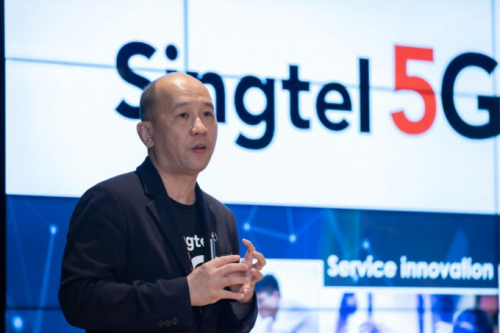
Known simply as Moon to just about everybody who knows him, Mr Yuen has been all about the small wins. PHOTO: SINGTEL
QUOTE
HOCK LOCK SIEW; What will Singtel's new CEO mean for its share price?
Joan Ng
Joan Ng , What will Singtel's new CEO mean for its share price?
1085 words
2 October 2020
Business Times Singapore
STBT
English
© 2020 Singapore Press Holdings Limited
INVESTORS craving a change in management direction at what was once Singapore's largest public-listed company have finally got what they want - sort of - with the appointment of Yuen Kuan Moon as the new chief executive of Singtel.
The argument for change is strong, given that Singtel's earnings are now lower than they were 10 years ago. Its balance sheet is more heavily geared, and its capacity to service its debt load has deteriorated. Meanwhile, many of its digital investments - pay-TV, music streaming and online advertising - have not paid off.
Singtel's dividend for FY2020 was S$0.1225 per share, versus S$0.175 per share for FY2019. Last month, its shares slumped to a 12-year low.
There were nine contenders for the top job at Singtel, said its chairman Lee Theng Kiat. He did not reveal how many - or, indeed, whether any - were outsiders.
But there is something to be said for having an individual with a deep understanding of the sprawling group at the helm at this difficult time, especially one with Mr Yuen's particular approach to business.
Known simply as Moon to just about everybody who knows him, he has been all about the small wins. An engineer by training, his focus has largely been on incrementally upgrading the experience of consumers.
He personally lobbied major mobile phone manufacturers to ensure Singtel's customers would be among the first in the world to hold hot, new releases. Under his watch, Singtel was also the first to deliver 4G speeds to mobile customers, and the first to raise data prices on the grounds of commercial sustainability.
Mr Yuen also championed Singtel's entry into the mobile money space, giving the group the experience that could be useful in its race to secure a digital-banking licence as part of a consortium.
In 2018, he was picked to fill a new role at Singtel as group chief digital officer to ensure that the company did not pass up on opportunities for disruption.
Internal competition
Singtel has a deep bench of management talent.
One possible alternative candidate could have been Mark Chong, 56, who joined Singtel in 1997 and has accumulated experience across a number of roles within the enlarged group.
He was chief operating officer of Singtel's Thai associate, Advanced Info Service; he also represented Singtel on the board of its Philippine associate, Globe Telecom, and served as the chief of the international business group from 2013 to 2017.
He is currently Singtel's chief technology officer, and would have brought both his international experience and possibly a tech-driven focus to Singtel's strategy.
Many telecom-sector watchers might also have expected Allen Lew to be in the running.
Mr Lew started his career in 1980 and, like Mr Chong, has done tours outside the country - in Thailand and Australia. While CEO for Singtel Singapore, he was also at one time leading Singtel's Singapore consumer business - a role Mr Yuen later assumed.
Under Mr Lew's watch, Singtel expanded its market share in Singapore and invested significantly in pay-TV. As head of Singtel's digital business, he oversaw the building of a startup-like wing at Singtel's Comcentre and staffed it with people to push the envelope of the group's digital strategy.
But, at 65, he is older than Singtel's outgoing CEO Chua Sock Koong, who is 63. And his recent stepping down as chief of Singtel's Australian business Optus might signal that he is easing off the company's top leadership bench.
Then there is Jeann Low, currently Singtel's group chief corporate officer, who joined Singtel in 1998. She oversees several functions, including mergers and acquisitions - a suitable background for an environment in which cheap assets might be available for a company with a balance sheet the size of Singtel's.
The 59-year-old was also Singtel's group chief financial officer for seven years - a portfolio Ms Chua had held before being made CEO.
Two newer joiners could have been candidates too: enterprise business CEO Bill Chang and international business CEO Arthur Lang.
Mr Chang, 53, oversees the side of Singtel's business that is arguably more scalable and pandemic-proof: connectivity and technology services for enterprises. He was also appointed as Singapore country chief officer in 2014, acting as a liaison between Singtel and regulatory bodies.
He joined Singtel only in 2005, but has many years of experience in Cisco and HP, equipping him with the skills to build Singtel into the multinational service provider it could be.
Mr Lang is even newer to the company, having joined Singtel only in 2017. Prior to that, he had run CapitaLand's real estate fund-management business and jointly headed Morgan Stanley's South-east Asian investment banking division.
A somewhat unusual hire for Singtel's management bench, which is filled with engineers, the 48-year-old Mr Lang would have, potentially, been able to bring very different ideas to the table.
Big challenge
Whatever the case, when Mr Yuen officially assumes the role of CEO in January, investors will be eager to hear his plans to staunch the group's deteriorating profitability and reset its balance sheet.
The market will also be looking for indications of Singtel's longer-term direction.
Will it pursue an asset-light structure by selling its network infrastructure and using the money to fund digital initiatives?
Will it, for instance, try to become a digital consumer-services brand, offering entertainment, banking, communication and an array of other super-app services?
Or, will it focus on scaling its business internationally to offer enterprise services to companies around the world?
Or, will it try to buy up other companies - whether telcos or otherwise - and model itself after Vodafone or Softbank?
Of course, Mr Yuen will, from his long experience, already be aware that consumers want new technologies but are unwilling to pay for them; that size and market share matter in the telecom industry; and that digital bets need to pay off quickly if they are to pay off at all.
Singtel's shares are already rebounding. If they continue in this direction, he will know he is on the right track.


 Aug 15 2020, 10:07 AM


 Quote
Quote
 Cannot blame them. Too much exposure to banks and rely heavily on trade + tourists. Island too small to sustain an autarky. But companies with more diversified geographical and industrial exposures do quite well. You need to be more selective and do some homework. My current SG portfolio outperforms the STI by around 9% since April/May.


 0.0361sec
 0.28
0.28
 7 queries
 GZIP Disabled