


OCBC Results: https://links.sgx.com/1.0.0/corporate-annou...bfce9f95449bae6
DBS Results: https://links.sgx.com/1.0.0/corporate-annou...43c6edf7b47adcd
SGX Counters, Discussion on Counters in the SGX
|
|
 Nov 5 2020, 10:19 AM Nov 5 2020, 10:19 AM
Return to original view | Post
#81
|
 
Senior Member
8,667 posts Joined: Aug 2019 From: Penang <-> Singapore  
|
Damn it. Haven't bought anything, stocks already recovered...
OCBC Results: https://links.sgx.com/1.0.0/corporate-annou...bfce9f95449bae6 DBS Results: https://links.sgx.com/1.0.0/corporate-annou...43c6edf7b47adcd |
|
|
|
|
|
Nov 8 2020, 11:21 AM
Return to original view | Post
#82
|
|
Senior Member
8,667 posts Joined: Aug 2019 From: Penang <-> Singapore
|
Some ST articles for sharing. Life insurers' balancing act only gets harder Tougher to deliver par funds' projected non-guaranteed bonuses amid low interest rates, stricter risk-based capital framework 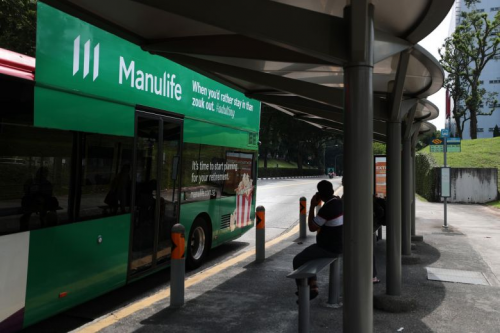 Manulife topped the 2017-2019 period at 7.68 per cent.ST PHOTO: KELVIN CHNG QUOTE Straits Times Breaking News Invest Life insurers' balancing act only gets harder Claire Huang 8 November 2020 The Straits Times STIMES English © 2020 Singapore Press Holdings Limited Tougher to deliver par funds' projected non-guaranteed bonuses amid low interest rates, stricter risk-based capital framework A persistent low interest rate environment and a tougher risk-based capital framework would make it harder for Singapore life insurers to deliver the projected non-guaranteed bonuses linked to participating or par funds, even though most of the 10 key life insurers are able to at least support any such payouts. Based on insurers' 2019 returns that were filed with the Monetary Authority of Singapore (MAS), Manulife Singapore, Prudential Singapore and AIA Singapore topped the geometric average net investment returns for par funds for the three-year, five-year and 10-year periods respectively. Manulife topped the 2017-2019 period at 7.68 per cent, while AXA Singapore and Tokio Marine Life Insurance Singapore followed at 7.44 per cent and 7.12 per cent respectively, higher than the group average of 6.69 per cent. Over a five-year period from 2015, Prudential took pole position with 6 per cent, followed by AIA with 5.91 per cent and NTUC Income at 5.33 per cent. The group average was 4.99 per cent. The group average from 2010 was 4.61 per cent and AIA topped this category at 6.21 per cent. Prudential followed at 5.84 per cent and AXA at 5.18 per cent. Etiqa Insurance was operational in Singapore from 2014, so it has no 10-year average returns. The insurer pointed out that as a relatively new player, high growth of the total par assets would have distorted the ratio. To illustrate, in 2015, Etiqa's cash holding was $22.2 million and investment assets (equities and bonds) were $29.8 million. This then resulted in lower investment income and, accordingly, lower returns, it said. When asked, Manulife chief customer and product officer Darren Thompson said the firm diversified investments in recent years and the change in strategy has worked well so far. Prudential chief investment officer David Chua said the firm uses "carefully curated fund strategies". The key consideration in insurers deciding the level of yearly reversionary bonus rates of par policies is investment performance. There are other factors that weigh in, such as the expenses, claims and surrenders, but sources say these are more impactful for small par funds and less so for large and mature par funds like those of AIA, Prudential and Manulife. They pointed out that the three-year average "carries more weight in determining bonus declarations" as it is more reflective of current trends. Those that perform well are also in a better position to weather storms. Currently, the two projected investment rates of returns shown in the benefit illustration of par products are 3.25 and 4.75 per cent per annum. Of the three-year industry averages, all players clocked higher rates than the two projections listed. Observers say pressure is building for a downward revision of the two projections in the light of increasing global volatility. The Life Insurance Association conducts an annual review on this. Together with insurers' average net investment returns, reserve ratios will paint a clearer picture for policyholders on whether insurers are likely to adjust non-guaranteed bonuses. Reserve ratios are calculated by comparing an insurer's reserve buffer against its total assets. Data showed that from 2017 to last year, Prudential, which did not cut bonus rates for FY2019, had the highest buffer of between 39 per cent and 43.6 per cent, while HSBC Insurance's reserve ratio slid from 14 per cent in 2017 to 10.5 per cent last year - the lowest of the 10 insurers. "At HSBC Life Singapore, we regularly review our bonus payout for participating products. The aim is to ensure our customers will receive a stable return over time regardless of market conditions. "It is also important to note that besides market performance, factors such as risk appetite of the insurer and product specifications including level of guarantees and risk passed on to customers would also impact par fund returns," said the insurer. It added that it has increased investments in alternative asset classes "which will diversify the portfolio and ultimately achieve better returns over the long term for our par policyholders". Etiqa, whose reserve ratio for the three years is mixed, attributed this to product mix, which players agree can have an impact. Looking ahead, observers cautioned that today's low interest rate environment may impact future investment returns of par funds, and in turn lead to possibly lower reserve ratios that are an important factor in considering whether a dividend adjustment may be needed. Together with the stricter risk-based capital framework known as RBC2 now in place, it is more costly for insurers to manage par funds and to balance between profitability and providing attractive returns to par policyholders, they said. About half of the new business in Singapore's life insurance industry come from par plans. Mr Thompson said: "With lower interest rates, the amount of capital required to support products with high guarantees will be more. "This may just mean that insurance companies will have to innovate to find alternative innovative product solutions to support the needs of the customers." Asked if Prudential would change its asset mix to manage capital costs, Mr Chua said: "We have been implementing ways to better realise capital efficiency and manage the cost of capital. Any asset mix changes will take into account the possible implications to product guarantees to policyholders." Singapore Press Holdings Limited And a new series of Me & My Money: Investing in tech keeps business looking good Beauty brand boss Amy Quek's decision to grow her firms' online presence pays off amid pandemic  Ms Amy Quek prefers to invest in foreign currency-linked structured notes with higher returns despite their volatility, and leverages with currency exchange rates and the interest through a 15-month tenure. However, she has taken a break from investments since July last year due to market uncertainties.ST PHOTO: GIN TAY QUOTE Me & My Money: Investing in tech keeps business looking good Sue-Ann Tan 8 November 2020 The Straits Times STIMES English © 2020 Singapore Press Holdings Limited Beauty brand boss Amy Quek's decision to grow her firms' online presence pays off amid pandemic Beauty industry executive Amy Quek saw the value of building financial independence early in life after her father died when she was just 12. Ms Quek, 55, tells The Sunday Times: "He was the sole breadwinner in the family, and this taught me to be self-sufficient. "When we reach a certain age, we will want to grow our finances, which is what drove me to start exploring investing." Much of that investing has been in her own companies - skincare chain BMF Bella Marie France and Svenson Hair Center - which she has built steadily over the years. The brands now have 10 outlets here in total, including in malls like Orchard Gateway. The pandemic and resulting shutdowns could have dealt the enterprise a severe blow, but Ms Quek's decision to invest in digital solutions enabled it to stay afloat. "With the government-mandated closure of our treatment centres, we relied on our e-commerce platform during the circuit breaker to ensure that our clients and other new customers continue to have access to our products round the clock," she says. "Growing our online presence both on social media and e-commerce had helped us pivot our business to a more digitalised and efficient operation model that helped to ensure business continuity." She adds that the company retained staff with no pay cuts, thanks to support from government schemes. The team also continued to stay connected to clients through phone calls and messages. Ms Quek, whose belief in lifelong learning led her to a master's in business administration from Murdoch University this year, started her career as a consultant at Marie France Bodyline Singapore before rising through the ranks. Bella Marie France resulted from a merger of Bella Skin Care and Marie France Bodyline. Worst and best bets Q: What has been your biggest investing mistake?A: It would be when I bought the British pound for $1.94. I can't recall exactly when this happened, but it fell off the cliff to around $1.80. This cost me almost $30,000 but I do understand that when it comes to investing, sometimes you win and sometimes you lose. You can't expect great returns all the time. Of course, it hurts when you incur losses in investments, but because there is no proven formula or hard-and-fast method for wins, you have to be prepared and be able to sustain losses if you want to invest. What I've learnt from my currency (investments) is that it is very volatile, as with any other investment, which is why I invest only 30 per cent of my funds for this. Q: And your best investment?A: The best investment would still be the time and effort in building the business of Global Beauty International that I am passionate about, which has enabled us to be at the forefront of the industry for many years and stay afloat during the pandemic. Investing effort and time in the business has taught me many things over the last 30 years. I'm still learning new things every day. Working with a big team means having to understand and manage different expectations and aspirations. To be able to provide opportunities and help staff realise their full potential is most fulfilling for me. I also believe strongly that service from the heart is very important in our industry, and because of this sincerity in providing our care and attention, many of us have established friendships with our clients. Now, BMF Bella Marie France offers skincare and body sculpting treatments, while Svenson Hair Center provides hair-loss and hair-weaving services. The brands come under umbrella company Global Beauty International, which is headquartered here. It owns and operates a network of beauty treatment centres in Singapore, Hong Kong, Macau and Malaysia. The business, which started in 1989, now has a headcount of about 500. It racked up annual turnover of around US$43 million (S$58 million) last year, while earnings before interest, taxes and amortisation grew by about 40 per cent from 2016 to last year. Ms Quek is married with three children aged 30, 26 and 19, and a one-year-old grandchild. She declined to reveal her husband's occupation. Q: What's in your portfolio? A: I am generally a safe investor (but) I prefer to invest more in foreign currency-linked structured notes with higher returns despite their volatility, and I leverage with currency exchange rates and the interest through a 15-month tenure. However, now that we're in the midst of a pandemic, I am more cautious, aside from the investments I have made pre-pandemic. I have actually taken a break from investments since July last year due to market uncertainties, such as the protests in Hong Kong, the United States and China trade war and now the pandemic, so I'm playing it safe for now until things are more stable. I also like the flexibility of forex investments as I can go either long or short term. Sometimes, if I predict that both currencies will increase in value, I will invest in both - the base currency and the quote currency. I have bought euros, British pounds, and US and Australian dollars. I don't have much time to watch over the market, hence I don't normally invest in stocks and shares. My portfolio is 70 per cent structured notes and the remaining 30 per cent on forex or foreign currency. Q: What are your immediate investment plans? A: On the professional front, as an ardent advocate of adopting innovative technology to drive visible and effective results through our treatments, we plan to reinforce this competitive edge that the business has and is known for, by investing US$2 million to procure 40 units of the latest treatment equipment for the group. In addition to the provision of the latest and most advanced technologies in our beauty treatments, the training and upgrading of our employees play a key role in my business approach. Last year alone, we accumulated 1,106 training hours for the group. We intend to continue investing in our employees through training hours, and thus providing opportunities for growth and improvement for them as individuals, and for the group as a whole. Q: Describe your investing strategy. A: My strategy is simple - I prefer something that doesn't take up too much of my time as I have a very hectic working schedule. I have tried investing with the help of a broker, and the returns were very slow, though safe. My investment monies are set aside from spare cash, and, with this in mind, I much prefer to invest in a mixture of risks and leverages, such as notes in different currencies, and, even if my notes get knocked out, I'll still have the forex and interest as a buffer. Q: What else is in your financial plan? A: I will certainly draw up my will, Lasting Power of Attorney and Advance Medical Directive. I don't believe in leaving behind problems for my children, or putting my children in a difficult position of having to make decisions on my behalf. Q: How are you planning for retirement? A: I've noticed on numerous occasions that people in Singapore have to compromise their standards of living after retirement. After spending many years working and building my career, I hope to be able to maintain a similar lifestyle that I had enjoyed pre-retirement - I still want to drive, enjoy the occasional dinner at a nice Michelin-starred restaurant and, of course, travel - hence the investments in my business and personal portfolio. Having said that, I personally do not think there should be an age for retirement. I believe that as long as I am still passionate about what I'm doing, I will continue to build my business and contribute to the community. At any age, having passion has to be your strongest driving force and is very important in all aspects of life and what we do. At 55, I acquired my master's in business administration with Murdoch University because I believe that constant learning and gaining knowledge have no age limit. Q: What does money mean to you? A: When we suddenly lost my father, who was the sole breadwinner of the family, all our relatives avoided us as they were afraid that we would be a burden to them. Hence, from the age of 12, I learnt to work hard and be self-sufficient so as to help my mother make ends meet. I feel blessed with how far things have come and I am able to share my blessings with others who are less fortunate and might not have the means to afford even a simple meal. As such, I do make a conscious effort to give back to society, both on a personal and professional level. Recently, BMF Bella Marie France and Svenson Hair Center donated $40,874, which is from a percentage of our sales from July to August this year, to Food from the Heart, a charity that reaches out to the less fortunate and brightens up their lives by alleviating hunger through a food distribution programme. Q Home is now ... A: A 2,500 sq ft penthouse in central Singapore with four bedrooms, two living halls and a rooftop terrace, with my husband and two children who are not married. Q I drive ... A: A black Mercedes-Benz S350 Singapore Press Holdings Limited Ans lastly for property investors in SG (excluding REITs and business trusts) Irresponsible tactics to lure Singapore property investors come under fire from authorities 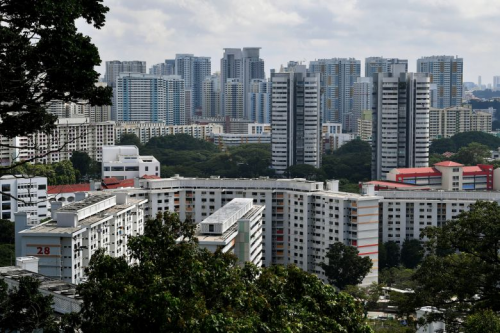 Some property investment educators and real estate agents have used scare tactics to attract customers to its investment courses.ST PHOTO: LIM YAOHUI QUOTE Irresponsible tactics to lure property investors come under fire from authorities Tan Ooi Boon 8 November 2020 The Straits Times STIMES English © 2020 Singapore Press Holdings Limited SINGAPORE - The Singapore authorities have criticised the "irresponsible" actions of some property investment educators and real estate agents who use scare tactics to attract customers to its investment courses. In particular, these people have been flagged for actively pushing the message that "HDB flats will become worthless after 99 years" on social media, so that worried owners will pay thousands of dollars to sign up for their investment courses or sell their Housing Board flats to invest in private or commercial properties. For instance, in a recent marketing video that has been uploaded on YouTube, one such "education company" interviewed Singaporeans, asking whether they knew that the value of their HDB flats would depreciate over the years . In another video, after interviewing several workers who said they had to work long hours, the presenter asked whether Singaporeans really "had to work till they drop" just to make ends meet. These advertisers then exhort viewers to sign up for their "free webinars", which promote their property investment strategies as the solution to viewers' woes. One such scheme entails using shell companies to apply for bigger loans to buy commercial properties - a scheme that is prescribed to those who may not be able to invest otherwise. In a joint statement to The Sunday Times, spokesmen for the Ministry of National Development (MND) and the Monetary Authority of Singapore (MAS) said: "It is inappropriate for any company to play up fears and uncertainties to attract people to sign up for its property investment courses. "This is an irresponsible marketing tactic. Buying of properties should not be seen as a quick or easy way to get rich." While no regulatory action is being taken now, the MAS has reminded banks to step up their due diligence on commercial property loan applications. Separately, the Council for Estate Agencies (CEA) has issued a warning to real estate agents that they must not use "inaccurate, false and misleading claims" to pressure owners to sell their HDB flats, just so they can earn more commission. This caution came after a recent spike in HDB resale transactions, which rose by 127.3 per cent in the third quarter of this year. The CEA urged the public to report such rogue agents so that it can take action against those who do not act professionally. The authorities' response came about a month after The Sunday Times' Invest flagged the worrying trend of some companies holding paid courses that purportedly teach people how to invest in properties to enjoy good rental incomes while they wait for "massive capital appreciation". These companies also claim to have investment strategies even for those who have little or even no cash. To prove such claims, some past participants were shown to be able to buy properties within days of attending such "property mastery" courses. Other success stories touted included people who were able to own multiple properties jointly in a short time. The participants are apparently taught how to set up private limited companies to buy commercial properties, so that they can get large loans from banks. On co-ownership of properties, the MAS spokesman said investors need to be aware of the financial risks. "Although they may only be part-owners, if a property loan is taken out, they can be liable for the full property loan amount in the event that other investors default or if there is insufficient rental income generated to repay the property loan," the spokesman noted. The MAS added that while investors can set up companies to buy commercial properties, it reminded banks to perform due diligence to determine if a company is engaging in substantive commercial activities or is merely a shell entity set up for the purchase of properties. In the latter case, MAS rules require banks to apply the total debt servicing ratio rules, which will usually result in lower loan amounts. The MAS also reminds banks to calibrate the loan-to-value limits for commercial property loans based on property usage. Loan amounts should be lower if the commercial property is to be leased out for rental income, compared with the case where a company buys it for its own use. Companies with genuine operations normally can get loans of up to 90 per cent of a commercial property's purchase price. A veteran financial adviser, who routinely handles such deals and declined to be named, said most experienced property investors know that banks are usually reluctant to lend more to those who intend to buy commercial properties with the sole purpose of collecting rents. "As a rule, I always advise them to have cash to pay 30 per cent of the property price. "But after this reminder from MAS, I would not be surprised if banks now ask for more down payment, especially if the purchase is made through newly set-up companies," he added. Singapore Press Holdings Limited donhay liked this post
|
|
|
Nov 9 2020, 11:11 AM
Return to original view | Post
#83
|
|
Senior Member
8,667 posts Joined: Aug 2019 From: Penang <-> Singapore
|
Continued from yesterday's topic: Why HDB flats are still the best investment for most families QUOTE Why HDB flats are still the best investment for most families Tan Ooi Boon 8 November 2020 The Straits Times STIMES English © 2020 Singapore Press Holdings Limited They take a swipe at many Singaporeans' most expensive assets - their Housing Board (HDB) flats - and say that these units will have zero value after 99 years. Using this scare tactic, these "investment gurus" then promise to teach people how to protect their wealth via property investments - after they pay for a course. Ironically, participants will be taught how to invest in commercial and private properties - both of which will also be of zero value between 60 and 99 years. So, before you get taken for a ride by such dubious experts, here are some facts on why HDB flats are still most families' best investment. Similar tenures to most new private properties Since 1967, all new sites for private homes are also given leases of up to 99 years. HDB flats are therefore no different from most condominiums here in terms of tenure. In land-scarce Singapore, it is not practical to build HDB flats that can be owned forever. Not only will their values skyrocket, but future generations may end up being driven out to sea, literally, when there is no land left for new homes. Further, the property divide will be huge. Those who can afford it will continue to keep such properties for generations, always depriving those who need affordable homes of the chance to own one. Yes, the Government can exercise land acquisition laws to take back old and decrepit freehold flats, but these will then have to be paid for at market rates - can future HDB buyers spend millions of dollars to pay for their flats? Unusually low price for Singaporeans Say what you will, but only in Singapore can you buy a brand-new four-room HDB flat in a mature estate such as Toa Payoh for about $350,000 when a similarly sized condominium unit nearby may cost four or five times more. Ask any Hong Kong resident and they will probably tell you how they wish they had similar homes built for them - most apartments there are not only more expensive than similar condominium units here, but also smaller. Singaporeans who are 55 years old and above can even apply for two-room flexi flats. While the flats have shorter leases from between 15 and 45 years, they are priced much lower, from as low as $10,000 with grants. Prime Minister Lee Hsien Loong has said many times in his National Day Rally speeches that the price of HDB flats will always be kept affordable so that the maximum number of Singaporeans can have homes they can call their own. Owing to such a non-market pricing approach, all Singaporeans who bought their flats directly from the HDB will almost certainly get a windfall when they sell their flats in the resale market. Two bites of the cherry Those who bemoan the 99-year lease of HDB flats forget one important fact: All Singaporeans are eligible to apply for new flats twice. If you bought your flat early at 25 and lived there for 30 years, you can still buy another new flat and restart your 99-year lease at the age of 55. Chances are, you will still make some money from your old flat after paying for the new one. Even if you have an extraordinarily long life and outlive your HDB leases, you do not have to worry that you have no flat to pass to your descendants - they can apply for the flats themselves, twice. Affordable maintenance fees Again, only in Singapore can owners of HDB flats enjoy a clean and well-maintained environment to live in without having to pay a lot to maintain it. Depending on the size of the flats, monthly conservancy charges are usually between $20 and $100. The best part is that whenever times are bad, many households get waivers for even these fees for a few months, especially those who live in smaller flats. They also do not have to worry when it comes to the replacement of big-ticket items such as lifts. For owners of condominium units, each household has to share and pay for expenditures for the upkeep of the estate and contribute to a "sinking fund" for upgrading purposes. This is why condominium unit owners can pay anything from about $300 to $2,000 a month for big units. Have a home and cash You have probably heard of cases involving owners of some landed homes who complain that they do not have sufficient cash at old age. While they can sell their home, this is usually easier said than done. In a downturn, it is not easy to sell one's home without possibly incurring huge losses. Even if you can do so, you have to uproot yourself and start life at a new home - something that some seniors do not enjoy doing. For owners of HDB flats, seniors who are short on cash can opt to sell part of their lease back to the HDB without needing to sell or move out of their homes. Finally, this is why the Singapore dream for many newlyweds always starts with HDB flats. For those who do well, the next phase of the dream is called "upgrading". So, never belittle the value of your HDB flat, as it has paved the way for a smoother life journey for more Singaporeans than it has been given credit for. Singapore Press Holdings Limited donhay liked this post
|
|
|
Nov 9 2020, 04:54 PM
Return to original view | Post
#84
|
|
Senior Member
8,667 posts Joined: Aug 2019 From: Penang <-> Singapore
|
QUOTE(skuba @ Nov 9 2020, 03:49 PM) Folks...for malaysians what is the best online brokerage to trade on sgx. I already have a ametritrade...but thats only useful for US stocks. Suggest FSM SG for investors with heavy weightage on S-REITs (able to subscribe to rights), otherwise, IBKR and their whitelabels (e.g. TSG) are good enough (unable to subscribe to rights, need to top-up manually, which may be bad for small-cap investors).Thanks for the help  |
|
|
Nov 12 2020, 06:12 PM
Return to original view | Post
#85
|
|
Senior Member
8,667 posts Joined: Aug 2019 From: Penang <-> Singapore
|
SATS results: https://links.sgx.com/1.0.0/corporate-annou...543469726870871
Singtel also released its result this morning. |
|
|
Nov 26 2020, 05:16 PM
Return to original view | Post
#86
|
|
Senior Member
8,667 posts Joined: Aug 2019 From: Penang <-> Singapore
|
QUOTE(abcn1n @ Nov 26 2020, 04:49 PM) Ohh, didn't know that about the rights. Thanks No, no. Need to change now.You CAN subscribe to rights via IBKR. I blindly listen to Ramjade before this, now I prove myself that rights can be subscribed. At least the application process is still ongoing. I will provide updates in IBKR thread if all else goes well. |
|
|
|
|
|
Nov 26 2020, 05:17 PM
Return to original view | Post
#87
|
|
Senior Member
8,667 posts Joined: Aug 2019 From: Penang <-> Singapore
|
QUOTE(Hansel @ Nov 26 2020, 02:18 PM) If the Msian Budget is approved this evening, the automatic moratorium of another 6 months for borrowers will benefit OCBC and UOB. SG banks strong as always. It plays an important part in my portfolio. Look forward to collect more if drop further.DBS, UOB and OCBC dropped this morning because of this report which was published yesterday : https://www.businesstimes.com.sg/companies-...stainable-rally |
|
|
Nov 26 2020, 10:14 PM
Return to original view | Post
#88
|
|
Senior Member
8,667 posts Joined: Aug 2019 From: Penang <-> Singapore
|
QUOTE(Ramjade @ Nov 26 2020, 05:28 PM) Yes can sub but will it go through? Let us know if it goes through. So you mean you got the same stuff with me appearing in your IBKR's CA Manager and then you subscribe to it but got rejected and money returned in the end? That's what happen to me last time. Paid for my rights but see not allocated anything. That's why become the sacrificial animal to india govt.  My understanding initially was that you cannot even see IBKR showing anything in the CA manager, i.e. you won't see any notice about rights subscription from the beginning. Now you are telling me something different? As for India government. India banks are notorious for their terrible credit quality. Government-backed SBI has bailed out plenty of them. (Yes bank was one of them, last year I guess, or 2 years ago?) I don't see Temasek risking their country's beloved asset. Maybe some hidden agreement (think CECA) behind? DBS will sort it out. You can tell the impact easily from various capital ratios and NPL/NPA ratios in the coming quarters. If you don't ask, the analysts will ask for you. One should not underestimate SG banks. For good or bad, they pay me 14% return in 6 months time. OCBC helps reduce my portfolio's volatility too; when the rotation happens my portfolio logs some positive return despite the sell-down in Parkway and KDC REIT. If still oligopoly, and no competitor coming tomorrow, with deposit rates higher and loan rates lower than the troika, the oligopoly is protected. Too early to judge, Ram. Looking forward, the market sees rate to go up. UOB is already seizing this opportunity to issue negative-yield bonds. The hint is there. https://www.businesstimes.com.sg/companies-...s-1b-euro-issue This post has been edited by TOS: Nov 26 2020, 10:24 PM |
|
|
Nov 27 2020, 08:20 AM
Return to original view | Post
#89
|
|
Senior Member
8,667 posts Joined: Aug 2019 From: Penang <-> Singapore
|
QUOTE(Ramjade @ Nov 27 2020, 12:17 AM) They appeared, I filled up everything. Money not even deducted. That's when I know they mentioned that ascendas have a clause saying that Malaysians need to be a accredited investor (HNWI). IBKR was nice to point out to me. Haha. Different people different risk profile. Congrats on your pick anyway. I am still on the low side of the learning curve. Er my fiverr is almost 100% up in less than 3 months I got at 114. It's now at 203.3 I will check with IBKR and see if money is deducted. Will update you guys soon. |
|
|
Nov 27 2020, 11:51 AM
Return to original view | Post
#90
|
|
Senior Member
8,667 posts Joined: Aug 2019 From: Penang <-> Singapore
|
QUOTE(aspartame @ Nov 27 2020, 11:14 AM) Ramjade bro, Fiverr has no fundamentals one... r u speculating on this? I thought u only collect divvies? Haha got caught. Ramjade Of course OCBC and the likes pay me less return than yours since it's a stable blue chips. You can't compare apples with oranges. We have different risk expectations and risk profiles. Never heard of Fiverr. Will look into it if got time. |
|
|
Nov 27 2020, 11:58 AM
Return to original view | Post
#91
|
|
Senior Member
8,667 posts Joined: Aug 2019 From: Penang <-> Singapore
|
QUOTE(Hansel @ Nov 27 2020, 11:10 AM) Bro,... why do you say this ? : Looking forward, the market sees rate to go up. UOB is already seizing this opportunity to issue negative-yield bonds. The hint is there. https://www.businesstimes.com.sg/companies-...s-1b-euro-issue. This is exactly what the bank is doing. SG banks sell bond at lower rate (in fact negative) to lock in the low rates. When rates rise, they already lock in their financing cost. So, they can borrow cheaply and then lend to others at higher rates in the future. So, high NIM as you would expect.Why would a bank want to grab the opportunity to issue negative-yielding bonds if interest rates may go up and banks can instead earn more net interest margin from a rising interest rate environment ? I have some suspicions in mind but I'd like you to clarify this,...  You may misunderstand something here. It's because interest rates go up in the future that banks want to lock in cheap financing options for them today, i.e. banks want to get money with low cost (borrow from investors at low cost (so low that in reality investors pay back the bank more than the banks lend from them, assume bond retired at par., since coupon rate is negative.) Then with cheap money, then can then lend to other fund users and borrowers at a higher rate. So, higher NIM. Did I explain well? |
|
|
Nov 27 2020, 11:34 PM
Return to original view | Post
#92
|
|
Senior Member
8,667 posts Joined: Aug 2019 From: Penang <-> Singapore
|
QUOTE(aspartame @ Nov 27 2020, 12:45 PM) What’s the catch? For negative interest bonds, the Singapore banks might as well issue as much as they can.. plus more.. right??? Not sure what you mean? No catch here. Just that Hansel probably thought banks loan to others at lower rates in the future when the article is saying that banks borrow at lower rates from others (by issuing bonds) now and lend to other at higher rates in the future. |
|
|
Nov 28 2020, 12:16 AM
Return to original view | Post
#93
|
|
Senior Member
8,667 posts Joined: Aug 2019 From: Penang <-> Singapore
|
QUOTE(aspartame @ Nov 27 2020, 11:50 PM) What I mean is isn’t it a no brainer for banks to keep issuing negative int rates bond to raise cheap cash?.. I mean, what can go wrong??? As long as got demands for their bonds, just keep issue bonds lah to raise funds to standby.. Yes of course. Banks don't simply issue bonds. They need to check their capital and asset structure etc. UOB's case is unique since, think about this, UOB does not have large operations in EU, why issue euro bonds? It's because they want to take advantage of cheaper financing available. Just that. They can issue bonds in later years or at any other time, in any currency they like. And no, not "keep issuing negative-yielding bonds". UOB just started this recently, so maiden issuance for an S-bank. Other S-banks may follow soon, or may not. It remains to be seen. Banks don't simply issue bonds, they need to make sure there is money to lend from the proceeds of the bonds, or there is a need to fulfill regulatory reserves ratio requirements, otherwise there is no reason a bond has to be issued in first place. |
|
|
|
|
|
Dec 1 2020, 04:12 PM
Return to original view | Post
#94
|
|
Senior Member
8,667 posts Joined: Aug 2019 From: Penang <-> Singapore
|
QUOTE(Hansel @ Dec 1 2020, 04:02 PM) Bros,... So, if the relocation were to come true, the delegates will come to SG, but the number of people would be too small to prop up the local economy, no? Apart from making SG reputable in handling covid well, the immediate economic impact might be too small to notice. Switzerland may not host the 2021 World Economic Forum after all, because the corona pandemic is taking such a heavy toll on the nation. The forum organizers are considering a temporary relocation to a safer place – maybe Singapore? The World Economic Forum (WEF) had opted for the reclusive site of Buergenstock for the 2021 meeting of business and political leaders instead of Davos, as it tried to make the showcase conference as safe as possible in the times of the pandemic. Now, the alternative meeting place has also come under review, according to a report by Swiss Sunday newspaper «Schweiz am Wochenende». The huge number of infections and the death toll exacted by Covid-19 in Switzerland has alerted not only foreign governments but also led to concern about participants of the WEF 2021. The organizers have started evaluating potential alternative venues for the meeting that is slated to take place in May. WEF as a Safe Place WEF founder Klaus Schwab said that Switzerland was given as the host nation, as long as the corona-situation permitted, according to «Schweiz am Wochenende». He will only allow the event to take place on Buergenstock if and when the health concerns of participants and the public have been met, adding that the WEF should not turn into a super-spreader event. According to unconfirmed media reports, Schwab held talks with representatives in Singapore https://www.finews.asia/finance/33282-world...tter-01-12-2020 Just fyi,... I loaded-up further on US Vaccine stocks last night,... What do you think? |
|
|
Dec 2 2020, 05:03 PM
Return to original view | Post
#95
|
|
Senior Member
8,667 posts Joined: Aug 2019 From: Penang <-> Singapore
|
QUOTE(Hansel @ Dec 1 2020, 04:55 PM) I look at it this way - the more int'l events are being held in SG, the more popular will SG be,... and the more investors will enter,... the effect of the macro-economy will be highly positive. And,... if you know what the WEF is,... I wouldn't call it as just a conference. You joined this year's WEF? You represent... ? I was in Switzerland at the begiining of this year,... this event is,... I can't find the word to describe it. I'm busy with Australia opening up now ! WEF is for the elite only, if I recalled correctly. |
|
|
Dec 4 2020, 10:22 AM
Return to original view | Post
#96
|
|
Senior Member
8,667 posts Joined: Aug 2019 From: Penang <-> Singapore
|
Saw this Tiger broker article. Don't seem to have anything fishy on regulation-related issues.
https://www.theedgesingapore.com/sff/fintec...w-new-investors |
|
|
Dec 4 2020, 03:40 PM
Return to original view | Post
#97
|
|
Senior Member
8,667 posts Joined: Aug 2019 From: Penang <-> Singapore
|
QUOTE(a16791 @ Dec 4 2020, 02:13 PM) Should be ok since MAS issue them a license . Like thier interface . Way advance relative to Sg's conventional brokers . Have you used or are you aware of IBKR/TSG? If so, why do you prefer Tiger over IBKR/TSG? Any specific reason for this? |
|
|
Dec 4 2020, 10:35 PM
Return to original view | IPv6 | Post
#98
|
|
Senior Member
8,667 posts Joined: Aug 2019 From: Penang <-> Singapore
|
QUOTE(a16791 @ Dec 4 2020, 04:02 PM) I'm aware but never really read about IBKR/TSG. Does ibkr / tsg allow trading in HKEX / SGX / ASX too ? Trying to have one brokerage to keep everything under one roof . Tiger quite easy for me as they uses DBS multi currency ac so fund transfer in is very easy and also is instant . Yes, many more than that. IBKR is mainly for large cap and HNWI investors, warp account or corporate/institutional clients whereas their whitelabels like TSG (Tradestation Global) are for small investors who don't want to pay the monthly below balance fee, but they come with slightly high commissions per trade of 3.75 SGD per SGD trade for SGX (1.5 USD per USD trade for US market) You can check the rest here. https://www.tradestation-international.com/...ng-commissions/ No worries about using IBKR. You can fund SGD via DBS by FAST, free of charge. As for withdrawals, IBKR only supports wire transfer, need to check whether DBS has charges for remittance out of IBKR into it. I can't look for a link on charges on DBS official page. My understanding is there are charges for Maybank SG (10 SGD per transaction) but none for CIMB SG. If you have SG address and open IBKR account with it, like one of my friend (lurker of this forum), then your default IBKR bank account number you use to transfer your money to will be a DBS bank account of IBKR. If this is the case life is very easy for you since you are also DBS bank user. For other users like me from Malaysia registered with a MY address, we will use IBKR's Citibank account instead (still a SGD account, Citibank N.A. Singapore's account). You are right that brokerage under one roof is indeed good, like what Hansel said. Makes management easy. This post has been edited by TOS: Dec 4 2020, 11:39 PM |
|
|
Dec 4 2020, 10:57 PM
Return to original view | IPv6 | Post
#99
|
|
Senior Member
8,667 posts Joined: Aug 2019 From: Penang <-> Singapore
|
The digital bank licenses are also awarded today.
https://www.businesstimes.com.sg/banking-fi...ng-coveted-full iFAST surprisingly lose in the final round. Guess its price set for correction soon. Majority of the awardees are SG homegrown companies, Singtel, Grab, Sea. iFAST loses out due to size and scale I guess. |
|
|
Dec 5 2020, 08:49 AM
Return to original view | IPv6 | Post
#100
|
|
Senior Member
8,667 posts Joined: Aug 2019 From: Penang <-> Singapore
|
|
| Change to: |  0.0360sec 0.0360sec
 0.61 0.61
 7 queries 7 queries
 GZIP Disabled GZIP Disabled
Time is now: 5th December 2025 - 07:22 AM |
 Quote
Quote