

 Military Thread V17
|
|
 Jul 10 2015, 06:32 PM Jul 10 2015, 06:32 PM
Return to original view | Post
#221
|
 
Newbie
0 posts Joined: Dec 2014 
|
National scene: Navy to build base in West Kalimantan The Indonesian Military (TNI) plans to construct a new naval base in Sambas, West Kalimantan, near the border with Malaysia’s Sarawak, a senior military official has said. Deputy Navy chief of staff Vice Adm. Widodo said on Wednesday night that the naval base could strengthen the country’s defense in border areas. Widodo also said that the Navy planned to make its naval base in Pontianak a main naval base later this month. With the change in status, the naval base in Pontianak would be put under a rear admiral from a colonel today. Pontianak and Sambas are close to the border area and the upgrading of their status could strengthen their capacity. President Joko “Jokowi” Widodo has pledged to turn the country into a maritime power. http://m.thejakartapost.com/news/2015/07/1...kalimantan.html |
 Quote
Quote|
|
Jul 11 2015, 01:51 PM
Return to original view | Post
#222
|
|
Newbie
0 posts Joined: Dec 2014
|
Ukraine Wants 1,000 Javelin Systems in Exchange for Nuclear Warheads  KIEV (Sputnik) — Javelin is the American portable anti-tank missile system of the third generation, designed to target armored vehicles and low-flying targets. "We need to understand that we must be prepared for any situation [in the southeast]. And also need to understand that Ukraine, which gave 1,240 nuclear warheads, should have the right to receive, if necessary, at least a thousand Javelins", Chaly was quoted as saying by Ukraine's Mirror Weekly newspaper on Friday. On Thursday, US Joint Chiefs Of Staff Chairman Nominee Joseph Dunford said in his confirmation hearing that it would be “reasonable” to provide Ukraine with anti-tank missiles. After Kiev began a military operation to suppress independence supporters in Ukraine's southeast in April 2014, Ukrainian authorities have repeatedly asked western states for lethal aid. Washington has provided non-lethal military assistance to Ukraine, but has stopped short of providing lethal aid over concerns it would escalate the conflict. In April, US Ambassador to Russia John Tefft said that the United States was not going to deliver the Javelin system to Ukraine. The European Union largely opposes Washington arming Ukraine with lethal weapons. http://sputniknews.com/politics/20150711/1024485322.html |
|
|
Jul 11 2015, 02:09 PM
Return to original view | Post
#223
|
|
Newbie
0 posts Joined: Dec 2014
|
5 insane military projects that almost happened 1. Winston Churchill’s plan for a militarized iceberg  This is a rendering of what Habakkuk may have looked like Photo: acidpotion.com Everyone knows that Winston Churchill is a certifiable badass — his military strategy in WWII led to the Allied victory over the Nazi Regime, and has secured him a spot amongst history’s greatest leaders. What few people know, however, is that Churchill’s most glorious military scheme never saw the light of day — and for good reason. It was insane. What exactly was the Bulldog’s grand plan, you ask? To create the largest aircraft carrier the world had ever seen, and to make it out of ice. Yes, you read that right. Churchill’s dream was to create a 2,000 foot long iceberg that would literally blow the Axis powers out of the water. The watercraft, dubbed Project Habakkuk, was going to be massive in every way: the construction plans called for walls that were 40 feet thick, and a keel depth of 200 feet — displacing approximately 2,00,000 tons of water. Habukkuk was no ice cube. Eventually the Brits realized that frozen water may not be the hardiest building material, and opted to replace it with pykrete, a blend of ice and wood pulp that could deflect bullets. Despite the fact that this “plan” sounds like something out of a bad sci-fi movie, Habakkuk almost happened. It wasn’t until a 60 foot long, 1,000 ton model was constructed in Canada that people realized how freaking expensive this thing would be — the 1940s were a strange time. A full-sized Habakkuk would cost $70 million dollars, and could only get up to about six knots. And at the end of the day, Germany could still potentially melt the thing, though it would probably take the rest of the war to make a dent in this glacier. 2. Napalm-packing suicide bomber bats  3. The Gay Bomb that would cause enemies to “make love, not war” Hindsight is always 20-20, but how anyone took this “military strategy” seriously is completely beyond us. In quite possibly the least politically-correct display of derring-do in American history, the U.S. prepared to take its enemies out in a way they would never expect — by turning them gay. Let’s take a moment to let that sink in. The United States of America, one of the most powerful countries in the world, was convinced that getting the enemy to “switch teams” was the key to military prowess. Oh, and did we mention this happened in 1994? The Wright Laboratory proposed a project that would require six years of research and a $7.5 million grant to create this bomb, along with other bizarre ideas — including as a bomb that would cause insects to swarm the enemy. So they really had the best and brightest American minds on this thing. The goal was to drop extremely powerful chemical aphrodisiacs on enemy camps, rendering the men too “distracted” to um … leave their tents. The project was still considered viable in 2002, when the proposal’s findings were sent to the National Academy of Sciences. At the time the Pentagon and the Department of Defence held that “homosexuality is incompatible with military service,” consistent with Clinton’s infamous “Don’t Ask, Don’t Tell” policy, so maybe the bomb wasn’t completely crazy for the time period? Just kidding. The gay bomb never got off the ground because researchers at the Wright lab discovered no such “chemical pheremones” existed, leaving the crazy idea with zero means to execute it. The Wright Lab did, however, win the IG Nobel Peace Prize in 2007 for its efforts, a tongue-and-cheek gesture from the Annals of Improbable Research. 4. B.F. Skinner’s pigeon-guided missile system  Photo: the brigade.com WWII is a treasure trove of weird military experiments, and famed psychologist B.F. Skinner’s contribution to the American cause may be one of the most bizarre. The plan? Place live pigeons inside missiles, and train them to direct it to the correct target, ensuring that no target was missed. The target would be displayed on a digital screen inside the missile, and the pigeon would be trained to peck the target until the bomb would correct its course and start heading in the right direction. Despite pretty hefty financial investment in the idea, it was ultimately decided that the time it would take to train the pigeons, and the fact that missiles would have to be updated with tiny screens for them to peck at, wasn’t worth the trouble. 5. America tried to take out the Viet Cong with clouds  This is one experiment that actually did happen, though that doesn’t make it any less ridiculous than our other contenders. When people think of the American military’s methods of chemical warfare in Vietnam, Agent Orange is what immediately comes to mind — but this chemical wasn’t the only weapon the U.S. employed in its battle against the Viet Cong. The CIA developed a strategy called cloud seeding in 1963, which would release chemicals into the air that would manipulate weather patterns, causing unusual amounts of rainfall for the surrounding area. And we’re not talking your run-of-the-mill thunderstorm, either. Vietnam gets a ridiculous amount of rain already (remember that clip from Forrest Gump?), so the U.S. needed weather that would literally wash away the Ho Chi Minh Trail. Or at least try to. The mission, called Operation Popeye, involved dumping iodine and silver flares from cargo planes over Cambodia, Laos, and Vietnam. Scientists predicted that these chemical agents would cause a surge in rainfall and even extend the monsoon period, screwing with the Viet Cong’s communication networks and basically making things more unpleasant for everyone involved. The results weren’t fantastic, but the U.S. didn’t roll over. The operation continued for five years, undertaking over 2,000 missions and releasing nearly 50,000 cloud-seed chemicals throughout the trail. Lack of results aside, the dedication is still impressive. http://www.wearethemighty.com/insane-milit...rojects-2015-07 |
|
|
Jul 11 2015, 07:10 PM
Return to original view | Post
#224
|
|
Newbie
0 posts Joined: Dec 2014
|
The Myth of the Iranian Military Giant  QUOTE Quantitatively, Iran’s military expenditures have sunk far below those of its Gulf rivals. In 2014, according to the Stockholm International Peace Research Institute (SIPRI), more than 25 percent of Saudi government spending was devoted to beefing up its military assets — expenditures that totaled more than $80 billion. Along with the United Arab Emirates (UAE), which spent nearly $23 billion, the two Gulf Arab countries comprise well over half the $173 billion in military expenditures spent by all Middle Eastern countries that year. Comparatively, Iran’s military expenditures failed to measure up. During 2014, Iran’s military spending was about $15 billion, which comprised about 9 percent of total military spending in the Middle East. That’s a mere fraction of Saudi military spending and about two-thirds of the UAE’s. The Gulf Cooperation Council states — Bahrain, Kuwait, Oman, Saudi Arabia, and the UAE — outspend Iran on arms by a factor of 13. This imbalance is also not merely a current phenomenon. In fact, according to SIPRI’s database, even prior to the arms embargo on Iran, which went into effect in 2010, Saudi Arabia’s military expenditures in the past two decades consistently doubled or tripled the amounts Iran was outlaying to its own military. The new trend, then, is not that Saudi spending has overtaken that of Iran (which has historically been the case during the era of the Islamic Republic), but rather that Saudi military spending has skyrocketed since 2005 to the point where it now dwarfs that of its regional rival — Iran. Qualitatively, the story’s the same. As one CSIS report notes, “The Arab Gulf states have acquired and are acquiring some of the most advanced and effective weapons in the world. Iran has essentially been forced to live in the past, often relying on systems originally delivered at the time of the Shah.” Saudi spending is used to procure the most modern weapons systems, while Iran is left with beleaguered and aging weapons systems ill-suited for state conflict. For the Gulf Arab countries, this includes some of the most modern American military hardware, such as the latest fighter jets from Boeing and Lockheed Martin, Predator drones, Apache attack helicopters, Patriot air-defense systems, and stockpiles of the latest missiles, bombs, and other weapons. As the Christian Science Monitor reported in May, there is a virtual rush to buy high-tech American weapons systems to protect against a rival Iran. Meanwhile, Iran is left with weapons systems that border on obsolete. Relying on Shah-era military hardware and unable to find a reliable partner overseas for weapons purchases, Iran has been forced to rely on its own industrial base to make any substantive advancements to its military weapons programs. While it does retain the region’s largest stockpile of ballistic missiles, expert opinion remains that Iran has been less than successful in doing so, leaving it in the disadvantageous position of being both outspent and outarmed by its regional adversaries. https://foreignpolicy.com/2015/07/10/the-my...military-giant/ |
|
|
Jul 11 2015, 08:04 PM
Return to original view | Post
#225
|
|
Newbie
0 posts Joined: Dec 2014
|
McMaster engineer explores concealed weapon detection in NATO project  A military personnel participates in a concealed weapon detection project at Natalia Nikolova's lab at McMaster University. The blue foam forms an anechoic chamber designed to absorb electromagnetic waves so outside sources do not interfere with the readings during the research. (Supplied by Natalia Nikolova ) A McMaster engineer is taking part in a NATO-funded project to develop portable devices that help military and civilian security personnel detect concealed weapons with radar technology. In a three-year project that launches this month, Natalia Nikolova, an electrical and computer engineering professor, will be working with researchers from Canada and Ukraine to design devices that use radar signals to analyze the materials carried by a person. The technology — which can be built into a military vest or a tripod, for example — is designed to emit radio waves that reach a person. The waves that bounce back will carry unique information that can be analyzed by computers. "This radio wave, as we say in radar terminology, interrogates the person and it carries back information from this target," Nikolva explained. The devices can theoretically use algorithms based on neural networks to differentiate normal reflections of a human body from abnormal ones. The technology has many applications, Nikolova said, such as at airports, border crossings and large public venues that require security screening. Nikolova said her previous prototypes have a detection range of up to 3 metres, which does not provide enough safe distance for security personnel if there is a risk of an explosive device. The latest project aims to increase that distance to as far as 15 metres. 1st NATO grant for McMaster The radar technology that was used as early as the 19th century is now commonplace: think marine radars, microwave ovens, and police radar guns that catch speeding cars. Detection using radar technology — described as a type of covert screening — is particularly useful on uncooperative threats, Nikolova said. "But it doesn't always have to be covert. You can always plaster signs," she said. The privacy concerns caused by many detection devices are minimal in this case, Nikolova said, because the frequency range used isn't high enough to generate an image of the person. Nikolova said her designs are different from a full-body scanner seen at airport screening points, although both use radar technology. The scanner uses high frequency waves to generate an image and requires trained human operators to make a decision. "In our case, it's going to be a computer that is analyzing features in signals," she said. Nikolova's team received $766,300 from NATO's Science for Peace and Security program, which funds multi-year research, training courses and workshops related to security. The program describes itself as "the first concrete link" between NATO and a partner by supporting scientific collaboration between NATO countries and partner countries. The devices developed during the project will be tested at several sites, including the Kyiv International Airport. The grant also marks the first time a McMaster researcher has received NATO funding, the university said. http://www.cbc.ca/news/canada/hamilton/new...oject-1.3147161 |
|
|
Jul 11 2015, 08:11 PM
Return to original view | Post
#226
|
|
Newbie
0 posts Joined: Dec 2014
|
New Russian 'Storm' Supercarrier Design Wows Chinese Media  The article, published in the Russian edition of the official organ of China's Communist Party, which is said to provide direct information on the policies and viewpoints of the Chinese government, states that the prospective supercarrier was shown off at the Army 2015 military expo in Kubinka outside Moscow last month. People's Daily notes that the Russian Navy's scientific-technical departments, Russian research institutes and the defense industry as a whole united their efforts toward creating the new supercarrier design. The paper notes that designers took account of Soviet experience in designing the Admiral Kuznetsov, while accounting for the technical and scientific progress made by Russian designers since then, and an analysis of the next generation of Western aircraft carriers, resulting in a project which "possesses a continuity of design, originality, as well as features which are discernably Russian." The newspaper takes note of four peculiarities of the 'Storm' design. To begin with, it points to the supercarrier's multifunctional character as an "airport at sea," which is a step away from Soviet-era carrier designs, whose anti-submarine, anti-ship and air defense focus effectively made them aircraft carrying cruisers instead of full-on aircraft carriers. The 330 meter-long, 40-meter wide 23000E, with a draught of 11-meters, is designed to be capable of carrying 80-90 aircraft, including the new T-50 PAKFA, as opposed to the Kuznetsov's 41-52 fixed and rotary wing aircraft. Secondly, People's Daily points out the aeronautics capabilities' focus of the design. "For example, the maximum width of the flight deck exceeds 80 meters; the design includes a double deck composition taken from British designs, along with plans for the creation of a smooth flight deck." Here too, according to the paper, the 'Storm' shows "Russian scientists' innovative ability to use their country's [design] inheritance and to borrow from past experience." Thirdly, the paper notes that the hull design of the new carrier is designed in such a way as to reduce drag resistance by 20 percent, allowing the ship to sail faster (up to 30 knots) while reducing fuel consumption and increasing the carrier's independent seafaring ability (up to 120 days). Finally, the newspaper makes note of the design's ability to carry early warning aircraft onboard, another innovation for Russian carrier design. Russia may start building a new aircraft carrier for its Navy after 2025, a Russian military industry source said Monday. The People's Daily article concludes with a note of guarded optimism, stating that there are still many questions yet to be resolved with regard to the future of the 'Storm', including technical and design questions (such as whether the ship will receive gas turbine or nuclear powered engines) and financial concerns. Citing Russian media and accounting for construction time, the article's author believes that from further design to construction to commissioning, the new Russian carrier is unlikely to emerge before the year 2030. http://sputniknews.com/military/20150711/1024496827.html |
|
|
Jul 12 2015, 05:26 AM
Return to original view | Post
#227
|
|
Newbie
0 posts Joined: Dec 2014
|
Sampaguita/SC72 And A South China Sea Peace – Analysis  http://www.eurasiareview.com/10072015-samp...peace-analysis/ |
|
|
Jul 12 2015, 05:31 AM
Return to original view | Post
#228
|
|
Newbie
0 posts Joined: Dec 2014
|
Turkish Military Cooperation Prompts Russian Military Moves in the Caucasus
 QUOTE Russia and Turkey In April, Russia announced plans to strengthen its military bases in Armenia, Abkhazia, South Ossetia and Kyrgyzstan. The move may be coincidental, but Moscow also recently provided Yerevan with a $200 million loan for military equipment — almost half of Armenian annual defense spending. In addition, Moscow is considering stationing Iskander surface-to-surface ballistic missiles in the country. Moscow may be using Yerevan’s fear of an alleged threat to Armenian security from cooperation between Azerbaijan, Turkey and Georgia as grounds for Russia's increased military presence, as it has recently done in Central Asia by trumpeting the security threat emanating from the Islamic State. Overall, media coverage of the military drills and subsequent comments by the ministers of the three cooperating countries have been limited to the need to provide security to the South Caucasus region by holding military conferences and sharing military expertise. Beyond this discussion, however, a combination of other more important factors are playing into the rationale for staging joint exercises. Lately Turkey has been reconsidering its geopolitical stance in the South Caucasus. Ankara fears Russia's growing military presence in the South Caucasus following the Russia-Georgia war as well as the increase of Russian forces in Georgia's two breakaway territories. In 2010, Russia extended the lease of the Gyumri military base in Armenia through 2044, and there have been constant drills in Russia-backed separatist regions in the South Caucasus. To counterbalance the Russians, the Turks need to strengthen their military partnership with Georgia and Azerbaijan. However, considering the logistics, ease of access to the new military equipment and the available resources, Azerbaijan still depends heavily on Moscow. Approximately 85 percent of its military supplies come from Russia, and that is unlikely to change. https://www.stratfor.com/analysis/turkish-m...-moves-caucasus This post has been edited by BorneoAlliance: Jul 12 2015, 05:31 AM |
|
|
Jul 12 2015, 10:48 AM
Return to original view | Post
#229
|
|
Newbie
0 posts Joined: Dec 2014
|
Competition for China's future helicopter being held in Beijing  The model of the JY-8 helicopter displayed during the Second China Helicopter Exposition in 2013. (Internet photo) The Future Helicopter Designer Competition held which began on July 8 in Bejing and is sponsored by the Aviation Industry Corporation of China will decide what kind of military helicopter the country will develop over the next five years, reports state-run Global Times. Wu Ximing, the chief helicopter designer of AVIC; Hong Jiao, the director of AVIC's helicopter Research and Development Center; and his deputy, Xu Chaoliang are the three major competitors. Each will have to present their ideas of what China's future helicopter should look like before Aug. 20. The three best designs will be chosen and the winner will be awarded during this year's China Helicopter Exposition in Tianjin. Various types of helicopter concepts were shown at the previous exhibition. During the second China Helicopter Exposition held back in 2013, the model of an unmanned helicopter called JY-8 was displayed to the public. Unlike most helicopters, the JY-8 does not have a tail rotor. AVIC claims that it can reach a maximum speed of 400 kilometers per hour. AVIC also presented a tiltrotor aircraft. Called the Blue Whale, it resembles the Bell Boeing V-22 Osprey of the United States. This aircraft is developed with a take-off weight of 60 tons, and payload of 20 to 30 tons. It is estimated to have a speed of 538 kilometers an hour and a range of 3,100 kilometers. http://www.wantchinatimes.com/news-subclas...=20150712000017 |
|
|
Jul 12 2015, 10:51 AM
Return to original view | Post
#230
|
|
Newbie
0 posts Joined: Dec 2014
|
Chinese Version of Russian Armored 'Bumerang' Reaches Testing Phase  China is finalizing the development of the VP-10, an analogue of the sophisticated Russian-made armored personnel carrier Bumerang (Boomerang), the Russian newspaper Rossiyskaya Gazeta reported. China North Industries Corporation (NORINCO) has already presented the prototype of the VP-10 at one of the country's military exhibitions. Its design is similar to the Bumerang armored vehicle. For example, the NORINCO VP-10's engine is installed at the front of the hull, and the troops can leave the vehicle via rear doors, or roof hatches. The new Chinese armored vehicle is expected to be equipped with different types of combat modules. A lighter version of the machine will be capable of carrying between ten and twelve fully kitted soldiers. A version of the vehicle with heavy weapons on board can only carry eight soldiers. Like the Bumerang, the amphibious NORINCO VP-10 will have an 8x8 configuration and can be transported by aircraft. In addition to being put on service in the Chinese army, the new armored vehicle is due to be supplied to African and Latin American countries. According to the military-informant.com website, the NORINCO VP-10 is currently undergoing a series of tests before being delivered to an unnamed customer. http://sputniknews.com/military/20150711/1024500887.html |
|
|
Jul 12 2015, 06:28 PM
Return to original view | Post
#231
|
|
Newbie
0 posts Joined: Dec 2014
|
Turkey's ASELSAN has signed an agreement with Saudi Arabia's King Abdulaziz City for Science and Technology, and TAQNIA Defense and Security Technologies  Turkish defense systems producer has signed a tripartite agreement with two Saudi companies. The Turkish Armed Forces Foundation company ASELSAN and the two Saudi firms, King Abdulaziz City For Science and Technology (KACST) and TAQNIA Defense and Security Technologies (DST), a subsidiary of the Saudi development and investment company, have signed a Memorandum of Understanding, ASELSAN announced in an official statement Friday. Under the deal, the three companies will further increase cooperation in coordination with government agencies. The agreement was signed by Saudi Arabia’s Prince Dr. Turki bin Saud bin Mohammad al-Saud, president KACST, Dr. Hamad al-Yousefi, chief executive officer TAQNIA DST and Oguz Sener, ASELSAN vice president in the presence of Turkish ambassador to Saudi Arabia, Yunus Demirer, the statement said. “The agreement is a start of an important strategic partnership that will have a positive impact on technology and innovation capabilities in the Kingdom,” al-Saud said in the the statement. “The cooperation defined in this agreement will contribute to the Kingdom's defense and security,” Sener said in the statement. http://www.worldbulletin.net/news/162026/t...deal-with-saudi |
|
|
Jul 13 2015, 10:50 PM
Return to original view | Post
#232
|
|
Newbie
0 posts Joined: Dec 2014
|
QUOTE(waja2000 @ Jul 13 2015, 06:15 PM) Shock watch ”The Last Ship“ season 2 Episode 5 Just finished watching. Rogue astute sub versus nathan james destroyer     |
|
|
Jul 14 2015, 04:11 PM
Return to original view | Post
#233
|
|
Newbie
0 posts Joined: Dec 2014
|
Stealth super bomber a new focus of China’s growing military might  CHINA has resolved to build a new, long-range stealth strike bomber capable of extending its reach deep into the Pacific as the emerging world power continues to flex its new-found muscle. The state-run China Daily newspaper last week devoted a full page feature article to the military talks which focused on future developments for the People’s Liberation Army and its air force (PLAAF). “The air force does need an intercontinental strategic bomber capable of penetrating an enemy’s air defences,” the article reads. Chief among the stated requirements for the new design is the ability to carry 10 tons of bombs and missiles a minimum of 8000km without refuelling. From China’s southernmost Hainan province, Darwin is 4100km distant, Perth is 5600km and Sydney is 7300km. The major US mid-Pacific military base at Guam would also be well within reach. Growing reach ... The operational radius of China’s existing H-6K bombers when flying out of new air bases now being built in the Spratly Islands. Source: News Corp Australia These distances will soon be greatly diminished once several new military air bases being built on artificial islands in the disputed Spratly Islands are completed. Defence analysts noted late last year the rapid construction of these new military bases would — for the first time — bring Australian cities within reach of existing Chinese bombers — the much upgraded, though antiquated, H-6K. This significance has been reflected in the PLAAF being designated a “strategic force”. This title had previously only applied to the PLA’s Second Artillery Corps which is responsible for the nation’s intercontinental ballistic missile arsenal. But the China Daily article also acknowledged the difficult task which lay ahead, stating such an aircraft would require “a state-of-the-art structure and aerodynamic configuration as well as a high-performance turbofan engine”. “All of these are major problems facing the Chinese aviation industry,” the publication’s deputy editor Wang Yanan added. “I don’t think these difficulties can be resolved within a short period of time.”  Evolving concepts ... This concept art shows a futuristic Chinese tactical bomber over disputed islands in the South and East China Seas. Any strategic bomber would be much larger. Source: Supplied China has been rapidly modernising and expanding its navy in recent years — fielding its first aircraft carrier as a steady stream of new warships and submarines enter service. The China Daily article and a series of new official reports — including China’s May 2015 Defence White Paper — appears to indicate the air force is set to receive similar attention. The United States, with its ever-tightening budget situation, runs the risk it will fall into the same economic trap it set for the former Soviet Union — engaging in an unaffordable arms race to keep abreast of spiralling technological developments. http://www.news.com.au/technology/innovati...k-1227441064314 |
|
|
Jul 14 2015, 04:19 PM
Return to original view | Post
#234
|
|
Newbie
0 posts Joined: Dec 2014
|
Putin Rebuilds Russia’s Military While US Strategy Is All Over Map 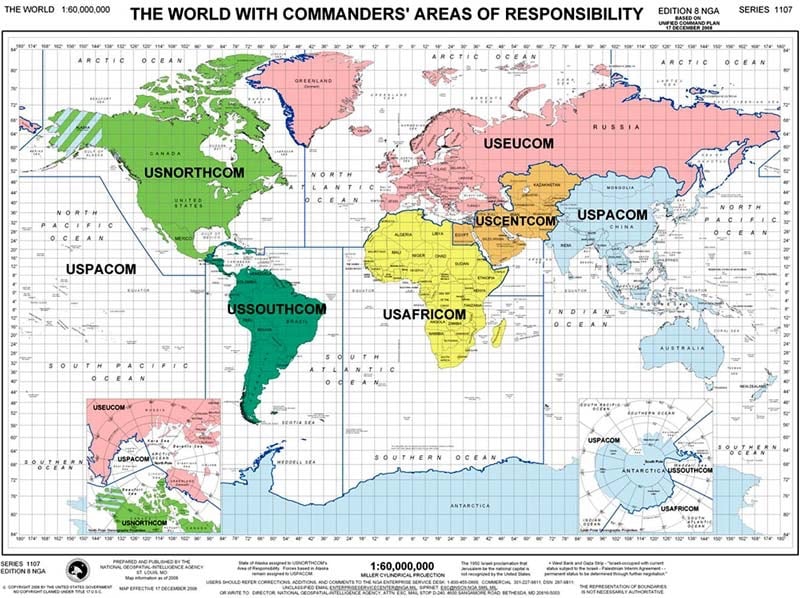 QUOTE In contrast to Putin’s laser-like focus on these issues, Washington is all over the map. In Asia, Washington ignores the impact of China’s aggressive posture in the South China Sea. The countries with claims in the South China Sea are turning to Tokyo because Tokyo is locked into competition with Beijing for dominance in Southeast Asia’s markets. However, unlike Beijing, Tokyo has no territorial ambitions in the region. Tokyo’s military equipment — submarines, aircraft — is priced to sell in a region where US equipment is widely seen as over-priced, and US assistance is tied to ‘democratic expectations’ and human rights performance. Thus, Tokyo’s energetic military and economic assistance to its non-Chinese neighbors is constraining Beijing’s actions, largely without US involvement. In the Middle East, Washington seems unable to decide who its friends and enemies really are. On the one hand, Washington ignores the hard facts. Turkey, with help from Qatar and wealthy Sunni Arabs, sponsored the creation of the Caliphate (or Islamic State –ISIL) to fight Iran’s Shiite clients in Syria and Iraq. On the other, Washington forgets that, whether the United States intervenes in this fight or not, Iran is in a fight for its life. It must fight to protect its clients and to prevent ISIL from reaching its borders. Building effective military power takes time, resources and imagination. Now is the time to build for the future. Putin gets it. Do we? http://breakingdefense.com/2015/07/putin-r...s-all-over-map/ |
|
|
Jul 14 2015, 04:24 PM
Return to original view | Post
#235
|
|
Newbie
0 posts Joined: Dec 2014
|
Meet the Future Warriors of World War III  QUOTE Not everyone fighting in the next world war will look like a soldier wearing an official military uniform. Some will work from computer consoles to infiltrate military networks. Others will become insurgents who strike swiftly at vulnerable targets and then vanish within the civilian population. Still more will carry military weapons and fight like trained warriors, but won’t wear the national flag of any particular country. And a few may take advantage of the chaos of war to kill for their own purposes. That diverse characters in the novel “Ghost Fleet” represent a combination of old and new forces on the imagined battlefields of World War III. The novel represents a work of fiction based on the real-world expertise of coauthors Peter Singer, a strategist and senior fellow at the New America Foundation, and August Cole, a writer, analyst and former journalist who covered the defense industry for the Wall Street Journal. Singer and Cole wrote “Ghost Fleet” as a techno-thriller designed to help readers consider the technological and socioeconomic forces shaping the next world war between great powers such as the U.S., China and Russia. Many of the characters in “Ghost Fleet” were inspired by the real-life people interviewed by Singer and Cole, including a Chinese admiral who consistently quotes Sun Tzu’s “The Art of War” and a U.S. Navy ship captain who tries to juggle his military duties and family life. But perhaps the most intriguing characters in the novel don’t always answer to the traditional military chain of command. Nor do they always wear uniforms when striking at their enemies. (WARNING: Some spoilers for “Ghost Fleet” follow.) http://blogs.discovermagazine.com/lovesick...i/#.VaTGgErXerU |
|
|
Jul 14 2015, 07:10 PM
Return to original view | Post
#236
|
|
Newbie
0 posts Joined: Dec 2014
|
More planes, more missiles, more warships: Iran increases its military budget by a third  QUOTE The order clearly shows that Iran is determined to expand the quality and the quantity of its armed forces. According to the latest report by the International Institute for Strategic Studies, Iran has about 500,000 active members in the armed forces and a budget of over $14 billion. Under the Sixth Development Plan, the administration is required to allocate 5% of the country’s entire budget to defense purposes. In this year’s budget, this means that at least $17 billion will go to the armed forces. However, considering the wide reach of the Iranian armed forces within the Middle East, this amount appears quite negligible. The head of the parliament's Defense Committee, Esmaeil Kousari, said regarding this issue in 2014, “Based on the research done, currently Iran has the lowest defense budget in the region. This amount is only enough to pay the salaries of the employees.” Nonetheless, in this year's budget bill, Rouhani’s administration increased the defense budget by 32.5% compared to the previous year. http://www.al-monitor.com/pulse/originals/...-military.html# |
|
|
Jul 14 2015, 07:13 PM
Return to original view | Post
#237
|
|
Newbie
0 posts Joined: Dec 2014
|
Serbia Develops State-of-the-Art, Armata-Style Battle Tank  Serbia has presented a concept of the М-20UP-1, the country's "tank of the future", at the Partner 2015 military exhibition in Belgrade. Designers said that they were inspired by the Russian-made Armata tank when developing the М-20UP-1, according to the Serbian news website Vecernje Novosti Online. The project cost of the production of one M-20UP-1 stands at five million euros. Goran Stojanovic, head of the working group to develop the tank, said that the М-20UP-1 will not compete with the Armata tank. "Our tank will be closer to the [Russian-made] T-90 tank in terms of combat capabilities. We are short of money, and our economic potential is not developed enough to let us compete with the Russians. But by using a design [resembling] those of advanced tanks across the world, we have developed the weapon of the future: cheap, modern and efficient," Stojanovic said. As in the T-14 Armata battle tank, the М-20UP-1's crew of three is securely enclosed in a multi-layer armored capsule, separated from the ammunition container. The Serbian tank also features an unmanned, digitally controlled turret, which is remotely controlled by a crew member located in the aforementioned capsule. The tank's 125mm smooth-bore gun is also digitally operated from the capsule via high-resolution cameras. The turret carries a total of 48 rounds of ammunition, including ready-to-use ones. The gun can also fire laser-guided missiles. The М-20UP-1 is equipped with electric transmission, which engineers said will help significantly reduce the power loss and will add to the tank's stealth characteristics. It reportedly took eight months to finalize the М-20UP-1, which was developed both by young and veteran Serbian engineers, who were engaged in the creation of the M-84 battle tank. The М-20UP-1 will form a base platform for other Serbian armored vehicles, as is the case with the Russian-made Armata platform. Earlier this year, similar plans were announced by India, which seeks to use the platform of its planned battle tank for as many as 11 different tracked vehicles. http://sputniknews.com/europe/20150710/1024464826.html |
|
|
Jul 14 2015, 07:20 PM
Return to original view | Post
#238
|
|
Newbie
0 posts Joined: Dec 2014
|
PLA's Type 075-class amphibious landing helicopter assault ship revealed  A photo of the Type 075-class amphibious landing helicopter assault ship model. (Internet photo) Photos of a model of China's new Type 075-class amphibious landing helicopter assault ship have recently been revealed on a Chinese military website, reports Hong Kong-based Phoenix Television on July 12. With a displacement of 40,000 tons, the Type 075-class amphibious landing helicopter assault ship has four take-off and landing spots dedicated to helicopters. Below the hanger of the vessel, there is a huge well deck designed to carry an unknown number of domestic air-cushioned landing craft. It looks very similar to the 25,000 ton amphibious landing helicopter assault ship displayed at the International Defence Exhibition held at Abu Dhabi in 2012. That craft, however, was designed primarily for the overseas market while the 40,000-ton vessel is being developed for the PLA Navy. China would have the ability to launch various types of helicopters from the Type 075-class amphibious landing helicopter assault ship for attacks on enemy gound forces, naval vessels and submarines in both the East or South China Sea. Should Beijing want to carry out amphibious warfare in those regions, the Type 075-class amphibious landing helicopter assault ship can even serve as command vessel to coordinate the operations of PLA ground, air and naval forces. The display of the Type 075's model indicated that construction of the vessel had begun already. It will soon appear on the building slip of a unknown shipyard in China, according to the Phoenix Television. http://www.wantchinatimes.com/news-subclas...=20150714000020 |
|
|
Jul 14 2015, 08:35 PM
Return to original view | Post
#239
|
|
Newbie
0 posts Joined: Dec 2014
|
MAXFAS exoskeleton improves soldiers' aim
 QUOTE Mention military exoskeletons and it will likely conjure up visions of something like Iron Man, that gives a soldier super strength or the ability to march all day with a pack the size of a piano. However, exoskeletons can provide more than brute strength. Taking a page from therapy exoskeletons, Dan Baechle, a mechanical engineer at the US Army Research Laboratory (ARL), is developing the MAXFAS exoskeleton that doesn't make soldiers stronger, but better shots instead. Despite (or perhaps because of) a century of technological progress, the life of the combat infantryman remains a hard, physically-exhausting one. Carrying anything up to 100 pounds of gear, soldiers must march, crawl, and run across broken terrain day and night in all weather. Worse, despite fatigue and anxiety, they have to able to shoot quickly and accurately at any time – even when failure to do so can cost time, waste ammunition, or lose lives. Part of the solution is that marksmen are as much made as born. With the right equipment and proper training, poor shots can become better ones, and good shots can become excellent. The trick is to train the shooter's hand so it remains steady during the critical moments. This is the purposes of MAXFAS. http://www.gizmag.com/maxfas-exoskeleton-i...iers-aim/38314/ |
|
|
Jul 14 2015, 08:43 PM
Return to original view | Post
#240
|
|
Newbie
0 posts Joined: Dec 2014
|
Texans monitor Jade Helm military training amid fears of government plot  QUOTE A counter-surveillance operation called Counter Jade Helm has been set up and volunteers are aiming to locate, track and observe US soldiers as they carry out training drills. The volunteers will gather intelligence that will be relayed to a headquarters in Arizona and posted on a website. “Why [Jade Helm] exists, we’re not quite certain,” said Eric Johnston, who will run surveillance teams in central Texas. Counter Jade Helm also plans missions in California, Utah, Nevada, Arizona, New Mexico, Louisiana, Mississippi and Florida. “They’re not inviting any media to embed with the units,” said Johnston, “and it’s important for Americans to step up and look around and say, ‘OK, what are you doing?’ ‘Well, it’s secret.’ Not if it’s in public – it’s no longer secret.” They’re not inviting media to embed with the units, and it’s important for Americans to say, ‘OK, what are you doing?' Eric Johnston The two-month exercise has been described by the US military as a routine, though unusually large, training event for a variety of units that will take place on both private and public land in order “to practice core special warfare tasks, which help protect the nation against foreign enemies”. The pushback has been especially strong in Texas, where some of the army’s biggest bases are located. The Lone Star State has been designated as “hostile” territory in the exercise. If nothing else, this is a fair assessment of the state’s prevailing attitude towards virtually anything linked with the Obama administration, or anything perceived as an encroachment on Texan independence. http://www.theguardian.com/us-news/2015/ju...government-plot This post has been edited by BorneoAlliance: Jul 14 2015, 08:49 PM |
| Bump Topic Topic ClosedOptions New Topic |
| Change to: |  0.0284sec 0.0284sec
 0.41 0.41
 7 queries 7 queries
 GZIP Disabled GZIP Disabled
Time is now: 11th December 2025 - 05:27 AM |
All Rights Reserved © 2002- 2025 Vijandren Ramadass (~unite against racism~)
Powered by Invision Power Board © 2025 IPS, Inc.