

LYN Catholic Fellowship V01 (Group), For Catholics (Roman or Eastern)
|
|
 Dec 27 2016, 05:50 PM Dec 27 2016, 05:50 PM
Return to original view | Post
#1021
|
 
Senior Member
3,576 posts Joined: Apr 2006  
|
|
 Quote
Quote|
|
|
|
|
Dec 30 2016, 02:47 PM
Return to original view | Post
#1022
|
|
Senior Member
3,576 posts Joined: Apr 2006
|
Circumcision: An Acceptable Practice?
The first of January is the Octave Day of Christmas. In the traditional Roman rite, it is the Feast of the Circumcision of Our Lord. Among other gems, this feast gives us the sublimely beautiful Benedictus antiphon, Mirabile mysterium, which has been wonderfully set to music and commented upon by great liturgical writers like Blessed Columba Marmion. The feast has also long had a Marian character to it, which fact gives some pretext to the new rite’s Solemnity of the Mother of God on that day. The feast of the Circumcision shows us Mary and Joseph’s humble fidelity to the covenant made between God and Abraham, with its peculiar sign that “would be in your flesh for a perpetual covenant” (Gen. 17:13). In this rite, we see a sort of anticipation of the Passion, for Our Lord’s Precious Blood was shed for the first time on that day. The Octave of the Nativity also marks the occasion when the Holy Infant received the name “Jesus,” which means Savior, and the Church stretches this particular mystery out another day, giving us the Feast of the Holy Name of Jesus. The connection between the Precious Blood and our salvation are thus made quite clear. Surely, with such a Biblical pedigree, the ceremony of circumcision is a good thing and something that ought to be practiced by Christians, no? No! The Apostle tells us “For in Christ Jesus neither circumcision availeth any thing, nor uncircumcision: but faith that worketh by charity” (Gal. 5:6). And: “For in Christ Jesus neither circumcision availeth any thing, nor uncircumcision, but a new creature” (Gal. 6:15). Lastly: “Is any man called in uncircumcision? let him not be circumcised. Circumcision is nothing, and uncircumcision is nothing: but the observance of the commandments of God” (I Cor. 7:18-19). In case the abrogation of this covenant was not obvious enough from Holy Scripture, the Church has multiple times reasserted, and very vigorously, that the religious ritual of circumcision is forbidden. It is one of those observances of the Old Law which is “both dead and deadly” according to the Church, which declared in the Council of Florence that, All, therefore, who after that time [that is “after the promulgation of the Gospel”] observe circumcision and the Sabbath and the other requirements of the [Mosaic] law, it [The Catholic Church] declares alien to the Christian faith and not in the least fit to participate in eternal salvation, unless someday they recover from these errors. (Denz. 712) Religious ritual circumcision is clearly off limits for Christians. But what about the modern medical practice? That’s good, right? It’s healthy, hygienic, aesthetic, and all those other wonderful things that many in the medical profession assure us it is, right? Again, no. What is done in modern American hospitals goes back to a Victorian obsession with physical hygiene and (believe it or not) a moral crusade to prevent what is delicately called “the solitary sin.” This is quite documented, and not just on Wikipedia. Circumcision, of course, does not help that moral disorder, the correction of which is reserved solely to the practice of virtue. Most of the Anglosphere stopped (or drastically curtailed) the practice of elective medical infant circumcision, but not the United States! We kept right on with it, due to a number of strange reasons, some cultural, and one of which is wickedly capitalist, for the American medical profession collects enormous sums from the sale of foreskins for medical research, skin grafts, and as ingredients in cosmetics (no, this is not… fake… news!). What is done in American hospitals is not what was done to Abraham, Isaac, or Jacob. Aside from its not having the same spiritual significance, it is not the same physical operation. In the modern practice, much more perfectly healthy tissue is amputated. The Old Testament practice, called in Hebrew brit milah, accomplished the removal of a small tip of the prepuce, leaving the glans covered. But the procedure for ritual circumcision was vastly altered by the rabbis around 140 A.D. into a much more intrusive procedure which amputates the entire prepuce, with its complex network of skin folds that cover the glans, as well as thousands of nerve endings, sebaceous glands, blood vessels, and even muscle tissue — all of which is part of the bodily integrity of that organ as God created it. This procedure, called in Hebrew brit periah, is much more painful, and is not what was mandated by God in the covenant with Abraham. (This article at Fisheaters (http://www.fisheaters.com/circumcision2.html?mc_cid=cb13ae79fa&mc_eid=93d38bed20) documents the difference between brit milah and brit periah from the 1906 Jewish Encyclopedia.) The reasons the rabbis made this change have been documented, but are a bit too indelicate for me to go into here. A clinically modest black and white series of illustrations will allow the reader a rapid glance at the considerable difference between the two practices. The alleged health benefits that accrue to the victim of this barbarity have been debunked. But even if sexually transmitted diseases and AIDS were actually statistically lowered by infant circumcision, there are other ways of preventing those diseases — most notably living a virtuous life. We need not mutilate every boy because he might become a lecher one day and expose himself to those diseases. As for cancer, there are more chances that other organs will become cancerous (female breasts and the male prostate), and we don’t go mutilating them in newborns to prevent disease from happening decades later. If the excuse of disease prevention were consistently applied across the human anatomy, we would become a society of cripples with (potentially) fewer diseases. There are Catholic moralists, like Father John J. Dietzen, Dr. David Lang, and (in the 1950’s) Father Edwin F. Healy, S.J., who teach that elective male infant circumcision not only violates the proper application of the time-honored principle of totality, but even fits the ethical definition of mutilation, which is gravely sinful. Indeed, if what we are talking about is a procedure that removes healthy tissue without any therapeutic reason at all, with only questionable (at best) or spurious prophylactic justifications, and that has serious risks of its own — including complications like hemorrhage, infection, ulceration, partial or total disfigurement, and even death — then there is overwhelming evidence to suggest that Catholic moral principles would oppose it. Information on the issue abounds. Besides Catholics against Circumcision, whom I contacted while doing my own research, there are organizations like Doctors Opposing Circumcision, Mothers against Circumcision, and the National Organization of Circumcision Information Resource Centers. There are also books on the subject like Marked in Your Flesh: Circumcision from Ancient Judea to Modern America by Leonard B. Glick, What Your Doctor May Not Tell You About Circumcision by Paul M. Fleiss and Frederick Hodges, and Circumcision, The Hidden Trauma by Ronald Goldman. |
|
|
Jan 2 2017, 01:12 AM
Return to original view | Post
#1023
|
|
Senior Member
3,576 posts Joined: Apr 2006
|
 How Can Mary Be God’s Mother? By: Tim Staples For many in the more traditional Protestant communities, believing Mary to be the Theotokos (Greek, "God-bearer") or Mother of God, is an area of agreement with Catholics. If Jesus Christ is truly God, then Mary is truly the Mother of God. But millions of others in Fundamentalist and Evangelical communities would not join Catholics in celebrating the Solemnity of Mary, the Mother of God. The objections to this great dogma of the faith are essentially three. The first objection states the obvious. Nowhere in Sacred Scripture are the words "Mother of God" used to describe Mary. "If this doctrine were as important as Roman Catholics claim, would not at least one of the inspired writers have used it?" The second objection is rooted in Luke 1:43—a text used by Catholics to demonstrate a biblical foundation for the Theotokos —wherein Elizabeth "exclaimed [to Mary] with a loud cry, ‘Blessed are you among women, and blessed is the fruit of your womb! And why is this granted me, that the mother of my Lord should come to me?’" Fundamentalists point out this text does not call Mary Mother of God; it calls her mother of my Lord. The New Testament uses the term "lord" (Gr., kurios) in the context of divinity at times, but it also uses it with reference to human persons in various contexts. The passage in Luke, it is argued, does not refer to the divinity of Christ, but to his humanity. And finally, Protestants make the point that it is impossible for God to have a Mother. "God is a Trinity. If Mary is the Mother of God, she is the mother of the Trinity. Therefore, the Trinity is no longer a Trinity—it would be a Quadrinity!" Objection 1: Where Is That in the Bible? To say Mary cannot be the Mother of God because Sacred Scripture does not use those explicit words places the Protestant in a very uncomfortable position. He would also have to conclude multiple essential Christian doctrines to be erroneous because they are not found verbatim in the Bible either. Take the Trinity, for example. This doctrine is preeminent among all Christian doctrines—and yet the term "Trinity" is not found in the Bible. Nor are terms like homoousios (Gr., "same nature"; Jesus has the "same nature" as his Father) or hypostatic union. The question the Protestant should ask is: Is the concept of Mary, Mother of God revealed to us in Sacred Scripture? And we will see that it is. Thus, this first objection is quite easily dismissed. Objection 2: Luke 1:43 Objection 2 is not so easily dismissed. The Greek word kurios or "lord" can indeed be used to denote divinity but not necessarily so. In fact, an example of the latter is found in 1 Corinthians 8:5: "For although there may be so-called gods in heaven or on earth—as indeed there are many ‘gods’ and many ‘lords’ . . ." Here the term "lord" (kurios) is obviously not used to refer to divinity. Moreover, Christ himself refers to the "owner of the vineyard" in his parable of the householder in Matthew 21:33-40, as kurios, or "lord of the vineyard," in verse 40. Thus, kurios can be used specifically with regard to a human person. However, if we go back to 1 Corinthians 8:5, the next verse gives us an example of kurios being used with regard to divinity: "Yet to us there is one God, the Father, from whom are all things, and for whom we exist, and one Lord, Jesus Christ, through whom are all things and through whom we exist." Notice two key points: Jesus is called both the one Lord and he is called creator of all things. There can be no doubt the context refers to our Lord’s divinity. Every Jew knew the truth of the great Sh’ma of Deuteronomy 6:4: "Hear, O Israel: The Lord our God is one Lord." There is only one Lord in Israel. And according to 1 Corinthians, Jesus is that one Lord. Moreover, Jesus is called the creator of all things. Genesis 1:1 cannot make any clearer that it is almighty God who is the creator of all things. "In the beginning God created the heavens and the earth." The title kurios applied to Christ as creator of all things in 1 Corinthians 8:6 is clearly a title of divinity for Christ. It is the context that makes this so apparent. The key to our discussion then is to ascertain how kurios is being used of Christ in Luke 1:43. Was it being used to describe Jesus with regard to his humanity alone, or with regard to his divinity? There are at least two reasons we can know for certain it refers to Christ as a divine person. First, if we understand its Old Testament antecedent, the conclusion becomes clear. Elizabeth was referring, almost verbatim, to a text from 2 Samuel 6:9 wherein David exclaims concerning the Old Testament Ark of the Covenant: "And David was afraid of the Lord that day; and he said, ‘How can the ark of the Lord come to me?’" When Elizabeth "exclaimed with a loud cry . . . Why is this granted me, that the mother of my Lord should come to me" (Luke 1:42-43), Mary was revealed to be the New Testament Ark of the Covenant. The question for us, then, is: Was the Ark of the Covenant in the Old Testament the ark of an earthly potentate, or was it the ark of almighty God? The answer is obvious. In the same way, the more glorious New Testament Ark of the Covenant is not an ark of an earthly potentate, but it is the Ark of Almighty God. The second and most important reason we know Luke 1:43 is referring to Mary to be the Mother of God is summed up in the Catechism of the Catholic Church: Called in the Gospels "the mother of Jesus," Mary is acclaimed by Elizabeth, at the prompting of the Spirit and even before the birth of her son, as "the mother of my Lord." In fact, the One whom she conceived as man by the Holy Spirit, who truly became her Son according to the flesh, was none other than the Father’s eternal Son, the second Person of the Holy Trinity. Hence the Church confesses that Mary is truly "Mother of God" (Theotokos). (CCC 495) Mary is the Mother of God precisely because Jesus Christ, her Son, is God. And when Mary gave birth, she did not give birth to a nature, or even two natures; she gave birth to one, divine Person. To deny this essential truth of the faith, as the Council of Ephesus (A.D. 431) declared, is to cut oneself off from full communion with Christ and his Church. The first of many "anathemas" that would be accepted by the Council decreed: "If anyone does not confess that God is truly Emmanuel, and that on this account the Holy Virgin is the Mother of God (for according to the flesh she gave birth to the Word of God become flesh by birth), let him be anathema." Notice the Council referred to the prophecy of Isaiah 7:14 in its definition. This text prophesied over 700 years before the birth of Christ that the Messiah was to be born of a woman and yet he was to be "God with us." The real problem with denying Mary as Mother of God and affirming Mary to be only the mother of the man Christ Jesus is that in doing so, one invariably either denies the divinity of Christ (as the fourth-century Arians did), or one creates two persons with regard to Jesus Christ. Either error results in heresy. The Councils of Nicaea (325) and Constantinople (381) dealt decisively with the Arian heresy. Rather than teaching the truth that Christ is one divine person with two natures—one human, and one divine—hypostatically unified, or joined together without admixture in the one divine Person of Christ, they were teaching Christ to be two persons with a merely moral union. The Council fathers understood Christians could never affirm this. The Bible declares to us: ". . . in him the whole fullness of deity dwells bodily" (Col. 2:9). And, ". . . in him all things were created, in heaven and on earth, visible and invisible . . ." (Col. 1:16). Nowhere do we read in them; we only read of him. The error proposes essentially different Christs. Jesus is truly one divine Person. If one prays to a Jesus who is two persons, one prays to a "Jesus" who does not exist! Objection 3: The "Quadrinity"? "If God is Trinity, and Mary is the Mother of God, would that not mean Mary is the Mother of the Trinity?" Actually, it does not. Paragraph 495 of the Catechism is very clear that Mary is the Mother of the Second Person of the Blessed Trinity because neither the Father nor the Holy Spirit is incarnate. Simple enough. But the problem here may be deeper than just a confusion of persons within the Godhead. In my experience, this simple explanation almost invariably leads to another question that reveals the real difficulty for many Fundamentalists: "Even if Mary is only the Mother of the second Person of the Blessed Trinity, Jesus is just as eternal as the other two divine Persons are. Thus, in order to be his mother, Mary would have to be equally as eternal." The root of this "Quadrinity" problem is a false understanding of what is meant by Mary’s true motherhood and perhaps a false understanding of is meant by motherhood in general. By saying Mary is the Mother of God, the Catholic Church is not saying that Mary is the source of the divine nature among the three Persons of the Blessed Trinity, nor is she the source of the divine nature of the second Person. But she doesn’t have to be in order to be the Mother of the second Person of the Blessed Trinity incarnate. Perhaps an analogy using normal human reproduction will help clarify the truth of the matter. My wife is the mother of my son, Timmy. But this does not mean she is the source of Timmy’s immortal soul. God directly and immediately created his soul as he does with every human being (see Eccl. 12:7). However, we do not conclude then that Valerie is merely "the mother of Timmy’s body." She is Timmy’s mother, period. She did not give birth to a body; she gave birth to a human person who is a body/soul composite: Timmy. Analogously, though Mary did not provide Jesus with either his divine nature or his immortal human soul, she is still his Mother because she did not give birth to a body, a soul, a nature, or even two natures—she gave birth to a Person. And that one Person is God. The conclusion to the whole matter is inescapable. Just as many of the more traditional Protestants would confess with us as Catholics: If Jesus Christ is one, eternal and unchangeable divine person—God—and Mary is his mother, then Mary is the Mother of that one, eternal and unchangeable person—God. http://www.catholic.com/magazine/articles/...2%80%99s-mother |
|
|
Jan 9 2017, 01:14 AM
Return to original view | Post
#1024
|
|
Senior Member
3,576 posts Joined: Apr 2006
|
|
|
|
Jan 10 2017, 01:01 AM
Return to original view | Post
#1025
|
|
Senior Member
3,576 posts Joined: Apr 2006
|
The heresy of worshiptainment
 The great heresy of the church today is that we think we’re in the entertainment business. A.W. Tozer believed this to be true back in the 1950s and 60s. Church members “want to be entertained while they are edified.” He said that in 1962. Tozer grieved, even then, that it was “scarcely possible in most places to get anyone to attend a meeting where the only attraction was God.”* More recently, David Platt has asked: “What if we take away the cool music and the cushioned chairs? What if the screens are gone and the stage is no longer decorated? What if the air conditioning is off and the comforts are removed? Would His Word still be enough for his people to come together?” (Radical) Would it be enough? Tozer got it right: “Heresy of method may be as deadly as heresy of message.” HALLOWEDNESS, NOT SHALLOWNESS Like Tozer, we should be concerned that so many people in our churches want to be entertained while they worship. We should be concerned when we no longer recognize the difference between the two. And we should be concerned by the growing belief that adding more entertainment value to worship is necessary for the church to accomplish its mission. I may stand alone, but it grieves me when I see worship services characterized more by props, performances, and pep rally atmospheres than by any sense of divine sacredness; and hallowedness giving way to shallowness. This is not about worship styles. The issue is not traditional versus contemporary versus blended worship. It’s not about organ versus worship band. That discussion misses the point completely. This is about the heart and focus and intent of worship. The real issues, for me, are these: 1. Who or what is the spotlight really on? If the figurative spotlight in our church services is on anyone other than God, it is not worship. If the spotlight shines brighter on human performance than on the gospel of Christ, it is not worship. If anyone other than Jesus is receiving our adulation and applause, it is not God we worship. 2. What message are we communicating? The message of the church—the message the world needs to hear from us—is not, “Come and have a good time,” “Come and be entertained,” or “Come and find your best life now.” Tozer said: “Christ calls men to carry a cross; we call them to have fun in His name.” The message of the church is the message of the cross. Lest we forget, Jesus’ cross was a source of entertainment only for those who mocked Him as He hung on it. 3. How are lives changed? “But our methods are attracting and winning people!” some will say. Tozer addressed that sentiment: “Winning them to what? To true discipleship? To cross-carrying? To self-denial? To separation from the world? To crucifixion of the flesh? To holy living? To nobility of character? To a despising of the world’s treasures? To hard self-discipline? To love for God? To total committal to Christ?” THE WORD DOES THE WORK David Platt and the church he pastored, The Church at Brook Hills, decided to try to answer the question, “Is His Word still enough for His people to come together?” They stripped away the entertainment value and invited people to come simply to study God’s Word. They called it Secret Church. They set a date—on a Friday night—when they would gather from 6:00 in the evening until midnight, and for six hours they would do nothing but study God’s Word and pray. People came. A thousand people came the first time and it grew from that. Soon, they had to start taking reservations because the church was packed full. Secret Church now draws tens of thousands of people via simulcast in over 50 countries around the world—with no entertainment, no bells and whistles or smoke machines. Why do they come? Platt explained in an interview: “People are hungry for the Word. There’s really nothing special or creative about it. It’s just the study of the Word …. The Word itself does the work!” People are hungry. They are hungry for a diet of substance, not candy. More of the Word. Deeper into the Word. Less of what Tozer called “religious toys and trifles.” *Tozer quotes are taken from Tozer on Worship and Entertainment by James L. Synder. https://mikelivingstone.com/2014/12/17/the-...orshiptainment/ |
|
|
Jan 10 2017, 02:14 AM
Return to original view | Post
#1026
|
|
Senior Member
3,576 posts Joined: Apr 2006
|
GOD FROM GOD, LIGHT FROM LIGHT, TRUE GOD FROM TRUE GOD
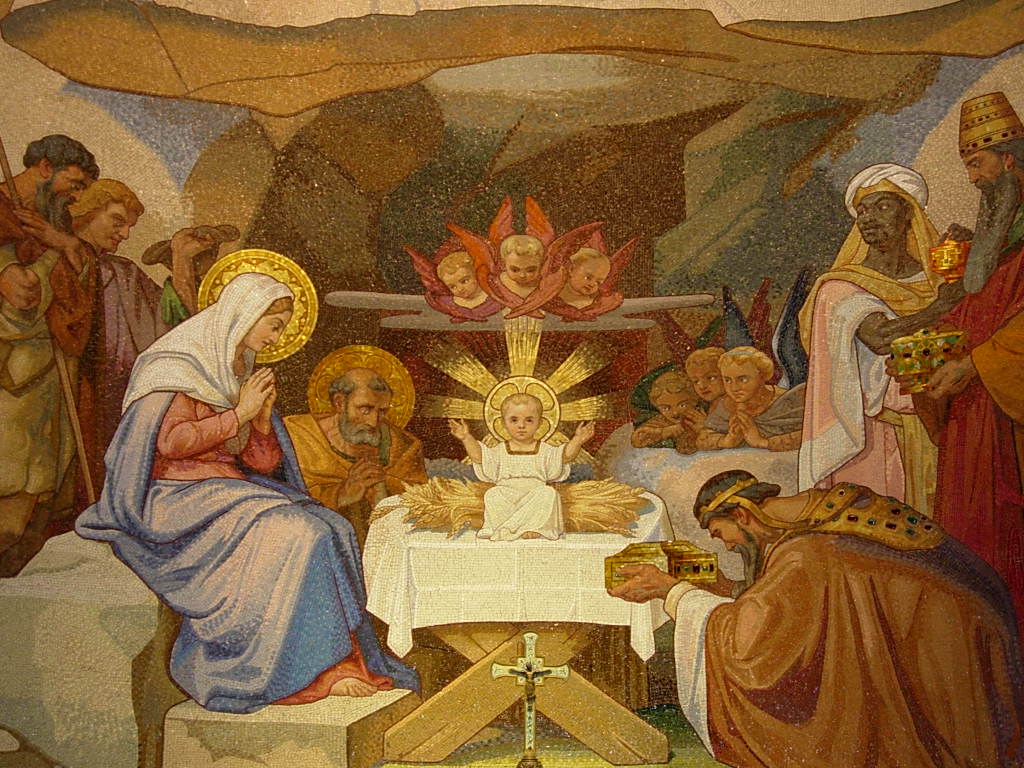 One afternoon when I was pastor at an Assembly of God Church, two women stopped to chat. I discovered that they were Mormons, and they had stopped to ask if I thought they were “saved.” I’m not sure if they had asked to “test” me somehow, or if they were asking sincerely; however, to this day, I think they were sincere. My Fundamentalist mind kicked in, and I immediately asked, “Have you accepted Jesus to be your personal savior?” And they both answered “yes.” “Then,” I answered, “you both are going to heaven.” We chatted for a bit more, and they went on their way. I would have given the same answer to anyone who asked, Catholic, Protestant, Evangelical, Mormon or Jehovah’s Witness. Now, many years later and a committed Traditional Catholic, I would say “Not so fast,” and would inquire a bit more deeply into whom they considered Jesus to be. Mormons have the strange belief that God the Father, like Jesus, was born and born again, once as a spirit, and again as a mortal man. Mormons believe that Jesus and Satan are created brothers and spiritual sons of God. Thereafter, as God formulated His plan of salvation, Satan proposed his own plan. Jesus, on the other hand, accepted God’s plan and offered to sacrifice himself as God’s Lamb and the spirit of Jesus was given a body through the Virgin Mary. Very confusing, and very non-Christian. Nor do Jehovah’s Witnesses believe that Jesus is God. They believe that he was a created man, the highest creation of God, but just a man. Five Reasons Why Catholics (and most Protestants) KNOW Jesus is God: 1. Jesus specifically fulfilled more than 300 Old Testament prophesies, including: o He would be born in Bethlehem: Micah 5:2 - AND THOU, BETHLEHEM Ephrata, art a little one among the thousands of Juda: out of thee shall he come forth unto me that is to be the ruler in Israel: and his going forth is from the beginning, from the days of eternity. o He would be born of a virgin: Isaiah 7:14 - Therefore the Lord himself shall give you a sign. Behold a virgin shall conceive, and bear a son, and his name shall be called Emmanuel. o He would be crucified: Psalm 22:16-18 - My strength is dried up like a potsherd, and my tongue hath cleaved to my jaws: and thou hast brought me down into the dust of death. For many dogs have encompassed me: the council of the malignant hath besieged me. They have dug my hands and feet. They have numbered all my bones. And they have looked and stared upon me. They parted my garments amongst them; and upon my vesture they cast lots. o He would have spikes driven through each hand: Zachariah 13:6 - And they shall say to him: What are these wounds in the midst of thy hands? And he shall say: With these I was wounded in the house of them that loved me. o He would be betrayed for the price of thirty pieces silver: Zachariah 11:12 - And I said to them: If it be good in your eyes, bring hither my wages: and if not, be quiet. And they weighed for my wages thirty pieces of silver. The odds of one man fulfilling all five of these prophesies, given thousands of years before by men unknown to one another, is calculated to be 1 in 10,000,000,000,000,000, or 1 in 1015. 2. During his time on earth, Jesus performed hundreds, if not thousands of healing miracles – of the blind, of the deaf, and of the sick and dying. He restored the dead to life. Many of these miracles are recorded in the Gospels. And Saint John concludes his Gospel by stating, “But there are also many other things which Jesus did; which, if they were written every one, the world itself, I think, would not be able to contain the books that should be written.” John 21:25 No one else in history ever performed this many miracles (not Mohammed - not anyone). If Jesus was not God, He would seem to be a fraud as He performed more miracles than all of the prophets before Him COMBINED! 3. The Word of God, in the New Testament states that Jesus is God: In the beginning was the Word, and the Word was with God, and the Word was God. The same was in the beginning with God. All things were made by him: and without him was made nothing that was made. In him was life, and the life was the light of men. John 1:1-3 4. After His death, resurrection and ascension, the Jewish council leaders tried to silence the preaching of the Apostles. After a second arrest for defying the council, the council members were deciding what to do when one of the council stood and said: But one in the council rising up, a Pharisee, named Gamaliel, a doctor of the law, respected by all the people, commanded the men to be put forth a little while. And he said to them: Ye men of Israel, take heed to yourselves what you intend to do, as touching these men. For before these days rose up Theodas, affirming himself to be somebody, to whom a number of men, about four hundred, joined themselves: who was slain; and all that believed him were scattered, and brought to nothing. After this man, rose up Judas of Galilee, in the days of the enrolling, and drew away the people after him: he also perished; and all, even as many as consented to him, were dispersed. And now, therefore, I say to you, refrain from these men, and let them alone; for if this council or this work be of men, it will come to nought; But if it be of God, you cannot overthrow it, lest perhaps you be found even to fight against God. And they consented to him. Acts 5:34-39 Today, there are more than 1.2 billion Catholics in the world. 5. Finally, Jesus himself claims to be God – John 14:6-10 - Jesus saith to him [Thomas]: I am the way, and the truth, and the life. No man cometh to the Father, but by me. If you had known me, you would without doubt have known my Father also: and from henceforth you shall know him, and you have seen him. Philip saith to him: Lord, shew us the Father, and it is enough for us. Jesus saith to him: Have I been so long a time with you; and have you not known me? Philip, he that seeth me seeth the Father also. How sayest thou, shew us the Father? Do you not believe, that I am in the Father, and the Father in me? The words that I speak to you, I speak not of myself. But the Father who abideth in me, he doth the works. Even atheists will tell you that Jesus was a great man, and had many good things to say. But this cannot be the only truth about Jesus: If Jesus were not God, then he had to be either delusional or completely insane. Many other reasons exist to believe that Jesus was who he claimed to be, but these five alone will give you much to ponder! This post has been edited by yeeck: Jan 10 2017, 02:17 AM |
|
|
|
|
|
Jan 13 2017, 01:05 AM
Return to original view | Post
#1027
|
|
Senior Member
3,576 posts Joined: Apr 2006
|
QUOTE(small_boat @ Jan 12 2017, 08:12 PM) Why Catholic claim they are the original against Protestant and evangelical groups? It's not just a claim. It is a fact. There is no Christian calling themselves Protestant or Evangelical in the early Church. Initially, Protestant became a general term to mean any adherent to the Reformation movement in Germany and was taken up by Lutherans. Even though Martin Luther himself insisted on Christian or Evangelical as the only acceptable names for individuals who professed Christ. French and Swiss Protestants preferred the word reformed (French: réformé), which became a popular, neutral and alternative name for Calvinists. The term Protestant later acquired a broader sense, referring to a member of any Western church which subscribed to the main Protestant principles.[20] However, it is often misused to mean any church outside the Roman and Eastern Orthodox communions. https://en.wikipedia.org/wiki/Protestantism#Terminology The earliest recorded evidence of the use of the term "Catholic Church" is the Letter to the Smyrnaeans that Ignatius of Antioch wrote in about 107 to Christians in Smyrna. Exhorting Christians to remain closely united with their bishop, he wrote: "Wherever the bishop shall appear, there let the multitude [of the people] also be; even as, wherever Jesus Christ is, there is the Catholic Church."[12][13][14] Of the meaning for Ignatius of this phrase J.H. Srawley wrote: This is the earliest occurrence in Christian literature of the phrase 'the Catholic Church' (ἡ καθολικὴ ἐκκλησία). The original sense of the word is 'universal'. Thus Justin Martyr (Dial. 82) speaks of the 'universal or general resurrection', using the words ἡ καθολικὴ ἀνάστασις. Similarly here the Church universal is contrasted with the particular Church of Smyrna. Ignatius means by the Catholic Church 'the aggregate of all the Christian congregations' (Swete, Apostles Creed, p. 76). So too the letter of the Church of Smyrna is addressed to all the congregations of the Holy Catholic Church in every place. And this primitive sense of 'universal' the word has never lost, although in the latter part of the second century it began to receive the secondary sense of 'orthodox' as opposed to 'heretical'. Thus it is used in an early Canon of Scripture, the Muratorian fragment (circa 170 A.D.), which refers to certain heretical writings as 'not received in the Catholic Church'. So too Cyril of Jerusalem, in the fourth century, says that the Church is called Catholic not only 'because it is spread throughout the world', but also 'because it teaches completely and without defect all the doctrines which ought to come to the knowledge of men'. This secondary sense arose out of the original meaning because Catholics claimed to teach the whole truth, and to represent the whole Church, while heresy arose out of the exaggeration of some one truth and was essentially partial and local.[15][16] By Catholic Church Ignatius designated the universal church. Ignatius considered that certain heretics of his time, who disavowed that Jesus was a material being who actually suffered and died, saying instead that "he only seemed to suffer" (Smyrnaeans, 2), were not really Christians.[17] https://en.wikipedia.org/wiki/Catholic_(term)#Historical_use |
|
|
Jan 13 2017, 01:33 AM
Return to original view | Post
#1028
|
|
Senior Member
3,576 posts Joined: Apr 2006
|
There are several anniversaries this year:
500th year of Protestantism (1517 revolution against the Church the Mystical Body of Christ), 300th year of freemasonry (1717 revolution against Christ), and 100th year of atheistic communism (1917 revolution against God). This year is also the 100th anniversary of the Fatima apparitions. In the face of the ongoing struggles of the world against Christ and His Church, Our Lady and the saints will help us! We need only ask them in prayer! Oremus! This post has been edited by yeeck: Jan 13 2017, 01:34 AM |
|
|
Jan 13 2017, 11:23 AM
Return to original view | Post
#1029
|
|
Senior Member
3,576 posts Joined: Apr 2006
|
QUOTE(prophetjul @ Jan 13 2017, 09:51 AM) “You shall not make for yourself an image in the form of anything in heaven above or on the earth beneath or in the waters below. 5 You shall not bow down to them or worship them; for I, the Lord your God, am a jealous God, punishing the children for the sin of the parents to the third and fourth generation of those who hate me, 6 but showing love to a thousand generations of those who love me and keep my commandments. Please re-read the earlier posts in this thread on statues and images. Plus the doctrine of the communion of saints and asking for their prayers and intercession. |
|
|
Jan 13 2017, 03:01 PM
Return to original view | Post
#1030
|
|
Senior Member
3,576 posts Joined: Apr 2006
|
QUOTE(prophetjul @ Jan 13 2017, 11:51 AM) They are dead. Necromancy is forbidden in scriptures Wrong. They are alive in Christ. "The wisdom of men is foolishness to God". Why don't you use your won wisdom to discuss? Preferably with scriptures  |
|
|
Jan 13 2017, 03:03 PM
Return to original view | Post
#1031
|
|
Senior Member
3,576 posts Joined: Apr 2006
|
Here we go again. With shioks coming up with the same stuff after not responding to replies. LOL.
|
|
|
Jan 14 2017, 09:12 AM
Return to original view | Post
#1032
|
|
Senior Member
3,576 posts Joined: Apr 2006
|
QUOTE(prophetjul @ Jan 13 2017, 04:11 PM) They can't hear you. The historic Christian practice of asking our departed brothers and sisters in Christ—the saints—for their intercession has come under attack in the last few hundred years. Though the practice dates to the earliest days of Christianity and is shared by Catholics, Eastern Orthodox, the other Eastern Christians, and even some Anglicans—meaning that all-told it is shared by more than three quarters of the Christians on earth—it still comes under heavy attack from many within the Protestant movement that started in the sixteenth century. Please REFER to scriptures to support necromancy. Scriptures please. Did Paul teach us to pray to dead saints? Who did scriptures teach us to pray to? Can They Hear Us? One charge made against it is that the saints in heaven cannot even hear our prayers, making it useless to ask for their intercession. However, this is not true. As Scripture indicates, those in heaven are aware of the prayers of those on earth. This can be seen, for example, in Revelation 5:8, where John depicts the saints in heaven offering our prayers to God under the form of "golden bowls full of incense, which are the prayers of the saints." But if the saints in heaven are offering our prayers to God, then they must be aware of our prayers. They are aware of our petitions and present them to God by interceding for us. And no, it is not necromancy. nec·ro·man·cy ˈnekrəˌmansē/Submit noun the supposed practice of communicating with the dead, especially in order to predict the future. witchcraft, sorcery, or black magic in general. |
|
|
Jan 14 2017, 09:15 AM
Return to original view | Post
#1033
|
|
Senior Member
3,576 posts Joined: Apr 2006
|
QUOTE(prophetjul @ Jan 13 2017, 04:14 PM) [yeeck] Is this true? Is google that difficult to use?https://www.catholic.com/magazine/online-ed...en-commandments |
|
|
|
|
|
Jan 14 2017, 09:21 AM
Return to original view | Post
#1034
|
|
Senior Member
3,576 posts Joined: Apr 2006
|
Abortionist Quits After St. Thomas Aquinas Visits Him in a Dream
Posted by Angelo Stagnaro on Monday Jan 9th, 2017 at 6:01 PM “These children are the ones you killed with your abortions,” said St. Thomas, and Stojan awoke in shock and fear. He decided he would refuse to participate in any more abortions.  Stojan Adasevic, a Serbian abortionist when Serbia was still a communist country, managed to kill 48,000 children in utero in his 26 years as a purveyor of death. Sometimes up to 35 per day. But that's all on the past, as Stojan is now one of Serbia's most important pro-life voices. As explained in a recent interview with the Spanish daily newspaper, La Razon: The medical textbooks of the Communist regime said abortion was simply the removal of a blob of tissue. Ultrasounds allowing the fetus to be seen did not arrive until the 1980s, but they did not change his opinion. Regardless of what he believed, or thought he believed, Stojan began to have nightmares. In describing his conversion to La Razon, Adasevic "dreamed about a beautiful field full of children and young people who were playing and laughing, from four to 24 years of age, but who ran away from him in fear. A man dressed in a black and white habit stared at him in silence. The dream was repeated each night and he would wake up in a cold sweat. One night Stojan asked the man in black and white in his frightening dream as to his identity. "My name is Thomas Aquinas," he responded. Stojan, educated in communist schools that pushed atheism instead of real learning, didn't recognize the Dominican saint's name. Stojan asked the nightly visitor, "Who are these children?" "They are the ones you killed with your abortions," St. Thomas told him bluntly and without preamble. Stojan awoke in shock and fear. He decided he would refuse to participate in any more abortions. Unfortunately, that very day in which he made his decision, one of his cousins came to the hospital with his four months-pregnant girlfriend―they had hoped for an abortion. Apparently, it wasn’t her first which is not uncommon in countries of the Soviet bloc. Stojan reluctantly agreed, but, instead of the usual Dilation and Curettage (D&C) Method in which the fetus is torn apart with the use of a hook shaped knife called a curette, he decided to chop it up and remove it as a single mass. Horrifically and providentially, his little cousin's heart came out still beating. It was then that Dr. Adasevic realized that he had indeed killed a human being. Stojan immediately notified his hospital that he would no longer perform abortions. No physician in communist Yugoslavia had ever before refused to perform an abortion. The hospital and government's reaction was swift and severe. His salary was cut in half and his daughter was immediately fired from her job. In addition, Stojan's son wasn't allowed to matriculate into the state university. After many years of surviving the many privations orchestrated by pro-abortion/pro-death fundamentalist atheist government, Stojan was about to buckle under the pressure and give into its demands. Fortunately, Stojan had another dream about St. Thomas. St. Thomas assured Stojan of his friendship and Stojan was in turn inspired. The physician became involved in the pro-life movement in Yugoslavia. In fact, he was able to get the state-run Yugoslav television station to twice broadcast Bernard Nathanson's anti-abortion film The Silent Scream. Since then, Stojan has told of his anti-abortion stance and his reversion to the Orthodox faith of his childhood to newspapers and television stations throughout Eastern Europe. In fact, he has a strong devotion to St. Thomas Aquinas and is rarely, if ever, without the saint's books―his constant reading material. Stojan often reminds his listeners that in his Summa Theologiæ, St. Thomas wrote that human life begins forty days after fertilization. Perhaps, Stojan would opine, "the saint wanted to make amends for that error." Today Stojan continues to fight for the lives and rights of the unborn. http://www.ncregister.com/blog/astagnaro/a...-him-in-a-dream This post has been edited by yeeck: Jan 14 2017, 09:22 AM |
|
|
Jan 15 2017, 10:25 PM
Return to original view | Post
#1035
|
|
Senior Member
3,576 posts Joined: Apr 2006
|
QUOTE(small_boat @ Jan 14 2017, 11:54 PM) catolic has changed a lot, it went through dark age and start to have many mixture, that's why evangelist or protestant trying to restore the truth, what is catolic's perspective about that? Some may be sincere-minded to address abuses, but most of the time, some errors were brought in as well. Remember, Christ guarantees that His Church will last till the end of time and no powers of hell shall overcome it. Matthew 16:18. |
|
|
Jan 15 2017, 10:27 PM
Return to original view | Post
#1036
|
|
Senior Member
3,576 posts Joined: Apr 2006
|
Isn't the Eucharist just symbolic, since Jesus could only sacrifice himself once?
Fr. Vincent Serpa O.P. August 05, 2011 Full Question One of the things that sets Catholics apart from other denominations is Communion. Since the followers of Christ were Jews and consuming blood was an abomination, why would they believe they were ingesting the actual blood of Christ and bring condemnation upon themselves? Also, wouldn’t the wafer, if it became the literal body of Christ, be an abomination to Catholics since cannibalism is a sin? Jesus was offered as a sacrifice for sin once upon the cross, and there is no more need of a sacrifice. Communion has been understood as being symbolic, or else it would have never been accepted by the disciples. The blood shed on the cross is the last time the blood of Christ flowed. His body was last on earth the day he ascended into heaven. To say the juice and wafer becomes the literal blood and body of Christ is saying he is sacrificed anew, which is an impossibility. Answer First of all, up to the 16th century virtually all Christians believed that the bread and wine truly becomes the body and blood of Christ. That’s a long time. The largest and oldest Christian Church still does—as do the Orthodox churches. So there has to be something credible about it. It is true that for the Jews, consuming blood was an abomination. Scripture tells us that many of the disciples of Jesus could not accept this and from that point on did not follow him (Jn 6:66), but not all of them. “Then Jesus said to the Twelve, ‘What about you, do you want to go away too?’ Simon Peter answered, ‘Lord, to whom shall we go? You have the message of eternal life, and we believe; we know that you are the Holy One of God’” (Jn 6:67-69). These disciples did accept what he said—not because they understood, but because they believed in him. If Jesus were merely speaking symbolically, he could easily have called the other disciples back and explained that he wasn’t speaking literally. He did not. Jesus, we believe, is God. It boggles the mind that God loves his creatures so much that he became one of them, and then allowed them to torture him and put him to death for their benefit. The moment in which he died covers every person who lived on this earth before Good Friday and everyone who was to live after it. It transcends time. The Church and everything about it is incarnational because Jesus became incarnate. He used water and spittle and bread and wine and his own body and blood to minister to those who needed him. Since Jesus is God, if he said that the bread and wine becomes his body and blood, then those who acknowledge his divinity should have no difficulty believing it to be true because, like the Twelve, they believe in him. It is certainly no more extraordinary than his Incarnation! Since the moment of his death transcends time, to celebrate it in time is not to create another Passion and death; it is to worship him in that very Passion here and now in the concrete manner of his devising. https://www.catholic.com/qa/isnt-the-euchar...ce-himself-once |
|
|
Jan 15 2017, 11:06 PM
Return to original view | Post
#1037
|
|
Senior Member
3,576 posts Joined: Apr 2006
|
|
|
|
Jan 16 2017, 01:49 PM
Return to original view | Post
#1038
|
|
Senior Member
3,576 posts Joined: Apr 2006
|
QUOTE(prophetjul @ Jan 16 2017, 11:17 AM) Did Paul teach you to do this? When both Col. 1 and Rev. 5 refer to “the saints,” it seems clear they are referring to Christians who are presently "walking[ing] through the valley of the shadow of death" as the Psalmist says. At least, in some sense. But I find many among the non-Catholics I converse with regularly to be surprised when I tell them the Catholic Church acknolwedges that all of the baptized can be referred to as “saints.” CCC 1475 says:Who taught you that saints have to be dead? For that matter, siants are not only those declared by your pope. Paul called those ALIVE as saints 1 Corinthians 1:2 To the church of God which is at Corinth, to those who have been sanctified in Christ Jesus, saints by calling, with all who in every place call on the name of our Lord Jesus Christ, their Lord and ours: Romans 1:7 to all who are beloved of God in Rome, called as saints: Grace to you and peace from God our Father and the Lord Jesus Christ. Verse Concepts to all who are beloved of God in Rome, called as saints: Grace to you and peace from God our Father and the Lord Jesus Christ. So your concept of saints is already wrong to begin with. No. They cannot hear you. Paul does not teach such practice. The Romish church does. In the communion of saints, "a perennial link of charity exists between the faithful who have already reached their heavenly home, those who are expiating their sins in purgatory and those who are still pilgrims on earth. Between them there is, too, an abundant exchange of all good things." In this wonderful exchange, the holiness of one profits others, well beyond the harm that the sin of one could cause others. Thus recourse to the communion of saints lets the contrite sinner be more promptly and efficaciously purified of the punishments for sin. CCC 946-948 makes it even more clear that all of God's faithful can be referred to as "saints." After confessing "the holy catholic Church," the Apostles' Creed adds "the communion of saints." In a certain sense this article is a further explanation of the preceding: "What is the Church if not the assembly of all the saints?" The communion of saints is the Church... (948) The term "communion of saints" therefore has two closely linked meanings: communion in holy things (sancta)" and "among holy persons (sancti)." "Sancti," by the way, means "saints," or "holy ones." The Catechism then continues: Sancta sanctis! ("God's holy gifts for God's holy people") is proclaimed by the celebrant in most Eastern liturgies during the elevation of the holy Gifts before the distribution of communion. The faithful (sancti) are fed by Christ's holy body and blood (sancta) to grow in communion of the Holy Spirit (koinonia) and to communicate it to the world. So now the question becomes: "Then why do Catholics refer to canonized 'saints' as 'saints,' but not one another this side of the veil? This seems to be a contradiction." I find St. Paul himself to be the best place to go for the answer to this question. In Col. 1:1-2, as I said above, St. Paul definitively refers to all of the faithful at Colossae as “saints.” And I should note here that the Greek word for “saints” (hagioi) is comparable to "sancti" in Latin. It simply means, “sanctified, set apart, or holy.” It means "saints." From a Catholic perspective, we would say of course St. Paul would refer to these Christians, and by allusion, all Christians, in this way because "being set apart and made holy" is precisely what baptism accomplishes in the life of every Christian. We “have been baptized into Christ Jesus” (Romans 6:3) who is the source of all holiness. But here's the rub. The Catholic Church also acknowledges what Col. 1:12 says,: Giving thanks to the Father, who has qualified us to share in the inheritance of the saints in light. The Greek word for “share” in this text is merida, which means “to partake in part or a portion.” According to St. Paul, "the saints” on earth partake in part in what "the saints” in heaven possess in fullness. Thus, it is fitting that the Catholic Church reserves the title of "saint" to those she has declared to be in heaven. They alone ("the saints" in heaven) possess sainthood, if you will, in its fullness. |
|
|
Jan 16 2017, 07:01 PM
Return to original view | Post
#1039
|
|
Senior Member
3,576 posts Joined: Apr 2006
|
QUOTE(prophetjul @ Jan 16 2017, 11:25 AM) Can you not answer for yourself? Catholics use statues, paintings, and other artistic devices to recall the person or thing depicted. Just as it helps to remember one’s mother by looking at her photograph, so it helps to recall the example of the saints by looking at pictures of them. Catholics also use statues as teaching tools. In the early Church they were especially useful for the instruction of the illiterate. In current times, it helps to lift one's mind to think about heavenly things. Many Protestants have pictures of Jesus and other Bible pictures in Sunday school for teaching children. Catholics also use statues to commemorate certain people and events, much as Protestant churches have three-dimensional nativity scenes at Christmas. 4 'You shall not make yourself a carved image or any likeness of anything in heaven above or on earth beneath or in the waters under the earth. If one measured Protestants by the same rule, then by using these "graven" images, they would be practicing the "idolatry" of which they accuse Catholics. But there’s no idolatry going on in these situations. God forbids the worship of images as gods, but he doesn’t ban the making of images. This post has been edited by yeeck: Jan 16 2017, 07:01 PM |
|
|
Jan 17 2017, 01:37 PM
Return to original view | Post
#1040
|
|
Senior Member
3,576 posts Joined: Apr 2006
|
QUOTE(prophetjul @ Jan 17 2017, 08:35 AM) Well....we agree in parts. There are many things extrabiblical, even by Protestants. Like...what made you accept the books of the Bible in the first place? The word Bible is extrabiblical and you have no problem accepting that now, would you? Christmas, Easter are also celebrated by Protestants even though the words are not found in the Bible, so what gives?However, the Roman church appears to be adding to what God has commanded. If Paul acknowledges that all are saints , why should you start something extra biblical? Appears you are rubbing in too much of your additions. Col 1:12 12 Giving thanks unto the Father, which hath made us meet to be partakers of the inheritance of the saints in light: 13 Who hath delivered us from the power of darkness, and hath translated us into the kingdom of his dear Son: 14 In whom we have redemption through his blood, even the forgiveness of sins: The saints are partakers of the inheritance of the following verses, deliverance and forgiveness. And it's everything there , not a portion as you put it. Is God's deilverance or forgiveness in fractions or parts? No. Nor does any of the verses in this passage indicate the saints in heaven or on earth. You are adding into scriptures. Therefore, for your pope to install saints is extrabiblical. God does that, not your pope P/S Cutting and pasting does not show that you have understanding of scriptures. No wonder they say that most Catholics do not read the bible. They just swallow whatever their priests tell them! |
|
Topic ClosedOptions
|

| Change to: |  0.1529sec 0.1529sec
 0.78 0.78
 7 queries 7 queries
 GZIP Disabled GZIP Disabled
Time is now: 4th December 2025 - 11:32 AM |
All Rights Reserved © 2002- 2025 Vijandren Ramadass (~unite against racism~)
Powered by Invision Power Board © 2025 IPS, Inc.