QUOTE(ghost_301 @ Jul 24 2006, 07:22 PM)
Make ur aero to very low value , u can have very much high drag speed , but u will lost control easily as well , so it's kind of trade off between speed and stability ... I am not so expert in setup though ... I think expert here is redline ... Too bad I can't join u guys for the race ... I still haven't manage race without TC ... What a shame ... As for the bump , whcih bump u refering redline ? Bump rubber or bump damping ?
you can still make the car stable using the suspension. just make sure which suspension unloads first under braking. softening this makes it easier for turning in. this is what I did at Monza
ok, i'll try explaining what I know... this is from my time racing in F1C, but it should apply to rFactor too
The anti roll bar will limit the roll as your car goes through the corners
A higher number (200) for front anti-roll will allow both front wheels to stay on the ground to provide traction.
A high anti-roll bar will provide more speed but less grip.
A low anti-roll bar will let the car roll in the corner more, if the front anti-roll is quite low (100) then the front inside wheel may lift off the track when cornering, but more weight will be on the outside wheel and more weight on the outside wheel means more grip until the wheel becomes overloaded (too much weight transfer) and the car spins out.
Because more weight is transferred forward when you brake to corner, a lower rear anti-roll can safely be used, a higher number like (100) for rear anti-roll will keep the ass-end on the ground better but less weight will transfer to the outside of the car to give more grip around a corner, using a low number like (50) for rear anti-roll will let more weight transfer to the outside wheel and provide more grip but the inside wheel may lift off the ground and less traction will be provided.
Camber and Toe InCamber is the amount the wheel is angled in or out vertically.
Negative camber means the wheel will lean inwards.
Positive camber means the wheel will lean outwards.
More negative camber means you can corner better, as the car goes into a corner and weight is transferred onto the tire, the tire is pushed down onto the track.
Generally more negative camber will help you go around a corner faster.
Too much negative camber will cause your tires to overheat, while you are getting more grip out of the tires, the tires are working harder and toasting themselves.
The softer your suspension, the more negative camber you will need.
You should have about 0.2 less negative camber on the inside wheels as they stay carry less weight than the outside wheels. If the track goes clockwise your inside wheels will be the right hand side of the car, if the track goes anti-clockwise your inside wheels will be on the left of the car.
Toe is the amount the wheel is angled horizontally.
Negative toe means the wheels are pointing inwards.
Positive toe means the wheels are pointing outwards.
Too much toe in can cause the outside of the tires to get too hot, but also slow the car down since the wheels arent quite pointing straight.
Toe in will help you keep the car in a straight line.
What camber should I use?It depends on how soft your suspension is and how much you allow your car to roll (anti-roll).
The softer your suspension the more camber you will need
The less anti-roll you have the more camber you will need.
PackersPackers limit the suspension travel by providing a stopper when the suspension bottoms out. This means that if you have soft suspension a packer would stop your car bottoming out.
How much packer should I use?About .8 on the front and about 1.0 on the rear for most tracks.
SpringsSprings are basically how soft or stiff your suspension is.
Springs determine the amount the car will pitch.
Hard springs (200 / 150) will mean the car will not pitch much so you can have a much lower ride height.
Hard springs make the car a lot more responsive but the car will not handle very well through corners.
Soft springs will allow the car to go through corners a lot more easily, but the car will be harder to drive because it will be less responsive.
Hard springs release their energy faster than soft springs, but hard springs absorb energy slower than soft springs.
Soft springs will provide more grip but will cause more tire wear and cause the tire to heat up more.
You can affect how the front of the car behaves by adjusting rear suspension.
If your car is unstable into a corner under braking, instead of making the front stiffer, soften the rear so that the softer springs can release the energy slower.
How do I decide what stiffness of spring to use?The more windy the track the softer you will want your springs as your car will corner better with softer springs.
You will need stiffer front springs if you want to ride the curbs a lot.
On a track with not so many corners like Monza you can use stiff springs (190 / 140) because cornering is not as much of an issue, you also get to lower your ride height because the car will be less bouncy and scrape the track less often.
You should always have stiffer front springs than rear springs.
Softer rear springs will provide more grip and reduce wheel spin in the rear of the car.
On a track where you dont need to ride the curbs much (like Monaco) then you can have soft springs (130/90), but you have to balance it between responsiveness and tire temperature.
On Australia (185 /120) is good, the stiffer front lets you cut the corners over the curbs without disturbing the balance of the car because the bumps are absorbed more slowly but the suspension resets fast enough that the car isnt unbalanced very long.
If you are spinning out while hitting curbs you probably want your front suspension at about 180-190.
Spinning out can also be because your rear suspension might be too high, a setting of 110 on most tracks will stop the rear unloading too fast and causing a spin.
Dont forget after adjusting springs to watch your tire temperature and then adjust the camber afterwards.
Stiffer springs = less negative camber needed.
Softer springs = more negative camber needed.
Dampers they are fine adjustments and dont affect the car in a very big way.
While the springs affect the amount the car pitches, the dampers affect the rate at which that pitch occurs.
Fast and slow dampening is the speed at which the wheel moves up or down.
Fast dampening fine-tunes the cars handling over bumpy surfaces.
Slow dampening fine-tunes the cars handling around a corner.
If your car is not handling well over bumps then bump and rebound dampening is the thing to change.
A stiffer damper will give better cornering stability.
A softer damper will give better cornering grip.
It is usually very hard to tell what damper settings you should have but in any case it only has a small effect on the cars handling.
If you know that your car is unstable through the corners then you probably want to stiffen the dampers (increase the values).
If your car needs more grip through the corners then you probably want to soften the dampers (decrease the values).


 Jul 1 2006, 05:51 PM, updated 19y ago


 Quote
Quote







 What a waste of FX-60 & 7950GX2....
  It's not streamyx but screen freeze and CTD...me & my bro were doing very good with 1-2 positon...but their 1 pitstop strategy split us.


 (and no offs no spins)


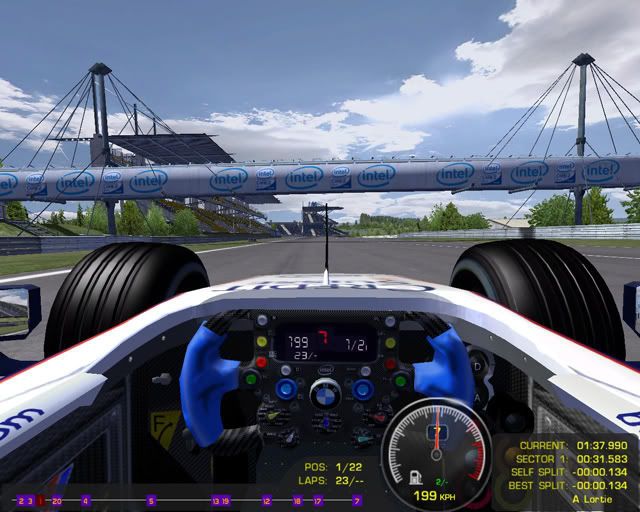

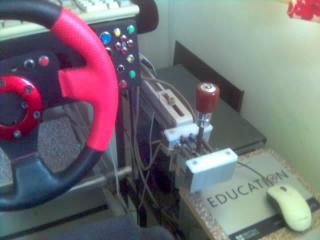





 then with 3 laps remaining engine blow......


 0.1268sec
 0.47
0.47
 6 queries
 GZIP Disabled