Welcome Guest ( Log In | Register )

Outline · [ Standard ] · Linear+

 Number of Hypotheses, Phd Level

views
     
TSTuten
post Nov 11 2013, 01:57 AM, updated 13y ago

New Member
*
Junior Member
21 posts

Joined: Apr 2012
Hi everyone,

My query is if you have 3 independent variables, 1 moderating variable and 1 dependent variable in your research framework.

Can you have;

1) Hypothesis formation on relationship between the independent variables?
2) Hypothesis formation on relationships between Independent variable and dependent variable through moderating variable?
3) Hypothesis formation on relationships between Independent variable directly with dependent variable?

And also,
4) what is the maximum number of Hypotheses allowed for PhD level?


hmm.gif
crazycrazyman
post Nov 11 2013, 02:07 AM

What about that?
*******
Senior Member
2,706 posts

Joined: Jan 2009
From: Malaysia.


QUOTE(Tuten @ Nov 11 2013, 01:57 AM)
Hi everyone,

My query is if you have 3 independent variables, 1 moderating variable and 1 dependent variable in your research framework.

Can you have;

1) Hypothesis formation on relationship between the independent variables?
2) Hypothesis formation on relationships between Independent variable and dependent variable through moderating variable?
3) Hypothesis formation on relationships between Independent variable directly with dependent variable?

And also,
4) what is the maximum number of Hypotheses allowed for PhD level?
hmm.gif
*
According to what i know, your hypothesis formation should be based on your literature review (gap from the past research), and based on that, you form your framework (i.e your 3 IV, moderator and 1 DV).

Just my 2cents. Please correct me if i'm wrong.
koaydarren
post Nov 11 2013, 02:21 AM

Mr D
***
Junior Member
430 posts

Joined: Feb 2011
QUOTE(Tuten @ Nov 11 2013, 01:57 AM)
Hi everyone,

My query is if you have 3 independent variables, 1 moderating variable and 1 dependent variable in your research framework.

Can you have;

1) Hypothesis formation on relationship between the independent variables?
2) Hypothesis formation on relationships between Independent variable and dependent variable through moderating variable?
3) Hypothesis formation on relationships between Independent variable directly with dependent variable?

And also,
4) what is the maximum number of Hypotheses allowed for PhD level?
hmm.gif
*
The number of hypotheses is not restricted.. You need to identify the gap based on the existing literature review and discover new knowledge or theory.. Not the more hypothesis the better it is.. Is the quality of findings smile.gif Correct me if i'm wrong TQ..
TSTuten
post Nov 11 2013, 08:43 AM

New Member
*
Junior Member
21 posts

Joined: Apr 2012
QUOTE(koaydarren @ Nov 11 2013, 02:21 AM)
The number of hypotheses is not restricted.. You need to identify the gap based on the existing literature review and discover new knowledge or theory.. Not the more hypothesis the better it is.. Is the quality of findings smile.gif Correct me if i'm wrong TQ..
*
Thank you Koay and Chris,

It is understood that your new research shall add to the body of knowledge and one way of doing it is by looking at the gaps or previous studies, if not researching something new.

So the number of hypotheses is unrestricted is good to know.


This post has been edited by Tuten: Nov 11 2013, 08:45 AM
Blofeld
post Nov 11 2013, 11:22 AM

Look at all my stars!!
*******
Senior Member
4,700 posts

Joined: Mar 2012
QUOTE(Tuten @ Nov 11 2013, 01:57 AM)
Hi everyone,

My query is if you have 3 independent variables, 1 moderating variable and 1 dependent variable in your research framework.

Can you have;

1) Hypothesis formation on relationship between the independent variables?
2) Hypothesis formation on relationships between Independent variable and dependent variable through moderating variable?
3) Hypothesis formation on relationships between Independent variable directly with dependent variable?

And also,
4) what is the maximum number of Hypotheses allowed for PhD level?
hmm.gif
*
1. Why do you want to hypothesise a relationship between the IVs? hmm.gif

2. The moderating variable moderates the relationship between the IV and the DV. It's NOT an intervening variable.

3. Yes, u can. Eg. A has a positive relationship with B.

4. There is no maximum or minimum. Of course, common sense would tell you not to have too simple or too complicated framework.
Critical_Fallacy
post Nov 11 2013, 01:00 PM

∫nnộvisεr
Group Icon
VIP
3,713 posts

Joined: Nov 2011
From: Torino
QUOTE(Tuten @ Nov 11 2013, 01:57 AM)
My query is if you have 3 independent variables, 1 moderating variable and 1 dependent variable in your research framework.
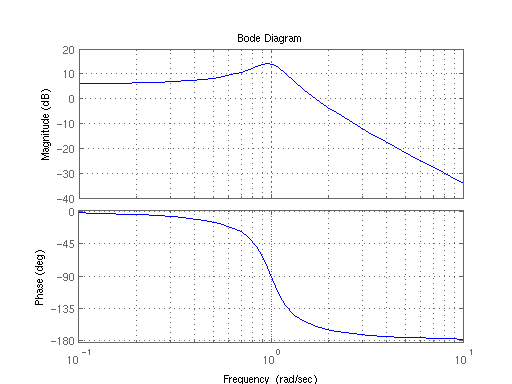
I'm not sure what kind of research you are currently studying, but each interacted component or element of a dynamic system will possess an input-output (or causal) relationship that can be expressed using Transfer Function. The transfer function of a linear, time-invariant, differential equation system is defined as the ratio of the Laplace transform of the output (response function) to the Laplace transform of the input (driving function) under the assumption that all initial conditions are zero.

Because the analytical determination of a system's transfer function can be difficult so far as individual component values may not be known, or the internal configuration of the system may not be accessible, the frequency response of the system, from input to output, can be obtained experimentally and used to determine the transfer function.

To obtain a frequency response plot experimentally, we use a sinusoidal force or signal generator at the input to the system and measure the output steady-state sinusoid amplitude and phase angle (see Bode plots). Repeating this process at a number of frequencies yields data for a frequency response plot. Once the frequency response is obtained, the transfer function of the system can be estimated from the break frequencies and slopes.

Bode plots are a convenient presentation of the frequency response data for the purpose of estimating the transfer function. These plots allow parts of the transfer function to be determined and extracted, leading the way to further refinements to find the remaining parts of the transfer function. For more information on obtaining transfer functions experimentally, read related topics like “model identification” or “system identification.”

user posted image
Critical_Fallacy
post Nov 11 2013, 01:36 PM

∫nnộvisεr
Group Icon
VIP
3,713 posts

Joined: Nov 2011
From: Torino
QUOTE(Tuten @ Nov 11 2013, 01:57 AM)
1) Hypothesis formation on relationship between the independent variables?
2) Hypothesis formation on relationships between Independent variable and dependent variable through moderating variable?
3) Hypothesis formation on relationships between Independent variable directly with dependent variable?
In non-dynamic systems, the basic premise of experimentation in Qualitative Research is that the researcher controls as much as possible to determine whether a cause-and-effect relationship exists between the variables being studied.

Let’s say, for example, that you are interested in whether taking Zinc supplements leads to increased sperm counts. The idea behind experimentation is that you manipulate at least one driving variable (known as the independent variable) and measures at least one response variable (known as the dependent variable). In your study, what parameter should you manipulate? If you identified amount of Zinc, then you are correct. If amount of Zinc is the independent variable, then sperm counts is the dependent variable.

For comparative purposes, the independent variable has to have at least two groups or conditions. They are typically referred as the control group and the experimental group. The control group is the group that serves as the baseline or “standard” condition. In your Zinc study, the control group does not take Zinc supplements. The experimental group is the group that receives the treatment—in this case, those who take Zinc supplements. Thus, in an experiment, one thing that you control is the level of the independent variable that male participants receive.

Can you identify other variables that you might need to consider controlling in the present study? How about amount of sleep received each day, type of diet, and amount of exercise (all variables that might contribute to general health and well-being)? There are undoubtedly other variables you would need to control if you were to complete this study.


user posted image
TSTuten
post Nov 11 2013, 11:27 PM

New Member
*
Junior Member
21 posts

Joined: Apr 2012
QUOTE(Critical_Fallacy @ Nov 11 2013, 01:36 PM)
In non-dynamic systems, the basic premise of experimentation in Qualitative Research is that the researcher controls as much as possible to determine whether a cause-and-effect relationship exists between the variables being studied.

Let’s say, for example, that you are interested in whether taking Zinc supplements leads to increased sperm counts. The idea behind experimentation is that you manipulate at least one driving variable (known as the independent variable) and measures at least one response variable (known as the dependent variable). In your study, what parameter should you manipulate? If you identified amount of Zinc, then you are correct. If amount of Zinc is the independent variable, then sperm counts is the dependent variable.

For comparative purposes, the independent variable has to have at least two groups or conditions. They are typically referred as the control group and the experimental group. The control group is the group that serves as the baseline or “standard” condition. In your Zinc study, the control group does not take Zinc supplements. The experimental group is the group that receives the treatment—in this case, those who take Zinc supplements. Thus, in an experiment, one thing that you control is the level of the independent variable that male participants receive.

Can you identify other variables that you might need to consider controlling in the present study? How about amount of sleep received each day, type of diet, and amount of exercise (all variables that might contribute to general health and well-being)? There are undoubtedly other variables you would need to control if you were to complete this study.

user posted image
*
thank you for the nice explanation.
TSTuten
post Nov 11 2013, 11:28 PM

New Member
*
Junior Member
21 posts

Joined: Apr 2012
QUOTE(Blofeld @ Nov 11 2013, 11:22 AM)
1. Why do you want to hypothesise a relationship between the IVs?  hmm.gif

2. The moderating variable moderates the relationship between the IV and the DV. It's NOT an intervening variable.

3. Yes, u can. Eg. A has a positive relationship with B.

4. There is no maximum or minimum. Of course, common sense would tell you not to have too simple or too complicated framework.
*
thanks.
1. Why do you want to hypothesise a relationship between the IVs?
A complex hypothesis
predicts the relationship between three or more variables. The variables may include:
b) A single independent variable and two or more dependent variables.
c) Two or more independent variables and one, or more, dependent variable(s).

This post has been edited by Tuten: Nov 11 2013, 11:57 PM


Change to:
| Lo-Fi Version
0.0179sec    0.40    5 queries    GZIP Disabled
Time is now: 4th December 2025 - 06:52 PM