If you read Korean newspaper you'll see some Chinese words there.they still use it till now to give a more accurate meaning because probably the Korean language vocab not big enough.Even their birth certificate got Chinese words as their name
An emissary from the kingdom of Langkasuka, details from a larger Chinese painting showing various emissaries to the Chinese court of Liang dynasty (502–587).
Selepas Qin Shihuang menjadi maharaja, beliau cuba hidup abadi. Beliau mendapat maklumat bahawa dalam Laut Bohai ada gunung kayangan dan ubat mukjizat hidup abadi. Maka beliau menghantar ahli nujum mencari ubat tersebut. Yang terlebih dahulu dihantar oleh Qin Shihuang mencari ubat itu ialah Lu Sheng. Lu Sheng bertolak dari Jieshi iaitu Pulau Qinhuangtao hari ini, tapi gagal mendapati ubat tersebut. Sekarang dalam Taman Dongshan di bandar Qinhuangtao masih ada tempat tinggalan sejarah tentang cerita itu. Pada tahun 1992, patong batu geranit warna hitam Qin Shihuang yang setinggi 6 meter dan seberat 80 tan telah tersergam di Taman Dongshan.
Lu Sheng gagal mendapati ubat mukjizat hidup abadi, Qin Shihuang menghantar lagi Xu Fu mencari ubat tersebut. Selepas Xu Fu pertama kali pulang selepas mencari ubat tersebut, beliau menyatakan bahawa beliau telah naik ke Gunung Fenglaixian dan melihat ubat mukjizat hidup abadi, akan tetapi dewa dalam gunung itu meminta beliau membawa lebih banyak cendera mata baru boleh membawa balik ubat tersebut dan mengatakannya jika hendak mendapati ubat mukjizat hidup abadi, mesti menghantar muda mudi dan tukang kraftangan. Qin Shihuang berasa sangat gembira selepas mendapat maklumat bahawa Xu Fu sudah melihat ubat mukjizat hidup abadi, dan segera memilih 3000 muda mudi dan beberapa tukang kraftangan kepada Xu Fu dan mengarahnya mengambil balik ubat mukjizat hidup abadi tersebut. Xu Fu gagal lagi mendapati ubat itu dari laut dan memberitahu Qin Shihujang konon kali ini gagal disebabkan ada ikan besar dalam laut, menghalangi kapal mendekati gunung kayangan, jika hendak pergi ke gunung itu, mesti dilengkapi pemanah mahir dan senjata maju. Seketika itu, Qin Shihuang bermimpi beliau bertempur dengan dewa laut, menurut penjelasan profesor nujum, dewa laut itu justeru lambang ikan besar. Maka Qin Shihuang percaya perkataan Xu Fu, dan menghantar pemanah dan menyediakan senjata kepada Xu Fu dan sendiri mengikuti kapal ke laut. Semasa kapal berlayar di tempat berdekatan Pulau Zhifu, telah nampak seekor ikan besar, Qin Shihuang sendiri membunuh ikan tersebut dan berpendapat tidak ada rintangan lagi menuju ke gunung kayangan. Tapi gunung kayangan dan ubat mukjizat tidak didapati, Xu Fu tidak berani menemui Qin Shihuang lagi. Beliau membawa 3,000 muda mudi dan sekumpulan tukang kraftangan telah pergi ke Jepun dan hidup di sana. Akhirnya, Xu Fu meninggal dunia di kawasan Gunung Fujishan Jepun. Di Jepun, ada legenda dan catatan tentang Xu Fu, ada sarjana berpendapat bahawa Xu Fu ialah raja Shenwu yang terkenal dalam sejarah penubuhan negara Jepun. Rakyat Jepun juga menyanjung Xu Fu dan menghormatinya sebagai “ dewa pertanian ” dan “ dewa ubat-ubatan ”. Bekas tempat Xu Fu termasuk makam, istana, batu dan tugu peringaatan Xu Fu dipelihara di Jepun setakat hari ini. Pada tahun 1991, rakyat Jepun juga mendirikan sebuah Taman “ Jalan Xu Fu ” di Ken Saga. Pada musim gugur setiap tahun, rakyat ken Saga akan menyumbangkan padi kepada patong Xu Fu. Upacara yang meriah juga akan diadakan setiap 50 tahun untuk memperingati Xu Fu.
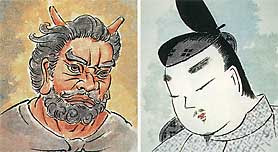
If you're currently staying in Japan, take close looks at faces of Japanese. Typically it is possible to categorize them into two :
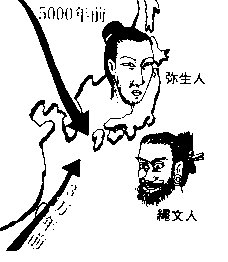
The hairy face in the left is called " Jomon " face while the flat one " Yayoi " face. The terms you're going to remember are just two this time.
We tend to think that Japan is a unified country composed by a single race. However, Japanese people have been formed after thousands years of racial mixture between two, Jomon and Yayoi.
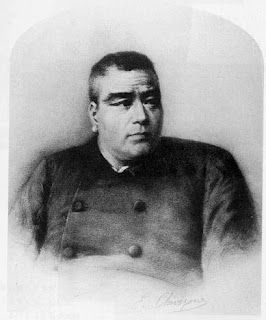
How about him below ? He is a typical kind of Jomon people. He was a popular leader of Kagoshima prefecture, southern part of southern island (Kyushu).
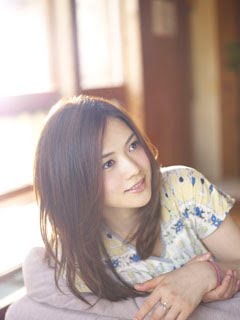
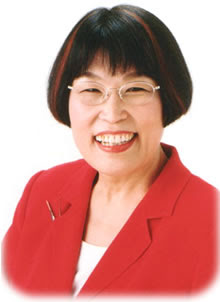
Then how about the woman below ? Please notice her characteristics such as thin eyes or big front teeth. Yes, that's a Yayoi face.
The Japanese rightist
Sunday, April 15, 2007 The faces of Japanese
If you're currently staying in Japan, take close looks at faces of Japanese. Typically it is possible to categorize them into two:
The hairy face in the left is called "Jomon" face while the flat one "Yayoi" face. The terms you're going to remember are just two this time.
We tend to think that Japan is a unified country composed by a single race. However, Japanese people have been formed after thousands years of racial mixture between two, Jomon and Yayoi.
How about him below? He is a typical kind of Jomon people. He was a popular leader of Kagoshima prefecture, southern part of southern island (Kyushu).
Then how about the woman below? Please notice her characteristics such as thin eyes or big front teeth. Yes, that's a Yayoi face.
It is found from recent studies that the Jomon was a conquered race after the Yayoi gradually spreaded to the entire Japan (about B.C. 300 to A. D. 300). However, you can easily find the native Japanese, the Jomon, if you'd have a chance to visit Okinawa or Hokkaido. Of course there are a lot of people with " jomonized " features in the main island, too. But the pure Jomon are already almost extinct in the places where the traffic has been great. (The figure below indicates that the Jomon came from the south. However, there's another perspective that they came from North through Sakhalin. Either way, the history of the Jomon must have been quite old.)
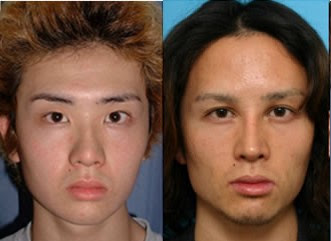
Recently, Japanese have been suffering from a huge identity crisis : although they are identified by their Yayoi faces, the wintry-looking, mongol-oriented face tends to be repelled. Especially, plastic surgery for eyes, cutting " Mongolian fold ", is getting popular. The mongolian fold functioned to protect their tear duct with the thick eyelid, but the physiological need has disappeard. High cheekbone is another hated property the Yayoi have.
Look at the picture above. Can you believe that's the same person ? The main magic is cutting the " folds ", the eyelids, that cover a large portion of your eyes. This process exposes his lacrimal glands. The inclination to the plastic surgery we see these days was said as yearning for European. Regardless of which type they are craving for, European or Jomon, it's sure they have many complaints about what they inherited from their ancestors.
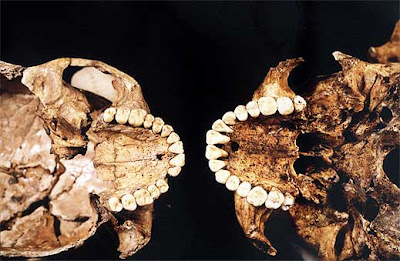
Another annoying part they hate is their teeth. Many Japanese have uneven teeth. Funnily, Korean or Chinese sometimes distinguish themselves from Japanese by the teeth. They have better evenness! The uneven teeth is a result of the race mixture as you might suspect. The size of the jaw from one race doesn't match the size of the teeth from the other race. My case by the way is OK. I have a combination of a big jaw and big teeth.
The above picture visually shows the difference of jaws and teeth between the Jomon (left) and Yayoi (right). If someone inherited a small jaw and big teeth as a result of blood mixture, they end up having very uneven teeth.
The Chinese race is actually a political creation of the Han dynasty, in which they are still known as Han Chinese today.
Before Han there was the tyrannic Qin dynasty, China's first imperial dynasty. There were 2 groups that escaped Qin, one to Japan and another down south to unknown whereabout (presumably Vietnam)
Based on the Han racial unification, Japanese are actually quite 'far', the closest cousins for the Chinese people are the North Vietnamese and North Koreans.


 Aug 18 2013, 06:02 PM


 First emperor of japan was a hokkien
  Quote
Quote








 0.0212sec
 0.39
0.39
 5 queries
 GZIP Disabled