

 Mystery Cases Unsolved
  Oct 18 2011, 05:38 PM


» Click to show Spoiler - click again to hide... «
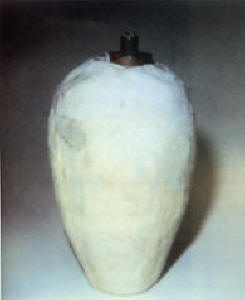
Was unearthed in Khujut Rabu, in the ruins of a Parthian village outside Baghdad in 1938 by German archaeologist Wilhelm Konig. It is a five-inch-long (13 cm) clay jar containing a copper cylinder that its edge was soldered with a 60-40 lead-tin alloy, and bottom was capped with a crimped-in copper disk and held in place with asphalt or bitumen. Another insulating layer of asphalt sealed the top and also protected an iron bar suspended into the center of the cylinder. This one is known as the Baghdad Battery and is about 2,000 years old. A dozen of other similar batteries were unearthed in Iraq. Most sources date the batteries to around 200 BC - in the Parthian era, circa 250 BC to AD 225. However the Parthians were skilled warriors rather and their scientific achievements were not known. It would appear then that they inherited these batteries from one of the earliest known civilizations. According to the experts, the device after being filled with an acid or alkaline liquid could create an electric charge. It is believed that this old battery might have been used to electroplate silver, but it is only one of the theories. Important is to emphasize that electric batteries were not invented until 1799 by Alessandro Volta.
ANCIENT GLIDER FROM EGYPT
» Click to show Spoiler - click again to hide... «
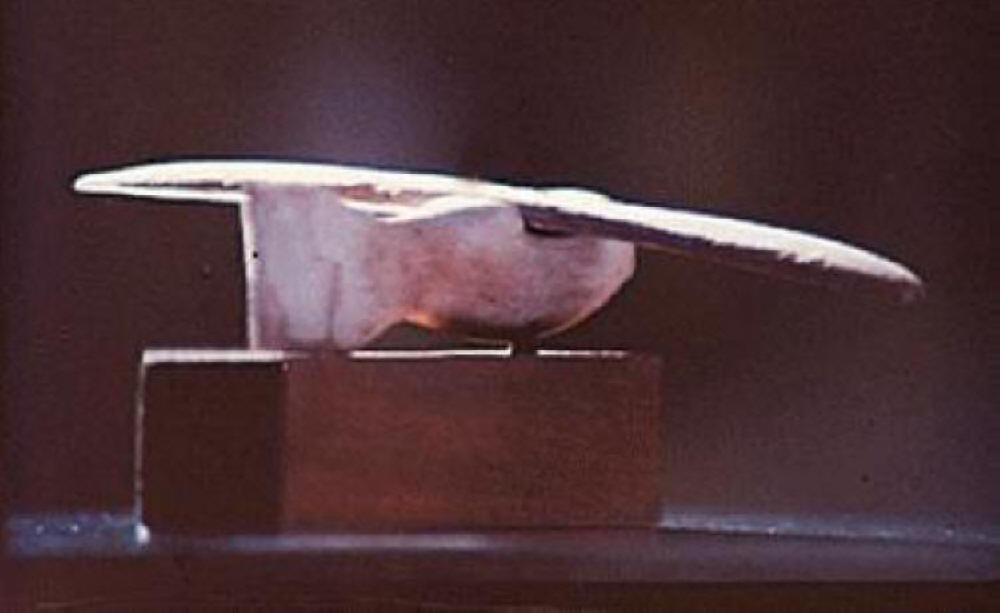
In 1898 a small wooden, winged object was found in the tomb of Pa-di-Imen in north Saqqara, Egypt. The model has the exact proportions of a very advanced form of "pusher-glider" however it was identified as a "bird model". Made of very light sycamore the craft weighs 0.5 oz. with straight and aerodynamically shaped wings, spanning about 7 inches. It looks like modern-day aircraft though it is 2,000-year-old. According to analysis it was discovered that the object was aerodynamically sound.
THE ANTIKYTHERA MECHANISM
» Click to show Spoiler - click again to hide... «
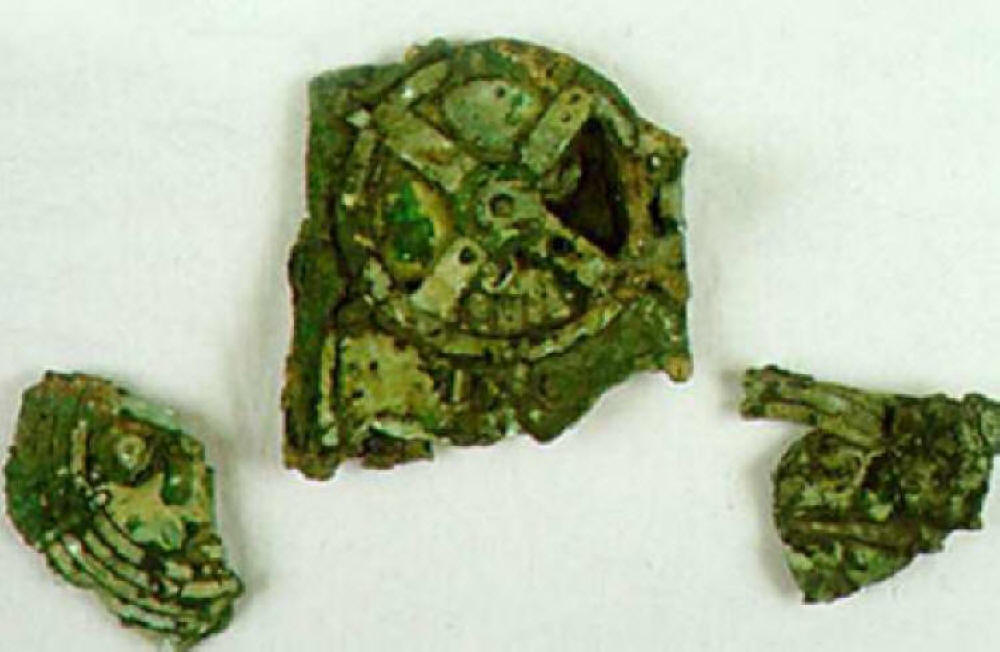
Dated to 80 A.D, probably used as calendar and astronomical calculator for the motions of stars and planets. It is very sophisticated device that consists of 30 toothed wheels, of diameter from 9 to 132 mm, being able to rotate at a different speed each, dials and scaled metal plates with inscriptions related to the signs of zodiac, names of the planets. The engraved signs inform about the equinoxes, months, winds and constellations being in their different phases. This device was created 1,000 years before the gear was invented.
MYSTERIOUS CHINA STONE
» Click to show Spoiler - click again to hide... «
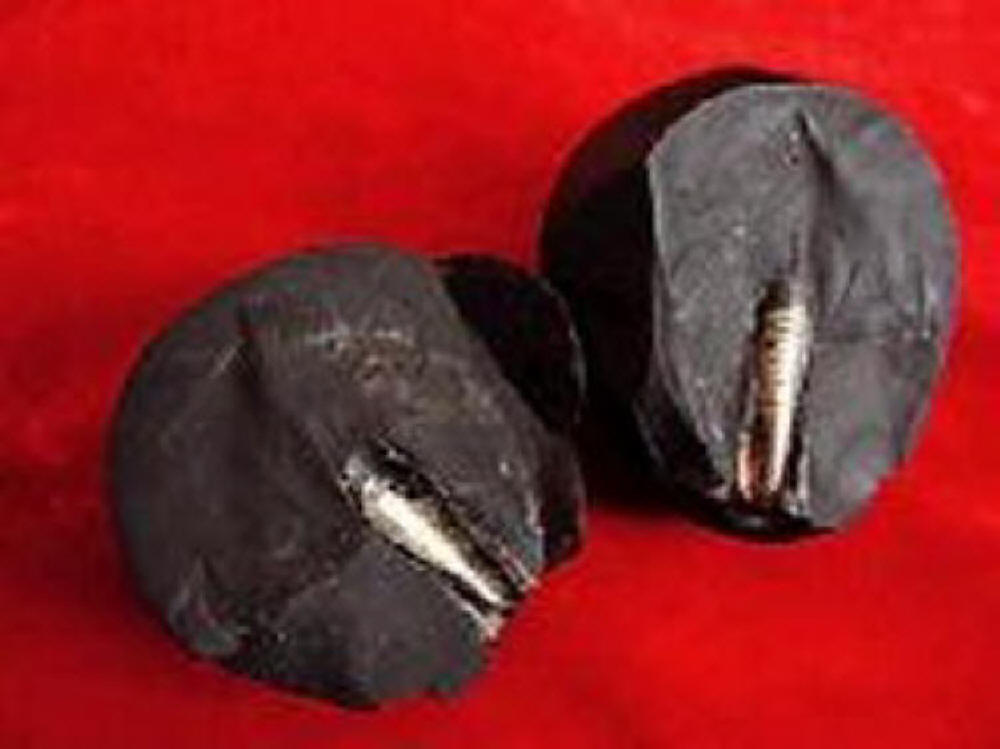
An uncommon stone imbedded with screw-threaded metal bar from a collector in Lanzhou Mr. Zhilin Wang. He found this stone on a field research trip to the Mazong Mountain area located on the border of Gansu and Xijiang provinces. The pear-shaped stone is extremely hard and has a mysterious black color. It is about 8 x 7 cm and weighs 466 grams. The most surprising part of the stone is the imbedded 6 cm cone-shaped metal bar which bears clear screw threads. The stone is one of the most valuable in China and in the world. There are many hypotheses about the formation of this stone, but all seem to be incredible. The screw-threaded metal bar is tightly enclosed in the black lithical material. Moreover, the screw thread width remains consistent from the thick end to the thin end, instead of varying due to the growth of organisms. Is this a relic from a prehistoric civilization?
ANCIENT PLANES FROM SOUTH AMERICA
» Click to show Spoiler - click again to hide... «
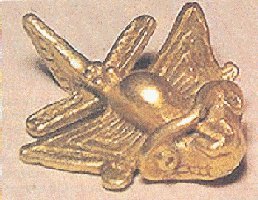
The mechanical features of the object suggest a highly sophisticated level of aerodynamics and construction. The objects are very old and small, approximately 2 inches long, objects, made of gold are estimated to be AT LEAST 1,000 years old. For archaeologists the artifacts were depicting animals and were classified as Sinu, a pre-Inca culture from A.D. 500 to 800... But only for them. For aeronautical engineers these objects more looked like airplanes with delta-shaped wings. So in 1997 they built a scaled up version of the objects to the exact specifications of the prototypes with the simple addition of an engine and propeller. The test was successful. The radio controlled aircraft flew performing airborn loops, rolls and other maneuvers, and then performed perfect landing. According to Dr. Ivan Sanderson, who studied the artifacts, these look too "mechanical" like an airplane, to be a natural object. Other similar objects have been discovered in Costa Rica, Venezuela and Peru.
THE PIRI REIS MAP
» Click to show Spoiler - click again to hide... «
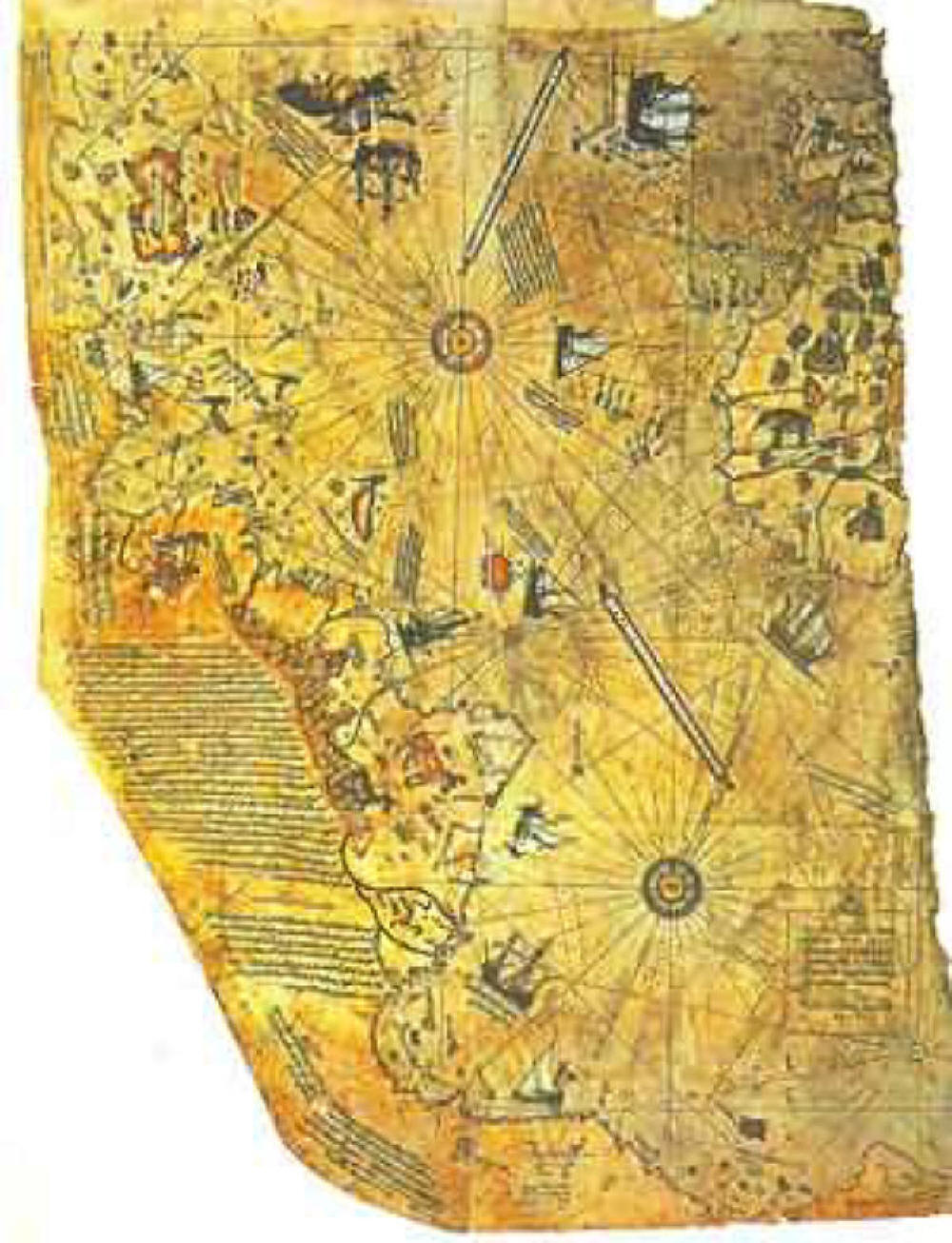
In 1929, a group of historians found an amazing map drawn on a gazelle skin. Research showed that it was a genuine document drawn in 1513 by Piri Reis, a famous admiral of the Turkish fleet in the sixteenth century. His passion was cartography. His high rank within the Turkish navy allowed him to have a privileged access to the Imperial Library of Constantinople.The Turkish admiral admits in a series of notes on the map that he compiled and copied the data from a large number of source maps, some of which dated back to the fourth century BC or earlier.
The Controversy... The Piri Reis map shows the western coast of Africa, the eastern coast of South America, and the northern coast of Antarctica. The northern coastline of Antarctica is perfectly detailed. The most puzzling however is not so much how Piri Reis managed to draw such an accurate map of the Antarctic region 300 years before it was discovered, but that the map shows the coastline under the ice. Geological evidence confirms that the latest date Queen Maud Land could have been charted in an ice-free state is 4000 BC.
THE WAFFLE ROCK
» Click to show Spoiler - click again to hide... «
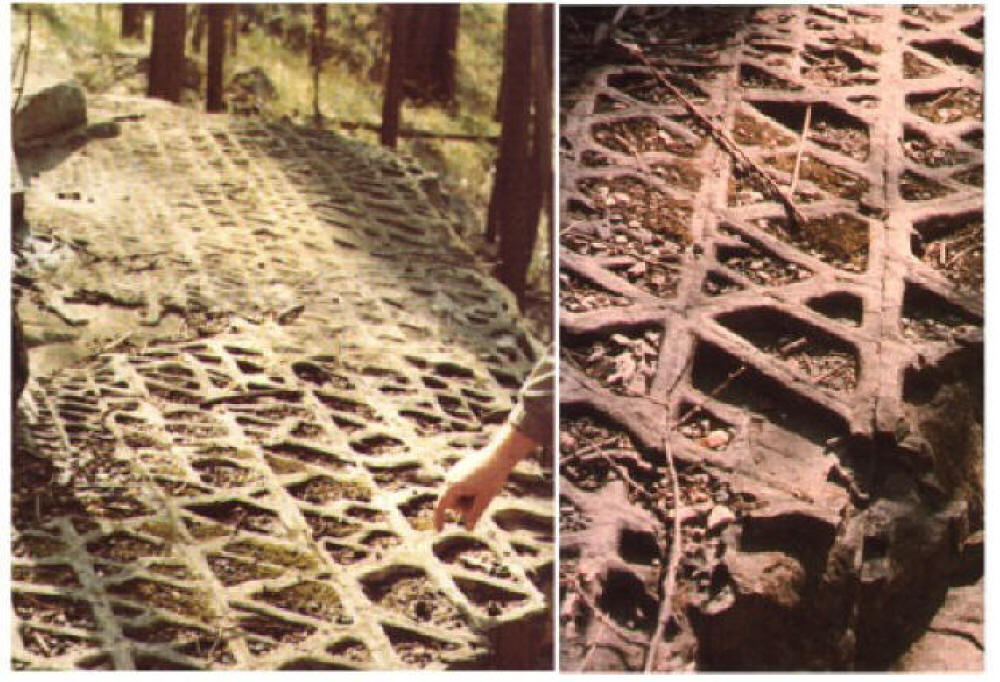
Waffle Rock (Jennings Randolph Lake, Mineral County, West Virginia, USA) is a strange patterned rock in America. Although the lines look to be connected in a set pattern they are slightly off in places. Also in the middle or between 2 lines, depending on how you look at them, you can see thin straight lines or breaks.
FIGURINES OF DINOSAURS
» Click to show Spoiler - click again to hide... «
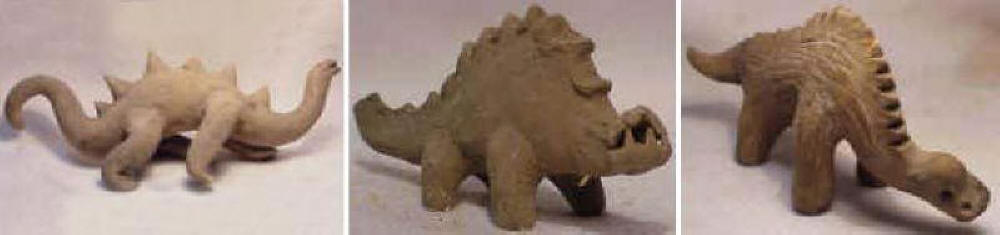
In 1945 Waldemar Julsrud, a German immigrant and an experienced archeologist, discovered some little clay statues, buried at the foot of El Toro Mountain, near Acambaro, Guanajuato, in Mexico. Near El Toro and at the other side of the town, in the vicinity of Mount Chivo, more than 33,000 figurines made of porcelain were discovered. Similar relics found nearby were associated to the Chupicuaro pre-classical Chupicuaro Culture (800 BC to 200 AD). The figurines are representations of various species of dinosaurs, which are believed to have disappeared 65 millions years ago.
 Quote
Quote








 0.0260sec
 0.61
0.61
 5 queries
 GZIP Disabled