had entered many moons ago $2-3 this is additional top up. which other big banks r going for a song? its fa is so-so, at least making money

the chart informs on the resistance & support, resistance is around $5. suspek it'll hover & then find a newer range to trade
next resistance is 7.50 then 17.50. if make profit, can easily go there, my cucu will be very happy. loaded up jan2013 calls too

too bad no sell armh when it spike up

but targeting better profit & price during earnings season, expect it to range trade soon

QUOTE(zamans98 @ Jan 6 2011, 11:54 PM)
I still don't understand. Why enter at 5 and go long? Why not at 4.50 or whatever the price was?

U can't just follow the chart fully, rite?
Technical aside, C is more likely be speculative play.
when I first drop by tis forum, here all proFA, no chart players & not much talking on TA

its good to see progress for the usa & klse players, since now u guys getting the hang of charts, reading volume & etc. i'll talk less abt chart
in year 2009, show u guys about swing trade & basic TA eg. 50ma & 200ma
in year 2010, show u guys about buy high, sell higher & basic FA eg. forward PE>10
for year 2011, we'll talk abt options & see how u guys r progressing, but it seems only zamans98 is doing the hard work

to answer ur soalan about c, recall a long time ago we talked abt pyramiding, here's something to read & is atml doing it?

Pyramiding Is Best Way To Enter Position
We learn new lessons as we begin to trade larger sums of money. Tax strategies start to matter more. Trade commissions matter less. And the advantage of pyramiding into stocks — which involves averaging up, rather than down — starts to make real sense.
To pyramid means to move into a stock in at least two or three progressively smaller purchases. The technique was made popular by Jesse Livermore, a history-making trader who operated in the first half of the 20th century.
A typical pyramiding strategy might apply a 50% portion of capital to a stock as it passes a buy point in heavy trading. If the stock rises 2% from that mark, a pyramider may add another 30% of his position. The final 20% piece is placed if and when the stock makes a 4% to 5% gain.
The strategy minimizes risk in the event the stock stalls before hitting the 5% mark. If it does make it that far, you have a full position laid in for whatever comes next.
Averaging up goes hand in hand with pyramiding.
It essentially means you buy a smaller number of shares at key points as the stock rises. The first purchases occur within the 5% range. Beyond that, you buy at follow opportunities, things like pullbacks, three-weeks-tight patterns and second-stage bases.
MercadoLibre's (MELI) July 2009 breakout gave a good chance to pyramid. The stock cracked a 27.52 buy point on a cup-with-handle in big volume July 15. 1 It was a good day to buy. Other quality stocks like Baidu (BIDU), Interactive Intelligence (ININ) and Fuqi International (FUQI) were also staging big-volume advances.
This just two days after the market returned to confirmed uptrend status.
An alert investor would have grabbed a 50% position as MercadoLibre passed the buy mark.
The stock continued more than 2% higher. Trading volume held firm. Those are the signals to apply another 30% of the assigned capital. Shares ended the day just shy of the 4% mark, leaving investors with 80% of their opening position in place.
On Day 2, shares traded between 27.72 and 29.65 2 You may have laid down the remaining 20% of your position when it rose 4% above the ideal buy point. Or, you may have seen that volume was weak for the day and decided to hold off until the stock decided to make a more confident statement.
Day 3: Shares pulled back more than 6% in strong trade, ending near the bottom of the day's trading range. That dents your bliss and leaves good cause to be cautious. But it's not an unusual move for a stock about to make a winning run.
Why not use this opportunity to buy more shares at a bargain?
Because that would be averaging down. Just like the 6% pullback, you don't know what will happen next.
Either you buy when the stock is moving higher, or you lock in a higher degree of risk. If you are patient, leading stocks nearly always provide additional chances to expand your position while minimizing your risk.
MercadoLibre offered follow-on opportunities with pullbacks in September and November. 3
Stick to the pyramiding strategy and make smaller buys each time around. You want to average up, but at the same time keep your cost from spiraling too high. As a general rule of thumb, keep your average cost a minimum 20% to 30% below the current price of the stock
» Click to show Spoiler - click again to hide... «
Jobs, Services Data Suggest Economy Stepped Up In Dec.
December private hiring and service sector growth were the strongest in years, according to separate reports Wednesday, further evidence that the economy was gathering steam heading into 2011.
The Institute for Supply Management's service sector index rose 2.1 points to 57.1, the highest since May 2006. Wall Street had expected a smaller increase to 55.7. Readings above 50 indicate growth.
Meanwhile, private firms on net hired 297,000 employees last month, the most since records began in 2000, according to ADP Employer Services. That almost tripled estimates for 100,000.
"The early part of the recovery has been focused on manufacturing, and we're seeing that momentum broadening out to the service sector and other parts of the economy," said Robert Dye, an economist at PNC Financial. "It looks like the pieces of a self-sustaining economic expansion are coming into place."
The S&P 500 rose 0.5% and the Nasdaq 0.8%. Meanwhile, the bullish data spurred investors to sell safe-haven Treasuries, driving the 10-year yield up 15 basis points to 3.48%.
Factory orders, retail sales, ISM's manufacturing index and a raft of other recent data suggest economic growth in Q4 easily outstripped Q3's 2.6% pace.
Yet Federal Reserve policymakers have vowed to press ahead with a $600 billion bond-buying program to stimulate the economy amid concerns that growth will remain too sluggish to quickly bring down the jobless rate.
ADP showed broad-based gains in hiring, from small businesses to large firms and from the service sector to manufacturing.
That bodes well for Friday's Labor Department employment report. Economists predict that will show public and private employers hired a net 150,000 in December, the third straight gain. The jobless rate is seen ticking down to 9.7%.
Still, ADP's data often differ sharply from Labor's figures. Also, ISM's service sector jobs gauge wasn't quite as upbeat, slipping 2.2 points to 50.5. ISM's manufacturing jobs subindex also fell.
"It remains to be seen whether big jumps like that (in the ADP report) are the rule or the exception," said Mike Schenk, vice president of economics and statistics at the Credit Union National Association and Affiliates. "Our view is that labor markets will be improving, but doing so slowly."
He said the jobless rate will remain above 9% through 2011 despite his forecast for 3% economic growth. That's partly due to a skills mismatch between the jobs available and the people looking for work, he said, adding that unskilled former manufacturing and construction workers face an especially difficult job search.
ISM's new orders gauge jumped 5.3 points to 63, the best in more than four years. The prices paid subindex soared 6.8 points to 70, the highest since September 2008. But companies are having trouble passing on higher costs to cash-strapped consumers.
"Consumer prices remain well contained outside monthly fluctuations in energy and food," Dye said, adding that company profits will likely suffer due to an inability to pass higher commodity costs on to shoppers.
This post has been edited by sulifeisgreat: Jan 9 2011, 12:34 AM


 Dec 8 2010, 01:18 AM


 Quote
Quote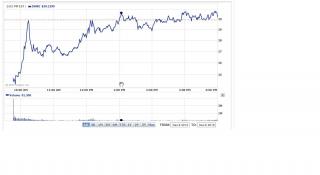


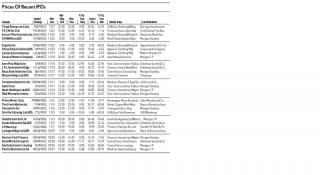

 whether it works or not is another issue altogether


 too bad exited vphm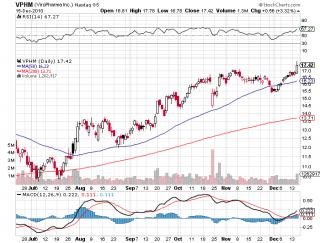

 wonder when it starts? must exercise patience
 remaining positions


 wah! look atml & ten


 is earnings tat good?
 0.0583sec
 0.90
0.90
 7 queries
 GZIP Disabled