Final reward makes Jonny Evans glad he stayed at UnitedYoung centre-back targeting his first domestic honour as Manchester United prepare to challenge Tottenham for Carling Cup
» Click to show Spoiler - click again to hide... «
Jonny Evans was changing after the recent Fulham game at Old Trafford when he spotted two nervous teenagers entering the dressing room, having been sent into the hallowed sanctum by that wily fox, Sir Alex Ferguson. Evans smiled knowingly and nudged his teammate Rio Ferdinand.
“I said to Rio, ‘I remember doing this when I was 15 and I remember talking to you at the time’. Rio couldn’t recall. You walk in and see all your idols. Six years later, I’m sitting beside one of them.”
Evans could pick up his first domestic trophy as a Manchester United player at Wembley today, to herald the start of what promises to be a long and glittering career. His importance to the team was illustrated last Tuesday when he had two painkilling injections in his ankle before the Champions League game against Inter at the San Siro. As United close in on the second of five trophies they can win this year, Ferguson has elevated Evans into the company of Ferdinand and Nemanja Vidic by describing them as the best bunch of centre-backs he has had at United. “Sometimes the manager gets carried away a bit,” Evans says with a smile. “The thing about this club is that you get scrutinised every day. I’ve played 20 games this season and I’m still fighting to stay at the club. The manager has let players go who people said were in their prime; Paul Ince, Ruud van Nistelrooy - great players.”
Whatever plans Ferguson has for Evans will probably be influenced by the fact that Evans is not just a cultured centre-half in the best United tradition, but he is also a bright and articulate 21-year-old. Evans was speaking at the club’s training ground at Carrington, where he has spent many of his formative years, and at one point motioned upstairs to recount another interesting episode from his early United days.
“When we were doing our education we would write down targets. I wrote that I wanted to be captain of United and go on and captain my country. Now I’m not looking that far ahead. My main aim is every time I get the chance, to do the best I can. It will get to the stage where I want to be playing week in, week out, but right now I am enjoying my time.”
Evans had successful loan periods at Royal Antwerp - the United feeder club in Belgium - and Sunderland, where his second spell there last season was an important factor in the club’s move away from the relegation zone. Former Sunderland manager Roy Keane wanted to sign Evans and despite his dream of captaining United, the player seriously considered moving - until Ferguson put an end to the idea.
The second spell at Sunderland came at a time when Evans seemed to be in jeopardy of losing all he had worked to achieve. After the United players’ Christmas party of 2007, he was arrested following allegations of rape by a 26-year-old woman. It appears to have been a case of mistaken identity and no charges were brought because of “insufficient evidence”.
“I didn’t lose any sleep,” Evans says. “At the time it was a shock but the hardest part was for my family. My conscience was clear.” It was hardly how his father Jackie, a former professional footballer, expected to see his son’s name become widely known. If Manchester United win today, however, his son’s name will be in the papers for all the right reasons.
Young Reds at Wembley
BEN FOSTER Sir Alex Ferguson rates him the best English-born goalkeeper in the Premier League. He’s played only one league game for United and will be 26 in April but for a keeper that is still young
JONNY EVANS Only 21, he has given a series of outstanding displays in central defence alongside Rio Ferdinand or Nemanja Vidic
FABIO DA SILVA has had fewer opportunities than his twin brother, Rafael, largely because of the outstanding form of Patrice Evra. Highly rated, the 18-year-old has a big future if he can shake off injury niggles
DANNY WELBECK The 18-year-old striker has a wonderfully light touch and a ferocious shot. His goal against Derby County in the semi-final second leg was a gem
DARRON GIBSON With so many options in United’s midfield, the Irishman has had a long wait to show what he can do. He is starting to add a physical threat to undoubted skill and technique
Source: Timesonline
Sir Alex Ferguson master of generation game» Click to show Spoiler - click again to hide... «
Oliver Kay
Sitting in front of a giant billboard bearing the name of the competition’s sponsor, Sir Alex Ferguson was doing his best to talk up the possibilities thrown up by the Carling Cup. He spoke of the chance to secure another trophy and the opportunity it offered Manchester United’s youngsters, but when it comes down to it, he said, “the League Cup is a bonus, really. We hadn’t planned to be in the final.” Honesty 1 Romance 0.
As Ferguson explained his thoughts on team selection, confirming only that Darron Gibson and Danny Welbeck would play as a “reward” for their contribution in the competition, he talked of the importance of the games over the next fortnight: the Barclays Premier League match away to Newcastle United on Wednesday, the FA Cup tie away to Fulham a week today, the second leg of the Champions League tie against Inter Milan on March 11 and the small matter of Liverpool’s visit to Old Trafford on March 14. Even now, tomorrow’s meeting with Tottenham Hotspur at Wembley — the first step towards an unprecedented quadruple — is not foremost in his thoughts.
Nor should it be. After a week in which Blackburn Rovers have limped out of the FA Cup at the hands of Coventry City, with Sam Allardyce resting his entire first team for the Premier League matches ahead, and Aston Villa and Tottenham have been eliminated from the Uefa Cup in similar circumstances, it seems that the value of silver has never been lower.
The Carling Cup final offers an opportunity and, with it, the potential for glory, but far less important than the trophy per se is the legacy that a successful cup run can bring, both for individuals and for the club as a whole. United’s 4-0 victory over Wigan Athletic in the final in 2006 was all about winning a trophy, a reward for a difficult campaign and a launch pad for the successful bid to wrest the Premier League title back from Chelsea the next season. This time Ferguson is looking for a different kind of legacy.
He wants to look back on the blossoming of players such as Ben Foster, Jonny Evans, Rafael and Fábio Da Silva, Rodrigo Possebon, Gibson and Welbeck in much the same way he does that of Gary Neville, Nicky Butt, David Beckham and Paul Scholes, who took their first steps in the League Cup in the 1994-95 season, when the below-strength team that Ferguson sent out for a tie at Port Vale — which they won — caused such a furore that it was debated in the House of Commons the next day.
There is an obvious difference between the two generations of Old Trafford starlets. Neville, his younger brother, Phil, Butt and Scholes were all from the Greater Manchester area, Evans and Gibson are from Northern Ireland and Possebon and the Da Silva twins are from Brazil. Only Welbeck, a skilful centre forward from Longsight, the same area of Manchester as Wes Brown, is a local lad. With similar situations at Arsenal, Chelsea and Liverpool, the picture is less rosy for England than for the leading clubs.
“It’s just the way it is for our club at the moment,” Ferguson said. “I don’t think it’s an actual trend in terms of developing or recruiting young players. Gibson and Evans have been with us since 12 years of age, so we regard them as local boys. Welbeck is a Manchester boy. The two Da Silvas and Possebon are Brazilian and we’re concentrating on some areas of the world very strongly, which has allowed us to get the three boys from Brazil. But it’s down to the scouting. If we see a player we think is going to have the quality we need, we have to assess it that way. It doesn’t matter where he’s from — even if he’s English.”
That last statement, delivered with a devilish chuckle, is not meant to be taken at face value. The Scot would say it is the academy system, which prohibits clubs from signing youngsters from beyond a 90-minute commuting distance, that is “handicapping” United when it comes to developing English players. Of the past five winners of United’s Young Player of the Year award, only one — Welbeck — has been English. Ferguson bristled yesterday when it was put to him that Manchester City are having more success developing local talents, his response — “that depends on the quality you’re talking about” — hinting at a belief that few of the youngsters who have made the grade across the city would do likewise at United.
There is a nature-versus-nurture argument when it comes to player development. John O’Shea and Darren Fletcher, for example, are good players who belong at a great club because they have acquired the experience and the mental capacity to do so.
Ferguson hopes that Evans and Gibson, loyal foot-soldier types rather than teenage protégés, will do likewise, leaving the Da Silva twins, Welbeck and others to provide the flair. For all of those youngsters, the Carling Cup has provided an opportunity to gain that kind of experience and to prove that they can perform for United. Whatever its value as a trophy, the Carling Cup is more about legacy where Ferguson is concerned.
Age-old question
23yr 3mths
The average age of Manchester United’s possible starting line-up for tomorrow’s Carling Cup final, which is 5½ years younger per player than what is arguably their first-choice side
22yr 2mths
Average age of Arsenal’s team in the competition’s final two years ago, when they lost 2-1 to Chelsea
25yr 8mths
Average age of the Tottenham Hotspur team that will take on United at Wembley
Source: Bill Edgar
Source: TimesonlineSir Alex Ferguson's finest European team ever?After dominating Inter Milan, the current Manchester United side look the pick of Sir Alex Ferguson’s European teams
» Click to show Spoiler - click again to hide... «
Jonathan Northcroft
Even in a career as encyclopaedic as that of Sir Alex Ferguson, there is still room for new entries. At the San Siro last Tuesday he did something unprecedented. Two minutes from the end of Manchester United’s draw against Internazionale, Wayne Rooney received a glaringly unjust booking. On the touchline, Ferguson cornered the assistant referee. You waited for the hairdryer blast. Instead came a gale of Govan laughter and a playful pat of the official’s cheek. Ferguson has had plenty golden European nights, but few when he enjoyed himself so.
It was no wonder. In Milan, United afforded their architect a pleasure few managers are privileged to taste. They should have achieved a superior scoreline to the 0-0 that makes them favourites to progress, but, in terms of performance, you can hardly be expected to do better than exert comprehensive control over one of the world’s top teams in one of the most hostile arenas. “There was overwhelming evidence of the technical and tactical superiority of the European champions,” was the verdict of La Repubblica newspaper. At the Colosseum the Christians aren’t supposed to dominate the lions.
It is rare enough for a side to travel to the home of a major domestic rival and, for most of the 90 minutes, dictate the game and direct its most penetrative moves. In Europe it almost never happens.
When did Inter last host foreign opponents who by half-time had already made 11 attempts on goal? It was United’s 20th consecutive unbeaten game in the Champions League, a record. There is a case for arguing that this is Ferguson’s best European side. His 1999 team performed great feats on continental grounds but achieved things in seat-of-the-pants style. His champions of last season were more in control, yet still, on trips to Lyons and Barcelona, required luck and a defensive mindset to survive. United’s 2009 edition can meet a fixture such as Inter (away) head-on.
Their authority on Tuesday was reminiscent of that which, before their decline, Carlo Ancelotti’s Milan exuded. United’s previous two trips to the San Siro had involved taking beatings from that side, something Ferguson recalled as he reflected on his team’s progress. “You saw a team that’s grown up together. They took on board how we failed the last time we went there, and we got right about Inter from the start. The only thing to contend with was the atmosphere. It was the kind of atmosphere you love to be involved in. After that, we just went and played.”
It was the “just going and playing” element that was the most significant component in United’s performance. Trips to Europe used to demand that they adapt their appearance and style; now they travel in the comfort of their own clothes. The mode of football they use in the Premier League is now identical to that required for Champions League success: counter-attacking, fluid in formation, flexible in tactics and with an addiction to clean sheets.
The education he has given young footballers such as Cristiano Ronaldo and Rooney has been in the disciplines that players need in the tight, chess-like matches seen at this level of European competition. They know about swapping positions, when to make the transition between defensive and attacking modes, and how to go, as modern parlance would have it, “between the lines”, into those pockets of space not covered by the opposition’s tactical set-up.
Ronaldo, at just 24, will make his 50th Champions League appearance in the return leg at Old Trafford. “Inter are a very experienced team, except for [Davide] Santon, their left-back. You’re talking about a team of absolutely top experience, who’ve been in World Cups and European Cups,” said Ferguson. But, despite their youthful average age, he could have been describing his own players.
Dimitar Berbatov, like Patrice Evra and Nemanja Vidic before him, is a signing who improved, in a key area, United’s technical proficiency. Ferguson once had performers who struggled to transpose domestic form to a European setting. Now he has players who appear born to play in Europe. And not all are European. Michael Carrick, man of the match in the Italian press, defends with clever positioning rather than fierce tackling, and hurts teams not through being dynamic on the ball but via the weight and angles of his considered passing. He is much more a midfielder in the continental tradition of Andrea Pirlo than the English one of Steven Gerrard.
Ferguson too has evolved, becoming more subtle tactically. Received wisdom said that his former assistant Carlos Queiroz was the strategist who made United’s way of playing “more European”, and some people fancied that Ferguson would struggle when Queiroz left last summer. Well, ask Jose Mourinho. Clever Clogs was made to seem a little dumb as United, with Berbatov, Ronaldo, Ryan Giggs and Ji-Sung Park continually switching from frontline to midfield positions, flitted between the lines of Inter’s static 4-4-2. “Where Giggs played would have been a surprise because I think he [Mourinho] thought Ronaldo would play through the middle,” Ferguson said with a smile. Omitting Rooney from the starting lineup proved shrewd: “I was worried about Inter’s height.”
United’s greatest development is in the strength of their squad. Ferguson’s 2009 first XI (if such a thing exists) is not better than his 1999 lineup but the pool of talent is far deeper. He remembers how, when Milan thrashed them 3-0 in 2007, United arrived at the San Siro “fatigued”. On Tuesday his players were “fresh and dying to play”. The difference is rotation. Inter were outplayed without Vidic, Rooney, Paul Scholes and Carlos Tevez in the starting lineup. “I could have picked two teams the other night, in fact two or three, and they’d have been in the same vein,” said Ferguson.
Talk has started of United winning a Quintuple of the Champions League, Premier League, FA Cup, Carling Cup and Club World Cup – something Ferguson wants to play down. “I don’t think it will be done. In cup football you can lose a game quite easily so I’ve got to look at the sensible options – the Premier League and Champions League.”
Only once have a British club won four trophies in a season: when Celtic scooped a domestic Treble and the European Cup in 1966-67. Out of reverence for Jock Stein, not to mention loyalty to his home city, Ferguson says it was really a Quintuple because Celtic also won the Glasgow Cup. “I’d be happy winning just one thing this year,” he said with a shrug. “The Champions League.” More than an 18th league title to equal Liverpool’s record? “Yes, definitely.”
CHASING THE BIG FIVE
The odds on Manchester United winning an unprecendented ‘quintuple’ of Club World Cup, Carling Cup, Premier League, Champions League and FA Cup have been slashed to 14/1. If United pull it off they will make history. Only Celtic have come anywhere near that achievement. In 1967 they won five trophies, including the European Cup, but included the Glasgow Cup among their haul. United’s 1999 Treble of Champions League, Premier League and FA Cup is the next best achievement
Dec 21 2008, Club World Cup United’s first trophy is in the bag, Wayne Rooney scoring in a 1-0 win over South American champions Liga de Quito of Ecuador
Mar 1 2009, Carling Cup Holders Tottenham, who beat Chelsea in last year’s final, stand in the way of United lifting their second trophy of the season at Wembley today
May 24 2009, Premier League United were seven points clear yesterday morning and it would take a catastrophic loss of form to blow it now
May 27 2009, Champions League United should dispose of Inter Milan next week to reach the quarter-finals – and a possible clash with English opposition. United are fancied to become the first to win the Champions League in successive seasons
May 30 2009, FA Cup Three more matches and United could have trophy No 5 in the bag. First, however, they must beat Fulham in next Saturday’s quarter-final and then win a semi-final on April 18/19
Source: Timesonline 

 Feb 22 2009, 02:44 PM


 Quote
Quote As far as i remember, i don't think so.

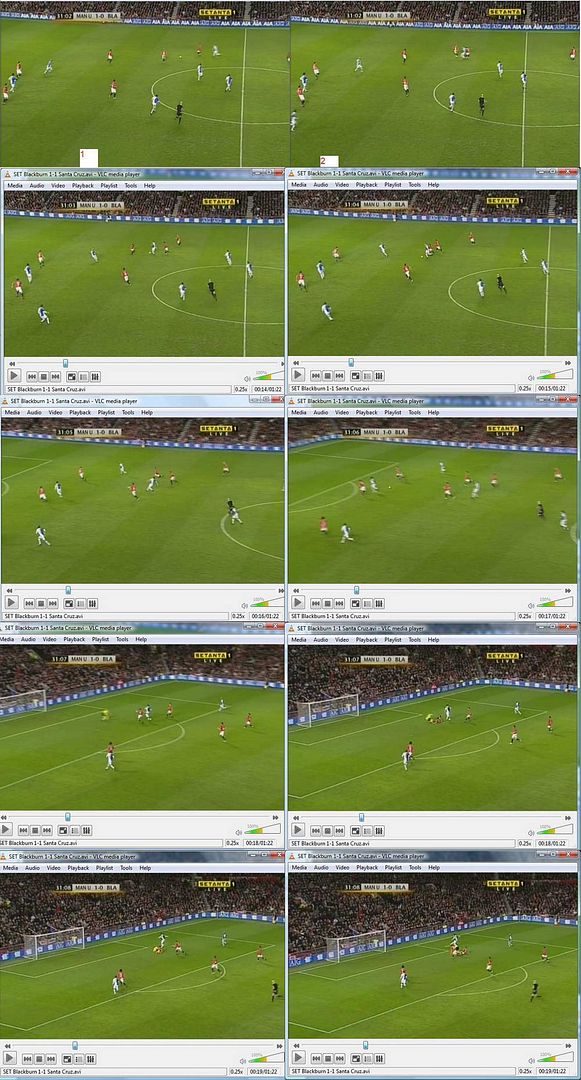


 Took me a while writing this.. Sorry if you don''t understand

 0.8267sec
 1.02
1.02
 7 queries
 GZIP Disabled