 WHEEK~WHEEK~
* Unlike cats they do not destroy the local wild bird population.
* Unlike hamsters, and some other small rodents they do not sleep all day.
* Unlike rabbits they eat little, can be handled easily, and can even stay indoors.
* Unlike snakes, and other reptiles they do not need extra heat and light.
* Unlike birds they do not make incessant noise.
* Unlike fish they can be handled and give affection.
* Unlike horses they do not need regular veterinary attention or expensive upkeep.HistoryThe Guinea Pig has its origins in the high mountains of South America. Natives of modern day Bolivia, Peru, and Ecuador domesticated the Guinea Pig for use as food. To this day, Guinea Pigs are still raised for food in certain areas of South America.
In the 1600s Spanish sailors were the first to adopt Guinea Pigs as pets and brought them back to Europe from South America. Since that time, Guinea Pigs have been bred to produce a wide variety of types of Guinea Pigs.
These small furry creatures came to be known as “pigs” because of the squeaking noises they make – Guinea Pigs are not related to pigs. The name “Guinea” is believed to have been derived from the route that was traveled to bring these furry animals to Europe – by way of Guinea. Many other cultures throughout the world have also adopted a derivation of the “pig” name for these animals. The scientific name for the Guinea Pig is Cavia porcellus – translated in Latin to mean “little pig.”
Scientific InformationKingdom: Animalia
Phylum: Chordata
Class: Mammalia
Order: Rodentia
Family: Caviidae
Genus: Cavia
Character InformationGuinea Pigs are nosey, friendly characters that are easily frightened and always rummaging around for something to nibble on. These furry companions generally weigh between 1 and 3 pounds and can grow up to as big as 15 inches long. The average life span is between 4 and 8 years. Unlike other rodents, Guinea Pigs find a mating partner and stick with that partner throughout their lives.
Guinea Pigs are not as agile as other members of the rodent family – they shy away from jumping, climbing and heights. When they get excited, they will “popcorn” – do little jumps up and down. When necessary, Guinea Pigs will do limited climbing such as going up and down stairs.
HOMEWhen choosing a new home and location for your guinea pig, it is important to consider the comfort and safety of your pet. Choose a safe, quiet location that gets plenty of air circulation and where the climate can be controlled. Guinea pigs prefer to live in 60 to 75 F degree temperatures. In hotter climates where temperatures extend over 75 degrees, provide your pet with a frozen ice pack in the bottom of the cage so the pet can cool itself. In cold weather, you may want to cover the cage with a warm blanket. In addition to climate concerns, constant or sudden loud noises in the home can cause the guinea pig undue stress – find a location that allows for social interaction without all the chaos.
Your guinea pigs enclosure should be between 100 and 180 square inches of floor space – any less space causes your pet to feel cramped. The sides should be at least 10 inches tall. The enclosure should be made of easy to clean material such as wire, stainless steel, glass or thick plastic. Cages made of wood are not recommended as they are hard to keep clean and are more apt to get chewed on, eventually creating an escape route for the pet.
The best type of bedding is hay – it’s great for sleeping and for snacking. Bedding should be cleaned weekly and the enclosure should be washed with hot soapy water and a non-toxic disinfectant. While other types of bedding can be used, be sure to avoid cedar wood chips, and saw dust. Cedar, while it smells pleasant, is actually toxic to guinea pigs and should be avoided as a choice of bedding. Saw dust tends to bind itself to male genitalia and should also be avoided.
Wire bottom cages can be convenient ways to keep urine and feces out of the cages, as the waste can easily drop through the mesh onto the ground. While this may be the easy way out for some pet owners, be aware that wire cage bottoms are hard on hamsters feet and can cause open sores as well as present the opportunity for broken legs if a leg happens to slip through and get caught.
If your guinea pig scares easily, you should provide a box or enclosure inside the cage where your guinea pig can escape to and hide. Frightened guinea pigs can behave erratically and, if they have no where to hide, may harm themselves trying to escape whatever it is that scared them
» Click to show Spoiler - click again to hide... «
Exercising
Guinea pigs do not require as much exercise as their other rodent family counterparts. They generally do not enjoy running wheels or plastic balls for roaming the house. Guinea pigs can find plenty of exercise by simply exploring in and out of homemade tunnels and obstacle courses made of blocks.
Rather than exercise, a guinea pig prefers to lay around and soak up the sun. Be sure to not allow your pet in the sun for too long as overexposure can result in heat stroke.
DIETCommercial guinea pig food enriched with vitamin C will provide your guinea pig with a balanced diet and is available at pet supply stores. You can supplement your guinea pig's diet with fresh foods like carrots, any kind of fruit, dark green lettuce, cucumbers, dark green vegetables, potatoes, sprouts, uncooked rolled oats and corn. Introduce new foods slowly and in small amounts to reduce the risk of diarrhea. Use a heavy crockery bowl that can't be tipped over and is easy to clean. A salt lick is recommended to prevent mineral deficiencies. Hang it from the side of the cage to prevent contamination. Keep fresh water available in a suspended "licker" water bottle at all times.
» Click to show Spoiler - click again to hide... «
i) Vitamin C
- Should to be given it day after day to guarantee first-class health.
- The lack of vitamin C causes scurvy.
- Every guinea pig has to be given 10mgs of vitamin C on a daily basis to 1kg body weight.
- Vitamin C can also be added to 1qt of water, freshly made every 12 or so hours, alternatively a handful of kale or cabbage can be given, even a quarter orange.
ii)Oxbow cavy cuisine
- a timothy hay-layered pellet food (a guinea pig in adult stage will enjoy this food and it will promote good health).
- alfalfa hay- layered pellet based food (guinea pig be a little under 10 months old, a guinea pig that is mothers-to-be and is nursing requires a higher protein and calcium consumption)
Certain guinea pig chow contains artificial colors which have a bad influence on your guinea pig and makes them hard to please should they eat this kind of food.
Guinea pig mixed feeds also consist of nuts and seeds; these are high in fat and are not healthy for guinea pigs.
It is recommended to always serve food in a heavy ceramic bowl, as to prevent it from been tipped over while eating. The sides of the bowls should be high enough to hold back the bedding and fecal pellets. Washing the bowl after every meal is strongly advised and you also have to make sure that the bowl is well dried before adding fresh food. A guinea pig however is more concerned about what contents are in the bowl more than the cleanliness.
Water should be made easily available and free from contamination; you may do this by supplying more than one bottle of water which should be equipped with “sipper” tubes. Water bottles tend to become contaminated and clogged as the guinea pig chews on the end of the sipper tube and backwashing food particles up the tube.
Should you notice that your guinea pig is picking up a bit of weight, this could be the result of eating too many pellets, either out of boredom or they are lacking in exercise. Preferably decrease the amount of food, a guinea pig can fill up on hay and their daily vegetables, these foods are not fattening rather very healthy. Weighing your guinea pig on a daily basis and keeping a record of the weight of your guinea pig. Should you be concerned about your pigs’ weight, either a decrease or an increase in excessive amounts, veterinary advice is recommended.
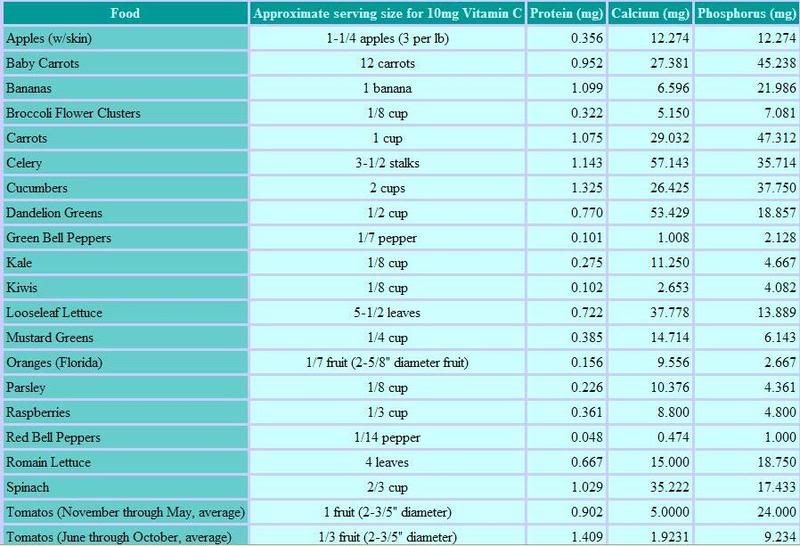
Vitamin C Content for Selected Fruits and VegetablesThe serving sizes given below are approximate values for obtaining roughly 10mg of vitamin C. Note that not all fruits and vegetables are created equal, so your actual mileage may vary. Protein, calcium and phosphorus totals are also approximate values for the given serving sizes.
Baby guinea pigs can start eating guinea pig pellets 5 days of age and should be completely weaned at about 10 days. Be sure to position the water dispense low enough so the smallest of the litter can reach the sipper tube – supplement the pellet diet by providing fresh vegetables daily.
HEALTH MATTERSA well-cared-for guinea pig may live four to seven years. Male guinea pigs can weigh between two to four pounds, females slightly less. Guinea pigs are sexually mature between five and eight weeks of age. Guinea pigs groom themselves with their front teeth, tongue and back claws, but they still require frequent brushing and combing to stay clean and tangle free, particularly the long-haired breeds. Use a soft baby brush or toothbrush. Because your guinea pig's teeth grow continuously, it's essential that you provide it with hard things to gnaw on to prevent its teeth from growing too long. Hard wood, untreated wicker and hard bread crusts are some suggested items. It's also possible for your guinea pig's nails to overgrow, causing discomfort and increasing your risk of being scratched. Ask your veterinarian to show you how to trim your guinea pig's nails.
» Click to show Spoiler - click again to hide... «
Clipping nailsGuinea pig nails should be trimmed as often as necessary and may not ever need to be trimmed depending on what type of surface your pet is accustomed to. Guinea pigs that spend a lot of time on hard, semi-rough surfaces will naturally wear down their claws to an acceptable length. If your guinea pig mostly lives on soft surfaces, the claws will grow longer into a sharp tip. Using commercially available cat clippers, clip the end of the claws – do not cut the claws too short to avoid injury.
Clipping nails videoInspecting TeethJust like other members of the rodent family, the guinea pig’s front two teeth – the incisors – will grow throughout its entire life. Because these teeth are always growing, if they are not worn down naturally or clipped occasionally they will curve into the mouth preventing proper eating resulting in starvation.
To care for your guinea pig’s teeth, make sure to provide your pet safe toys to gnaw on such as commercially available chew sticks, tree branches or wood blocks. The natural chewing action will wear down the front teeth to a healthy, acceptable length.
If the teeth become too long and are in need of clipping, take your pet into the local veterinarian to have the clipping done. Additionally, if you notice that the teeth are chipped, consult with your veterinarian.
BrushingGuinea pigs are fastidious groomers and generally will keep their fur clean by themselves. If you choose to brush your pet’s fur, use a stiff pet brush by applying moderate pressure to remove loose hair and to remove any mats. As you brush, inspect the ears and skin for any signs of mites, fleas or any other kind of skin irritation or abrasion.
BathingMost guinea pigs do not like the water – in fact, the panic induced by a bath can result in unhealthy stress and potential injury. Guinea pigs should not be bathed unless they absolutely need it – for medical reasons, such as fleas, or if they happen to get extremely dirty, mud or sewage.
As an alternative to a bath, consider some of the following options:
* Powder baths – apply the powder to the fur and brush out with a stiff brush
* Spot clean dirty bottoms with hydrogen peroxide – gently rub to remove feces and urine stains
* Spot clean fur with a washcloth and warm soapy water
HANDLING WITH CAREGuinea pigs are easily stressed and require careful handling. Always let your guinea pig know you're there by allowing it to sniff your hand. To pick up your guinea pig, slowly place one hand under its chest, just behind the front legs, and gently cup your other hand under its hindquarters. Once you have a firm but gentle grip, lift it up and immediately pull it close to your chest or lap so it doesn't thrash around. Guinea pigs feel most secure
when they're held close to your body and when their feet are supported. Since guinea pigs aren't very agile, a fall could result in serious injury. Guinea pigs love to have their heads scratched and will frequently make a "chattering" sound similar to a cat's purr to show their appreciation. The more you handle your guinea pig, the friendlier and tamer it will be.
BEHAVIOR BITSGuinea pigs are social creatures and enjoy the company of other animals, especially other guinea pigs. Males generally don't get along, however, unless they're neutered. Two females will usually do fine together, as will a male and female. Be sure to have the male neutered, otherwise you'll soon have unwanted litters. Guinea pigs have a keen sense of sight. They also have the ability to recognize all the colors of the spectrum. Their hearing is even better than their vision, and they can quickly learn to respond to a specific sound. Guinea pigs don't use their claws to carry food to their mouth, but put their front feet on the food to hold it still. Young guinea pigs love to jump, so you might want to build them a little obstacle course for exercise.
BREEDS OF GUINEA PIG» Click to show Spoiler - click again to hide... «
ABYSSINIAN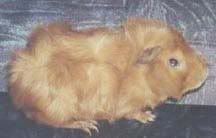
Hair grows in swirls all over the body, hair neither short nor long (about an inch or so)
ALPACA (Boucle)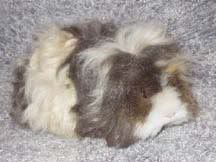
Like a peruvian but with wavy hair like a texel as it has the rex gene.
AMERICAN / ENGLISH SMOOTH COAT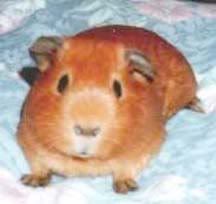
Short haired, smooth and can be of any colour.
HAIRLESS PIGS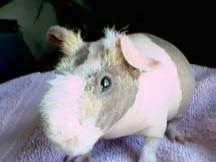
There are 2 types of hairless pig:
Skinny Pigs - Have a little fuzzy hair on their nose and feet.
Baldwins - Have no hair at all
CORONETThe coronet is like a cross between a sheltie and a crested in that it has long straight hair but has a crest on the forehead.
CRESTEDEnglish: A 'smooth' haired guinea pig with a flat 'swirl' of hair forming a crest on the forehead. The crest is in the same colour as the coat.
American: The same, however the crest is white in colour.
MERINOLike a coronet (long hair with a crest) but wavy like a texel -it has the rex gene.
PERUVIANLong hair growing towards the face (like a long haired abyssinian)
SHELTIE (Silkie)Long straight hair flowing away from the face. Short hair on the face (like a long haired 'smooth' coat).
TEDDY / REXShort fuzzy hair ! The Teddy and the Rex look the same but have different genetic make up.
TEXELLong hair in a wavy pattern, like a cross between a sheltie and a rex but not as fuzzy as a rex, more wavy
See more details here:
Cavy breeds and coat type SOUNDS» Click to show Spoiler - click again to hide... «
WheekingWheeking is aimed at us humans, 'feed me now please'. If its veggie time, if you only have to pass their cage and they tell you 'where are you going?, its feeding time mum'. If they hear anything that sounds suspiciously like food might be coming, they will also start a chorus of wheeks. Even closing the back door signals some lovely fresh grass might be on its way or opening the fridge door.
RumbleA rumble, which sounds like a purring sound, happens usually when a male piggy is romancing another guinea pig. A female can also make this sound if she is in season. A rumble sounds deeper than a purr with a vibrating effect. While making this sound a guinea pig will sway their hips and walk around another guinea pig. This is known as the mating dance, other terms used are motorboating or rumble strutting.
PurringA purring guinea pig is experiencing enjoyment/pleasure. You may hear this sound if you are petting your guinea pig. Purring does sound like a rumble (mating noise). A purr can actually have more than one meaning. If it happens very suddenly, and you aren't petting your piggy, then this purr will sound much shorter and they will suddenly stand still like a statue (freeze). This shorter purr is often described as a 'durr' sound. Its because they have heard a sound like the telephone ringing or a knock on the door and they are afraid of this sudden strange noise. They may just make this noise once or repeat the noise, depending on if the 'threat' has gone away. Some guinea pigs will also make this short sound when they are given a veggie treat.
ShriekingShrieking sounds like a very sharp, high pitched wheek and it means your guinea pig has suffered pain or they may be very afraid. You may hear this sound if a guinea pig has nipped a cage mate or you may hear several shrieks if your vet has given an injection. .
Guinea pigs can also shriek as a warning to another guinea pig, telling them to 'keep away' if they are showing aggression. A defensive shriek is not made out of aggression, its because the shrieking guinea pig is afraid, panicking and just wants to be left alone and certainly doesn't want to have a confrontation with the other guinea pig.
Shrieking can also mean an alarm call. Young guinea pigs calling to their mother or a piggy calling to a cage mate. This can happen if a guinea pigs cage mate is out of the cage or they have been seperated for whatever reason.
Chutt/Chubble/MutterThis is a hard noise to describe, when your guinea pigs are out and about, you'll notice they will be happily walking around on the floor, going about their business and this is when they may make a repeated chut sound. It really sounds as though they are muttering to themselves. It means they are relaxed and contented.
Whinning
Whinning1Its usually heard when a guinea pig is resting and if disturbed by another piggy in the cage, they let their feelings known by moaning at them. It starts off fairly quiet, but will increase in volume if the intruding guinea pig doesn't get the message. Guinea pigs will also have a moan at us humans if they don't like what we are doing.
ChirpingRare sound made by some guinea pigs. You may hear a few people say they've heard their guinea pigs "chirp". Not all guinea pigs will make this noise and some cavy owners have never heard it. Others have a special pig who chirps frequently. It is said to be a very bird-like chirp and can vary in frequency (faster or slower). Chirping guinea pigs may look like they are in a trance.
Teeth ChatteringA guinea pig that starts teeth chattering is an upset/angry guinea pig. If a piggy is heard doing this to another piggy, it means they are agitated and are warning the other guinea pig to keep away. Often guinea pigs that are first introduced to each other will start teeth chattering. When two boars meet for the first time, they may chatter at each other, trying to sort out their position in the hierarchy. It can also happen with sows when they first meet. If teeth chattering increases, the fur around their necks may become raised to make them seem larger. They may also stamp their feet from side to side making themselves rock, looking very stiff with their movements. This isn't the same as a guinea pig rumble strutting, this type of behaviour is aggressive behaviour. If you see your guinea pigs doing this to each other, its best to separate them before they fly at each other, just remember to watch your hands. Place a towel over them to confuse them, then you can separate them.If a guinea pig chatters at you, they are also telling you to keep your distance.
PARASITES» Click to show Spoiler - click again to hide... «
Mange
Mange is a common parasitic disease that affects the skin of guinea pigs. This parasite can cause skin irritations and hair loss in large clumps on the back of the guinea pigs. If you suspect your pet is afflicted with mange, it is best to pay a visit to your veterinarian for further examination. While mange is treatable, an illness involving hair loss could indicate further problems, either internal or external.
Ringworm
Ringworm is a skin parasite that can cause skin irritation and hair loss around the head, neck and nose of the guinea pig. This parasite generally infects young guinea pigs and is transferable from one guinea pig to another and can be transferred from the pet to its owner. Always use caution when handling guinea pigs that you suspect may have contracted ringworm and always wash your hands before and after handling your pet.
To treat ringworm, take your guinea pig to your veterinarian – ringworm is typically treated by either topical or oral medication
Lice
Lice is a skin parasite that lives by biting and sucking blood from the guinea pig – they are generally found attached to the hair follicles. Lice can cause sores, hair loss and severe skin irritation and itching. If you suspect your pet has lice, use caution when handling your pet as lice can be transferred from pet to human. Always wash your hands before and after handling your pet.
Lice is generally treated by a medicated shampoo. Before beginning treatments, always consult with your veterinarian.
Ciccodioses
Ciccodioses is a liver and intestinal disease caused by a single celled parasite. Guinea Pigs typically contract this disease by consuming food or water that has been contaminated with feces. Physical response to this type of disease depends on a number of factors and can be manifest in a number of ways. Guinea pigs infected with ciccodia can experience blood in the feces and diarrhea, and become dehydrated and experience weight loss. Pet owners should seek the help of a veterinarian to treat this illness.
DISEASES» Click to show Spoiler - click again to hide... «
Scurvy (Vitamin C Deficiency)
Guinea pigs bodies do not produce vitamin C and therefore must consume an adequate supply of it from fresh fruits and vegetables and meal supplements. Vitamin C deficiency can cause scurvy, causing lethargy, weak and disfigured bone and teeth development, swollen joints, reluctance to move, and spontaneous bleeding from the gums. Guinea pigs that are experiencing these symptoms should be seen by a veterinarian. Scurvy can be reverse through diet changes or vitamin C injections.
Pet owners choosing to supplement the diet with pellets loaded with vitamin C should be sure to keep the pellets in a cool, dry, dark place as vitamin C will deteriorate if left in direct sunlight or prolonged heat.
Hair Loss
Hair loss in guinea pigs occurs at various times in the guinea pig’s life cycle. Breeding females and weaning infants may experience hairloss – over time the hair will return on its own. Additionally, as young guinea pigs mature and establish their place in the breed’s pecking order, more dominant guinea pigs may chew off the hair of the less aggressive guinea pigs in the litter. Hair can also be lost because of fungal disease and external parasite infestations.
Cancer
Cancer is rare among guinea pigs – typically only older guinea pigs are affected. Most tumors are benign and involve the skin and respiratory tract lining. Cancer may also affect the reproductive tract, mammary glands (breasts) and blood (leukemia).
Pneumonia
The most common bacterial diseases in pet guinea pigs is Pneumonia. Pneumonia is caused by bacteria that inhabit the respiratory tracts of guinea pigs. This disease is generally caused by stress, inadequate diet, and improper care. When a guinea pig contracts pneumonia they may experience labored or rapid breathing, fluid from eyes and nostrils, laying down, rolling, a lack of desire to eat and lethargy.
If you suspect your guinea pig has pneumonia, contact a veterinarian immediately as death can occur suddenly. Treatments include antibiotic injection and rest.
It is important to note that the most common pneumonia causing bacteria in guinea pigs is natural flora for rabbits and rats – if rabbits and rats are kept as pets in the same home, they must be kept away from each other.
How to Determine the Sex of a Guinea Pig» Click to show Spoiler - click again to hide... «
Guinea pigs can multiply rapidly, even at a young age. It is essential to determine a guinea pig's gender to eliminate the chance of an unwanted litter. Even very young sows may be carrying babies when purchased from a pet store. By learning to tell the sex of guinea pigs, you make an informed choice when bringing one into your home.
Step1
Calm the guinea pig. Hold it close to your body, speaking in a soothing tone while stroking its fur.
Step2
Hold the piggy gently but firmly. Place one hand under its rump. Put your other hand on its chest, under the front legs.
Step3
Stand close to a mirror. Pull the guinea pig upward, its back against your chest, exposing its full underside.
Step4
Use your rump-holding hand to spread the guinea pig's back legs and closely examine the genital area.
Step5
Look for a Y-shaped opening. Females have a smooth area of skin in the crook of the "Y." Males have a penis head that looks like a small, round "button" of skin. In older males, testicles are often evident just under the "Y."
Step6
Tap the genital area gently if you are still uncertain. In females, the "Y" will open more fully. In males, the penile shaft will slowly expose itself.
To determine sex of a guinea pig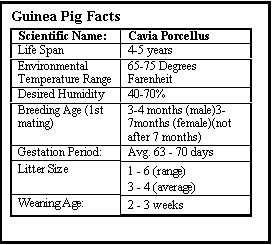

____________________________________________________
Below are the useful site for you to get info about Guinea Pigs:
Guinea LynxJackies Guinea PiggiesKornagePeter GurneyWinking CavyThis post has been edited by sharil_routh: Jun 18 2008, 10:17 PM Attached File(s) Caring_for_Your_GP_complete_.doc
 ( 67k )
Number of downloads: 27
GP_Caresheet.doc ( 31k )
Number of downloads: 24


 May 3 2008, 10:32 PM, updated 18y ago


 Quote
Quote


 Also easier to see how much you're cutting using my clipper.


 0.0297sec
 0.44
0.44
 6 queries
 GZIP Disabled