QUOTE(Takudan @ Nov 25 2024, 10:53 PM)
I can't see clearly exactly because it's locked, and when I tried to report the profile, FB just returned me with an error lmfao.
Honestly though, how did you 100% confirm it's a fake account?
I now recall a report I actually took the effort the compile evidence and submitted to BNM earlier this May. It was a scam FB ad and I screenshotted and provided link to the ad library and whatnot. To my disappointment, BNM responded with a generic "pls beware". Like no shit Sherlock, I reported this so ofc I know it's bs? I took a peek for the next few weeks, it was just there so I gave up.
Now that I look for that ad again, the page and everything vanished from the internet, but BNM didn't update any alert list, I suppose it's because there was no company registration number(??)
Tbh I don't think my report did anything so it feels silly to try... do you have any success story to tell?
Hi! Let me answer the success rate of reporting part – my next response is going to be quite long. I have had success in reaching the minister of communications and also have had success in reaching MCMC hotlines to have content taken down and also escalated to law enforcement.
As a matter of fact, minister Fahmi once assisted me in removing the account of a local Malay extremist, which was encouraging. MCMC can be a little bit slow in acting, though, but if you do report, then typically they have a cost to take action, and your report will add to the bank of reasons as to why it is that they need to take action.
Let me now talk about the idea of fake accounts.
If we want to be really technical about it, the term fake account doesn't really make sense and we need to actually break it down.
Rather than speak about whether an account is fake or is real in terms of existence, it makes more sense to think of what is real or is fake in terms of its behaviour: All accounts exist, but not all accounts represent the people that they claim to be, and I claim that what we would typically call a fake account is an account that's associated with a particular behaviour pattern that Facebook itself has mentioned, that is called inauthentic behaviour.
Here is the original report:
https://about.fb.com/wp-content/uploads/202...ort-Q2-2022.pdfWhat is Inauthentic Behavior? Inauthentic behavior (IB), as detailed in our Community Standards, is an effort to mislead people or Facebook about the popularity of content, the purpose of a community (i.e. Groups, Pages, Events) or the identity of the people behind it. It is primarily centered around amplifying and increasing the distribution of content, and is often (but not exclusively) financially motivated.
It is most accurate to describe what's happening here with these accounts as what Facebook calls CIB, or Coordinated Inauthentic Behavior.
Facebook says of Coordinated inauthentic behavior (CIB) the following:
“We view CIB as coordinated efforts to manipulate public debate for a strategic goal, in which fake accounts are central to the operation. In each case, people coordinate with one another and use fake accounts to mislead others about who they are and what they are doing. When we investigate and remove these operations, we focus on behavior rather than content — no matter who's behind them, what they post or whether they're foreign or domestic.”
Based on what I can see, the behaviour pattern of these accounts is to do two main things.
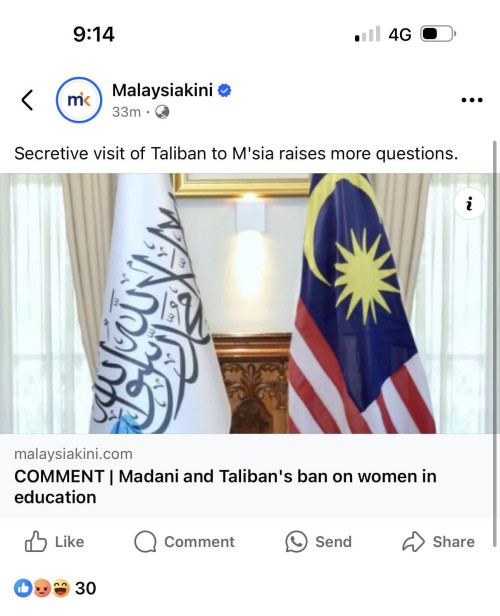
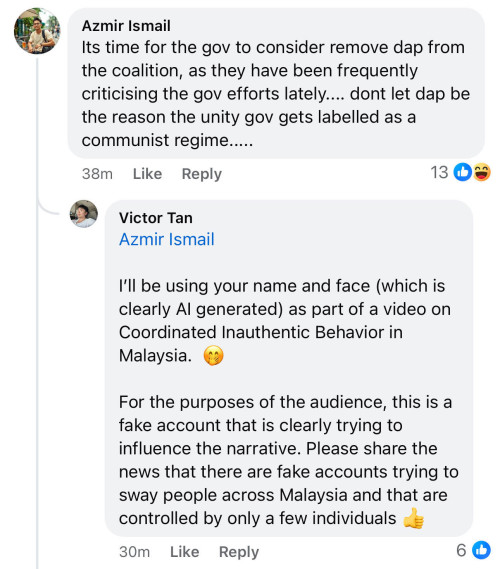
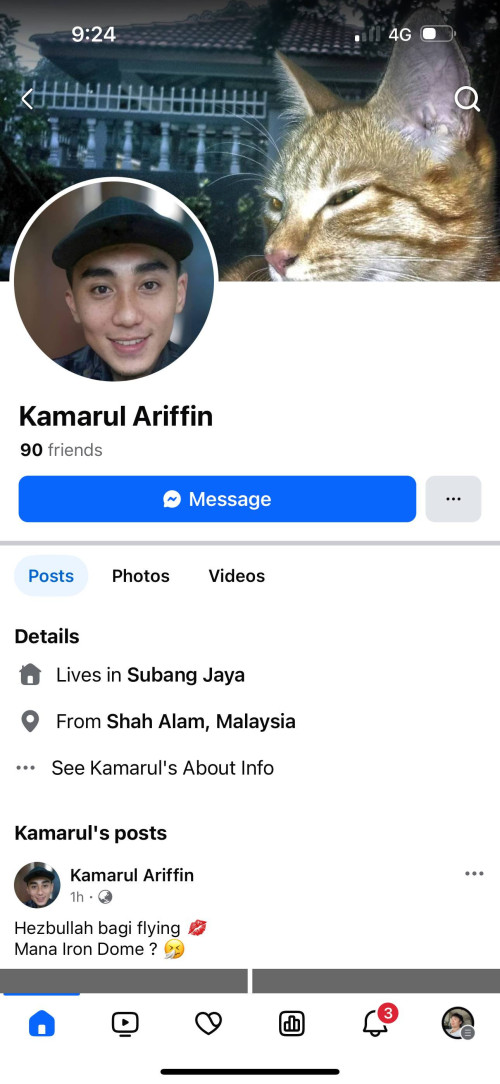
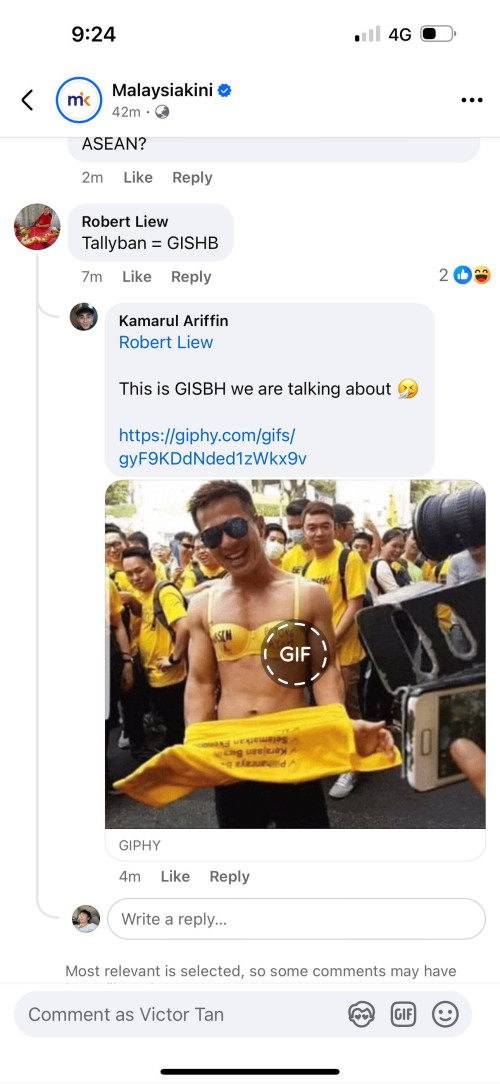
First, they repeatedly comment on contentious posts across news sites, such as recently the signboard issue, and recently the visit from the Taliban to the Education Ministry.
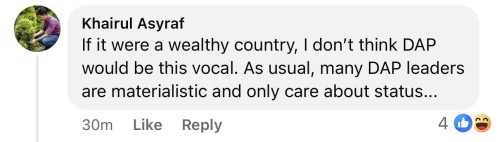
From there, they start structuring a narrative by criticising specific individuals, almost always in association with a political party.
For example, they will go around repeatedly criticising DAP, as they have done with Tiong King Sing, Anthony Loke, etc.
The second thing that they do is that they like one another's comments, and so they end up creating the impression of mass engagement, because sometimes there can be more than 10 likes in the course of 10 minutes for a comment on an article or something.
The result of these two things is that whenever anyone visits Facebook and views the article, they will see that there is a large number of likes or engagements on the bot's comments, creating the impression that a huge number of people are against DAP or whatever it is that the bots are trying to target.
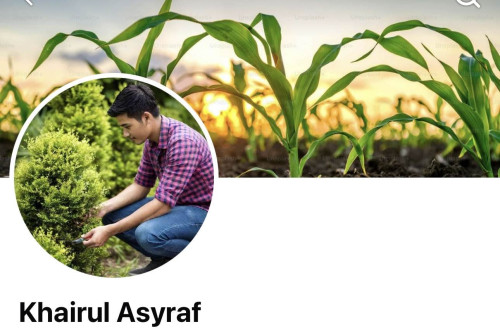
Now, for the idea of fake accounts once again, the fake accounts, as I'd call them, misleads people about who is actually behind the account by putting in a name that is not guaranteed to actually be owned by the original person, and in any case cannot be verified in the same way that a social media profile of a real person can be, and an AI-generated profile picture is placed there as well, which further obfuscates things, because AI-generated profile pictures have a similarity to reality that you might not notice if you don't look close up - the thing is that they also lock their accounts so you can't really zoom in on the profile picture, so it's easy for you to mistake them for something else.
Anyway, that's how I use the idea of a fake account, or how I understand it. I think it's a really huge threat to Malaysia, and I really hope that something can be done about it. :/


 Nov 25 2024, 03:52 PM, updated 2y ago



 Quote
Quote

 0.0199sec
 1.02
1.02
 6 queries
 GZIP Disabled