


 Feb 19 2023, 11:47 AM, updated 3y ago


Insects to swarm European shelves and into our stomachs
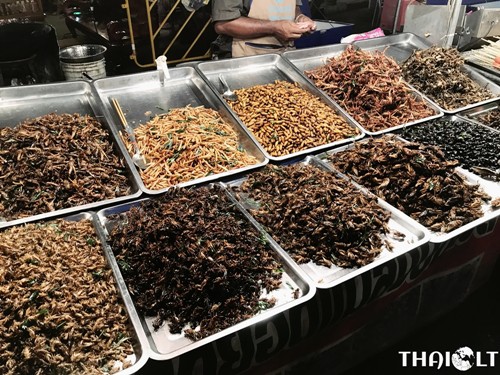
People have been munching on creepy crawlies for millennia, but it seems Western countries are having to get used to that idea all over again.
Diets in much of Europe may now be expanding faster, as new laws in the European Union which came into effect on Jan 24 mean more types of insect can now be processed into food.
That means gourmands can dig into food containing house crickets and the larval form of mealworms and migratory locusts.
While proponents say insects will play an increasingly important role in sustainable diets, that prospect still leaves many torn between curiosity and disgust.
In the European Union, all novel foods need to be approved and the latest regulation allows house crickets to be frozen, dried and used as powder in food. That means Vietnamese company Cricket One, for example, may market its partially defatted house cricket (Acheta domesticus) powder.
Scientists have already studied the crickets after they were included on a list of novel foods.
The next change came on Jan 26, when larvae of the lesser mealworm was allowed in food. Legally, food can already include migratory locusts and larvae of the yellow mealworm.
What kind of foods contain crickets?
All kinds. Breads, bread rolls, biscuits, crackers, baking mixes and pasta, sauces and soups, meat and milk substitutes, potato products or chocolate all can contain cricket powder, for example. They would then not be labelled vegan or vegetarian.
Are we going to see a lot of that kind of thing in the near future?
That’s not clear yet. Right now, food containing insects is “really a very, very small niche market”, says food chemist Armin Valet of a German consumer advice centre.
It varies from one country to the next, and in Germany, for example, you can only get a few products that contain small amounts of insects, such as energy bars or noodles. Mixing insect powder into biscuits or flour is “really still a long way off,” says Valet.
Might we be eating insects without knowing it?
No. Any products containing insects have to be labelled as such. “We are not aware of insects being just somehow mixed into products,” says Valet.
Meanwhile, the European Commission says “it is up to consumers to decide whether they want to eat insects or not.”
The regulation says lists of ingredients must state, for example: “Frozen Acheta domesticus (house cricket)” or “powder Alphitobius diaperinus larvae (lesser mealworm).”
But Valet wants to see even clearer labels such as “biscuits containing insects” or “pasta contains insects”.
What about people with allergies?
After evaluating a series of studies, the European Food Safety Authority concluded that the powder of house crickets in the amounts proposed is safe. But many foods, including insect powder, can trigger rare allergic reactions.
People who are allergic to crustaceans, molluscs and dust mites could be affected. Again, clear information should be highlighted close to the ingredient list. The chitin in the exoskeleton of insects, for example, can trigger allergic reactions. It’s an insoluble dietary fibre that is also found in shellfish and mushrooms.
Why would you use insect powder anyway?
Not for commercial reasons, if you ask Valet.
“Products containing insect meal are often sold at significantly higher prices,” he says.
However, the price may fall for companies in future, he says, in which case it’s important to ensure consumers are not misled.
How nutritious are insects?
People around the world eat more than 1,900 species of insect.
The US Food and Agriculture Organization (FAO) has carried out a series of studied and found they are a highly nutritious and healthy food source, containing large amounts of fat, protein, vitamins, fibre and minerals.
Insects contain a protein content similar to beef, pork or turkey, though this varies depending on the type of insect, says the German Consumer federation.
Are insects sustainable as a food source?
Eating insects is considerably more sustainable than beef, pork or chicken, according to the WWF environmental organisation.
Compared to meat, producing insects requires much less agricultural land, or about half, compared to chicken. Crickets only need about a twelfth of the amount feed that cattle need to produce the same amount of protein, says the FAO.
Insect farming also releases fewer greenhouse gases. Furthermore, you can eat more of an insect than a cow, with the edible proportion of insects at 80%, which is significantly more than that of cattle at 40%, according to German calculations.
Will bugs from outdoors be on our dinner tables in future?
No. The insects we eat will not be gathered up from the great outdoors but will be farmed specially for the purpose, say consumer advisors. But further clarity is needed, they say, as many countries lack regulations governing how insects are kept. Consumer advisors want to see more rules on the way bugs are used in medicines, for example, and to minimise cruelty when they are killed. - dpa
https://www.thestar.com.my/lifestyle/living...to-our-stomachs
So Shocking!, Better read the label of processed food
 Quote
Quote











 0.0177sec
 0.62
0.62
 5 queries
 GZIP Disabled