QUOTE(babisotong @ Feb 3 2023, 05:17 PM)
so we can assume new Axia realistically gonna improved FC by atleast 10%~15%, so from 15km/l ~ 18km/l will be improved to 17km/l ~ 20km/l .
either way, it's too early to assume since we didn't even see the car yet, don't even know whether the car is heavier or ligther.
'Too early to assume'
'We can assume'
A bit confusing right? Would be really good if they can get that improvement. But again must be apples to apples comparison (i.e. my new Alza has much better FC than my old Alza... obviously so just from the fact the old Alza was almost 14 years old at that point, so comparing 1 year old and 14 year old car) of similar age vehicles with similar usage.
QUOTE(Zot @ Feb 3 2023, 05:30 PM)
The FC meter is accurate in the sense that it keeps correcting the calculation. After refuel,if the average was low the estimated range will be also low based on current average. If high, the average is higher. I can honestly say that I used to do manual calculation many time over a long period of time. Sampling many time over the years thinking that if the manual calculation dropped far below average, I would know that there is something wrong with engine. Each time I refuel the car, I reset the fc meter to zero and compare the meter and my calculation. They were pretty much the same. In this case, both cars are the Perodua. So, calculation algorithm should be the same.
Round trip to office is 100km exactly unless I went to Lotus nearby or somewhere during lunch.

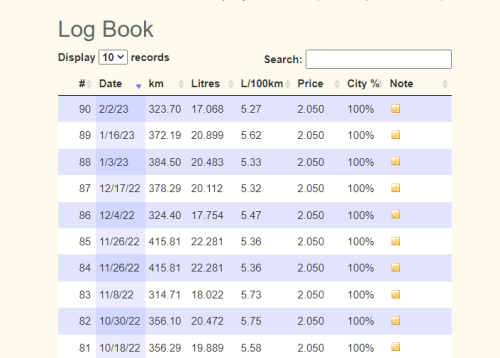
My experience with the Perodua FC calculation is it is consistently 'off' from my actual calculated fuel consumption. For me I don't calculate FC based on individual pump up (because that would depend on how full you fill up in the initial pump and 2nd pump both), instead I use an app to track mileage and amount over time. Then I track not the per-fueling stats but the average stats over time (you can also running average to see trends if your driving varies by time of year). By this calculation the dash estimate is always too optimistic in my new Alza, by about 1 km/l. The possible source of error here would be how accurately the internal sensor can measure the exact amount of fuel each time you pump (definitely much less accurate than the petrol pump measurement due to profit motive of petrol distributor compared to car manufacturer). So imagine car owners A and B with exact same vehicle, but A always fill 'full tank' which is slightly more than B 'full tank', doubt that the car can differentiate the total amount of fuel in that case due to resolution/sensitivity of sensor.
tl;dr - reading from dashboard give general idea, but not as reliable. Measure yourself.


 Feb 3 2023, 02:53 PM


 Quote
Quote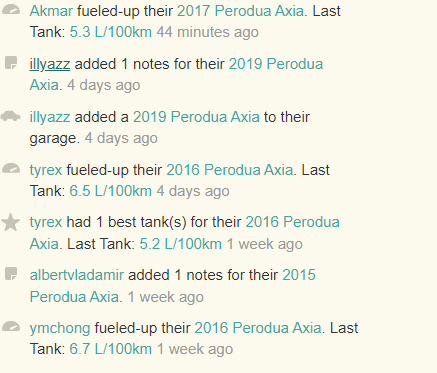

 0.0164sec
 0.49
0.49
 6 queries
 GZIP Disabled