Welcome Guest ( Log In | Register )

Outline · [ Standard ] · Linear+

 Multimeter recommend, Learning the Basic now

views
     
SUSceo684
post Mar 2 2021, 10:30 PM

Component Burner
********
All Stars
11,667 posts

Joined: Jan 2003
From: Klang/Subang


QUOTE(Maxieos @ Mar 2 2021, 10:13 PM)
Sanwa , Uni-T , Flukes

As I check , Flukes too expensive.Between Sanwa and Uni-T.

Learning for basic testing AC & DC for
-AA recharge Battery (eneloop)
-Phone / Laptop battery ( capacity drop)
-Check for spoil circuit board location on motherboard or handphone.Finding whether it's capacitor problem or chip transistor .
-Maybe check for spoil board on LED monitor , adapter and find a replacement.

mostly purpose is to check for circuit board error issue when it's not working.

Since a beginner , i am not sure which one to choose.
Leaning some basic DIY fixing.
Also , do I need different multimeter to test for car battery or alternator ?
*
Car batt pls get a battery tester. The current (CCA) remaining is in few hundred amps and no basic multimeter can withstand (maybe max 10A only), even a half dead car battery at 200A also will blow up your meter twenty times over before we go into "voltage under load" condition.

https://shopee.com.my/product/51048683/6713...38-1614695768.9
The uni-t auto range meter is easier to use than the manual range select models. It cost more like 58 bucks but for the price able to do capacitance test.

This post has been edited by ceo684: Mar 2 2021, 10:38 PM
SUSceo684
post Mar 2 2021, 10:44 PM

Component Burner
********
All Stars
11,667 posts

Joined: Jan 2003
From: Klang/Subang


Fluke was too expensive, I usually work with AC 230/415V, need to see AC amps so I got a Kyoritsu clamp meter, works very well for AC amps. Clamp meter usually for noncontact amp measurement and wont be able to do the finer stuff like capacitance test.

For finer work like what TS described the usual multimeter with probes from uni-t eg UT33-A will be good enough.

Essentially..the meter u need will be based on what kind of measurement u intend to do

AC A >10A use clamp meter
Small AC A or DC A below meter threshold (usually 10A max, could be less!) can use the normal multimeter
Big DC A need meter that can support

AC V/DC V normally V is very easy to measure both types also will work

Resistance ohm also common like V, both also can

Capacitance only better multimeter have it. Clamp meter seldom have this. Uni T 33A, Kyoritsu 1009 also can.

Although imma Kyoritsu girl myself coz used to using them in uni, whilst my dad is more of a Fluke person.

This post has been edited by ceo684: Mar 2 2021, 11:09 PM
SUSceo684
post May 4 2021, 09:36 AM

Component Burner
********
All Stars
11,667 posts

Joined: Jan 2003
From: Klang/Subang


QUOTE(Maxieos @ May 4 2021, 06:34 AM)
Can you describe what are the different between brand which is more expensive ?
There are a lot of model , what is the different in model ? having extra function to test AC/DC accurate ? I prefer digital.

Do I need a separate model to test
-PC motherboard
-Fixing Phone
and etc as above?
:confuse:
*
Basically the minimum clamp meter you should ever use is a Uni-T. Insulation of the meter will be suspect if no name meter. NCV test. Some are special model w a smaller clamp for tight spot.

All the above desktop application you can use digital multimeter.
There is no one size fit all. It really depends on what scope one does.
Some function overlap. Some are specific to that meter type.

The fundamental differences between the normal desktop meter and clamp meter are AC amps and capacitance measurement.

Clamp meter (being indirect) can measure big AC amps. Desktop meter (direct) will probably go kaboom above 10A. Indirect still ok for electrical, better w true RMS accuacy.
-- Direct probe current measurement (in desktop meter) is for finer electronics work: much more accurate but the range is small.


Desktop multi meter can check capacitance (usually), clamp meter not covered.

Below is Kyoritsu clamp meter. Does 1000 AC A, V AC, V DC, resistance ohms and continuity. NCV indicator works anytime an AC V is detected in close proximity.
Attached Image

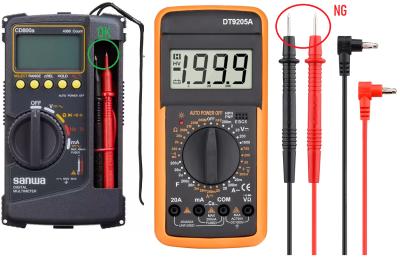
Below is knockoff Sunwa (pirated Sanwa) only does up to 0.25 AC A, V AC, V DC, resistance ohms, crude hFE for transistor, and continuity.
Attached Image

This post has been edited by ceo684: May 4 2021, 09:58 AM
SUSceo684
post May 4 2021, 09:47 AM

Component Burner
********
All Stars
11,667 posts

Joined: Jan 2003
From: Klang/Subang


QUOTE(Maxieos @ May 4 2021, 06:34 AM)
Sorry for all those who reply in my thread.I though of buying one As for Starter who try to learn electronic but previously went back to work , doesn't have time.Now going to mco or work from home again so i have time study a bit more.

About the Budget Below RM150 ? because I really don't know the real pricing for multimeter

Reason on buying , i repeat.
-As starter or beginner learning electronic
-Want to test all my old AA or AAA battery whether which one I should throw.
-Trying to identified which part of Old spoil Motherboard/Printer/Scanner/LCD monitor and keyboard which have double tab issue.If possible ( want to revive old spoil hardware) by replacing the parts.
-Want to learn on fixing old Mobile phone which does not detect sims card , screen crack , brick and etc.Maybe need a learn soldering technical part.
-Fix old digital watch and analog clock not running.
-Fixing and testing Electronic application like Thermo Pot cannot pump water.

Not going for car battery , start with beginner multimeter first.

So which brand one do you suggest and the price ? My budget max rm200.I am not sure the actual price as mention.That is the above requirement i need for multimeter.Mostly , is to identified what is spoil in the blueprint diagram and try to find a replacement.
*
Multimeter will work fine for the above electronics testing application. thumbup.gif
Clamp meter only if you wanna measure AC amps in your DB box. Multimeter being direct probe will not withstand big AC amps. Itu sahaja.

Brand wise any Uni-T will work fine if you don't wanna spend too much. However, some features like auto ranging, 10A DC amps, and capacitance may only be found in higher model.

RM40 below UNI-T UT33D+ can only do V/10 A/Ω - manual range NO capacitance

RM125 SANWA DIGITAL MULTIMETER CD800A - 600V/0.4 A/Ω/100 μF capacitance
RM130 FLUKE 101 - 600V/NO A/Ω/100 μF capacitance
RM120 Kyoritsu KEW1018H - 600V/NO A/Ω/200 μF capacitance
RM150 Kyoritsu 1009 - 600V/10 A/Ω/100 μF capacitance thumbup.gif
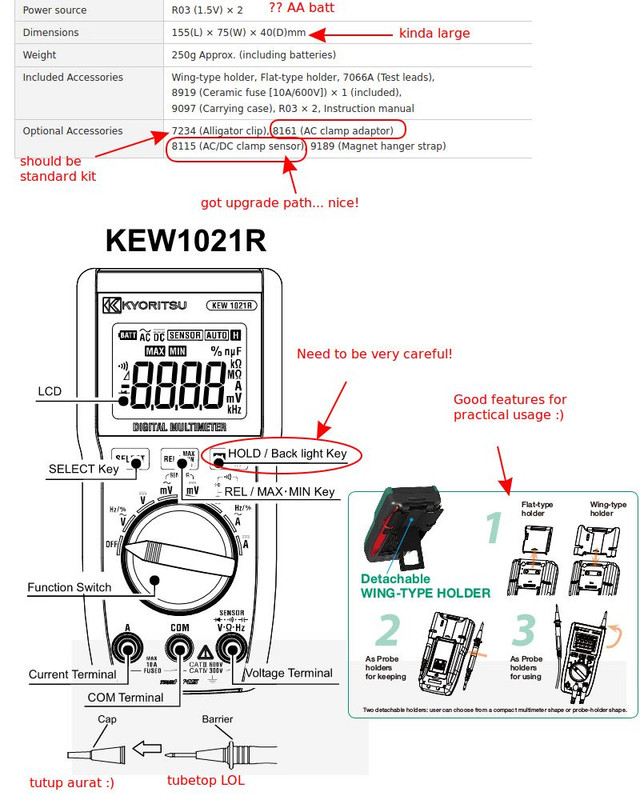
RM170 Kyoritsu KEW1021R - 600V/10 A/Ω/1000 μF capacitance thumbup.gif

RM85 UT202A clamp meter - 600V/600 AC A, NO DC A/Ω/4mF (4000μF) capacitance. If you need bigger capacitance testing you can look at the UT 203/ UT 204, they have even higher Capacitance Range for these as compared to the UT202A.

This post has been edited by ceo684: May 4 2021, 10:33 AM
SUSceo684
post May 12 2021, 01:32 PM

Component Burner
********
All Stars
11,667 posts

Joined: Jan 2003
From: Klang/Subang


QUOTE(ShadowR1 @ May 12 2021, 11:51 AM)
Using this.
[attachmentid=10877174]
*
Wah flexing. this for work?
SUSceo684
post May 12 2021, 03:06 PM

Component Burner
********
All Stars
11,667 posts

Joined: Jan 2003
From: Klang/Subang


QUOTE(ShadowR1 @ May 12 2021, 01:53 PM)
Yup ... comp bagi one ... using it for some year now ... change batt once ...

Build like a tank, work like a charm.
*
Yup, used to play around with my dad's company issued Fluke. But lower range la. Not ur model.
Sometime then I got my own Kyoritsu thumbup.gif

QUOTE(ktek @ May 12 2021, 01:58 PM)
sis u know a lot electrical thing also thumbup.gif
*
I dabbled in electrical a bit laugh.gif used to sell & commission inverters, automation sensors.

QUOTE(Cyclone1 @ May 12 2021, 02:02 PM)
Also don't forget to pay attention to the protection limit of the DMM, as indicated by CAT I follow by voltage number.  This CAT number indicate the amount of impulse that the DMM is designed for and you need to make sure you don't poke at area it is not capable of measuring.

E.g A CAT I 1kV DMM does not mean it can measure any kind of 1000V. It means it is only able to measure 1kV on a non-mains isolated circuit. You will need a CAT II instrument in order to do it on mains circuit. Go look up Measurement Category.

Protection limit is just as important as other characteristic, so remember that.
*
For detailed reading on CAT I II III IV see https://content.fluke.com/promotions/promo-...yguidelines.pdf

There will be a max safe rated voltage for each multimeter per CAT category.

QUOTE(ktek @ May 12 2021, 02:04 PM)
CAT include the body itself and probe?
*
This depends on the unit. Need to check spec sheet. Some can have lesser insulation on the probes. It will be stated on the unit where applicable, or where u plug into.

Example of this meter and referring to the fluke PDF above, this CAT III rated to 600V, means premise based three phase 415V also OK, safe to measure 415V equipment and interior wiring,
but CAT IV (TNB grid/outdoor connections) is only rated to 300V so can only use for 230V measurement for that use case, 415V TNB grid/outdoor connection (following the CAT VI type rating) will require a higher rating i.e. CAT IV 600V or better meter to be safe even though the meter technically can measure 600V on CAT III but safety wise its not guaranteed for CAT IV use case.

The amp rating of this meter also rated as 1000A (AC) only. No DC amps.

For electronics applicable should be a CAT I, as Fluke says higher CAT also no harm. But the CAT rating should follow the intended usage esp for electrical high voltage* 230/415V.
*HV as relative to 9V smarttag batteries, otherwise kena kecam by 66kV 132kV folks.

This post has been edited by ceo684: May 12 2021, 03:22 PM


Attached thumbnail(s)
Attached Image
SUSceo684
post Oct 14 2021, 11:01 PM

Component Burner
********
All Stars
11,667 posts

Joined: Jan 2003
From: Klang/Subang


QUOTE(okuribito @ Oct 14 2021, 09:52 PM)
thanks... would you know what test it is that need to check current Amps in the DB? I read that to prove DB is dead, NCV and Voltage is sufficient (haha dangerous to DIY work on live db)
*
Do NOT work on the live DB if you don't have any idea what you are doing in there.

Current Measurement
You can carefully position the clamp not to disturb the wires in the DB and be 100% mindful don't simply poke here poke there.

It is used in residential to troubleshoot AC that die off.. WH load amps.. getting a feel of 3 phase balanced or totally imba circuit assignment.
Usually I used them for commercial work/inverter load monitoring upon commissioning

NCV sufficient, follow with a 2nd test on voltage just to be sure.
You need to understand the concept of LDL (live dead live), prove the equipment works to measure, prove the dead circuit is truly dead reading, prove the measurement is repeatable on live again.

https://www.fluke.com/en-my/learn/blog/elec...voltage-testing

QUOTE(okuribito @ Oct 14 2021, 07:13 PM)
Can I ask why measure AC amps at DB box? Is it a normal test for troubleshooting? Curious to learn  smile.gif

The other thing is, I notice the regular residential DB is really crammed with wires, especially at the E & N bars; I'm curious how the clamps can be used. Perhaps only on the big wires in & out of the ELCB & main breaker?

LOL iinm I understand the clamp is really to measure current by inductance (also non-contact safety iinm). But I see many youtubers (some probably working electricians) use the clamp to hang up and free the hands (good idea biggrin.gif ). On the other hand, I notice Fluke DMMs have a magnetic strap accessory to do the same thing.
Can I have your opinion on the Fluke 101 for basic troubleshooting residential wiring  - light switches, power sockets, aircon/water heater switches? Is it sufficient? Not going to use for troubleshooting appliances that have capacitors ... just wiring (with the mains OFF) 

Thanks in advance

PS: I guess key criteria would be reliability & safety which everyone would expect from Fluke. Not so much features. Suggestions for other affordable brands/models most appreciated  thumbsup.gif
*
Clamps are for measuring AC amps under load safely. It is NOT a test by itself. It is a measurement.

Why usually at DB? Because its easy to access all the live wire.
There is no better spot (logically) as:
1. concealed wiring = need to tear down the whole wall
2. device on the other end is fixed in nicely = meaning there won't be enough space to slip in a clamp.
3. flexicord L and N cancel each other out = meaning forever 0A reading
4. Fundamental of Clamps = can only work for AC amps measurement when you can isolate only one leg.

Theoretically, you can use a clamp to check full load amps before the compressor motor jams up or sth along those lines.
Other than that, the fluke 101 is kinda like an overpriced A-class.. you get to check voltage and continuity with it. Cannot read current.

If you want to poke around AC.. I'd recommend the Kyoritsu clamp (KEW 2117) over it. Autoranging so lesser chance to blow up.
There you can see.. ahh WH take up 16A..
got voltage checks
got continuity test to see whether fuse blow

Coz voltage will be 230V all over the house unless something is wrong.

Magnetic straps are accessories but not needed.
The CAT III or better rating is the one to be concerned about. Just in case butterfingers.

This post has been edited by ceo684: Oct 14 2021, 11:21 PM
SUSceo684
post Oct 15 2021, 12:56 AM

Component Burner
********
All Stars
11,667 posts

Joined: Jan 2003
From: Klang/Subang


QUOTE(okuribito @ Oct 15 2021, 12:29 AM)
TQ for your reply. Much appreciated

IMHO normal householders would not be concerned with the things you described. I dunno if by AC, you mean aircon or alternating current. And by WH you mean watthours or some appliance. Either way,  I'm not interested in measuring amps

I can only think of ppl who are wondering why their TNB bill is high & hence wanna "measure" how many amps is running thru which circuit at the DB. Rest assured, I'm not one of them - I'd rather just read the owner's manual or the sticker on the appliance.  That's why I don't see the need for a clamp meter; but that's only me LOL
Oh yes! LDL - always prove against a known live. And always zero out the leads & check if the Hold button's been accidentally activated previously
The question then is why would I wanna measure current? My end objective is safety. Will knowing how much current runs thru that wire on circuit xyz add to my safety? If not, I'll pass smile.gif
TQ for explaining. Helps me decide smile.gif
I thought the 101 is auto-ranging & cannot fool around selecting specific ranges. And on the contrary, someone said that without an amp socket in the 101, there was less chance for a noob to stick the probe in the wrong socket & blow a fuse  tongue.gif

hehe what's this WH? sounds more like an appliance in this context smile.gif

Edit: LOL water heater hahaha now I can go to sleep
It was just a comparison with using the clamp of a clampmeter for hanging the meter up LOL ummm like using a fridge as a cabinet for stuff??

thumbsup.gif
Couldn't agree more!!!
*
AC = aircond.
WH = water heater.

For troubleshooting it could come in useful to see whether the AC (aircon) motor able to run or it tripped off (condition failed to start, reached Imax, and the AC circuitry cut off) kinda thing. Also it might come in useful to determine if you should shuffle heavy appliances if you're maxing out one circuit (case in point: ideally kitchen sockets should be of sufficient ampacity rating to support all the heavy appliances and not running close to redline 19.9A on a 20A rated MCB on looping circuit)

Mostly any meter will work for continuity test.. basically to ensure from appliance metal body it has good body-to-E, and no continuity from body-L and body-N (just to verify the appliance is not leaking).

Uh yes the 101 is auto-ranging. My thought was distracted by the mention of other Uni-T's (some of which are still manual ranging) earlier in the thread -- and therein lies the legacy problem of the user need to remember to start with the largest range and move down to smaller more appropriate range.

The direct competitor for the 101 will be the Kyoritsu 1009 (CAT III 300V basic model w/o LED backlight) or Kyoritsu 1021R ( CAT IV 300V / CAT III 600V, more sensitive model w/ backlight). Sanwa CD800A (ori not fake Sunwa) also OK- CAT III 600V.
Personally no harm in getting either one of them in this paragraph.. if you like fluke, go for it. thumbup.gif

There's a difference in the leads..Fluke, Kyoritsu, Sanwa ones like "wearing baju kurung" only the feet (lead tips) are exposed minimally for 3mm.
excl.gif Many others especially those generic no name ones.. technically are like "wearing tube top" only (whole probe contact is exposed for a good 12mm) and therein lies the danger.

This post has been edited by ceo684: Oct 15 2021, 01:09 AM


Attached thumbnail(s)
Attached Image
SUSceo684
post Oct 16 2021, 01:29 AM

Component Burner
********
All Stars
11,667 posts

Joined: Jan 2003
From: Klang/Subang


QUOTE(okuribito @ Oct 15 2021, 03:26 PM)
» Click to show Spoiler - click again to hide... «

rclxms.gif  rclxms.gif  rclxms.gif  rclxms.gif  you're a champ, maam!!!

No, not that I "like" the Fluke ... just that it's simple & got reputation for quality. Yeah I know it's made in PRC but even Sanwa has mfg in Shenzen

Shopee price ~150 ... Looks like it's the 1021R for me ... it's got backlight which the F101 does not haha. Kyoritsu also a serious brand, right?

Both the K & the F can diy a strap to hang up but the K wins with the probe holder (though dunno if easy to hold the meter with the probe attached & ***stick into power/switch sockets)

As for the test lead design, I only wish the distance between the finger guard & the testing end is longer & the insulation narrower - so that it's easy to find&contact the fixing screws in tight quarters (switches and power sockets). Unfortunately, I think none of the brands have this

Thanks again... you been super helpful & generous with your knowledge  thumbup.gif

some links:
https://www.kew-ltd.co.jp/files/en/manual/1..._92-2238B_E.pdf
https://www.kew-ltd.co.jp/en/products/detail/00015/
ps: i noticed the upgrade path LOL ...
PPS: *** I mean after opening the faceplate & probing at the terminals at the back

user posted image
*
Most welcome smile.gif Yes Kyoritsu is well-regarded brand in the meter industry.
The 1021R is made in Thailand.
Comes w/ batteries in the box.

Typically it will beep on every button you press..or every click of the main dial. Its good practice to double check the meter settings and mode is correct before you begin to use it.

Test leads options are there if you dabble in finer electronics and stuff, but generally the ones that come in the box are already pretty good.

Typically, switches and sockets should have just enough slack and clearance for sticking test leads, its wired with stiff wire so it will hold position once you massaged out the wires.. no worries on that. Usually they won't give drooping lengths because "too much wire" is hard to get in the backbox.

This post has been edited by ceo684: Oct 16 2021, 01:34 AM
SUSceo684
post Oct 17 2021, 03:41 AM

Component Burner
********
All Stars
11,667 posts

Joined: Jan 2003
From: Klang/Subang


QUOTE(okuribito @ Oct 16 2021, 09:05 PM)
» Click to show Spoiler - click again to hide... «

Thanks ceo684

Yeah I appreciate the need for some extra length of wire in there as well as not too much; else cannot close the box LOL Still, i think a longer section with narrow insulation between the barrier/finger guard & the tip will speed up work

Btw, I was learning about RCDs and I think I found a use case for current measurement. Since they work on residual current, one might want to find out how much that residual current is.

My friend had a RCCB that just wouldn't reset after a thunderstorm. The electrician said RCCB damaged by surge & recommended to instal a new one. So my friend did that himself; turned off the Main circuit breaker after the meter & took out the old RCCB & put in a new one, ensuring the Line & Neutral were inserted correctly and tightly

Before he turned the main circuit breaker back on, he pushed the RCCB's switch back on; but it wouldn't engage  ohmy.gif   He also had a good look at the old one (not connected at all) and tried to push the switch back on AND he could! So he took out the new one and connected the old one back in the DB.  LOL the switch wouldn't engage in the ON position hahaha

He then reconfirmed that the main CB was OFF & removed one of the Neutral wire from the RCCB; tried to push the switch up again - it engaged & stayed up!

We think there's current in the Neutral but none in the Line - that's why the RCCB wouldn't allow the switch to stay up. I'm waiting for my new Kyoritsu to arrive & I plan to go over to measure the amps across the In & Out Neutral poles on the RCCB (mains off) to test our suspicion. What do you think?
*
Whatever current went IN on hot(s) did not return OUT on N is causing RCD tripping, or rather, even TWO RCD tripping means you (DEFINITELY) have a leaking device/melted socket/plug /wires incorrectly wired are touching earth (lately this miswiring issues are very common - not sure intentional sabotage or just pure noob workers wiring power strips and plugs incorrectly) etc.

Need to troubleshoot by isolating circuits - off all and turn on one by one until you identify the problem. The RCD should be able to hold up with 0 final-circuit MCBs turned on.

The problem with desktop DMM amp measurement is you need to run current in series - i.e. through the meter itself to measure amps - safer with clamp.
The touch at in and out N will not work for current because you're measuring in parallel. shakehead.gif
Running current through the meter directly produce a lot of heat. sweat.gif

This post has been edited by ceo684: Oct 17 2021, 03:53 AM
SUSceo684
post Nov 26 2021, 08:11 PM

Component Burner
********
All Stars
11,667 posts

Joined: Jan 2003
From: Klang/Subang


QUOTE(sevenor @ Nov 26 2021, 01:05 PM)
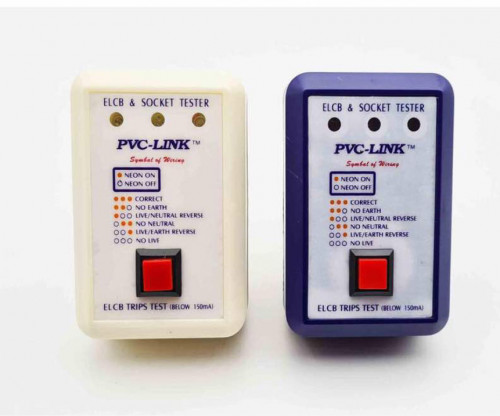
Cant agree with you more. Recently while installing a simple water filter next to my washing machine, I received a mild electric shock* when my elbow accidentally touched the side panel of the washing machine. When tested with a Philip test pen on the metal drum n metal door hinges of the washer, to my horror, the pen lit up! I suspected during house renovation more than 15 years ago an inexperienced electrical contractor worker must have wired the wires wrongly. My suspicion was proven right when I checked it with a power outlet/socket tester (see pic below). It showed that there was no Earth! 😅 After dismantling the wall socket, I found out that the PVC insulation of Earth cable was not peeled off enough and the tightening screw was actually screwing onto the PVC insulation only instead of on the copper wire! Imagine if there had been a short circuit during the 15+ odd years, you guys wouldn’t be hearing this from me already unless…. 😂😂😂

*Talking about mild electric shock, I had also experienced the same with my MacBook but I had already check the power outlet it’s connected to and the L, N and E were in order. Wonder what could be the reason…🤔

user posted image
*
IKR. Look at this idiota's work!
Nowadays buy new home really need to tear down every switch and every socket just to ensure that they are all wired correctly.

Some customer place the wires are not even screwed in at the terminal. They just popped out once I open the socket up laugh.gif

This post has been edited by ceo684: Nov 26 2021, 08:12 PM


Attached thumbnail(s)
Attached Image
SUSceo684
post Nov 27 2021, 03:09 AM

Component Burner
********
All Stars
11,667 posts

Joined: Jan 2003
From: Klang/Subang


QUOTE(sevenor @ Nov 26 2021, 09:39 PM)
OMG!!! 🤦‍♂️

In fact, I had gone to the length of checking all my house power outlets with the outlet tester to make sure that they were wired properly. I don’t know how I could have missed the power outlet of the washer despite being so meticulous! 😂 I had also labeled all the outlets to avoid overloading any particular circuit but in spite of that, recently a 3-pin plug and the wall socket melted! It must have happened over years. Good thing the ELCB had tripped eventually else… The mistake was in connecting a 2400W kettle and a fridge in parallel in the same circuit AND most probably the use of a 3-core flexible cable which was lower than the required rating. Notice that the PVC insulation of the Live wire inside the plug and parts of the plug melted.
*
This plug seems like it didn't even get a Sirim sticker laugh.gif
But yeah, in the market there's barely passing and better made plug tops and sockets.
I recommend MK. Good stuff and technically not super expensive.

Sockets E2757 or S2757 about rm4.50-5, diff is whether u want frameless or picture frame flush type.

Plug top for high draw device use MK650 duraplug. About 5.50 ea only.

There's subtle diff in tolerances - like the plug top fuse holder grips like hell vs weakling fuse holder from other ciplak plug tops. Loose connections cause fires. It is also important to cut the wire lengths and strip to the correct mm as the cardboard template to achieve a "perfect fit" in the plug top. I had a similar plug top meltdown coz idiota installed it all 3 wires equal length, 1st problem. Led to 2nd problem, it pulled down the fuse holder and created airgap arcing.

This post has been edited by ceo684: Nov 27 2021, 03:12 AM


Attached thumbnail(s)
Attached Image Attached Image
SUSceo684
post Nov 30 2021, 04:43 PM

Component Burner
********
All Stars
11,667 posts

Joined: Jan 2003
From: Klang/Subang


QUOTE(sevenor @ Nov 30 2021, 03:55 PM)
How I wish this MK RCD (aka GFCI) socket costs a few dollars more than the normal MK socket! It’s more than 700 bucks! 😅
*
Equivalent is PDL Elimit 10mA about 85
https://s.lazada.com.my/s.3SNja
SUSceo684
post Nov 30 2021, 08:43 PM

Component Burner
********
All Stars
11,667 posts

Joined: Jan 2003
From: Klang/Subang


QUOTE(sevenor @ Nov 30 2021, 08:14 PM)
I actually have one of that but it’s more of a tester than a wall socket. Don’t know if PDL makes one like MK’s 2 gang one.
*
That would be uneconomical in MY config. Whole house 30mA RCD for economical option, or one 30mA each per phase for 3ph supply would give general good coverage, and add 10mA for wet floor things as necessary.

At 600-700/RCD socket, you could get a few pcs of 10mA RCD // RCBO for that price. laugh.gif

This post has been edited by ceo684: Nov 30 2021, 08:43 PM
SUSceo684
post Nov 30 2021, 10:54 PM

Component Burner
********
All Stars
11,667 posts

Joined: Jan 2003
From: Klang/Subang


QUOTE(sevenor @ Nov 30 2021, 10:30 PM)
Agree with you.

I just have a rccb at my DB box. It’s made by ABB, model: FH202 AC, same as this:
https://s.lazada.com.my/s.3Sv4X
Specs: https://new.abb.com/products/2CSF202006R125...h202-ac-25-0-03

So it’ll be tripped at 30mA, the Rated Residual Current, correct?
*
Erm.
The RCD in your pic is showing Icn of 0.1A (100mA)?
Its 0.03 if 30mA.

https://shopee.com.my/product/403384113/11846935209 this is the correct spec one. 2P 63A 30mA.

This post has been edited by ceo684: Nov 30 2021, 10:59 PM
SUSceo684
post Dec 2 2021, 02:41 PM

Component Burner
********
All Stars
11,667 posts

Joined: Jan 2003
From: Klang/Subang


QUOTE(Bug Juice @ Dec 2 2021, 01:14 PM)
Good day, tumpang thread kejab

I haz got my first multimeter, it's uni-t that cost me 50 bucks, I just wanna know if my dumbass has fucked up the meter already, I buy this to do one thing only, to read the lamp current drawing off a compatible ballast.

Here is what I do, I just do what some utuber did anyway

user posted image

I turn the dial to 6 o'clock, which says "10A", if I understand correctly it mean it would read up to 10A and anything above would blow the fuse after 10 seconds? I've tested several lamps that ranging from 0.37A to 3.25A operating current but all it does is 0.00 on the LCD, the lamp do fire up normally. Or maybe I connect the wrong way or something? Any inputs from otai sifus will be appreciated.
*
What lamp is this? Flourescent? LED?
If its a CFL at ~0.18A the 10A range could be out of range ie too low to see shit. Try the 200mA range at your own risk tongue.gif

Another thing, the output waveform from ballast can be unreadable or grossly inaccurate for a non true rms meter. You should be in series with the input 230V side of the ballast.

This post has been edited by ceo684: Dec 2 2021, 02:43 PM


Attached thumbnail(s)
Attached Image


Change to:
| Lo-Fi Version
0.0326sec    0.62    7 queries    GZIP Disabled
Time is now: 16th December 2025 - 11:40 AM