

 Nov 29 2020, 05:28 PM, updated 6y ago


The Battle of Maling (Chinese: 馬陵之戰) took place in Maling, currently Dazhangjia Town (大張家鎮), Shen County (莘县), Henan Province, in 342 BC during the Warring States period (476-221 BC). The combatants were the State of Qi, who fought on behalf of the State of Han, and the State of Wei. This battle is well recorded in history texts and is famous for the tactics of Sun Bin, known as the "Tactic of Missing Stoves", in which one side is led to underestimate the other by creating an illusion of soldiers running away from the army.
Pang Juan, commander of Wei, was lured to a narrow pass at night, where his army was ambushed by 10,000 archers from Qi. According to some sources, Pang Juan committed suicide whilst others say he was killed by Qi archers. Wei was defeated and its power decreased significantly thereafter, making the state unable to compete for Kingship of the Zhou Dynasty.
In 342 BC, the state of Wei attacked the state of Han, and Han turned to its ally Qi for help. Sun Bin advised King Wei of Qi to provide military aid for Han, but only send out troops when the army of Wei had been depleted after prolonged fighting in order to preserve their own strength whilst garnering respect from Han.
Han was misled to believe that they could rely on the army of their ally Qi, and thus fought without reserve. After a year of resistance, Han was no longer able to resist and asked for help from Qi a second time. Instead of sending troops to save Han directly, Sun Bin suggested they should aim for the capital of Wei, Daliang.
When King Hui of Wei learned of the attack, he had to order Wei General Pang Juan, to retreat in order to defend against the oncoming army of Qi. Pang Juan was incensed at the news, because he was only days away from taking the capital of Han. King Hui of Wei appointed Prince Shen of Wei as chief commander and Pang Juan as commander, and ordered an army of 100,000 to mobilize against Qi.
Learning from the Battle of Guiling, Pang Juan ordered his troops to go around the Qi troops, to avoid getting ambushed on the main path. Pang Juan also ordered his troops to make haste to the capital, before Qi could set up any effective ambushes. Instead of rushing and trying to ambush the high morale Wei troops, Sun Bin decided to let a great majority of his troops rest. These Qi troops were ordered to move slowly back into Qi and prepare equipment for an ambush when needed. Sun Bin took a smaller force to face Pang Juan. Once the two forces drew close to each other, Sun Bin immediately ordered a retreat from Jin.
In order to mislead his enemy, Sun Bin ordered his soldiers to make less stoves (cookfires) day by day. On the first day, Qi had enough stoves for 100,000 people; on the second day, there were stoves for only 50,000 people. On the third day, there were only stoves for an army of 20,000. As Pang Juan saw this, he judged that the soldiers of Qi were deserting their army and decided to pursue the Qi army with a small elite cavalry. This unit was overconfident following their recent victory in Han. As Qi retreated into their own territory, Sun Bin ordered his troops to abandon some of their heavy artillery. This further gave the impression of a state of confusion amongst the Qi army. As Qi arrived at Maling, Sun Bin noticed a heavily wooded and narrow pass that could be used for ambush. Estimating the arrival of Pang Juan around nightfall, he ordered his men to cut down a tree, remove its bark, and carve the words "Pang Juan shall die in Malingdao, under this tree" on its trunk. This was a proverb spoken by the teacher of both Sun Bin and Pang Juan (both had been in the same class).
Pang Juan had moved to Malingdao, and when he saw the warning message, he paid no attention, instead ordering the words to be scraped off. The army advanced when suddenly, a flush of Qi troops surrounded the Wei. In the darkness, Qi archers managed to shoot down many of the Wei soldiers, before the rest of soldiers charged in. The Wei troops did not expect Qi to still have so many troops under their command and were quickly overrun. Pang Juan, sensing his end was near, committed suicide. In some versions, Pang Juan was among the first of his troops to be shot to death.
Even though Pang Juan had tricked Sun Bin and maimed him by removing his knee caps, Sun Bin felt very sad to see his former classmate dead. He had hoped they would make their relationship better after the battle.
After the death of Pang Juan, Prince Shen was captured by Qi. The power of the state of Wei decreased considerably after this battle.
Pang Juan
Pang Juan was a fellow student of Sun Bin and both of them studied military strategy together under the tutelage of the hermit Guiguzi. They developed a close friendship and became sworn brothers, while studying in seclusion with their teacher in mountainous regions. Pang left and ventured to the Wei state when he heard that King Hui of Wei was recruiting men of talent to serve him. Pang impressed the king with his proposals on policies to strengthen the Wei state and boldly asserted that he had the ability to help Wei conquer the other six major rival states. The king appointed Pang Juan as a military general and put him in charge of Wei's military forces. Pang led the Wei armies to victories in battles against smaller states such as Song, Lu and Zheng and became a highly respected figure in Wei.
Rivalry with Sun Bin
Pang invited Sun Bin to join him in serving the Wei state later but he was actually secretly jealous of Sun because Sun learnt more from their teacher than him. Pang Juan framed Sun Bin on charges of treason later and reported Sun to King Hui. The king believed Pang and was furious, that he ordered Sun Bin to be executed. Pang pretended to plead for mercy on Sun's behalf and the king agreed to spare Sun's life. Sun was condemned to face-tattooing (criminal branding) and had his kneecaps removed, becoming a cripple. Pang pretended to take pity on Sun and tried to trick him to compile his knowledge about military strategy into a book and kill him later. But some servants told Sun Bin the truth and Sun Bin discovered Pang's true intentions and feigned madness. Sun escaped from Wei with the help of officials from the Qi state and became an important strategist and statesman in Qi later.
Betrayal and multilation of Sun Bin
Pang Juan framed Sun Bin for treason and reported him to King Hui of Wei, who ordered Sun Bin to be executed. Pang pretended to plead for mercy on Sun's behalf, and the king instead condemned Sun to face-tattooing and removal of the kneecaps, effectively branding Sun as a criminal and crippling him for life. Pang pretended to take pity on Sun and treated him well while trying to trick Sun into compiling his knowledge on military strategy into a book, after which Pang could kill him. Sun eventually realized Pang's true intentions and feigned madness. Pang attempted to test whether Sun had really become insane or not, so he had Sun locked up in a pigsty. Sun appeared to enjoy himself there and even consumed animal faeces, calling them delicious. Pang believed that Sun was truly mad and lowered his guard. Sun later escaped from the Wei state with the help of diplomats from the Qi state.
Works of Sun Bin
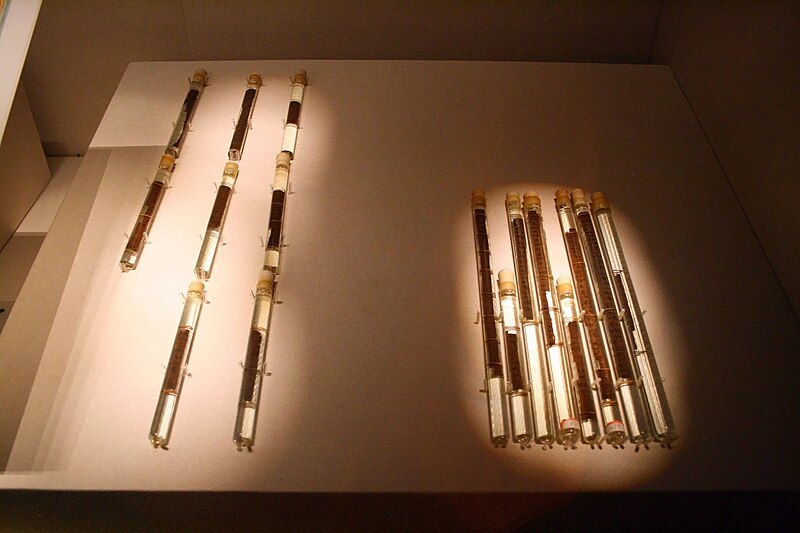
Sun Bin's Art of War (孫臏兵法) is a military treatise authored by Sun Bin. The book was believed to be lost after the Han Dynasty, and although there were numerous references to it in post-contemporary texts, some historians still believed that the book was never written and could be a forgery. However, in April 1972, archaeologists excavated several fragments of scrolls from a tomb in Linyi, Shandong province. Sun Bin's Art of War was found among the scrolls. Although ancient texts mention that the original Sun Bin's Art of War was 89 chapters long, the rediscovered copy had 16 verifiable chapters only. As fragments of Sun Tzu's The Art of War were discovered as well, historians believed that some of the chapters might belong to The Art of War instead.
The newly discovered text provided historians with a different perspective on the Battle of Guiling and Battle of Maling. In addition, when compared to Sun Tzu's The Art of War, Sun Bin's Art of War contained one major difference from the former. The former advised against siege warfare, while the latter suggested tactics for attacking a besieged city. This paralleled a shift in the strategic consideration of siege warfare during the later stages of the Warring States period.
This post has been edited by Maria Takagi: Nov 29 2020, 05:28 PM
 Quote
Quote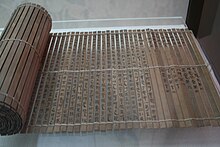









 0.0265sec
 0.52
0.52
 5 queries
 GZIP Disabled