

 Sep 3 2020, 12:49 PM


QUOTE(hksgmy @ Sep 3 2020, 12:36 PM)
Hello everyone.
After a cursory search through the F/B/I threads, I realise there isn't much information around for the investor who might be interested in buying whole retail bonds (not via a bond fund), and since bonds have been my preferred asset class for the past few years, I thought I'd share the little that I know, and I'd be very grateful for any input or comments or corrections by the real experts here.
What are bonds?
Bonds are debts or a fancy IOU note issued by companies or corporations or even governments. Bonds usually come in 2 flavours:
1. Those with a fixed maturity date, by which time the bond “matures”, the debt is paid in addition to whatever coupon (“interest”) that is promised every quarterly/half-yearly or annually and is considered “redeemed”
2. Those with no fixed maturity date (termed “perpetual” bonds), but usually have a “callable date”, in which the issuer has the option of redeeming the debt as per no.1 above. Otherwise, the bond continues to be valid and the coupon continues to be paid
Perpetual bonds also usually come with a “re-fix”, by which the coupon is re-pegged and re-adjusted at the “callable date” if the option of redeeming it has not been exercised by the issuer. The re-fix is usually the prevailing interest rate or base lending rate or some other point of reference, plus a premium (which will usually be clearly indicated on the bond prospectus) to account for the risks the bond holder takes on in buying & holding the issuer’s bonds.
What are secured vs unsecured bonds?
Bonds can also be secured, or unsecured junior or senior subordinated, or unsecured & unsubordinated. Essentially, these are sub-divisions within the bond offering to determine the priority in which debt will be repaid in the event of a catastrophic meltdown (i.e. the company going bankrupt or becoming insolvent and is placed under judicial management). Secured bonds will always be paid first – although a haircut is expected, and the investor cannot be expected to get his or her full capital back, followed by the others. Unsecured and unsubordinated bonds will be paid last – and the investors may get nothing back!
Realistically, most retail investors like myself can never hope to get secured bonds – those would likely be snapped by institutional investors. The best we can ever hope for realistically are the unsecured subordinated offerings – but, to be honest, this sub-category isn’t really as important as the next which I’ll be discussing, because if the company folds, the money is as good as lost.
What are investment grade vs unrated bonds?
By definition, investment grade bonds are bonds which have been given a rating of no less than Baa3 (Moody’s), or BBB- (S&P & Fitch). And, various different book-runners (i.e. the banks that are in charge of the bond’s IPO) may then assign in-house rating guides as to the “safety” of these IG bonds. Maybank, for example, assigns an in-house system of IG1 (highest rating, as close to sovereign AAA bonds as you can get) to IG10 (lowest rating, but still investment grade). Different banks/brokerage houses will assign different internal rating guides, but they usually work along the same principles.
“Unrated” bonds can these can be further subdivided into 2 broad categories.
Bonds may be unrated if the company is very well known locally, and the bond IPO is mainly for the domestic market. An example I will quote is a well-known local entity in Singapore, Mapletree. Mapletree came up with a bond a few years ago, which was unrated, but it was quickly snapped up by retail and institutional investors. The reason for it was simple – Mapletree is wholly owned by Temasek Holdings Pte, and that was all the backing that investors needed.
Bonds may also be unrated “junk” bonds. These bonds usually carry a high yield (my personal cut off is anything more than a coupon yield of 6%), and correspondingly, these bonds will come with a higher risk. A classic case of such a bond that folded spectacularly is Singapore’s Hyflux. Bond defaults in Oil & Gas companies and Off Shore marine companies have also been on the rise, as the result of the recent economy downturn and the plunge in oil & gas prices.
Common wisdom would therefore dictate that the safer bonds are those which have are rated as investment grade offerings.
What type of investors are suited for bonds?
As my learned colleagues have opined correctly, bonds are not for everyone. Firstly, the capital outlay required for bonds can be prohibitive, especially for someone starting out in their investment journey. In Singapore for example, the minimum “entry” purchase is $250,000 per “whole” bond. In Australia, the entry criteria ranges from AUD200,000 to AUD250,000 per bond. Different countries will obviously have different purchase requirements.
Alternately, bonds may be purchased in parts, through a bond fund – but that’s outside the scope of this discussion.
So, who then is the typical bond buyer? It’s usually an older investor, who can ill-afford the inherent volatility of stocks or other assets/instruments with higher yields but come with higher risks. Bonds (especially investment grade ones) are often considered “boring” and rank amongst the safer asset classes.
Case in point, when I purchased a bunch of Equity-Linked Notes about a year ago, every one of those purchases had to be done in person, with my personal banker coming to see my wife and I at our house and we would sign the documents after a lengthy waiver and disclaimer lecture. With bonds, my bankers can do voice verification over the phone, as long as what we are buying are investment grade bonds.
Bonds, being “safer” (but not without its risks – e.g. when the company goes bankrupt!), also pays a lower yield, when compared to shares or stocks or ELNs. A decent yield from an investment grade bond is around 3 – 4%, some older IG bonds may offer up to 5%, but that’s quite rare in today’s environment. In contrast, the ELN plays my wife and I committed to last year offered 10% in returns, but came with much sleepless nights, especially when COVID-19 happened. My bonds kept chugging along in their quiet, unobtrusive way, paying me the coupons when they were due, with nary a complaint or a peep.
So, a younger investor, with a smaller “war chest” and a longer run of economic productivity in terms of working life might not find bonds all that attractive. More mature investors who are now in the phase of wealth preservation as opposed to outright wealth accumulation/generation are more the target demographic of purchasers. Bonds are usually also less volatile, and less likely to need close monitoring, so they are more suited for the busy investor who might want to “fire and forget”, and may not have time to squint over price movements on a screen.
Final miscellaneous notes
I would recommend only ever buying bonds in your “home” currency, to minimize the effects of currency exchange rates and fluctuations. That’s why I only ever purchase bonds in SGD and AUD, as I don’t mind holding currencies in these 2 denominations.
Sometimes, bonds can show sharp capital appreciation, and these can be realised for profit, as was the case when I picked up blue chip bonds of Singapore’s local banks for below their IPO price during the earliest weeks of COVID-19 and there was mass selling in the market. Now, they’ve not only recovered but broadly appreciated in price.
Bonds are traded on the open market, and the final payment is the sum of the offer price plus the interest accrued, so you’ll have to factor that into the cost involved, as well as the final yield to maturity or yield to call, as a result of the offer price being higher than the IPO price.
I am sure I would have missed out on a great many other details – so if anyone else has comments and opinions to offer, please do so and we can all benefit together!

That's a reason why you don't see people talking much about bonds in Malaysia.After a cursory search through the F/B/I threads, I realise there isn't much information around for the investor who might be interested in buying whole retail bonds (not via a bond fund), and since bonds have been my preferred asset class for the past few years, I thought I'd share the little that I know, and I'd be very grateful for any input or comments or corrections by the real experts here.
What are bonds?
Bonds are debts or a fancy IOU note issued by companies or corporations or even governments. Bonds usually come in 2 flavours:
1. Those with a fixed maturity date, by which time the bond “matures”, the debt is paid in addition to whatever coupon (“interest”) that is promised every quarterly/half-yearly or annually and is considered “redeemed”
2. Those with no fixed maturity date (termed “perpetual” bonds), but usually have a “callable date”, in which the issuer has the option of redeeming the debt as per no.1 above. Otherwise, the bond continues to be valid and the coupon continues to be paid
Perpetual bonds also usually come with a “re-fix”, by which the coupon is re-pegged and re-adjusted at the “callable date” if the option of redeeming it has not been exercised by the issuer. The re-fix is usually the prevailing interest rate or base lending rate or some other point of reference, plus a premium (which will usually be clearly indicated on the bond prospectus) to account for the risks the bond holder takes on in buying & holding the issuer’s bonds.
What are secured vs unsecured bonds?
Bonds can also be secured, or unsecured junior or senior subordinated, or unsecured & unsubordinated. Essentially, these are sub-divisions within the bond offering to determine the priority in which debt will be repaid in the event of a catastrophic meltdown (i.e. the company going bankrupt or becoming insolvent and is placed under judicial management). Secured bonds will always be paid first – although a haircut is expected, and the investor cannot be expected to get his or her full capital back, followed by the others. Unsecured and unsubordinated bonds will be paid last – and the investors may get nothing back!
Realistically, most retail investors like myself can never hope to get secured bonds – those would likely be snapped by institutional investors. The best we can ever hope for realistically are the unsecured subordinated offerings – but, to be honest, this sub-category isn’t really as important as the next which I’ll be discussing, because if the company folds, the money is as good as lost.
What are investment grade vs unrated bonds?
By definition, investment grade bonds are bonds which have been given a rating of no less than Baa3 (Moody’s), or BBB- (S&P & Fitch). And, various different book-runners (i.e. the banks that are in charge of the bond’s IPO) may then assign in-house rating guides as to the “safety” of these IG bonds. Maybank, for example, assigns an in-house system of IG1 (highest rating, as close to sovereign AAA bonds as you can get) to IG10 (lowest rating, but still investment grade). Different banks/brokerage houses will assign different internal rating guides, but they usually work along the same principles.
“Unrated” bonds can these can be further subdivided into 2 broad categories.
Bonds may be unrated if the company is very well known locally, and the bond IPO is mainly for the domestic market. An example I will quote is a well-known local entity in Singapore, Mapletree. Mapletree came up with a bond a few years ago, which was unrated, but it was quickly snapped up by retail and institutional investors. The reason for it was simple – Mapletree is wholly owned by Temasek Holdings Pte, and that was all the backing that investors needed.
Bonds may also be unrated “junk” bonds. These bonds usually carry a high yield (my personal cut off is anything more than a coupon yield of 6%), and correspondingly, these bonds will come with a higher risk. A classic case of such a bond that folded spectacularly is Singapore’s Hyflux. Bond defaults in Oil & Gas companies and Off Shore marine companies have also been on the rise, as the result of the recent economy downturn and the plunge in oil & gas prices.
Common wisdom would therefore dictate that the safer bonds are those which have are rated as investment grade offerings.
What type of investors are suited for bonds?
As my learned colleagues have opined correctly, bonds are not for everyone. Firstly, the capital outlay required for bonds can be prohibitive, especially for someone starting out in their investment journey. In Singapore for example, the minimum “entry” purchase is $250,000 per “whole” bond. In Australia, the entry criteria ranges from AUD200,000 to AUD250,000 per bond. Different countries will obviously have different purchase requirements.
Alternately, bonds may be purchased in parts, through a bond fund – but that’s outside the scope of this discussion.
So, who then is the typical bond buyer? It’s usually an older investor, who can ill-afford the inherent volatility of stocks or other assets/instruments with higher yields but come with higher risks. Bonds (especially investment grade ones) are often considered “boring” and rank amongst the safer asset classes.
Case in point, when I purchased a bunch of Equity-Linked Notes about a year ago, every one of those purchases had to be done in person, with my personal banker coming to see my wife and I at our house and we would sign the documents after a lengthy waiver and disclaimer lecture. With bonds, my bankers can do voice verification over the phone, as long as what we are buying are investment grade bonds.
Bonds, being “safer” (but not without its risks – e.g. when the company goes bankrupt!), also pays a lower yield, when compared to shares or stocks or ELNs. A decent yield from an investment grade bond is around 3 – 4%, some older IG bonds may offer up to 5%, but that’s quite rare in today’s environment. In contrast, the ELN plays my wife and I committed to last year offered 10% in returns, but came with much sleepless nights, especially when COVID-19 happened. My bonds kept chugging along in their quiet, unobtrusive way, paying me the coupons when they were due, with nary a complaint or a peep.
So, a younger investor, with a smaller “war chest” and a longer run of economic productivity in terms of working life might not find bonds all that attractive. More mature investors who are now in the phase of wealth preservation as opposed to outright wealth accumulation/generation are more the target demographic of purchasers. Bonds are usually also less volatile, and less likely to need close monitoring, so they are more suited for the busy investor who might want to “fire and forget”, and may not have time to squint over price movements on a screen.
Final miscellaneous notes
I would recommend only ever buying bonds in your “home” currency, to minimize the effects of currency exchange rates and fluctuations. That’s why I only ever purchase bonds in SGD and AUD, as I don’t mind holding currencies in these 2 denominations.
Sometimes, bonds can show sharp capital appreciation, and these can be realised for profit, as was the case when I picked up blue chip bonds of Singapore’s local banks for below their IPO price during the earliest weeks of COVID-19 and there was mass selling in the market. Now, they’ve not only recovered but broadly appreciated in price.
Bonds are traded on the open market, and the final payment is the sum of the offer price plus the interest accrued, so you’ll have to factor that into the cost involved, as well as the final yield to maturity or yield to call, as a result of the offer price being higher than the IPO price.
I am sure I would have missed out on a great many other details – so if anyone else has comments and opinions to offer, please do so and we can all benefit together!
One bond cost RM250k/batch. How many can fork out RM250k? Same issue in sinagpore. One batch cost SGD250k That's why bond is off limit to Malaysian unless one is extremely rich.
I will never buy bonds even if I have the money cause bond coupon is stagnant so you will lose money to inflation.
I am dividend investing guy.
Better for me to buy Dividend growth stock as every year my dividends are increasing automatically which means for the same bond duration, I am actually earning more than bond coupons.
This post has been edited by Ramjade: Sep 3 2020, 12:50 PM
 Quote
Quote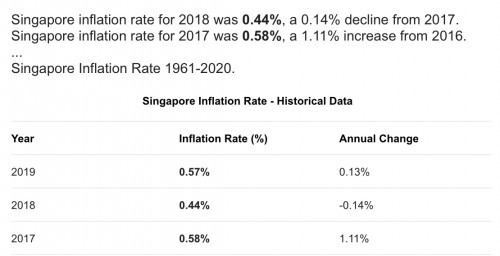
 a lot of my fellow workers here in Singapore keep complaining about how their CPF is all tied up etc - but it’s guaranteed money!!

 0.0249sec
 0.73
0.73
 6 queries
 GZIP Disabled