Welcome Guest ( Log In | Register )

28 Pages « < 20 21 22 23 24 > » Bottom

Outline · [ Standard ] · Linear+

 🏳️‍🌈 LGBTQ Community, Discussion regarding LGBTQ

views
     
TSinternaldisputes
post Mar 18 2021, 09:21 AM

he/his/him
******
Senior Member
1,723 posts

Joined: Oct 2010
🇺🇸 Elliot Page Covers Time Magazine, Opens Up About Coming Out As Transgender
Source: https://www.huffpost.com/entry/elliot-page-...5b6f2f91a2c825f


More than three months after his coming out captured global attention, Elliot Page is opening up further about his journey to embracing his authentic self.

The “Juno” and “Umbrella Academy” star sat down with Time for an emotional interview and photo essay unveiled this week, making him the magazine’s first transgender male cover star. He told journalist Katy Steinmetz that reactions to his announcement have been widely mixed, but that “letting myself fully become who I am” has been worth the scrutiny he has had to endure.

“What I was anticipating was a lot of support and love and a massive amount of hatred and transphobia,” Page explained. “That’s essentially what happened.”

Still, at a time when hate crimes against transgender people and transphobic rhetoric are on the rise, the 34-year-old felt a deep responsibility to serve as a visible advocate for that community.

“My privilege has allowed me to have resources to get through and to be where I am today, and of course I want to use that privilege and platform to help in the ways I can,” he added. “Extremely influential people are spreading these myths and damaging rhetoric — every day you’re seeing our existence debated. Transgender people are so very real.”

Page also touched on his recent divorce from wife Emma Portner ― the couple actually separated last summer but only formalized the split in January ― as well as how his mother, the daughter of a minister, reacted to her son’s gender identity.

The actor also said his time spent in isolation during the COVID-19 pandemic affected his decision to come out.

“I had a lot of time on my own to really focus on things that I think, in so many ways, unconsciously, I was avoiding,” he said, naming Janet Mock and Laverne Cox as two of his personal inspirations.

One thing Page said he needn’t have been concerned about was the impact that living his truth would have on his career. The actor’s team has seen a renewal of interest in his work, including offers to direct and produce, as well as some “dude roles,” presumably referring to opportunities to play cisgender men.

“I’m really excited to act, now that I’m fully who I am, in this body,” he said. “No matter the challenges and difficult moments of this, nothing amounts to getting to feel how I feel now.”
TSinternaldisputes
post Mar 19 2021, 11:00 AM

he/his/him
******
Senior Member
1,723 posts

Joined: Oct 2010
🇯🇵 Japanese sake brewery launches One Cup Rainbow in honour of the LGBTQ community
Source: https://soranews24.com/2021/03/19/japanese-...gbtq-community/

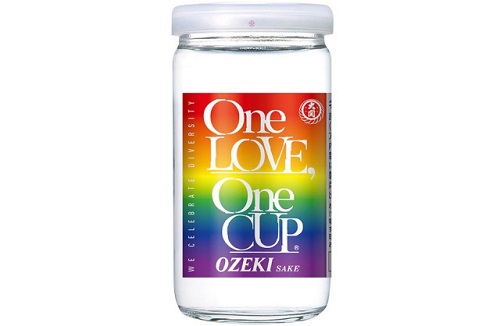
user posted image

New sake will be sold in eight countries around the world.

You’ll find a lot of sake brands throughout Japan, but one that everyone knows is the ubiquitous One Cup by Ozeki. Commonly sold at supermarkets and convenience stores in a convenient glass jar that allows you to enjoy a serving of sake “anytime, anywhere”, the One Cup is cheap but great-tasting, and its makers, Ozeki, have been brewing sake for over 300 years.

Constantly evolving to meet the needs of the market, Ozeki describes itself as “a pioneer striving to fulfil the needs of its customers with new sakes“. This trailblazing spirit has led them to their latest release, a special edition called One Cup Rainbow, which comes with the tagline “We Celebrate Diversity“.

Ozeki says the new sake was created in response to proposals from young local employees and strong requests from overseas customers. Ozeki has been producing sake in the United States for 42 years, after becoming the first Japanese manufacturer to break into the market there when it set up a factory in California in 1979, and this has allowed them to combine tradition with the needs of the international market in an innovative way.

The One Cup Rainbow features six colours of the rainbow flag, with red resembling life, orange resembling healing, yellow for sunlight, green for nature, indigo for serenity and violet representing spirit.

Ozeki isn’t just aiming to promote diversity with the new product–they’ve set up a number of in-house initiatives to improve workplaces within the company as well. In 1996, they abolished the gender checkbox on job application forms for new graduate recruits–a big move in Japan, where gender still plays a big part on forms–and in 2008 they established an in-house consultation service to help prevent harassment in the workplace.

Last year, they implemented even more initiatives to help safeguard employees, by:
  • Revising harassment prevention regulations to specify harassment and behaviour on the grounds of sexual orientation and self-identification as prohibited acts
  • Providing training to promote understanding of LGBTQ matters for managers involved in personnel and general affairs operations
  • Setting up LGBTQ E-learning initiatives for employees of domestic business companies
Japan is often cited as one of the countries where the LGBTQ community still has a long way to go to reach the levels of recognition achieved in other countries, so it’s heartening to see a centuries-old sake company placing such importance on promoting diversity.

The One Cup Rainbow was initially made in limited quantities for release in eight countries, with plans to expand into other areas in future, but stocks have already sold out during pre-sales with wholesalers. Given the demand for the new product within Japan, Ozeki was able to release a special batch for sale within the country, which will go on sale in time for Pride Month in June.

While customers in the Oceania region were able to enjoy the new sake from January, sake fans in the U.S. and Europe will have to wait until May to get a taste of the rainbow. Thankfully, the company says they still plan to broaden their distribution areas in future, which is a fitting plan for a product celebrating diversity and inclusivity.

Here’s hoping they eventually broaden distribution for their sake-scented incense sticks and tiny gacha toy collection too.
TSinternaldisputes
post Mar 19 2021, 11:07 AM

he/his/him
******
Senior Member
1,723 posts

Joined: Oct 2010
🇺🇸 Soldier Walks in Surprising His Partner While They Were Video Chatting
Source: https://www.youtube.com/watch?v=Cw7NZCSpGpY


Just sharing a random video recommended to me on Youtube. So unusual to see kids running around not even caring. Brothers, sisters, parents all being part of this lovely moment.
TSinternaldisputes
post Mar 20 2021, 11:56 AM

he/his/him
******
Senior Member
1,723 posts

Joined: Oct 2010
🇦🇷 In Pope’s homeland, ex-priest leaves church over gay unions
Source: https://apnews.com/article/argentina-priest...93e4d353f8e95b2

user posted image

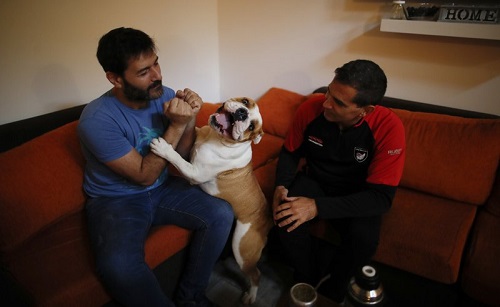
BUENOS AIRES, Argentina (AP) — A former priest and LGBTQ activist who has blessed same-sex unions in Pope Francis’ home country, Argentina, is leaving the Roman Catholic Church after the Vatican issued a pronouncement this week that priests may not perform such blessings.

Andrés Gioeni delivered a letter disavowing his faith to the bishopric in a Buenos Aires suburb on Wednesday, the anniversary of his ordination as a priest in 2000 and two days after the declaration from the Holy See.

“I do not want to continue being an accomplice to this institution, because I realize the harm they are doing to people. I am not renouncing my faith in God but rather I am renouncing a role and a rite,” said Gioeni, 49.

He spoke in an interview with The Associated Press at the home he shares with his husband, 50-year-old Luis Iarocci, and their three dogs, a few blocks from the cathedral in San Isidro north of the capital.

Like other LGBTQ Catholics, Gioeni was shocked by Monday’s proclamation, which argued that clergy members cannot bless same-sex unions on the grounds that they are not part of the divine plan and God “cannot bless sin.”

The Vatican says LGBTQ people should be treated with dignity and respect, but that gay sex is “intrinsically disordered” and same-sex unions are sinful.

The declaration from the Holy See’s orthodoxy office, the Congregation for the Doctrine of the Faith, was authorized by Francis, who prior to assuming the papacy supported legal protection for gay people in civil unions in the country as Cardinal Jorge Mario Bergoglio, archbishop of Buenos Aires.

“There is no mention in any book (of the Bible) of consensual love between two people of the same sex and God telling them no,” said Gioeni, who has blessed at least four such unions.

Born in Mendoza province some 600 miles (1,000 kilometers) west of Buenos Aires, Gioeni pursued a religious vocation as a young man despite being tormented by doubts about his sexuality. He even “outed” to his superiors three fellow seminarians who had confessed attraction to him.

“All throughout seminary I was terribly homophobic,” Gioeni said. “It was a defense.”

After ordination he rose quickly in the provincial church, while secretly exploring chatrooms for the local gay community. He had his first sexual encounter with another man, broke it off to continue the priesthood, but then saw the man again. Gioeni told the bishop he needed to leave.

The church did not offer him psychological help, just a room next to the organ of the Buenos Aires cathedral where he was to confront his supposed crisis of faith.

“That was my descent into hell. There I realized that I was considered like the Hunchback of Notre Dame — a defective being who could not go out into the world because he would be criticized and singled out,” Gioeni recalled.

Gioeni’s superiors became aware of his sexual identity in 2003, when he appeared nude on the cover of a gay magazine, and barred him from exercising priestly ministry.

He studied acting and worked as a waiter in a disco, where he met Iarocci. Together for 17 years now, they wed after Argentina became the first Latin American nation to legalize same-sex marriage in 2010.

In recent years Gioeni has become an LGBTQ activist lobbying for a more open Catholic Church.

Severing formal ties with the institution doesn’t change his faith in God, he said.

“I continue believing in God and He will be my God. In that, my spirituality is unchanged,” Gioeni said. “I no longer have a label. ‘What religion are you?’ I believe in God.”


This post has been edited by internaldisputes: Mar 20 2021, 12:01 PM
TSinternaldisputes
post Mar 21 2021, 10:29 AM

he/his/him
******
Senior Member
1,723 posts

Joined: Oct 2010
🇮🇳 ‘The best cops’: Indian state recruits its first transgender police officers
Source: theguardian.com/global-development/2021/mar/18/the-best-cops-indian-state-recruits-its-first-transgender-police-officers-chhattisgarh

user posted image

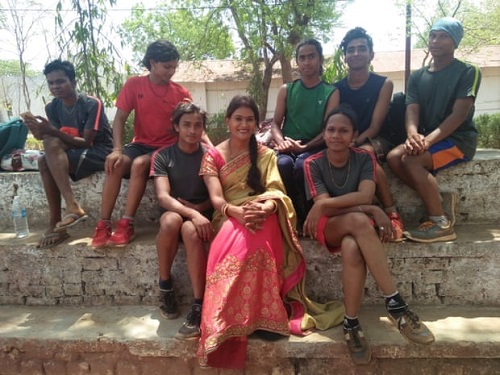
The 13 new constables have overcome society’s prejudice to win a place at Chhattisgarh’s training academy

The top police officer in Chhattisgarh state, Durgesh Awasthi, has nothing but praise for his new recruits. He suspects, he says, some of them will prove to be “the best cops” the force has ever enlisted.

“They are sensitive, have a high emotional quotient and know not just how the other half lives but what it’s like being on the other side of the law,” said Awasthi.

This month Chhattisgarh became the first Indian state to welcome a cohort of transgender people into its police training college after 13 qualified for the course.

Awasthi had been working with Vidya Rajput, 43, a community leader in the state capital Raipur, to help the force with trans awareness when Rajput decided to push for further progress, remembering her own childhood impression of police officers.

“For me they were godlike figures, the people everyone turned to if they were in any trouble. They were reassuring figures, respected by the public. I wondered why we couldn’t join them and prove that we could be useful citizens too,” she said.

Too old to qualify herself, Rajput mobilised the trans community in Raipur, and 27 took up the challenge.

For the written exam, they studied “like fiends” until 2am for months. Preparing for the physical fitness test was even harder. “Very few of us had any interest in sports. We’re just not keen. The applicants had no sports clothes or trainers,” said Rajput.

The state government stepped in to provide clothing, but the first few weeks at the training ground, where – along with more than 100 other applicants – they were put through their physical paces, were not easy.

“Our bodies didn’t know what had hit them. We had never done any physical exercise. Our joints were swollen and bruised and we had injuries from falling. It was very difficult but Rajput ma’am wouldn’t let us give up,” said new recruit Tanushree Sahu, 25.

The trans recruits had to undergo their training while coping with the stresses of their everyday lives: uncertain income, parental beatings, landlord evictions and harassment. “I was proud of them. You have to realise their lives have been nothing but negativity, isolation and loneliness and suddenly they have to summon up the emotional reserves to make a go of this and they did it,” said Rajput.

When the results were announced and 13 of the 27 trans applicants heard they would be going to the police training academy, there was a sense of euphoria. “I was surprised, but delighted they had made it,” said Awasthi.

Ever since India’s supreme court 2014 ruling, which overturned colonial-era laws used to criminalise LGBTQ+ people and recognised trans people, or “hijras”, as a “third gender enjoying the same constitutional rights and freedoms as other citizens”, many have felt more positive about their place in society.

But progress has been slow, with trans people still facing stigma and harassment, including from police.

Many are still forced to survive on scraps earned from begging, or from dancing at weddings, but some have managed to find mainstream work.

One high-profile recent example is Dr Aqsa Shaikh, a community medicine specialist, who heads the Covid vaccination campaign at Hamdard Institute of Medical Sciences and Research in Delhi.

While there is a smattering of success stories across India, some states are more progressive than others in policies relating to trans people, and Chhattisgarh has emerged as a leader.

The city of Raigarh elected India’s first trans mayor, Madhu Bai Kinnar, in 2015. Another trans woman, Veena Sendre, was chosen as Miss Chhattisgarh 2018. A hospital in Raipur has dedicated times for trans patients, so they can visit without any fear of hostility.

Trans people becoming police constables – from social outcasts to pillars of society – is a journey that has delighted new recruit Sahu. As someone who never used to leave the house without covering her head with a scarf, she feels her life has come full circle.

“I can’t believe that I am going to throw away my scarf for a police uniform,” she said. “It’s something I can’t get my head around.”
TSinternaldisputes
post Mar 22 2021, 09:28 AM

he/his/him
******
Senior Member
1,723 posts

Joined: Oct 2010
🇯🇵 Opinion: Japan’s groundbreaking marriage equality ruling paves the way for change
Source: https://www.washingtonpost.com/opinions/202...quality-change/

user posted image

Makiko Terahara is representative director of Marriage for All Japan, an organization that campaigns for marriage equality, and co-chair of the Tokyo defense team for the same-sex marriage case.

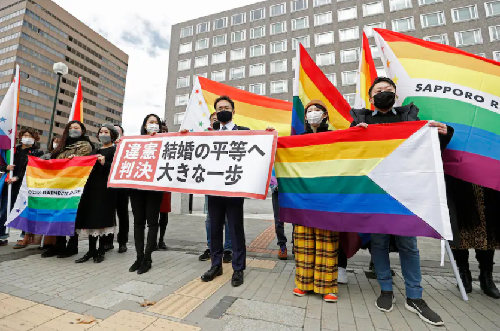
In 2019, the first lawsuits in Japan were filed in five district courts directly challenging the constitutional violation of not recognizing same-sex marriages. On Wednesday, the Sapporo District Court ruled that the current law, which does not recognize same-sex marriage, is unconstitutiona because it violates the principle of equality stipulated in Article 14 of the Japanese constitution.

This is the first ruling on same-sex marriage in Japan — and it is groundbreaking.

The decision is the culmination of years of work by many individuals. Our organization, Marriage for All Japan, was founded in January 2019 to achieve marriage equality. Our members include lawyers such as myself, as well as others. Almost all of us voluntarily work without compensation, and most of the members have been working for the protection of LGBTQ rights for more than 10 years.

The courts are one of several venues in which we have been pushing for change. We also lobby members of the Diet and work to raise public awareness. That work has slowly brought about change: In the past two years, about 70,000 people have signed our campaign calling for the legalization of same-sex marriage, 147 companies have expressed their support for marriage equality and 80 organizations throughout Japan have endorsed our activities. More members of the Diet have also supported our efforts.

We believe all of this work has been directly or indirectly reflected in the Sapporo ruling. We have received messages from quite a few people saying, “This ruling has given me the courage to live.” Following the ruling, the national newspapers have all covered same-sex marriage, and momentum is building.

There are three reasons the Sapporo ruling is particularly noteworthy.

The first is that it set very strict standards of review. The Sapporo ruling states that “sexual orientation is a personal characteristic that cannot be changed by the will of the individual, and in that sense it is similar to race or gender. Therefore, whether or not a distinction based on such a matter has a rational basis must be carefully examined to determine whether or not it is truly an unavoidable distinction.”

Second, the decision was made by going back to the purpose and essence of marriage. The government argued that “marriage is for heterosexual couples because the purpose of marriage is to bear and raise children.” The Sapporo ruling, on the other hand, states that “the protection of a couple’s common life itself, with or without children, is also an important purpose of marriage” — an important clarification.

Third, the Sapporo ruling affirmed that the majority’s understanding or acceptance was not a requirement. At the same time, the court made clear that the transformation of the traditional view of the family cannot be a reason for not recognizing same-sex marriages.

There is no doubt that the Sapporo ruling will have a positive impact on the other lawsuits still in progress in four district courts; if other courts are to rule that the current law does not violate the Constitution, they will need to overcome the theory of the Sapporo decision.

Yet the team behind the Sapporo lawsuit has already announced their intention to appeal. This is because the Sapporo ruling did not recognize the current law as infringing on freedom of marriage under Article 24 of the constitution. We believe that the failure to recognize same-sex marriage is a violation, not just of the principle of equality, but also of freedom of marriage.

No matter what kind of decision is made by the district courts, either the government or the plaintiffs will file an appeal, and the final decision will be made by the Supreme Court. We expect this to happen by the end of 2023.

But the Diet should take the Sapporo ruling as a sign that it has a responsibility to promptly amend the law. Article 99 of the constitution stipulates that members of the Diet have a duty to respect the constitution. The Diet does not have to wait for a Supreme Court decision to take action for what is right.

On Jan. 18, Ikuo Sato, one of the plaintiffs in the Tokyo lawsuit, passed away from a brain hemorrhage. He had said, “When I die, I want to hold the hand of my partner, who became my legal spouse, and say that I was happy.” But his wish was not fulfilled.

At this very moment, there are people who are unable to envision a future because of the lack of recognition of same-sex marriages, and some who are even being driven to suicide. This is an urgent issue that affects everyday lives, as well as a symbolic discrimination.

There is no doubt that the recognition of same-sex marriages will be a big step toward the fundamental elimination of discrimination and prejudice against the LGBTQ community. This discrimination is the responsibility of the majority who lets it happen — and it is the majority that needs to change.
TSinternaldisputes
post Mar 22 2021, 09:37 AM

he/his/him
******
Senior Member
1,723 posts

Joined: Oct 2010
🌎 ‘I don’t want sex with anyone’: the growing asexuality movement

user posted image

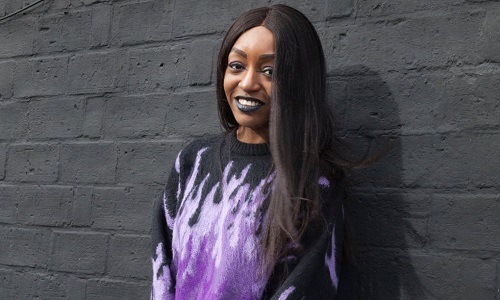
Yasmin Benoit realised she was asexual around the time her peers in Reading figured out they weren’t. “Everyone seems pretty asexual until puberty hits and then they aren’t. But I didn’t feel the same way. I realised something was up,” she recalls.

But when the then-teenager came out as asexual, no one believed her. “They were, like: ‘You don’t look asexual, you’re probably just insecure, or you must have got molested or you must be gay… Maybe you’re a psychopath and can’t form proper connections with people.’”

Everyone had a theory about what was “wrong” with Benoit; no one accepted the simple fact that, by nature, she didn’t feel sexual attraction towards others. And she’s not alone. Today, as well as being a fashion model, the poised 24-year-old is the world’s most prominent activist for asexuality, an orientation estimated to apply to 1% of the global population, although some think the number is higher.

“I don’t want to have sex with anybody[ and I probably won’t ever have sex,” says Benoit over Zoom, although she does explain that the key point here is sexual relations with others: she does masturbate.

Benoit is determined to ensure other asexual (or “ace”) people don’t feel broken or alone in a world in which lust and desire pulsate through our entire culture. “Our society is increasingly hyper-sexualised,” she says, “and that can make it particularly alienating for asexual people who don’t have those feelings, or don’t want to live that life.”

The asexuality movement is young and fast-growing, and it recently received a notable boost. Last September saw the release of Ace, a critically acclaimed book by asexual journalist Angela Chen. It illuminates the myriad shades of asexuality via a series of real-life profiles. “Instead of getting bogged down in definitions, people can read those stories and think: does that resonate with my experience?” says Chen, 29, who is based in Brooklyn.

For too long such experiences have not been acknowledged: asexuality has sometimes been dubbed the “forgotten” or “invisible” orientation owing to its lack of public prominence. Until recently it was deemed a medical issue by the US’s Diagnostic and Statistical Manual of Mental Disorders – which added an exception in 2013 to state that asexuals do not have a desire disorder – and many continue to erroneously dismiss it as an affliction.

It has also been labelled “the world’s first internet orientation,” implying that people who feel this way have only existed since the advent of the internet – and suggesting it’s a fad embraced by pink-haired teens on Tumblr, but not applicable in the real world. Nonetheless, the internet has been an anchor for the modern asexuality crusade, which began in 2000 when David Jay, a San Francisco college student, started a website to connect with others (when he’d looked up “asexuality” all he’d found were “papers about plant biology and amoebas”, he says). It attracted thousands of hits and he then launched the Asexual Visibility and Education Network (AVEN), which remains the biggest asexuality platform, with 120,000 members today. Tight-knit communities have since sprouted on Twitter, Tumblr, Reddit and Discord, and have flourished offline, too.

Jay has been joined by a spirited collective of younger activists who give talks, write books, host podcasts and run YouTube channels. They’re showing it’s possible to live a fulfilling life without sex and, although they’re a small minority, they have plenty to teach the rest of society. Such as about how allosexuals – people who do experience sexual attraction – conflate sex, romance and intimacy, yet could benefit from teasing these things apart. Or about how sexual partnerships are automatically ranked higher in the social totem pole than platonic ones – a sentiment captured in phrases such as “just friends” and enshrined in health-insurance and other laws – even though friendships can be more meaningful.

Read more @ https://www.theguardian.com/lifeandstyle/20...uality-movement
TSinternaldisputes
post Mar 22 2021, 10:05 AM

he/his/him
******
Senior Member
1,723 posts

Joined: Oct 2010
QUOTE(Carnage Mk II @ Mar 22 2021, 10:01 AM)
first time see this tered

although i am not gay, i dont see anything wrong with gay ppl (or lesbian) loving their other half.

so its good to see this tered here..
*
Really appreciate it. Thanks!
TSinternaldisputes
post Mar 23 2021, 11:41 AM

he/his/him
******
Senior Member
1,723 posts

Joined: Oct 2010
🇬🇧 Trans woman living ‘double life’ at work amid fear of discrimination
Source: https://metro.co.uk/2021/03/22/two-thirds-o...t-work-14286952

user posted image

A trans woman has shared how she is living a ‘double life’ following the news that 13% more trans employees are hiding their authentic self at work than in 2016.

A Totaljobs survey of more than 400 trans employees, made in collaboration with YouGov and charity Sparkle during February 2021, found that 65% of trans people had been forced to conceal their personal status at their workplace – up from 52% five years ago.

Ellen, 57, came out as transgender seven years ago, but still presents as male in her office. She says her company, based in Leeds, does not have any policies for protecting trans employees and she feels certain she will face discrimination from senior members of staff. She told Metro.co.uk: ‘No one at work knows I’m female. I have to be male in the office. It is hard work, it’s draining, I have to change everything about myself.

‘Even the way I speak or the way my nails look – I’m so self-conscious all the time. It’s like splitting myself in two. But I’m afraid that if I reveal I’m transgender there will be a reaction I can’t take back. I know my performance will be viewed differently, as sad as that is. ‘There’s no legal safety net for someone like me. I am sort of living a double life and I know it’s not good for my mental health.

‘I’m so fortunate to have many friends who accept me as I am in the real world, but I’m afraid it’s too late for me to risk my career.’ The Totaljobs study revealed that 32% of trans employees had faced discrimination at work, while more than a quarter had been deadnamed. Around 32% of those asked had experienced bullying or insults, and 30% described others deliberately misusing pronouns when referring to them. Only 33% of trans members of staff said their workplaces had dedicated anti-trans discrimination policies. More than half said their employers don’t offer any training on how to support trans workers.

Over a third also said they were not aware of any official process for them to report discrimination and 35% said they wouldn’t report anti-trans behaviour when it happened. Resultantly, the study found 43% of trans employees said they’d quit because their work environment was unwelcoming. This is 7% higher than in 2016.

Jon Wilson, CEO of Totaljobs, said: ‘‘Having a situation where any employee feels that they have to hide who they are in the workplace, or even decide to leave a role as a consequence of not feeling accepted, is simply wrong. ‘To hear that the number of trans people experiencing this has increased since our last report in 2016, is deeply concerning. As employers, we need to ask serious questions as to what we can do to improve this state of affairs and ensure we’re championing a culture that is inclusive of trans individuals, to ensure they have happier, healthier working lives.

‘I call upon all companies, big or small, to consider the steps they can take across their attraction, recruitment, and retention strategies to remove the barriers faced by trans people. ‘In particular, having a firm stance against anti-trans behaviour or abuse at work is non-negotiable; nobody should have to feel unwelcome or unsafe at work. ‘
TSinternaldisputes
post Mar 24 2021, 09:50 AM

he/his/him
******
Senior Member
1,723 posts

Joined: Oct 2010
🇮🇹 Attack on gay couple in Rome prompts calls for anti-homophobia law
Source: https://www.theguardian.com/world/2021/mar/...-homophobia-law

user posted image

Italian politicians and activists have called for the urgent approval of a law that would criminalise violence against LGBT people following a homophobic attack in Rome.

Jean Pierre Moreno was punched and kicked by an aggressor at a metro station in Rome after kissing his boyfriend, who was hit in the eye. The incident was captured on video and shared by the activist groups Gaynews and Gaynet Roma on Sunday night. Moreno told Gaynews: “While my boyfriend and I were kissing, we suddenly heard a man shout from the other platform: ‘What are you doing? Aren’t you ashamed?’” The man then crossed the tracks to attack the couple.

A long-awaited bill that would make violence against LGBT people and disabled people, as well as misogyny, a hate crime was passed by Italy’s lower house of parliament in November despite months of protests from far-right and Catholic groups.

However, the bill’s passage through the upper house, or senate, has been delayed by a change of government but also resistance from senators belonging to Matteo Salvini’s far-right League, which returned to government after endorsing prime minister Mario Draghi’s broad coalition.

The law, drafted by Alessandro Zan, a senator with the centre-left Democratic party (PD), would be an extension of an existing law that punishes racist violence, hatred and discrimination.

Zan said there was an urgent need to pass a law that exists “in almost all other western countries”.

He added that the bill had the support from senators belonging to the two biggest parties in parliament – the PD and the Five Star Movement – as well as Free and Equal, a small leftwing group, and several senators with Silvio Berlusconi’s Forza Italia. However, League politicians immediately accused the left of “exploiting the attack for political ends”.

“The PD, M5S and Free and Equal have asked for the law to be put on the agenda, but there has been resistance from the League,” said Zan. “However, even though the government changed, parliament stayed the same, and so we believe we still have the numbers to pass it – we just need the law to be released by the government.”

Two Forza Italia senators – Gabriella Giammanco and Barbara Masini – both said on Monday that they backed the law and called for a vote to be scheduled as soon as possible.

Rights groups receive hundreds of hate crime reports each year but many go unpunished. Although Italy approved same-sex civil unions in 2016, the country has lagged behind its EU partners in creating anti-homophobia measures. Attempts by various governments over the past three decades to enact a similar law have either been stifled or sabotaged, with any progress or even just meaningful debate stymied by a macho culture, Catholicism and support for far-right parties.

The League and the smaller far-right party, Brothers of Italy, held protests against the law last summer, arguing it would suppress freedom of expression. The Italian bishops’ conference also said the bill marked “the death of liberty”.

“We strongly hope that the law will be approved as it is badly needed,” said Luisa Rizzitelli, an LGBT and women’s activist. “But it is more at risk now as the force of the League has become important again. So the pressure needs to be increased, otherwise there’ll be the temptation to push the law to the back of the queue.”
TSinternaldisputes
post Mar 24 2021, 01:07 PM

he/his/him
******
Senior Member
1,723 posts

Joined: Oct 2010
🇹🇭 There will be LGBTQ+ Pride festival by the beach in Phuket this Songkran
Source: https://www.timeout.com/bangkok/news/there-...songkran-031621

user posted image

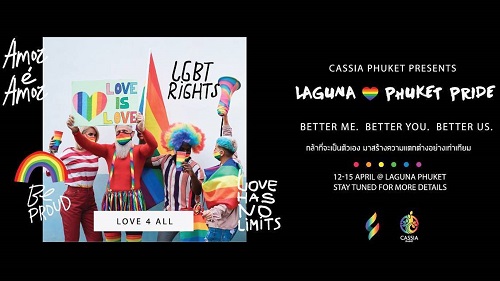
An LGBTQ+ Pride festival has become a global phenomenon that celebrates equality and empowerment of people in the LGBTQ+ community. A large number of leading metropolises around the globe, including London, New York, Vienna, Madrid, Amsterdam, and Taipei, have hosted the event and attracted influxes of tourists.

However, the ongoing pandemic has caused some troubles to the usual destinations for Pride, but not to Thailand's sunkissed paradise Phuket. Those who miss the blow-out fun at Pride Parade can now get ready to the upcoming festival Laguna Phuket Pride at gigantic resort property Laguna Phuket. Presented by Cassia Phuket, this new edition of Pride will expand for four days between April 12-15 with a huge line-up of activities under the concept of "Better Me, Better You, Better Us" such as Day & Night Party, forum discussion, Pride March, and more surprises—including live concerts by pop superstars, LGBTQ+ icons, and DJs—on the way.

Subscribe Laguna Phuket Pride's Facebook page for more details.


This post has been edited by internaldisputes: Mar 24 2021, 01:07 PM
TSinternaldisputes
post Mar 25 2021, 09:55 AM

he/his/him
******
Senior Member
1,723 posts

Joined: Oct 2010
QUOTE(FirstTimer @ Mar 25 2021, 01:35 AM)
You're doing such a great work trying to raise awareness about LGBTQ+ culture in our country. Keep up the great work!
*
QUOTE(FirstTimer @ Mar 25 2021, 01:39 AM)
I have been around Lowyat Forum for awhile. Four- Five years ago I would see posts that are incredibly hostile towards LGBTQ+ community in this forum. I still see some today, but the overall attitude at least from this thread has drastically improved since 4-5 years ago. Lowyat Community seem to have become more accepting.

I always think Lowyat forum is a good barometer to gauge how urbanite millennial (maybe gen-Z too?) Malaysians anonymously think about current issues. It's refreshing and welcoming to see the improvement.
*
You really made my morning! Thanks!

I really feel the same way! It really gives me hope that things are going to get better. If not in my lifetime, at least for the next generation.... I think as LGBT people all of us should be more visible to the public and show to people that we are just like regular people. Most of the hatred towards LGBT (at least in my opinion) comes from the fact that most people aren't exposed to LGBT people too much hence prejudice takes over. sweat.gif
TSinternaldisputes
post Mar 25 2021, 12:58 PM

he/his/him
******
Senior Member
1,723 posts

Joined: Oct 2010

TSinternaldisputes
post Mar 25 2021, 07:22 PM

he/his/him
******
Senior Member
1,723 posts

Joined: Oct 2010
QUOTE(gabay @ Mar 25 2021, 05:21 PM)
Another day, another thread from a homophobe/transphobe who wants their opinion validated. sweat.gif
TSinternaldisputes
post Mar 26 2021, 09:53 AM

he/his/him
******
Senior Member
1,723 posts

Joined: Oct 2010
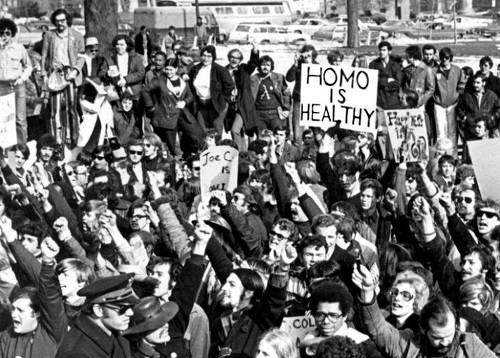
🇺🇸 Cured: How mental illness was used as a tool against LGBT rights
Source: https://www.bbc.com/news/entertainment-arts-56508488
user posted image

Until 1973 the American Psychiatric Association defined being gay as having a mental illness. A new documentary recalls the struggle to change a definition which for years limited the rights of LGBT people in the US. But the film's makers say the fight for equality was part of a bigger battle which continues today.

The film archive you see in the documentary Cured isn't a total surprise: being gay was illegal in the US when most of the programmes and public service announcements featured were made. The US's path to legalising same-sex relationships would be complex, often with variations between the country's 50 states.

Even so, the prejudices at work in some of the material can be startling.

A police officer was filmed by station WTVJ in South Florida addressing school students in 1966 about the dangers of being near gay people. "They can be anywhere," he tells them. "They can be policemen, they can be schoolteachers. And if we catch you with a homosexual, your parents are going to know about it first..."

The following year an edition of CBS Reports, called The Homosexuals, was probably trying to tackle a controversial topic with an open mind. But reporter Mike Wallace, using the terminology of the time, is repeatedly tripped up by his moralistic commentary.

"The average homosexual, if there be such, is promiscuous. He is not interested in or capable of a lasting relationship like that of a heterosexual marriage. The pick-up, the one night stand - these are characteristics of the homosexual relationship."

Film-maker Patrick Sammon describes the programme as "landmark" - but not in a good way.

The documentary he has now made with Bennett Singer tells a story of prejudice within the American Psychiatric Association (APA), a hugely influential part of the US medical establishment. But the first half of the film uses interviews and archive film and TV to illustrate more generally the pressures of growing up gay in 1950s and 60s America.

In 1952 the APA's manual had defined being gay as a "sociopathic personality disturbance". It gave a supposedly scientific rationale to prejudices already widespread in the US and elsewhere. (Gay sex was illegal in England and Wales until 1967; Scotland followed in 1981 and Northern Ireland in 1982.)

Singer says the post-World War Two period appears in retrospect especially homophobic in the US and elsewhere.

"My sense is that there was a new push toward conformity after the war - a return to normal political life and social life. Embedded in that was this sense of heterosexuality - that men should marry women and that women should have kids and be subservient. This fitted the classic model of what a healthy society was."

Co-director Sammon says part of the reason for making the film was to investigate how far psychiatry itself created or encouraged hostility to LGBT people. "Were psychiatrists the cause or the effect of that prejudice? Certainly the APA classification in 1952 made the atmosphere more hostile. Business and government used it as an excuse to discriminate against and to oppress LGBT people."

Singer says it's also a matter of how the ruling damaged profoundly the picture LGBT people had of themselves and of whether they were valued in society.

Sammon says one of the most telling bits of archive - showing attitudes tentatively shifting - is an edition of the David Susskind Show from 50 years ago.

"It was a popular nationally-syndicated talk show and the producers invited seven out lesbians to talk about society's attitudes. In 1971 Susskind would have been considered a progressive, liberal and enlightened host. So it's very interesting to hear him espousing the idea that homosexuality was a mental aberration.

"The women really push back and say we're the experts on our lives: we're happy and well-adjusted so why are you espousing these myths? It was quite a fiery confrontation."

There are also striking interviews with those who suffered from the APA assertion that being gay was a mental abnormality, or with those who knew them.

Magora Kennedy, now 82 and described as the "gayest great grandmother in the gay, lesbian, bisexual and transgender community", describes being forced to marry a man at 14 for fear of being institutionalised against her will. She remembers the practice as common post-war.

The late Barbara Gittings, shown as extremely effective in pushing the cause of delisting being gay as an illness, is recalled with affection by her partner of 46 years Kay Lahusen.

Some of the most engaging testimony - delivered with wry humour - comes from Richard Socarides. The gay businessman and former adviser to President Bill Clinton recalls coming out when young to his psychiatrist father Dr Charles Socarides - a leading proponent in the 50s and 60s of the idea that being gay was treatable as a neurotic disorder.

A moment of comic absurdity comes in 1972. Archive shows Dr John Fryer addressing an APA convention in a full face-mask and using a voice-distorting microphone to disguise his identity as he talks about being a gay psychiatrist.

It's no great surprise that elements of the film are now in development by 20th Television as a possible multi-part scripted drama.

Sammon says the point the campaigners returned to again and again was the absolute lack of scientific data to support the assertion that being gay was a mental illness. It's clear that a younger generation in psychiatry was becoming uncomfortable with the APA's views.

Eventually - though only over a period of years - the persistence of the campaigners paid off. In 1973 the APA reversed a ruling it had adhered to for more than two decades.

So in a way the documentary has a positive ending, with prejudice losing the fight. But Singer sees only a limited reason to celebrate.

"Since the 1960s attitudes have changed dramatically in places such as the USA or Britain. But there are still parts of the world where to be gay is to be in danger."

He says a new threat has now opened up with so-called "conversion therapy, which refers to any form of treatment or psychotherapy which aims to change a person's sexual orientation or gender identity.

"Attempts to 'cure' or 'fix' or 'repair' people based on their sexual orientation or their gender identity are continuing. So it's been heartening for us to connect with activists who are fighting that fight and who see our film as a tool to heighten awareness of past attempts to 'cure' LGBT people.

"Even though this is a story about the past it's a very relevant topic which is still with us today."

Cured is available online until Sunday 28 March as part of the BFI Flare LGBTIQ+ Film Festival.

TSinternaldisputes
post Mar 28 2021, 08:16 PM

he/his/him
******
Senior Member
1,723 posts

Joined: Oct 2010
🇯🇵 Japan: Pass Equality Act Before Olympics
Source: https://www.hrw.org/news/2021/03/25/japan-p...ty-act-olympics

user posted image

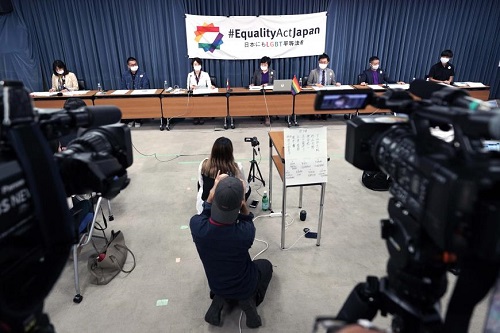
(Tokyo) – Japanese political parties should work together to submit and pass a bill at the national Diet to protect against discrimination on the basis of sexual orientation and gender identity, J-ALL, Athlete Ally, All Out, and Human Rights Watch said today. The groups submitted a petition containing 106,250 signatures from Japan and abroad to the ruling Liberal Democratic Party, asking it to introduce the LGBT Equality Act.

The LGBT Equality Act should be passed during the ongoing Diet session, which is scheduled to end in mid-June 2021, so that this landmark, urgently needed legislation is in place before the Tokyo Olympics, which are set to start on July 23.

“It’s major progress that Japan’s political parties are discussing LGBT-related legislation, but many LGBT people in Japan still remain in the closet, unable to discuss with others out of fear and stigma,” said Yuri Igarashi, director of the Japan Alliance for LGBT Legislation (J-ALL), an umbrella organization of 80 LGBT groups in Japan. “With the Olympic Games approaching, a law prohibiting discrimination on the basis of sexual orientation and gender identity is urgently needed to protect LGBT people, not only athletes and spectators, but everyone in Japan.”

Tokyo was slated to host the 2020 Summer Olympics, but the International Olympic Committee and the Japanese government postponed the games for a year due to the Covid-19 pandemic. The Tokyo Summer Games are advertised as celebrating “unity in diversity” and “passing on a legacy for the future.” To do this, Japan needs to enact a national anti-discrimination law to protect lesbian, gay, bisexual, and transgender (LGBT) people in a manner that meets international standards, Human Rights Watch said.

The #EqualityActJapan campaign has gathered 106,250 signatures (including 41,333 from Japan) during an online petition drive from October 15, 2020 to February 21, 2021. Many athletes and others affected by the lack of protections in Japan have added their names and support to the campaign for an Equality Law in Japan.

All of Japan’s political parties are considering the enactment of the country’s first LGBT legislation. As is customary, legislation initiated by lawmakers can only be discussed and passed by the Diet if all parties agree on the content of the legislation. The signatures in support of the legislation have already been submitted to the Japan Innovation Party, the Constitutional Democratic Party of Japan, the Social Democratic Party, and the KOMEITO. On March 25, the signatures were submitted to the Liberal Democratic Party, Japan’s largest party, and they will also be submitted to the Democratic Party for the People and the Japanese Communist Party.

The Olympic Charter expressly bans “discrimination of any kind,” including on the grounds of sexual orientation as a “Fundamental Principle of Olympism.” Japan has also ratified core international human rights treaties that obligate the government to protect against discrimination, including the International Covenant on Civil and Political Rights and the International Covenant on Economic, Social and Cultural Rights.

“The spirit of the Olympic Games unites us as a global sports community championing equality and inclusion for all,” said Joanna Hoffman, communications director at Athlete Ally. “Athlete Ally is proud to support the LGBT Equality Act in Japan, and to mobilize athletes around the world who believe all Japanese LGBT people should live free from discrimination of any kind.”

Japanese LGBT groups have pressed for six years to pass legislation to protect everyone’s rights. Their progress reflects sharply changing attitudes in Japanese society, with public support for LGBT equality surging in recent years. In November, a nationwide public opinion survey found that 88 percent of those polled “agree or somewhat agree” with the “introduction of laws or ordinances that ban bullying and discrimination (in relation to sexual minorities).”

Japan’s national government has not enacted anti-discrimination legislation on the grounds of sexual orientation and gender identity. But in October 2018, the Tokyo metropolitan government adopted an ordinance that protects LGBT people from discrimination in line with the Olympic Charter. This municipal “Olympics” law was a direct result of a human rights consultation tied to the Olympics, and has proven popular. But it has also shown gaps in protection across the country and the need for a national approach, the groups said.

“Tens of thousands of people in Japan, and from around the globe, have come together to demand safety and equal rights for LGBT+ people in Japan,” said Stana Iliev, campaigns manager at All Out. “Japanese political parties need to act now to establish the LGBT Equality Act. The world is watching.”

Japan has increasingly taken a leadership role at the United Nations by voting for both the 2011 and 2014 Human Rights Council resolutions calling for an end to violence and discrimination based on sexual orientation and gender identity. But LGBT people in Japan continue to face intense social pressure and fewer legal protections than other Japanese. On March 17, a court in Sapporo called Japan’s current ban on same-sex marriage “unconstitutional.” Japan’s Supreme Court will eventually have to decide whether the Diet needs to amend the law to recognize same-sex relationships.

“If all political parties in Japan could come together to pass this landmark legislation to protect LGBT people including athletes, it will be a significant turning point for Japan as the global Olympic spotlight turns on the country,” said Kanae Doi, Japan director at Human Rights Watch.
TSinternaldisputes
post Mar 29 2021, 12:39 PM

he/his/him
******
Senior Member
1,723 posts

Joined: Oct 2010
🇺🇸 Lil Nas X’s Sexed-Up ‘Montero’ Video Has Changed Everything for Queer Music Artists
Source: https://ourculturemag.com/2021/03/26/lil-na...e-by-your-name/


Last night, I saw something I didn’t quite believe I ever would get to see: An openly gay music superstar indulging in a sex-and-drugs-and-sin video fantasy. In his instantly viral music video for his latest single, “Montero (Call Me By Your Name),” Lil Nas X is unabashedly queer and unmistakably horny (literally and figuratively), ending with a barely clad Nas giving a lap dance to the leather-clad devil, before he snaps Lucifer’s neck.

I don’t think it’s possible for me, a 41-year-old gay man, to overstate just how monumental it was to see a 21-year-old gay man express his sexuality on exactly the same terms — and at the same level of fame, success and media attention — his straight counterparts have enjoyed for decades.

From the stripper pole, short shorts and pelvic undulations to the deliberatively provocative religious imagery, Nas evoked everyone from Madonna and Janet Jackson to Nicki Minaj and Megan Thee Stallion, and in doing so proclaimed that he has every right to be just as brazen about his desires and titillating about his body. Other out music stars — Frank Ocean, Scissor Sisters, Adam Lambert, Olly Alexander, Orville Peck — have waded into the same territory, most recently Troye Sivan with his (self-proclaimed) bop about bottoming, “Bloom.” But no music star who’s achieved Nas’ chart-topping, record-setting level of success and also come out has attempted anything on the scale of what Nas is doing with “Montero.”

Instead, historically, gay men who’d reached a similar career pinnacle at roughly the same age have either had to stay in the closet and sing about women — see: New Kids on the Block’s Jonathan Knight, NSYNC’s Lance Bass, Ricky Martin — or come out after establishing themselves and keep their sexuality in vaguely PG territory (if that). See: Elton John, George Michael, Michael Stipe, Mika and, again, Ricky Martin.

I do not blame any of these men for making these choices, if indeed it’s even possible to call them choices given the pervasive homophobia of the music business at the time and the world at large. All of these men have made music that I’ve loved, and I’ve celebrated when they were finally able to come out, while also clocking the marked downturn many of their music careers took after they did so. When One Direction’s self-conscious flirtation with each other only magnified their fame — and their sex appeal to tween and teen girls — I marveled at how these lads managed to flip the boy band script on gay panic while also wondering whether an A-list queer music star would ever be able to just actually flirt without quotation marks attached to it.

Cut to Lil Nas X, grinding on Satan’s lap in thigh-high stiletto boots, an image that made me feel old and young again all at once. When debuting the video on Thursday night, Nas also posted a letter to his 14-year-old self, with words that resonated deeply for me, and I suspect many other LGBTQ people.

“I know we promised to never come out publicly,” Nas wrote. “I know we promised to never be ‘that’ type of gay person, I know we promised to die with the secret, but this will open doors for many other queer people to simply exist. You see this is very scary for me, people will be angry, they will say I’m pushing an agenda. But the truth is, I am. The agenda to make people stay the fuck out of other people’s lives and stop dictating who they should be.”

After decades of transposing our desires onto the fantasies projected by straight (or occasionally bisexual) women, here’s Lil Nas X, providing gay men a sex idol all their own. The video is already nearing 5 million views in roughly 24 hours; any clutched pearls have been far, far outmatched by fists pumped and streams run on repeat. I cannot wait to see what he’s up to next, and it seems I am far from alone. That’s fabulous news for Nas and for any other queer artists who wish to follow in his footsteps. It’s also, perhaps, bittersweet for the queer artists who’ve come before Nas, who could have hit these same heights would they were ever afforded the chance.
TSinternaldisputes
post Mar 29 2021, 12:50 PM

he/his/him
******
Senior Member
1,723 posts

Joined: Oct 2010
QUOTE(matt_pp @ Mar 29 2021, 12:47 PM)
How can there be next generation if everyone accept and embrace LGBT?
This is such an abnormal behavior and i really cannot accept it until today..
So in next 100 years you expect baby to be born in tabung uji or some fertilzer clinic.
That is way fucked up
*
Straight people have been giving births to gay babies since ancient time and will probably continue to do so in the future. Personally, I'm not worried about LGBT being extinct anytime soon. sweat.gif
TSinternaldisputes
post Mar 29 2021, 02:45 PM

he/his/him
******
Senior Member
1,723 posts

Joined: Oct 2010

TSinternaldisputes
post Mar 30 2021, 09:21 AM

he/his/him
******
Senior Member
1,723 posts

Joined: Oct 2010
QUOTE(dogbert_chew @ Mar 29 2021, 08:40 PM)
Thought this is interesting and belongs here
https://cilisos.my/46-years-ago-the-johor-m...ve-of-her-life/
*
Thanks for sharing!

So weird to see how time has changed. People who say our society has always been anti-LGBT need to check their facts straight. sweat.gif

28 Pages « < 20 21 22 23 24 > » Top
 

Change to:
| Lo-Fi Version
0.0980sec    0.79    6 queries    GZIP Disabled
Time is now: 12th December 2025 - 02:25 PM