

 Dec 14 2020, 09:43 AM


Source: https://www.nytimes.com/2020/12/12/world/as...alizes-gay.html
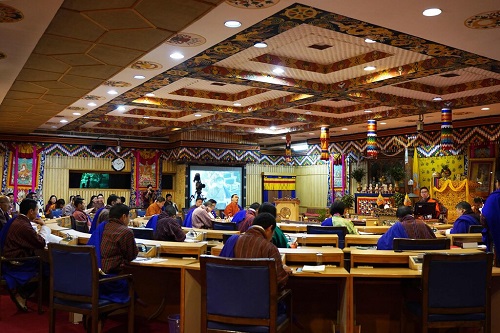
HONG KONG — The kingdom of Bhutan prides itself on maximizing “gross national happiness,” but it doesn’t always feel that way to members of the country’s L.G.B.T. community.
Stigma and discrimination are rife, activists say, and it’s common for gay people to be blackmailed. “These are the issues that don’t get talked about, but this is the reality,” said Tashi Tsheten, a founding member of the local advocacy group Rainbow Bhutan.
This week, however, lawmakers in the Himalayan country voted to amend a line from Bhutan’s penal code that criminalizes “sodomy or any other sexual conduct that is against the order of nature,” previously treated as a reference to gay sex.
The move, which still needs the king’s approval to become law, was the latest example of an Asian government loosening restrictive laws governing the private lives of L.G.B.T. people.
In neighboring India, the Supreme Court unanimously struck down one of the world’s oldest bans on consensual gay sex in 2018, ruling that gay Indians were to be accorded all the protections of the Constitution.
Last year, lawmakers in Taiwan voted to legalize same-sex marriage, a first for Asia. That gave new leverage to activists campaigning for marriage equality in Japan and beyond.
And in July, Thailand’s cabinet said that it had approved a draft bill that would give same-sex unions many of the same benefits as heterosexual marriages. The legislation avoided the term “marriage,” but allowed for the legal registration of same-sex partnerships.
Bhutan’s new law, which passed both houses of Parliament on Thursday, “folds Bhutan into the global momentum toward recognizing equality for lesbian, gay, and bisexual people,” said Kyle Knight, a senior researcher in the L.G.B.T. rights program at Human Rights Watch who has written about the law.
However, he added, “Bhutan still has significant work to do to ensure that the rights of people who have been long marginalized on the basis of their sexual orientation or gender identity are fully protected.”
Bhutan’s penal code was introduced in 2004, four years before this Buddhist-majority nation of 800,000 people held its first elections as part of a transition from absolute monarchy to constitutional democracy. Much of the code was adopted from criminal laws in the United States, according to a recent analysis by the legal scholars Dema Lham and Stanley Yeo.
The parts about sodomy and “unnatural sex,” though, are identical to language in other penal codes around South Asia that was copied from the Indian Penal Code, a law introduced in the 1860s by the British colonial authorities, said Mr. Tsheten, the Bhutanese activist. Individuals charged with “unnatural sex” acts in Bhutan would be subject to penalties consistent with a petty misdemeanor.
The campaign to amend anti-gay language in Bhutan’s penal code did not involve much direct lobbying from L.G.B.T. activists, Mr. Tsheten said, in part because formally registering a gay rights advocacy group in the country could be interpreted to mean that you were “standing up for criminals.”
Instead, he said, it grew out of an effort to help the Health Ministry prevent H.I.V. in the country’s gay community. “What we did was just show people in Bhutan that we exist,” he said.
The ministry became an ally because it recognized that the penal code’s reference to “unnatural sex” could prevent gay and bisexual men from seeking H.I.V. treatment. And when the penal code came up for review last year, Finance Minister Namgay Tshering — who had previously worked at the Health Ministry and the World Bank — stood up in Parliament to insist that the outdated language be repealed.
“My primary reason is that this section is there since 2004 but it has become so redundant and has never been enforced,” Mr. Tshering said. “It is also an eyesore for international human rights bodies.”
When Bhutan’s lawmakers voted on Thursday to amend the penal code’s reference to “unnatural sex,” Pema Dorji, an L.G.B.T. activist who was sitting in the chamber, was so nervous that he could not watch.
“I just closed my eyes,” said Mr. Dorji, a founding member of the advocacy group Queer Voices of Bhutan. “I was looking at the floor the whole time as I waited for them to raise their hands.”
Ugyen Wangdi, a lawmaker on a panel considering the changes, told Reuters on Thursday that 63 of Bhutan’s 69 lawmakers had voted to amend the penal code. The other six were absent.
The language about “unnatural sex” will reman in the code, Mr. Tsheten said, but will now be followed by a sentence clarifying that “homosexuality between adults” does not meet that definition.
He said that while the amended language “opens up a lot of doors” for Bhutan’s L.G.B.T. community, there would be no shortage of homophobia to overcome. Gay friends of his who have been blackmailed, for example, have been forced to change schools[ or start new social media profiles.
“You get a very hostile sense,” he said, “that your friends or colleagues would not be supportive if you came out.”
Added on
A growing number of Asian countries are starting to get into their senses. Malaysia bila?

 Quote
Quote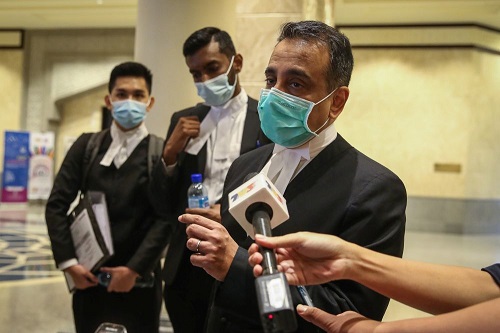







 0.0902sec
 0.79
0.79
 6 queries
 GZIP Disabled