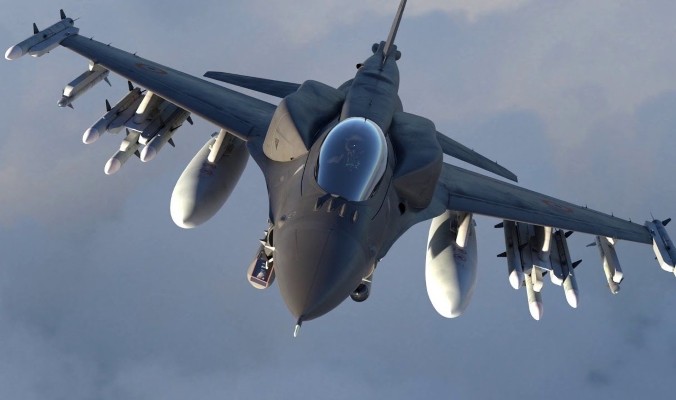
It looks like there has been no announcement of any delay on Singapore's new F16Vs due to Covid-19.
As such, Singapore is expected to receive its 62 F16Vs from early 2021. With the induction of the F16Vs, RSAF transits into an all 4.5 generation air force (F15SG and F16Vs) from a 4th/4.5th generation air force.
When RSAF receives its first F35Bs in 2025-26, it will then become a 4.5th/5th generation air force. Whilst RSAF has said that the F35s will replace its F16s and F-5 S/Ts, I think what will happen is that the F35s will operate with the F16Vs and F15SG for quite some time, and as RSAF gets more brand new F35As/Bs, the F16Vs will slowly be withdrawn maybe 2030-35 onwards after the F35s reach OIC in batches. It does not make cost sense to simply retire all 62 F16Vs before 2030 when the mid-life upgrade will make it viable for 10-15 more years.
The F16s will be upgraded in Singapore by ST Eng Aerospace. With DSTA's involvement, we can expect Singapore's F16Vs to be unique and more deadly. End-project timeline: 2022-early 2023.
Singapore and Australia Navies Conduct 25th Anniversary of Bilateral Exercise Singaroo 2020
The Republic of Singapore Navy (RSN) and the Royal Australian Navy (RAN) are participating in the bilateral maritime exercise, Exercise Singaroo, from 26 to 28 September 2020. Inaugurated in 1995, this year marks the 25th anniversary of the exercise.
The exercise will be conducted in the southern reaches of the South China Sea, with no physical interactions between the personnel from both navies due to the current COVID-19 situation. The RSN is participating with one Formidable-class frigate RSS Tenacious, one Independence-class Littoral Mission Vessel RSS Dauntless, as well as two Victory-class missile corvettes, RSS Valiant and RSS Valour, both embarked with ScanEagle unmanned aerial vehicles (UAVs), and a submarine. The RAN is deploying one Hobart-class destroyer HMAS Hobart, with an embarked MH-60R helicopter, supported by a replenishment oiler HMAS Sirius. The exercise will also be supported by a Republic of Singapore Air Force Fokker-50 Maritime Patrol Aircraft and two F-16 fighter aircraft. During the exercise, both navies will conduct various serials, including gunnery firing, manoeuvring drills, underway replenishment, air defence exercises, communication exercises and encounter exercises where the UAVs will be deployed to provide surveillance and threat identification.
Highlighting the importance of the exercise in building interoperability between both navies, RSN's Commander 8th Flotilla, Colonel Ho Jee Kien said, "Exercise Singaroo serves as a useful platform for the RSN and the RAN to carry out high-end training across the air, sea and underwater domains. As we mark the 25th anniversary of the exercise this year, we look forward to many more years of close cooperation and friendship between our two navies."
Exercise Singaroo is one of many bilateral military interactions between the Singapore Armed Forces and the Australian Defence Force, underscoring the close and long-standing defence relations between Singapore and Australia. In addition to bilateral and multilateral exercises, both armed forces also interact frequently through high-level visits, regular dialogues, professional exchanges and the cross-attendance of courses.
Source: SG Mindef
Mai's note: That is some powerful anti-air (ESSM/Standards/Aster15/30s) and anti-surface badass (Formidable alone can carry 24 harpoon and in future 24 Blue Spear missiles) capability. But there is something more important...interoperability between RSN and RAN especially if they can share the same situational awareness i.e. their ships and planes and submarines can link up.
Good ship and crew! Weapons is one thing. Logistic/support is everything!
This post has been edited by Mai189: Oct 4 2020, 02:54 PM
It looks like there has been no announcement of any delay on Singapore's new F16Vs due to Covid-19.
As such, Singapore is expected to receive its 62 F16Vs from early 2021. With the induction of the F16Vs, RSAF transits into an all 4.5 generation air force (F15SG and F16Vs) from a 4th/4.5th generation air force.
When RSAF receives its first F35Bs in 2025-26, it will then become a 4.5th/5th generation air force. Whilst RSAF has said that the F35s will replace its F16s and F-5 S/Ts, I think what will happen is that the F35s will operate with the F16Vs and F15SG for quite some time, and as RSAF gets more brand new F35As/Bs, the F16Vs will slowly be withdrawn maybe 2030-35 onwards after the F35s reach OIC in batches. It does not make cost sense to simply retire all 62 F16Vs before 2030 when the mid-life upgrade will make it viable for 10-15 more years.
The F16s will be upgraded in Singapore by ST Eng Aerospace. With DSTA's involvement, we can expect Singapore's F16Vs to be unique and more deadly. End-project timeline: 2022-early 2023.
Singapore and Israel eye buying Lockheed fighter By Jim Wolf
5 MIN READ
WASHINGTON (Reuters) - Singapore has shown interest in possibly buying up to 100 of Lockheed Martin Corp's LMT.N F-35 Joint Strike Fighter aircraft over coming decades, matching Israel's tentative plans, the general in charge of the program for the Pentagon said on Monday.
Separately, the eight countries that have joined the United States to co-develop the plane appear to be largely sticking to their plans to buy some 730 of their own, said Air Force Maj. Gen. Charles Davis, the Pentagon’s program chief.
“The Israelis have said they’d take up to 100 aircraft,” he said in an interview. “The Singaporeans have said basically the same thing.” Embassy spokesmen of the two countries had no immediate comment.
Development of the F-35, a family of radar-evading aircraft, was co-financed by Britain, Italy, the Netherlands, Turkey, Canada, Australia, Denmark and Norway.
The United States currently plans to buy a total of 2,443 F-35 models -- including 1,763 for the U.S. Air Force and 680 for the Marine Corps and Navy together. It is the costliest U.S. arms program ever at a projected $299 billion.
Hundreds of others may be sold overseas to replace a range of fighters, including Lockheed F-16s and Boeing Co BA.N F-18s.
Davis predicted Japan formally would request F-35 pricing and availability information by the end of this year as part of its next fighter selection process.
“There’s no doubt it’ll be a strong competitor” in Japan, he said, adding talks had also taken place with Spain about the F-35 as an eventual replacement for its Harrier jump jets.
He said the F-35 was on course to become a $1 trillion venture worldwide through 2065, when the last scheduled to be built would reach the end of its projected service life.
One trillion dollars is “what it costs to develop, buy, upgrade, sustain and fly more than 3,000 airplanes through their entire scheduled life cycle,” he said, referring to the projected world fleet.
Tom Jurkowsky, a Lockheed Martin spokesman, said the F-35 program was making “outstanding technical progress, especially in the context of it being the most complex aircraft ever built.”
The first F-35, a conventional take-off and landing version, began its flight testing program on December 15, 2006.
After the June 11 maiden flight of a short take-off, vertical landing model, the Pentagon’s top arms buyer, John Young, said the program was more mature than comparable ones at this stage of development “in terms of quality, software, testing and manufacturing readiness.”
Lockheed's chief F-35 subcontractors are Northrop Grumman Corp NOC.N and BAE Systems Plc BAES.L. Two rival, interchangeable F-35 engines are under development. One is built by United Technologies Corp's UTX.N Pratt & Whitney unit; the other by a team of General Electric Co GE.N and Rolls-Royce Group Plc RR.L.
F-35 competitors include Saab's SAABb.ST Gripen, the Dassault AVMD.PA Rafale, MiG-35 and Sukhoi Su-35, and the Eurofighter Typhoon, made by a consortium of British, German, Italian and Spanish companies.
Davis, in the interview, said his biggest concern was any “short-sighted decisions” to delay currently planned purchases of the aircraft, for which relative affordability is one of the hallmarks.
“Guys, quit screwing around with this,” he said, spelling out his message to lawmakers holding the purse-strings in the United States and in the F-35 partner countries.
“We have a huge mountain to climb here,” Davis added. He referred to going from current low-rate initial production of about 12 per year to 12 per month starting in 2014, when full production is due to kick in.
Around that time, the F-35A conventional take-off and landing version is projected to cost about $68 million apiece, he said. The F-35B short take-off, vertical landing model, designed for the Marines, would run about $85 million to $88 million, Davis said.
He put the cost per plane of the F-35C aircraft carrier variant for the Navy at $90 million to $92 million by around 2015. The F-35C version is due to fly for the first time in about October 2009, Davis said.
The jets will be bought in batches. Meanwhile, please note RSAF will upgrade the F15SGs after the upgrades to the F-16s are done - likely to F15X.
The security situation in South East Asia has gotten worse. Youve got countries laying claim on limited maritime resources; petty border disputes (economic in origin - because some countries cannot compete) led by incompetent grandfathers; others meanwhile dream of a new axis of grandeur and power whilst tens of millions of their citizens are struggling below the poverty line and dying due to Covid 19; genocide in the same region, etc.
This post has been edited by Mai189: Oct 5 2020, 01:00 PM
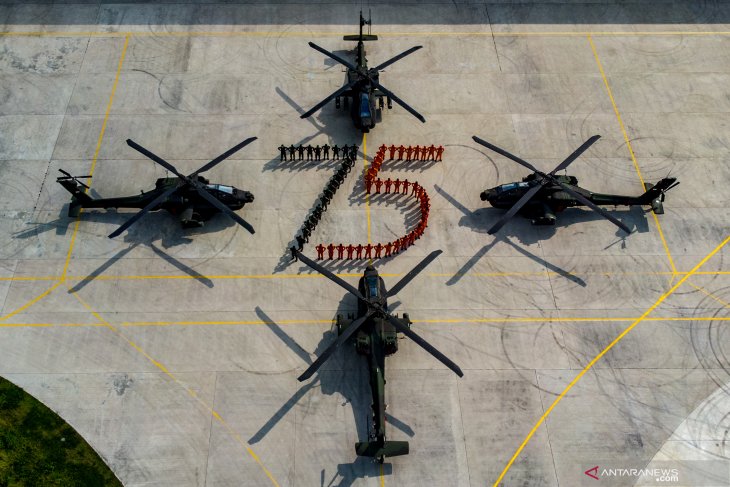
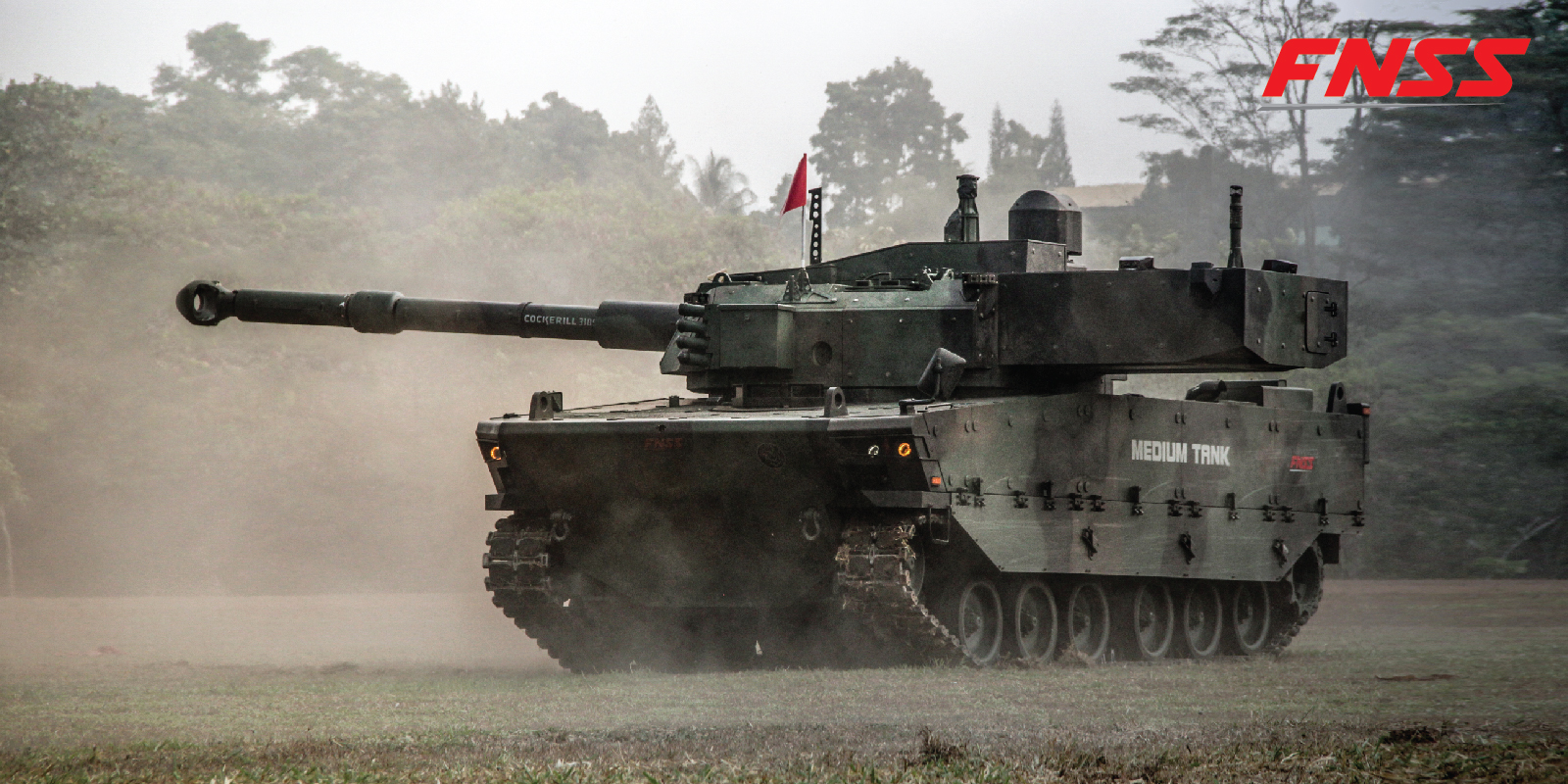
Indonesian Armed Forces (TNI) today celebrated its 75th Anniversary. AH-64E Apache Guardians of the Indonesian Army 11th Assault Squadron. Credit to Antara News.
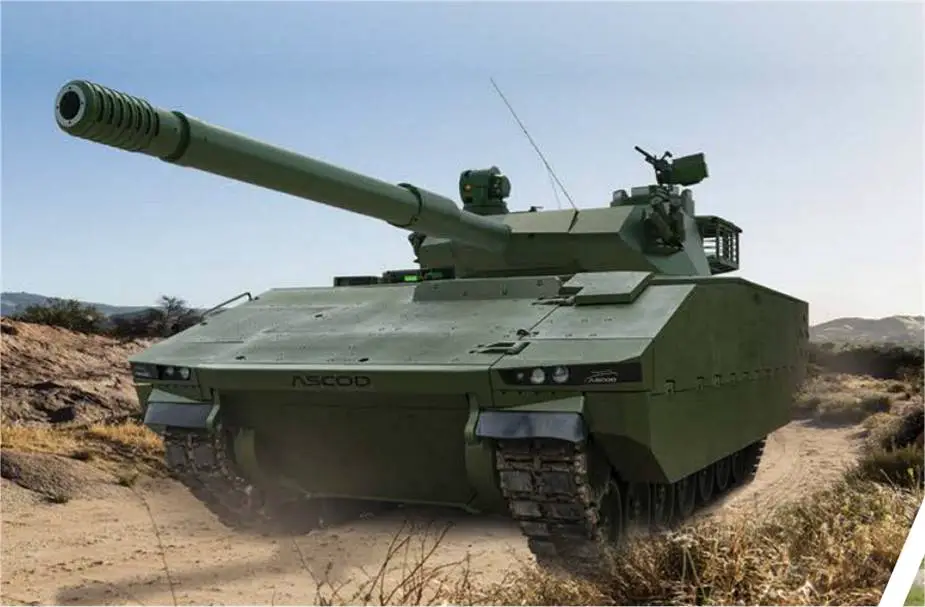
Elbit Systems from Israel offers Sabrah Light Tank for Philippines Light Tank Acquisition Project
POSTED ON SUNDAY, 04 OCTOBER 2020 16:18
According to information released on the Facebook account of MaxDefense Philippines on October 4, 2020, the Israeli company Elbit Systems has offered its new Sabrah Light Tank for the Philippine Army's Light Tank Acquisition Project, which is in competition with Hanwha Systems K21-105 and Otokar Arma 105 light tanks, and Pindad Harimau Light Tank.
Drawing of Elbit Systems Sabrah 105mm light tank based on tracked platform ASCOD 2 from GDELS. (Picture source Elbit Systems)
The Elbit Systems Sabrah light tank is available in two configurations including a tracked variant based on the General Dynamics European Land Systems (GDELS) ASCOD 2 and a wheeled version based on the Pandur II 8x8 armored vehicle also produced by GDELS.
Elbit Systems’ “Sabrah” configurable light tank solution adds highly effective firepower to Armored Fighting Vehicles (AFV’s). Based on the success of our fully combat-proven armored vehicles and turrets in use by numerous armed forces around the world, the “Sabrah” series of solutions is the latest generation AFV system developed by Elbit Systems. The modular design enables using the same 105mm turret for tracked or 8X8 wheeled platforms to deliver reliable, high-performance firepower to the battlefield.
The Sabrah turret design benefits from the reference of Elbit Systems and the IDF “Merkava” Directorate “MANTAK” combat-proven Armored Vehicles. The turrets, Fire Control Systems (FCS), electro-optics, and 105mm tank guns are in use by the IDF as well as numerous other armed forces around the world. The Booth version of the Sabrah light tank is fitted with a two-man turret armed with an Elbit Systems Land 105mm gun and one 7.62mm coaxial machine gun. Each side of the turret are equipped with a bank of four smoke grenade dischargers. The turret drive is fully electric with elevation and traverse stabilization
Standard equipment of the turret includes a fire control system, laser range finder, and one panoramic sight with advanced Electro-Optic sensors (Day, Night-Vision, and LRF) for an effective day, night, and all-weather fighting conditions. The panoramic sight is used for observation and target aiming.
The 105 mm gun system is fitted with an automatic loading system with 12 rounds ready to fire. The vehicle carries a total of 36 ammunition, with 24 rounds stored in the hull. The gun can fire a wide range of NATO ammunition including HEP-T (High-explosive), HESH (High-explosive squash head), APFSDS (Armour-piercing fin-stabilized discarding sabot) as well as advanced ammunition, T-MP-HE M110.
The 105 mm gun has an effective firing range of 3,600m with a rate of fire of 6 rounds per minute.
SHAH ALAM: Briefings for MPA and UAS tenders. The Defence Ministry’s Procurement Division together with Defence Industry Division and RMAF hold separate briefings for the procurement of the MPA and UAS last week. Though the tenders for both were published on 25 August, the one for MPA (two aircraft) will closed on 3 December while the UAS system on 26 November.
The briefings were held via video conferencing due to the current pandemic, the MPA one on 1 October and UAS on 2 October at the Intermark Hotel, says the RMAF in two separate releases. Not much details were issued in both releases though it stated that both are international tenders. Only companies which took part in the briefings are eligible to take part in them, it must be noted.
Probably first look at Singapore-Israel new anti-surface/anti-ship 5th generation missile i.e. Blue Spear now marketed by new 50/50 joint venture company called Proteus Advanced Systems:
QUOTE
Israel Tests New Sea-to-Sea Missile System
September 25, 2020 DP Staff Writer 0 Comments Anti-ship missile, Israel, Israel Aerospace Industries (IAI), Israeli Defense Forces (IDF), Israeli Navy The Israeli Navy and the Ministry of Defense (IMoD) successfully tested a new sea-to-sea missile system off the Israeli coast earlier this month, Israeli Defense Forces (IDF) announced Friday.
The missile system was reportedly developed by Israel Aerospace Industries (IAI) and was tested by the Navy and the IMoD’s Administration for the Development of Weapons and Technological Infrastructure (MAFAT). The series of tests included firing the missile at a decommissioned ship that simulated an enemy vessel.
The IDF said that the new system, whose name was not announced, was designed to “ensure Israel’s continued naval superiority.”
“The new missile system has more accurate attack capabilities, abilities to reach farther distances, improved attack flexibility and is better able to handle the advanced threats it is facing,” the IDF said.
The system is deemed operational and ready for use in the Navy following the tests. The new missiles will be integrated on Navy’s Sa’ar-5 class corvettes and the new German-made Sa’ar-6 corvettes that will enter service in the coming months.
ST Engineering confirmed to Defense News that its next generation anti-ship missile is called the Blue Spear, a system that it says it has been working with IAI over the past few years, although it declined to divulge the exact timeline...
A spokesperson from the company added that Blue Spear, which was also known as the 5G SSM, is “is an anti-ship missile system that introduces an advanced and novel approach which addresses the challenges of the modern naval arena for years to come,” and confirmed reports elsewhere that ST Engineering’s role in the Blue Spear’s development includes the design, development and production of major subsystems like the booster motor and warhead...
Mai's note 1: Like the domestic production of Spike missiles, Singapore can construct rolls and rolls of Blue Spear missiles which are launchable from land, air and submarines. Note: Type 218SG submarines have Horizontal Multi-Purpose Airlocks, which can be used to launch either torpedoes, divers, or special forces assault teams, and also have the capability to launch cruise-missiles while submerged with an option for Vertical Multi-Purpose Airlock, for launching missile vertically, like the Tomahawk or Naval Strike Missile.
Mai's note 2: An air launched Blue spear missile will have a much longer range - likely nearly 600km to 700km.
This post has been edited by Mai189: Oct 5 2020, 05:47 PM
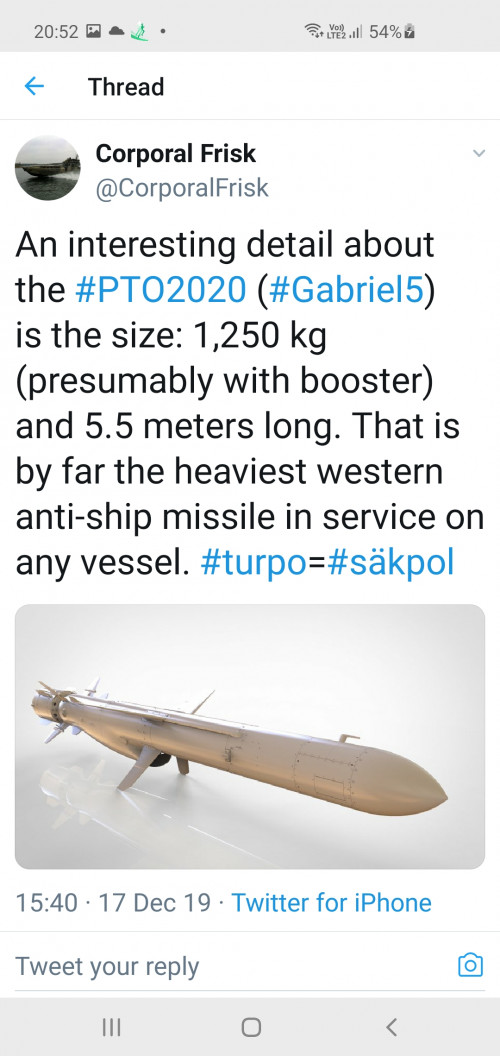
Finland Stealth Boats to Get Israel’s Gabriel Advanced Naval Attack Missiles
Finland has selected Israel’s Advanced Naval Attack Missile to replace its current MTO85M system, a derivative of Swedish RBS15 that will reach the end of its life cycle in the 2020s. IAI’s Gabriel has beaten four other competitors evaluated by Finland’s MOD, including Kongsberg’s NSM, MBDA’s Exocet, Boeing’s Harpoon and Saab’s RBS15. The initial contract is worth EUR162 million, with an option worth EUR 193 million.
The selection of Israel’s Advanced Naval Attack Missile marks an important achievement for IAI, representing the first sale of such strategic system to a European Navy. Also known as Gabriel 5, the weapon is the latest member of a family of naval attack missiles developed by IAI. Little is known about the weapon, that is believed to be operational on Israel Navy missile boats and with some foreign navies.
With a size roughly as the American Harpoon and French Exocet, the Israeli missile covers longer ranges and can complete its mission even in a highly restrictive environment. Using a modern and advanced active radar seeker and a sophisticated weapon control designed to overcome target selectivity problems, the system achieves very high operational effectiveness, particularly in littoral waters. As such it is optimized for operation in congested waters, and under heavy electronic warfare and against sophisticated countermeasures, typical of scenarios that might be encountered in the Baltic Sea. The missile has an estimated range of 200-400 km and, according to some reports, a version of the missile is equipped with a two-way datalink. According to the Finnish MOD, the missile will also be usable from vehicular platforms on land and against land targets.
As an advanced attack missile, Gabriel 5 could penetrate the target’s protection, both soft- and hard-kill defenses. It was designed with sophisticated electronic counter-countermeasures (ECCM) dealing with chaff, advanced decoys, and active ECM. Gabriel 5 and Barak 8 were described as part of a combined, offensive and defensive system suite built by IAI’s Missiles and Space division for the Israeli navy and for export.
The main selection criteria weighed the weapon’s performance along with acquisition costs and schedule, lifecycle costs and security of supply. Compatibility with existing infrastructure and defense system was also considered.
The new missile will be installed on existing Hamina-class missile boats and the new Squadron 2020 vessels, the first will be launched in 2019. The Hamina is undergoing a midlife upgrade program lead by Patria. The SMM2020 will also be installed on a vehicle platform, introducing a first known coastal defense variant for the Gabriel. Deliveries will start in 2019 and continue through 2025. The Finnish Navy is expected to maintain the new missile in service for a period of 30 years. The purchase will include launchers, missiles, simulators, test equipment, spare parts, and training. The SSM2020 will be maintained in Finland.
Finland "officially" bought Blue Spear which it calls SSM2020 first. Expectedly, the missile has a huge range of 400km - the largest ship-borne anti-ship/anti-surface western missile at this point in time thus far.
This post has been edited by Mai189: Oct 5 2020, 05:39 PM
Receiving Rp. 137 T Budget, What Will Prabowo Be Shopping in 2021?
Chandra Gian Asmara, CNBC Indonesia 05 October 2020 09:07
Jakarta, CNBC Indonesia - The Ministry of Defense receives the second largest budget allocation in the 2021 Fiscal Year State Budget (APBN).
The ministry, led by Lieutenant General TNI (Purn) Prabowo Subianto, received an allocation of Rp. 136.9 trillion, or higher than the previously proposed Rp. 129.3 trillion.
This fund is the second largest allocation after the Ministry of Public Works and Public Housing (PUPR). The PUPR Ministry receives a budget allocation of Rp 149.8 trillion.
Based on CNBC Indonesia's records, the defense authority's budget for next year will increase by 18.76% compared to last year's Rp 115.4 trillion. Here are the details:
• Year 2016: Rp. 98.1 trillion • Year 2017: Rp. 117.3 trillion • Year 2018: Rp. 106.7 trillion • Year 2019: Rp. 115.4 trillion • Year 2020: Rp. 117.9 trillion • Year 2021: Rp. 136.9 trillion.
The funds will be used to realize the seven main programs. Starting from the program to use force of Rp.4.4 trillion, as well as the professionalism and welfare program for soldiers of Rp.11.42 trillion.
Then, the defense policy and regulation program amounting to Rp 35.4 billion, the defense equipment modernization program, non alutsista, and defense sarprs Rp 42.65 trillion, and the defense resource development program Rp 1.6 trillion.
Likely hedging 1) against a possible budget reduction due to the incoming recession 2) fall in rupiah value against major currencies, and 3) 2019 budget was reduced due to Covid-19 - so part of it is to cover last year's reduction.
Finland "officially" bought Blue Spear which it calls SSM2020 first. Expectedly, the missile has a huge range of 400km - the largest ship-borne anti-ship/anti-surface western missile at this point in time thus far.
As for Finland's SSM2020 pogramme, the decision to purchase Blue Spear (which it calls SSM2020) was made as a result of competitive bidding between Kongsberg NSM, MBDA Exocet, Boeing Harpoon Block 2+, Saab RBS15 Mk4 and Israel Aerospace Industries Gabriel missiles.
It has gone unnoticed. Put another way, this is the first time a Western nation has bought a middle-eastern(Israel)/Asian(Singapore) designed anti-ship/anti-surface missile. Blue Spear was pitted against the latest missiles such as NSM (to be bought by Malaysia) and RBS 15 MK4 Gungir and won. Blue Spear is effective against both sea and deep land targets.
To celebrate the 100th anniversary of the V.P. Chkalov State Flight Test Center, the Russian Ministry of Defense released a video. Some never-seen footage shows a Su-35S fighter jet shooting an R-37M air-to-air hypersonic missile.
Initially designed in the 1980s as a long-range air-to-air weapon, the Vympel R-37 program was dropped due to budget constraints in 1998. However, in 2006 work resumed on the R-37M, also known as RVV-BD (for Long-Range Air-to-Air Missile), to create a replacement to the R-77 supersonic missile for the current and upcoming fighter jets of the Russian Aerospace Forces. The new variant was reduced, both in weight and length, to fit modern aircraft.
The weapon has a reported maximum range of up to 200 kilometers (124 miles) and can hit a target at an altitude from 15 meters (49 feet) to 25 kilometers (15 miles), at a speed of Mach 6. The Su-35S fighter jet is reportedly capable of carrying up to four R-37Ms. Along with the Su-35S, the MiG-31BM heavy interceptor should eventually include the R-37M in its arsenal. Compatibility tests with the internal weapons bay of a Su-57 fifth-generation fighter jet are also planned.
This is a 1980s missile designed in late 1970s. Apart from the shortage of funds, the missile has difficulty maneuvering to hit agile targets - it goes generally straight.AIM 120D is said to exceed it in range.
Also, F35s (later block >4s) will be installed with laser defensive systems to knock out incoming missiles. Now available for F16Vs/F15s as add-on pods:
Finland "officially" bought Blue Spear which it calls SSM2020 first. Expectedly, the missile has a huge range of 400km - the largest ship-borne anti-ship/anti-surface western missile at this point in time thus far.
Yes 400km. MTCR is no longer abided with or dead for all intents and purposes. And Sg and Israel are not buyers. They are weapon producers.
Lrasm, which Australia will get, has a range of 350-400km when ship launched. SAABS RBS15 MK4 Gungnir has a range of 350km.
Nope....MTCR is 300km SG unlikely producer. We will know if one producer or not. Just partner in selling it with some benefit. I will believe in SG is a producer if already produced a shorter one first. You learn to walk before run
This post has been edited by Lampuajaib: Oct 6 2020, 11:12 AM
Nope....MTCR is 300km SG unlikely producer. We will know if one producer or not. Just partner in selling it with some benefit. I will believe in SG is a producer if already produced a shorter one first. You learn to walk before run
QUOTE
A spokesperson from the company added that Blue Spear, which was also known as the 5G SSM, is “is an anti-ship missile system that introduces an advanced and novel approach which addresses the challenges of the modern naval arena for years to come,” and confirmed reports elsewhere that ST Engineering’s role in the Blue Spear’s development includes the design, development and production of major subsystems like the booster motor and warhead...
Read my posts. Sg and Israel jointly designed and will jointly produce the missile. And MTCR is non binding and dead. They learned to walk long before you did. LRASM, RBS 15 MK4, etc all exceed 300km.The only short legged one is NSM.
This post has been edited by Mai189: Oct 6 2020, 11:21 AM
Read my posts. Sg and Israel jointly designed and will jointly produce the missile. And MTCR is non binding and dead. They learned to walk long before you did. LRASM, RBS 15 MK4, etc all exceed 300km.The only short legged one is NSM.


 Oct 4 2020, 02:10 PM



 Quote
Quote




 0.0303sec
 0.64
0.64
 6 queries
 GZIP Disabled