

LYN Catholic Fellowship V02 (Group), For Catholics (Roman or Eastern)
LYN Catholic Fellowship V02 (Group), For Catholics (Roman or Eastern)
|
|
 Oct 10 2018, 11:00 AM Oct 10 2018, 11:00 AM
Return to original view | Post
#561
|
 
Junior Member
225 posts Joined: Mar 2008  
|
|
|
|
|
|
|
Dec 14 2018, 09:57 AM
Return to original view | Post
#562
|
|
Junior Member
225 posts Joined: Mar 2008
|
Full Question
At what age was reception of the Eucharist allowed prior to the papacy of Pope Pius X? Answer Until the thirteenth century, the usual practice was for infants and children to receive First Communion immediately after baptism. This was normally done by administering a drop of Precious Blood to the infant or by the priest dipping his thumb in the chalice and then placing his thumb in the infant's mouth. At Masses small children were often given the fragments of hosts that were left over after the adults had received Communion. This practice in the Western Church generally died out by the thirteenth century, and the Eucharist was given only to those who had reached the "age of discretion" and had gone to confession. Obviously, there were differences of opinion as to when children had reached the age of discretion. Local customs vaired in their established age of discretion from ages seven to fourteen. In 1866, Pope Pius IX condemned the practice of overly delaying the reception of First Communion but did not set a universal age. In 1910, the Sacred Congregation for the Discipline of the Sacraments set out that the age of discretion should be considered to be around seven years of age. St. Pius X approved and published the decree. Source: https://www.catholic.com/qa/a-history-of-th...first-communion ----- Above answer gives the rationale behind the age at which a child is allowed his or her First Holy Communion. This is largely dependent on whether the child has reached the "age of reason" ("age of discretion", in the article), i.e. able to understand the significance of the Sacrament of Holy Communion / Eucharist. Do take note that for parishes within the Archdiocese of Kuala Lumpur, and Malaysia, the age has been set at 10 years old, when a child should be in Standard 3, by secular Primary School reckoning. On a similar note, the article below explains the Sacrament of Confession and going for penitential rites for children. ----- The 1983 Code of Canon Law says, "It is the responsibility, in the first place, of parents and those who take the place of parents as well as of the pastor to see that children who have reached the use of reason are correctly prepared and are nourished by the divine food as early as possible, preceded by sacramental confession" (CIC 914). Cutting out the opening words relevant to parents, the canon says, "It is the responsibility. . . of the pastor to see that children who have reached the use of reason. . . are nourished by the divine food as early as possible, preceded by sacramental confession" (CIC 914). Your priest has a responsibility under the Code of Canon Law to see that the children of your parish are given the instruction and opportunity for sacramental confession prior to their reception of First Communion. The importance of this has been re-emphasized by the Vatican in the Catechism of the Catholic Church: "Children must go to the sacrament of penance before receiving Holy Communion for the first time" (CCC 1457). If your parish does not supply its children with the instruction and opportunity for confession prior to First Communion, it is in violation of the Vatican's directives. Source: https://www.catholic.com/index.php/qa/shoul...first-communion |
|
|
Jan 21 2019, 07:55 PM
Return to original view | Post
#563
|
|
Junior Member
225 posts Joined: Mar 2008
|
Catholic - Universal Church
"Not to oppose error is to approve it; and not to defend truth is to suppress it." Pope St. Felix III, Papacy 269-274 "The true religion has shown forth with greater splendor the more it has been oppressed." Pope St. Symmachus, c. 506 A.D. "You are certainly aware, our beloved sons and venerable brothers, that every kind of impious and deceitful writing, lies, calumny, and blasphemy has been let loose from hell. No pain has been spared to transfer schools to non-Catholic teachers and to appropriate churches for non-Catholic worship. With a multiple of other, surely diabolical treacheries, arts, and undertakings, the enemies of God employ every effort to destroy completely - if that were possible - the Catholic Church, seduce and corrupt the people, especially guileless youth, and uproot our holy faith and religion from the souls of all." Pope Pius IX, "Quanto Conficiamur Moerore", 1863 A.D. "If the Lord wishes that other persecution should be suffered, the Church feels no alarm; on the contrary, persecutions purify her and confer upon her fresh force and a new beauty." Pope Pius IX, Papacy 1846-1878 "Our lot has been cast in an age that is bitterly hostile to justice and truth" Pope Leo XIII, "Mirae Caritatis", 1902 A.D. "Recourse to God, so infinitely good, is all the more necessary because, far from abating, the struggle grows fiercer and expands unceasingly. It is no longer only the Christian faith that they would uproot at all costs from the hearts of the people; it is any belief which lifting man above the horizon of this world would supernaturally bring back his wearied eyes to heaven. Illusion on the subject is no longer possible. War has been declared against everything supernatural, because behind the supernatural stands God, and because it is God that they want to tear out of the mind and heart of man." Pope St. Pius X, "Une Fois Encore", 1907 A.D. |
|
|
Jan 31 2019, 10:53 AM
Return to original view | Post
#564
|
|
Junior Member
225 posts Joined: Mar 2008
|
The Job of a Prophet is to be hated
Fourth Sunday in Ordinary Time Year C  A joke that I tell my priest friends who know Latin goes as follows: If I ever get a dog I’ll call him ‘Anathema’ so that I can shout out regularly ‘Anathema –sit’! The word “anathema”, which is actually Greek in origin, originally meant “an offering” or “something dedicated”, eventually came to be used as the ecclesiastical ‘curse’ or decree of excommunication used by the Church from the Council of Trent in the sixteenth century until Vatican II, to condemn erroneous or heretical teachings and those who promoted them. As harsh as this may sound, the anathema curse actually has scriptural origins and is used by St Paul against those who preach a false Gospel: “As we have already said, so now I say again: If anybody is preaching to you a gospel other than what you accepted, let them be ‘anathema’ (Gal 1:9). St Paul uses such harsh language in his condemnation because he understood how utterly evil and incredibly damaging it is to the faith of the faithful to preach a false Gospel. There really is no issue more serious for a Christian. Yet so few Christians take this subject seriously. Few care in the least or bother to determine whether they are deliberately or inadvertently holding to or teaching a false or corrupted gospel. Personal preferences and sentiments often trump Truth. Ambiguity seems to be the rule of day. On the other hand, doctrinal certainty is often labelled as rigid and unbending. The irony today is that it is not those who spew heresies and false teachings from the pulpit who often get cursed in this manner, but rather, the ones who defend orthodox teaching and speak the truth who risk being thrown out of the pulpit either by an angry audience or by their more politically-correct superiors. This was the fate of our Lord. Today’s passage follows immediately last week’s episode where our Lord after reading the passage from the Book of Isaiah was treated like the local hero. They marvelled at the wonderful things He said among them. He was one of their own, He grew up among them and they knew His background. Now He spoke with eloquence and graciousness and this “won the approval of all.” They felt proud that their town could produce such a man. He told them that the words of hope they treasured in the Scripture were being fulfilled in their hearing. He was basically telling them that “all is well,” because God has come to save the day. That wonderful warm fuzzy feeling – who could deny or reject this. Everything was going well, until our Lord began to challenge their expectations, perception and belief system. Jesus takes up the attitude and role of a prophet and in so doing, begins to provoke His listeners. He ‘judgmentally’ tells His audience that His prophetic words will not be accepted or recognised “in his own country”, citing two examples of great prophets in the Old Testament who were also rejected by their own people. When the Lord shifted the tone of His sermon, the crowd’s response also moved from hospitality to hostility. We might well think Jesus was imprudent in the way He provoked His own relations and fellow townspeople. It is always wise to look for allies rather than make enemies. We may even be tempted to fault Him for being the cause of the people’s indignation and wanting to drag Him out of the town to murder him. Yet, later Christian teaching and preaching will imitate His method. The martyrs and confessors of the Church had to pay the price for it. One can tiptoe around diplomatically only for a short time before it leads to the point where one has to jump feet first into truth-telling. This Gospel is like a microcosm of the whole story. As the Prologue to the Gospel of John says: “He came unto his own, and they that were his own received him not.” (John 1:11). He was one of their own, and they were more than happy to go along with him for a time. How often this happens in the life of Jesus – that people follow Him and then go off in a different direction when things don’t suit, when the gospel He preaches is no longer “nice” but has a sharp painful sting to it with a big price tag. There is no problem when you tell people what they want to hear. The man whose message is ‘repent’ sets himself against his age, and will be battered mercilessly by the age whose moral tone he challenges. There is but one end for such a man…either rejection or death! The spiritual gift of a prophet is not so much foretelling, as it is forth-telling. The prophet sees a problem and addresses it. Such was the role of the prophets in Israel. The Old Testament prophets called God’s people to repentance, revival, and renewal. They could not and would not settle for status quo. Being a prophet was never an easy calling, then or now. A prophet’s uncompromising truthfulness was both utterly confronting and utterly ego-deflating. To be prophetic is to call sin, sin. It is to say, without apology or reservation, “The Lord says ...” and sometimes, He says things which are not very comforting or pleasing to the ear, especially when He is confronting our sinfulness. He did so, not because He was intentionally mean and wanted to hurt His listeners. St Paul was right in the second reading. The prophet is motivated by love, never by spite. Love doesn’t seek to hide the truth. Love doesn’t lie. A priest friend once told me that the job of a Parish Priest is to be hated. I guess this includes someone who plays the “prophet.” If he is doing his job, and doing it right, there are bound to be people who would disagree with him or eventually hate him. I’m not sure if I have the thickness of his skin to endure this. Bishop Emeritus Anthony Selvanayagam once shared how the legendary late Monsignor Aloysius gave him this piece of advice, “A bishop must have the wisdom of Solomon, the patience of Job and the hide of a rhinoceros.” No wonder we have so few bishops and God forbid if any of us priest ever got chosen to be one. The truth is that whether it be a priest, or a parent, or just an ordinary Christian, our job is not to be popular. Our job is to be faithful and that’s the hardest part of our calling. The litmus test of a true Christian is best measured not by how many bouquets that have been pinned on him, but rather by how many brickbats that have been pitched at him. Prophets have been on the receiving end of mud more than medals. I’ve personally experienced this truth - the preacher who jests and jokes with his people all week will soon find that he cannot stand in his pulpit on Sunday with power to reprove, rebuke, and exhort. He may be the life of the party but it will be the death of the prophet. Popularity has killed more prophets than persecution. I understand that my role as a true pastor must not only be to feed the flock, but also to warn the flock. To turn black and white into grey doesn’t honour God, it just makes sinners feel better about themselves. The prophet’s calling is lonely, sometimes discouraging and usually misunderstood. People will either run from a prophet or try to destroy him – only the remnant minority receives the prophet and his message with gladness. But remember this - the only reason a true prophet speaks is because he is compelled by God and moved by Love, a love that “takes no pleasure in other people’s sins but delights in the truth.” The prophet may not be perfect. He often isn’t. He too is broken by sin but he desires God’s people to experience God’s best and experience what he has experienced – forgiveness and mercy at the point of repentance. And if we doubt whether we would have the gumption or the “hide of a rhinoceros” to do the job, let us be reminded that we have something far greater – the promise of the Lord to make us into “a fortified city, a pillar of iron, and a wall of bronze to confront all.” He assures you: “They will fight against you but shall not overcome you, for I am with you to deliver you – it is the Lord who speaks!” Source: http://michaelckw.blogspot.com/2019/01/the...o-be-hated.html |
|
|
Feb 14 2019, 10:43 AM
Return to original view | Post
#565
|
|
Junior Member
225 posts Joined: Mar 2008
|
QUOTE(yeeck @ Feb 13 2019, 03:04 PM) Homily for the 4th Sunday after Epiphany: “There are Pirates in the Boat” Are you that worried? I am not ... 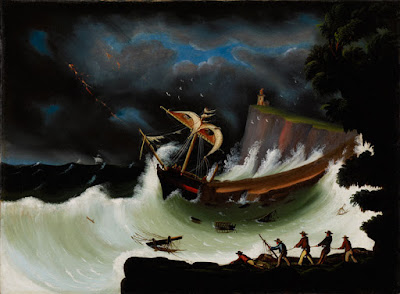 At that time, Jesus got into a boat, and His disciples followed Him. And behold, there arose a great storm on the sea, so that the boat was covered by the waves; but He was asleep. So they came and woke Him, saying: Lord, save us! We are perishing! But He said to them: Why are you fearful, o you of little faith? Then He arose and rebuked the wind and the sea, and there came a great calm. And the men marveled, saying: what manner of man is this, that even the wind and the sea obey Him? (From the Gospel of the day: Matthew VIII, 23-27) Dear Brethren, The words of the Holy Gospel that we just heard tell us of what happened when the boat where Jesus was with his disciples was faced with a terrible storm. The waves were so big that it seemed that the boat would sink. So the disciples cried out to the Lord and the storm disappeared. This is what happened at that time. And this is what is happening today. If we move beyond the literal meaning of the Scriptures, we will be able to see in the Gospel for today not only a faithful narration of what happened in the past, but also a very accurate description of what is happening today. This Gospel teaches us many precious lessons in these terrible times of confusion and scandals. That boat, where Jesus was with his disciples, is a figure of the Church, the Church navigating the sea of this world, navigating toward heaven. And the storms are all the trials that the Church has to face here on earth. So the Church is a spiritual boat, the boat of Christ, which leads us to the port of salvation. The Catholic Church is the Boat of Christ, the only one that can take us to heaven. And how comforting to know that we are inside this boat! However, we see in the Gospel that this boat would not be spared storms. The boat would shake; the boat would swing… The Church would not be spared the attacks of her enemies, who would try, without interruption, to sink the boat. We can see that from the very beginning of the Church: persecutions from the Jews; persecutions from the pagans; and then all the heresies that the Church had to fight over the centuries. So many trials... And sometimes these trials were so strong, sometimes the waves were so big, that it seemed that the boat was going to sink. But no, the boat didn’t sink… it is still floating. All the tactics of the devil seem to have failed. But the enemy of God is very clever. He would not give up so easily: he tried to attack the Church openly, and it didn’t work. So he tried another path. His new plan was to quietly insinuate agents of evil into the Church, who would distill their poison, who would corrupt the truth, but now without being recognized. The plan was to send pirates to hijack the boat of the Church -- pirates who would pretend to be members of the crew of Christ, but who were, instead, members of the crew of Satan. Pirates from the red flag of communism. Pirates from the rainbow flag of immorality. Pirates from the white flag of ecumenism, this false peace that does not come from Christ, because it compromises the Truth. My brethren, it is with great sadness that we see that these pirates made their way into the boat. They made their way into the Church. If in the past they had to be careful not be recognized, nowadays they don’t hide anymore. And we can recognize the pirates, not by the clothes they use, but by the words they say. We recognize the infiltrators by their teachings. If someone teaches the truth of Christ, he is from the crew of Christ. But if someone teaches something contrary to the Gospel of Jesus Christ, he is not from Christ, but he is a pirate. It is as simple as that. So we have to be aware: there are pirates in the boat, there are pirates in the Church. And I would be guilty of a grave sin if I didn’t alert you. This sect of pirates is trying to take control of the Church, and has even climbed to positions of authority in order to give the Church a new direction, opposed to the life giving words of Our Lord. They want to create a “paradigm shift”, a new religion: free from doctrine, free from morality… in a word: free from Christ. They don’t want Christ anymore, because Christ bothers; the words of Christ do not allow them to do whatever they want. And so, of Christ they keep the name only, but not the reality. And then they preach this empty Christ, this deformed Christ, claiming “a new understanding” of things. I can give you some examples. Our Lord said that a man who divorces his wife and marries another commits adultery. But now they say it’s okay. The Holy Scriptures condemn homosexuality, but now they say it’s all right. The Church always taught that there can be no salvation outside the True Faith, but now they say that it is not really like that. My brethren, we should know that Truth cannot change. Heaven and earth shall pass away, but the word of the Lord shall remain forever. We cannot try to update the Word of God. But the pirates do try to change the words of God. They are the anti-Church, somehow mingled with the Church of Christ. The weeds are mingled with the wheat. The Church is in eclipse. So in these very difficult times, we are called to prove the spirits, as Saint John says, in order to see if they come from God. We have to compare the teachings we receive with what the Church has always taught. That is why we must know our Faith, we must study our Faith, in order to discern what is true from what is false. And that is how we will be able to separate the weeds from the wheat, the heresies from the Truth, and the pirates from the true ministers of Jesus Christ. Yes, my brethren, there are pirates in the boat. And they are working hard in order to “change the Church”, what is just a nice euphemism for “destroying” the Church. That is what they are up to. And in these conditions, should we jump out of the boat? Should we leave the Church? No, never! The boat is ours! They are the ones who have to go away. You know that the situation today is very delicate, very painful. However, with all these scandals coming to light, we have reasons to be hopeful that this will bring about a great purification in the Church; that all the pirates will be named and cast out, and that the true face of the Church will shine again. Let us have hope, and never forget that Our Lord is in the boat with us. But if He seems to be sleeping, it is time for us to wake him up with our prayers, with our supplications, asking His boundless mercy that the Church may be delivered from Her enemies, from without and from within, and may experience some peace. Domine, salva nos perimus. Lord, save us lest we perish. Amen. https://rorate-caeli.blogspot.com/2019/02/h...phany.html#more   Matthew 10:16-18 New Revised Standard Version Catholic Edition (NRSVCE) [b]Coming Persecutions[b] “See, I am sending you out like sheep into the midst of wolves; so be wise as serpents and innocent as doves. Beware of them, for they will hand you over to councils and flog you in their synagogues; and you will be dragged before governors and kings because of me, as a testimony to them and the Gentiles. Matthew 16:18-20 New Revised Standard Version Catholic Edition (NRSVCE) And I tell you, you are Peter, and on this rock I will build my church, and the gates of Hades will not prevail against it. I will give you the keys of the kingdom of heaven, and whatever you bind on earth will be bound in heaven, and whatever you loose on earth will be loosed in heaven.” Then he sternly ordered the disciples not to tell anyone that he was the Messiah. John 15:18-25 New Revised Standard Version Catholic Edition (NRSVCE) [b]The World’s Hatred[b] “If the world hates you, be aware that it hated me before it hated you. If you belonged to the world, the world would love you as its own. Because you do not belong to the world, but I have chosen you out of the world - therefore the world hates you. Remember the word that I said to you, ‘Servants are not greater than their master.’ If they persecuted me, they will persecute you; if they kept my word, they will keep yours also. But they will do all these things to you on account of my name, because they do not know him who sent me. If I had not come and spoken to them, they would not have sin; but now they have no excuse for their sin. Whoever hates me hates my Father also. If I had not done among them the works that no one else did, they would not have sin. But now they have seen and hated both me and my Father. It was to fulfill the word that is written in their law, ‘They hated me without a cause.’ 1 Timothy 3:15 New Revised Standard Version Catholic Edition (NRSVCE) if I am delayed, you may know how one ought to behave in the household of God, which is the Church of the living God, the pillar and bulwark of the truth.  Pax brother! |
|
|
Feb 14 2019, 10:56 AM
Return to original view | Post
#566
|
|
Junior Member
225 posts Joined: Mar 2008
|
Happy are you who are poor
Sixth Sunday in Ordinary Time Year C  We are in for a treat this weekend. I’m not sure about you but I’m personally excited. It’s not always that you get to celebrate the liturgy of the Sixth Sunday in Ordinary Time in the Year C cycle. The last occasion was in 2010! It’s like a liturgical leap year of sorts. We have a late occurrence of Ash Wednesday and Lent this year to thank for this. An added treat would be that the gospel passage features the beatitudes as found in the Gospel of St Luke, and not the familiar eight that we hear more frequently (well, at least once a year on the Solemnity of All Saints and it comes at the top of a list of options for funerals). The beatitudes in the famous Sermon on the Mount in the Gospel of St Matthew and the Sermon of the Plains in St Luke contain some similarities and differences, despite the great likelihood that these are a narration of the same sermon. The striking difference between the two is to be found in the number of beatitudes: in Luke, who gives us four, compared to Matthew’s eight more developed beatitudes. But Luke balances his four blessings with four corresponding curses or ‘woes’ (or in our text “alas for you”). The Matthean beatitudes sees the world with a Jewish lens, where groups of people are identified as the righteous and the unrighteous. The Lukan beatitudes, on the other hand identify and categorise humanity as simply the poor and the rich. The Law, rightousness and piety found in the Matthean text is all but absent from the gospel of St Luke. St Luke is more concerned with the universality of the mission and message of our Lord Jesus Christ. We will not have sufficient time for a complete comparison of the two versions, but suffice to say that they are not just redundant repetitions. After having provided the context of the sermon on the Plain (topographical location, demography of the audience), St Luke makes this poignant statement, “then fixing his eyes on his disciples, (Jesus), said …” In some translations, we have “And he, lifting up his eyes on his disciples.” This simple action of the Lord provides us with a clue of what is going to follow. St Ambrose asks, “What is lifting up the eyes, but to disclose a more hidden light?” Christ is calling His hearers to a deeper understanding of God and His plan for mankind. The Lord is not simply calling us to pay attention, but rather, He is calling us to see with the eyes of faith. Then we begin with the set of four beatitudes. Thirty years ago, the Jerusalem Bible created a stir by rendering the traditional “blessed” of the Beatitudes as “happy”: “How happy are you who are poor . . .” Happy? What a choice of word! Happy sounds frivolous and superficial. But the Greek word “makarioi” can be translated as both “blessing” as well as “happiness”. The problem is that many today often associate happiness with "having a good time"–with pleasure and comfort, the absence of suffering and want. But contemporary usage is flawed. True happiness is spiritual and moral, not merely emotional or pleasurable. The saints in heaven are supremely happy, because they're with God, the source of all happiness. Just as the beatitudes in the Matthean gospel is hinged on the first beatitude, the four beatitudes of St Luke are likewise summarised in the first. That makes my preaching so much easier and your listening so less demanding. What is it about poverty that is so “blessed” or “happy” or even authentically “human”? We must first make a critical distinction between poverty and destitution. All human beings are entitled to have their basic needs met. The fact that millions are living in our world in the state of destitution, where hunger and disease ravage entire nations, is a great sin against humanity. There is certainly no blessing in this, neither should it ever be a cause of happiness. Every time we withhold our cloak from the naked or our food from the hungry, we sin, not only against the human person, but also against the Lord Himself. But poverty, or at least evangelical poverty, is not identical with destitution. The destitute may think of themselves as forsaken, but the poor are definitely not forsaken by God. Poverty is the state of simplicity, that is the state of having only what one needs. Poverty brings with it the simplicity to give oneself to God, who is the final cause of all of humanity. God is their wealth. As the spiritual writers unanimously observed, to advance in the life of virtue, poverty must come first. This is due to the chasm that lies between God and the world, the Creator and His creatures. This world and all its riches is God’s gift to us to be used as a means for our return to Him. Simply put: God is the end; things are means to this end. On the other hand, the possession of material goods beyond that of basic necessity brings with it the risk of using goods as ends in themselves. Things therefore become our ‘idols.’ The outcome would be the proliferation of vices like greed, envy and possessiveness. It is interesting that, while Christ cured the sick, made the blind see, made the deaf hear, but to my recollection, He never once made a poor man rich. Illness, blindness, and deafness are deprivations; poverty is not. Likewise, when one is deprived of the basic needs of life, this physical state of destitution necessarily brings with it the challenge of spiritual destitution. This is precisely why we must work to eliminate destitution in the world, not primarily because of the physical sufferings, but first and foremost to allow God’s people the freedom to worship Him in health of body, mind, and soul. Christ, in this first beatitude, does not say, “To those who are impoverished, I say to you, the day will come when I will relieve you of this poverty and make you rich.” That’s the gospel of prosperity often preached by successful and popular pastors. No wonder, thousands throng to their churches. Instead, our Lord says, “happy are you who are poor.” Poverty itself brings with it blessing, or rather, sanctity. The poor understand their need for God. The poor’s security and wealth lies with God. If the possession of goods beyond that of basic needs bring with it the risk of treating this excess as an end in itself, then it follows that the more we possess, the further we find ourselves from pursuing our proper end: God. We cannot serve both God and mammon. The further we are from our proper end, the less human we find ourselves. This explains the unique theme of reversal present in St Luke’s beatitudes, the so-called four ‘woes’ as opposed to the four ‘blessings. Wealth, full stomachs, contentment and human respect, though good in themselves, can also risk becoming dangerous. They can lead us to believe only in ourselves and our resources and forget our true end which is God and His Kingdom. I hope that I have not given the impression that the Church has canonised material poverty as the ladder to heaven. The state of poverty cannot just be purely material; material poverty alone does not bring salvation. St Basil warns us, “for many are poor in their possessions, yet most covetous in their disposition; these poverty does not save, but their affections condemn.” Material poverty in order to be humanising and divinising must be accompanied by spiritual poverty – being “poor in spirit.” On the other hand, neither is the state of poverty purely spiritual. There are those who want to reduce Christ’s call to poverty to the mere spiritual detachment from goods and continue to live scandalously lavish lives at the expense of the poor. This too is a distortion of the Gospel message. Finally, this beatitude should certainly not excuse us from our responsibility to assist those who are in a state of destitution. Evangelical poverty can never mean a rejection of all material goods which are good in themselves. But it is an invitation to see that these things are better when they are shared with those who have-not. As we continue our celebration of this Year of Mission, let us not forget the last point of the star. That our encounter with Christ, our learning from missionary testimonies and catecheses, should lead us to missionary charity, and in doing so, may we give true glory and worship to God, who became poor so that we may become rich in His graces. Source: http://michaelckw.blogspot.com/ |
|
|
|
|
|
Feb 25 2019, 02:29 PM
Return to original view | Post
#567
|
|
Junior Member
225 posts Joined: Mar 2008
|
 |
|
|
Mar 6 2019, 10:18 AM
Return to original view | Post
#568
|
|
Junior Member
225 posts Joined: Mar 2008
|
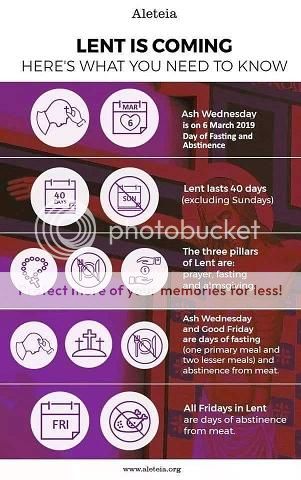
Today is Ash Wednesday, please attend Mass ... God Bless! |
|
|
Mar 29 2019, 02:26 PM
Return to original view | Post
#569
|
|
Junior Member
225 posts Joined: Mar 2008
|
|
|
|
Apr 1 2019, 01:57 PM
Return to original view | Post
#570
|
|
Junior Member
225 posts Joined: Mar 2008
|
something to remember, in light of recent events ... Ad majoram Dei gloriam!
|
|
|
Apr 3 2019, 08:06 AM
Return to original view | Post
#571
|
|
Junior Member
225 posts Joined: Mar 2008
|
QUOTE(toda_erika_II @ Apr 2 2019, 06:51 PM) Any Chinese Catholic here? I'm a banana, would like to learn about Chinese Catholic prayers such as Grace before and after Meals. I tried searching online, it's not as simple as searching rosary prayers in Chinese language. Any help will be appreciated. Some URL Links:-www.catholicworld.info : General Information Catholic Prayers : Chinese to English and English to Chinese Mandarin Chinese Rosary Prayers Traditional Catholic Prayers: Chinese to English and English to Chinese ... The Lord's Prayer, also have other prayers available under this channel ... 'Glory Be' Prayer, other prayers also available under this channel plus info about faith Google has lots of resources ... Cheers and God Bless! |
|
|
Apr 12 2019, 12:19 PM
Return to original view | Post
#572
|
|
Junior Member
225 posts Joined: Mar 2008
|
QUOTE(smallbug @ Apr 10 2019, 09:52 PM) Amazing stuff.. banana here too... might attend a Mandarin Mass and see how it goes! Eeekkk!!! ... all banana Catholics here arrrr?!  I attended Mandarin Mass before, can follow because of universal nature of Catholic Church Order of Mass established. Lucky don't look like so blurr case ... but still needed the wife to translate the homily ... Wahahahaha!!! God bless and have blessed Holy Week ahead you all! |
|
|
Apr 14 2019, 08:46 PM
Return to original view | Post
#573
|
|
Junior Member
225 posts Joined: Mar 2008
|
|
|
|
|
|
|
Apr 14 2019, 08:50 PM
Return to original view | Post
#574
|
|
Junior Member
225 posts Joined: Mar 2008
|
|
|
|
Apr 14 2019, 09:00 PM
Return to original view | Post
#575
|
|
Junior Member
225 posts Joined: Mar 2008
|
|
|
|
Apr 15 2019, 10:23 AM
Return to original view | Post
#576
|
|
Junior Member
225 posts Joined: Mar 2008
|
QUOTE(Hades76 @ Apr 15 2019, 10:03 AM) So true brother. Went to attend mass at the vatican once. All in Italian. I had my own mass in English ( whisper to my self ). St Peter's or Sistine Chapel? I was there once too, waay back in the 80s when I was a child, hope to go again once more.Was the mass really conducted in Italian or Latin? This would be interesting as I always wondered what languages are considered vernacular in Vatican city(?) |
|
|
Apr 15 2019, 03:19 PM
Return to original view | Post
#577
|
|
Junior Member
225 posts Joined: Mar 2008
|
QUOTE(Hades76 @ Apr 15 2019, 10:27 AM) Went to St. Peter's. It was definately Italian. Some of the words I can understand. Went and took the host as well. It was an uplifting experience. Amen! I find that every Mass we participate in is always an uplifting experience, as the Eucharist is the source and summit of our Christian Life (CCC 1324) GBU! |
|
|
Apr 16 2019, 07:37 AM
Return to original view | Post
#578
|
|
Junior Member
225 posts Joined: Mar 2008
|
|
|
|
Apr 17 2019, 01:38 PM
Return to original view | Post
#579
|
|
Junior Member
225 posts Joined: Mar 2008
|
Hosanna in the highest!
Aftermath of the Notre-Dame Cathedral Fire: “Main Structure Saved” from Total Destruction |
|
|
Apr 25 2019, 03:13 PM
Return to original view | Post
#580
|
|
Junior Member
225 posts Joined: Mar 2008
|
|
| Change to: |  0.1022sec 0.1022sec
 1.15 1.15
 7 queries 7 queries
 GZIP Disabled GZIP Disabled
Time is now: 16th December 2025 - 07:42 PM |
 Quote
Quote