

QUOTE(yeeck @ Jun 8 2017, 05:06 PM)
-sorry, double post-

hehe, no worries ... we know you are inspired and filled with the Holy Spirit!!! 


This post has been edited by khool: Jun 8 2017, 05:23 PM
LYN Catholic Fellowship V02 (Group), For Catholics (Roman or Eastern)
|
|
 Jun 8 2017, 05:22 PM Jun 8 2017, 05:22 PM
|
 
Junior Member
225 posts Joined: Mar 2008  
|
QUOTE(yeeck @ Jun 8 2017, 05:06 PM) -sorry, double post- hehe, no worries ... we know you are inspired and filled with the Holy Spirit!!! This post has been edited by khool: Jun 8 2017, 05:23 PM |
|
|
|
|
|
Jun 9 2017, 09:59 AM
|
|
Junior Member
225 posts Joined: Mar 2008
|
Friday of the Ninth Week in Ordinary Time
Lectionary: 357  Reading 1 (Tb 11:5-17) Anna sat watching the road by which her son was to come. When she saw him coming, she exclaimed to his father, "Tobit, your son is coming, and the man who traveled with him!" Raphael said to Tobiah before he reached his father: "I am certain that his eyes will be opened. Smear the fish gall on them. This medicine will make the cataracts shrink and peel off from his eyes; then your father will again be able to see the light of day." Then Anna ran up to her son, threw her arms around him, and said to him, "Now that I have seen you again, son, I am ready to die!" And she sobbed aloud. Tobit got up and stumbled out through the courtyard gate. Tobiah went up to him with the fish gall in his hand, and holding him firmly, blew into his eyes. "Courage, father," he said. Next he smeared the medicine on his eyes, and it made them smart. Then, beginning at the corners of Tobit's eyes, Tobiah used both hands to peel off the cataracts. When Tobit saw his son, he threw his arms around him and wept. He exclaimed, "I can see you, son, the light of my eyes!" Then he said: "Blessed be God, and praised be his great name, and blessed be all his holy angels. May his holy name be praised throughout all the ages, Because it was he who scourged me, and it is he who has had mercy on me. Behold, I now see my son Tobiah!" Then Tobit went back in, rejoicing and praising God with full voice for everything that had happened. Tobiah told his father that the Lord God had granted him a successful journey; that he had brought back the money; and that he had married Raguel's daughter Sarah, who would arrive shortly, for she was approaching the gate of Nineveh. Tobit and Anna rejoiced and went out to the gate of Nineveh to meet their daughter-in-law. When the people of Nineveh saw Tobit walking along briskly, with no one leading him by the hand, they were amazed. Before them all Tobit proclaimed how God had mercifully restored sight to his eyes. When Tobit reached Sarah, the wife of his son Tobiah, he greeted her: "Welcome, my daughter! Blessed be your God for bringing you to us, daughter! Blessed is your father, and blessed is my son Tobiah, and blessed are you, daughter! Welcome to your home with blessing and joy. Come in, daughter!" That day there was joy for all the Jews who lived in Nineveh. Responsorial Psalm (Ps 146:1b-2, 6c-7, 8-9a, 9bc-10) R. Praise the Lord, my soul! or: R. Alleluia. Praise the LORD, O my soul; I will praise the LORD all my life; I will sing praise to my God while I live. R. Praise the Lord, my soul! or: R. Alleluia. The LORD keeps faith forever, secures justice for the oppressed, gives food to the hungry. The LORD sets captives free. R. Praise the Lord, my soul! or: R. Alleluia. The LORD gives sight to the blind. The LORD raises up those who are bowed down; the LORD loves the just. The LORD protects strangers. R. Praise the Lord, my soul! or: R. Alleluia. The fatherless and the widow he sustains, but the way of the wicked he thwarts The LORD shall reign forever, your God, O Zion, through all generations! Alleluia. R. Praise the Lord, my soul! or: R. Alleluia. Alleluia (Jn 14:23) R. Alleluia, alleluia. Whoever loves me will keep my word, and my Father will love him and we will come to him. R. Alleluia, alleluia. Gospel (Mk 12:35-37) As Jesus was teaching in the temple area he said, "How do the scribes claim that the Christ is the son of David? David himself, inspired by the Holy Spirit, said: The Lord said to my lord, 'Sit at my right hand until I place your enemies under your feet.' David himself calls him 'lord'; so how is he his son?" The great crowd heard this with delight.  REFLECTION DAVID HIMSELF CALLS HIM “LORD.” When Jesus teaches in Jerusalem, He has to face influential people like the Pharisees, Sadducees, and Herodians who, unlike the rural folk in Galilee, are not open to His teachings. These people pose “loaded” questions to Him: On paying taxes to Caesar, on the resurrection, and the first of the commandments. Jesus answers so well that “no one dared to askHim any more questions” (Mk 12:34). Now, it is Jesus’ turn to ask. The teachers of the Law, basing themselves on scriptural passages, teach that the Messiah is the son of David. Now, in Psalm 110:1 which is attributed to David, David himself calls the Messiah “lord.” Since the father is greater than the son, David could not call the son of David “lord.” No answer is given, and the crowd hears this with delight because Jesus pins down his detractors. They themselves probably do not know the answer. The Christians in Mark’s time would also hear this with delight because they knew the answer. It is in the opening words of the Gospel itself: “The beginning of the gospel of Jesus Christ [the Son of God]” (Mk. 1:1). Jesus the Messiah is the descendant of David “according to the flesh” (in his humanity), but he is the Son of God according to the spirit of holiness, i.e., conceived through the power of the Holy Spirit (cf Rom. 1:3-5). David is right to call Him “lord” because Jesus is the divine Messiah. Have you read the infancy narratives of Matthew and Luke? What do they say about the origin of Jesus? SOURCE: “365 Days with the Lord 2017,” ST. PAULS Philippines, 7708 St. Paul Rd., SAV, Makati City (Phils.) http://www.ssp.ph/ |
|
|
Jun 9 2017, 10:02 AM
|
|
Junior Member
225 posts Joined: Mar 2008
|
 |
|
|
Jun 9 2017, 10:04 AM
|
|
Junior Member
225 posts Joined: Mar 2008
|
   |
|
|
Jun 9 2017, 12:31 PM
|

Senior Member
3,576 posts Joined: Apr 2006
|
No, I say to you: but unless you shall do penance (repent), you shall all likewise perish.
--Our Lord Jesus Christ (Luke 13:3) |
|
|
Jun 9 2017, 02:40 PM
|
|
Senior Member
3,576 posts Joined: Apr 2006
|
The Secret Catholics of Saudi Arabia
By Billy Ryan - June 8, 2017 In Saudia Arabia, Religious freedom is virtually non-existent. The Government does not provide legal recognition or protection for freedom of religion, and it is severely restricted in practice. In fact, all citizens are considered by the state to be Muslim by default, with this policy extending so as far as to unborn children still in the womb. Despite the intense religious restrictions, the universality of the Catholic Faith is truly shown by over a million followers of the one true Church living in the country. In Saudi Arabia, conversion from Islam to any other religion is considered apostasy by the state, which carries with it the possibility of punishment by death. The government also has a department, called the Committee for the Propagation of Virtue and the Prevention of Vice, intended to enforce these laws and promote religious uniformity in the country. Still, well over a million faithful Catholics live in Saudi Arabia and are forced to practice the Faith in private for fear of punishment. The largest population of Catholics are immigrants from the Philippines, who come to the country as expatriates for work. Although Saudi Arabia comes under the jurisdiction of the Apostolic Vicariate of Northern Arabia, it has no dioceses or churches. Thus, community members hold private Masses in their homes. One member of the underground community is a Philipino man, whose name we will not publish for his safety, working in the country since 1992. He is a member of an international Catholic lay ecclesial movement, which has about 3,000 hidden members in Saudi Arabia. He says that community members hold Masses in private residences, constantly moving from house to house to avoid detection. Masses are also occasionally held in foreign embassies. “There are houses identified and we determine who goes to what house,” [Name redacted] said, adding that each Mass is usually attended by about 80 people. There is freedom but you should not create noise unlike some of our brothers. Their praise and worship events usually create noise.” Almost a decade ago in 2008, the Vatican was in talks with the government of Saudi Arabia to establish a Catholic Church in the country, but the state government decided against it. Today, the future is unclear whether or not the country will allow for churches to be built. What is certain, is that the Catholic Faith is as alive and well as ever. |
|
|
|
|
|
Jun 9 2017, 04:47 PM
|
|
Junior Member
225 posts Joined: Mar 2008
|
   |
|
|
Jun 11 2017, 02:37 PM
|
|
Senior Member
3,576 posts Joined: Apr 2006
|
 |
|
|
Jun 11 2017, 02:57 PM
|
|
Senior Member
3,576 posts Joined: Apr 2006
|
"God cannot be God without man"
On June 7th, the Holy Father Pope Francis delivered a catechesis on the Our Father during his General Audience. The center of his message was that far from being a God distant and unconcerned with man, God is intimately close to man and cares deeply about his affairs. He longs for man's salvation with divine paternity; this is why Christians call God "Father", and the pope called us to reflect on what a revolutionary concept it is to understand God as a Father. In the course of these reflections, Francis made the following statement, which has raised many eyebrows: The Gospel of Jesus Christ shows us that God cannot stay without us: He will never be a God “without man”; it is He Who cannot stay without us, and this is a great mystery! God cannot be God without man: the great mystery is this! (General Audience, June 7th, 2017) Protestants and certain Catholics alike have come out with accusations of heresy or blasphemy against the pope on account of these statements. The accusation is that Pope Francis is teaching that God some how requires man - that the divine substance stands in need of humanity in order for it to be complete, for God to be God. If this were true, this would make God's omnipotence dependent upon man, the Creator dependent upon the creature, and entirely invert the relationship between God and man. Such would be a very problematic position indeed! I have been critical of Francis' speech in the past, both in his manner and content; I even wrote an ebook chronicling a series of theological concerns arising from his encyclical Laudato Si. I am certainly no papolater; I'm not one of those people who feels the necessity to offer a knee-jerk defense of every word that comes out of the pope's mouth, least of all in a very low-level, non-biding, non-authoritative pronouncement like a General Audience. That being said, I do not think what Francis said here was blasphemous or heretical. Sloppy? Yes. Poorly worded? Definitely. Heresy? I don't think so. First, we must remember that there are two ways to consider God. We may speak of the "theological Trinity" (sometimes called the "immanent Trinity") or the "economic Trinity." When we speak of the theological Trinity, we are speaking in terms of what God is in and of Himself without reference to His creation - to the mysterious inner life of God Himself. When we speak about the economic Trinity, we are speaking about God with reference to the economy of creation - God in relation to creation. The theological Trinity speaks of who God is, the economic Trinity what God does in relation to the world. When we are speaking about the salvation of the human race, we are speaking of the economic Trinity. Understood in and of Himself, God does not "need" man or anything other than Himself. He is perfectly self-sufficient and blessed in His own nature. He is all-powerful and all-knowing and needs nothing whatsoever. As Acts 17:25 says, God stands in need of nothing. Creation needs Him; He does not need creation. God is perfectly self-sufficient. But God did not remain solitary. He freely created mankind, and in creating man out of love, He bound Himself to the fate of man, in the sense that He continues to seek man and provide for man's welfare, even when man rejects Him. From beginning to end, God is initiator of man's salvation. He is the one who calls man to communion, who sent His Son to die, and who constantly prepares man's heart to receive Him via grace. God is the initiator of man's salvation in every sense. Thus, though God does not "need" man in an absolute sense, within the economy of salvation He cannot stop seeking man. God is faithful and has promised to provide for man's redemption. He cannot fail to seek man anymore than He could lie or betray His word. The source of this is not any necessity that binds God's will, but the free choice of God Himself, who created man out of love and continually seeks after Him. The Catechism of the Catholic Church sums this up well when it says: Through an utterly free decision, God has revealed himself and given himself to man. This he does by revealing the mystery, his plan of loving goodness, formed from all eternity in Christ, for the benefit of all men. God has fully revealed this plan by sending us his beloved Son, our Lord Jesus Christ, and the Holy Spirit (CCC 50). Francis says the Gospel of Christ reveals that God cannot stay without us. Though God communicated to man in many ways throughout salvation history, His definitive revelation to man comes through Jesus Christ. "In many and various ways God spoke of old to our fathers by the prophets, but in these last days he has spoken to us by a Son" (Heb. 1:1-2). The people of the Old Testament knew that God was loving, but the depth of His great love are revealed by the mission of the Son and His atoning death on the cross. This love is perfected in the Incarnation and Crucifixion. God does not need man, but at the Incarnation He forever united Himself to human nature in Mary's womb. The Incarnation is the permanent union of the divine nature with human nature. Thus, since the Incarnation, Francis is right to say God will never be a God without man. Christ will never not be a God-Man. The Incarnation permanently bonds God to human nature and forever orients all God's saving acts in the world towards mankind. In the economy of salvation, the acts of God are always ordered towards man's beatitude. "God cannot stay without us", yes, in the sense that God can no more abandon mankind than He can undo the Incarnation. The Incarnation was a total and irrevocable commitment of God to mankind. Again, the Catechism says, "Although man can forget God or reject him, He never ceases to call every man to seek him" (CCC 30). Is it then true that "God cannot be God without man"? Not if we take this to refer absolutely, to the theological Trinity; of course, the divine nature needs nothing to be complete. But the whole focus of the pope's homily was God inasmuch as He is a Father to His people; in other words, the economic Trinity, God within the economy of human salvation. And within the economy of salvation, God has permanently and irrevocably committed Himself to the calling, redemption, and glorification of mankind. As long as creation endures, God cannot un-orient Himself from mankind. For God to be what He claims to be, He cannot be without man. He cannot abandon man. He has promised He would not. "Lo, I am with you always, even unto the end of the age" (Matt. 28:20). Thus, I think those who find Francis' words here heretical are not sufficiently grasping the concept of God's permanent orientation towards man within the economy of salvation. Some are citing verses like Daniel 4:35 and Acts 17:24-25 as evidence that Francis has taught heresy. The passage from Daniel merely notes that God is all-powerful and can exercise His will unhindered; the passage from Acts 17 states that God does not need anything. Neither of these undermine the pope's words; if God is all-powerful, as Daniel teaches, then He can voluntarily bind Himself to His creation through all His salvific acts, especially the Incarnation; and since God does not need anything according to His divine nature, as Acts 17 teaches, then the fact that God is so faithful in His relentless pursuit of man is even more marvelous. God does "need" to do certain things that He has voluntarily bound Himself to. It's like asking does God " need" to forgive the original sin of a person coming to baptism under the right conditions? Considered absolutely, no, but considered in terms of God's salvific works, in terms of what He Himself promised to accomplish through baptism, then yes, God does "need" to remit original sin through baptism - otherwise we would have no confidence in the efficacy of the sacraments. But it must be stressed that this "necessity" is not any kind of compulsion that moves God from without, but rather it flows from God's faithfulness to His own promises. The only thing that binds God is His own word. Could Francis have worded this better? Could he have perhaps been more sensitive to how his statements could be taken? Could he have perhaps offered more precise distinctions. Would such a clumsy theological statement probably have been censored a hundred years ago? Affirmative on all counts. But I don't think there is anything inherently heretical in these statements, understood rightly. His words are sloppy and confusing, per the norm, but in this case there is nothing to cry afoul of. |
|
|
Jun 11 2017, 04:08 PM
|

Junior Member
17 posts Joined: Feb 2007
|
yeeck, I understand the Pope has a pastor. How does it work? I thought the Pope is infallible but then why he needs a pastor?
This post has been edited by whispering: Jun 11 2017, 04:39 PM |
|
|
Jun 11 2017, 10:39 PM
|
|
Senior Member
3,576 posts Joined: Apr 2006
|
QUOTE(whispering @ Jun 11 2017, 04:08 PM) yeeck, I understand the Pope has a pastor. How does it work? I thought the Pope is infallible but then why he needs a pastor? I'm not quite sure what kind of pastor you meant. If you mean the Protestant kind of pastor, no. But if you mean a confessor or spiritual director, then yes, the pope can have that. Infallibility does not equal impeccability because the Pope is still human. What infallibility means is that in specified circumstances the Pope is incapable of error in pronouncing dogma. |
|
|
Jun 13 2017, 12:01 AM
|
|
Senior Member
3,576 posts Joined: Apr 2006
|
The Athanasian Creed
Whosoever will be saved, before all things it is necessary that he hold the catholic faith. Which faith except every one do keep whole and undefiled; without doubt he shall perish everlastingly. And the catholic faith is this: That we worship one God in Trinity, and Trinity in Unity; Neither confounding the Persons; nor dividing the Essence. For there is one Person of the Father; another of the Son; and another of the Holy Ghost. But the Godhead of the Father, of the Son, and of the Holy Ghost, is all one; the Glory equal, the Majesty coeternal. Such as the Father is; such is the Son; and such is the Holy Ghost. The Father uncreated; the Son uncreated; and the Holy Ghost uncreated. The Father unlimited; the Son unlimited; and the Holy Ghost unlimited. The Father eternal; the Son eternal; and the Holy Ghost eternal. And yet they are not three eternals; but one eternal. As also there are not three uncreated; nor three infinites, but one uncreated; and one infinite. So likewise the Father is Almighty; the Son Almighty; and the Holy Ghost Almighty. And yet they are not three Almighties; but one Almighty. So the Father is God; the Son is God; and the Holy Ghost is God. And yet they are not three Gods; but one God. So likewise the Father is Lord; the Son Lord; and the Holy Ghost Lord. And yet not three Lords; but one Lord. For like as we are compelled by the Christian verity; to acknowledge every Person by himself to be God and Lord; So are we forbidden by the catholic religion; to say, There are three Gods, or three Lords. The Father is made of none; neither created, nor begotten. The Son is of the Father alone; not made, nor created; but begotten. The Holy Ghost is of the Father and of the Son; neither made, nor created, nor begotten; but proceeding. So there is one Father, not three Fathers; one Son, not three Sons; one Holy Ghost, not three Holy Ghosts. And in this Trinity none is before, or after another; none is greater, or less than another. But the whole three Persons are coeternal, and coequal. So that in all things, as aforesaid; the Unity in Trinity, and the Trinity in Unity, is to be worshipped. He therefore that will be saved, let him thus think of the Trinity. Furthermore, it is necessary to everlasting salvation; that he also believe faithfully the Incarnation of our Lord Jesus Christ. For the right Faith is, that we believe and confess; that our Lord Jesus Christ, the Son of God, is God and Man; God, of the Substance [Essence] of the Father; begotten before the worlds; and Man, of the Substance [Essence] of his Mother, born in the world. Perfect God; and perfect Man, of a reasonable soul and human flesh subsisting. Equal to the Father, as touching his Godhead; and inferior to the Father as touching his Manhood. Who although he is God and Man; yet he is not two, but one Christ. One; not by conversion of the Godhead into flesh; but by assumption of the Manhood into God. One altogether; not by confusion of Substance [Essence]; but by unity of Person. For as the reasonable soul and flesh is one man; so God and Man is one Christ; Who suffered for our salvation; descended into hell; rose again the third day from the dead. He ascended into heaven, he sitteth on the right hand of God the Father Almighty, from whence he will come to judge the living and the dead. At whose coming all men will rise again with their bodies; And shall give account for their own works. And they that have done good shall go into life everlasting; and they that have done evil, into everlasting fire. This is the catholic faith; which except a man believe truly and firmly, he cannot be saved. |
|
|
Jun 13 2017, 08:45 AM
|
Senior Member
6,240 posts Joined: Jul 2005
|
Morning Fellow Christians.
Hi Yeeck, wsup.  Hope we can foster friendship. This post has been edited by unknown warrior: Jun 13 2017, 08:53 AM |
|
|
|
|
|
Jun 13 2017, 09:10 AM
|
|
Junior Member
225 posts Joined: Mar 2008
|
Memorial of Saint Anthony of Padua, Priest and Doctor of the Church
Lectionary: 360  Reading 1 (2 Cor 1:18-22) Brothers and sisters: As God is faithful, our word to you is not "yes" and "no." For the Son of God, Jesus Christ, who was proclaimed to you by us, Silvanus and Timothy and me, was not "yes" and "no," but "yes" has been in him. For however many are the promises of God, their Yes is in him; therefore, the Amen from us also goes through him to God for glory. But the one who gives us security with you in Christ and who anointed us is God; he has also put his seal upon us and given the Spirit in our hearts as a first installment. Responsorial Psalm (Ps 119:129, 130, 131, 132, 133, 135) R. Lord, let your face shine on me. Wonderful are your decrees; therefore I observe them. R. Lord, let your face shine on me. The revelation of your words sheds light, gives understanding to the simple. R. Lord, let your face shine on me. I gasp with open mouth in my yearning for your commands. R. Lord, let your face shine on me. Turn to me in pity as you turn to those who love your name. R. Lord, let your face shine on me. Steady my footsteps according to your promise, and let no iniquity rule over me. R. Lord, let your face shine on me. Let your countenance shine upon your servant, and teach me your statutes. R. Lord, let your face shine on me. Alleluia (Mt 5:16) R. Alleluia, alleluia. Let your light shine before others that they may see your good deeds and glorify your heavenly Father. R. Alleluia, alleluia. Gospel (Mt 5:13-16) Jesus said to his disciples: "You are the salt of the earth. But if salt loses its taste, with what can it be seasoned? It is no longer good for anything but to be thrown out and trampled underfoot. You are the light of the world. A city set on a mountain cannot be hidden. Nor do they light a lamp and then put it under a bushel basket; it is set on a lampstand, where it gives light to all in the house. Just so, your light must shine before others, that they may see your good deeds and glorify your heavenly Father."  REFLECTION To god belongs the glory. Jesus often instructs his followers not to publicize the good they have done; it is better to keep such things in secret that their Father may reward them. In the Gospel, he says that there is really nothing wrong in revealing their good deeds provided that his Father gets the glory. This revelation of their good deeds as the glory of the Father will make them “light for others.” We may do good but not become agents of light if we arrogate the glory. That is why it is good to examine our motivation even when we participate in activities that we believe are God- and other-oriented. If our intention is to gain the applause and approval of others, it means that we do not at all become light for them. In fact, we may end up showing more darkness, worse than those who do evil and do not try to hide their selfishness under the cover of goodness. Working for the glory of God can be tricky because we, humans, may hide our real intentions. We have so many urgings and unconscious desires that are uncovered only when we honestly confront ourselves. A psychological survey made in seminaries decades ago revealed that the hidden intention of many seminarians was that they saw the priesthood as a way out of poverty. Indeed, we may make sacrifices because we hunger for the approval of others and feel good when affirmed. When a person gives God the glory for his good actions, he becomes a vehicle of God’s presence on earth, a bastion of humility, which makes him attractive to others. People flock to him not because he does good but because in his person shines the glory of God. He becomes a “city set on a mountain” (v 14). This explains the charm of St. Teresa of Kolkata to people; even Communists sought this elderly bent figure, because she truly reflected the glory of God. Her disinterested service for the poorest of the poor was a revelation that a human being is indeed a carrier of divine glory, provided that one dies to selfishness and pride and centers one’s life on God. According to a legend, Francis of Assisi one day told his faithful friend Bro. Leo that they would go to the market and preach. Bro. Leo happily agreed and accompanied this “living saint.” They passed through the entrance, the byways and passages, the stalls displaying animals and selling meat, and the vegetable and fruit corners until they got out of the marketplace. Bro. Leo was surprised and asked Francis whether they would return because they had gone there to preach and all that they did was to walk through. Francis responded, “We already did. People have seen us.” SOURCE: “365 Days with the Lord 2017,” ST. PAULS Philippines, 7708 St. Paul Rd., SAV, Makati City (Phils.) http://www.ssp.ph/ This post has been edited by khool: Jun 13 2017, 09:36 AM |
|
|
Jun 13 2017, 09:33 AM
|
|
Junior Member
225 posts Joined: Mar 2008
|
St. Anthony of Padua: Hammer of Heretics
June 13th is the feast day of one of the most beloved saints of the Catholic church, Saint Anthony of Padua. Saint Anthony was the saint canonized the most quickly in the history of the Church, his canonization taking place a mere eleven months after his death. In 1946 he was proclaimed a Doctor of the Church. He was a Franciscan friar who lived during the lifetime of the founder of the Franciscan order, Saint Francis of Assisi. Saint Anthony was born in Lisbon, Portugal, in 1195 and became known as Saint Anthony “of Padua” because he founded a convent near that Italian city where he spent the last years of his life. He died near Padua in 1231 when he was just thirty-six years old. He was the foremost preacher in his day. 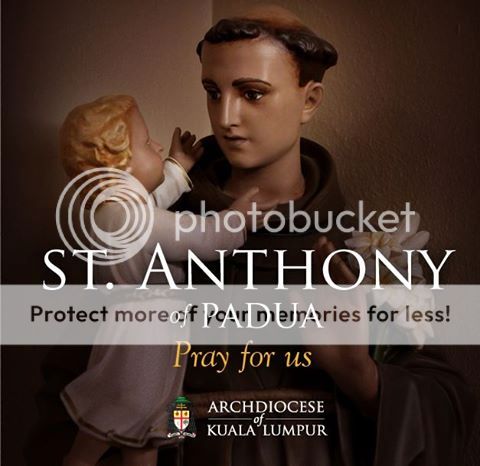 At fifteen years of age Saint Anthony had relinquished a life of nobility, wealth, and honor, and chose instead to live a life in service to God among the order known as the Augustinians. Some years later he witnessed the dead bodies of martyred Franciscan friars being taken through the town where he was stationed. Filled with zeal to follow Christ even more completely after the example of these martyrs, Saint Anthony entered the Franciscan order and traveled to Morocco to preach to the Moors. However, ill health prevented him from this task and he was forced to return to Italy. There he lived a quiet and secluded life, spending his time in prayer, study, and priestly duties. At this time, no one had any idea of his giftedness as a preacher and teacher of theology. It wasn’t until a turn of events left an ordination service without a prepared homily that Saint Anthony’s talents as a preacher came to light. With no one prepared to speak, he was pressed by the other friars in attendance (both Franciscans and Dominicans) to take on the impromptu task. He hesitated, but was encouraged by the others to speak “whatever the spirit of God gave him to say.” 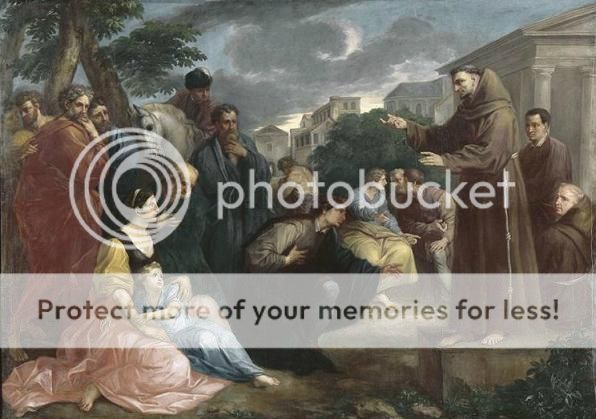 Anthony proceeded to preach with great brilliance, to the shock of all in attendance. His time spent praying, serving God, studying the Scriptures, and living a life of poverty, chastity, and obedience as prescribed by the Franciscan order prepared him to be used mightily by God. He was then appointed as the first Franciscan friar to teach theology to the other friars. Later he was sent to preach to heretics who were spreading false doctrines far and wide, and he often converted from their erroneous path. His zeal, oratory skill, and many conversions won him the title “Hammer of Heretics.” In saint statues and prayer cards Saint Anthony is often depicted holding a book to emphasize his great learning, or a lily to emphasize his purity, as well as the Infant Jesus. (Unfortunately, he is rarely depicted holding a hammer to emphasize his oratory skill against the heretics!) Saint Anthony reminds us that life is very short, and the eternal rewards of living a life completely committed to Jesus are very great. A quote from one of his sermons serves as a mini autobiography of this great saint: “The saints are like the stars. In his providence Christ conceals them in a hidden place that they may not shine before others when they might wish to do so. Yet they are always ready to exchange the quiet of contemplation for the works of mercy as soon as they perceive in their heart the invitation of Christ.” 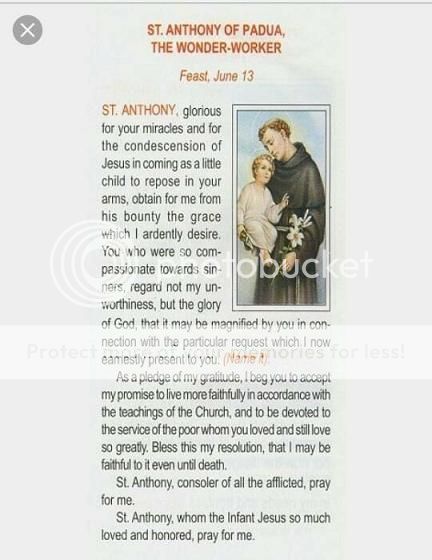 Read more from St. Anthony of Padua online from the Franciscan Archives Source: https://www.catholiccompany.com/getfed/st-a...e=socialnetwork This post has been edited by khool: Jun 13 2017, 09:38 AM |
|
|
Jun 13 2017, 09:41 AM
|
|
Junior Member
225 posts Joined: Mar 2008
|
PRAYER - in Disneyland!
Thank you Father Rob! |
|
|
Jun 14 2017, 12:51 AM
|
|
Senior Member
3,576 posts Joined: Apr 2006
|
Infallibility is NOT Impeccability
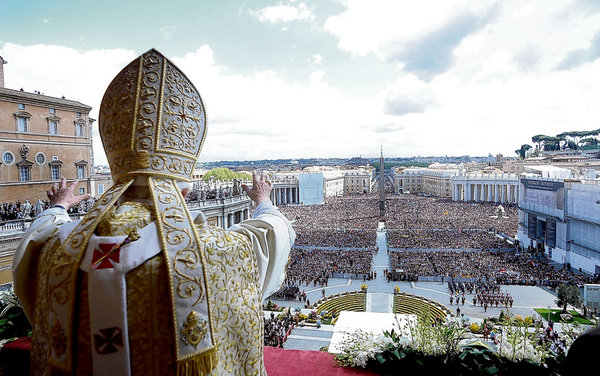 Amongst the Catholic doctrines most troublesome to many Protestants (and many Orthodox, too) is that of papal infallibility. Perhaps it conjures up visions of flabella and the sedia gestatoria, or a not-so-subtle Vatican form of mind control, or even an abuse of our valued freedom of conscience. Actually, it’s a rather straightforward sign of God’s love for His Church. First of all, papal infallibility is not to be confused with impeccability. Most people understand this, but there are some who think Catholics are supposed to believe that the Pope cannot sin. Infallibility has nothing to do with the absence of sin. It’s a charism – a gift – which God imparts. Although it is rightly referred to as “papal infallibility," nonetheless it is something shared with the whole body of Catholic bishops. Although they do not have this charism individually, they do exercise the gift when they teach in doctrinal unity with the Successor of St. Peter. This is defined in Lumen Gentium, n. 25: Although the individual bishops do not enjoy the prerogative of infallibility, they can nevertheless proclaim Christ’s doctrine infallibly. This is so, even when they are dispersed around the world, provided that while maintaining the bond of unity among themselves and with Peter’s successor, and while teaching authentically on a matter of faith or morals, they concur in a single viewpoint as the one which must be held conclusively. This authority is even more clearly verified when, gathered together in an ecumenical council, they are teachers and judges of faith and morals for the universal Church. Their definitions must then be adhered to with the submission of faith. Despite the myths held by some, the Pope doesn’t wake up in the morning and think to himself, “I think I shall proclaim something infallibly today,” nor are Catholics inhabitants of an ecclesiastical Wonderland in which they are required to believe “six impossible things before breakfast.” So what is papal infallibility? It is defined in the First Dogmatic Constitution on the Church of Christ, Pastor Aeternus, Chapter 4, n. 9: Therefore, faithfully adhering to the tradition received from the beginning of the Christian faith, to the glory of God our savior, for the exaltation of the Catholic religion and for the salvation of the Christian people, with the approval of the Sacred Council, we teach and define as a divinely revealed dogma that when the Roman Pontiff speaks EX CATHEDRA, that is, when, in the exercise of his office as shepherd and teacher of all Christians, in virtue of his supreme apostolic authority, he defines a doctrine concerning faith or morals to be held by the whole Church, he possesses, by the divine assistance promised to him in blessed Peter, that infallibility which the divine Redeemer willed his Church to enjoy in defining doctrine concerning faith or morals. Therefore, such definitions of the Roman Pontiff are of themselves, and not by the consent of the Church, irreformable. This was confirmed by the Fathers of the Second Vatican Council in Lumen Gentium, n. 25: And this infallibility with which the Divine Redeemer willed His Church to be endowed in defining doctrine of faith and morals, extends as far as the deposit of Revelation extends, which must be religiously guarded and faithfully expounded. And this is the infallibility which the Roman Pontiff, the head of the college of bishops, enjoys in virtue of his office, when, as the supreme shepherd and teacher of all the faithful, who confirms his brethren in their faith, by a definitive act he proclaims a doctrine of faith or morals. And therefore his definitions, of themselves, and not from the consent of the Church, are justly styled irreformable, since they are pronounced with the assistance of the Holy Spirit, promised to him in blessed Peter, and therefore they need no approval of others, nor do they allow an appeal to any other judgment. For then the Roman Pontiff is not pronouncing judgment as a private person, but as the supreme teacher of the universal Church, in whom the charism of infallibility of the Church itself is individually present, he is expounding or defending a doctrine of Catholic faith. The doctrine of papal infallibility did not abruptly appear in the 19th century. It was found implicitly from the earliest days of the Church, and indeed has its foundation in Holy Scripture itself. In St. John’s Gospel (21:15-17) Christ makes it clear to St. Peter that he, Peter, is to tend the flock and feed the sheep; in St. Luke’s Gospel (22:32) our Lord tells Peter that He will pray for him, so that his faith will not fail, and for him to strengthen the other apostles; in St. Matthew’s Gospel (16:18) Christ proclaims Peter to be the Rock on which He would build His Church. The Church, founded by our divine Saviour, was commanded by Him to teach everything that He had revealed to His apostles (St. Matthew 28:20), and He promised them that they would be guided into all truth by the Holy Spirit (St. John 16:13). As the teaching authority of the Church, along with the primacy of St. Peter and his successors, was more and more comprehended, there came a clearer understanding of the protection God provides through the gift of infallibility. From the scriptural testimony, on through such witnesses as St. Cyprian of Carthage and St. Augustine of Hippo, it is clear the Church has always understood that God reveals and safeguards His truth through this charism. There is an erroneous idea that a formal statement of infallible truth marks the occasion when the Church only began to teach a particular doctrine – in other words, that belief in papal infallibility began in only in 1870. However, infallible pronouncements are usually made only when some doctrine has been called into question. Most doctrines have never been doubted by the large majority of Catholics, and so have never required a formal and infallible statement. We see this even with a cursory reading of the Catechism, where most of the doctrines outlined in its pages require no corresponding papal document to confirm what is simply part of the ordinary magisterium of the Church. If we scratch the surface of most arguments against the doctrine of papal infallibility, we will often find that there is confusion between infallibility and impeccability (“look at the sinful popes in history”), along with an independent streak of protestantism (“no one is going to tell me what I have to believe”). I find it to be both amazing and amusing, that those who are most vociferous against papal infallibility present their arguments with a certitude which could only be described as infallible. It takes no great leap of faith to accept the fact that the God who created the universe and raises the dead, would also ensure that His children are given the truth. That He protects His Vicar on earth from solemnly defining something as true, if it’s really false, not only harmonizes with Scripture, but it is reflected in the unbroken history of the Church. We should derive great comfort from the doctrine of infallibility, because it’s a beautiful act of God’s divine love. |
|
|
Jun 15 2017, 09:16 AM
|
|
Junior Member
225 posts Joined: Mar 2008
|
Thursday of the Tenth Week in Ordinary Time
Lectionary: 362  Reading 1 (2 Cor 3:15—4:1, 3-6) Brothers and sisters: To this day, whenever Moses is read, a veil lies over the hearts of the children of Israel, but whenever a person turns to the Lord the veil is removed. Now the Lord is the Spirit and where the Spirit of the Lord is, there is freedom. All of us, gazing with unveiled face on the glory of the Lord, are being transformed into the same image from glory to glory, as from the Lord who is the Spirit. Therefore, since we have this ministry through the mercy shown us, we are not discouraged. And even though our Gospel is veiled, it is veiled for those who are perishing, in whose case the god of this age has blinded the minds of the unbelievers, so that they may not see the light of the Gospel of the glory of Christ, who is the image of God. For we do not preach ourselves but Jesus Christ as Lord, and ourselves as your slaves for the sake of Jesus. For God who said, Let light shine out of darkness, has shone in our hearts to bring to light the knowledge of the glory of God on the face of Jesus Christ. Responsorial Psalm (Ps 85:9ab and 10, 11-12, 13-14) R. The glory of the Lord will dwell in our land. I will hear what God proclaims; the LORD–for he proclaims peace to his people. Near indeed is his salvation to those who fear him, glory dwelling in our land. R. The glory of the Lord will dwell in our land. Kindness and truth shall meet; justice and peace shall kiss. Truth shall spring out of the earth, and justice shall look down from heaven. R. The glory of the Lord will dwell in our land. The LORD himself will give his benefits; our land shall yield its increase. Justice shall walk before him, and salvation, along the way of his steps. R. The glory of the Lord will dwell in our land. Alleluia (Jn 13:34) R. Alleluia, alleluia. I give you a new commandment: love one another as I have loved you. R. Alleluia, alleluia. Gospel (Mt 5:20-26) Jesus said to his disciples: "I tell you, unless your righteousness surpasses that of the scribes and Pharisees, you will not enter into the Kingdom of heaven. "You have heard that it was said to your ancestors, You shall not kill; and whoever kills will be liable to judgment. But I say to you, whoever is angry with his brother will be liable to judgment, and whoever says to his brother, Raqa, will be answerable to the Sanhedrin, and whoever says, 'You fool,' will be liable to fiery Gehenna. Therefore, if you bring your gift to the altar, and there recall that your brother has anything against you, leave your gift there at the altar, go first and be reconciled with your brother, and then come and offer your gift. Settle with your opponent quickly while on the way to court with him. Otherwise your opponent will hand you over to the judge, and the judge will hand you over to the guard, and you will be thrown into prison. Amen, I say to you, you will not be released until you have paid the last penny."  REFLECTION Whoever is angry. In fulfilling the Law of Moses, Jesus points not just to the prohibition of certain acts but to the very root that may give rise to the acts themselves. The fifth commandment of the Decalogue declares, “You shall not kill” (Ex 20:13). “Whoever kills will be liable to judgment” is not an exact quotation from the Old Testament, but a man who strikes a mortal blow is to be punished by death (cf Ex 21:12). Jesus goes to the root of evil by prohibiting anger, the motive behind murder. There are ways of killing a person even without a mortal blow. It is “killing softly,” as when a person insults another by saying “Raqa” (fool or imbecile). One can also kill by silent treatment, acting as if the other person does not exist. As one can show love and care by simple acts of kindness, by a smile, or by a touch, so one can show anger and hatred by bodily language or by avoidance. The commandment against murder also covers words and actions that hurt the feelings of another person. And so, as the song goes, “Please be careful with my heart!” Human as we are, we cannot avoid getting hurt and so we entertain anger, grudge, or revenge. How do you empty your heart of these emotions? SOURCE: “365 Days with the Lord 2017,” ST. PAULS Philippines, 7708 St. Paul Rd., SAV, Makati City (Phils.) http://www.ssp.ph/ |
|
|
Jun 15 2017, 09:19 AM
|
|
Junior Member
225 posts Joined: Mar 2008
|
PRAYER FOR THE STRENGTH TO FORGIVE
 Faultless Lord, enduring death for me, You have consummated the debt of my sins: Your sacrifice of forgiveness was absolute! Grant me the strength to also forgive others, To excuse their transgressions against me. So I may truly reflect this spiritual fruit, Obliterate any persistent feelings of malice. Let each trespass end as a closing chapter, My continuing on the road of righteousness. Forgive my sins as I aspire to forgive others. You are truly archetypical of forgiveness. You are a most forgiving Lord! Source: http://catholicgo.org/prayer-for-the-strength-to-forgive/ |
|
|
Jun 15 2017, 09:24 AM
|
|
Junior Member
225 posts Joined: Mar 2008
|
QUOTE(unknown warrior @ Jun 13 2017, 08:45 AM) Morning Fellow Christians. Hello and welcome, may the Lord be with you!Hi Yeeck, wsup. Hope we can foster friendship. This post has been edited by khool: Jun 15 2017, 09:27 AM |
| Change to: |  0.0193sec 0.0193sec
 0.49 0.49
 6 queries 6 queries
 GZIP Disabled GZIP Disabled
Time is now: 4th December 2025 - 11:57 PM |
 Quote
Quote