

This post has been edited by khool: Oct 6 2017, 02:12 PM
LYN Catholic Fellowship V02 (Group), For Catholics (Roman or Eastern)
|
|
 Oct 6 2017, 02:06 PM Oct 6 2017, 02:06 PM
|
 
Junior Member
225 posts Joined: Mar 2008  
|
This post has been edited by khool: Oct 6 2017, 02:12 PM |
|
|
|
|
|
Oct 6 2017, 04:17 PM
|
|
Junior Member
225 posts Joined: Mar 2008
|
  This post has been edited by khool: Oct 6 2017, 04:17 PM |
|
|
Oct 8 2017, 11:02 AM
|
|
Junior Member
225 posts Joined: Mar 2008
|
This post has been edited by khool: Oct 8 2017, 11:03 AM |
|
|
Oct 10 2017, 12:40 PM
|
|
Junior Member
225 posts Joined: Mar 2008
|
Thousands gather to pray rosary at Poland’s borders
On Saturday, 7 October 2017, the feast of Our Lady of the Rosary, thousands of Polish Catholics gathered along their country’s border to pray for peace, as well as for the future and salvation of Poland and the world. 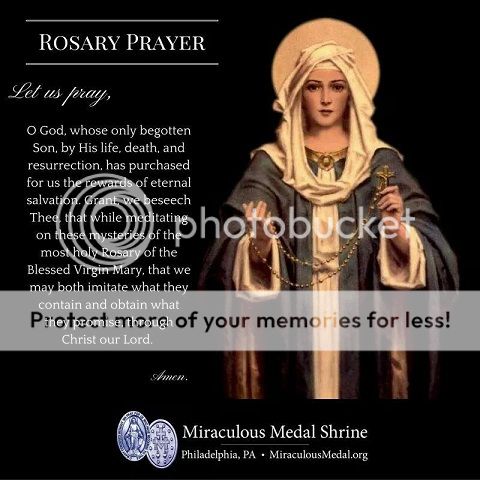 The event, entitled “Rosary at the Borders,” was organized by a lay movement called the Solo Dios Basta Foundation (God Alone Suffices). It was supported by the Polish Bishop’s Conference and was sponsored by several state-owned companies. Approximately 90 percent of the country, beloved home of the Polish Pope St. John Paul II, identifies as Catholic. According to the New York Times, participants gathered for prayer at 320 churches near the border of Poland as well as in 4,000 designated prayer zones. The prayer took place on the feast of Our Lady of the Rosary, which also commemorates the anniversary of the Battle of Lepanto, during which Mary, through the prayer of the rosary, is credited for a key victory against the Ottoman Empire. 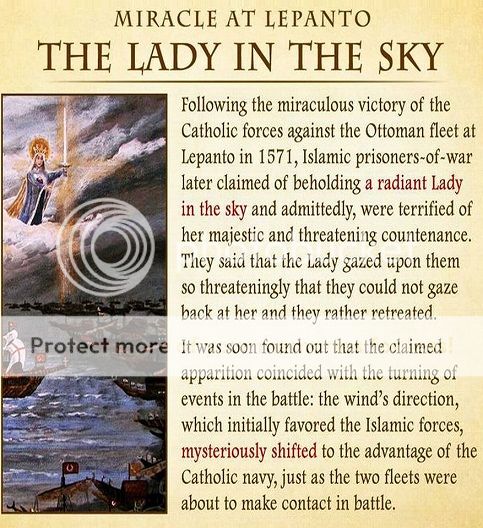 It also fell a week before the 100th anniversary of the final apparition of Our Lady of Fatima, who encouraged the world to pray the rosary for peace. The rosary is “a powerful weapon in the fight against evil,” states the official website for the event. “Let’s pray for other nations of Europe and the world to understand that we need to return to the Christian roots of European culture if we want Europe to remain Europe,” Archbishop Marek Jedraszewski said in his homily on Saturday, according to the New York Times. The event’s website noted that in almost every major Marian apparition, Mary asks that the rosary be recited. “Mary is the Queen of Poland, she has been taking care of us for generations, in critical moments of history she has always been with us, and we are with her. As a rescue for the world, Our Lady points to the prayer of the Rosary.” Organizers anticipated at least 1 million participants in the majority-Catholic country, though officials have said they do not yet have the final numbers for the event. 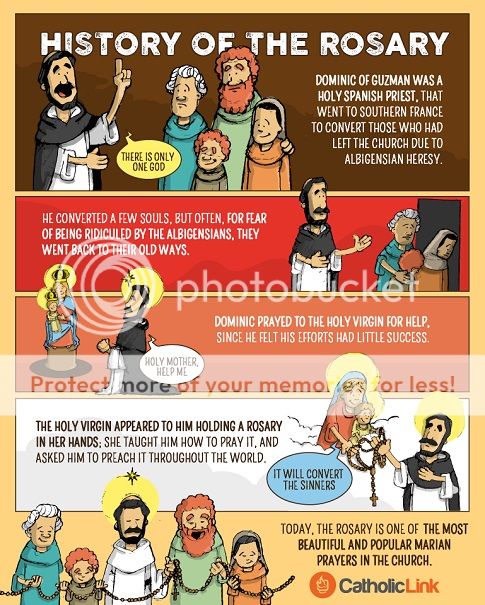 Source: https://www.catholicnewsagency.com/blog/tho...polands-borders 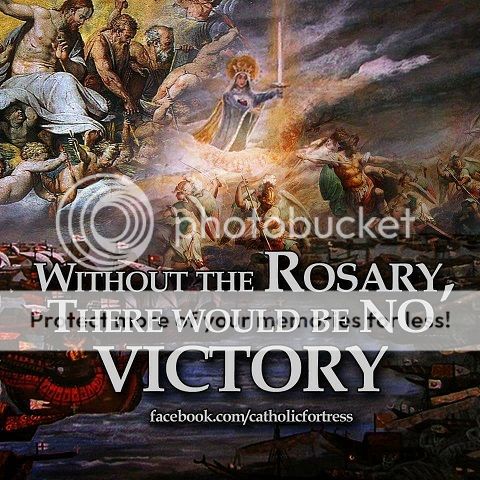 This post has been edited by khool: Oct 10 2017, 02:54 PM |
|
|
Oct 10 2017, 12:53 PM
|
|
Junior Member
225 posts Joined: Mar 2008
|
Tuesday of the Twenty-seventh Week in Ordinary Time
Lectionary: 462  Reading 1 (Jon 3:1-10) The word of the LORD came to Jonah a second time: "Set out for the great city of Nineveh, and announce to it the message that I will tell you." So Jonah made ready and went to Nineveh, according to the LORD's bidding. Now Nineveh was an enormously large city; it took three days to go through it. Jonah began his journey through the city, and had gone but a single day's walk announcing, "Forty days more and Nineveh shall be destroyed," when the people of Nineveh believed God; they proclaimed a fast and all of them, great and small, put on sackcloth. When the news reached the king of Nineveh, he rose from his throne, laid aside his robe, covered himself with sackcloth, and sat in the ashes. Then he had this proclaimed throughout Nineveh, by decree of the king and his nobles: "Neither man nor beast, neither cattle nor sheep, shall taste anything; they shall not eat, nor shall they drink water. Man and beast shall be covered with sackcloth and call loudly to God; every man shall turn from his evil way and from the violence he has in hand. Who knows, God may relent and forgive, and withhold his blazing wrath, so that we shall not perish." When God saw by their actions how they turned from their evil way, he repented of the evil that he had threatened to do to them; he did not carry it out. Responsorial Psalm (Ps 130:1b-2, 3-4ab, 7-8) R. If you, O Lord, mark iniquities, who can stand? Out of the depths I cry to you, O LORD LORD, hear my voice! Let your ears be attentive to my voice in supplication. R. If you, O Lord, mark iniquities, who can stand? If you, O LORD, mark iniquities, LORD, who can stand? But with you is forgiveness, that you may be revered. R. If you, O Lord, mark iniquities, who can stand? Let Israel wait for the LORD, For with the LORD is kindness and with him is plenteous redemption; And he will redeem Israel from all their iniquities. R. If you, O Lord, mark iniquities, who can stand? Alleluia (Lk 11:28) R. Alleluia, alleluia. Blessed are those who hear the word of God and observe it. R. Alleluia, alleluia. Gospel (Lk 10:38-42) Jesus entered a village where a woman whose name was Martha welcomed him. She had a sister named Mary who sat beside the Lord at his feet listening to him speak. Martha, burdened with much serving, came to him and said, "Lord, do you not care that my sister has left me by myself to do the serving? Tell her to help me." The Lord said to her in reply, "Martha, Martha, you are anxious and worried about many things. There is need of only one thing. Mary has chosen the better part and it will not be taken from her." 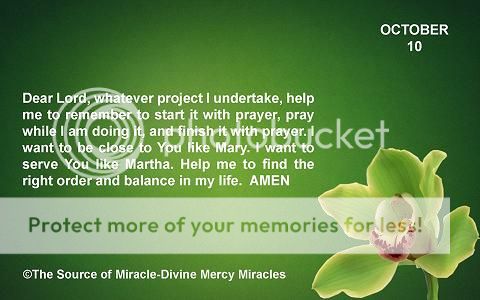 REFLECTION: WORD Today  "Faith without works is dead." (James 2:26) But the opposite is also true, works are dead without faith. Both must be present if we are to grow in Christian maturity. In the Gospel, Jesus is visiting the home of His friends Lazarus, Martha and Mary. Immediately Martha rushes to the kitchen to serve Jesus. Then, harassed and overburdened, she complains to Jesus that Mary her sister is not helping but just listening to Him. Jesus gently tells her, "Martha, Martha, you are anxious and worried about many things," and that Mary is doing "the better part." Jesus is reminding Martha and us that listening to His Word is vital if we are to act on it. Otherwise we will be working for ourselves, not for God. We will be relying on our limited strength, not God's power. We will be anxious and worried, and our work prone to error. We also remember Jesus telling us elsewhere that He is the Vine and we are His branches. If we hope to be fruitful, we must stay connected to Him. "Without Me, you can do nothing." (John 15:5) The First Reading is a powerful demonstration. Yesterday, Jonah would not listen to God. He went on his way and his life was stormy and scary. Today, he finally listens to God and goes to work, evangelizing Nineveh, a pagan city some 500 miles (800 kms.) north-east of Jerusalem. "Now Nineveh was an enormously large city; it took three days to go through it." It is thus estimated to have been 60 miles (almost 100 kms.) in diameter. But in just 1 day of preaching, the whole city was on its knees! From the lowest slave to the mighty king, everyone repented their sins. The impossible happened because God was working though Jonah. Read the Bible at the start of each day. Listen to God and keep His message at heart. Then our day will be peaceful and our works will be blessed. Source: https://www.facebook.com/CatholicMassReflec...787761481521609 This post has been edited by khool: Oct 10 2017, 02:56 PM |
|
|
Oct 10 2017, 02:58 PM
|
|
Junior Member
225 posts Joined: Mar 2008
|
 |
|
|
|
|
|
Oct 10 2017, 06:06 PM
|
|
Junior Member
225 posts Joined: Mar 2008
|
‘Work Out Your Salvation with Fear and Trembling’
 In his letter to the Philippians, St. Paul tells us how to live out our salvation in terms that are sobering and startling: QUOTE So then, my beloved, obedient as you have always been, not only when I am present but all the more now when I am absent, work out your salvation with fear and trembling. For God is the one who, for his good purpose, works in you both to desire and to work (Philippians 2:12-13). This statement stands in stark contrast to a popular misunderstanding of salvation as a single complete act—a sort of bolt of divine lightning that changes us instantly and forever. It also militates against a widespread contemporary tendency to view the issue of salvation in completely rosy terms, minus all those things that are inconsistent with a modern therapeutic mentality—things like hell and fear. In an important way, Paul’s words also affirm a vital plank of traditional Christian doctrine on salvation—that good works belong to the economy of salvation, that some effort, some element of cooperation on our part is necessary. Listen closely to his words. Paul is surprisingly explicit: work out your salvation. The translation here is an accurate one of the Greek katergazomai, whose root ergon means work and is the source of our words energy and ergonomic. Of course, the next verse makes an extremely important clarification: For God is the one who, for his good purpose, works in you both to desire and to work. We work, but it is really God who works through us. Here we have an extraordinary affirmation of the traditional teaching on the relationship between God’s grace and our free will. Here is St. Thomas Aquinas’ brief synopsis in the Summa Theologica: QUOTE Free-will is the cause of its own movement, because by his free-will man moves himself to act. But it does not of necessity belong to liberty that what is free should be the first cause of itself, as neither for one thing to be cause of another need it be the first cause. God, therefore, is the first cause, Who moves causes both natural and voluntary. And just as by moving natural causes He does not prevent their acts being natural, so by moving voluntary causes He does not deprive their actions of being voluntary: but rather is He the cause of this very thing in them; for He operates in each thing according to its own nature (Question 83, Article 1, Reply to Objection 3). The last line is the key to the whole. He operates in each thing according to its own nature. In other words, God moves inanimate things lacking free will according to their nature. The rock falls due to the immutable laws of gravity: it has no choice in the matter. His operation on the rock does not change its nature. Likewise, He operates within us without changing our nature, which includes free will. This is exactly what Paul seems to be saying (as Aquinas himself points out). He states not just that God works through us, but that he works through us in a way that we too work. And not only that but also his working through us causes us to desire His goodness. That word, desire, is also sometimes translated as will, which is a valid translation of the Greek thelein. (This word may be familiar to some readers in the term Monothelitism, a seventh-century heresy which held that Christ had only one will, thereby denying the fullness of His humanity in what was essentially a throwback to the older Monophysite controversy.) Paul’s exhortation is set in the context of His majestic hymn to the Incarnation and must be understood in this context, according to Dennis Hamm, SJ, a Catholic biblical commentator. Here is the full text of this well-known and beloved hymn: QUOTE Who, though he was in the form of God, did not regard equality with God something to be grasped. Rather, he emptied himself, taking the form of a slave, coming in human likeness; and found human in appearance, he humbled himself, becoming obedient to death, even death on a cross. Because of this, God greatly exalted him and bestowed on him the name that is above every name, that at the name of Jesus every knee should bend, of those in heaven and on earth and under the earth, and every tongue confess that Jesus Christ is Lord, to the glory of God the Father (Philippians 2:6-11). Now the mystery of how God works within us while preserving our own free will is recast in light of the mystery of the Incarnation. Sometimes the way the Incarnation is described makes it possible to forget its utterly radical paradoxical meaning. The term Incarnation itself means the taking on of flesh. But Jesus’ humanity was more than a cloak of flesh around His humanity. (That view is close to the heresy of Docetism, by the way.) Being fully human meant having a human soul, intellect, and will co-existing fully with the divine intellect and will. If God then can become fully human while retaining the fullness of His divinity, then He can certainly move our wills without causing us to losing anything of our humanity—of which the free will is an essential aspect. Of course this remains a mystery, one that is ultimately centered in Christ. Paul’s hymn to Christ not only illuminates his statement on salvation but gives its further practical weight. In the hymn he depicts Christ’s Incarnational life as an act of obedience that went all the way to the cross. So also, in verse 12, Paul couches our work of salvation as obedience. We can infer, then, that in the same way ‘working’ out our salvation means imitating the example of Christ in assenting to the will of the Father to the point of taking up our crosses (Luke 9:23). The Incarnational context also illuminates Paul’s somewhat unnerving phrase at the end of verse 13—work out your salvation with fear and trembling. As Hamm points out this is an allusion to an Old Testament phrase for how we should approach the presence of God. As Psalm 2:11 puts it, “Serve the Lord with fear; exult with trembling.” Likewise, Jeremiah 33:9, “They shall fear and tremble because of all the prosperity I give it.” Now as Christians, we are able to work out our salvation in ‘fear and trembling’ because of the Incarnation, which has made God present to us. He is both present to us through saints like Paul. But He is present even in their absence—working through us in ways most intimate and mysterious, transforming our very will and desire. It is a truth so awesome that we should tremble not only with fear but also with joy even to think of it. Source: http://catholicexchange.com/work-salvation..._eid=6396f20ec0 |
|
|
Oct 11 2017, 10:46 AM
|
|
Junior Member
225 posts Joined: Mar 2008
|
     This post has been edited by khool: Oct 11 2017, 10:48 AM |
|
|
Oct 11 2017, 11:20 AM
|

Senior Member
3,573 posts Joined: Apr 2006
|
 |
|
|
Oct 11 2017, 11:25 AM
|
|
Junior Member
225 posts Joined: Mar 2008
|
Wednesday of the Twenty-seventh Week in Ordinary Time
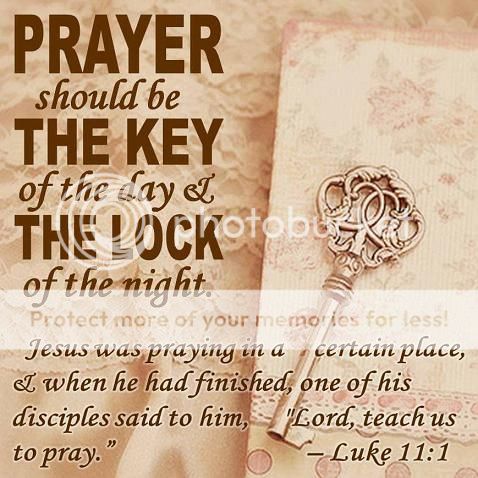
Lectionary: 463  Reading 1 (Jon 4:1-11) Jonah was greatly displeased and became angry that God did not carry out the evil he threatened against Nineveh. He prayed, "I beseech you, LORD, is not this what I said while I was still in my own country? This is why I fled at first to Tarshish. I knew that you are a gracious and merciful God, slow to anger, rich in clemency, loath to punish. And now, LORD, please take my life from me; for it is better for me to die than to live." But the LORD asked, "Have you reason to be angry?" Jonah then left the city for a place to the east of it, where he built himself a hut and waited under it in the shade, to see what would happen to the city. And when the LORD God provided a gourd plant that grew up over Jonah's head, giving shade that relieved him of any discomfort, Jonah was very happy over the plant. But the next morning at dawn God sent a worm that attacked the plant, so that it withered. And when the sun arose, God sent a burning east wind; and the sun beat upon Jonah's head till he became faint. Then Jonah asked for death, saying, "I would be better off dead than alive." But God said to Jonah, "Have you reason to be angry over the plant?" "I have reason to be angry," Jonah answered, "angry enough to die." Then the LORD said, "You are concerned over the plant which cost you no labor and which you did not raise; it came up in one night and in one night it perished. And should I not be concerned over Nineveh, the great city, in which there are more than a hundred and twenty thousand persons who cannot distinguish their right hand from their left, not to mention the many cattle?" Responsorial Psalm (Ps 86:3-4, 5-6, 9-10) R. Lord, you are merciful and gracious. Have mercy on me, O Lord, for to you I call all the day. Gladden the soul of your servant, for to you, O Lord, I lift up my soul. R. Lord, you are merciful and gracious. For you, O Lord, are good and forgiving, abounding in kindness to all who call upon you. Hearken, O LORD, to my prayer and attend to the sound of my pleading. R. Lord, you are merciful and gracious. All the nations you have made shall come and worship you, O Lord, and glorify your name. For you are great, and you do wondrous deeds; you alone are God. R. Lord, you are merciful and gracious. Alleluia (Rom 8:15bc) R. Alleluia, alleluia. You have received a spirit of adoption as sons through which we cry: Abba! Father! R. Alleluia, alleluia. Gospel (Lk 11:1-4) Jesus was praying in a certain place, and when he had finished, one of his disciples said to him, "Lord, teach us to pray just as John taught his disciples." He said to them, "When you pray, say: Father, hallowed be your name, your Kingdom come. Give us each day our daily bread and forgive us our sins for we ourselves forgive everyone in debt to us, and do not subject us to the final test."  Reflections: WORD Today 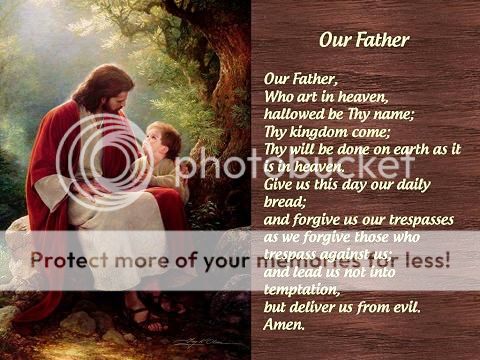 In the Lord's Prayer, Jesus teaches us to ask our Father, "Forgive us our sins for we ourselves forgive everyone." (Gospel) But in the First Reading, Jonah, prophet of God and devout temple-goer, wanted only the first part of the prayer, not the second. God forgave him his sin of disobedience, saved him from death by drowning, and then mercifully gave him a second chance. But when God gave the Ninevites the same treatment, he was angry. He wanted God to kill his enemies. Jesus asks us, promoters of God and devout church-goers, to be one with Him in praying "Your Kingdom come." This needs us to be more understanding of the faults and failures of fellow sinners, allowing for justifying circumstances we may know nothing about; To be merciful as our heavenly Father is merciful to tax collectors, prostitutes and drug offenders, rather than cheering their murder; And to pray that they, like us, be given 70x7 more chances. Our Father, reform my will and let Yours be done. Amen. Source: https://www.facebook.com/CatholicMassReflec...788108634820227  |
|
|
Oct 11 2017, 02:11 PM
|
|
Junior Member
225 posts Joined: Mar 2008
|
  |
|
|
Oct 12 2017, 09:49 AM
|
|
Junior Member
225 posts Joined: Mar 2008
|
  |
|
|
Oct 12 2017, 12:10 PM
|
|
Junior Member
225 posts Joined: Mar 2008
|
  |
|
|
|
|
|
Oct 12 2017, 02:02 PM
|
|
Junior Member
225 posts Joined: Mar 2008
|
Thursday of the Twenty-seventh Week in Ordinary Time
Lectionary: 464 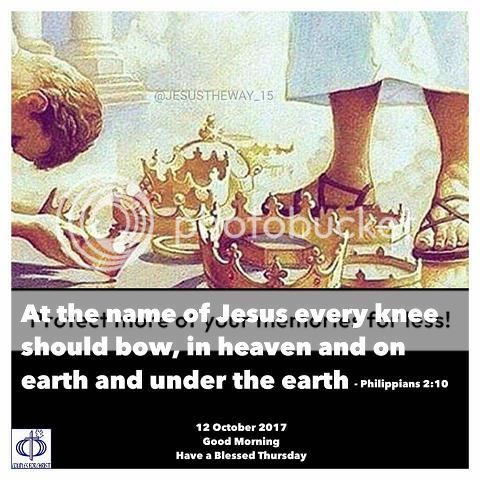 Reading 1 (Mal 3:13-20b) You have defied me in word, says the LORD, yet you ask, "What have we spoken against you?" You have said, "It is vain to serve God, and what do we profit by keeping his command, And going about in penitential dress in awe of the LORD of hosts? Rather must we call the proud blessed; for indeed evildoers prosper, and even tempt God with impunity." Then they who fear the LORD spoke with one another, and the LORD listened attentively; And a record book was written before him of those who fear the LORD and trust in his name. And they shall be mine, says the LORD of hosts, my own special possession, on the day I take action. And I will have compassion on them, as a man has compassion on his son who serves him. Then you will again see the distinction between the just and the wicked; Between the one who serves God, and the one who does not serve him. For lo, the day is coming, blazing like an oven, when all the proud and all evildoers will be stubble, And the day that is coming will set them on fire, leaving them neither root nor branch, says the LORD of hosts. But for you who fear my name, there will arise the sun of justice with its healing rays. Responsorial Psalm (Ps 1:1-2, 3, 4 and 6) R. Blessed are they who hope in the Lord. Blessed the man who follows not the counsel of the wicked Nor walks in the way of sinners, nor sits in the company of the insolent, But delights in the law of the LORD and meditates on his law day and night. R. Blessed are they who hope in the Lord. He is like a tree planted near running water, That yields its fruit in due season, and whose leaves never fade. Whatever he does, prospers. R. Blessed are they who hope in the Lord. Not so the wicked, not so; they are like chaff which the wind drives away. For the LORD watches over the way of the just, but the way of the wicked vanishes. R. Blessed are they who hope in the Lord. Alleluia (See Acts 16:14b) R. Alleluia, alleluia. Open our hearts, O Lord, to listen to the words of your Son. R. Alleluia, alleluia. Gospel (Lk 11:5-13) Jesus said to his disciples: "Suppose one of you has a friend to whom he goes at midnight and says, 'Friend, lend me three loaves of bread, for a friend of mine has arrived at my house from a journey and I have nothing to offer him,' and he says in reply from within, 'Do not bother me; the door has already been locked and my children and I are already in bed. I cannot get up to give you anything.' I tell you, if he does not get up to give him the loaves because of their friendship, he will get up to give him whatever he needs because of his persistence. "And I tell you, ask and you will receive; seek and you will find; knock and the door will be opened to you. For everyone who asks, receives; and the one who seeks, finds; and to the one who knocks, the door will be opened. What father among you would hand his son a snake when he asks for a fish? Or hand him a scorpion when he asks for an egg? If you then, who are wicked, know how to give good gifts to your children, how much more will the Father in heaven give the Holy Spirit to those who ask him?"  REFLECTION: WORD Today 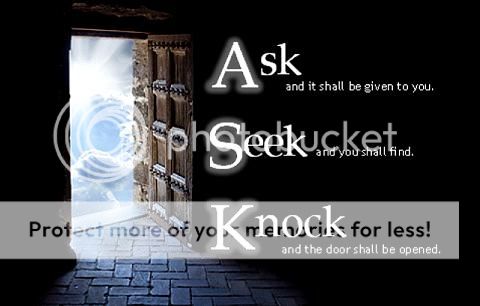 Right after teaching His disciples the Lord's Prayer, (yesterday), Jesus continues today to deepen our understanding of praying. "Ask and it will be given you; seek and you will find; knock and it will be opened to you." OH REALLY LORD? Why then do godless people get rich while I who do pray and obey God's commandments suffer? (First Reading) Let us pause for a while and reflect on our own question... By asking such a question, are we really any different from those "godless people"? Could we be praying and asking God for the same kind of life they have? A life of indulgence and ease where God is not needed? Jesus tells us to ask instead for the very best God can give: His own Holy Spirit. This is asking for a Spirit-guided life that hungers for Jesus the Word and the Bread of Life, rather than worldly toys ("snakes and scorpions") that poison the soul. Lord Jesus, today I come to ask for Your wisdom, to seek ways to serve You, and to knock on the door to a life of purpose and peace with You. Source: https://www.facebook.com/CatholicMassReflec...788400138124410  |
|
|
Oct 12 2017, 03:37 PM
|
|
Junior Member
225 posts Joined: Mar 2008
|
 |
|
|
Oct 13 2017, 12:09 PM
|
|
Junior Member
225 posts Joined: Mar 2008
|
Friday of the Twenty-seventh Week in Ordinary Time
Lectionary: 465  Reading 1 (Jl 1:13-15; 2:1-2) Gird yourselves and weep, O priests! wail, O ministers of the altar! Come, spend the night in sackcloth, O ministers of my God! The house of your God is deprived of offering and libation. Proclaim a fast, call an assembly; Gather the elders, all who dwell in the land, Into the house of the LORD, your God, and cry to the LORD! Alas, the day! for near is the day of the LORD, and it comes as ruin from the Almighty. Blow the trumpet in Zion, sound the alarm on my holy mountain! Let all who dwell in the land tremble, for the day of the LORD is coming; Yes, it is near, a day of darkness and of gloom, a day of clouds and somberness! Like dawn spreading over the mountains, a people numerous and mighty! Their like has not been from of old, nor will it be after them, even to the years of distant generations. Responsorial Psalm (Ps 9:2-3, 6 and 16, 8-9) R. The Lord will judge the world with justice. I will give thanks to you, O LORD, with all my heart; I will declare all your wondrous deeds. I will be glad and exult in you; I will sing praise to your name, Most High. R. The Lord will judge the world with justice. You rebuked the nations and destroyed the wicked; their name you blotted out forever and ever. The nations are sunk in the pit they have made; in the snare they set, their foot is caught. R. The Lord will judge the world with justice. But the LORD sits enthroned forever; he has set up his throne for judgment. He judges the world with justice; he governs the peoples with equity. R. The Lord will judge the world with justice. Alleluia (Jn 12:31b-32) R. Alleluia, alleluia. The prince of this world will now be cast out, and when I am lifted up from the earth I will draw all to myself, says the Lord. R. Alleluia, alleluia. Gospel (Lk 11:15-26) When Jesus had driven out a demon, some of the crowd said: "By the power of Beelzebul, the prince of demons, he drives out demons." Others, to test him, asked him for a sign from heaven. But he knew their thoughts and said to them, "Every kingdom divided against itself will be laid waste and house will fall against house. And if Satan is divided against himself, how will his kingdom stand? For you say that it is by Beelzebul that I drive out demons. If I, then, drive out demons by Beelzebul, by whom do your own people drive them out? Therefore they will be your judges. But if it is by the finger of God that I drive out demons, then the Kingdom of God has come upon you. When a strong man fully armed guards his palace, his possessions are safe. But when one stronger than he attacks and overcomes him, he takes away the armor on which he relied and distributes the spoils. Whoever is not with me is against me, and whoever does not gather with me scatters. "When an unclean spirit goes out of someone, it roams through arid regions searching for rest but, finding none, it says, 'I shall return to my home from which I came.' But upon returning, it finds it swept clean and put in order. Then it goes and brings back seven other spirits more wicked than itself who move in and dwell there, and the last condition of that man is worse than the first."  REFLECTION: WORD TOday 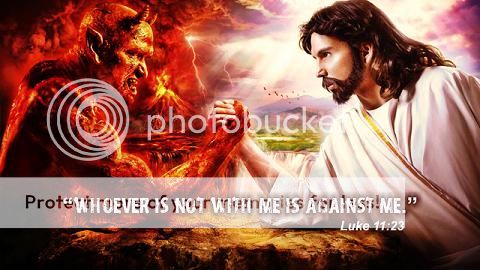 If you pour water out from a glass, is it now empty? No. Now it's full of air. Something else will always fill a vacuum. Astrophysicists even say there is no real vacuum, that even deep inter-galactic space is filled with invisible but very real "dark matter." So it is in the spiritual world. When we truly repent our sins, God drives out Satan. But we cannot remain an empty vacuum. We must be filled with Jesus or else Satan returns to refill our heart (Luke 11:24-26). "Whoever is not with me is against me. Whoever does not gather with me scatters." (Lk 11:23) Jesus gives us only two choices, nothing in between. We can either belong to Him, reading, believing and living His Words, or we belong to the world, filled with dark matter and conflicting values and philosophies. Even sitting between the fence and doing nothing is already being against Him since we are not with Him. If we desire a new life with Jesus, then we must be with Jesus. We must give Him the chance to fill us up. This means decreasing our worldly pastimes and pursuits, and making more time for spiritual inputs and activities. There's just no other way to do it. We cannot be half-filled with Jesus and half with Satan. A kingdom divided will eventually collapse (v. 17). Let us check our status today: Do the words that I speak reflect the message of the Gospel? Does the example of my life attract and gather people to the One Body of Christ? Or do I scatter His flock by echoing the thinking of the world, saying that I can do my own thing and you can do yours - that anything is okay? That there is no sin and no need for the authority of Christ and His Church? Lord Jesus, save me! Be the ruler of my heart and master of my home. Fill me with love and desire only for You. Amen. Source: https://www.facebook.com/CatholicMassReflec...788743248090099  |
|
|
Oct 13 2017, 02:07 PM
|
|
Junior Member
225 posts Joined: Mar 2008
|
Conversion Is Not for Convenience
 I subscribe to email updates from a Jewish website, and one such update, advertising a recent article, caught my attention. The writer, a Jewish woman living in an area of the Midwest with few Jews and no synagogues, asked herself: “Wouldn’t it be easier to just accept Jesus as the son of God?” This question occurred to the writer when she was working at a Catholic church as a musician during Holy Week. While playing the music for a Mass on Palm Sunday, she started reflecting on how difficult it could be to be a non-Christian in a small town filled with Christians: QUOTE All of my friends are Christian here. I have been handed countless books. I have been encouraged, and shamed, and excluded, and judged—and at that moment at the piano, I was damn tired of it all. I wrestled with these thoughts privately, of course. I knew better than to share my confusion with my Evangelical friends. No fewer than three local Protestant pastors invited me to Good Friday services. I was relieved to be playing for the Catholics. The parish priest was kind and respectful, and I thought the music was beautiful. She was strongly considering talking to the priest about conversion to Catholicism when a passage from the Gospel read that day at Mass stopped her cold. In Matthew’s account of the Passion, the crowd—incited by the chief priests and elders who wanted Jesus dead (Matt. 27:20)—demanded Jesus’ crucifixion and told Pontius Pilate, “His blood be on us and on our children!” (Matt. 27:25). The writer shared her reaction: QUOTE I wanted to get up and run out of the church. My mind was alive with thoughts about blood libel, and the persecution of my people, and the fact that I was sitting in a church, listening to a justification said to come from the Jewish people, as if we deserved what has happened to us over the millennia. We don’t have space here to address the question of whether this passage in Matthew’s Gospel actually is anti-Semitic or in any way justifies anti-Semitic acts. The short answer is that it isn’t and it doesn’t. Here instead I want to look at the question, “Wouldn’t it be easier to just accept Jesus as the son of God?” Conversions happen for many reasons, and some of those reasons are better than others. My initial interest in Catholicism was sparked by a desire to rebel against my upbringing. My family was Seventh-day Adventist, although my branch of the family was mostly non-practicing, and Seventh-day Adventism is historically anti-Catholic. As this writer considered doing, I separated myself from my family’s religious tradition. In my case though, it wasn’t to assimilate into a larger society but to assert individuality. I was under no illusion that following through on that flawed spark of interest would be easy. Again, as happened to this Jewish writer, my spark of interest happened around Holy Week, in 1995. I had to call a local parish three times over a period of a couple of months before I finally got in to see the pastor. It turned out that Holy Week is a really bad time to try to pigeonhole a priest with questions about conversion! The need for persistence turned out to be an occasion of grace. Having to work hard to get a priest’s attention made me all the more determined to become Catholic. It sparked my desire to learn the Faith, not just through the RCIA program but through personal study. When confronted with questions about Catholic beliefs and practices that rubbed against the grain of my culturally Protestant background, I took those questions to Catholics for answers. By that time, I was disposed to accept the answers I was given. But the questions don’t magically stop the moment the chrism dries on the new convert’s forehead. Many converts experience periods of difficulty, of doubt, following conversion. Acclimation to the Catholic Faith—as distinguished from assimilation—can take years. A few years ago I wrote: QUOTE I firmly believe that, sooner or later, each and every convert to the Catholic Faith—whether that person chose to become Catholic as an adult or was brought into the Faith as a baby by his parents—is going to have to face the scandal that the Church is not what he believed it to be when he signed up. The test will be whether he will persevere because he knows it to be the Church Christ founded or whether he will fall away because he decides it is merely a human institution that has disappointed him. The writer of the essay I read came to the conclusion that her experience at that Palm Sunday Mass had in fact been an epiphany that strengthened her identity as a Jew and her commitment to Judaism. Perhaps it was. If that incident strengthened her to stand up to occasions on which she had been “shamed, and excluded, and judged” in her community because she was not Christian, if it kept her from becoming Christian for the wrong reasons (such as to make her life easier), then perhaps that was how God chose to act in her life at that moment. Perhaps it will be an important step on her journey to where God is leading her. What we can say for sure, though, is that no one should become Christian to make his life easier. Those who want to follow Christ will be called upon to do exactly as Christ did in the Palm Sunday Gospel. They will be called to take up their cross and follow him, all the way to Calvary (Matt. 16:24). Or, as C.S. Lewis wryly noted: QUOTE I didn’t go to religion to make me happy. I always knew a bottle of port would do that. If you want a religion to make you feel really comfortable, I certainly don’t recommend Christianity. Source: https://www.catholic.com/magazine/online-ed...for-convenience |
|
|
Oct 13 2017, 02:57 PM
|
|
Junior Member
225 posts Joined: Mar 2008
|
   This post has been edited by khool: Oct 13 2017, 03:47 PM |
|
|
Oct 13 2017, 06:47 PM
|
|
Junior Member
225 posts Joined: Mar 2008
|
 |
|
|
Oct 16 2017, 12:17 PM
|
|
Junior Member
225 posts Joined: Mar 2008
|
Monday of the Twenty-eighth Week in Ordinary Time
Lectionary: 467  Reading 1 (Rom 1:1-7) Paul, a slave of Christ Jesus, called to be an Apostle and set apart for the Gospel of God, which he promised previously through his prophets in the holy Scriptures, the Gospel about his Son, descended from David according to the flesh, but established as Son of God in power according to the Spirit of holiness through resurrection from the dead, Jesus Christ our Lord. Through him we have received the grace of apostleship, to bring about the obedience of faith, for the sake of his name, among all the Gentiles, among whom are you also, who are called to belong to Jesus Christ; to all the beloved of God in Rome, called to be holy. Grace to you and peace from God our Father and the Lord Jesus Christ. Responsorial Psalm (Ps 98:1bcde, 2-3ab, 3cd-4) R. The Lord has made known his salvation. Sing to the LORD a new song, for he has done wondrous deeds; His right hand has won victory for him, his holy arm. R. The Lord has made known his salvation. The LORD has made his salvation known: in the sight of the nations he has revealed his justice. He has remembered his kindness and his faithfulness toward the house of Israel. R. The Lord has made known his salvation. All the ends of the earth have seen the salvation by our God. Sing joyfully to the LORD, all you lands; break into song; sing praise. R. The Lord has made known his salvation. Alleluia (Ps 95:8) R. Alleluia, alleluia. If today you hear his voice, harden not your hearts. R. Alleluia, alleluia. Gospel (Lk 11:29-32) While still more people gathered in the crowd, Jesus said to them, "This generation is an evil generation; it seeks a sign, but no sign will be given it, except the sign of Jonah. Just as Jonah became a sign to the Ninevites, so will the Son of Man be to this generation. At the judgment the queen of the south will rise with the men of this generation and she will condemn them, because she came from the ends of the earth to hear the wisdom of Solomon, and there is something greater than Solomon here. At the judgment the men of Nineveh will arise with this generation and condemn it, because at the preaching of Jonah they repented, and there is something greater than Jonah here."  REFLECTION: WORD Today  In the Gospel, Jesus is frustrated that crowds come to see His miracles but not to listen to His teachings. He refused to do more miracles except that of Jonah who was swallowed by a whale then came out alive 3 days later. Jesus gave us the ultimate miracle of dying for our sins. He was swallowed by a tomb then came out alive 3 days later.Are you interested in miracle cures as much as Christ's teachings? The greatest miracle Jesus can do for us is our conversion from dead sinner to a live saint. In prayer meetings we cheer when someone shares his medical miracle. A few months or years later, we shake our heads when he finally dies. Share your conversion story. Do not be ashamed to glorify Jesus with your past life that He put to death. You just might make your listener live forever.  |
| Change to: |  0.0340sec 0.0340sec
 0.75 0.75
 6 queries 6 queries
 GZIP Disabled GZIP Disabled
Time is now: 3rd December 2025 - 02:03 PM |
 Quote
Quote