QUOTE(barjoyai @ Feb 21 2017, 01:33 PM)
upgrade ur motherboard then

i think ur night and day diff u said earlier comparing with the PC speaker is
bcoz of ur TDL speaker.based on my exp, DAC didnt really give night and day diff, the biggest diff being the speakers/headphone/earphones and the amplifier used.
You are absolutely right.
I was missing the bass from the puny Edifier R401 speaker system, even though it has a separate subwoofer.
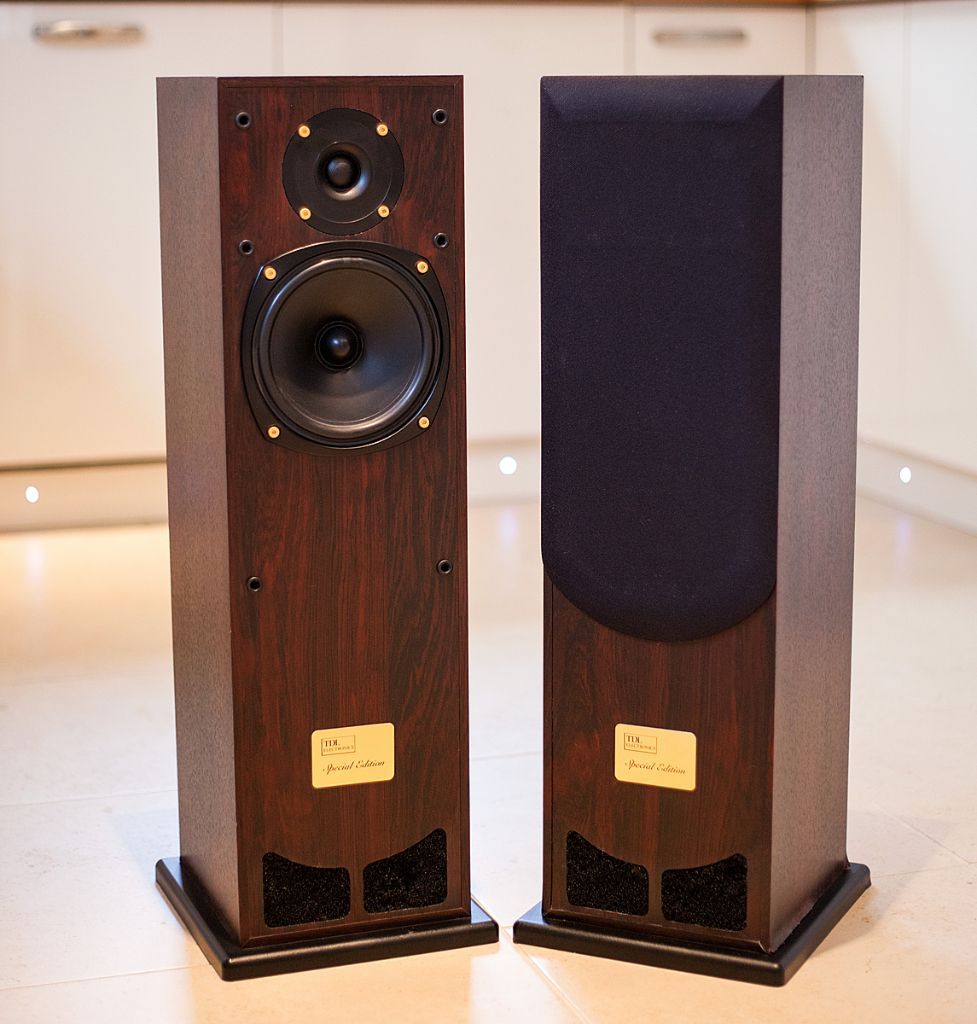
TDL speakers are famous for tight bass and very low bass extension.
I found that I didn't need a separate subwoofer for my AV system when I was using the TDL speakers.
I am getting the 'feel' of the bass now

From wiki.....
A transmission line loudspeaker is a loudspeaker enclosure design (topology) that uses an acoustic transmission line within the cabinet, compared to the simpler enclosures used by sealed (closed) or ported (bass reflex) designs. Instead of reverberating in a fairly simple damped enclosure, sound from the back of the bass speaker is directed into a long (generally folded) damped pathway within the speaker enclosure, which allows far greater control and use of speaker energy, and the resulting sound.
Inside a transmission line (TL) loudspeaker, is a (usually folded) pathway into which the sound is directed. The pathway is often covered with varying types and depths of absorbent material, and it may vary in size or taper, and may be open or closed at its far end. Used correctly, such a design ensures that undesired resonances and energies, which would otherwise cause undesirable auditory effects, are instead selectively absorbed or reduced ("damped") due to the effects of the duct, or alternatively only emerge from the open end in phase with the sound radiated from the front of the driver, enhancing the output level ("sensitivity") at low frequencies. The transmission line acts as an acoustic waveguide, and the padding both reduces reflection and resonance, and also slows the speed of sound within the cabinet to allow for better tuning.
Transmission line loudspeakers designs are more complex to implement, making mass production difficult, but their advantages have led to acclaim for a number of manufacturers such as IMF, TDL, PMC, KVART & BØLGE[2] and the like. As a rule, transmission line speakers tend to have exceptionally high fidelity low frequency response far below that of a typical speaker or subwoofer, reaching into the infrasonic range (British company TDL's studio monitor range from the 1990s quoted their frequency responses as starting from as low as 17 Hz depending upon model with a sensitivity of 87 dB for 1 W @ 1 metre), without the need for a separate enclosure or driver.


 Feb 21 2017, 09:00 AM, updated 9y ago


 Quote
Quote




 0.0252sec
 0.53
0.53
 7 queries
 GZIP Disabled