The Navy's Newest Linux-Powered Command Center Is Right Out Of Star Trek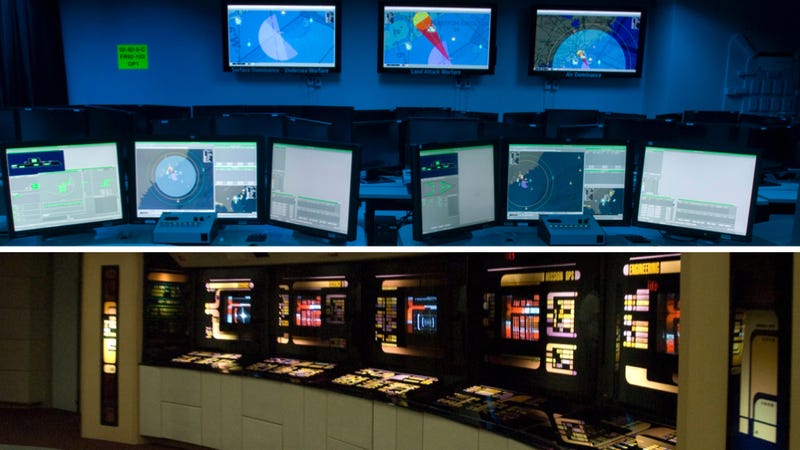
QUOTE
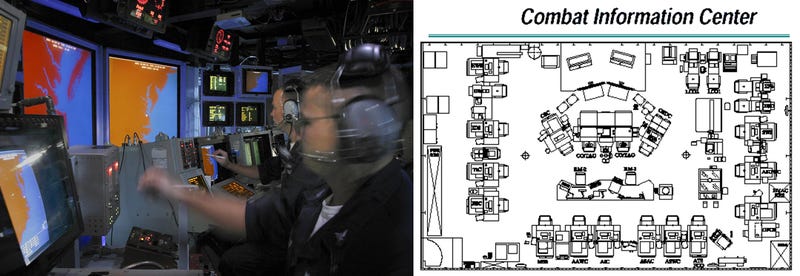
The DDG-1000 Zumwalt Class Destroyer could very well revolutionize the way the Navy does its surface warfare business. One of its biggest innovations is ditching the cramped, darkly lit Combat Information Center (CIC), a fixture for many decades on past USN combat ships, and replacing it with the state-of-the-art, spacious, Star Trek bridge-like Ship's Mission Center.
QUOTE
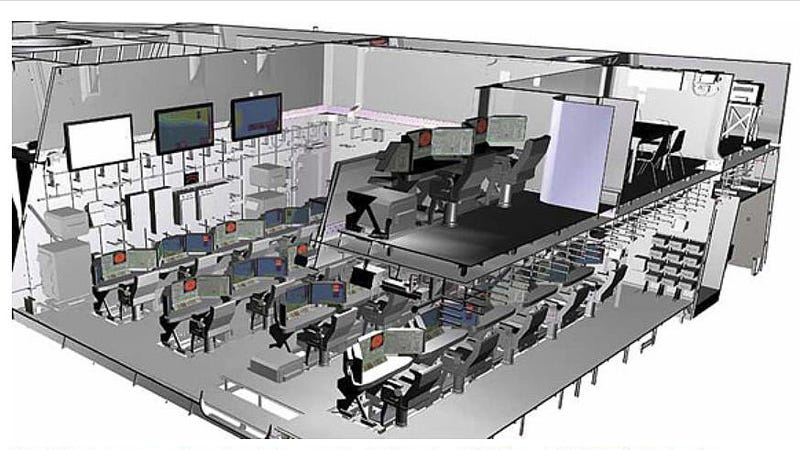
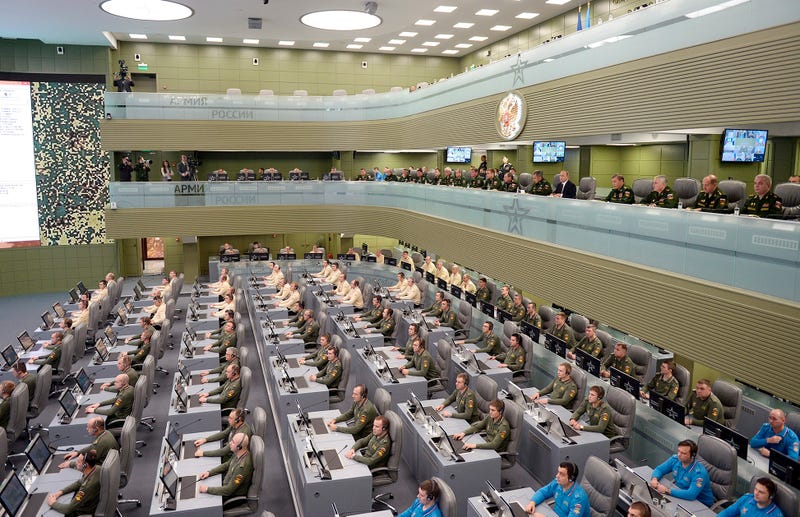
What looks like a miniature version of a war room at the Pentagon or a Combined Air Operations Center (CAOC) near a combat zone overseas, the DDG-1000's Ship's Mission Center may look like its out of the movie War Games but it works in a similar fashion to the bridge seen on Star Trek The Next Generation.
Gone are the purpose-built heavy consoles used in a ship's dark and cramped Combat Information Centers (CIC), such as those still found today aboard AEGIS combat system equipped cruisers and destroyers. In their place, the Ship's Mission Center (SMC) will be entirely re-configurable and will feature streamlined consoles and workstations running on an incredibly powerful array of custom-built software and advanced off the shelf hardware.
Dozens of individual three-screen work stations, called Common Display Stations, will fill the majority of the Ship's Mission Center, and much like Captain Picard's chair on his ship, commanding officers will have their Common Display Stations built right into their seats. From the SMC's Common Display Stations, the ship's guns can be fired, its sensors slewed, its missiles launched, its radios controlled and the ship's 'signature' profile can be changed. The DDG-1000 can even be steered from the SMC if need be.
QUOTE
The SMC, and the whole ship for that matter, will run on the Linux-based, Raytheon-built, Total Shipboard Computing Environment (TSCE). This is a powerful software and hardware suite that features 16 large hardened, coffin-like IBM blade servers, called Electronic Modular Enclosures, distributed around the ship. These modular super-computing units power the ship's proprietary 'internet.' Because of its open architecture and cloud-like design, every Common Display Station console can be rapidly configured to display anything from weapons diagnostics to sensor pictures and everything in between, once again just like the touch-screen control consoles on the science fiction's USS Enterprise.

QUOTE
The DDG-1000, of which only three are planned, will be as much of a data-fusion and command center as another major surface combatant capable of slinging Tomahawk missiles, chasing subs and shooting down aircraft. Because of this, and her unique ability to operate closer to enemy territory than her counterparts, as well as her enhanced survivability when operating as part of a larger flotilla, will see flag level officers deployed aboard her to direct an overall battle plan from the SMC. With this in mind, the DDG-1000's designers included a commanding and flag officer area perched high above and overlooking the multi-level Ship's Mission Center.

QUOTE
The DDG-1000 Zumwalt Class truly represents one future vision of surface warfare for the US Navy and it packs a serious punch, especially when it comes to attacking an enemy's shore-based assets and capabilities. Still, it is interesting to think that beyond the ship's big rocket assisted projectile slinging 155mm guns, stealthy design, high-end sensors, long rows of vertical launch cells packed with missiles and its top-of-the-line aviation element, the DDG-1000's biggest weapon is its brain and the way in which its human occupants will manipulate it.
http://foxtrotalpha.jalopnik.com/the-navys...ight-1682363296 

 Military Thread V18
  Nov 20 2015, 02:42 PM



 Quote
Quote









 0.0616sec
 0.67
0.67
 7 queries
 GZIP Disabled