Now on Sale: China Set to Export New Fifth Generation Fighter Jet
In a recent report, China Aviation Industry Corporation (AVIC) revealed some tactical and technical characteristics of the J-31 Gyrfalcon fighter at the last air show in Beijing.
Li Yuhai, deputy general manager of AVIC, told reporters in November, “Since the start of the J-31's development, we have planned to use the plane to end some foreign nations' dominance of the fifth-generation fighter jet. One of its variants will be specifically designed for export,” Chinese media reported.
Export of the J-31 would be a breakthrough for China's aviation industry because the plane would give AVIC a substantial boost in competition with Western defense aircrafts.
The J-31 has a combat range of 1,200km and a top speed of 2,205 km/h. The fifth-generation fighter jet also has a maximum payload capacity of 8 metric tons and service span of 30 years.
Xu Bangnian, a professor at the PLA Air Force Command Institute, said he expected international demand for the plane as it seemed to be the only choice for developing countries who are interested in an affordable fifth-generation stealth aircraft.
Russia's military overall is inferior to the USA but Russia can dominate regions
The U.S. spends nearly 10 times more than Russia on national defense. The U.S. operates 10 aircraft carriers; Russia has just one. And the U.S. military maintains a broad technological edge and a vastly superior ability to project power around the world.
Russia is now developing some key technologies, new fighting tactics and a brazen geopolitical strategy that is aggressively undermining America's 25-year claim to being the only truly global superpower. The result: Russia is unexpectedly re-emerging as America's chief military rival.
At least locally, Russia has the potential to generate superior forces.
Russia has preserved, even modernized, its own "triad" with nuclear-tipped intercontinental ballistic missiles, a large fleet of long-range strike aircraft and increasingly sophisticated nuclear-armed submarines.
There are specific conventional areas where the Russians excel — among them aircraft, air defenses, submarines, and electronic warfare.
China today spends more on defense annually than Russia, but still imports platforms and advanced weaponry from Russia.
Russia's airspace also is heavily fortified. The quality of Russia's stealth aircraft is far weaker than those of the U.S., but Russia has cutting-edge anti-stealth systems, and also has invested heavily in robust surface-to-air missile systems and arrayed its forces domestically to protect its border regions
NBF- Russia can protect its airspace and borders and can project dominant power a thousand miles from its borders. Russia has over ten times the military that the US faced in the Iraq wars.
BAE Systems touts 3D battlefield vision technology
QUOTE
Keep your head up, eyes out and your finger on the trigger with this new breakthrough that provides a see-through display of critical mission data - all by just clipping BAE System’s Q-Warrior to your helmet.
Once the stuff of movies like “Iron Man” and “Edge of Tomorrow”…now ground troops can benefit from this state-of-the-art tech too.
The lightweight Q-Warrior is a new cutting-edge gadget that takes an ordinary warrior’s helm
The Newest Army Helicopter Is An Incredible War Machine
The United States Army is set to display the newest Army helicopter the Association of the United States Army exhibition Oct. 12, and people will be able to get a full view of America’s newest war machine. The S-97 Raider, built by Sikorsky, is a multi-role attack helicopter, according to UPI.
The S-97 Raider is unique for several reasons, including the fact that it has been developed with both vertical flight and forward speed capabilities. Building helicopters usually demands that the manufacturer choose between vertical flight or forward speed capabilities, but Sikorsky managed to find a way to include both. In 2010, a prototype of the helicopter unofficially broke the speed record for a helicopter.
Sikorsky Director of Advanced Military Programs Steve Engebretson has said that the display at the AUSA will be the first time a helicopter with this technology has ever been officially displayed saying, “The aircraft has exceeded our expectations in early flight testing, affirming the technology and its potential for executing the future missions of armed reconnaissance, special operations, and light attack or assault. For our customers who haven’t seen the aircraft in person yet, we think it will help to give them a hands-on experience with the RAIDER aircraft, bringing them closer to envisioning the possibilities that are becoming reality.”
The S-97 Raider can carry up to six troops at a time while being armed with unspecified weapons.
The Tomahawk Used its Own Camera to Find and Destroy a Target
QUOTE
The Tomahawk missile has demonstrated a new ability to use its on-board camera to take a picture of a potential target, send it to a command center and then loiter until instructed to destroy that target, Raytheon officials told Scout Warrior.
The technology was used in a test-firing of a Tomahawk recently launched off a Navy surface ship off the coast of California, Chris Sprinkle, Raytheon Tomahawk program manager, told Scout Warrior in an interview.
“We are taking advantage of the capability that is already in the weapon. It took a picture of a target area and sent it to a controller. The controller selected the target out of the photo and gave those coordinates to the weapon,” Sprinkle said.
During the Navy-Raytheon test-firing, photos from the missile were sent from the ocean off the Southern California coast to a command center all the way in Bahrain in the Middle East, Sprinkle explained.
“Controllers at the 5th fleet in Bahrain were controlling a large number of Tomahawks,” he added. The weapon used its data-link to send photos to the command center while the Tomahawk loitered near a potential target, Sprinkle said. The Tomahawk was used to destroy a mobile missile threat during the test, Raytheon officials said.
“We flew a Tomahawk over the island and took a picture at a specific point to say is there a target there. That information was sent back via bi-directional data link to a controller in Bahrain. They evaluated and said yes there is a target. They processed the coordinates for that target and passed those coordinates back to the weapon,” Sprinkle explained.
The Tomahawk then went off into a holding pattern and waited for instruction, he added. “The weapon was instructed to go attack the target that was in the photo. This is a pretty awesome use of the weapon,” he added. Raytheon officials say this technology is now operational and deployable. The Tomahawk’s camera can also be used for battle damage assessments.
ISIS Makes Gains in Syria Territory Bombed by Russia
QUOTE
Daesh has exploited the Russian airstrikes and the preoccupation of the Free Syrian Army in its battles in Hama, and advanced in Aleppo,” one rebel commander told Reuters.
The Islamic State advance is threatening a strategic area north of Aleppo on the way to crossing points into Turkey that was to be part of a proposed ISIS-free buffer zone under a plan the United States announced over the summer with Turkey. That plan now seems to have stalled.
Two lighthouses in Spratlys solidify China's territorial stake
QUOTE
These structures will reinforce China's claims to these waters, which extend across the bulk of the South China Sea and compete with territorial assertions made by as many as five other countries. As well, they will undoubtedly maintain or increase tensions with China's neighbors.
US delivers missiles to Lebanon to defend Syria border
QUOTE
The high-tech munitions are part of a $8.6 million aid package intended to help the LAF defend the country’s eastern border from Sunni terrorists and other militias trying to breach the border from the Syrian side.
The aid package includes 50 Hellfire missiles and 560 artillery shells, including the “precision munitions,” according to the embassy statement.
A Lebanese military source told Reuters that the Hellfire missiles and 155 mm “smart artillery shells” have already been delivered to the LAF.
The American boost to the Lebanese army comes as Russia significantly increases its presence in Syria. Declaring its main goal as defeating Islamic State, Russian army warplanes have so far bombed dozens of targets in Syria, and according to Western officials, only a small proportion of the Russian assaults targeted Islamic State targets.
According to Defense Systems, DARPA is considering the use of UAVs with some sort of cloaking technology in order to make deliveries. The drones will make their drop, then disappear from the sky. The technology is being sought under the Inbound, Controlled, Air-Releasable, Unrecoverable Systems (ICARUS) program, which requires the drones to be 100% invisible from the naked eye.
Development is currently underway, with DARPA seeking a testing device that will hold 3lbs payloads and be able to deliver them within 32ft. of a target based on GPS coordinates. Once the payload is dropped, the drone has to completely vanish — DARPA makes it clear that it isn’t interested in aerial vehicles that “technically disappear” from sight.
The ICARUS research would ultimately go toward supporting Special Forces and other military teams, as well as disaster relief teams that are sent to locations where they have minimal supplies. DARPA is splitting ICARUS into two project phases, each one lasting a full year. A proposer/proposal day will take place on October 15 for interested potential partners.
Moscow’s Jaw-Dropping New Missile Is a 'Wake-Up Call' for Washington
QUOTE
The Pentagon is identifying the missiles as SS-N-30s, and while US intelligence officials had been aware of an earlier model known as the SS-N-27, the sheer range demonstrated in Wednesday’s raid caught officials off-guard.
"It should be a wakeup call that we don’t have a monopoly on the capability," Eric Wertheim, a US naval analyst, told the Daily Beast.
He added that Russia has now joined what the Daily Beast described as "an exclusive club of global military powers. And that should worry the Pentagon."
QUOTE
Western analysts were also surprised by the fact that such long-range missiles were successfully fired from relatively small naval ships. The SS-N-30 is comparable to the Tomahawk missile, and in the US Navy, those are fired from vessel with a length of at least 500 feet.
Russia’s cruise missiles were fired from ships as small as 200 feet.
CHINA WATCH: The Pace of Chinese Naval Modernization is Getting Attention at the Pentagon
QUOTE
China has plans to grow its navy to 351 ships by 2020 as the Chinese continue to develop their military’s ability to strike global targets, according to a recent Congressional report.
QUOTE
Opponents of this strategy point out that the U.S. has 11 aircraft carriers, the Chinese have one and China's one carrier still lacks an aircraft wing capable of operating off of a carrier deck. However, several recent reports have cited satellite photos showing that China is now building its own indigenous aircraft carriers. Ultimately, the Chinese plan to acquire four aircraft carriers, the reports say.
QUOTE
These include the LUYANG III, a new class of Chinese destroyer slated to enter the fleet this year. These ships are being engineered with vertically-launched, long-range anti-ship cruise missiles, the commission said. The new destroyer will carry an extended-range variant of the HHQ-9 surface-to-air missile, among other weapons, the report says.
QUOTE
The Chinese are currently testing and developing a new, carrier-based fighter aircraft called the J-15. Regarding amphibious assault ships, the Chinese are planning to add several more YUZHAO LPDs, amphibs which can carry 800 troops, four helicopters and up to 20 armored vehicles, the report said.
The Chinese are also working on development of a new Type 055 cruiser equipped with land-attack missiles, lasers and rail-gun weapons, according to the review.
China’s surface fleet is also bolstered by production of at least 60 smaller, fast-moving HOBEI-glass guided missile patrol boats and ongoing deliveries of JIANGDAO light frigates armed with naval guns, torpedoes and anti-ship cruise missiles.
QUOTE
The commission also says Chinese modernization plans call for a sharp increase in attack submarines and nuclear-armed submarines or SSBNs. Chinese SSBNs are now able to patrol with nuclear-armed JL-2 missiles able to strike targets more than 4,500 nautical miles.
The Chinese are currently working on a new, modernized SSBN platform as well as a long-range missile, the JL-3, the commission says.
Homeland Security Today: US Military Awards Follow-On Aklus Shield Biological Defense System Contract
QUOTE
SRC, Inc. was awarded a follow-on contract to provide Aklus Shield biological defense systems, training and support to the Joint United States Forces Korea Portal and Integrated Threat Recognition (JUPITR) program.
JUPITR is a program led by the Joint Program Executive Office for Chemical and Biological Defense supported by the Army Edgewood Chemical Biological Center, which will provide unique biological detection capabilities to decrease soldier workload, lower operational costs, increase performance and create a stronger biological defense capability throughout South Korea.
Four candidates to become the airplane of the future
QUOTE
Within weeks, the Department of Defense will grant one of four competitors a $95 million contract to build an exotic new aircraft — of the sort 20th century inventors went broke and nearly mad trying to create.
North Korea shows off ‘long range’ nukes, but experts divided over authenticity of claim
QUOTE
A defense analyst in Seoul said the new missile appeared to have been modified to allow it to be fitted with a miniature nuclear warhead — a claim echoed by North Korea’s state TV — but others experts said it was impossible to tell.
North Korea has long claimed it has technology capable of launching nuclear bombs at its distant enemies, but experts are skeptical whether the impoverished country has acquired the sophisticated technology needed to produce such weapons.
“With the vengeful desire to turn the citadel of our enemies into a sea of fire, our powerful tactical rockets loaded with diversified and miniaturized nuclear warheads are on the move,” the commentator said, as rows of missiles were shown on screen.
Leader Kim Jong Un on Saturday told crowds assembled for the parade that the country’s armed forces “are capable of fighting any kind of war provoked by the U.S. and we are ready to protect our people and the blue sky of our motherland.”
Lee Il-woo, a defense analyst at Korea Defense Network, said the new version of the KN-08 — which has an estimated range of up to 12,000 kilometers (7,500 miles) — had a more rounded end than the version unveiled in 2012.
“This means North Korea might have successfully developed technology to minimize nuclear warheads and fit them on top of missiles,” he said.
But another analyst, Chae Yeon-seok at the Korea Aerospace Research Institute, cautioned that the missiles might be mock-ups.
Holographic Wonder: Russia Develops One of a Kind Gun Sight
Presenting the all-new Valdai PG-210 holographic weapon sight at a military expo held earlier this month in Kubinka, just outside Moscow, the Yupiter factory’s director, Nikolai Klimkin, described it as “a lightweight and easy-to-use day/night wide-angle scope.”
The PG-210 holographic gun sight with binocular observation ensures an increased rate of fire at moving targets.
“We are now working on one of a kind holographic gun sights with variable rangefinding reticles,” Klimkin emphasized.
The new sight’s additional forte is its invisibility to existing means of optical detection.
Designed expressly for use with the Kalashnikov assault rifles, the Valdai PG-210 holographic sight can also be easily installed on hunting, sportsman rifles and other non-military weapons.
Valdai-PG210
A holographic weapon sight is a non-magnifying gun sight that allows the user to look through a glass optical window and see a cross hair reticle image superimposed at a distance on the field of view.
The hologram of the reticle is built into the window and is illuminated by a laser diode.
Intercepted ISIS comms show 'growing panic' after Russian airstrikes - combat report
Russian Air Forces have extended the range of their airstrikes on Islamic State positions in Syria to four provinces, focusing primarily on demolishing fortified installations and eliminating supply bases and the terrorists' infrastructure.
Over the last 24 hours Russian aircraft have attacked terrorist positions in the Hama, Idlib, Latakia and Raqqa provinces of Syria. In total, 64 sorties targeted 63 Islamic State installations, among them 53 fortified zones, 7 arms depots, 4 training camps and a command post.
The airstrikes were carried out by Sukhoi Su24M and Su-34 bombers and Su-25SM assault aircraft, with Sukhoi Su-30 fighter jets ensuring air escort for the assault groups.
“Having accomplished combat assignments, all aircraft of the task force operating in Syria successfully returned to the Khmeimim airbase,” said the spokesperson for the Russian Defense Ministry, Igor Konashenkov.
Radio intercept data has revealed “growing panic” among Islamic State militants, according to Konashenkov. He added that IS field commanders have urged senior staff to expedite supply armament and military equipment, as well as to redeploy reinforcements from Raqqa province as a result of Russia’s air bombardment.
In the vicinity of the city of Saraqib in northwest Syria, an artillery position known for inflicting strikes on the nearby residential areas has been exposed and eliminated.
A group of Sukhoi Su-24M bombers attacked a terrorist field headquarters near the village of Salma in northwest Syria. This command post has been coordinating operations of the militants in whole of the Latakia province.
“A direct hit of a guided KAB-500 air bomb completely destroyed a building with militant commanders inside," the Defense Ministry’s spokesperson reported. “The airstrike also eliminated five SUVs with ZU-23 double-barreled 23mm anti-aircraft guns mounted on them that were parked nearby.”
A Sukhoi Su-24M bomber attacked a thoroughly concealed position of SUVs with mortar launchers mounted on them near the village of Kafer-Delba. As a result of the attack, a mobile sub-artillery battery consisting of four vehicles was eliminated.
Aerial reconnaissance discovered a stronghold of terrorists near the village of Achan. A pinpoint airstrike carried out by Su-24M aircraft eliminated the installation, along with an ammunition and logistics depot.
Defense Ministry’s spokesman, Igor Konashenkov, also said that the Russian and American armed forces have held a second video conference regarding the operation in Syria. The two sides discussed in detail proposals voiced at the first such event and focused on issues of air security to be ensured by both sides, since both US and Russian aircraft are currently operating in Syria’s airspace.
The date for the next consultation is to be arranged later.
Chinese army soldiers in Xinjiang, a high, remote territory on the border with Pakistan, Afghanistan, Kyrgyzstan, Kazakhstan and Mongolia, can’t always count on road access to strategic regions. So they ride yaks, instead, as Xinhua’s recent photos illustrate.
There are a few other true cavalry units in the world. Horse units are still fairly widespread — U.S. Special Forces rode on horseback in Afghanistan in 2001. The Jordanian and Indian militaries deploy camel troops.
Has Islamic State's leader been killed? Deadly convoy raid by Iraqi air force 'kills many'
QUOTE
Iraqi air forces have bombed the convoy of the terrorist Abu Bakr al-Baghdadi while he was heading to Karabla to attend a meeting with Daesh commanders," the statement read, using the Arabic acronym for Islamic State.
The military said the air force bombed a location where Baghdadi was planning to meet Islamic States commanders.
"The location of the meeting was also bombed and many of the group's leaders were killed and wounded," the statement said.


 Military Thread V18
  Oct 9 2015, 10:36 PM


 Quote
Quote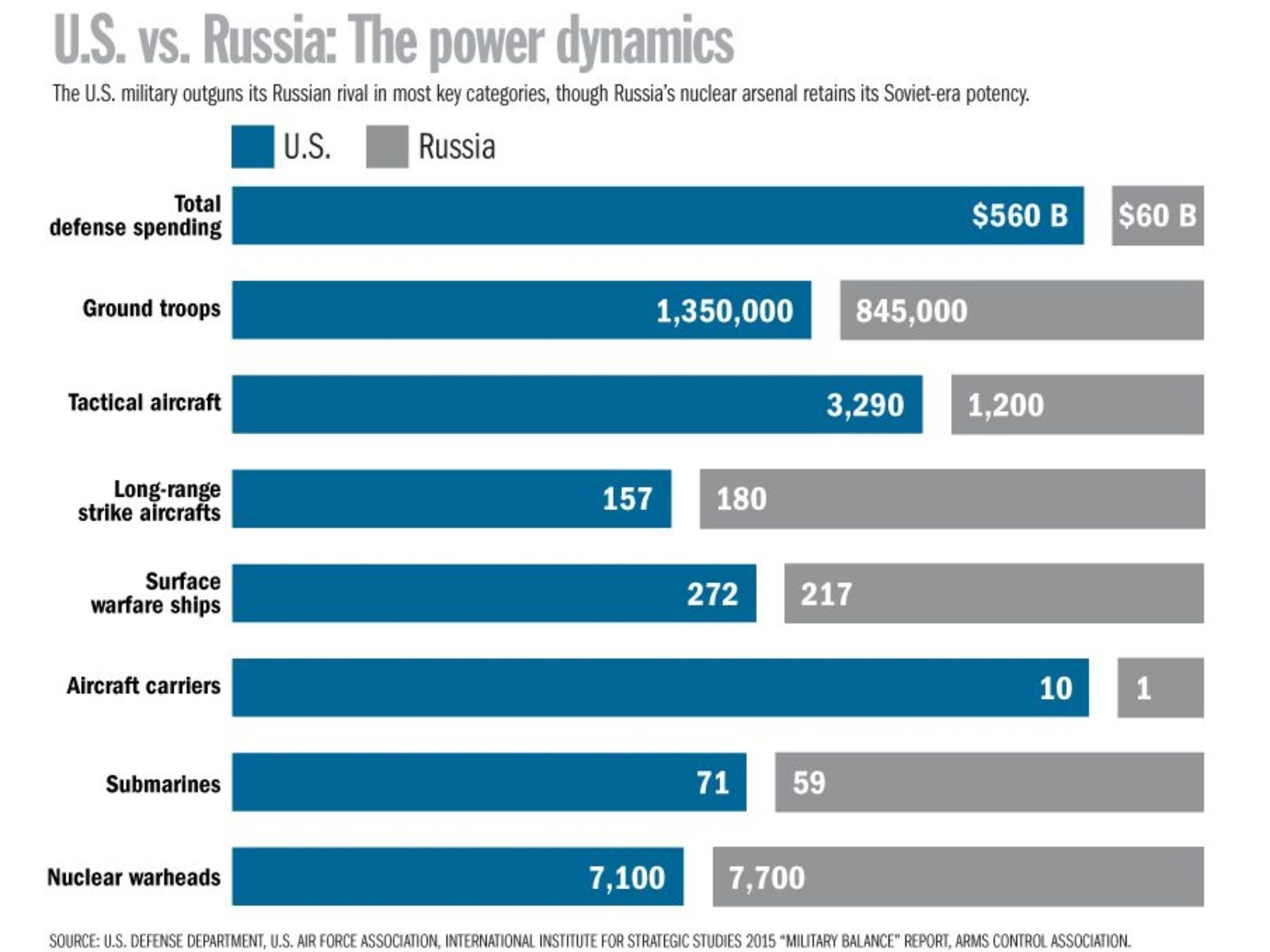



 0.0540sec
 0.80
0.80
 7 queries
 GZIP Disabled