Welcome Guest ( Log In | Register )

Bump Topic Topic Closed RSS Feed
25 Pages  1 2 3 > » Bottom

Outline · [ Standard ] · Linear+

> Military Thread V17

views
     
BorneoAlliance
post May 26 2015, 07:00 PM

New Member
*
Newbie
0 posts

Joined: Dec 2014

1947 Rand McNally map lists some S China Sea islands as Chinese

user posted image

The word
The word "China" is shown underneath the Paracel Islands in parenthesis on the map made by Rand McNally in 1947. (Internet photo)

A 1947 map by American map publisher Rand McNally in 1947 gave China ownership over many islands in the South China Sea, the state-run China News Service reported Sunday.

CNS cited a report in Hong Kong's Ming Pao the same day as saying that a Collier's World Atlas and Gazetteer published in 1947 was recently spotted at a secondhand store in Vancouver.

In the collection, a map drawn by Rand McNally and titled Popular Map of China, French Indochina, Siam and Korea, contains detailed descriptions of the South China Sea islands and says that China owns some of the islands. The Paracels are specifically labeled as Chinese territory, according to the Ming Pao report.

The World Atlas and Gazetteer was published two years after World War II, when the US was desperate for Chiang Kai-shek's Nationalists to prevail in their civil war against Mao Zedong's Communists.

The book also contains a Rand McNally-drawn map of the Philippines and Spratly Islands. Although the Philippines have maintained close relations with the United States, none of six names the map producer used to identify the archipelago are Philippine terms, the report said.

The report also said that China's sovereignty claim over the South China Sea islands can be traced to before the Industrial Revolution.

Thitu island in the Spratlys, currently occupied by the Philippines which calls it Pag-asa, is labeled as Thi Tu Island on the old map. In the center of Thi Tu, there is a temple built by Chinese people in the Qing Dynasty, the report said. China refers to the islands as Zhongye island.

Citing John Price, a history professor at the University of Victoria, the report said that as the Cold War began US negotiators adopted an "avoidance strategy" during talks on the sovereignty of the South China Sea islands to avoid recognizing the new Communist regime in Beijing.

However, when it wanted to use Okinawa and other Pacific islands as military strongholds, the United States became strict and had clear-cut opinions in terms of sovereignty issues, according to Price, who said that the impact of injustice created by the US in those years is still being felt today.

http://www.wantchinatimes.com/news-subclas...=20150526000135
BorneoAlliance
post May 26 2015, 07:06 PM

New Member
*
Newbie
0 posts

Joined: Dec 2014

Wary of ‘Russian Invasion’, Estonia Designs Mobile Bomb Shelter

user posted image

“This shelter was designed to handle the impact of 155 mm artillery shells… We have just tested it against a variety of weapons, from 81 mm shells all the way to 155 mm ones and, as you can see, it handled all of them just fine”, said Peter Kirsti, one of the designers of the mobile shelter.

Dubbed as Sub Safe U1, the shelters, made from polythene, are around six meters long, weigh around two tons, cost 18,000 euros a piece and purportedly take less than two hours to assemble.

Built by Estonian defense firm Terramil, the units can hold up to 12 people.

With the armed conflict in Ukraine raging on despite the proclaimed ceasefire, the demand for mobile shelters is high, even though work on the prototype started well before the outbreak of the conflict in Donbass.

Additionally to the Eastern European countries, the mobile bomb shelters have generated considerable interest in Saudi Arabia, India and Egypt.

http://sputniknews.com/europe/20150526/1022556902.html
BorneoAlliance
post May 28 2015, 08:44 AM

New Member
*
Newbie
0 posts

Joined: Dec 2014

Australian Media Spies Imaginary Weapons in South China Sea

user posted image

On Tuesday, Japan announced that it would join in the Talisman Sabre, joint military exercises typically conducted by the United States and Australia. The newly formed trifecta of Pacific allies was largely seen as the latest in an attempt to bolster defenses against an alleged Chinese threat.

While Japan’s participation in the drills demonstrated Tokyo’s concern over the Beijing’s construction of islands in the South China Sea, Australia seems to have taken even more of Washington’s bait. A number of Australian media outlets are now reporting that China has moved weaponry onto artificial islands in the South China Sea.

While these claims, if true, would represent a major shift in Chinese policy, and a major escalation in the ever-growing tensions between regional stakeholders, the outlets have not provided any evidence.

Many of these reports could stem from the Australian government’s growing concerns about their own trade routes, as Washington continues to stoke fires about their imagined Chinese threat. While Australia had previously remained neutral in all South China Sea disputes, it appears to be changing its tune.

"Give the size and modernization of China’s military, the use by China of land reclamation for military purposes would be of particular concern," Australia’s top defense official, Dennis Richardson, said during a forum in Sydney.

Japan to Join Huge US-Australian Pacific War Games As China Tensions Mount
The Chinese government has repeatedly insisted that the islands lie within its sovereign territory, and that it has every right to build. On Tuesday, Defence Ministry Spokesman Yang Yujun compared the land reclamation efforts to the construction of roads and homes on the mainland.

"From the perspective of sovereignty, there is absolutely no difference," he told reporters. This echoed earlier statements made by Foreign Ministry spokesman Hua Chunying, who emphasized that the islands would help maritime search and rescue, disaster relief, environmental protection, and navigational security.

"Some external countries are also busy meddling in South China Sea affairs," a Chinese policy document, released on Tuesday, reads. "A tiny few maintain constant close-in air and sea surveillance and reconnaissance against China."

This was taken as reference to the efforts of the United States. Despite the fact that the US has no territorial claims in the region, it has consistently heightened efforts to incite unrest in the sea, staging military exercises with the Philippines and Indonesia, and launching patrol missions over the land reclamation projects.

"China’s actions are bringing countries in the region together in new ways," US Defense Secretary Ash Carter said during a military ceremony on Wednesday. "They’re increasing demand for American engagement in the Asia-Pacific. We’re going to meet it."

"We will remain the principal security power in the Asia-Pacific for decades to come," he added.

With nearly $5 trillion in trade passing through its waters annually, the South China Sea is a hotly contested region. While China lays claim to most of the area, there overlapping claims from Vietnam, Taiwan, Indonesia, Malaysia, Singapore, Brunei, and the Philippines.

http://sputniknews.com/asia/20150528/1022634719.html
BorneoAlliance
post May 28 2015, 08:51 AM

New Member
*
Newbie
0 posts

Joined: Dec 2014

America readies its new 'smart' nuke

user posted image

U.S. Air Force photo by Senior Airman Evelyn Chavez
April 29, 2015

The U.S. Air Force is on the cusp of flight testing a new tail-kit assembly that will upend the old way of conducting tactical nuclear combat, should the United States ever enter a shooting match with a nuclear-armed state like Russia or China.

We're talking about an upgrade to the B61 thermonuclear bomb  —  the oldest nuclear gravity bomb in America's stockpile. The Boeing-built guidance unit adds range and accuracy, turning it into a "smart" nuke compatible with the F-35 Joint Strike Fighter and future Long-Range Strike Bomber.

The B61 entered production in 1968, and is still the Pentagon and NATO's go-to weapon for tactical and strategic nuclear combat.

The flying branch's weapons office at Eglin Air Force Base in Florida has been working with Boeing to design and develop the tail-kit assembly since 2012. The Air Force is scaling up the flight test program this year.

The tail kit will resemble a non-nuclear Joint Direct Attack Munition, with strap-on strakes for range, and tail fins guided by a GPS-aided inertial navigation unit.

God no, the U.S. Air Force doesn’t need another Curtis LeMay
The equipment will work even if America's navigation satellites are shot to pieces — a likely scenario during a nuclear war — and is hardened to survive the electromagnetic pulse generated by a high-altitude nuclear explosion.

Both the Air Force and Boeing have expressed confidence in the tail kit, and the $1 billion program is meeting its cost and schedule targets. But the program is marching toward a tougher phase of development, with a critical design review planned for later this year that will push Boeing's design to its limits.

"We don't anticipate any major risks associated with the tail kit assembly that can't be mitigated," Boeing spokeswoman Katie Kelly wrote in an email in January.

Hans Kristensen, a nuclear weapons policy expert for the Federation of American Scientists, said he has serious reservations about the program. He added that cutting or canceling the B61 could save the government billions of dollars.

However, he believes the technology is there to produce a precision-strike gravity nuke  —  a concept the Pentagon first seriously considered in the 1990s.

"There might be individual challenges that are particular for this kind of weapon they have developed," Kristensen said. "But they have so much experience now with guided systems that I would be surprised if there were some real tough nuts that they wouldn't be able to crack or that would delay it significantly."

”There are so many precision weapons that have been produced and mated with so many different kinds of aircraft that I'd be surprised if there were major technical problems," he added.

According to the Air Force, developing the guidance kit might be the easy part. The National Nuclear Security Administration — which oversees America's nuclear warheads — has the tougher task of refurbishing the complete weapon. It's all part of an $8-billion life-extension program that will keep the nukes active until 2040.

The first fully-refurbished bomb won't be available until 2020, well after the tail kit enters service.

Today, there are five versions of the B61, including one ground-penetrating version to kill hardened bunkers. The government wants to cull the stockpile down to just two versions — a low-yield version, designated B61–12, and the bunker-busting nuke retained in its current form.

It falls to Sandia National Laboratories to consolidate 400 to 500 of these Cold War relics into the B61–12 variant.

"To date, Boeing and Sandia National Labs have completed several series of all-up-round level testing as well as fit checks and a captive-carry flight test with the launch aircraft," the Boeing spokeswoman wrote. "Each test helps reduce risk."

Along with the flight test program, 2015 will be a big year for integrating the bomb onto existing aircraft.

The program office has the money to begin pairing the smart nuke with other aircraft — the B-2, F-16, and F-35A as well as the European PA-200 Tornado.

This month, the NNSA confirmed that an F-16, F-15, and a B-2 armed with advanced measurement devices have been zipping around Eglin and Edwards Air Force Base to collect vibration and flight environment data for the B-61's new tail kit. Those flights took place between July and December 2014.

"This series is the first of many flight tests for the B6–12 life-extension program," a Feb. 9 press statement noted. "The testing is a key building block between ongoing system ground testing and the first development flight test drop scheduled in fiscal year 2015."

The Air Force will test the first complete tail kit on an F-15E Strike Eagle using an inert bomb. If the flight tests are successful, Boeing will pass the design review and proceed to the next round of development, with a plan to deliver the first production unit in 2018.

There are a series of smaller flight tests planned throughout the year to test different components of the weapon system. But Air Force plans the complete developmental test flight in November.

So why turn a tactical nuke into a smart bomb? It's all about destroying the same target with a less powerful warhead.

"U.S. Strategic Command determined that with the accuracy provided by a tail kit, the yield provided by today's lowest yield B61 variant would be sufficient to meet all of the strategic and non-strategic requirements for gravity systems," Donald Cook, the NNSA's deputy administrator for defense programs, told Congress in 2013.

"As a result, there will no longer be any need to design, develop, certify, or maintain multiple variations of the B61."

But the larger context is the New START treaty signed by Pres. Barack Obama and then-Russian Pres. Dmitry Medvedev in 2010. The treaty limits each side to 1,550 deployed nuclear warheads by 2018.

To meet these arms reduction targets, U.S. Strategic Command advocated for what's still known as the "3+2 Strategy," where the U.S. would move toward a nuclear stockpile with three interoperable ballistic missile warheads — for the submarine and land-based legs of the nuclear triad — and two air-delivered warheads.

As part of this plan, the U.S. would eliminate the megaton-class B83 gravity bomb.

The U.S. has already cut its nuclear stockpile by 80 percent compared to its Cold War peak, and the Pentagon estimates it could still meet its nuclear deterrence strategy with one-third fewer weapons.

Whether those additional reductions are ever realized depends on the next round of arms control talks set to take place before the New START caps expire in 2021.

The Air Force's latest budget request includes $743 million during the next five years for B61 tail kit research and development. The NNSA has asked Congress for $643 million to support the B61 life-extension program in fiscal year 2016.

According to the flying branch's latest tail kit schedule, the critical design review should finish in early 2016, ahead of a contract award to Boeing for phase two of development.

From drones to AKs, high technology to low politics, War is Boring explores how and why we fight above, on, and below an angry world.

http://theweek.com/articles/552119/america...-new-smart-nuke

BorneoAlliance
post May 28 2015, 08:19 PM

New Member
*
Newbie
0 posts

Joined: Dec 2014
user posted image
BorneoAlliance
post May 28 2015, 08:24 PM

New Member
*
Newbie
0 posts

Joined: Dec 2014


China starts building new lighthouses in South China Sea

The building of lighthouses on the Nansha Islands will enhance navigational safety in the South China Sea and will help fulfill China's international obligations, the Chinese foreign ministry said Tuesday.

The South China Sea is a vital waterway for international transportation and one of the most important fishing grounds in the world, said Chinese foreign ministry spokeswoman Hua Chunying at a regular press briefing.

China's construction of lighthouses on the Huayang Jiao and Chigua Jiao islands is an initiative of the country to meet its international responsibilities by providing passing vessels with efficient guidance and substantially improving navigational safety in the South China Sea, Hua stressed.

"The Chinese side will continue to build other civilian facilities on relevant maritime features of the Nansha Islands and offer better services to vessels from littoral countries of the South China Sea and those sailing through this area," she said.

The Ministry of Transport hosted a ceremony on Tuesday to mark the start of work on the two multi-functional lighthouses on the pair of islands.

According to the ministry, the lighthouses will be 50 meters high, and have a range of 22 nautical miles when completed.

Wang Xiaopeng, an expert in maritime and border studies at the Chinese Academy of Social Sciences, told the Global Times that the lighthouses will be used as public facilities for the international community, and that this project is necessary as the region is a dangerous shipping area because of its strong ocean currents.

"Building lighthouses is indeed a move to satisfy international and regional needs, while the construction is lawful as China is building on its own territory," he said.

In April, the Philippines expressed its alarm about Chinese construction activities in the area and said the building work has damaged the environment.

China rejected this accusation and said that before the construction work began the plans went through years of scientific assessment and it will inflict no damage to the marine environment.

China has repeatedly stated that the main areas advanced by its construction projects in the South China Sea are related to civilian activities.

http://www.ecns.cn/military/2015/05-27/166945.shtml

This post has been edited by BorneoAlliance: May 28 2015, 08:24 PM
BorneoAlliance
post May 28 2015, 08:28 PM

New Member
*
Newbie
0 posts

Joined: Dec 2014
Concept art of China's 'Condor' high-altitude drone circulates online

user posted image

Concept of the drone circulating online. (Internet photo)

A diagram charting the development of Chinese military aircraft has been making the rounds of online media publications in the country for some time, according to the military web portal of China's Global Times.

Many of the models shown on the diagram have since proven to be accurate, but one of the most mysterious aircraft shown on the diagram is the one labeled "high-altitude long-range anti-stealth drone."

In the book Ever Onwards-Aircraft: Design Expert Li Ming, published by Beijing-based Aviation Industry Press, appears the line, "At the same time as he was researching combat drone technology, Li Ming also pushed for cooperation with other countries on high-altitude anti-stealth drones, and the fruit of this cooperation was the 'Shendiao' or 'Condor' prototype developed by Unit 601."

A Chinese military forum recently published unconventional looking drone concept art. The drone depicted had a double fuselage design and its wing extension is extremely large, suggesting it a high-altitude long-range drone. This suggests that it may be the Shendiao, or Condor, drone suspected to be in development at the Shenyang Aircraft Design Institute (Unit 601). The Shendiao appears from the picture to have a large aspect ratio, with an extremely long thin wing, giving it a significant amount of lift even when cruising at high-altitudes with lower pressure, allowing it to achieve level-flight.

Military commentator Liu Zijun was cited by the website as stating that "anti-stealth" drones are being used to strengthen the PLA's airborne early warning capabilities. Even though China has already developed the Guizhou Soar Dragon drone, the drone has a relatively light take-off weight and has limited maneuverability. This means that it can't carry an extra payload, which puts it well short of the capabilities of the US RQ-4 Global Hawk drone.

Liu said that even though China already has the KJ-2000, KJ-200 and KJ-500 airborne early warning and command aircraft, the KJ-2000 is limited in its numbers and the KJ-200 and KJ-500 are limited in number and have limited range. China's early warning capabilities are therefore contained within the area that China refers to as the "First Island Chain" of the Pacific stretching from the Kamchatka peninsula in Russia's far east to the Malay peninsula. This severely limits the PLA Air Force's situational awareness. These problems could be solved with a high-altitude long-range drone, Liu said.

The man credited with designing China's airborne early warning and control systems, Wang Xiaomo, said in 2014 that future early warning aircraft would get rid of the round part at the back of the plane, using an antenna that is stuck to the fuselage instead, which is why the concept art portraying the drone does not resemble manned early warning aircraft in terms of design. The Shendiao could be used in coordination with manned early warning systems to improve radar accuracy.

High-altitude long-range drones refer to those that fly at 18 km and above and have an endurance of upwards of 10, several dozen hours or even several days of flight time. It is relatively cheap to make.

http://www.wantchinatimes.com/news-subclas...=20150528000063

This post has been edited by BorneoAlliance: May 28 2015, 08:29 PM
BorneoAlliance
post May 29 2015, 05:10 AM

New Member
*
Newbie
0 posts

Joined: Dec 2014

Germany Lacked Will and Money to Implement Armata Project – German Media

user posted image

The basic concept of the Russian Armata tank was developed 30 years ago in Western countries and even tested in Germany. However, Germany lacked the political will and financial resources to implement the project, the German newspaper reported.

The tank concept was once considered a potential replacement for the current Germany’s Leopard 2. Industry experts point out that a new battle tank could have been built a long time ago.

However, the fall of Berlin Wall in 1989 and the collapse of the Soviet Union have brought major German military projects to a standstill. After the end of the Cold War, the ‘threat from the East’ disappeared and Germany did not see any urgent necessity to continue the arms race.

Now, Russia managed to produce the newest battle tanks based on a German concept. For Germany itself the production of similar Leopard-2 successors could take more than 15 years, experts claim.

"Armata is a wake-up call from the sleep into which we had fallen in early nineties," an industry expert said under condition of anonymity.

According to him, the new Armata T-14 has obvious advantages, even compared to modern variants of the Leopard 2.

http://sputniknews.com/europe/20150528/1022676133.html
BorneoAlliance
post May 29 2015, 05:19 AM

New Member
*
Newbie
0 posts

Joined: Dec 2014

HACKED EMAILS REVEAL RUSSIAN PLANS TO OBTAIN SENSITIVE WESTERN TECH

user posted image

QUOTE
April 2014, Viktor Tarasov wrote to the head of Ruselectronics, a Russian state-owned holding company, about a critical shortage of military equipment. The Russian military lacked thermal imaging systems — devices commonly used to detect people and vehicles — and Tarasov believed that technology might be needed soon because of the “increasingly complex situation in the southeast of Ukraine and the possible participation of Russian forces” to stabilize the region.

Tarasov, in charge of Ruselectronics’ optical tech subsidiary, was hoping that the head of Ruselectronics would write to the minister of defense for armaments to advance his company 150 million rubles, then about $4 million, to buy 500 microbolometer arrays, a critical component of thermal imaging devices. The money, Tarasov wrote, would allow the company to buy the equipment under a current contract from a French company without the need for signing a new “end-use certificate,” which requires the buyer to disclose the final recipient.

Time was of the essence, he warned, because the West was preparing another round of sanctions against Russia that would slow the purchases and increase costs. Tarasov also claimed that the United States was already providing similar equipment to Ukrainian forces. (Pentagon spokesperson Eileen Lainez confirmed that the Department of Defense had provided thermal imaging devices and night-vision goggles to Ukraine in 2014, along with a variety of other military equipment).


QUOTE
The reason for the shortfall was Russia’s inability to produce a critical component — microbolometer arrays — which can capture images without requiring cooling, reducing the size and complexity of thermal imaging systems.


https://firstlook.org/theintercept/2015/05/...ront-operation/
BorneoAlliance
post May 29 2015, 05:25 AM

New Member
*
Newbie
0 posts

Joined: Dec 2014

Darpa demonstrates lidar on a chip - E & T Magazine

user posted image

American defence research agency Darpa has developed a lidar system small enough to be integrated on a microchip yet offering better performance than conventional bulky mechanical devices.

A more precise alternative to radar, measuring distances using laser beams instead of radio waves, lidar is essential for many military capabilities including autonomous navigation, chemical-biological sensing, precision targeting and communications.

Until today, lidar devices have required bulky mechanical assemblies to sweep the laser beam around, which are both expensive and sensitive to mechanical shocks and fluctuations of temperature. The use of the technology has therefore so far been limited.

Darpa’s researchers working under the Short-range Wide-field-of-view Extremely agile Electronically steered Photonic EmitteR (SWEEPER) programme have now announced a major breakthrough that could pave the way for more widespread adoption of lidar technology.

“By finding a way to steer lasers without mechanical means, we’ve been able to transform what currently is the largest and most expensive part of laser-scanning systems into something that could be inexpensive, ubiquitous, robust and fabricated using the same manufacturing technology as silicon microchips, said Josh Conway, Darpa programme manager.

“This wide-angle demonstration of optical phased array technology could lead to greatly enhanced capabilities for numerous military and commercial technologies, including autonomous vehicles, robotics, sensors and high-data-rate communications.”

The new device, which can be integrated onto a microchip, is not only small and simple. It also offers significant improvements compared to traditional devices. Its silicon-based laser consisting of billions of light-emitting dots can be swept around more than 10,000 times faster than what is currently possible with mechanical lidar systems – up to 100,000 per second.

Moreover, it can steer the laser precisely across a 51-degree arc, offering the widest field of view of all chip-scale optical scanning systems.

The device relies on the so called phased-array techniques developed in the 1960s for radar technology. Phased arrays use carefully engineered surfaces to control the direction of selected electromagnetic signals by varying the phase across many small antennas.

The technology, revolutionary at its time, enabled using multiple beams and rapid scanning speeds, as well as the ability to shape the arrays into curved surfaces.

However, using the concept with optical technology presented many challenges. As optical wavelengths are thousands of times smaller than those of radio waves used by radar, elements of the array must be placed within only a few microns of each other. The manufacturing requires extreme precision as deviations as small as 100 nanometres can affect performance.

http://eandt.theiet.org/news/2015/may/lidar-on-chip.cfm

BorneoAlliance
post May 29 2015, 06:55 AM

New Member
*
Newbie
0 posts

Joined: Dec 2014

Russia To Buy At Least 50 Tu-160 Blackjack Bombers, Production Likely To Complete Ahead Of Time

user posted image

Russia will purchase at least 50 Tupolev Tu-160 “Blackjack” heavy strategic bombers when the aircraft's production is renewed, Russian Air Force Commander Col. Gen. Viktor Bondarev announced Thursday. The Tu-160 strategic bombers will be produced simultaneously with the country’s new bomber, called PAK DA.

“The production of the aircraft will be restarted,” Russia’s TASS news agency quoted Bondarev as saying. "To cover all the outlay of the production, at least 50 aircraft will be purchased in course of time.”

According to Bondarev, the revival of the Tu-160 production will not interfere with the production of the PAK DA aircraft, which is expected to make its first flight in 2019. The PAK DA bombers are likely to be part of the Russian Air Force in 2023-2025 and would replace existing bpmbers including the Tu-160, Tu-22M3 “Backfire” and Tu-95 “Bear.”

In late April, Russian Defense Minister Sergei Shoigu had reportedly ordered the resumption of the production of Tu-160 bombers at the Kazan aviation plant in the Republic of Tatarstan in the Volga Federal District. The director of the Kazan aviation plant said Tuesday that the modernization of 16 existing Tu-160 bombers is expected to be completed in 2019, instead of 2020 as previously estimated, IHS Jane's Defence Weekly reported.

According to the report, the modernization of Tu-160 bombers includes two major phases. The first phase, which is now completed, involves strengthening the aircraft’s armament, to carry 12 conventional long-range cruise missiles and laser-guided bombs. The second phase focuses on replacing the jet’s radar, electronic navigation and communication systems, IHS Jane's Defence Weekly reported, adding that the aircraft's engines will also be upgraded at a later date.

In addition to Tu-160 and PAK DA, Russia is also working on its fifth-generation stealth fighter jet, known as PAK FA, which will enter service in 2016.

“We’re completing the aircraft tests and from 2017 they will be serially supplied,” Bondarev said, according to TASS. The PAK FA jets “will not be in any way inferior to US F-22 and F-35 fighters and will surpass them by all practical parameters.”

http://www.ibtimes.com/russia-buy-least-50...ad-time-1941450
BorneoAlliance
post May 29 2015, 07:03 AM

New Member
*
Newbie
0 posts

Joined: Dec 2014

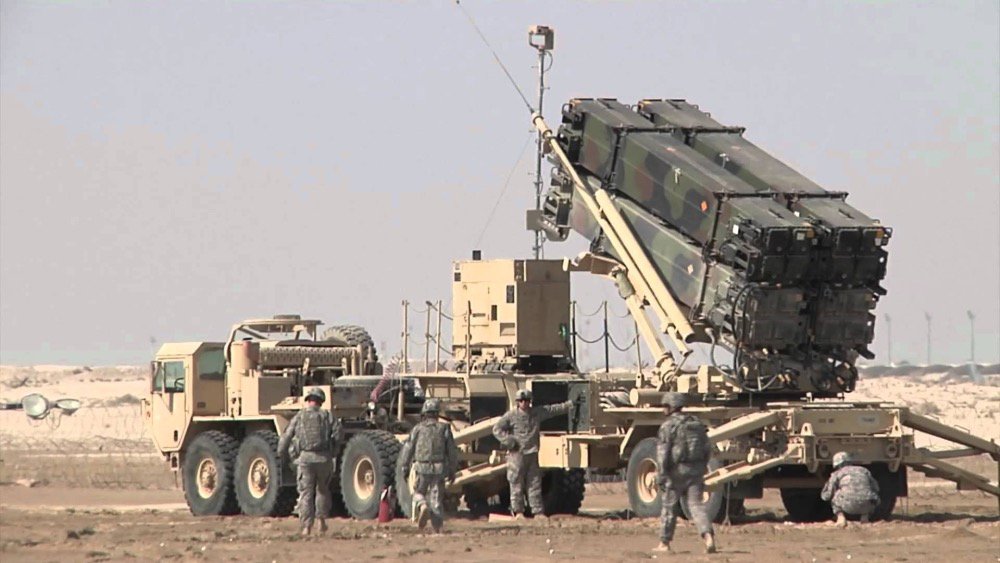
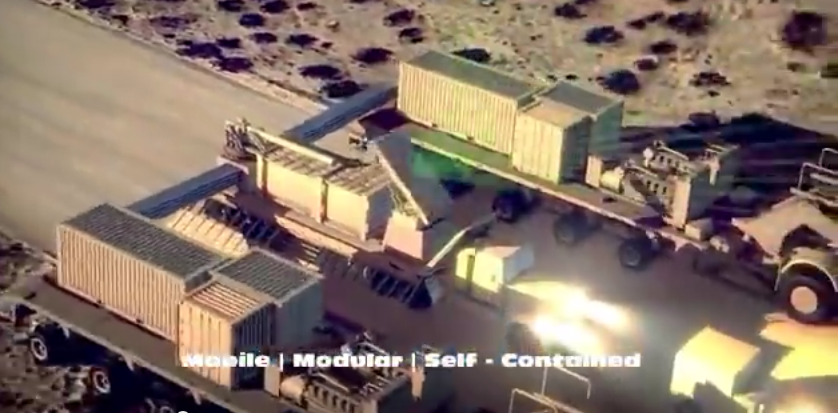
Pentagon looking at integrating anti-missiles, lasers and railguns against expected future missile filled battlefield

user posted image

user posted image

user posted image

QUOTE
The Pentagon has been authorized to create “the true and complete integration of air and missile defense” and on “left-of-launch and non-kinetic means of defense.”

They will be coordinating — a much wider range of tools than just traditional Patriot-style interceptors. Lasers are literally the flashiest example here, but there’s also room for rail guns; “non-kinetic” means such as cyber and electronic warfare; and even missile strikes of our own to destroy the enemy missiles before they’re fired, what’s known as “left of launch.”

Ballistic and cruise missiles aren’t the only problem. Adding precision guidance to artillery rockets, cannon shells, or even mortar rounds makes these traditional military tools much more dangerous. There’s also the proliferation of armed drones, which are effectively slower-moving, reusable cruise missiles.

“The full spectrum from smart artillery to UAVs to cruise missiles to maneuvering reentry vehicles of various kinds and anti-ship cruise missiles, anti-ship ballistic missiles, [and] hypersonics… it’s a unified problem set,” said Karako. You can’t just try to stop one and forget about the others, he warned. “For an integrated air and defense program, you have to be doing a lot of things simultaneously.”

There are targets to develop boost phase anti-missile technology by 2022 to 2025.


http://nextbigfuture.com/2015/05/pentagon-...ating-anti.html
BorneoAlliance
post May 29 2015, 07:06 AM

New Member
*
Newbie
0 posts

Joined: Dec 2014

Radar displays for Thai air force get upgrade from Cambridge Pixel

user posted image

BANGKOK, Thailand. Cambridge Pixel was selected by engineers at the Royal Thai air force (RTAF) headquarters at Don Muang Airbase, Bangkok, Thailand to upgrade its radar display technology and air defense processing at several strategic sites across their country -- such as air force bases and training facilities -- without replacing the existing and expensive radar sensors.

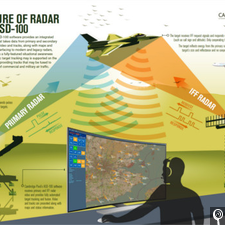
A key requirement from RTAF was use commercial-off-the-shelf (COTS) products to reduce long-term maintenance costs while adding new tracking, safety, and display features such as delivering improved target tracking from both the primary and identification friend or foe (IFF) sensors, track fusion, safety alerts, and then presentation of the integrated data on a large, clear plan position indicator (PPI) display on top of user-selectable maps.

“We were very pleased with Cambridge Pixel," says RTAF Group Captain Thouchpong. "Their engineers understood what we needed and provided excellent support during the installation and deployment of the first two sites at Udon Thani and Nakhon Pathom. We now have an upgraded capability based on COTS products, which promises reduced long-term maintenance costs. We are looking forward to continuing the collaboration by upgrading the air defense systems at our other airbase facilities.”

Cambridge Pixel engineers delivered its radar processing and tracking products which interface to the current primary and secondary IFF radars to enable upgraded target tracking from the primary and IFF sensors and fusion into a single track source. The display is managed by Cambridge Pixel’s ASD-100 air situation display software, which enables an integrated display picture of primary and secondary video and tracks that are then overlaid on maps. The software runs on standard PC hardware, which reduces system maintenance costs.

Cambridge Pixel’s hardware-agnostic SPx suite of software libraries and applications are used in radar visualization, radar video distribution, plot extraction, target tracking, and fusion. The company’s ASD-100 air situation display gives operators an integrated picture of everything in the skies -- military or commercial air traffic, friend or foe. This application can then interface to a variety of different ASTERIX data inputs such as CAT-240 (radar video), CAT-48 (track reports) and CAT-4 (safety alert messages). Safety alerts such as short term conflict alerts, area proximity warnings, and minimum safety altitude warnings may be sent to the ASD-100 display using the company’s SPx SafetyNet server application.

http://mil-embedded.com/news/radar-display...mbridge-pixel/#
BorneoAlliance
post May 29 2015, 07:19 AM

New Member
*
Newbie
0 posts

Joined: Dec 2014

X-Ray Vision? DARPA Wants US Troops to See Through Walls

user posted image

To hear the Pentagon tell it, traditional, everyday vision sounds like a bit of a drag.

"Conventional optic imaging systems today largely limit themselves to…providing two-dimensional renderings of three-dimensional scenes…" reads an announcement from the Defense Advanced Research Projects Agency (DARPA), released last Friday.

In other words, any photo you see, any video, is only a 2D representation of what’s directly in front of the lens. That’s because conventional optics only measure light intensity.

But DARPA is interested in tapping into other aspects of photons, the elementary particles of light, which carry vast amounts of information that are simply not measured by the human eye or traditional photographic equipment.

"Many photons traverse complex paths punctuated by multiple bounces prior to entering the aperture of a camera or other imager – a process through which these photons pick up information about their surroundings," the announcement reads.

Launching the Revolutionary Enhancement of Visibility by Exploiting Active Light-fields (REVEAL) project, DARPA hopes to unlock the hidden potential of photons, and the Pentagon is currently soliciting research proposals for how to develop the technology.

The idea, essentially, is to utilize a single vantage point to create a 3D image of the area. By taking in extra data collected from the photons, that vantage point would be able to essentially see through objects.

The project is still in the very early stages of development, and as such, DARPA is a little light on details. The specific hardware — for example, whether or not we’re talking about specially worn goggles — is not known at this time. But the applications could be revolutionary.

"Imagine, for example, squad members patrolling a street in a deployed urban environment, and an armed assailant crouching behind a car or a concrete barrier," the announcement reads. "Without the benefit of different vantage points (from the air, for example), the squad could be blind to the hidden threat.

"By exploiting currently untapped aspects of light and the varied paths of photons bouncing off the brick wall, troops using hardware based on the theoretical foundations provided by REVEAL might someday be able to detect the otherwise hidden assailant."

Based on the photon data, REVEAL could also identify radioactive, biological, or chemical threats.

The project is currently divided into two 24-month segments, with the first testing scene reconstruction in a controlled environment, and the second taking the concept out into realistic light conditions. So, assuming it even works, it’s still a long way off.

But if everything goes according to plan, as DARPA program manager Predrag Milojkovic points out, it could allow individuals to “fly” through a scene without changing their physical location.

http://sputniknews.com/science/20150528/1022680794.html
BorneoAlliance
post May 30 2015, 08:45 AM

New Member
*
Newbie
0 posts

Joined: Dec 2014

US to Arm China’s Pacific Neighbors to Counter Beijing’s Growing Influence

user posted image

The Senate Armed Services Committee (SASC) has added a "China Sea Initiative" to the 2016 defense bill. The legislation was drafted, in part, to address China’s ongoing construction of artificial islands in the South China Sea as a part of its ambitious land-reclamation campaign.

SASC Chairman Senator John McCain inserted the initiative to offer support – in the form of training and weapons – to allied countries like Indonesia, Malaysia, the Philippines, Thailand and Vietnam.

The new directive is designed "to provide assistance to national military or other security forces of such countries that have among their functional responsibilities maritime security missions."

If adopted, the provision will free up $425 million over the next five years – including $50 million in 2016.

In the past year, China has added more than 1,500 acres of new artificial territory to its island areas in the South China Sea, Pentagon officials said.

The new provision was accompanied by a letter from lawmakers to Defense Secretary Ashton Carter, listing their concerns about China’s behavior in the South China Sea and asking Carter to strengthen the US military's response.

Among other things, the letter argues that China should not be invited to participate in the upcoming 2016 Rim of the Pacific multi-national military exercise slated to take place in Hawaii.

"Given China's behavior in the past year alone, including its disregard for the interests of our allies, international law and established norms, we do not believe Beijing should have been invited to this prestigious U.S.-led military exercise in 2016," the letter reads.

The letter also called out the fact that China brought an intelligence-gathering ship to the most recent Rim of the Pacific exercise in 2014 – a move which drew criticism at the time.

While lawmakers said it is important to sustain a military-to-military relationship with China, they urge Carter to do more to challenge Beijing's coercive and “bullying” behavior throughout the region.

While speaking to reporters during a recent trip through in the Asia-Pacific region, Carter said China's actions are inspiring cooperation among other countries in the area, adding that the situation calls for greater US involvement.

"The reason that the United States and everyone else in the region has a stake in this, is because it gets to the question of freedom of navigation, freedom of the seas, freedom from coercion, abiding by peaceful and lawful processes, and that is, again, a longstanding US position, as it freedom of flying, freedom to sail," Carter said.

http://sputniknews.com/us/20150529/1022730493.html
BorneoAlliance
post May 30 2015, 08:49 AM

New Member
*
Newbie
0 posts

Joined: Dec 2014

Weapons sent to Hainan for potential S China Sea conflict

user posted image

The Chinese J-10 fighter at Hainan's Xiuying port. (Internet photo)

After several confrontations with US warships and aircraft in the South China Sea, the People's Liberation Army decided to demonstrate several of its most advanced weapon systems to the people living on Hainan island, which is located close to China, but still in the South China Sea, reported state-run Xinhua News Agency on May 28.

The weapons demonstrated at Haikou's Xiuying port included the J-10 fighter, WZ-10 gunship, Type 63A amphibious light tank, anti-tank missile vehicle and armoured command vehicle. Because Hainan is very likely to become the primary PLA base for operations if China enters a conflict in the South China Sea, Beijing wants to prepare the civilians of the island for military conflict through exhibiting those weapon systems, according to the Xinhua.

The USS Fort Worth, a US Navy Freedom-class littoral combat ship, was chased by the Yancheng, a Chinese Type 054A guided-missile frigate, earlier this month in waters closed to the Spratly islands on May 11. After that, a US Navy P-8 patrol plane was warned eight times by the PLA Navy while conducting a reconnaissance flight over Fiery Cross Reef to monitor Chinese land reclamations in the region on May 20.

Chinese nationalist tabloid, the Global Times, said that China is ready for a war if the United States or other nations claiming the Spratly islands continue to demand the nation to give up its land reclamation activities. The central government said that for China, this is its bottom line, and no country, not even the United States can stop it from doing so. The weapons systems shown in Hainan could thus be considered a political move for China to demonstrate its preparations for a final military confronation.

http://www.wantchinatimes.com/news-subclas...=20150529000012
BorneoAlliance
post May 30 2015, 08:53 AM

New Member
*
Newbie
0 posts

Joined: Dec 2014

New camp opens for China's peacekeeping unit in South Sudan

user posted image

(Photo/CRIENGLISH.COM)

China's first peacekeeping mission involving combat-ready troops has been deployed to South Sudan. It has held an inauguration ceremony for its headquarters in the capital Juba. This is the first time China has sent peacekeeping infantry to any task zone since it first took part in peacekeeping operations in 1990.

The new base for the first ever Chinese infantry battalion sent abroad for a UN peacekeeping mission will be home to 700 troops and 350 engineers, medical and other non-combat personnel while they serve in South Sudan, a country deep in crisis since December 2013.

China's ambassador to South Sudan and the Special Representative of the UN Secretary-General for South Sudan, joined the troops for the base's opening ceremony.

"This is the first time China has sent peacekeeping infantry troops to Africa, which shows that China has participated in the African peace and security affairs constructively and that China's peacekeeping task in South Sudan has entered a new period," said Chinese ambassador to South Sudan Ma Qiang.

"I am pleased to note that the first ever Chinese infantry battalion in the history of UN peacekeeping which is 700 men and women strong was deployed to south Sudan and part of them are standing in front of us. No doubt in recognition of the very big challenges faced by this country," said Head of UN Mission in South Sudan Ellen Margrethe Loej.

Chinese peacekeepers are in charge of five out of 11 responsibility zones in Juba.

Every two hours, a patrol team with contact commanders and medics is deployed to maintain safety in 20 streets in the city.

Unlike China's previous peacekeeping support missions, this unit is allowed to fight.

"This peacekeeping infantry battalion will conduct more missions, such as protecting civilians and UN organs and staff, guarding, patrolling, defending and escorting," said Yang Li, instructor of Chinese Peacekeeping Infantry Battalion.

With the long-term interests of the South Sudanese people and regional peace and stability at stake, China has reiterated many times that the conflict cannot be resolved militarily.

The world's newest state, which declared independence from Sudan in January 2011, was plunged into civil war less than two years later. Thousands have died since then, and nearly 2 million people have fled their homes.

http://www.ecns.cn/military/2015/05-29/167354.shtml
BorneoAlliance
post May 30 2015, 06:33 PM

New Member
*
Newbie
0 posts

Joined: Dec 2014

US military tests a Tinker Bell-sized drone

user posted image

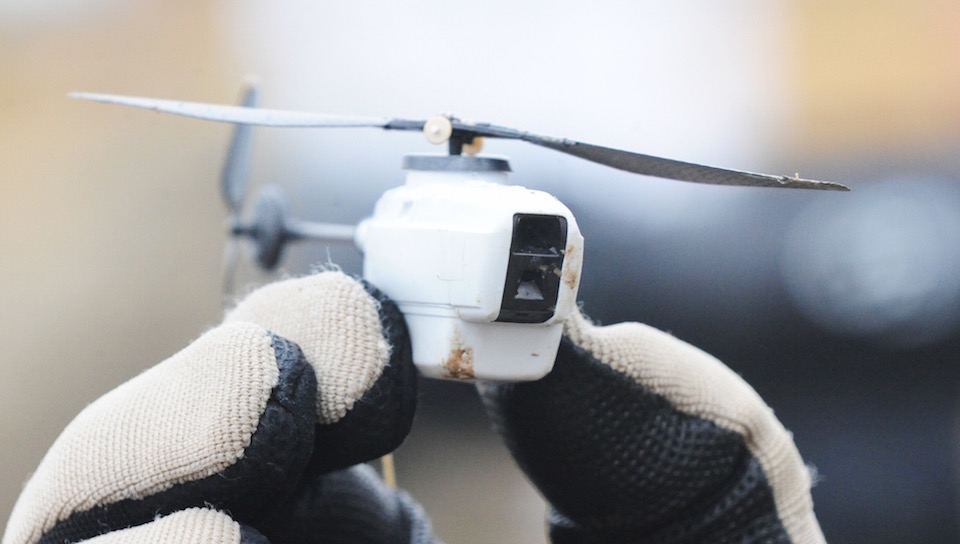
There's no standard set for the shape or form of drones, and the Army plans to use that to its advantage. Here's where the Black Hornet Nano comes in. This micro drone, designed by Norway-based firm Prox Dynamics, is small enough to fit in the palm of your hand, measuring in at a mere 4 x 1 inches and weighing only around 0.04 lbs. What's more, the PD-100 UAV features regular as well as thermal cameras and has a range of roughly 0.6 miles -- in other words, it's perfect for those missions that require stealth surveillance.

According to Defense One, the US Army has "a handful" of these drones in its possession, which it began testing back in March. That said, the tiny, $40,000 Black Hornet Nano has been part of the British military's arsenal since 2013, so the US is a slightly behind on adopting the device.


http://www.engadget.com/2015/05/29/us-military-micro-drone/
BorneoAlliance
post May 30 2015, 06:41 PM

New Member
*
Newbie
0 posts

Joined: Dec 2014

Islamic State Benefits From Iraqi Military’s Incompetence — Shows Off Massive War Spoils From Plundering Iraqi Towns

user posted image

Over the course of the past year, it was reported that Barack Obama’s plan to train the Iraqi Military to take on Islamic terrorism was a gigantic failure. According to previous reports by the Inquisitr, the incompetence of the Iraqi military is so bad, the Secretary of Defense, Ashton Carter, even blasted them. Just to show you how bad the Iraqi military is, on June 28, 2014, they moved into the city of Tikrit to take it back from terrorist country. The next day, not only did they retreat, but nurses were also kidnapped.

Now the incompetence of the Iraqi military has been beneficial for the Islamic State yet again. Reports now show the Islamic terrorist group are gloating their massive war haul from plundering Iraqi villages, especially around Fallujah. From what is shown, it is not good news for Iraq at all.

According to Daily Mail, the images released online by the Islamic State were war spoils following their slaughter of towns which lie near the Iraqi city of Fallujah. The images show a supply of military-grade weaponry and vehicles. There were also multiple images of guns and ammunition scattered across the floor of what seemed to be a warehouse. It is evidently clear the pictures were taken to emphasize the Islamic State’s arsenal, showing the world how much firepower they have at their disposal.

To be fair, the Iraqi military is only as bad as the leadership responsible for them. In a follow-up by The Blaze, Iraqi Prime Minister Haider al-Abadi made a statement that it was probably a mistake to not guard the boarder against the Islamic State more vigilantly.

“Not controlling Syria-Iraq border more closely was an error. Syria is in chaos which made IS [Islamic State] become stronger.”

Despite the fact the Iraqi military is proving to be a complete and utter failure, Barack Obama still has the U.S. over there training and equipping the Iraqi military’s soldiers. Since the training initiated back in 2011, the Iraqi military should be well-trained to take on terrorism just like the American military can. Instead, Iraq is gaining a militia that lacks any backbone while all the supplies the United States is providing them ends up in the hands of the Islamic State.

http://www.inquisitr.com/2129886/islamic-s...ive-war-spoils/
BorneoAlliance
post May 30 2015, 07:33 PM

New Member
*
Newbie
0 posts

Joined: Dec 2014

Nimrod cuts 'have allowed Russian submarines to spy on Trident' - Telegraph

user posted image

Russian submarines are likely to have gathered valuable intelligence on Britain’s nuclear deterrent since the Government scrapped maritime patrol aircraft needed to track them, senior RAF figures warn.

Britain’s lack of submarine-hunting planes after the Nimrod fleet was axed has left Trident vulnerable to Russian spying which could “prejudice the security and effectiveness” of the deterrent, they argue.

In a letter to the Telegraph they also warn that unless new patrol aircraft are bought urgently, the Royal Navy’s new £6 billion aircraft carriers will be “put severely at risk”.

The letter from five retired senior officers with significant maritime aviation experience comes as the Government begins a new defence review.

Many in the Armed Forces fear a repeat of 2010’s cuts. George Osborne, the Chancellor, has told Government departments he needs to find 5 per cent cuts across Whitehall. Defence sources said the MoD has been told to find around £1 billion in savings.

The scrapping of the troubled Nimrod jets after the last defence review is considered by many defence experts to have left a damaging gaps in Britain’s military power.

The letter signed by Air Mshl Sir John Harris, AVM George Chesworth, AVM David Emmerson, AVM Andrew Roberts and Air Cdre Andrew Neal says it is now “widely recognised” Britain urgently needs new maritime patrol aircraft.

A Nimrod lies in pieces in 2011 after demolition work began on the aircraft at BAE Systems Woodford airfield in Cheshire (BBC)

“With so few naval escorts available, this will be vital if future aircraft carriers are not to be put severely at risk,” they write.

“We know that Russian submarines are monitoring the area from which our nuclear missile submarines emerge from the Clyde. Without maritime patrol aircraft surveillance, opportunities for intelligence-gathering by such ‘intruders’ can only prejudice the security and effectiveness of our strategic deterrent.

“Indeed, it would be surprising if valuable intelligence had not already been acquired by the Russian Navy since the Nimrod force was grounded in March 2010.”

The Nimrod spy planes had been mainstays of the RAF's reconnaissance fleet since the late 1960s and had a central role in anti-submarine warfare. A new updated fleet, running nine years late and £800 million over budget, was scrapped just before they were due to enter service, as part of drastic defence cuts five years ago.

Britain has since then been forced to rely on its allies. When a suspected Russian submarine was spotted off the Scottish coast in November, four patrol aircraft from Canada, France and the US were scrambled to RAF Lossiemouth and spent weeks scouring the area.

In 2010, senior Navy officers said a specially upgraded Russian Akula class submarine had been caught trying to record the acoustic signature made by the Vanguard submarines that carry Trident nuclear missiles.

RAF crew have been posted to allied navies including the US to keep their submarine-hunting skills sharp, but unless Britain buys new aircraft soon all the UK’s expertise will be lost, the letter argues.

The gap also means the UK is no longer able to meet its international long-range search and rescue obligations.

In the event of an airline disaster, such as the loss of Malaysia Airlines MH370, close to the UK, the country is not equipped to search for wreckage or survivors.

British Navy personnel stand atop the Trident Nuclear Submarine, HMS Victorious, on patrol off the west coast of Scotland (AFP)

Special forces operations against shipping are also being hampered by the lack of intelligence and surveillance patrol aircraft can bring, sources said.

Julian Lewis, a Conservative MP running for chair of the Commons defence committee, said: “From the outset, the government have acknowledged that this is a serious gap in our defences, but have promised it would only be temporary.

“With the serve chill in East-West relations, the time has come to close that gap without further delay.”

An MoD spokeswoman said Britain could still carry out maritime surveillance with a mixture of warships, submarines, helicopters and other spy planes.

She said: "We continue to assess future requirements and options ahead of a decision in the ongoing full strategic defence and security review.”

http://www.telegraph.co.uk/news/uknews/def...on-Trident.html

25 Pages  1 2 3 > » 
Bump Topic Topic ClosedOptions New Topic
 

Change to:
| Lo-Fi Version
0.0515sec    0.60    7 queries    GZIP Disabled
Time is now: 9th December 2025 - 11:23 PM