Welcome Guest ( Log In | Register )

Bump Topic Topic Closed RSS Feed
25 Pages < 1 2 3 4 > » Bottom

Outline · [ Standard ] · Linear+

> Military Thread V17

views
     
BorneoAlliance
post May 30 2015, 07:39 PM

New Member
*
Newbie
0 posts

Joined: Dec 2014

Lightweight High-Energy Liquid Laser (HELLADS) prepared for live fire tests

user posted image

HELLADS is primarily intended as an air-to-ground laser weapon (Credit: DARPA)

A high-power laser weapon light enough to be carried by tactical aircraft has moved out of the laboratory and onto the testing ground. General Atomics Aeronautical Systems' High-Energy Liquid Laser Defense System (HELLADS) has finished its US Government Acceptance Test Procedure and is on its way to the White Sands Missile Range in New Mexico for live-fire tests.

Laser weapons have made great strides in recent years, but one of the most sought after goals has been to marry high power to light weight so the system can be installed in aircraft and other very mobile platforms. The result of a DARPA program, the all-electric HELLADS punches a 150 kW laser, yet is only a tenth the size and weight of comparable systems.

DARPA's brief for HELLADS was for a high-powered air-to-ground laser that could be installed in a tactical aircraft. It had to weigh under 5 kg (11 lb) per kW, and have a volume of 3 cubic meters (105 cubic ft). According to General Atomics, this required the development of second- and third-generation laser systems based on specialized laser materials and optics, as wells as improved manufacturing methods.

The result is an all-electric 150-kW laser weighing under 2,000 lb (907 kg). General Atomics says that this is the world record for the highest laser output power of any electrically-powered laser, yet has notably low power consumption, and required the creation of the world’s highest brightness laser diodes, a compact battery storage system, and thermal storage systems.

For the White Sands tests, HELLADS will be in a ground-based configuration and set against military targets for Counter-Rocket, Artillery, and Mortar (CRAM), and counter-air and counter-missile roles. If the system demonstrates the needed beam quality, laser power, efficiency, size, and weight, it will go on for further development. General Atomics says that when deployed, HELLADS could be installed not only in aircraft, but in patrol ships and armored combat vehicles.

“HELLADS represents a new generation of tactical weapon systems with the potential to revolutionize sovereign defenses and provide a significant tactical advantage to our warfighters,” said Linden Blue, CEO of General Atomics. “It is remarkable to see high-power laser technology mature into an extremely compact weapons system and be deployed for field tests. It will be even more remarkable to witness the impact that this will have on U.S. Defense capability.”

http://www.gizmag.com/lightweight-high-ene...re-tests/37742/
BorneoAlliance
post May 30 2015, 07:44 PM

New Member
*
Newbie
0 posts

Joined: Dec 2014

WHAT MIGHT A KILLERBOT ARMS RACE LOOK LIKE?

user posted image

QUOTE
When they appear on the horizon, the robots to coming kill you won't necessarily look like warplanes. That's limited, human-centric thinking, says Stuart Russell, a computer scientist at the University of California at Berkeley, and it only applies to today's unmanned weapons. Predator and Reaper drones were built with remote pilots and traditional flight mechanics in mind, and armed with the typical weapons of air war--powerful missiles, as useful for destroying buildings and vehicles as personnel. Tomorrow's nimbler, self-piloted armed bots won't simply be updated tools for old-fashioned air strikes. They'll be vectors for slaughter.

More likely, the lethal autonomous weapons systems (LAWS) to come will show up in a cloud of thousands or more. Each robot will be small, cheap, and lightly armed, packing the bare minimum to end a single life at a time. Predicting the exact nature of these weapons is as macabre as it is speculative, but to illustrate how we should adjust our thinking on the subject of deploying autonomous robots on the battlefield, Russell offers two hypotheticals. “It would perhaps be able to fire miniature projectiles, just powerful enough to shoot someone through their eyeball,” he says. “It would be pretty easy to do that from 30 or 40 meters away.

Or it could put a shaped charge directly on a person's cranium. One gram of explosives is enough to blow a hole in sheet metal. That would probably be more than enough.”
Russell's prediction is one of focused, efficient lethality. But to anthropomorphize this assault cloud, imagining it as a swarm of tiny, flying snipers or grenadiers, is another mistake. Russell estimates that, with enough iteration and innovation, the systems developed in a LAWS arms race could eventually be as cheap as $10 apiece.

They would be closer to a plague of guided munitions than an automated fighting force, leaving a locust-like trail of inert, disposable components alongside their victims. Unleashing such a weapon on a city, with orders to kill anyone holding a weapon-like object, or simply every male within a given age group, would be too cheap, and too effective to resist. “No matter where this sort of arms race ends up, it becomes clear that humans don't stand a chance.”


http://www.popsci.com/what-would-killerbot-arms-race-look
BorneoAlliance
post May 31 2015, 10:43 AM

New Member
*
Newbie
0 posts

Joined: Dec 2014

Russia to Take Part in South China Sea Naval Exercises

user posted image

Russia will conduct naval exercises in the South China Sea in 2016, together with its partners in the Asia Pacific Region, Russian Deputy Defense Minister Anatoly Antonov said at a defense summit in Singapore on Saturday.

Speaking at the Shangri-La Dialogue summit of defense ministers, Antonov said that Russia is increasingly concerned for its security, citing US missile shield deployments, terrorism and "color revolutions." Russia will also conduct its first-ever exercises together with Brunei in 2016.

"We are concerned by US policies in the region, especially since every day it becomes increasingly focused on a systemic containment of Russia and China," Antonov said.

US Ramping Up 'Containment'

Antonov also said that US policies in the region are increasingly aimed against China and Russia, and that US missile destroyers pose a threat to stability in the region.

"Despite our concerns about the US global missile defense architecture, they continue a policy of disrupting strategic stability, adding a regional segment of an anti-missile 'shield' in the Asia-Pacific," Antonov said.

Antonov also cited Vietnam as a recent example of US pressure, where the country was forced to prohibit the maintenance of long-range Russian aircraft in Vietnamese airports.

"The objective is to reduce the possibility of using foreign airfields and ports by the Russian Navy and Air Force," he added.

Spread of Terrorism

Antonov said that terrorism is turning into a threatening force in several countries around the world and has become a threat t the Asia-Pacific Region alongside piracy, cyber-crime and drug trafficking.

"It is worrying that terrorists in several countries are turning into a real force and are aspiring to come to power in some states," Antonov said.

Antonov added that the Taliban movement remains a problem which the international coalition in Afghanistan failed to defeat.

"According to some data, there are around 50,000 fighters in Afghanistan. In the country itself, as well as border territories there is a network of terrorist training camps, including for suicide bombers," Antonov added.

Political Concerns

Western-organized "color revolutions" could come to the Asia-Pacific region at any time under the guise of introducing "democratic" values, Antonov told the forum.

"An epidemic of 'color revolutions' swept up the Middle East and, like a hurricane, wiped out several states in the region. This disease went across several European countries, where events are freely controlled from the outside," Antonov said.

Antonov brought up the example of Ukraine as a case where the results of such a "color revolution" have impacted Russia's interests, as millions of Russians live in Ukraine.

"As a result of the unconstitutional coup, the country is plunged into a civil war, and the supporters of the 'war party' continue pushing the state to military adventures. At the same time there is a real humanitarian catastrophe. Over 6,000 people have already been killed," Antonov said.

Also at the summit, Russia expressed interest in developing closer cooperation with Israel, as well as developing pacts to ban military exercises near its borders with North Korea and Japan.

http://sputniknews.com/asia/20150530/1022753332.html
BorneoAlliance
post May 31 2015, 10:54 AM

New Member
*
Newbie
0 posts

Joined: Dec 2014

NSA's Stuxnet-Inspired Attack On North Korea Foiled By Pyongyang's Isolation

user posted image

Even the most powerful cybersoldiers in the world can't hack a country that doesn't have the Internet. The United States learned that the hard way five years ago when the National Security Agency tried and failed to launch a computer virus against North Korea with the ultimate aim of infecting the isolated nation's nuclear weapons technology.

The NSA has long been credited with launching the Stuxnet virus against Iranian nuclear centrifuges in 2009 and 2010. By successfully exploiting a flaw in the Microsoft Windows operating system Stuxnet became what's believed to be the first computer worm that resulted in real-world damages (it destroyed 1,000 or so centrifuges and set Iranian nuclear production back by a number of years). A Reuters report revealed for the first time Friday Iran wasn't the only target, and the NSA deployed a Stuxnet variant against North Korea without achieving the same success.

That's because, unlike Iran, North Korea's population of 25 million is almost completely offline. The so-called hermit kingdom has earned its nickname, with only 1,024 official Internet protocol addresses though the New York Times reported “the actual number may be a little higher.” Such a limited number means the NSA had far fewer ways to introduce malicious software onto computer systems at North Korea's Yongbyon Nuclear Research Center.

North Korea and Iran, which share military technology, are known to have obtained its nuclear centrifuges -- pieces of equipment that enrich particles by spinning them at an accelerated speed -- from A.Q. Khan, a Pakistani scientist who developed his own country's weapons. The centrifuges were operated with data systems from Siemens, which relied on Windows. By tweaking the code used in Stuxnet, an intelligence source told Reuters, the NSA easily could have deployed malware that was activated when translated into the Korean language.

The Reuters report came almost six months after the FBI blamed North Korea for the hack on Sony, which canceled the theatrical release of “The Interview” and prompted international concern over corporate cybersecurity.

While Internet security experts have questioned whether Pyongyang was in fact responsible, the U.S. is almost certainly behind a retaliatory attack that knocked North Korea's Internet offline in December. Unlike a Stuxnet-like malware attack, though, it was a distributed denial of service hack, which involves flooding a system with an overwhelming level of Web traffic, that knocked Pyongyang offline.

http://www.ibtimes.com/nsas-stuxnet-inspir...olation-1945277
BorneoAlliance
post May 31 2015, 11:02 AM

New Member
*
Newbie
0 posts

Joined: Dec 2014

China — A Staunch Proponent of Peace and Stability in the South China Sea
By Liu Zhenmin Source:Globaltimes.cn Published: 2015-5-30 16:46:34

In recent weeks, some outsiders, in disregard of historical evidence, principles of international law and facts and in an attempt to ratchet up tensions in the South China Sea, have been engaging in large-scale hyping-up of the South China Sea issue, and singing in chorus with certain claimants. China is seriously concerned about this.

China has indisputable sovereignty over the Nansha Islands and their adjacent waters. Consistently upheld by successive Chinese governments, China's sovereignty and rights and interests in the South China Sea were established over a long course of history and have ample historical and legal basis. There is no need to have them strengthened through construction activities on relevant islands and reefs.

Beginning in the 1970s, some other countries claimed sovereignty over islands and reefs of China's Nansha Islands and illegally occupied dozens of them, hence the territorial disputes. Furthermore, with the establishment of the modern law of the sea regime came the issue of overlapping maritime jurisdictions. The Chinese government firmly opposes illegal occupations of China's territory. Yet in the larger interest of peace and stability in the South China Sea, we have exercised enormous restraint and remained committed to settling territorial disputes and overlapping maritime claims through direct negotiation and consultation with the countries concerned.

A certain country made close-in maneuvers around China's Nansha islands and reefs, and claimed to conduct "joint patrols" with other countries. This can by no means be explained away as an exercise of freedom of navigation or overflight, but is rather a crude act of muscle flexing that threatens to heighten militarization of the South China Sea. This would be utterly irresponsible and dangerous. Over the years, there has never been any issue with freedom of navigation in the South China Sea, nor would such an issue come up in the future. The South China Sea provides major shipping lanes for China's trade and imports of energy. To ensure the freedom and safety of navigation in the South China Sea is of vital importance to China. The Chinese government has been a strong advocate for safeguarding freedom of navigation by all countries in the South China Sea in accordance with international law. And China is actively engaged in regional cooperation on maritime security. Having said that, the right to freedom of navigation and overflight should not be abused or infringe on the sovereignty, rights and security of the littoral states, which are protected by international law.

China's construction activities on the Nansha islands and reefs are entirely within her sovereignty. It is lawful, justified, and reasonable. It does not affect or target any particular country. Such construction activities are aimed to strengthen the functions of some islands and reefs in providing multiple and integrated services. Besides meeting necessary defense needs, it is more geared to serve civilian purposes. Rather than affecting freedom of navigation, it will only contribute to joint responses to maritime challenges and to safety of navigation in the South China Sea. The recently started construction of two multi-functional lighthouses on Huayang Reef and Chigua Reef, for example, is for the purpose of providing effective aids for navigation for vessels from all countries passing through those waters and better ensuring navigation safety and freedom.

Meanwhile, certain countries have been questioning the pace and scale of China's construction activities. What needs to be pointed out is that China is a big country that shoulders more international responsibilities and obligations. China is conducting construction activities at a pace and with a scale as befitted her international responsibilities and obligations in the field of search and rescue, disaster prevention and mitigation, meteorological observation, ecological conservation, navigation safety and fishery services. China should not simply be blamed for the pace and scale of her construction activities, because this might indicate that the construction activities by other countries on their illegally-occupied islands and reefs of China's Nansha Islands are beyond reproach.

China and ASEAN countries have been making joint efforts to deepen friendly and cooperative relations in all areas and build a community of common destiny. We identified a "dual track" approach on the South China Sea issue, i.e. relevant disputes should be resolved through negotiation and consultation between parties directly concerned, and China and ASEAN member states should work together to maintain peace and stability in the South China Sea. Thanks to common efforts by China and ASEAN countries, positive progress has been made in the consultation on a Code of Conduct in the South China Sea (COC). They reached agreement on "early harvest" measures, and resolve to take forward COC consultations through enhancing mutual trust and cooperation. However, relevant outsiders tried to set a timetable for the COC consultation. Yet, given the complexity of the South China Sea issue, the formulation of the COC will be a step-by-step process. Moreover, the COC is meant to be a set of rules for China and countries in this region rather than rules set by outsiders for us. The efforts made by China and ASEAN countries in this regard deserve more respect.

China's policy for the South China Sea is clear and consistent. We remain committed to maintaining peace and stability in the South China Sea and resolving disputes through negotiation and consultation. We support strengthening mechanisms and rules governing the South China Sea issue, including the full and effective implementation of the Declaration on the Conduct of Parties in the South China Sea (DOC) and the formulation of the COC, as effective means to manage disputes. And we consistently stand for joint development and maritime cooperation as win-win arrangements pending the final resolution of the issue.

China firmly upholds her sovereignty and maritime rights and interests, and is opposed to any words or actions that encroach on China's sovereignty and legitimate rights and interests or affect regional peace and stability. Countries not directly concerned on the South China Sea disputes should speak and act with caution on this issue, faithfully observe their commitment of not taking positions on sovereignty disputes, and respect the efforts by countries in the region to maintain peace and stability in the South China Sea. Going in another direction would be less than responsible.

The author is Vice Minister of Foreign Affairs of the People's Republic of China

http://www.globaltimes.cn/content/924468.shtml
BorneoAlliance
post May 31 2015, 10:09 PM

New Member
*
Newbie
0 posts

Joined: Dec 2014

Moscow accuses American warship of 'acting aggressively'

user posted image

Russia has scrambled military jets in response to an American navy destroyer which, it has been reported in Russian media, was acting “aggressively” in the Black Sea.

The Russian defence minister, speaking at a security summit in Singapore, said US missile ships operating near Moscow’s territorial waters “pose a danger to strategic stability” between the two countries.

State news service RIA Novosti quoted a military source as saying the USS Ross was sighted heading straight for Russian waters after leaving the Romanian port of Costanta on Saturday.

“The crew of the ship acted provocatively and aggressively, which concerned the operators of monitoring stations and ships of the Black Sea Fleet,” RIA reported.

Which countries have nuclear weapons?

“Scrambled Su-24 attack aircraft demonstrated a readiness to forcibly prevent border violations and defend the interests of the country,” the source was quoted as saying.

In a statement, the Pentagon’s spokeswoman Eileen Lainez confirmed the incident but said that the USS Ross had been “well within international waters at all times, performing routine operations”.

“The US Navy operates routinely in the Black Sea, in accordance with international law," Lainez said, adding that the ship’s deployment to the region had been publicly announced.

Sputnik News, Russia’s state service for international news, quoted a military source as suggesting the US ship had turned away following the incident, and boasting: “It seems that the Americans did not forget the April 2014 incident when one Su-24 actually shut down all equipment on the new USS Donald Cook American destroyer with anti-missile system elements.”

The clash is the latest example of military encounters between Russia and Western militaries, as tensions continue over the Ukraine crisis.

Earlier in May, both Britain and Sweden said they had scrambled fighters to intercept Russian bombers near their territory. Last month, the US said it was filing a complaint to Russia over a its “sloppy” and unsafe interception of a US reconnaissance plane in international airspace over the Baltic Sea.

http://www.independent.co.uk/news/world/eu...y-10287303.html
BorneoAlliance
post Jun 1 2015, 12:32 PM

New Member
*
Newbie
0 posts

Joined: Dec 2014

Russia's New Armata Tank Can Be Upgraded to Robot - Official

user posted image

Russia's New Armata Tank Can Be Upgraded to Robot - Official

MOSCOW (Sputnik) — Earlier on Sunday, Russian media cited an interview with a deputy general director of Uralvagonzavod, the Armata's manufacturer, who said that the tank could be fitted with remote control to become a robot.

"It was provided for from the beginning," Rogozin said via his Twitter account referring to earlier reports of possible upgrades to Russia’s new main battle tank.

Vyacheslav Khalitov also said that Armata could serve in the Russian Armed Forces until the end of the century.

The Russian Defense Ministry unveiled its new Armata tank at the Victory Day military parade in Moscow on May 9.

The tank is operated by a crew of three, housed in an armored capsule at the front. Its main armament includes a 7.62 mm remote-control machine gun and a 125 mm smoothbore cannon.

http://sputniknews.com/military/20150531/1022788084.html
BorneoAlliance
post Jun 1 2015, 04:23 PM

New Member
*
Newbie
0 posts

Joined: Dec 2014

Why China’s Air Force Needs Russia's SU-35

user posted image

QUOTE
Last April, Chinese airplane manufacturer Shenyang Aircraft Corporation surprised military observers by test flying its new J-11D fighter jet, an upgraded version of the J-11, China’s indigenous copy of the Russian Su-27. The D-model J-11 is believed to include such advanced features as an active electronically scanned array (AESA) radar, a relocated infrared search and track (IRST) system, and the expanded use of composite materials to reduce the plane’s weight and radar signature. This first flight indicates that the J-11D is further along in its development cycle than many experts predicted and is poised to provide a new and deadly addition to the growing fighter fleet of the People’s Liberation Army Air Force (PLAAF).

Despite the evident maturity of the J-11D program, the Chinese military nevertheless appears to also be going ahead with plans to purchase Russian Su-35 Flankers. The Su-35 is far more maneuverable than the J-11 – which gives the Russian jet an advantage in short-range dogfights – can fly longer distances, and can take off and land with a larger payload. It is also equipped with new avionics and new cockpit displays. However, its radar is a less advanced passive electronically scanned array (PESA) than the AESA system on the J-11D. Moreover, the aircraft and its systems will be manufactured abroad. The Chinese government views its indigenous defense industry as a strategic asset; purchasing more planes from Russia will not help advance Beijing’s goal of developing a mature, self-reliant aerospace industry. Given the apparent redundancy of moving forward with two very similar aircraft programs, some analysts speculate that the PLAAF’s primary motivation for buying the Su-35 may not be for its value as a weapons system but rather because it is equipped with advanced AL-117S turbofans.


http://thediplomat.com/2015/06/why-chinas-...eeds-the-su-35/
BorneoAlliance
post Jun 1 2015, 04:30 PM

New Member
*
Newbie
0 posts

Joined: Dec 2014

China to hold live fire drills along tense border with Myanmar

user posted image

BEIJING (Reuters) – China’s military will hold land and air live fire drills along a part of the border with Myanmar where shells have fallen during fighting between the Myanmar government and ethnic Chinese rebels, the Defence Ministry said on Monday.

China has been angered by repeated incidents of shells or bombs from the fighting falling in Chinese territory, in which at least five Chinese have died, and thousands of refugees have crossed into China’s southwestern province of Yunnan to escape the clashes.

The Chinese military’s drills will begin on Tuesday, the Defence Ministry said, and take place in two Yunnan counties which lie right next to Myanmar’s Kokang region.

China had informed Myanmar about the drills, it said.

The drills will not affect the normal lives of residents, though they will have to follow instructions on which parts of the county will be off limits, the ministry said, adding that the end of the exercises would be announced later.

Myanmar’s parliament last month extended martial law for three months in the Kokang region.

China has repeatedly demanded that Myanmar take greater steps to prevent fighting from spilling over to its side of the border.

Myanmar government soldiers have been battling rebels who were dug in as close as 500 metres (yards) from the border area, Myanmar’s Information Ministry said in April.

The main rebel group in Kokang is called the Myanmar National Democratic Alliance Army (MNDAA), which is led by ethnic Chinese commander Peng Jiasheng.

The MNDAA was formed from remnants of the Communist Party of Burma, a powerful China-backed guerrilla force that battled the Myanmar government until it splintered in 1989.

The group struck a truce with the government which lasted until 2009, when government troops took over their region in a conflict that pushed tens of thousands of refugees into China’s Yunnan province.

http://www.euronews.com/newswires/3021138-...r-with-myanmar/
BorneoAlliance
post Jun 1 2015, 04:36 PM

New Member
*
Newbie
0 posts

Joined: Dec 2014

North Korea 'could DESTROY London and kill THOUSANDS with devastating cyber attacks'

user posted image

Professor Kim Heung-Kwang, who defected from the regime, said that the country's military hacking unit could pose a "feasible threat to a city".

He said: "The reason North Korea has been harassing other countries is to demonstrate that North Korea has cyber war capacity."

"Their cyber-attacks could have similar impacts as military attacks, killing people and destroying cities."

The country's notorious hacking agency – also known as Bureau 121 – has been linked to a series of cyber-attacks.

Professor Kim taught computer science at Hamheung Computer Technology University, before escaping the country in 2004.

While he did not teach hacking techniques, his former students have gone on to North Korea's notorious bureau.

http://www.express.co.uk/news/world/581023...121-Kim-Jong-un
BorneoAlliance
post Jun 1 2015, 07:23 PM

New Member
*
Newbie
0 posts

Joined: Dec 2014

Men brace for 'beard patrols' in Iraq's IS-held Mosul

user posted image

QUOTE
Baghdad (AFP) - Every time he looks in a mirror, Laith Ahmed is worried. As of Monday, the young Iraqi's hopelessly hairless chin could land him in an Islamic State group jail.

The jihadist group has handed out leaflets in their stronghold of Mosul in recent weeks announcing that full beards become compulsory on June 1 and explaining why shaving is punishable.


http://news.yahoo.com/men-brace-beard-patr...-034937048.html


BorneoAlliance
post Jun 1 2015, 07:45 PM

New Member
*
Newbie
0 posts

Joined: Dec 2014

US to deploy advanced weapons near China

user posted image

US Defense Secretary Ash Carter in a speech on Sunday has unveiled the Pentagon’s plans to deploy advanced weapons, including the newest stealth destroyer, near the borders of China.

The Wall Street Journal has said reported on Sunday that during his visit to Singapore on Sunday, US Defence Secretary Ash Carter named new weapons systems the United States plans to move to Asia as "part of its longer-term rebalance of military assets to the region,"

One of the weapons in the artillery is the military’s newest stealth destroyer, the Zumwalt.

The 610-foot-long Zumwalt is named after the late Admiral Elmo “Bud” Zumwalt Jr. It will have nearly 10 times more available power than its predecessors.

The vessel could become the first ship carrying next-generation weapons like electromagnetic railguns, which use a strong electromagnetic pulse, rather than gunpowder, to shoot projectiles.

Washington is stepping up its pressure on China after Beijing decided to build artificial islands in the South China Sea.

China has warned that coming too close to the islands would be provocative.

Chinese Foreign Ministry spokeswoman Hua Chunying expressed concern over US plans to bolster its military presence in the Asia-Pacific region.

http://www.worldbulletin.net/news/160022/u...pons-near-china
BorneoAlliance
post Jun 2 2015, 03:22 AM

New Member
*
Newbie
0 posts

Joined: Dec 2014

Vietnam Rejects US Demand to Stop 'Land Reclamation' in South China Sea

user posted image

Vietnam rejected US Defense Secretary Ashton Carter's demand to stop land reclamation in the South China Sea, saying the activities were not aimed at expansion.

Carter called for an "an immediate and lasting halt to land reclamation by all claimants" at a security summit in Singapore on Saturday. The United States previously accused China of "manufacturing sovereignty" by reclaiming and consolidating islands in the disputed region.

"We have some activities to enhance and consolidate the islands that are under our sovereignty. We do not expand the islands, we just consolidate to prevent erosion because of waves," Vietnam's Defense Minister Phung Quang Thanh said after talks on Monday.

Vietnam also has soldiers stationed on 21 islands and reefs in the disputed region, according to Thanh. A US military source told Reuters that Carter did not receive an explanation over what Vietnam considers maintenance versus new expansion.

"On the submerged islands, we only built small houses, which can accommodate a few people and we are not expanding. The scope and characteristic of our work is purely civilian," Thanh added.

Carter also pledged $18 million for Vietnam to buy coast guard vessels. The US banned selling arms to Vietnam not related to maritime security or surveillance over what the US considers Vietnam's "human rights" issues.

The two countries also discussed cooperation to clean up residue from Agent Orange, a poisonous defoliating agent the US dispersed over Vietnam during the two countries' 1955-1975 war.

The US use of Agent Orange, since banned by the Geneva Convention, led millions of Vietnamese citizens to suffer from health problems including disabilities and birth defects. Residue from the agent continues to contaminate Vietnam's agricultural lands and pose a threat to nearby residents and the country's food supply.

http://sputniknews.com/asia/20150601/1022807566.html
BorneoAlliance
post Jun 2 2015, 06:16 AM

New Member
*
Newbie
0 posts

Joined: Dec 2014

7 nations reveal naval combat systems requirements

user posted image

Australia

The RAN’S ANZAC upgrade programme has benefited from a series of incremental update packages. One of the most important has involved the fitting of the RIM-162 Evolved Sea Sparrow Missile (ESSM), which offers improved kinematic performance and a significantly expanded engagement envelope.

In addition, under Project SEA 1348 Phase 3A, all 8 ANZAC ships have received the RGM-84L Harpoon Block II anti-ship missile.

Other changes have included the introduction of the Nulka active missile decoy system (each ANZAC ship has received 4 quad launchers).

An ESM upgrade is bringing Sceptre-A up to a replacement standard known as Centaur; introduction of a multilink capability (adding Link 16 and Variable Message Format datalink capabilities alongside Link 11), and the replacement of the Mk 46 Mod 5 lightweight torpedo with the Eurotorp MU90 Impact torpedo under Joint Project 2070/Project Djimindi.

The ASMD programme, under the umbrella Project SEA 1448 Phase 2, provides a robust area air-defence capability to defeat the latest generation of anti-ship missiles.
Also introduced under SEA 1448 Phase 2B is a new navigation radar system based on 2 Kelvin Hughes SharpEye I-band radars.

There are also aspirations to provide the class with a Long Range Persistent Subsurface Detection Capability under Project SEA 1100 Phase 4. Intended to provide an enhanced anti-submarine warfare (ASW) capability, SEA 100 Phase 4 projects an ability to employ a towed-array sonar.

Royal Australian Navy Project Sea 1657 (Cuttlefish) is a Technology Demonstration Programme (TDP) to develop and demonstrate an advanced counter-surveillance countermeasures capability. The prototype system was taken for live tests by the Australian Defence Science and Technology Organisation (DSTO) in 2012.

New Zealand

New Zealand’s Ministry of Defence has signed a contract with MBDA for the procurement of the Sea Ceptor anti-air guided weapon system to satisfy the Local Area Air Defence component of the Royal New Zealand Navy’s ANZAC Frigate Systems upgrade project.

Compared with the Australian ANZAC Frigates, the RNZN’s 2 vessels have been the subject of only modest combat system upgrades. Examples include the installation of the Phalanx close-in weapon system (CIWS) and the addition of the Mini-Typhoon/Toplite package for force protection against asymmetric threats.

The Frigate Systems Upgrade (FSU) project covers the upgrade of the surveillance, combat and self-defence capabilities of the New Zealand ANZAC frigates. It includes the replacement of CMS hardware and software, new radars, electronic detection and other above-water sensors, improved anti-ship missile decoys, a torpedo defence system, an upgrade to the hull-mounted sonar, and the replac ement of the RIM-7P NATO SeaSparrow point-defence missile system with a more capable Local Area Air Defence (LAAD) system (Sea Ceptor).

Integral to the upgraded frigates’ combat system will be a new Lockheed Martin Canada CMS known as CMS 330.

Philippines

The Phillippine Navy (PN) is planning further upgrades for its 2 ex-US Coast Guard Hamilton-class cutters, including upgrades for navigation, propulsion, communication, surveillance, and weapon systems.

The PN is also splanning to fit the vessels with an anti-submarine warfare capability and surface-to-surface missiles, although funding limitations may determine the full extent of the modernisation programme.

AAW Upgrades for 2 Frigates were included in the 2013 budget. 6 AAW Frigates are included in the 15 year plan.

Germany

The Phase III Upgrade (2012-2016) of the 4 Brandenburg Class Frigates includes an improved AAW Capability incorporating the Evolved Sea Sparrow Missile (ESSM). Germany may become the first European nation to embark on integrating the Raytheon Standard Missile 3 (SM-3) onto its naval vessels.

The Ship Infra-Red Monitoring, Observation and Navigation Equipment (SIMONE) is being delivered for the F.125 Frigates of the German Navy.

UK

The Daring class destroyer, HMS Daring, has begun a capability upgrade in Portsmouth, during which it will be the first of 4 of the 6 Daring-class ships to receive 2 quadruple Harpoon anti-ship missile launchers recycled from decommissioned RN Type 22 frigates. A Type 45 BMD capability upgrade is also planned.

The Future Local Area Air Defence System (FLAADS) - Sea Ceptor, is under development. It will be fitted on the planned Type 26 frigates.

EW Requirements include: the increased digitisation of RESM equipment; the need for advanced RF, IR and EO countermeasures; and a desire to integrate various soft-kill components under software control.

The ACCOLADE technology demonstration programme, is a joint UK/France effort for the development of a new, Active Radar Frequency Decoy. The demonstration concluded in 2014.

Under a separate TPD known as ELOPE, Thales UK in Belfast was contracted to investigate a future EO/laser countermeasure. ELOPE is intended to de-risk technologies for a future MIDAS increment.

Maritime Integrated Defensive Aids Suite (MIDAS): this programme has been superceded in the U.K. by the DAS-SS programme - the current fixed, 6-barrel decoy launchers would also be replaced with a new generation launcher.

Type 23 Capability Sustainment Programme (CSP)
DAS-SS: the Type 23 is expected to get the new decoy launcher and the decoys that will emerge from the various MIDAS-related work streams.

MEWSS/UAT spiral development will roll in progressive improvements to the Electronic Warfare Support Systems, and under Future Maritime Radar Electronic Surveillance (FMRES) the ships will be fitted with the latest fully digital Radar Electronic Support Measures (RESM) already being fitted to the Type 45 Destroyer.

Fleet Exercise Web (FEXWEB) is a Royal Navy owned unclassified internet co-ordination tool used by EU naval forces engaged in counter-piracy operations. Mercury is a highly secure internet environment, which has been developed to replace FEXWEB and is owned by EUNAVFOR.

Colombia

The Colombian Navy’s Almirante Padilla-class frigate upgrade programme includes installation of a Smart-S Mk 2 3D surveillance radar, Sting-EO Mk 2 radar/EO system, Mirador EO fire control system, VIGILE 200S electronic warfare system, SKWS communications systems, and Terma decoy launchers.

Thales has also upgraded the Altesse intelligence/communication system on the four frigates of the class.
The Colombian Navy commissioned its second 1,723-tonne 20 de Julio-class ocean patrol vessel on the 17th March, the 7 de Agosto which is armed with twin 40 mm guns, a 20 mm gun, and two .50 cal remote weapon stations (RWS).

The Colombian Navy expects to buy a total of six OPV 80s by 2019, and unconfirmed reports suggest that the navy is undertaking studies to equip its future OPVs with surface-to-surface and surface-to-air missile systems.

2 LSDs are planned for procurement, with an armament which includes 2 20 mm guns and a close-in weapon system (CIWS).

Indonesia

The Indonesian Navy (Tentera Nasional Indonesia – Angkatan Laut: TNI-AL) has fitted 2 of its KCR-40-class anti-ship missile craft with the AK-630 close-in weapon systems (CIWS).

Based on its performance on Clurit and Kujang, the AK-630 may be mounted on the other TNI-AL KCR-40-class missile craft.

The Indonesian Navy’s (TNI-AL’s) new Klewang-class missile patrol craft will incorporate a radar with wider coverage, missiles with longer range and a new composite material hull, compared to the class’ original design.

The trimaran will also include Saab’s new Sea Giraffe 1X 3D compact radar and be armed with 4 RBS15 Mk3 surface-to surface missiles.

The ship’s radar and weapons will be managed via a Saab 9LV Mk4 combat management system (CMS), which includes the CEROS 200 air defence fire control director.

The Indonesian Navy will equip a total of 4 Ahmad Yani (Van Speijk)-class guided missile frigates and one Kapitan Pattimura (Parchin I)-class corvette with low-probability-of-intercept (LPI) radars.

Up to 20 locally built 2,400 tonne frigates are planned to be acquired, based on the SIGMA 10514 design, from 2017. These will be fitted with anti-air missiles.

http://www.defenceiq.com/naval-and-maritim...ments-revealed/

BorneoAlliance
post Jun 2 2015, 06:26 AM

New Member
*
Newbie
0 posts

Joined: Dec 2014

UPDATE 1-U.S. approves possible $1.7 bln sale of E-2D early warning planes to Japan

user posted image

(Reuters) - The U.S. State Department has approved the possible sale to Japan of four E-2D Advanced Hawkeye Airborne Early Warning and Control aircraft built by Northrop Grumman Corp, a deal valued at around $1.7 billion, the Pentagon announced on Monday.

The deal includes the aircraft, four engines, radars and other equipment, the Defense Security Cooperation Agency said in a notification to lawmakers.

Congress now has 15 days to block the sale, but such action is rare since sales are carefully vetted with lawmakers before they are formally notified.

Japan, which already operates an earlier model of the E-2 aircraft, has been interested in upgrading its fleet for several years. The move comes amid a big push by Japan to beef up its intelligence, surveillance and reconnaissance equipment.

The Pentagon said it was vital to the U.S. national interest to help Japan develop and maintain a strong and ready capability for self-defense. It said the sale would improve Japan's ability to defend its homeland and monitor air and naval activity in the Pacific region. (Reporting by Andrea Shalal; Editing by Chris Reese)

http://www.reuters.com/article/2015/06/01/...N0YN1U220150601
BorneoAlliance
post Jun 2 2015, 09:37 AM

New Member
*
Newbie
0 posts

Joined: Dec 2014

African Cadets in Russia March, Sing Native Song


BorneoAlliance
post Jun 2 2015, 12:36 PM

New Member
*
Newbie
0 posts

Joined: Dec 2014

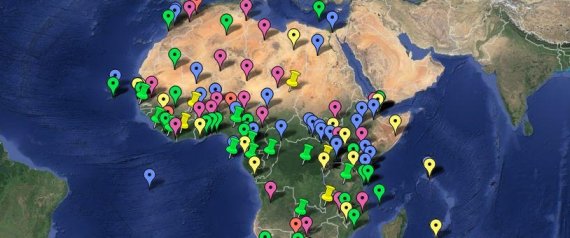
The War in Africa the U.S. Military Won't Admit It's Fighting

user posted image

QUOTE
Turse's investigations eventually showed that the U.S. military has been involved in one way or another -- "construction, military exercises, advisory assignments, security cooperation, or training missions" -- with more than 90 percent of Africa's 54 nations. He writes, "While AFRICOM... maintains that the United States has only a 'small footprint' on the continent, following those small footprints across the continent can be a breathtaking task."

Beyond raising the alarm over the growing scale of operations, Turse's book explains how American actions have almost unfailingly resulted in disastrous unforeseen consequences, a pattern that has done little to deter the U.S. military's expansionist zeal. In this conversation, Turse outlines some of those consequences, how the military's efforts to block and undermine his reporting shaped Tomorrow's Battlefied and whether the lessons of recent history or competition with China have any chance of altering the United States' military-first approach to Africa.


http://www.huffingtonpost.com/bryan-mayger..._b_7480360.html
BorneoAlliance
post Jun 2 2015, 04:09 PM

New Member
*
Newbie
0 posts

Joined: Dec 2014

PLA developing submarines powered by lithium-ion batteries

user posted image

China is experimenting with a lithium-ion battery propulsion system for submarines and aims to achieve results within the next five years, according to a report from Tokyo-based international news magazine the Diplomat.

Lithium-ion batteries offer much higher energy density and longer dive times than conventional diesel-powered submarines, which is why Chinese researchers see them as the "wave of the future," says Andrew Erickson, a professor at the Naval War College in Newport, Rhode Island.

The PLA Navy is discussing putting lithium-ion batteries "on a new generation of conventional subs sometime between now and 2020, but there is no indicator as yet of the type of submarine that might be," Erickson said.

China is working extremely hard to advance its submarine technology because it remains more than a generation behind the West, the report said. The PLA's Type 095 nuclear submarine, for example, is likely to be on par with 1980s NATO nuclear-powered fast-attack submarines. One of the major structural weaknesses is said to be the lack of propulsion engineering because most engines used in Chinese subs are either based on imported foreign technology or built domestically under license.

The PLA wants submarines with reactors that are "efficient, long-lasting, reliable and quiet enough," Erickson said, which is why China has equipped them in their Song- and Yuan-class attack subs. Diesel subs are generally stealthier than nuclear subs because the former are specifically designed to minimize vibration and noise in order to evade sonar detection. However, China also wants their subs to be able to not have to surface in order to charge batteries, which is why longer-lasting lithium-ion batteries could be the solution.

The PLA Navy currently has five nuclear attack submarines, four nuclear ballistic missile submarines and 53 diesel attack submarines, according to the Pentagon's Office of Naval Intelligence. The Pentagon estimates that by 2020 China's underwater force will grow to between 69 and 78 submarines.

http://www.wantchinatimes.com/news-subclas...=20150531000123
BorneoAlliance
post Jun 2 2015, 04:26 PM

New Member
*
Newbie
0 posts

Joined: Dec 2014
Beijing Hint: No More Mr. Nice Guy in South China Sea

In position to reclaim its ‘lake,’ China invokes its long tolerance of neighbors’ acts

user posted image

QUOTE
SINGAPORE—The way China looks at the disputes roiling the South China Sea, its forbearance has gone on far too long.

Smaller countries that ring the sea, including Vietnam, the Philippines and Malaysia have tested Beijing’s patience by striking claims to multiple islets, building structures on them and prospecting for energy in the surrounding waters. Indeed, these actions preceded any by China. But leniency has limits.

This sense of righteousness drives China’s massive island-building project in the Spratlys chain, which is now at the center of a gathering crisis in the world’s economically most vibrant region.

And it comes with a long historical perspective. China is merely returning what it calls its “near waters” to the state in which it believes they existed for millennia—as a Chinese “lake”—before a century of colonialism intervened. Now, after China has put civil war, Japanese invasion and other tumult behind it and after four decades of spectacular economic rise, it is finally strong enough to stand its ground under President Xi Jinping.
Far from behaving as a revisionist power with military ambitions to dominate, in China’s reckoning the ballooning of reefs and rocks into potential fortresses is an act of historical redemption.

In short, China’s dredging activities don’t upset the balance, they restore it.


http://www.wsj.com/articles/beijing-hint-n...-sea-1433228954
BorneoAlliance
post Jun 2 2015, 04:35 PM

New Member
*
Newbie
0 posts

Joined: Dec 2014
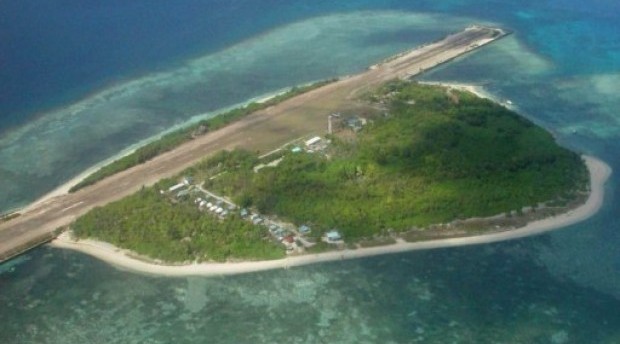
PH, Vietnam can wipe out Chinese forces in Spratlys – ex-USPACOM chief

user posted image

IT will be unfavorable to China if it would launch military action in the Spratlys (Kalayaan Island Group) in the South China Sea (West Philippine Sea), as it is too far away from mainland to reinforce itself during conflict, a former chief of US Pacific Command and Director of National Intelligence said.

“The Spratlys are 900 miles away from China, for God’s sake. Those things have no ability to defend themselves in any sort of military sense,” said Adm. Dennis Blair, who is now a director at the National Bureau of Asian Research, said in an interview with Wall Street Journal recently.

As a former USPACOM chief, he used to be responsible for the American forces in the Asia-Pacific region.

“If the Chinese were ever so foolish as to try to take any sort of actual military action from those islands, they’re completely indefensible militarily. Heck, the Philippines and the Vietnamese could put them out of action, much less us,” he added.

Blair resigned in 2010 as the US intelligence director over alleged rift with the White House.

Blair was USPACOM chief in 2001 when a Chinese fighter jet clashed with a US spy plane over South China Sea. It killed the Chinese pilot and the US plane made emergency landing on Hainan.

China has made significant progress in its reclamation projects in recent months, turning islands and reefs to artificial islands believed to be military installations. But China

It has also warned US and Philippine planes on patrol over the disputed waterway recently. This was seen by some as China’s attempt to set up an Air Defense Identification Zone.

At a security summit in Singapore over the weekend, US Defense Secretary Ashton Carter called for an end to all reclamation activities by all claimants in the South China Sea, including by China who has made the most developments.

The former USPACOM chief also accused the US of planning “whack-a-mole” in dealing with China over the sea dispute and suggested for diplomacy rather than military actions.

“We shouldn’t be leading with the aircraft carriers down there,” he said.

Blair said the main problem in the disputed waters would be Spratlys, where China is doing massive construction activities.

“The only thing I can think of there is you divide them up: Okay, Philippines you get 20, Malaysia gets 15, China gets 10,” he said.

Some of his proposals to the problem include a ban on military forces and agreement to jointly develop fishing and other resources, adding that US and its allies would likely agree.

China claims most parts of the disputed South China Sea, a major trade route believed to be rich in resources. AC

http://globalnation.inquirer.net/123794/ph...x-uspacom-chief

This post has been edited by BorneoAlliance: Jun 2 2015, 04:37 PM

25 Pages < 1 2 3 4 > » 
Bump Topic Topic ClosedOptions New Topic
 

Change to:
| Lo-Fi Version
0.0486sec    0.50    7 queries    GZIP Disabled
Time is now: 11th December 2025 - 12:51 AM