


LYN Catholic Fellowship V01 (Group), For Catholics (Roman or Eastern)
|
|
 Aug 8 2016, 09:32 PM Aug 8 2016, 09:32 PM
Return to original view | Post
#501
|
 
Junior Member
225 posts Joined: Mar 2008  
|
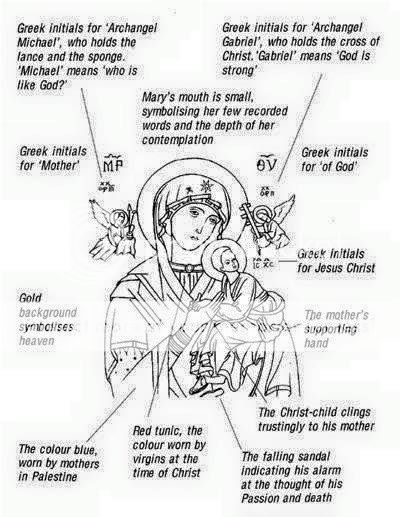
Our Lady of perpetual help medal explained.
|
|
|
|
|
|
Aug 9 2016, 11:01 AM
Return to original view | Post
#502
|
|
Junior Member
225 posts Joined: Mar 2008
|
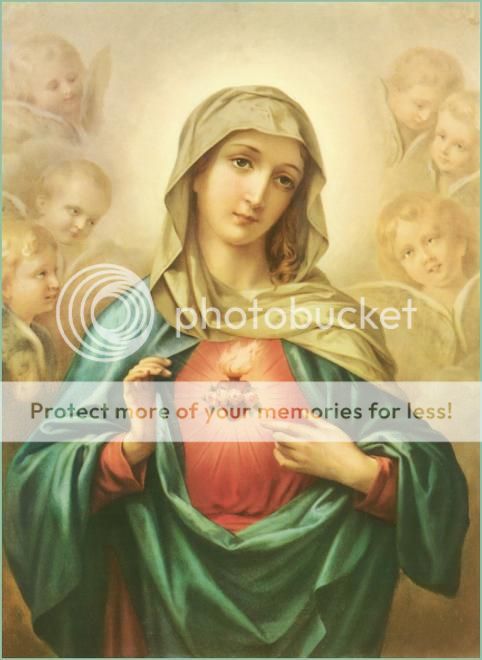
The month of August is dedicated to the Immaculate Heart of Mary.
 This post has been edited by khool: Aug 9 2016, 02:09 PM |
|
|
Aug 9 2016, 02:05 PM
Return to original view | Post
#503
|
|
Junior Member
225 posts Joined: Mar 2008
|
QUOTE(yeeck @ Aug 9 2016, 11:18 AM) Oh I thought August is month of the Immaculate Heart of Mary, while April is month of the Blessed Sacrament. Oops!!! you are right ... lemme get the right meme later then!   Thanks! |
|
|
Aug 10 2016, 12:14 PM
Return to original view | Post
#504
|
|
Junior Member
225 posts Joined: Mar 2008
|
ST. LAWRENCE
Feast Day: August 10  Saint Lawrence was one of seven deacons who were in charge of giving help to the poor and the needy. When a persecution broke out, Pope St. Sixtus was condemned to death. As he was led to execution, Lawrence followed him weeping, "Father, where are you going without your deacon?" he said. "I am not leaving you, my son," answered the Pope. "in three days you will follow me." Full of joy, Lawrence gave to the poor the rest of the money he had on hand and even sold expensive vessels to have more to give away. The Prefect of Rome, a greedy pagan, thought the Church had a great fortune hidden away. So he ordered Lawrence to bring the Church's treasure to him. The Saint said he would, in three days. Then he went through the city and gathered together all the poor and sick people supported by the Church. When he showed them to the Prefect, he said: "This is the Church's treasure!" In great anger, the Prefect condemned Lawrence to a slow, cruel death. The Saint was tied on top of an iron grill over a slow fire that roasted his flesh little by little, but Lawrence was burning with so much love of God that he almost did not feel the flames. In fact, God gave him so much strength and joy that he even joked. "Turn me over," he said to the judge. "I'm done on this side!" And just before he died, he said, "It's cooked enough now." Then he prayed that the city of Rome might be converted to Jesus and that the Catholic Faith might spread all over the world. After that, he went to receive the martyr's reward. Saint Lawrence's feast day is August 10th. Text: http://www.catholic.org Photo: http://www.catholictradition.org |
|
|
Aug 11 2016, 12:35 PM
Return to original view | Post
#505
|
|
Junior Member
225 posts Joined: Mar 2008
|
QUOTE(yeeck @ Aug 11 2016, 01:14 AM) A beautiful staircase, even if it may not be built by St Joseph himself Might be our Lord Himself, after all He too is a trained AND expert carpenter ...   |
|
|
Aug 15 2016, 01:58 PM
Return to original view | Post
#506
|
|
Junior Member
225 posts Joined: Mar 2008
|
  |
|
|
|
|
|
Aug 21 2016, 11:00 AM
Return to original view | Post
#507
|
|
Junior Member
225 posts Joined: Mar 2008
|
“The Innocents”: A Harrowing, True Story of Strength in the Face of Evil
The Innocents is set in 1945 Poland and is a story based on the journal writings of Dr. Madeleine Pauliac (renamed Mathilde in the movie). Dr. Pauliac, a medical lieutenant in the French Army, was appointed the the chief doctor in Warsaw and head of the French Red Cross during the end of World War II after Russia had taken control of the country. We may be inured to all kinds of graphic violence in movies, this was different. Watching with the knowledge that these events actually took place was extremely difficult – nearly impossible. Yet, sometimes it is necessary to watch appalling events in order that we might better understand our history, our faith, and even ourselves. Mathilde encounters a young Polish nun who has escaped her convent in order to seek medical help for one of her novice sisters. When Mathilde, a woman of no faith, finally agrees to go, she finds an unimaginable situation. Months before her arrival, Russian soldiers had invaded the secluded Benedictine convent and repeatedly raped the nuns. As if that did not cause the nuns enough pain and shame, several of them are now pregnant. Mathilde is sworn to secrecy because of the Mother Superior’s fear that the scandal would destroy the convent, but she is permitted to return to help safely deliver the babies and care for the nuns. There are so many beautiful themes in this film, but what kept my interest the most was the process of healing that the nuns went through as they came face-to-face with evil. Though it was horrific to watch, it was also deeply moving and inspiring. Director Anne Fontaine did an incredible job of capturing the pain, emotions and stages of grief that this violence caused the nuns. All of the women victimized had a different reaction to the atrocities they faced. Though they struggled and questioned God at times, they also endured their trials faithfully and (most of them) never abandoned their faith. The Innocents is a must-see for anyone who ministers to or counsels others. Heavy, even excruciating, it sheds such poignant insight into the hearts of women of faith who have been violated, physically (and metaphysically).The nuns’ anguish is highly personal, yes, but at the same time it is tragically common to the universal human experience, perhaps especially today. Amidst the woundedness that is so rampant in modern society, our own communities, even in our families, there is something to gain here that really is best told in story-form… even a tragic, true story. The Gospel and the Sacraments are not rewind buttons or erasers, but they are medicine for our wounded world. As the film demonstrates with aching nuance, the Church does not condescend to us in our agony with platitudes, and neither should we, as helpers, friends, counselors or ministers. Healing hurts, all the more intensely from a rupture as profound as rape. After watching The Innocents, you will have a deeper understanding of the questions of faith and feelings of unworthiness that rape victims may be struggling with. Let us be inspired by the strength of the women in The Innocents and remember to pray for all victims of sexual abuse. Source: http://catholic-link.org/2016/07/26/the-innocents/ |
|
|
Aug 22 2016, 01:53 PM
Return to original view | Post
#508
|
|
Junior Member
225 posts Joined: Mar 2008
|
Memorial of the Queenship of the Blessed Virgin Mary
Lectionary: 425 Reading 1 (2 Thes 1:1-5, 11-12) Paul, Silvanus, and Timothy to the Church of the Thessalonians in God our Father and the Lord Jesus Christ: grace to you and peace from God our Father and the Lord Jesus Christ. We ought to thank God always for you, brothers and sisters, as is fitting, because your faith flourishes ever more, and the love of every one of you for one another grows ever greater. Accordingly, we ourselves boast of you in the churches of God regarding your endurance and faith in all your persecutions and the afflictions you endure. This is evidence of the just judgment of God, so that you may be considered worthy of the Kingdom of God for which you are suffering. We always pray for you, that our God may make you worthy of his calling and powerfully bring to fulfillment every good purpose and every effort of faith, that the name of our Lord Jesus may be glorified in you, and you in him, in accord with the grace of our God and Lord Jesus Christ. Responsorial Psalm (Ps 96:1-2a, 2b-3, 4-5) R. Proclaim God’s marvelous deeds to all the nations. Sing to the LORD a new song; sing to the LORD, all you lands. Sing to the LORD; bless his name. R. Proclaim God’s marvelous deeds to all the nations. Announce his salvation, day after day. Tell his glory among the nations; among all peoples, his wondrous deeds. R. Proclaim God’s marvelous deeds to all the nations. For great is the LORD and highly to be praised; awesome is he, beyond all gods. For all the gods of the nations are things of nought, but the LORD made the heavens. R. Proclaim God’s marvelous deeds to all the nations. Alleluia (Jn 10:27) R. Alleluia, alleluia. My sheep hear my voice, says the Lord; I know them, and they follow me. R. Alleluia, alleluia. Gospel (Mt 23:13-22) Jesus said to the crowds and to his disciples: “Woe to you, scribes and Pharisees, you hypocrites. You lock the Kingdom of heaven before men. You do not enter yourselves, nor do you allow entrance to those trying to enter. “Woe to you, scribes and Pharisees, you hypocrites. You traverse sea and land to make one convert, and when that happens you make him a child of Gehenna twice as much as yourselves. “Woe to you, blind guides, who say, ‘If one swears by the temple, it means nothing, but if one swears by the gold of the temple, one is obligated.’ Blind fools, which is greater, the gold, or the temple that made the gold sacred? And you say, ‘If one swears by the altar, it means nothing, but if one swears by the gift on the altar, one is obligated.’ You blind ones, which is greater, the gift, or the altar that makes the gift sacred? One who swears by the altar swears by it and all that is upon it; one who swears by the temple swears by it and by him who dwells in it; one who swears by heaven swears by the throne of God and by him who is seated on it.” |
|
|
Aug 22 2016, 02:08 PM
Return to original view | Post
#509
|
|
Junior Member
225 posts Joined: Mar 2008
|
Hail, holy Queen, Mother of Mercy,
Our life, our sweetness and our hope. To thee do we cry, poor banished children of Eve, To thee do we send up our sighs, Mourning and weeping in this valley of tears. Turn then, most gracious Advocate, thine eyes of mercy toward us, And after this our exile, show unto us the blessed fruit of thy womb, Jesus. O clement, O loving, O sweet Virgin Mary! Pray for us, O Holy Mother of God, That we may be made worthy of the promises of Christ. Amen.  |
|
|
Aug 30 2016, 07:17 AM
Return to original view | Post
#510
|
|
Junior Member
225 posts Joined: Mar 2008
|
--- DELETED ---
This post has been edited by khool: Aug 30 2016, 07:29 AM |
|
|
Aug 30 2016, 07:18 AM
Return to original view | Post
#511
|
|
Junior Member
225 posts Joined: Mar 2008
|
Deacon Harold Burk-Sivers
 This post has been edited by khool: Aug 30 2016, 07:22 AM |
|
|
Sep 2 2016, 05:52 PM
Return to original view | Post
#512
|
|
Junior Member
225 posts Joined: Mar 2008
|
FYI ...
 Have a blessed weekend!!! |
|
|
Sep 4 2016, 12:22 PM
Return to original view | Post
#513
|
|
Junior Member
225 posts Joined: Mar 2008
|
Amen!
 |
|
|
|
|
|
Sep 4 2016, 03:15 PM
Return to original view | Post
#514
|
|
Junior Member
225 posts Joined: Mar 2008
|
Twenty-third Sunday in Ordinary Time
Lectionary: 129 Reading 1 (Wis 9:13-18b) Who can know God’s counsel, or who can conceive what the LORD intends? For the deliberations of mortals are timid, and unsure are our plans. For the corruptible body burdens the soul and the earthen shelter weighs down the mind that has many concerns. And scarce do we guess the things on earth, and what is within our grasp we find with difficulty; but when things are in heaven, who can search them out? Or who ever knew your counsel, except you had given wisdom and sent your holy spirit from on high? And thus were the paths of those on earth made straight. Responsorial Psalm (Ps 90:3-4, 5-6, 12-13, 14-17) R. In every age, O Lord, you have been our refuge. You turn man back to dust, saying, “Return, O children of men.” For a thousand years in your sight are as yesterday, now that it is past, or as a watch of the night. R. In every age, O Lord, you have been our refuge. You make an end of them in their sleep; the next morning they are like the changing grass, Which at dawn springs up anew, but by evening wilts and fades. R. In every age, O Lord, you have been our refuge. Teach us to number our days aright, that we may gain wisdom of heart. Return, O LORD! How long? Have pity on your servants! R. In every age, O Lord, you have been our refuge. Fill us at daybreak with your kindness, that we may shout for joy and gladness all our days. And may the gracious care of the LORD our God be ours; prosper the work of our hands for us! Prosper the work of our hands! R. In every age, O Lord, you have been our refuge. Reading 2 (Phmn 9-10, 12-17) I, Paul, an old man, and now also a prisoner for Christ Jesus, urge you on behalf of my child Onesimus, whose father I have become in my imprisonment; I am sending him, that is, my own heart, back to you. I should have liked to retain him for myself, so that he might serve me on your behalf in my imprisonment for the gospel, but I did not want to do anything without your consent, so that the good you do might not be forced but voluntary. Perhaps this is why he was away from you for a while, that you might have him back forever, no longer as a slave but more than a slave, a brother, beloved especially to me, but even more so to you, as a man and in the Lord. So if you regard me as a partner, welcome him as you would me. Alleluia (Ps 119:135) R. Alleluia, alleluia. Let your face shine upon your servant; and teach me your laws. R. Alleluia, alleluia. Gospel (Lk 14:25-33) Great crowds were traveling with Jesus, and he turned and addressed them, “If anyone comes to me without hating his father and mother, wife and children, brothers and sisters, and even his own life, he cannot be my disciple. Whoever does not carry his own cross and come after me cannot be my disciple. Which of you wishing to construct a tower does not first sit down and calculate the cost to see if there is enough for its completion? Otherwise, after laying the foundation and finding himself unable to finish the work the onlookers should laugh at him and say, ‘This one began to build but did not have the resources to finish.’ Or what king marching into battle would not first sit down and decide whether with ten thousand troops he can successfully oppose another king advancing upon him with twenty thousand troops? But if not, while he is still far away, he will send a delegation to ask for peace terms. In the same way, anyone of you who does not renounce all his possessions cannot be my disciple.”  |
|
|
Sep 6 2016, 01:48 PM
Return to original view | Post
#515
|
|
Junior Member
225 posts Joined: Mar 2008
|
“Does God Really Answer My Prayers?”
by Jeannie Ewing A friend recently asked me, “How can I know that God answers my prayers? If I ask Him to heal someone who is sick, and it doesn’t happen, does that mean He didn’t answer? And if the person gets better, how do I know it was because of prayer? I don’t know how to pray.” We must begin by recognizing God’s presence in every circumstance, every breath, every struggle or recovery. As people of faith and as our faith grows stronger, we realize that prayer must be more than merely asking God to grant our desires. It’s an inner dialogue that is ever-present with every beat of our hearts. Prayer is a relationship that moves us to listen, respond, and desire God’s will above our own. Part of resolving this dilemma is to rest in the mysteries of life. Not everything can or must be explained, so it’s important for us to recognize our human limitations with humility, while always lifting our eyes, hearts, and hands heavenward. Trusting that God answers our prayers, whether they’re desired outcomes or not, is sometimes an extraordinary act of faith. We must resign ourselves to the good and the bad, knowing that all will pass in time. Loving God for His own sake requires a deep level of resolve on our part. When we move from loving God, because He grants us favors and consolations to loving Him when He chooses to remain silent, our faith moves from a petulant to mature spiritual depth. How we pray is up to our openness to the Holy Spirit. The beauty of Catholicism is that we have access to countless types of and ways to pray. Rote, memorized prayers, such as the Our Father, Hail Mary, and Glory Be, are often a comfort when we are depleted of strength and cannot muster a creative, spontaneous prayer of our own. At times, the “Spirit intercedes with groanings” on our behalf, especially when we are weary. At other times, the Holy Spirit may move us to a heartfelt stream of thoughts or words that reflect our gratitude, praise, and even lamentations to God. Prayer is a conscious, intellectual act of the will, but it can also be quite passive. Passive prayer exists in our constant awareness of God’s presence in and around us. Even as we go about our daily routines, we may be moved to thoughts of God, which then nudge our hearts. Eventually, it becomes natural for us to move fluidly from passive to active prayer several times throughout the day. The point is that our hearts are always focused on God, remaining vigilant and steadfast in times of trial, always grateful and ever eager to serve when God calls upon us. When we doubt how or whether God answers our prayers, we doubt Him. Our faith in God wavers. We don’t have to know the details of how God chooses to act in and through our intercession; we are merely asked to believe that He does. Often, God answers prayers in very clandestine ways, perhaps to annihilate our pride and thus increase the virtue of humility in us. While it may be natural to become skeptical of answered prayer from time to time, we must never remain in a place of questioning for too long. The key to obtaining great faith is fidelity to the Lord. In other words, there are seasons of life that require us to simply be obedient to God and fulfill our role as Christians, even and especially when God appears to be silent. We can glean much from recognizing God’s silence, as well as the thunderous ways He sometimes chooses to reveal Himself. More often than not, He chooses the hidden path so that we may seek Him wholeheartedly. “I sought Him whom my heart loves. I sought Him but could not find Him” (Song of Songs 3:1). The jealousy of God isn’t so much about envy, but rather it is about His desire to belong to us completely, without any other distractions or gods replacing Him. In order for that to happen, we must be empty of self, which includes most especially our pride, because our emptiness provides a vast space within us that God can then fill with Himself. Do not be duped when God chooses to remain silent, whether it is after you have offered a desperate supplication to Him that appears to have gone unheeded or you do not feel His presence or hear His voice. His silence is not an indication of His absence. Rather, it is an invitation for you to delve more deeply into the recesses of your heart and soul to find Him there. If you doubt this, meditate on the mystery of the Eucharist and how Jesus chose to hide Himself in a tiny piece of unleavened bread. Throughout your life, it is crucial to remain close to God through daily conversation in prayer and in frequent reception of the sacraments of Reconciliation and Eucharist. Believe, dear soul, that He is near you in times of spiritual aridity, in times of darkness and intense interior strife. He is nearer to you when He sleeps in you, because He rests where you have provided a place for Him – a place of refuge and respite. Not every soul is as generous, and Jesus doesn’t choose to sleep in every soul. But if He has chosen yours as a place to enjoy solitude and rest, allow Him all the time He desires. This is your offering of love for the sake of love rather than gain. In this way, you please Him and you will eventually find Him whom your heart loves. When you do, you will not let Him go (Song of Songs 3:4). So when the matter of whether God answers prayer, the answer is a resounding yes. He answers every prayer, but you may or may not be privy to how He chooses to do so. Often the most powerful answers to prayer are as hidden as the Sacred Host, hidden in the sense that the one offering prayer does not see what has happened, yet great transformation has occurred within a formerly lukewarm soul. Do not doubt the power of spiritual change, for it is far greater than physical healing. Therefore, do not concern yourself with how, when, or whether God responds to your pleas. Instead, stand firmly rooted in prayer. If you are faithful to God, His fidelity will be yours forever. Source: http://catholicexchange.com/god-really-ans..._eid=6396f20ec0 |
|
|
Sep 7 2016, 02:59 PM
Return to original view | Post
#516
|
|
Junior Member
225 posts Joined: Mar 2008
|
Amen! Amen! Praise the Lord!
 Agnus Dei, qui tollis peccata mundi, miserere nobis. Agnus Dei, qui tollis peccata mundi, miserere nobis. Agnus Dei, qui tollis peccata mundi, dona nobis pacem. |
|
|
Sep 8 2016, 02:05 PM
Return to original view | Post
#517
|
|
Junior Member
225 posts Joined: Mar 2008
|
Rediscovering “Work” with Purpose
Labor Day marks the end of the summer season for Americans as it represents a return to work and school for many. In particular, it is meant to serve as a tribute for the contributions and achievements of American workers. While the day is marked mostly by families having parties and barbecues in the more accommodating September weather, it should be a moment for serious pause because, ultimately, our lives (and civilization) are marked by the work we do. That raises a critical question: Why do we do the work that we do? Put another way, what is the purpose of our work? In today’s post-industrial age, the majority say it is to collect a paycheck in order to put food on the table and pay the bills. The rhythm of the work revolves around making it until Wednesday evening when the hump of the work week has passed and then looking forward to the weekend. Beyond that, it is counting the days until one can share ten to fourteen days on vacation living the life you ultimately desire with family and loved ones. This description fits most of the “work” of the industrial age from the 19th century to the present day. Very few actually like the work they do and feel trapped in a world of “jobs” that do not satisfy and that ultimately have disrupted the family unit where more and more couples feel forced to work two jobs to cover the costs of living these days. Is this what God intended for “work”? Are we supposed to live to work or work to live? The way most of the world is organized today, it would seem that we live in order to work. But this is NOT what God intended “in the beginning”. God revealed the true meaning of work when He made the heavens and earth. First, we learn from Genesis that God’s work is creative and gives life. That creative work culminated on the 6th day when God made man, male and female, after His own image and likeness. Therefore, the work of man will be authentic to the extent that it images God’s work that is an outflow of His creative love. This is why the industrial age was such an affront against man — no matter what it claims as its scientific accomplishments — as it made man a mere cog in the machine with no dignity for his creative skills. Value was in production. And this later became reflected in education in both the east and now in the west where the point of education is not freedom of the individual, but to put each child on a conveyor belt for a specific job in life. Second, we see in Genesis that all of God’s work was ordered to Him, especially man’s dominion over the earth. God’s order is based on a creative and loving work that leads to man’s greatest freedom. This is why obedience to God’s law, which is written in every heart (because we are made in God’s image and likeness), is essential to all work and the measure of any true progress. Satan always offers a counterfeit to humanity, which is simply an inversion of God’s order, where the emphasis is redirected from the glory of God to the self-glorification of man. The 19th and 20th centuries have witnessed the greatest push by man to progress without God as if His glory can be, literally, manufactured (made by human hands). What fruits has the industrial revolution born humanity? The splitting up of families, the separation of the children from their parents, etc. The rapid advancement in technology without a moral and spiritual compass has been used predominantly to enslave humanity and put it on the brink of self-annihilation. It’s a simple equation: self-glorification leads to slavery and self-annihilation. Work for the glorification of God leads to true self-discovery, innovation and salvation. A third revelation about work that we see in Genesis is that it serves an ultimate purpose — to rest with God in heaven. This is such an important point because it is all but lost in the world today, where the end of “work” is money or worldly power. The point of God resting on the 7th day was not because He was exhausted from creating zillions of life forms and ordering them all to Himself, through humanity. God rested on the 7th day in order to bless it and hallow it. In doing this, God revealed that while man was created on the sixth day, he was made for the 7th day, eternal rest with God in heaven. In other words, man was created to be consecrated (set apart for the holy) to God. In that same light is man’s work to be ordered as well. In the first two chapters of Genesis, we see in a nutshell the paradigm for all work. Our work is meant to be creative, innovative and ordered to heaven. When humanity views work this way, we have an entirely different civilization. Actually, we can only have a true civilization when we work in this way. That is why the working of land, craftsmanship/ carpentry, caring for others through natural remedies and teaching, have always been those forms of work most consonant with God’s revelation of work from the time of creation, and are also directly related to man being free. A sign of great hope is that we are seeing a rediscovery and return to these ways of life that have the building up of the family and a return to the land where God meets man in a special way. Monks of every age intentionally live this way for this purpose. As the industrial ages dies out, we will continue to see a resurgence in many to take control of their lives in order to pursue without fear God’s purpose for them. It’s a return to the human and Catholic genius that has restored humanity in every critical cycle of history. And this renaissance is built upon man rediscovering why God created him and why God created him in this moment in history. Each person has a unique and special purpose for which he is created; if he doesn’t accomplish it, no one will. Purpose can only come from faith and the greater one’s purpose the greater one’s faith. It is equally true in the converse: the greater one’s faith, the greater should that person’s purpose be in life. This is the standard by which every saint lived. And the standard for every saint is nothing less than heroic. Therefore, since we Christians were baptized for one purpose and one purpose only — to be the greatest saint that God created us to be — a saint that is unique and unrepeatable from all others— we should be spending every moment of our lives trying to figure out what that is, so that we can live it NOW. We can only “figure it out” (also known as discernment) by speaking with God, sharing with Him our hearts and our passions and asking Him why He has them there and for what purpose. This is what prayer is — a heart to heart conversation with God in which we incline our ear to His and find Him inclining His ear toward us — and why it is so important. This is how the saints discovered God’s will to them. They looked for God and listened to Him in His Word. Attentiveness to His Word at Mass was enhanced by a daily conversation these saints had with God, so that when the day came for them to discover God’s special purpose for them, they were primed and ready. Look at St. Antony of the Desert, St. Augustine, St. Francis of Assisi — all of whom God called through their hearing of His word, whether it was during the day’s Liturgy or walking about a garden. The work that flowed from their daily conversation and communion with God is now indelibly written into the greatest chapters of the history of the world. There was never a dull moment in their lives once they understood the purpose of their life and their vocation to “work” in these terms. They never bound themselves to the expectations and mere conventions of men. They truly believed what St. Paul did and said, “I can do all things in Him who strengthens me.” Moreover, all their work had a definitive purpose — starting their path to heaven on earth, getting there at the end of their life and bringing as many people with them as possible. All material things in this world were means to that end. They understood and communicated to others that in order to live the most human of lives, we need the Life of the Divine within us, a Divine Life given to us only in Jesus Christ. The leaders who will arise to lead this spiritually, morally and economically collapsing world will all share the same spirit, the Holy Spirit — they will be risk takers who are willing to stretch themselves to their natural limits in order to create, innovate and liberate others to live lives they believe God has called them to live and not what others believe they should live. Do you truly know God’s purpose for you? What great and heroic work will you see to do for His Kingdom? Remember the words of Our Lord, “Much will be required of the person entrusted with much” (Luke 12:48). Life is too short. Aim high and dare to dream big for God. Then trust unconditionally in Him and step out into the deep. That’s the “job” description of every Christian. The world is waiting. Source: http://www.spiritualdirection.com/2016/09/...rk-with-purpose |
|
|
Sep 10 2016, 08:28 AM
Return to original view | Post
#518
|
|
Junior Member
225 posts Joined: Mar 2008
|
Evangelization Homily
|
|
|
Sep 10 2016, 08:47 AM
Return to original view | Post
#519
|
|
Junior Member
225 posts Joined: Mar 2008
|
"Formed by divine teaching, we dare to say..."
In the new translation of the Roman Missal, the Lord's Prayer is introduced with the words, "At the Saviour's command and formed by divine teaching, we dare to say..." The prayer itself is so familiar to us that we often forget that it was given to the disciples in the context of a series of instructions about how to pray it. What is this teaching in which we have been "formed"? In Matthew 6: 5-15 the Prayer is taught in the context of the Sermon on the Mount (chapters 5, 6, and 7), which concerns the various dimensions of the living of the Christian life, beginning with the Beatitudes which form the portrait of the perfect Christian. Immediately before the teaching on prayer, he speaks of the love of enemies and of almsgiving in secret. This leads him naturally to go on: "when you pray, go into your room and shut the door and pray to your Father who is in secret; and your Father who sees in secret will reward you." This is the lead-in to the Lord's Prayer itself (6: 9-15), and it is paralleled by a passage at the end where he speaks of fasting: "when you fast, anoint your head and wash your face, that your fasting may not be seen by men but by your Father who is in secret, and your Father who is in secret will reward you." He then continues with reference to the nature of the "reward", namely "treasures in heaven" (6: 19-21), adding "For where your treasure is, there will your heart be also." Immediately after that, he adds the instruction about the eye of light ("the eye is the lamp of the body"), the need to serve only one master (6: 24), the need not to be anxious (6: 25-34), and so on. All these teachings are interconnected; they are the unfolding of a single teaching, of a piece with the Lord's Prayer itself. So let us look at this sequence. 1. Almsgiving is the preparation for prayer. Why? Giving to others is the law of love, it is part of the war against greed, it detaches us from material possessions, it makes us rely solely on God – but only if we do it for his sake, without seeking praise or thanks from men. To give away what we have accumulated is to turn our back on the past. In this way it prepares us for prayer, prepares us to be with God alone, makes us "empty" enough to receive treasures from God, prepares us to close the doors. 2. To go into our room and shut the door is to withdraw from the world of the senses, to the interior, our "spirit" which is the apex mentis or "soul of the soul". Since our Father "is in heaven", according to the Prayer, the "secret place" where he is and from which he sees us must be heaven, and our own spirit must be open to it. In John 10: 9, Jesus himself tells us that he is "the door", so it is through him that we enter into God's presence. The door is also the "now", the "present moment" or instant that divides past from future, our one "opportunity"("port" means harbour, entrance, passageway, gate). To enter by this "narrow way" into life (Matt 7: 14) is to defeat the distractions on the two sides of the doorframe, namely our memories of the past (by almsgiving) and our imagination and worries about the future (by fasting). 3. Fasting in a sense follows prayer. Fasting is only made possible by prayer, for we have turned to God for our "bread" and now we can live without material food, or at least we have put material food in its rightful (secondary) place. Otherwise we would be "serving two masters", namely God and our own body. Fasting strengthens our prayer, and extends its effects. Again the "Father who is in secret" is mentioned, but in order to be with him so that he sees us and rewards us we do not once again close the door and go into a private room, but rather anoint our heads (with oil) and wash our faces. In other words we invoke the Holy Spirit (oil), and purify the gaze we turn to the Father, so that our faces are unmarked by the world, and do not reflect worldly concerns that distract us from the presence of God. In particular, in the case of fasting, we refuse to panic at the thought of lacking what we will need to go on living. We "turn our backs on the future". 4. The reward we must seek from God, the "treasure in heaven", is simply the "one thing needful" that is God himself – for God's gift, being perfect, is himself, containing all sweetness, all consolation, all that is good. His gift is the "person-gift", his own nature transformed into gift; that is, the Holy Spirit (as he makes clear in Luke 11: 13, in another version of the giving of the Lord's Prayer which I will comment on later). Where this treasure is, there will our hearts be. To find this treasure is to find our hearts, to find that "heaven" where the Father is, our refuge. "One thing I have asked of the Lord, that I will seek after; that I may dwell in the house of the Lord all the days of my life, to behold the beauty of the Lord, and to inquire in his temple" (Ps 26[27]: 4). 5. There then follows the teaching that when your eye is "single" (not just "sound" or "pure") your whole body will be full of light. For someone who has withdrawn from the distractions of time, and concentrated on receiving the gift of the Spirit from God, is able to see everything with this noetic light shining from within – in contrast with which the darkness of normal vision seems dark indeed. Source: http://thechristianmysteries.blogspot.my/2...we-dare-to.html |
|
|
Sep 10 2016, 10:43 PM
Return to original view | Post
#520
|
|
Junior Member
225 posts Joined: Mar 2008
|
Twenty-fourth Sunday in Ordinary Time
Lectionary: 132 Reading 1 (Ex 32:7-11, 13-14) The LORD said to Moses, “Go down at once to your people, whom you brought out of the land of Egypt, for they have become depraved. They have soon turned aside from the way I pointed out to them, making for themselves a molten calf and worshiping it, sacrificing to it and crying out, ‘This is your God, O Israel, who brought you out of the land of Egypt!’ “I see how stiff-necked this people is, ” continued the LORD to Moses. Let me alone, then, that my wrath may blaze up against them to consume them. Then I will make of you a great nation.” But Moses implored the LORD, his God, saying, “Why, O LORD, should your wrath blaze up against your own people, whom you brought out of the land of Egypt with such great power and with so strong a hand? Remember your servants Abraham, Isaac, and Israel, and how you swore to them by your own self, saying, ‘I will make your descendants as numerous as the stars in the sky; and all this land that I promised, I will give your descendants as their perpetual heritage.’” So the LORD relented in the punishment he had threatened to inflict on his people. Responsorial Psalm (Ps 51:3-4, 12-13, 17, 19) R. (Lk 15:18) I will rise and go to my father. Have mercy on me, O God, in your goodness; in the greatness of your compassion wipe out my offense. Thoroughly wash me from my guilt and of my sin cleanse me. R. I will rise and go to my father. A clean heart create for me, O God, and a steadfast spirit renew within me. Cast me not out from your presence, and your Holy Spirit take not from me. R. I will rise and go to my father. O Lord, open my lips, and my mouth shall proclaim your praise. My sacrifice, O God, is a contrite spirit; a heart contrite and humbled, O God, you will not spurn. R. I will rise and go to my father. Reading 2 (1 Tm 1:12-17) Beloved: I am grateful to him who has strengthened me, Christ Jesus our Lord, because he considered me trustworthy in appointing me to the ministry. I was once a blasphemer and a persecutor and arrogant, but I have been mercifully treated because I acted out of ignorance in my unbelief. Indeed, the grace of our Lord has been abundant, along with the faith and love that are in Christ Jesus. This saying is trustworthy and deserves full acceptance: Christ Jesus came into the world to save sinners. Of these I am the foremost. But for that reason I was mercifully treated, so that in me, as the foremost, Christ Jesus might display all his patience as an example for those who would come to believe in him for everlasting life. To the king of ages, incorruptible, invisible, the only God, honor and glory forever and ever. Amen. Alleluia (2 Cor 5:19) R. Alleluia, alleluia. God was reconciling the world to himself in Christ and entrusting to us the message of reconciliation. R. Alleluia, alleluia. Gospel (Lk 15:1-32) Tax collectors and sinners were all drawing near to listen to Jesus, but the Pharisees and scribes began to complain, saying, “This man welcomes sinners and eats with them.” So to them he addressed this parable. “What man among you having a hundred sheep and losing one of them would not leave the ninety-nine in the desert and go after the lost one until he finds it? And when he does find it, he sets it on his shoulders with great joy and, upon his arrival home, he calls together his friends and neighbors and says to them, ‘Rejoice with me because I have found my lost sheep.’ I tell you, in just the same way there will be more joy in heaven over one sinner who repents than over ninety-nine righteous people who have no need of repentance. “Or what woman having ten coins and losing one would not light a lamp and sweep the house, searching carefully until she finds it? And when she does find it, she calls together her friends and neighbors and says to them, ‘Rejoice with me because I have found the coin that I lost.’ In just the same way, I tell you, there will be rejoicing among the angels of God over one sinner who repents.” Then he said, “A man had two sons, and the younger son said to his father, ‘Father give me the share of your estate that should come to me.’ So the father divided the property between them. After a few days, the younger son collected all his belongings and set off to a distant country where he squandered his inheritance on a life of dissipation. When he had freely spent everything, a severe famine struck that country, and he found himself in dire need. So he hired himself out to one of the local citizens who sent him to his farm to tend the swine. And he longed to eat his fill of the pods on which the swine fed, but nobody gave him any. Coming to his senses he thought, ‘How many of my father’s hired workers have more than enough food to eat, but here am I, dying from hunger. I shall get up and go to my father and I shall say to him, “Father, I have sinned against heaven and against you. I no longer deserve to be called your son; treat me as you would treat one of your hired workers.”’ So he got up and went back to his father. While he was still a long way off, his father caught sight of him, and was filled with compassion. He ran to his son, embraced him and kissed him. His son said to him, ‘Father, I have sinned against heaven and against you; I no longer deserve to be called your son.’ But his father ordered his servants, ‘Quickly bring the finest robe and put it on him; put a ring on his finger and sandals on his feet. Take the fattened calf and slaughter it. Then let us celebrate with a feast, because this son of mine was dead, and has come to life again; he was lost, and has been found.’ Then the celebration began. Now the older son had been out in the field and, on his way back, as he neared the house, he heard the sound of music and dancing. He called one of the servants and asked what this might mean. The servant said to him, ‘Your brother has returned and your father has slaughtered the fattened calf because he has him back safe and sound.’ He became angry, and when he refused to enter the house, his father came out and pleaded with him. He said to his father in reply, ‘Look, all these years I served you and not once did I disobey your orders; yet you never gave me even a young goat to feast on with my friends. But when your son returns, who swallowed up your property with prostitutes, for him you slaughter the fattened calf.’ He said to him, ‘My son, you are here with me always; everything I have is yours. But now we must celebrate and rejoice, because your brother was dead and has come to life again; he was lost and has been found.’” |
|
Topic ClosedOptions
|
| Change to: |  0.1330sec 0.1330sec
 0.40 0.40
 7 queries 7 queries
 GZIP Disabled GZIP Disabled
Time is now: 8th December 2025 - 10:32 AM |
 Quote
Quote