Welcome Guest ( Log In | Register )

Bump Topic Topic Closed RSS Feed
13 Pages « < 10 11 12 13 >Bottom

Outline · [ Standard ] · Linear+

> Military Thread V15, Gong Xi Fa Cai; Huat ah

views
     
BorneoAlliance
post Mar 9 2015, 08:11 PM

New Member
*
Newbie
0 posts

Joined: Dec 2014

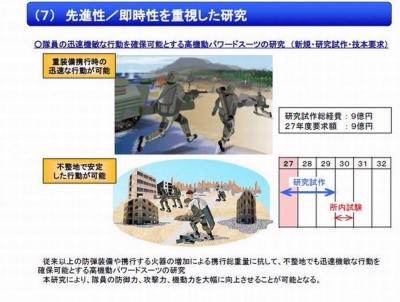
The Japanese Military Is Building a Robotic Exoskeleton

QUOTE
If Japan were to go to war, the exoskeletons would be a “force multiplier,” in military terms. An enemy’s superior numbers might not matter much if Tokyo’s troops wear power armor.

Japan’s Technical Research and Development Institute—part of the ministry of defense—has worked on the technology since 2010 as part of its “Zero Casualty Battle System” concept. The idea is to avoid human casualties by replacing soldiers with tech whenever possible. 

A powered suit could carry stronger bulletproof protection against enemy fire without sacrificing speed and mobility — a problem associated with ceramic plate and Kevlar.


https://medium.com/war-is-boring/the-japane...on-d1ee94a71022


Attached thumbnail(s)
Attached Image
BorneoAlliance
post Mar 9 2015, 10:19 PM

New Member
*
Newbie
0 posts

Joined: Dec 2014

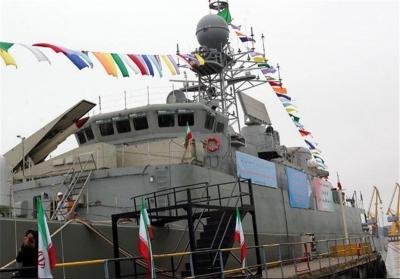
Damavand Faster, Stronger than Jamaran: Iran Navy Commander

Speaking at a ceremony for the official coming into service of Damavand in the northern port city of Bandar-e-Anzali, Rear Admiral Habibollah Sayyari said the new destroyer enjoys high-tech systems, some of which has been installed on a vessel for the first time.

Damavand is a Jamaran-class destroyer with unique features to meet the demands of the Iranian naval forces in the country’s northern waters.

The advanced destroyer is capable of tracking the aerial, surface and sub-surface targets simultaneously.

More than 700 industrial, research and academic Iranian centers cooperated in designing and producing the military vessel, which is also a training warship.

Experts at Iran’s Defense Ministry have installed 25 homegrown electronics and communication systems on Damavand, including advanced naval radars and systems for communication, detection and interception.

Elsewhere in his comments, Sayyari described the Caspian Sea as one of Asia’s most important regions and a strategic zone for Iran.

“The Caspian Sea, with its special circumstances, has much influence on the regional equations,” he added.

The Caspian Sea is the largest enclosed water body on earth by area, variously classed as the world’s largest lake or a full-fledged sea.

The Caspian Sea Convention will determine the territorial rights of littoral states as well as other matters related to the world’s largest landlocked body of water.

http://www.tasnimnews.com/english/Home/Single/680524


Attached thumbnail(s)
Attached Image
BorneoAlliance
post Mar 10 2015, 01:09 AM

New Member
*
Newbie
0 posts

Joined: Dec 2014
QUOTE
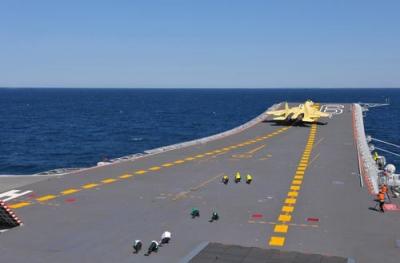
China reportedly building 2nd aircraft carrier 

Hong Kong, March 9 (CNA) Several senior Chinese officials have confirmed that China is building its second aircraft carrier and will likely adopt an improved launch system for aircraft on the ship, a Chinese-language daily in Hong Kong reported Monday. 

The Hong Kong Commercial Daily (香港商報) cited Liu Xiaojiang (劉曉江), a former political commissar of the People's Liberation Army (PLA) Navy, as saying that the government's industrial and manufacturing agencies are now in charge of the ship's construction.


http://focustaiwan.tw/news/aipl/201503090027.aspx


Attached thumbnail(s)
Attached Image
BorneoAlliance
post Mar 10 2015, 09:02 AM

New Member
*
Newbie
0 posts

Joined: Dec 2014

DARPA's Anti-Ship Missile Still Less Deadly Than Chinese ‘Carrier Killer’

At 15 tons and 35 feet tall, China’s DF-21D Dong Feng missile is rumored to be able to travel at speeds as fast as Mach 10 and has an effective range of up to 1,200 miles. In the event of a conflict, the weapon would pose a major threat to US aircraft carriers off the coast of Taiwan.

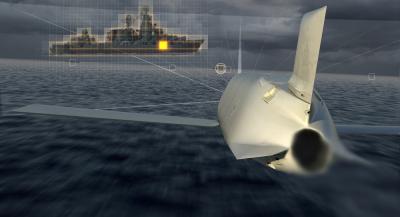
In response to the Navy’s call for a similarly sophisticated weapon system, the Defense Advanced Research Projects Agency spent years developing its own Long Range Anti-Ship Missile. According to DARPA, LRASM aims "to provide a leap ahead in US surface warfare capability."

The missile can operate in antiaccess/area denial or A2/AD environments with robust anti-missile defense and fierce electronic warfare with the ability for "jamming" guidance systems. LRASM can also operate independently and under remote guidance and survive GPS jamming.

The missile, designed by defense contractor Lockheed Martin, can guide itself to targets using "autonomous guidance algorithms" even in the absence of remote control or GPS by pinpointing strike targets independently.

LRASM has completed three successful flight tests, according to DARPA, and is targeted for a deployment date sometime in 2018.

As another countermeasure to China’s “carrier killer,” the Pentagon paid Raytheon millions of dollars to develop a RIM-162 ESSM "Evolved SeaSparrow" antimissile missile. The hope is that such a defensive weapon will be able to shoot down DF-21D, despite its high speed and high trajectory.

In a keynote address on American Society of Naval Engineers’ Day on March 4, Sean Stackley, the Navy’s acquisition chief, stressed the importance of modernizing ships in the fleet.

To help reach that goal, the Navy has embarked on a 30-year research and development plan to ensure that it remains not only the largest such force in the world, but also the most powerful.

http://sputniknews.com/news/20150310/1019279301.html


Attached thumbnail(s)
Attached Image
BorneoAlliance
post Mar 10 2015, 09:04 AM

New Member
*
Newbie
0 posts

Joined: Dec 2014
QUOTE
Ukraine says rebels attack near Mariupol, NATO deploys Baltics troops 


http://www.rappler.com/world/regions/europ...oogle.com.my%2F


Attached thumbnail(s)
Attached Image
BorneoAlliance
post Mar 10 2015, 11:17 AM

New Member
*
Newbie
0 posts

Joined: Dec 2014
Baltic: US Sends Heavy Military Equipment Amid Russia Threat

user posted image

QUOTE
The Baltic states need to protect themselves for 72 hours

The President of Lithuania Dalia Grybauskaite, who compared the Russian President Vladimir Putin to Joseph Stalin and Adolf Hitler back in summer 2014, has recently said that the Baltic states are facing a real threat and must be prepared to independently protect themselves for 72 hours in case of a military aggression until NATO allies arrive to help.


http://www.valuewalk.com/2015/03/baltic-us...ilitary-russia/
BorneoAlliance
post Mar 10 2015, 11:27 AM

New Member
*
Newbie
0 posts

Joined: Dec 2014

Stratfor Explores Russia's Military Options in Ukraine

QUOTE
Stratfor's three-part editorial series on Russia's military options covers:

Part 1, "Gaming a Russian Offensive" - An overview of military scenarios that Russia could potentially exercise in Ukraine, including harassment operations and an all out invasion of eastern Ukraine up to the Dnieper River.  VIDEO: Watch a narrated animation from Stratfor outlining six offensive military options Russia could conduct in Ukraine. 

Part 2, "What the West Could Do" - A look at the potential responses from the United States or a coalition of NATO countries if Russia were to pursue any of the military scenarios identified by Stratfor. 

Part 3, "Russia Weighs the Cost" - An examination of the cost and benefits Russian military planners and policymakers will have to consider when deciding whether any of the military options in Ukraine serve a strategic purpose and meet their political requirements.

Part one of Stratfor's editorial series, "Russia's Military Options in Ukraine," can be accessed on the company's website at www.stratfor.com/analysis/gaming-russian-offensive.

VIDEO: Stratfor's George Friedman discusses the concept of wargaming with an eye toward the Russia-Ukraine conflict.


http://www.marketwired.com/press-release/s...ine-1998551.htm
BorneoAlliance
post Mar 10 2015, 03:16 PM

New Member
*
Newbie
0 posts

Joined: Dec 2014
Gaming a Russian Offensive

user posted image

QUOTE
However, this operation would be a massive military undertaking. The force required to seize this area — approximately 222,740 square kilometers — and defeat the opposition there would need to number 91,000-135,000 troops and advance as much as 402 kilometers. Since the river could bolster defensive capabilities, the defensive force could remain roughly the same size as the attacking force. However, with a population of 13 million in the area, the additional troops that might be required for the counterinsurgency force could range from 28,000-260,000. Russia has approximately 280,000 ground troops, meaning that the initial drive would tie down a substantial part of the Russian military and that an intense insurgency could threaten Russia's ability to occupy the area even if it deployed all of its ground forces within Ukraine.  One positive aspect would be that this operation would take only 11-14 days to execute, even though it involves seizing a large area, because Russia could advance along multiple routes. On the other hand, the operation would require such a vast mobilization effort and retasking of Russian security forces that Moscow's intent would be detectable and would alarm Europe and the United States early on.


user posted image

QUOTE
A similar scenario that has been considered is the seizing of the entire southern coast of Ukraine in order to connect Russia and its security forces in the Moldovan breakaway region of Transdniestria to Crimea. The logic goes that this would cripple Kiev by cutting off access to the Black Sea and would secure all of Russia's interests in the region in a continual arc. In terms of effort required, Russia essentially would be doubling the land bridge option. It would require an attacking force of 40,000-60,000 troops driving almost 645 kilometers to seize territory encompassing 103,600 square kilometers over 23-28 days. The required defensive force would number 80,000-112,000. This would also add a complicated and dangerous bridging operation over a large river. Moreover, the population in this region is approximately 6 million, necessitating 13,200-120,000 counterinsurgency troops.


user posted image

QUOTE
Russia would have to drive more than 400 kilometers (250 miles) into an area encompassing 46,620 square kilometers, establish more than 450 kilometers of new defensive lines, and subdue a population of 2 million.    Taking this territory against the current opposition in Ukraine would require a force of around 24,000-36,000 personnel over six to 14 days. For defensive purposes, Russian planners would have to recognize the risk of NATO coming to Kiev's assistance. Were that to happen, Russia would have to expand the defensive force to 40,000-55,000 troops to hold the territory. 


https://www.stratfor.com/analysis/gaming-russian-offensive
BorneoAlliance
post Mar 10 2015, 05:07 PM

New Member
*
Newbie
0 posts

Joined: Dec 2014
Taking Tikrit

user posted image
Analysis

The offensive against Islamic State forces holding the Iraqi city of Tikrit in Saladin province is a crucial barometer for future operations. Instead of containing the city and then bypassing it to retake Mosul, military planners have decided to eliminate the Islamic State's presence there first. Aside from being the hometown of former Iraqi leader Saddam Hussein, Tikrit is an important Sunni Arab stronghold on the highway linking Baghdad to Mosul.

The Iraqi army, recovering from its collapse last year, is receiving significant support from Iran, from rockets to intelligence and military advisers. A blocking position has been established to the west and the Iraqi army is making slow gains from the east and southeast, hampered by large numbers of improvised explosive devices along their axes of advances. Iraqi Golden Division special operations forces pushed into the northern city district March 6. Islamic State fighters have increasingly been forced to fall back to the interior but have made effective use of harassing fire. In an attempt to slow advancing forces and disrupt airstrikes from Iraqi fixed-wing aircraft and attack helicopters, the militants set fire to the Ajil oil field March 5, creating massive clouds of smoke.

Reports indicate that Iraqi attempts to lock down Tikrit have not been successful, and Islamic State fighters still possess limited freedom of movement. But sources on the ground claim that elements of the Islamic State leadership in Tikrit have already fled the city. Although it is unlikely that the Islamic State would relinquish its grip on Tikrit without extracting a cost on the attacking forces, the exodus of ground commanders could indicate that the city will fall. Additional reports, however, suggest that Islamic State forces have abandoned Qayyarah Air Base, south of Mosul, to free up reinforcements for Tikrit. This would indicate the militant group is prepared to stand its ground, or in the worst case, counter attack in force.

https://www.stratfor.com/sample/image/taking-tikrit

This post has been edited by BorneoAlliance: Mar 10 2015, 05:10 PM
BorneoAlliance
post Mar 10 2015, 10:30 PM

New Member
*
Newbie
0 posts

Joined: Dec 2014
Retired admirals reveal plan to use Australian submarines to defend Japan

user posted image


QUOTE
BUYING a Japanese submarine has more to do with the US alliance and protecting Japan from China than jobs or capability, according to two former Japanese admirals.  In a document obtained by News Corp, former Japanese Navy chief Vice-Admiral Yoji Koda and former submarine fleet commander Vice Admiral Masao Kobayashi argue that the “north-south cooperation” between Australia and Japan would provide “strategic and operational flexibility to the USA’s rebalancing policy”.  “This strategic relationship is a thing which no other nation can replace,” the document says.


http://www.news.com.au/national/retired-ad...2-1227257466455
BorneoAlliance
post Mar 10 2015, 10:34 PM

New Member
*
Newbie
0 posts

Joined: Dec 2014

Iraqi Forces Enter Key Town North of Tikrit

user posted image


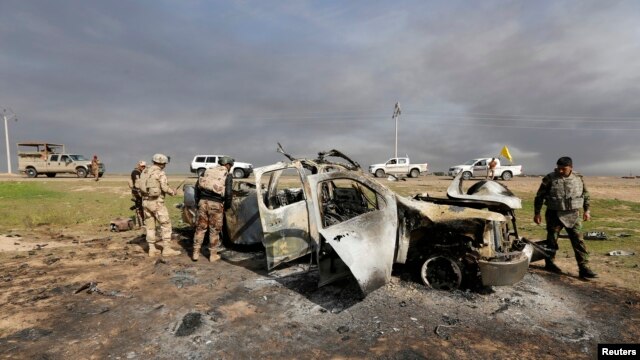
Iraqi security forces inspect a destroyed vehicle belonging to Islamic State militants on the outskirts of al-Alam, just north of Tikrit, March 9, 2015

BAGHDAD—

Iraqi security forces and Shi'ite militia took the center of a town on the northern edge of Tikrit from the Islamic State group on Tuesday as they closed in on Saddam Hussein's home city.

Al-Alam is the last Islamic State stronghold that needs to be cleared before government forces and militiamen can enter the city of Tikrit itself, which has been under militant control since last summer.

Military commanders said Islamic State militants were still holding out in houses in the northern section of al-Alam, but the army and mainly Shi'ite militia had retaken the town center and were preparing for street fighting to seize the rest.

“Snipers and booby traps are slowing our advance to completely control all parts of the town,” said army captain Wisam Ibrahim, speaking from al-Alam.

“We're waiting for the army helicopters to secure the way for a smooth advance for the troops,” he said.

The battle for Tikrit and its aftermath will inform any plans to move further north and recapture Mosul, the largest city under Islamic State rule.

The campaign to retake Tikrit, which began one week ago, is the biggest since Islamic State swept across the north last year, and the government hopes it will reverse the militants' momentum.

The Islamic State group has sent reinforcements to Tikrit from other parts of its self-proclaimed caliphate further north, where it came under attack on Monday from Kurdish forces around the oil-rich-city of Kirkuk.

http://www.voanews.com/content/iraqi-force...it/2674217.html
BorneoAlliance
post Mar 10 2015, 10:49 PM

New Member
*
Newbie
0 posts

Joined: Dec 2014

Polish firm develops deadly 'Bee' drones

user posted image

A Polish firm who develop new technologies for the military has devised a system of miniature drones capable of operating from vehicles for surveillance and even directly supporting infantry units.

WB electronics, which already manufactures surveillance and target acquisition systems for the Polish army, teamed up with another firm, Optimum, to develop drones with camera systems capable of attacking small targets with explosive charges.

The system, called 'Bee', can be configured to fit a number of the small-sized drones on to a military vehicle, such as the Rosomak (Polish for 'Wolverine') armored personnel carrier (APC).

The range of the drones controlled from a tablet-sized interface is around two kilometers with a flight time of 30 minutes.

One design, which WB Electronics say is unique to their system, is a camera head capable of thermal vision and laser target designation at just 300 grams (10.5 ounces) in weight.

"There is no other head this small in the world with two in-built cameras and which is also electromechanically stabilized by a gyroscope in two dimensions. This is an absolutely unique solution," WB Electronics Director For Research and New Technologies, Wojciech Komorniczak, said.

The system is designed to offer support to infantry operating in an urban and densely built-up environment, and has an independent communications system.

"This is about a communications system which will operate very well in battle conditions despite dense urban development. Battle conditions are, for instance, when there is no mobile phone connection and the generally available wireless network is gone, so we have to supply such a network by ourselves," Komorniczak said.

Other drones in the system are designed to attack targets from the air by flying close to them and exploding. Another solution in the prototype phase is the 'Warmate' drone that is meant to act like a guided missile providing a real-time video feed of its target.

"The innovative feature of our solution is that this drone can first identify the target and make sure that it is in fact the enemy our opponent, so that we don't strike innocent people," Komorniczak said.

The 'Warmate' drone is planned to be incorporated in the 'Bee' system in the future and is a cheaper and more versatile alternative to commonly used missile systems, the company says. Its full weight is planned to be several kilograms and when stowed away in a special container is meant to be easy to carry.

The company tests their drones in various conditions, ranging from Arctic to desert and jungle, as well as in high altitudes. The system is part of a tender by the Polish armed forces for a direct support attack system for the its infantry.

This article originally appeared at Reuters. Copyright 2015. Follow Reuters on Twitter.

http://www.businessinsider.com/r-mini-army...ed-2015-3?IR=T&

BorneoAlliance
post Mar 11 2015, 10:37 AM

New Member
*
Newbie
0 posts

Joined: Dec 2014

Delivery of stealthy Zumwalt destroyer to Navy to be delayed

user posted image


BATH, Maine -

The complexity of the stealthy Zumwalt destroyer will delay delivery of the first two ships.

The Navy says delivery of the Zumwalt, originally set for this summer, has been pushed back to November, and delivery of the second ship in the class is being pushed back a few months next year.

A third ship is on schedule for December 2018.

The warships are under construction at General Dynamics' Bath Iron Works in Maine.

Navy spokeswoman Cmdr. Thurraya Kent says the Zumwalt is 94 percent complete, but the complexity of the engineering and propulsion systems has required extended time for tests and activation.

The Zumwalt is the first electric-drive surface combatant built for the Navy since a line of destroyer escorts in the 1940s.

http://m.wmur.com/news/delivery-of-stealth...elayed/31713562
BorneoAlliance
post Mar 11 2015, 10:42 AM

New Member
*
Newbie
0 posts

Joined: Dec 2014


Ukrainian Soldier Killed in Accident With Obsolete British Saxon APC


user posted image

Ukraine bought 75 Saxons from a British company, reportedly paying $50,000 per vehicle — a move that raised the eyebrows of military experts. British general Sir Richard Dannatt, who served as UK's Chief of the General Staff between 2006 and 2009, called the vehicles "quite useless." Others were less polite: Thomas Newdick in the popular blog "War is Boring" brought up memories of soldiers who rode in the APC, calling the vehicle an "armored bread van" and underscoring that the Saxon is extremely vulnerable in modern combat.

Nevertheless the first 20 Saxons arrived in Ukraine last month. And on Tuesday, an accident involving two of the APCs on the way from Kiev to the town of Berezan in the Kiev region resulted in the death of a Ukrainian soldier.

According to preliminary reports and eyewitness accounts, two APCs connected by a rigid tow hitch jackknifed, sending the leading vehicle to the left and the towed APC to the right, where it flipped and fell into a ditch. The driver of the leading APC, who reports say lost control of his vehicle, was killed. It is not known whether there was a driver or passengers in the towed APC.


UK Confirms Delivery of Out-of-Service Armored Vehicles to Ukraine
The two Saxons were part of an 8-vehicle transport operation along the Kiev-Kharkov highway. Law enforcement and officials from the military prosecutor’s office were on the scene and an investigation into the incident has been launched.

But there's little hope that the tragic incident will stop Ukrainian authorities from using the APCs that were scrapped by the British military years ago. After the cash-strapped country's leadership paid millions of dollars for the archaic vehicles and presented them as potential saviors for the Ukrainian military, it would be politically inconceivable to admit that the Saxons did more to put soldiers’ lives in danger than it did to protect them.

http://sputniknews.com/military/20150311/1019320581.html
BorneoAlliance
post Mar 11 2015, 02:17 PM

New Member
*
Newbie
0 posts

Joined: Dec 2014
Ethiopia Spends Very Little Money on Its Military — And It Works

The question is … how?

user posted image

QUOTE
By African standards, the dollar amount spent—around $330 million per year or so depending on the source—is middling. Ethiopia is one of the few countries on the continent that decreased its defense budget during the past decade, according to data from the Stockholm International Peace Research Institute.  Despite this, Ethiopia has one of the strongest armies in Africa, arguably outmatched only by Egypt, Algeria and South Africa. And these three countries spend far more on their militaries, both in per capita terms and in actual dollars, than Ethiopia.


QUOTE
Ethiopia fields more than 135,000 soldiers and hundreds of T-55 and T-72 tanks. Boosting this firepower, Ethiopia bought 200 more T-72 tanks from Ukraine in 2011.  Its air force is tiny, but fields a diverse group of older Russian fighters and more capable Su-27s and Czech-made L-39 trainers. The landlocked country, to be sure, has no navy.  The Ethiopian army is currently the fourth largest contributor to peacekeeping missions in the world when it comes to raw manpower. In short—don’t mess with Ethiopia.


QUOTE
Ethiopia invested heavily in training and producing its own weapons. Addis Ababa now makes its own version of the AK-47 rifle and PKM machine gun. It assembles its own grenade launchers and ammunition. The country’s arms industry can manufacture and refurbish tanks and armored vehicles—although they’re older Soviet-style models.  Ethiopia also churns out a lot of hardware for other African militaries engaged in peacekeeping. The country is the main weapons manufacturer for the African Union.


QUOTE
Politicians and generals around the world often argue that bigger budgets and military effectiveness have a direct correlation — like a formula that shows an army getting tougher the more money you pour into it.  But a bloated budget can lead to a military being worse off—if a country squanders the money and spends it on the wrong things.  “In emphasizing troop training and modern, domestically produced, equipment, [Ethiopia] has managed to keep its military expenditures low, its armed forces well prepared, and its territory relatively safe from attack,” OE Watch stated.


https://medium.com/war-is-boring/ethiopia-s...ks-1be0d725f8a9
BorneoAlliance
post Mar 11 2015, 03:24 PM

New Member
*
Newbie
0 posts

Joined: Dec 2014

Sunni Tribes And Iraqi Military Score Victories Against ISIS In Anbar With 'Tunnel Warfare'


user posted image

QUOTE
ISTANBUL -- Sunni tribal fighters in Iraq's Anbar province are fighting without the missiles and other heavy weaponry promised by the U.S., but they are scoring successes anyway against the Islamic State group with unconventional, and far less technological, methods. In a partnership with elite Iraqi military units, tribal fighters are digging tunnels throughout Anbar near the militants' outposts, lining them with explosives and detonating them. 

Fighters on the front line in Ramadi told International Business Times this kind of tunnel warfare has helped them kill dozens of militants of the Islamic State group, also known as ISIS or ISIL, in the past week, giving them the upper hand in the 2-month-old battle. Iraqi security forces announced this week that with the help the the Sunni tribes, they had pushed ISIS out of al-Baghdadi, a town that hosts hundreds of U.S. personnel at the Ain al-Asad air base.


QUOTE
Videos obtained by IBTimes show members of the Iraqi military, the Anbar Central Command -- a security force that patrols the province -- and Sunni tribal fighters installing explosives in a tunnel in Ramadi. In the video, men are seen crawling out of the tunnels after finishing their dig to the ISIS outposts. Several men are seen talking about how one of the tunnel explosions killed nearly 50 ISIS militants in one day in February. 


http://m.ibtimes.com/sunni-tribes-iraqi-mi...warfare-1842838
BorneoAlliance
post Mar 11 2015, 07:06 PM

New Member
*
Newbie
0 posts

Joined: Dec 2014

New Setback: F-35s Won’t Be Able to Conduct Close-Air-Support Until 2020


user posted image


Unlike previous precision-guided air-dropped weapons, the Small Diameter Bomb II (SDB II) has the ability to track and hit moving targets from up to 40 miles. It will enter service in 2017.

The F-35 however, will not have the software package required to operate the bomb until 2022.

The delay will reduce the F-35’s ability to provide close-air support to ground troops, and raises questions about the aircraft’s ability to adequately replace the A-10 Warthog if Congress allows the Air Force to retire it.

Air Force leaders want to retire the A-10 by February 2019 so it can transfer the resources supporting the aircraft to the development of the F-35, which will be one of many aircraft that will backfill the A-10.

The SDB II will not even fit onto the F-35B – the Marine Corps variant – without modifications to the aircraft’s weapons bay. But the Pentagon is in no rush to make those changes, because the weapon still will not work until the correct software package is installed.

“When we get to the (software upgrade) of the F-35s those are going to be great CAS (close air support) platforms – when we get there. So we’ve got to continue to move down that with respect to the systems,” Air Force Gen. Herbert “Hawk” Carlisle, Commander of Air Combat Command, told reporters on March 6.

The SDB II uses a guidance system known as a “tri-mode” seeker, which can direct the weapon using millimeter wave radar, uncooled imaging infrared guidance and semi-active laser technology.

“Really, in the close-in CAS fight, and the most challenging being danger close where you have adversaries and friendlies in very close proximity – we have to be able to support the ground component at that point. We need the ability to deliver weapons rapidly. We need the high magazine, we need precision and we need to be able to control the yield,” Carlisle said.

Part of the Joint Strike Fighter program’s developmental strategy includes a series of incremental software drops, each of which adds new capability. The drop that will make the F-35 capable of operating the SBD II is not scheduled to take place until 2022.

The Marine Corps’ F-35B is slated to reach operational status following a software drop later this year. The Air Force plans to reach operational status with its F-35A in 2016 using the next software update.

http://sputniknews.com/news/20150311/1019320014.html
BorneoAlliance
post Mar 11 2015, 09:51 PM

New Member
*
Newbie
0 posts

Joined: Dec 2014

Two Ton Drone: Russian Company Developing New Versatile Multipurpose UAV

user posted image

Engineers at the United Instrument Corporation, a branch of the state-owned innovation corporation Rostec, have conceptualized a new two-ton unmanned aerial vehicle, capable of transporting supplies, personnel, reconnaissance equipment and onboard weapons systems.

The two-ton drone concept is based on the new Chirok ('Teal'), a drone equipped with an air cushion design with no equivalent in the world of UAV design. Developed by the Moscow Radio Engineering Research Institute, the air cushion design allows the Chirok to take off and land in virtually any natural conditions —from uneven surfaces, to sand or snow-covered and wetland territories, to water surfaces.

A source at the United Instrument Corporation told the press Tuesday that "at the moment, a theoretical study of the elements of an apparatus weighing over two tons, built on the basis of the 750kg Chirok UAV has already been carried out. It uses all the same technology, but in a number of areas the 'Big Chirok' will exceed its 'little brother'." Rossiyskaya Gazeta notes that a prototype of the two ton drone may be approved following the testing of the Chirok this summer.

The 750kg Chirok UAV will be presented at the 12th International Aviation and Space Salon MAKS this August in Zhukovsky, Moscow region. The UAV is capable of carrying 2-3 passengers plus gear; alternately it can be loaded with aerial reconnaissance equipment or armaments to serve as an assault drone. The multiuse device has a maximum flight distance of 2,500 km, and can fly at a maximum height of 6,000 meters.

The stealth-capable device also has civilian applications: it can monitor forest fires and natural disaster zones, deliver supplies to extremely remote locations, and engage in environmental observation.

http://sputniknews.com/military/20150311/1019337665.html
BorneoAlliance
post Mar 12 2015, 07:32 AM

New Member
*
Newbie
0 posts

Joined: Dec 2014

Boeing, Saab Adapt Air Launched Small Bomb for Ground Launch

Test proves effectiveness of new rocket artillery capability

VIDSEL, Sweden, March 10, 2015 – Boeing [NYSE: BA] and Saab [Stockholm: SAAB] have proven that Boeing’s Small Diameter Bomb I, originally developed for use by aircraft, can be adapted for launch from a ground artillery system.
The companies recently tested the Ground Launched Small Diameter Bomb (GLSDB), integrating the SDB I and M26 rocket motor technologies for the Multiple Launch Rocket System. The testing showed that the bomb can withstand a rocket artillery launch without its performance being compromised.

“GLSDB combines two highly successful, combat-proven systems into an effective ground forces offensive capability,” said Beth Kluba, vice president, Boeing Weapons and Missile Systems. “Boeing and Saab bring together deep knowledge of precision weapon systems and can quickly and cost-effectively deliver GLSDB domestically and around the world.”

GLSDB allows the artillery system to reach targets from significantly longer distances, and engage hard-to-reach targets, while maintaining the Small Diameter Bomb’s flight maneuverability and accuracy.
Under a teaming agreement signed last year, Boeing and Saab will offer GLSDB to current and future rocket artillery users. The rocket motor used during testing was provided by Nammo.

“Saab and Boeing have a history of successful cooperation that now extends into yet another technology area – precision weapons systems,” said Görgen Johansson, Head of the Dynamics Business Area within Saab AB. “Together, we now offer a new and game-changing capability for the U.S. as well as the global market.”

Saab serves the global market with world-leading products, services and solutions within military defence and civil security. Saab has operations and employees on all continents around the world. Through innovative, collaborative and pragmatic thinking, Saab develops, adopts and improves new technology to meet customers’ changing needs.

A unit of The Boeing Company, Defense, Space & Security is one of the world's largest defense, space and security businesses specializing in innovative and capabilities-driven customer solutions, and the world’s largest and most versatile manufacturer of military aircraft. Headquartered in St. Louis, Defense, Space & Security is a $31 billion business with 53,000 employees worldwide. Follow us on Twitter: @BoeingDefense.

http://boeing.mediaroom.com/2015-03-10-Boe...r-Ground-Launch
BorneoAlliance
post Mar 12 2015, 11:29 AM

New Member
*
Newbie
0 posts

Joined: Dec 2014


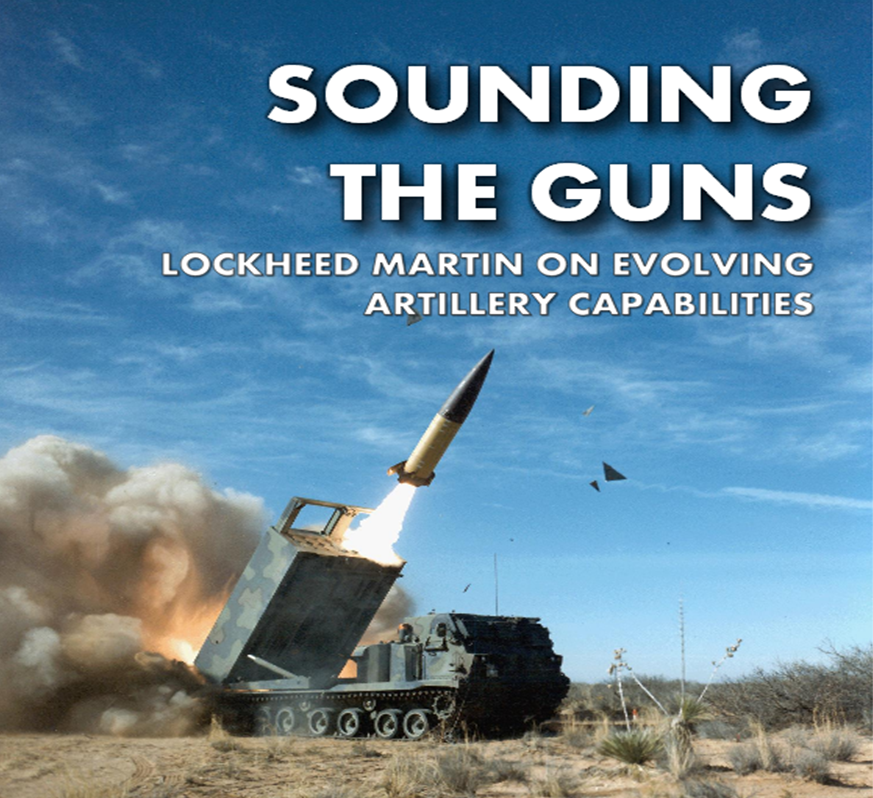
Lockheed Martin discusses evolving artillery capabilities

user posted image

For a company that has one of the most seasoned histories in the U.S. defence market, dating back more than 40 years, it is no surprise that its role in supporting the field artillery needs of both its American and international customers is held in high regard. From the Army Tactical Missile System (ATACMS) to the High Mobility Artillery Rocket System (HIMARS), we take a look at where the company's artillery focus lies today in this exclusive feature.

Download the feature by clicking on the picture below: http://www.defenceiq.com/army-and-land-for...llery-lockheed/

13 Pages « < 10 11 12 13 >
Bump Topic Topic ClosedOptions New Topic
 

Change to:
| Lo-Fi Version
0.0687sec    0.43    7 queries    GZIP Disabled
Time is now: 13th December 2025 - 06:33 AM