Welcome Guest ( Log In | Register )

Outline · [ Standard ] · Linear+

 The World Through A Macro Lens, Macro Photography <3

views
     
TS[PF] T.J.
post Jun 29 2014, 10:45 PM, updated 10y ago

20k VIP Club
Group Icon
Elite
24,193 posts

Joined: Feb 2010
From: Perak
Hello guys notworthy.gif notworthy.gif

I would like to share some of my Macro Photographs here which will be updated on a daily basis icon_rolleyes.gif I hope you will enjoy the photos and more importantly, learn some facts out of them ^___^
I would also like to promote my new blog on Macro Photography, hope you guys can support support: PixelsDimension

Apart from promoting and teaching about Macro Photography, as a Scientist I hope the blog will eventually act as a platform to help us understand and catalogue Malaysian flora and fauna better: It is time we reduce our reliance on foreigners to help us with our wildlife treasures thumbup.gif

The following are some of my recent Macro Photos (descriptions are all within the links); thank you for viewing and feel free to C&C!:
#1
user posted imageStink Bug by PF T.J., on Flickr

#2
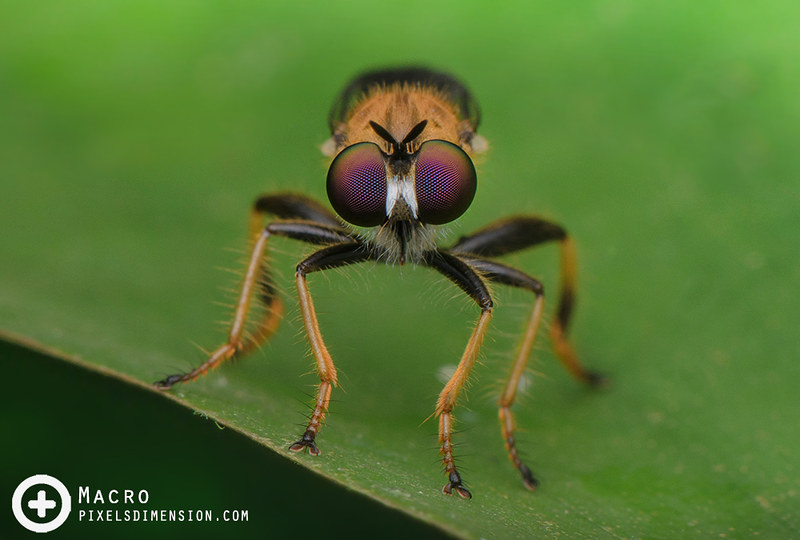
user posted imageRobberfly by PF T.J., on Flickr

#3
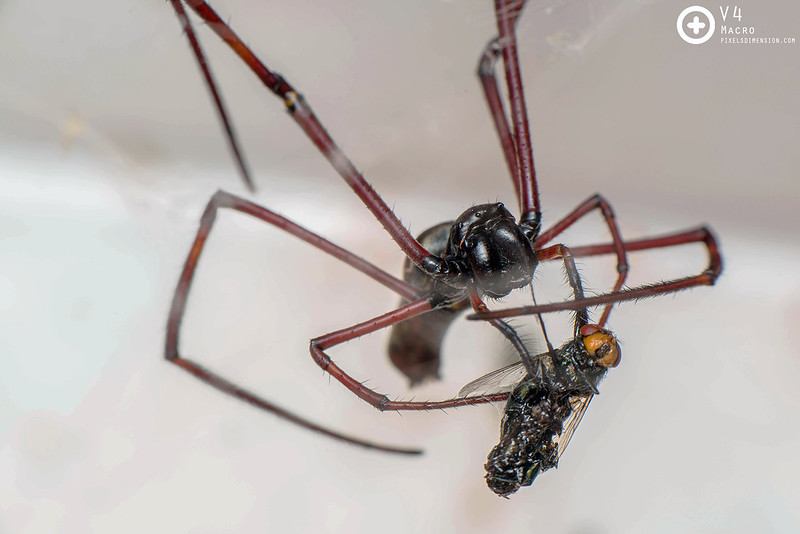
user posted imageNephila pilipes ♂ by PF T.J., on Flickr

#4
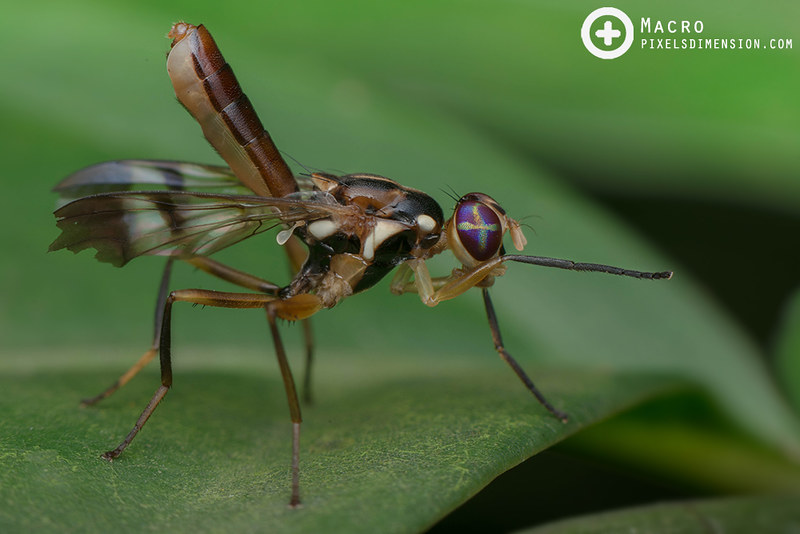
user posted imageStalk-Eyed Fly (Teleopsis sp.) by PF T.J., on Flickr

#5
user posted imageFlask-shaped pitcher plant (Nepenthes ampullaria) by PF T.J., on Flickr

#6
user posted imageRopalidia (?) wasp in flight by PF T.J., on Flickr

#7
user posted imageArgiope versicolor ♀ by PF T.J., on Flickr

#8
user posted imageMountain Horned Dragon - Acanthosaura armata by PF T.J., on Flickr

#9
user posted imageOlive Tree Skink - Dasia cf. olivacea by PF T.J., on Flickr

#10
user posted imageNephila cf. kuhlii ♀ by PF T.J., on Flickr

This post has been edited by [PF] T.J.: Nov 3 2014, 11:19 PM
TS[PF] T.J.
post Jun 29 2014, 10:48 PM

20k VIP Club
Group Icon
Elite
24,193 posts

Joined: Feb 2010
From: Perak
#11
user posted imageHeavy Jumper (Hyllus sp. ♂) showing fang arrangement by PF T.J., on Flickr

#12
user posted imageMacracantha arcuata ♀ by PF T.J., on Flickr

#13
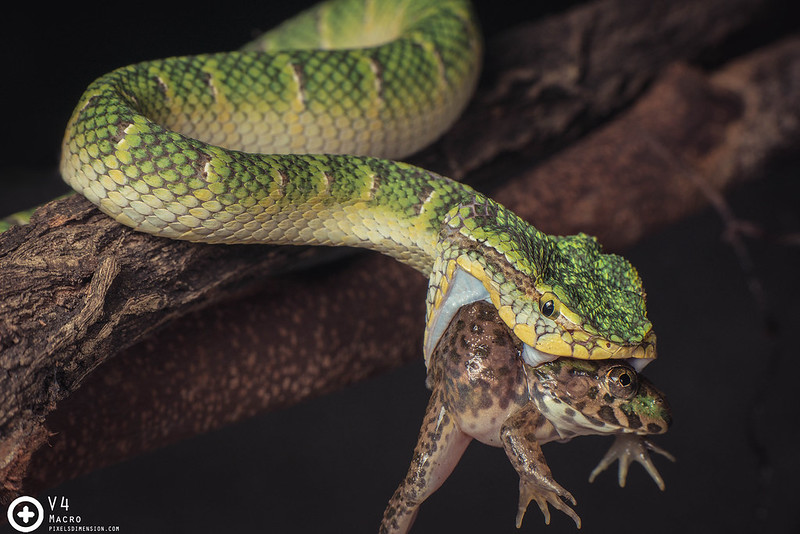
user posted imageWagler's Pit Viper (Tropidolaemus wagleri) feasting by PF T.J., on Flickr

#14
user posted imageGiant Forest Scorpion (Heterometrus spinifer) glowing under UV light by PF T.J., on Flickr

#15
user posted imageGreen Crested Lizard 1- Bronchocela cristatella by PF T.J., on Flickr

#16
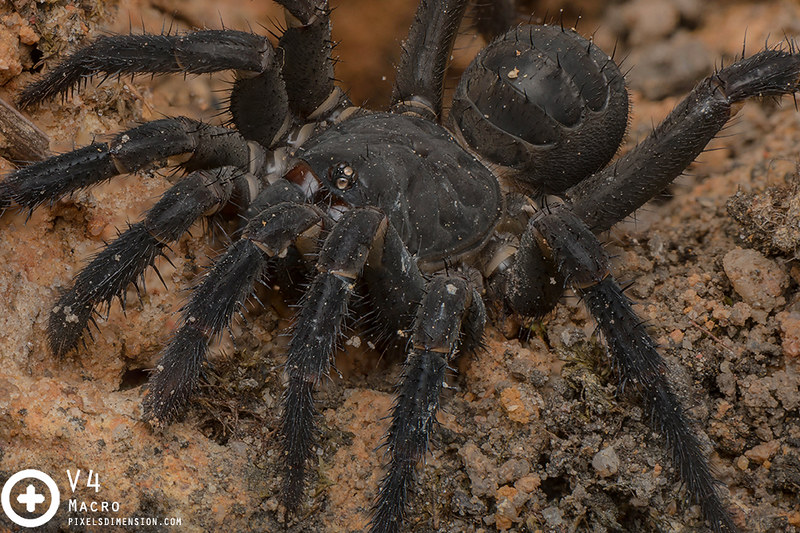
user posted imageLiphistius desultor ♀ by PF T.J., on Flickr

#17
user posted imageCicindela aurulenta Tiger Beetles Mating by PF T.J., on Flickr

#18
user posted imageScolopendra subspinipes by PF T.J., on Flickr

#19
user posted imageTree-climbing Crab (Episesarma sp.) by PF T.J., on Flickr

#20
user posted imageArgiope versicolor web wrapping by PF T.J., on Flickr
uraki
post Jul 1 2014, 04:19 PM

Getting Started
**
Junior Member
182 posts

Joined: Jan 2003


Awesome macro shots!
My favourites are 1,8,13,14.
CaptainJack
post Jul 1 2014, 04:23 PM

Getting Started
**
Junior Member
82 posts

Joined: Apr 2012


+ 1
Very nice pictures..

TS[PF] T.J.
post Jul 1 2014, 04:31 PM

20k VIP Club
Group Icon
Elite
24,193 posts

Joined: Feb 2010
From: Perak
QUOTE(uraki @ Jul 1 2014, 04:19 PM)
Awesome macro shots!
My favourites are 1,8,13,14.
*
Thanks man!
And very great taste there mate haha, the ones you mentioned are my favourites too haha notworthy.gif

QUOTE(CaptainJack @ Jul 1 2014, 04:23 PM)
+ 1
Very nice pictures..
*
Thank you man, appreciate it! notworthy.gif
justified
post Jul 1 2014, 04:38 PM

Getting Started
**
Junior Member
121 posts

Joined: Nov 2011


wow, how did u take tht pic, Wagler's Pit Viper ? fantastic !are u a phd holder ?
TS[PF] T.J.
post Jul 1 2014, 07:51 PM

20k VIP Club
Group Icon
Elite
24,193 posts

Joined: Feb 2010
From: Perak
QUOTE(justified @ Jul 1 2014, 04:38 PM)
wow, how did u take tht pic, Wagler's Pit Viper ? fantastic !are u a phd holder ?
*
Good question mate haha notworthy.gif

My cousin just so happen to be doing research on snake venom laugh.gif So I just join in the fun. We gave the viper (reared in aquarium) a frog to eat to distract it, then we took the snake (on a branch) out for shots laugh.gif Most creatures are less sensitive while eating; after all, they don't get meals that often.

Purposely put the snake in a middle of the room so that the background becomes dark.

I just finished my phD haha... weirdly my topic was not on entomology or arachnology laugh.gif
justified
post Jul 1 2014, 07:54 PM

Getting Started
**
Junior Member
121 posts

Joined: Nov 2011


oh congratz..haha a phd who is pro in phtography smile.gif cnt get any better.. where u graduate from if u dont mind me asking?
TS[PF] T.J.
post Jul 1 2014, 08:02 PM

20k VIP Club
Group Icon
Elite
24,193 posts

Joined: Feb 2010
From: Perak
QUOTE(justified @ Jul 1 2014, 07:54 PM)
oh congratz..haha a phd who is pro in phtography smile.gif cnt get any better.. where u graduate from if u dont mind me asking?
*
Thanks man notworthy.gif
Quite a lot of advantages when you are good in photography (photo editing in particular), very useful for publications laugh.gif

Aiya, I graduated locally hehe, University of Malaya icon_rolleyes.gif
justified
post Jul 1 2014, 08:29 PM

Getting Started
**
Junior Member
121 posts

Joined: Nov 2011


wow u must be smart UM is #1 in malaysia..u shld consider apply for nat geographic freelance photographer haha. keep up the work, inspiring for me

p/s: do u shoot macro handheld or tripod? ppl tend to suggest use tripod to avoid shake, but i find it very troublesome to set it up, not to mention the time it takes...the insects would have vanish by the time i am ready with the tripod.

This post has been edited by justified: Jul 1 2014, 08:44 PM
mingyuyu
post Jul 1 2014, 10:36 PM

B A N N E D
Group Icon
Elite
3,249 posts

Joined: Oct 2011


wah the sifu finally opens a showcase thread.

too much awesomeness tongue.gif
TS[PF] T.J.
post Jul 2 2014, 12:37 AM

20k VIP Club
Group Icon
Elite
24,193 posts

Joined: Feb 2010
From: Perak
QUOTE(justified @ Jul 1 2014, 08:29 PM)
wow u must be smart UM is #1 in malaysia..u shld consider apply for nat geographic freelance photographer haha. keep up the work, inspiring for me

p/s: do u shoot macro handheld or tripod? ppl tend to suggest use tripod to avoid shake, but i find it very troublesome to set it up, not to mention the time it takes...the insects would have vanish by the time i am ready with the tripod.
*
Thanks again for the praise haha, but overpraise liao haha, UM is #1 in Malaysia only laugh.gif
I need better skills and knowledge to be able to qualify for NatGeo I guess haha, but I will try my best, thanks for the encouragement!

I agree with you, most of the time its too cumbersome and slow to bring a tripod, so macro photographers rely on using flashguns instead to "freeze" the moment. By doing that, you will essentially minimize minor handshakes and wind movements icon_rolleyes.gif

More details here if you are interested hehe: http://pixelsdimension.com/using-flash-in-macro-photography/


QUOTE(mingyuyu @ Jul 1 2014, 10:36 PM)
wah the sifu finally opens a showcase thread.

too much awesomeness  tongue.gif
*
Thanks man, your shots are good also ma, very artistic, I will never be able to get those kinds of shots haha... I'm too impatient tongue.gif

Had to open a showcase thread to help promote my blog haha, no choice laugh.gif
TS[PF] T.J.
post Jul 2 2014, 12:41 AM

20k VIP Club
Group Icon
Elite
24,193 posts

Joined: Feb 2010
From: Perak
Adding some more recent photos to the thread~ been taking a lot of photos lately since I really wanted to improve my light diffusion system laugh.gif


#21
user posted imageTransverse LadyBird (Coccinella cf. transversalis) copulation by PF T.J., on Flickr

#22
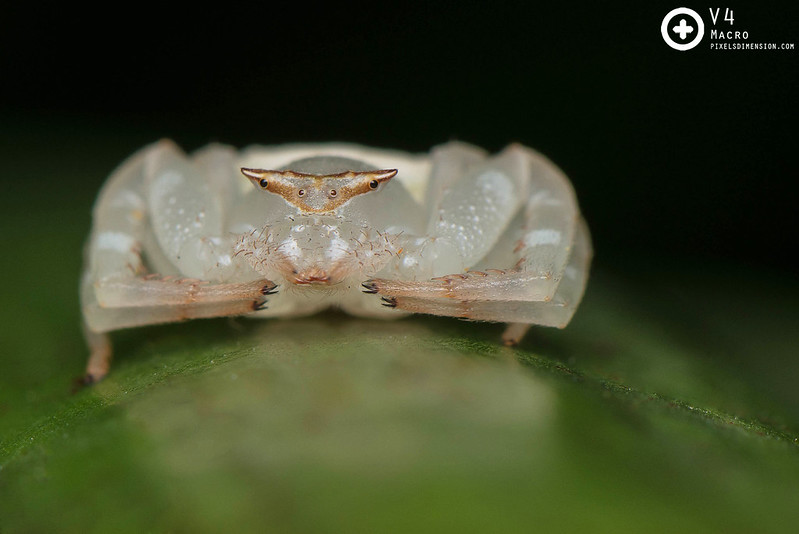
user posted imageCrab Spider (Mastira sp.? ♀) by PF T.J., on Flickr

#23
user posted imageHibiscus Stamen by PF T.J., on Flickr

#24
user posted imageSiler semiglaucus ♂ by PF T.J., on Flickr

#25
user posted imageTelamonia cf. dimidiata ♂ by PF T.J., on Flickr
fansoption
post Jul 2 2014, 02:39 PM

Look at all my stars!!
*******
Senior Member
3,065 posts

Joined: Jan 2003
Wah Sifu opens a showcase thread laio, support!
TS[PF] T.J.
post Jul 2 2014, 04:34 PM

20k VIP Club
Group Icon
Elite
24,193 posts

Joined: Feb 2010
From: Perak
QUOTE(fansoption @ Jul 2 2014, 02:39 PM)
Wah Sifu opens a showcase thread laio, support!
*
Thanks man, still no chance to take awesome flower macros like you do sad.gif
fansoption
post Jul 2 2014, 05:19 PM

Look at all my stars!!
*******
Senior Member
3,065 posts

Joined: Jan 2003
QUOTE(PF T.J. @ Jul 2 2014, 04:34 PM)
Thanks man, still no chance to take awesome flower macros like you do  sad.gif
*
i no that awesome anymore smile.gif
TS[PF] T.J.
post Jul 2 2014, 06:38 PM

20k VIP Club
Group Icon
Elite
24,193 posts

Joined: Feb 2010
From: Perak
QUOTE(fansoption @ Jul 2 2014, 05:19 PM)
i no that awesome anymore smile.gif
*
Your flower shots still are rclxms.gif
Not shooting macro anymore? sad.gif
TS[PF] T.J.
post Jul 8 2014, 09:14 PM

20k VIP Club
Group Icon
Elite
24,193 posts

Joined: Feb 2010
From: Perak
#26
user posted imageArgiope versicolor reborn by PF T.J., on Flickr

#27
user posted imageArgiope versicolor underside by PF T.J., on Flickr

#28
user posted imageNephila cf. kuhlii underside by PF T.J., on Flickr

#29
user posted imageMulti-coloured Phintella- Phintella versicolor ♀ by PF T.J., on Flickr

#30
user posted imageIridescent Green Garden Jumper- Cosmophasis thalassina ♂) by PF T.J., on Flickr

This post has been edited by [PF] T.J.: Jul 10 2014, 12:54 AM
Pmc
post Jul 13 2014, 07:48 PM

(╯°□°)╯︵ ┻━┻
******
Senior Member
1,182 posts

Joined: Oct 2007
From: Asgard


wa.. master sifu open gallery liao
TS[PF] T.J.
post Jul 14 2014, 09:43 PM

20k VIP Club
Group Icon
Elite
24,193 posts

Joined: Feb 2010
From: Perak
QUOTE(Pmc @ Jul 13 2014, 07:48 PM)
wa.. master sifu open gallery liao
*
Thank you sifu! notworthy.gif notworthy.gif
I haven't reached masta level yet bro huhu...

Still a lot to improve, especially with light diffusion... really a lot of trial-and-error to do with DIY diffuser haha laugh.gif
TS[PF] T.J.
post Jul 14 2014, 09:45 PM

20k VIP Club
Group Icon
Elite
24,193 posts

Joined: Feb 2010
From: Perak
#31
user posted imageBlackwood Golden Orb Spider wrapping up food- Nephila cf. kuhlii by PF T.J., on Flickr

#32
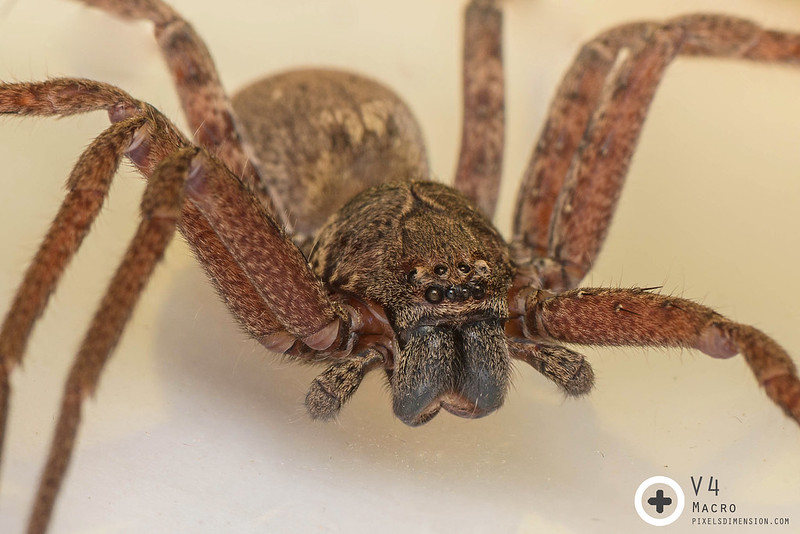
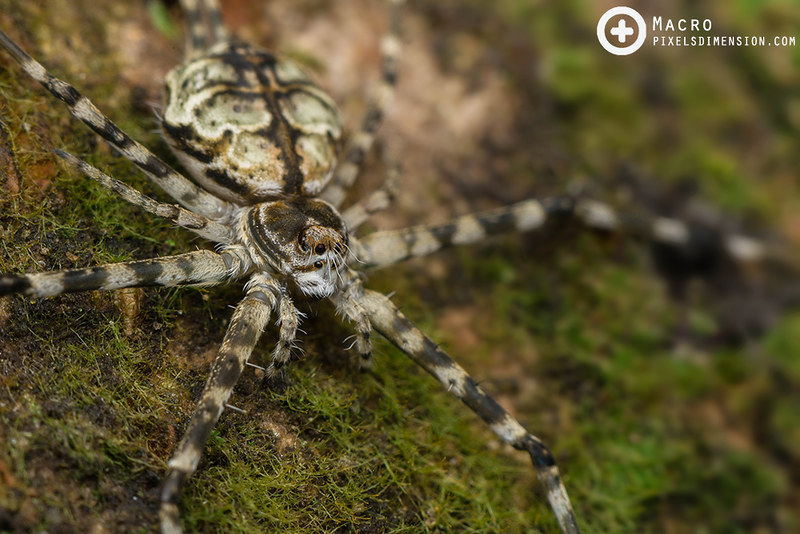
user posted imageHuntsman Spider- Heteropoda sp. ♀ by PF T.J., on Flickr

#33
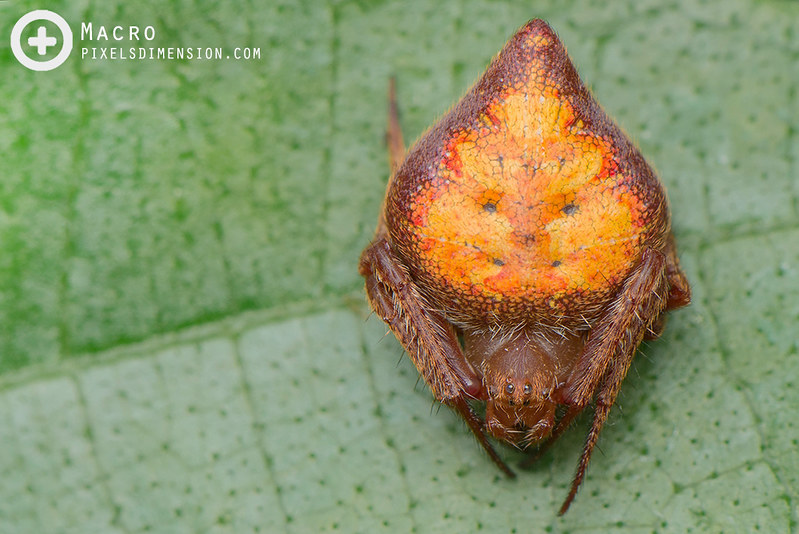
user posted imageKidney Garden Spider- Araneus mitificus ♀ by PF T.J., on Flickr

#34
user posted imageCommon White Crab Spider- Thomisus callidus ♀ by PF T.J., on Flickr

#35
user posted imageElectric Blue Banded Phintella- Phintella vittata ♂ by PF T.J., on Flickr
TS[PF] T.J.
post Jul 20 2014, 01:13 AM

20k VIP Club
Group Icon
Elite
24,193 posts

Joined: Feb 2010
From: Perak
#36
user posted imageThiania bhamoensis ♂ upclose - Fighting Spider by PF T.J., on Flickr

#37
user posted imageArgiope catenulata ♀ upclose- Silver-Yellow St. Andrew's Cross Spider by PF T.J., on Flickr

#38
user posted imagePear-shaped Opadometa- Opadometa fastigiata ♀ by PF T.J., on Flickr

#39
user posted imageWagler's Pit Viper (Tropidolaemus wagleri) feasting by PF T.J., on Flickr

#40
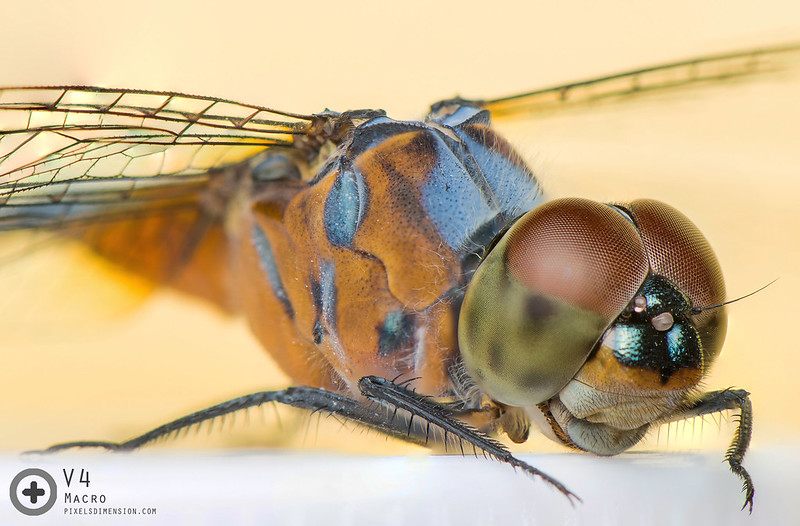
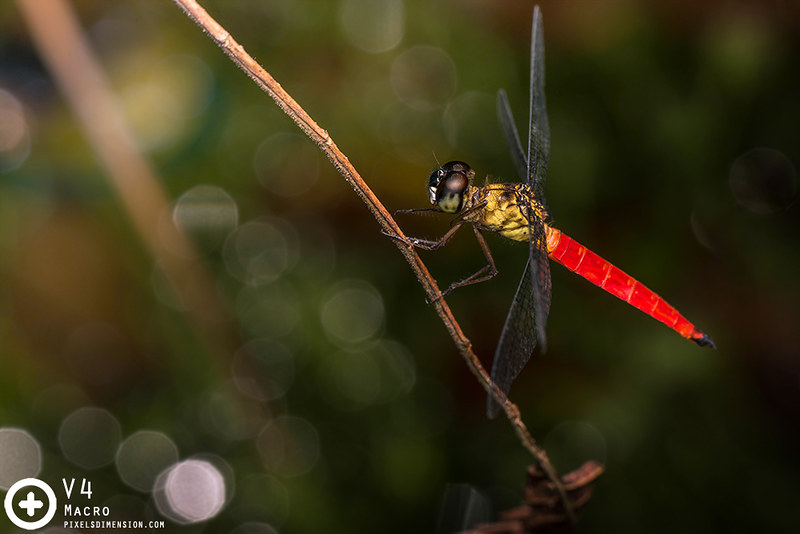
user posted imageBlue Dasher- Brachidiplax chalybea ♂ by PF T.J., on Flickr
TS[PF] T.J.
post Aug 1 2014, 04:22 PM

20k VIP Club
Group Icon
Elite
24,193 posts

Joined: Feb 2010
From: Perak
#41
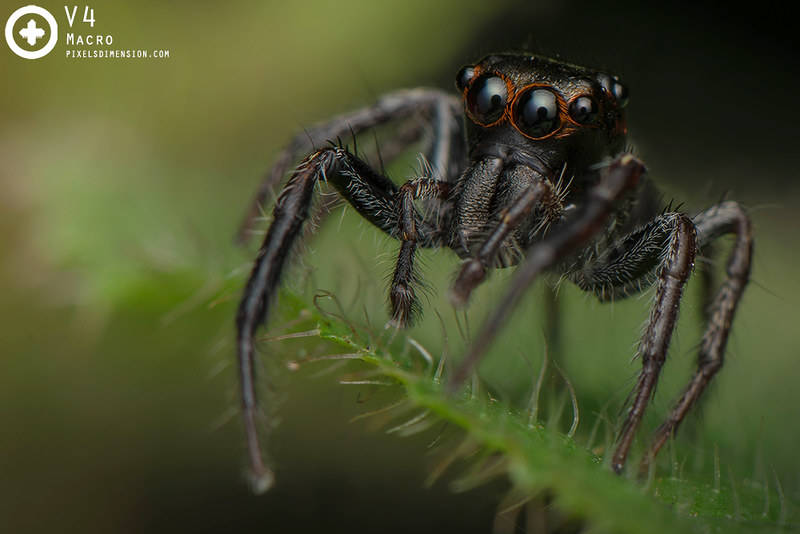
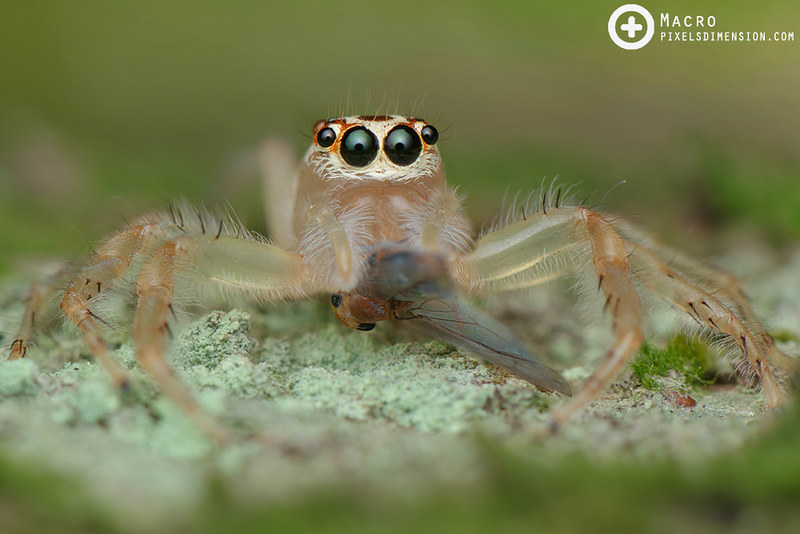
user posted imageJumping Spider ♂ (unidentified) by PF T.J., on Flickr

#42
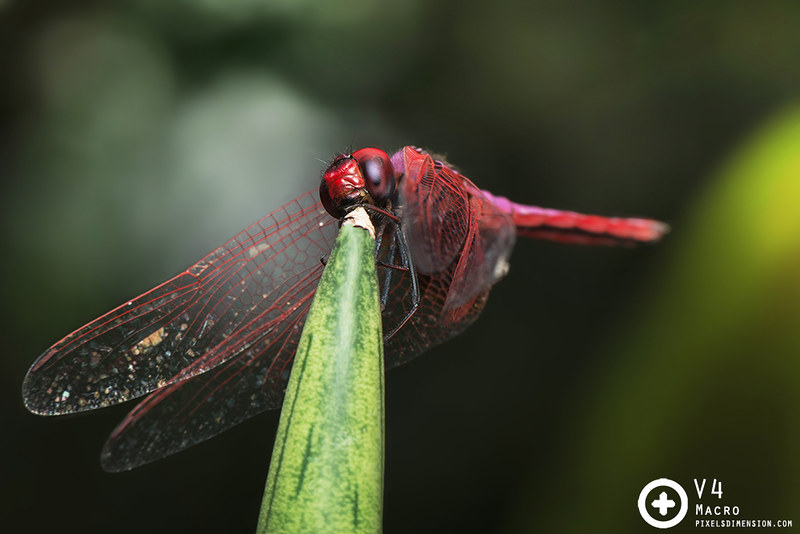
user posted imageTrithemis aurora ♂- Crimson Dropwing by PF T.J., on Flickr

#43
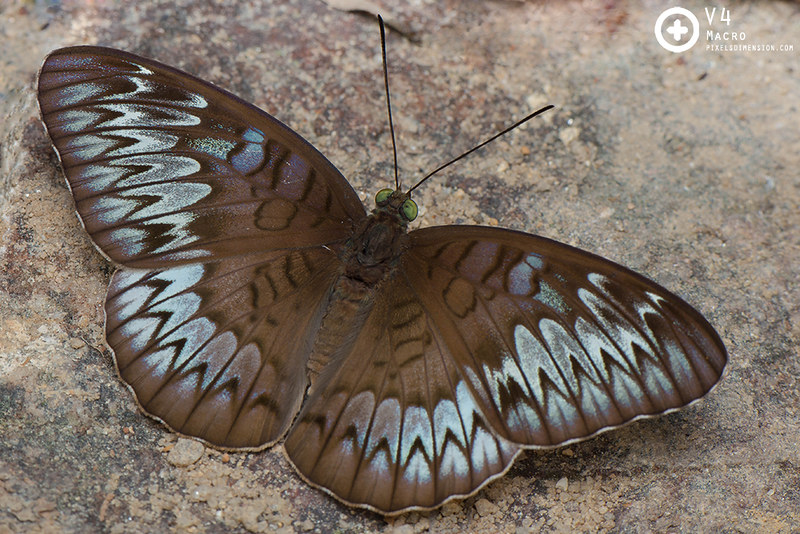
user posted imageEuthalia sp. (?) Butterfly by PF T.J., on Flickr

#44
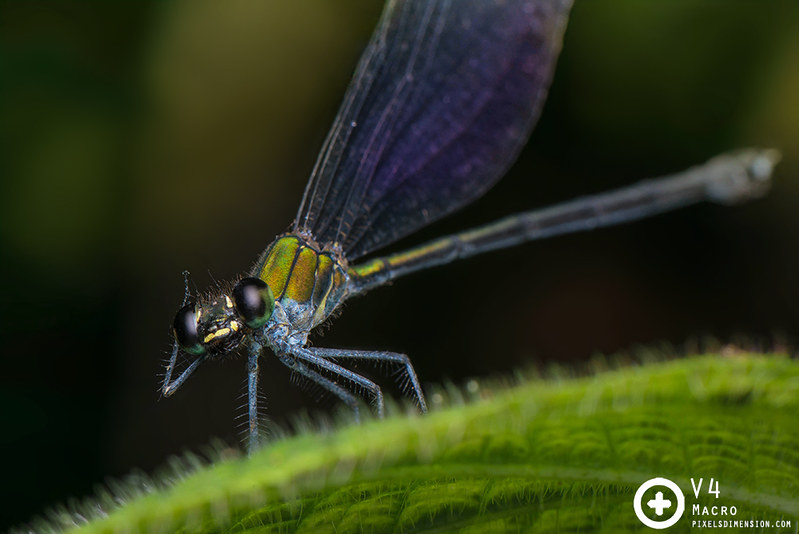
user posted imageVestalis cf. amethystina ♀ salute- Common Flashwing Damselfly by PF T.J., on Flickr

#45
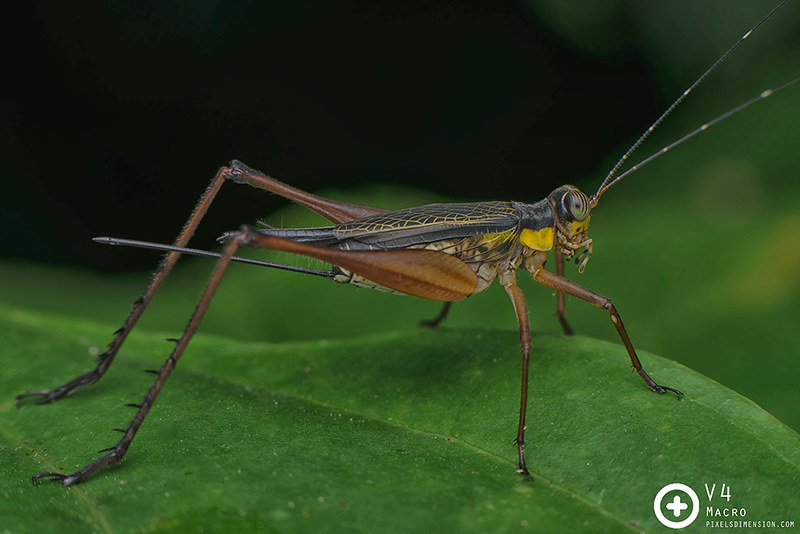
user posted imageNisitrus vittatus ♀- Common Bush Cricket by PF T.J., on Flickr

For more photos and guides on Macro Photography, please check out my blog: http://pixelsdimension.com/ rclxms.gif rclxms.gif
TS[PF] T.J.
post Aug 6 2014, 06:02 PM

20k VIP Club
Group Icon
Elite
24,193 posts

Joined: Feb 2010
From: Perak
#46
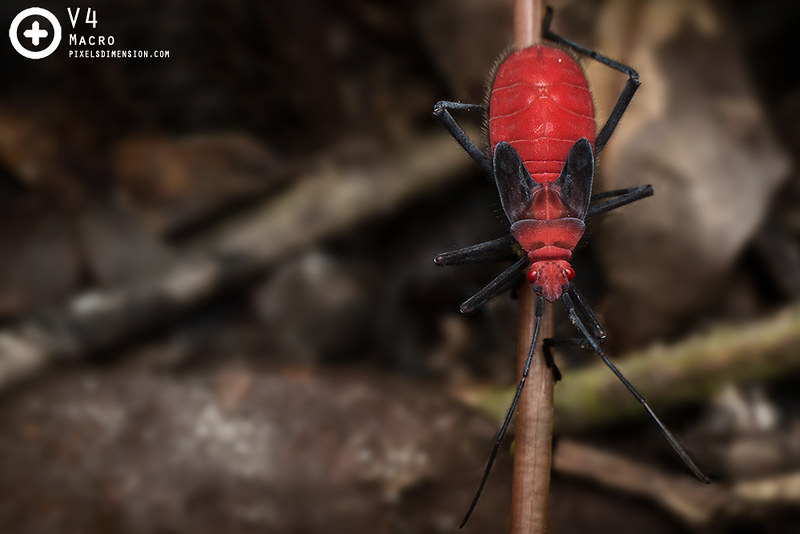
user posted imageStink bug (?) by PF T.J., on Flickr

#47
user posted imagePlexippus petersi ♀- Common Housefly Catcher by PF T.J., on Flickr

#48
user posted imageLiphistius malayanus ♀- Malaysian Trapdoor Spider by PF T.J., on Flickr

#49
user posted imageLiphistius desultor ♀- Giant Trapdoor Spider by PF T.J., on Flickr

#50
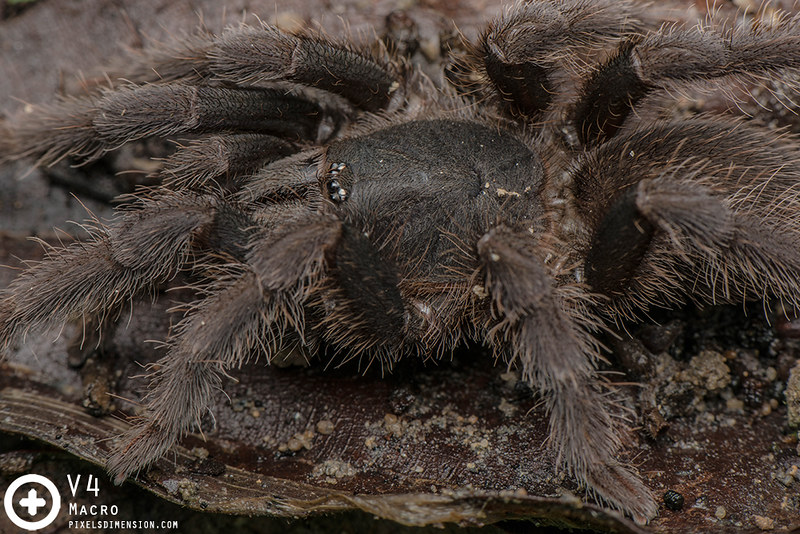
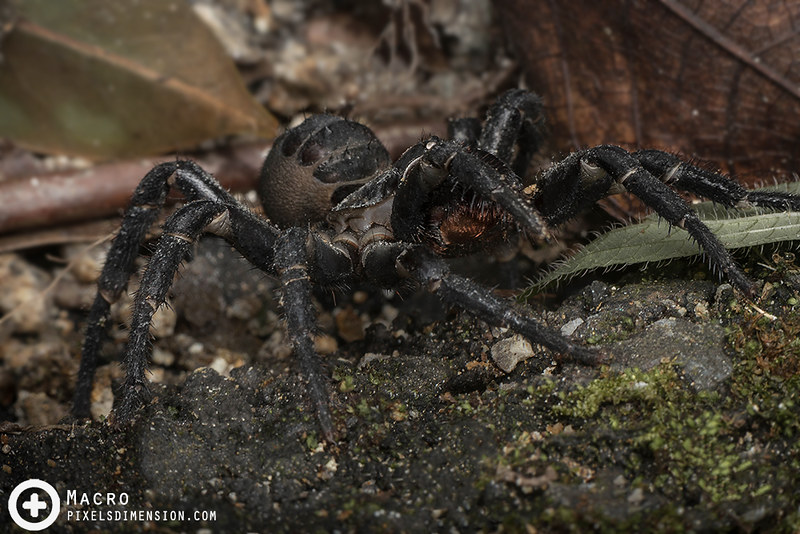
user posted imageCoremiocnemis sp. ♀- Common Black Femur Tarantula by PF T.J., on Flickr

For more info and guides on Macro Photography, please kindly visit my blog: http://pixelsdimension.com/

notworthy.gif notworthy.gif
Ask_Yip
post Aug 7 2014, 03:00 PM

Retired Audiophiles
*******
Senior Member
2,864 posts

Joined: Feb 2011
From: NoWhere
interesting macro photos
TS[PF] T.J.
post Aug 7 2014, 03:14 PM

20k VIP Club
Group Icon
Elite
24,193 posts

Joined: Feb 2010
From: Perak
QUOTE(Ask_Yip @ Aug 7 2014, 03:00 PM)
interesting macro photos
*
Thank you man, really appreciate it notworthy.gif notworthy.gif
TS[PF] T.J.
post Sep 3 2014, 06:29 PM

20k VIP Club
Group Icon
Elite
24,193 posts

Joined: Feb 2010
From: Perak
#51
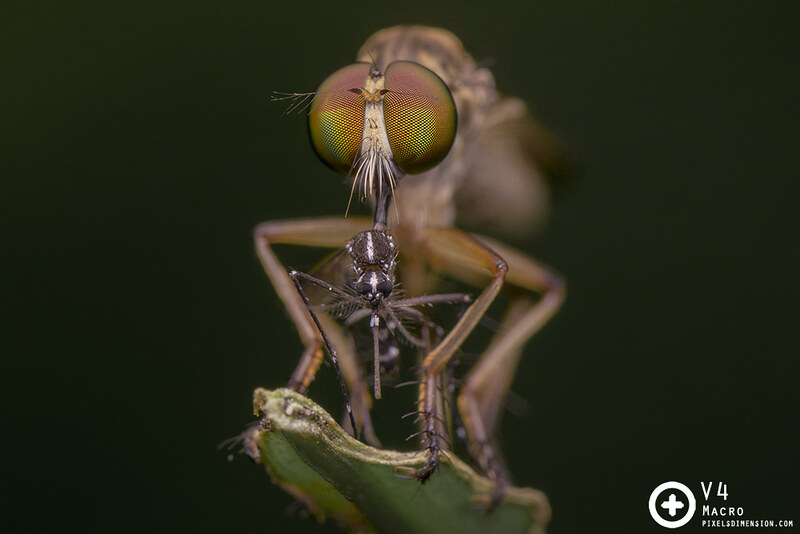
user posted imageRobberfly with mosquito prey by PF T.J., on Flickr

#52
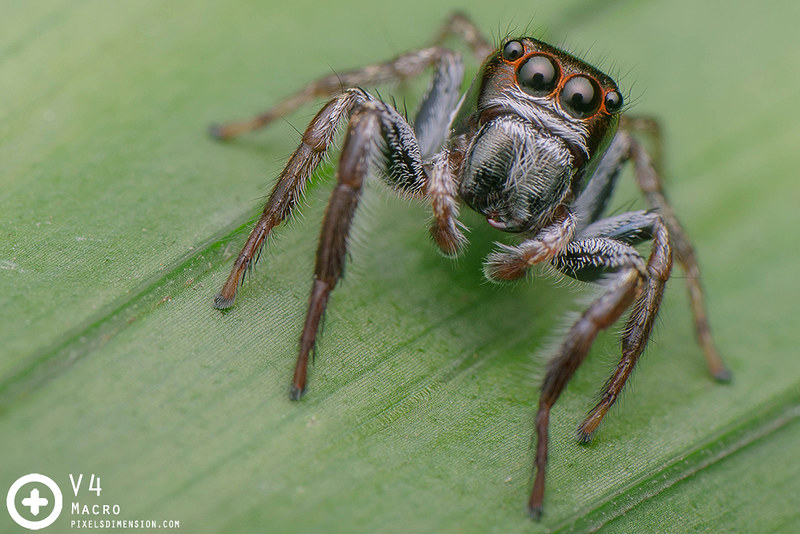
user posted imageUnidentified Jumping Spider (Ptocasius sp.?) ♂ by PF T.J., on Flickr

#53
user posted imageBronchocela cristatella feasting- Green Crested Lizard by PF T.J., on Flickr

#54
user posted imageDendrolycosa sp. ♀- Mangrove Swamp Dendrolycosa by PF T.J., on Flickr

#55
user posted imageOrchithemis pulcherrima ♂- Variable Sentinal by PF T.J., on Flickr

For more photos and guides on Macro Photography, please check out my blog: http://pixelsdimension.com/
TS[PF] T.J.
post Sep 9 2014, 11:13 AM

20k VIP Club
Group Icon
Elite
24,193 posts

Joined: Feb 2010
From: Perak
#56
user posted imageFruitfly (Adrama sp.) by PF T.J., on Flickr

#57
user posted imageTelamonia dimidiata ♀ with prey by PF T.J., on Flickr

#58
user posted imageHersilia sumatrana ♀ - Sumatran Two-tailed Spider by PF T.J., on Flickr

#59
user posted imageAngry Malaysian Trapdoor Spider (Liphistius malayanus ♀) by PF T.J., on Flickr

#60
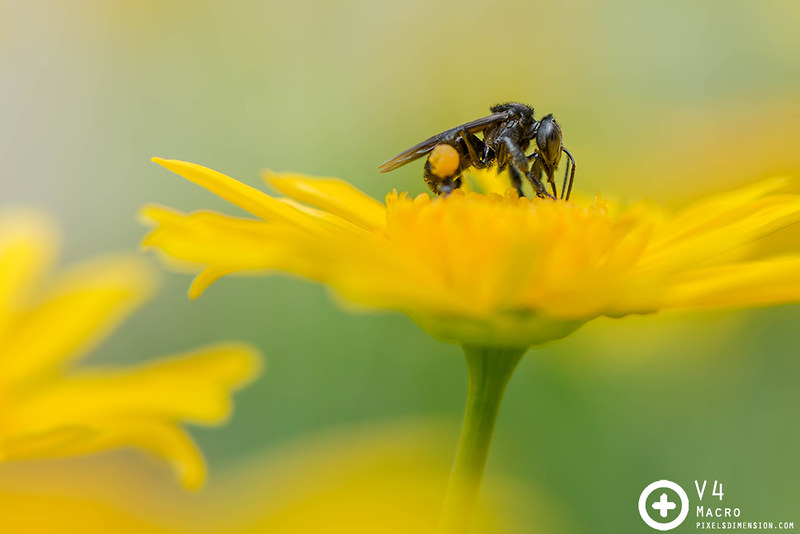
user posted imageStingless bee collecting nectar (Trigona sp.) by PF T.J., on Flickr


*For more photos and guides on Macro Photography, please check out my blog: http://pixelsdimension.com/
TS[PF] T.J.
post Sep 16 2014, 05:50 PM

20k VIP Club
Group Icon
Elite
24,193 posts

Joined: Feb 2010
From: Perak
#61
user posted imageGolden-Coloured Tortoise Beetle (Aspidomorpha sp.; Cassidinae) by PF T.J., on Flickr

An extremely beautiful Tortoise Beetle, especially when it flies around under the morning sunlight!

These bugs have transparent exoskeleton that sort of act like a shield to the bug (Not sure why these are not called Shield Bugs instead tongue.gif)

Unfortunately, this gorgeous-looking beetle is kind of a pest >_<

*For more photos and guides on Macro Photography, please check out my blog: http://pixelsdimension.com/

This post has been edited by [PF] T.J.: Sep 16 2014, 05:53 PM
TS[PF] T.J.
post Sep 16 2014, 05:52 PM

20k VIP Club
Group Icon
Elite
24,193 posts

Joined: Feb 2010
From: Perak
#62
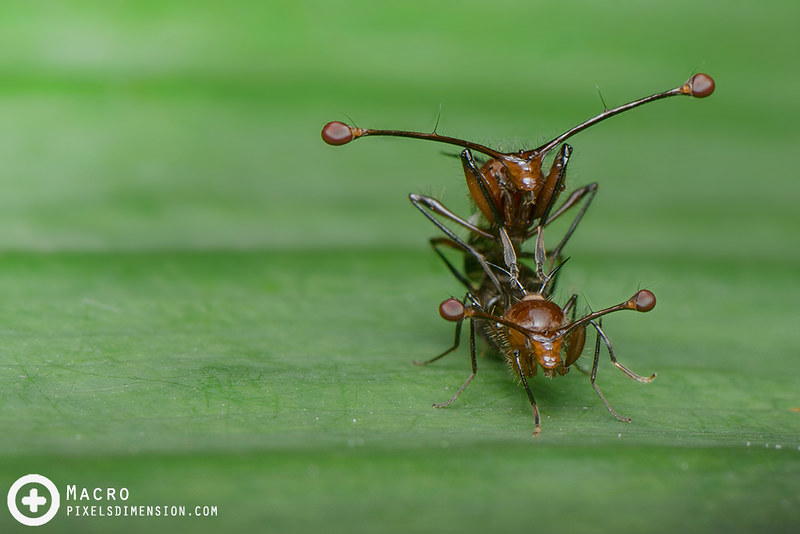
user posted imageStalk-eye Flies (Teleopsis sp.) mating by PF T.J., on Flickr

I was lucky enough to find and observe a mating pair recently happy.gif

Stalk-eye Flies, as the name suggest, have very long eye-stalks (yes, those are the eyes on the far left and right tongue.gif).

The males (on top) tend to have much longer eye stalks, which acts as a prerequisite to "tackle" the females (bottom).

Males and females tend to rub their forelegs together (also in my Flickr account), which I suspect it to be a mode for stridulation- calling out for a mate.

When a pair of male and female are close together, the male will bend its body low while using its forelegs to continuously tap the surface of the leaf as a sign for mating.

When mating, the male steps on top of the female. The forelegs of the male are put on the "V-shaped" abdominal spines of the female (so that's what its for lol tongue.gif)

PS: These flies are a nightmare to photograph up-close due to their very weird body shape!

*For more photos and guides on Macro Photography, please check out my blog: http://pixelsdimension.com/

This post has been edited by [PF] T.J.: Sep 16 2014, 05:53 PM
TS[PF] T.J.
post Sep 16 2014, 05:54 PM

20k VIP Club
Group Icon
Elite
24,193 posts

Joined: Feb 2010
From: Perak
#63
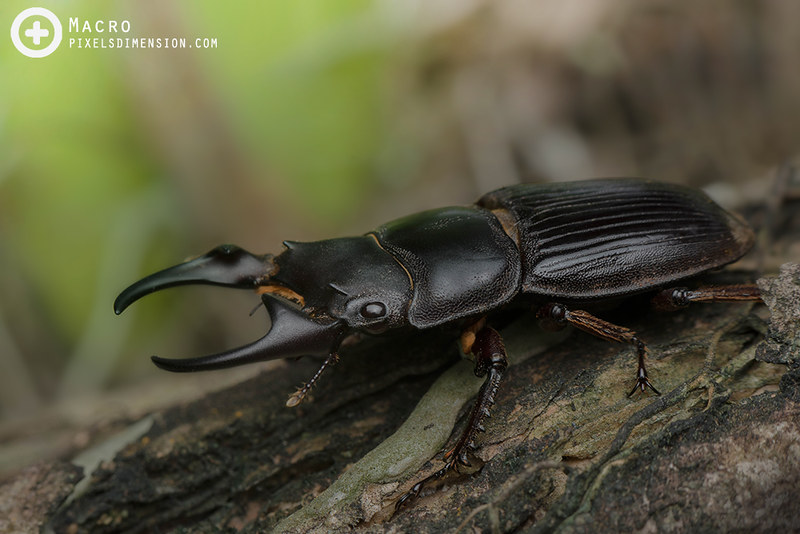
user posted imageStag Beetle- Aegus parallelus by PF T.J., on Flickr

A male Stag Beetle and its powerful pincers; heavily built yet capable of flying- essentially a flying tank!

*For more photos and guides on Macro Photography, please check out my blog: http://pixelsdimension.com/
TS[PF] T.J.
post Sep 16 2014, 05:54 PM

20k VIP Club
Group Icon
Elite
24,193 posts

Joined: Feb 2010
From: Perak
#64
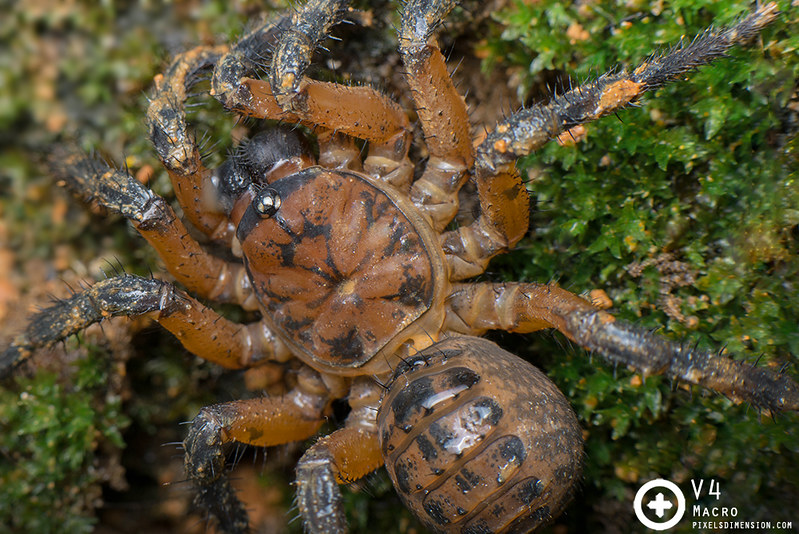
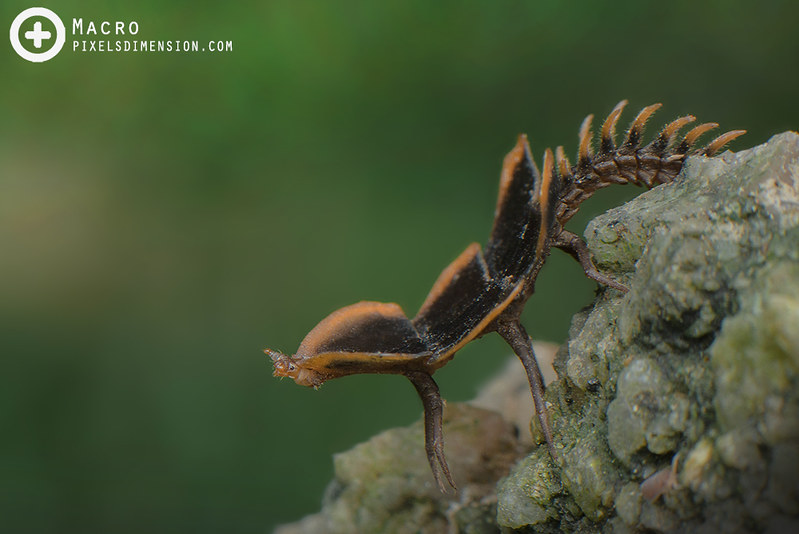
user posted imageHoi Sen's Trilobite Beetle (juv)- Platerodrilus ruficollis (?) by PF T.J., on Flickr

This particular beetle was originally described as Duliticola hoiseni; likely a juvenile.

Trilobite beetles are so-called due to their resemblance to the already-extinct Marine Trilobite arthropods.

The females of these beetles are termed Neotenous since they remain in larvae-form throughout its life.

*For more photos and guides on Macro Photography, please check out my blog: http://pixelsdimension.com/
TS[PF] T.J.
post Sep 16 2014, 05:55 PM

20k VIP Club
Group Icon
Elite
24,193 posts

Joined: Feb 2010
From: Perak
#65
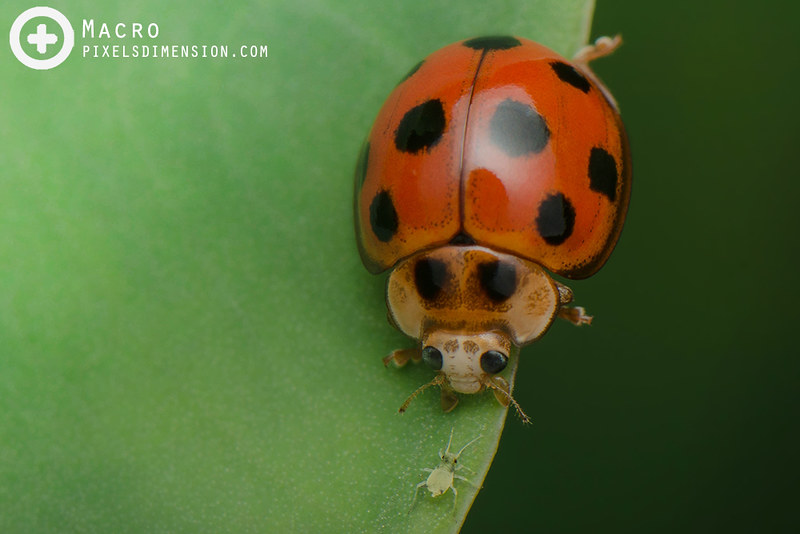
user posted imageLadybird vs. Aphid by PF T.J., on Flickr

A size comparison between a common ladybug and its breakfast- an aphid!

*For more photos and guides on Macro Photography, please check out my blog: http://pixelsdimension.com/
TS[PF] T.J.
post Sep 16 2014, 05:57 PM

20k VIP Club
Group Icon
Elite
24,193 posts

Joined: Feb 2010
From: Perak
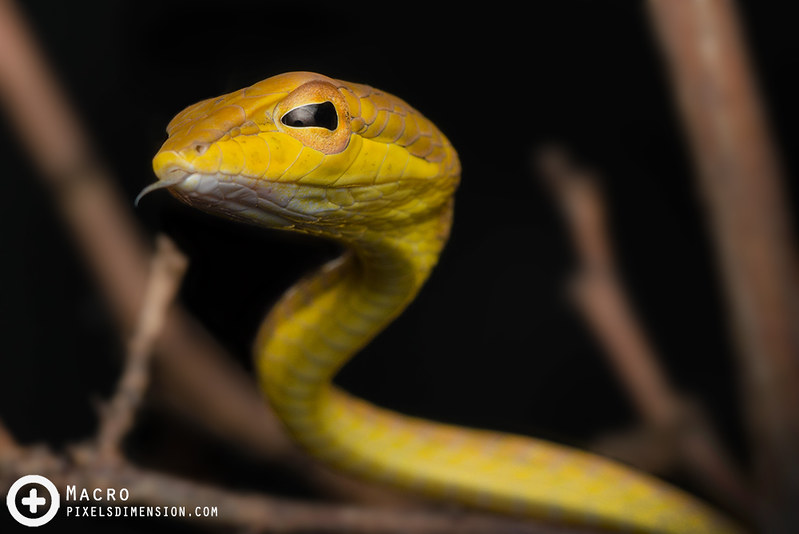
#66
user posted imageOriental vine snake- Ahaetulla prasina by PF T.J., on Flickr

A yellow morph of a beautiful juvenile Oriental Vine snake, which will probably change colour with age (?).

These particular genus of snakes are known to have binocular vision and horizontal pupils (see photo). They are ovoviviparous as well, unlike other snakes that lay eggs.

Snakes often flick out their forked tongues to "smell", detecting both friend and foe, predator and prey.

*For more photos and guides on Macro Photography, please check out my blog: http://pixelsdimension.com/

This post has been edited by [PF] T.J.: Sep 16 2014, 05:57 PM
TS[PF] T.J.
post Sep 16 2014, 05:58 PM

20k VIP Club
Group Icon
Elite
24,193 posts

Joined: Feb 2010
From: Perak
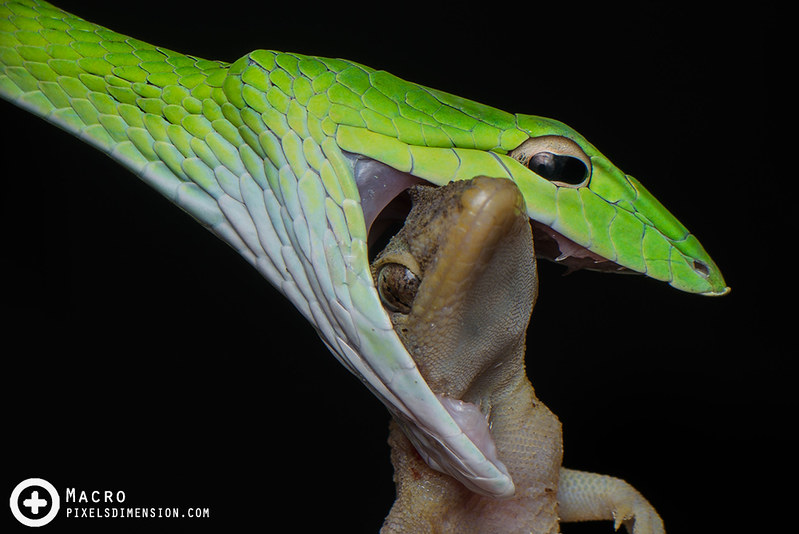
#67
user posted imageMalayan vine snake feasting- Ahaetulla mycterizans by PF T.J., on Flickr

As a member of the Colubrid family, the Malayan vine snake has groove teeth located at the back of its jaw (opisthoglyphous), which is very much different from those in vipers (Viperidae) and cobras (Elapidae). Although constituting the largest snake family, colubrids are generally harmless to humans (not un-painful though tongue.gif) .

Ahaetulla mycterizans is morphologically similar to Ahaetulla prasina apart from a white belly with paired longitudinal green lines.

*For more photos and guides on Macro Photography, please check out my blog: http://pixelsdimension.com/

This post has been edited by [PF] T.J.: Sep 16 2014, 05:58 PM
TS[PF] T.J.
post Sep 20 2014, 08:28 PM

20k VIP Club
Group Icon
Elite
24,193 posts

Joined: Feb 2010
From: Perak
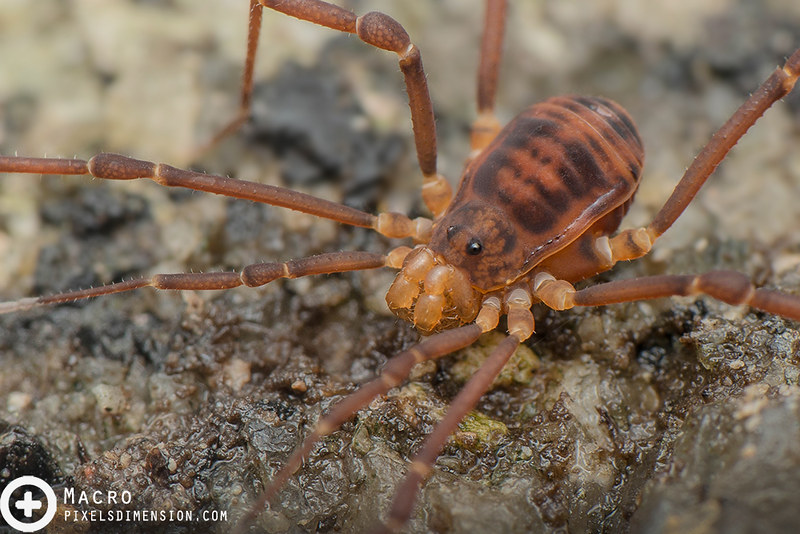
#68
user posted imageHarvestman-Opiliones; Tithaeus sp. (?) by PF T.J., on Flickr

Harvestmen look a lot like spider superficially (often confused with daddy-long-legged-spiders) but they are not considered as true spiders.

Despite also having eight legs, harvestmen do not have a distinctively separated thorax and abdomen like spiders do: The thorax and abdomen are merged together (as seen in photo .

Harvestmen are usually herbivours or scavengers.

*For more photos and guides on Macro Photography, please check out my blog: http://pixelsdimension.com/
TS[PF] T.J.
post Sep 20 2014, 08:29 PM

20k VIP Club
Group Icon
Elite
24,193 posts

Joined: Feb 2010
From: Perak
#69
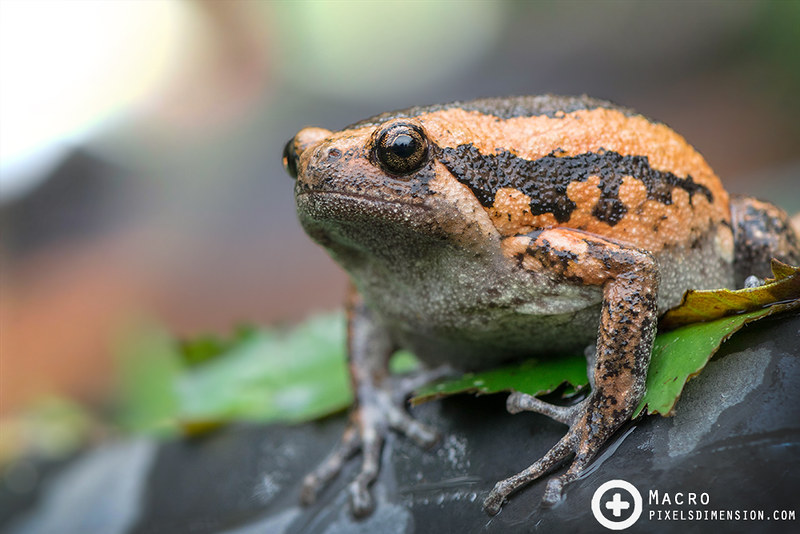
user posted imageBanded bullfrog- Kaloula pulchra ♀ by PF T.J., on Flickr

This cute and chubby frog is pretty well adapted to urban environments and often come out before heavy rains during the night.

Banded bullfrogs let out a loud and distinctive calls at night which we are all very familiar with.

When threatened, Banded Bullfrogs will inflate itself and becoming even rounder (and cuter!), and at the same time releasing sticky, and irritating goo from the skin of its body.

*For more photos and guides on Macro Photography, please check out my blog: http://pixelsdimension.com/
TS[PF] T.J.
post Sep 20 2014, 08:30 PM

20k VIP Club
Group Icon
Elite
24,193 posts

Joined: Feb 2010
From: Perak
#70
user posted imageEriovixia sp. ♀ - Red Morph by PF T.J., on Flickr

This brilliant-looking, female orb web spider looks superficially like the common whitish-grey Eriovixia laglaisei found in gardens, but is fiery red in colour! And I am quite sure there are plenty of different colour variants out there: Are the colour differences due to the difference in species? Adaptation to different environments? Or simply different stages of instar?

*For more photos and guides on Macro Photography, please check out my blog: http://pixelsdimension.com/
TS[PF] T.J.
post Sep 30 2014, 12:49 PM

20k VIP Club
Group Icon
Elite
24,193 posts

Joined: Feb 2010
From: Perak
#71
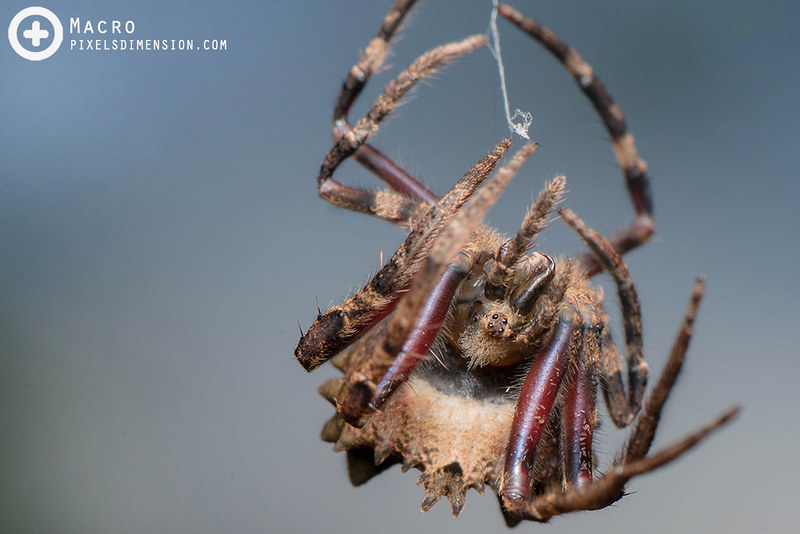
user posted imageTree-Stump Spider moulting- Poltys cf. illepidus ♀ by PF T.J., on Flickr

Most photos of Tree-Stump Spiders are taken while in resting stage, where the legs are all clumped together, making the superficial details less observable. I was lucky to find one moulting; took a few shots for record hehe XD

Tree-Stump Spiders are so-called due to their unique camouflage (note the abdominal spines) that look like tree branches.

*For more photos and guides on Macro Photography, please check out my blog: http://pixelsdimension.com/
TS[PF] T.J.
post Sep 30 2014, 12:49 PM

20k VIP Club
Group Icon
Elite
24,193 posts

Joined: Feb 2010
From: Perak
#72
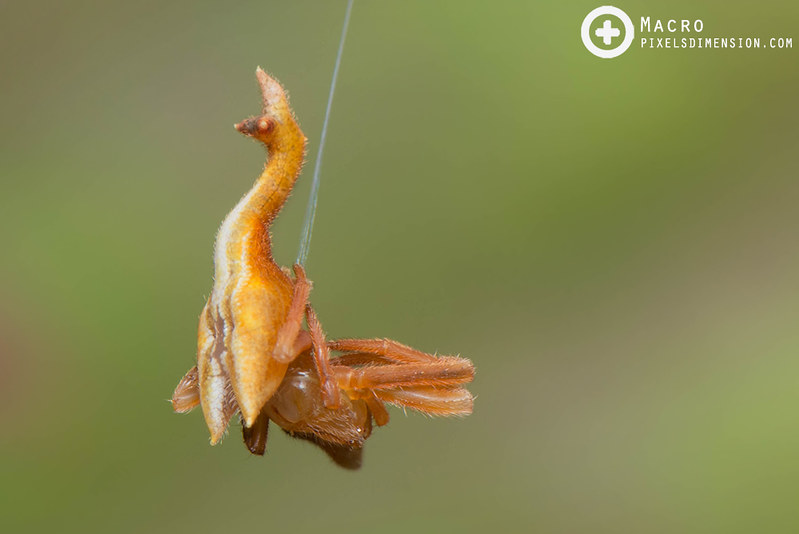
user posted imageScorpion Spider- Arachnura sp. ♀ by PF T.J., on Flickr

Despite imitating stings of scorpions, Arachnura uses the overall appearance to look like wilted leaves.

The tail itself is very flexible and can be curled upwards or downwards whenever necessary (i.e. walking on the ground). The tip of the tail is composed of three pointed ends which can also be used to hold on to the spider's web.

*For more photos and guides on Macro Photography, please check out my blog: http://pixelsdimension.com/

TS[PF] T.J.
post Sep 30 2014, 12:50 PM

20k VIP Club
Group Icon
Elite
24,193 posts

Joined: Feb 2010
From: Perak
#73
user posted imageMalayan Forest Gecko removing water droplets- Cyrtodactylus pulchellus by PF T.J., on Flickr

This unique-looking gecko is different from the normal geckos since it has bent, curved toes. As a result, a Malayan banded gecko cannot climb plastic or glass like the usual ones do (but the tail will break off like normal as a distraction to predators tongue.gif)

This gecko is nocturnal in nature, evident from the slit pupils. Unlike lizards, geckos do not have eyelids, so they have to lick water droplet or small irritants off using their tongues!

*For more photos and guides on Macro Photography, please check out my blog: http://pixelsdimension.com/

This post has been edited by [PF] T.J.: Sep 30 2014, 12:51 PM
TS[PF] T.J.
post Sep 30 2014, 12:51 PM

20k VIP Club
Group Icon
Elite
24,193 posts

Joined: Feb 2010
From: Perak
#74
user posted imageFunnel-Web Spider hunting a helpless grasshopper- Macrothele cf. segmentata ♀ by PF T.J., on Flickr

Macrothele spiders are known to be some of the most vicious-looking around; with several members within the Hexathelid family known to be fatal to humans.

Macrothele spiders can be identified by its dark body colour and the long and flexible spinnerets. These spiders build sophisticated webs (which can be very large) among leaf litter or within crevices of tree trunks or mud slopes.

Trip-silks are positioned throughout the entrance of the lair so as to warn the spider of predator and prey. The nest is built with plenty of entrance/ escape holes.

*For more photos and guides on Macro Photography, please check out my blog: http://pixelsdimension.com/
TS[PF] T.J.
post Sep 30 2014, 12:52 PM

20k VIP Club
Group Icon
Elite
24,193 posts

Joined: Feb 2010
From: Perak
#75
user posted imageA Tent Spider grooming itself- Cyrtophora sp. ♀ by PF T.J., on Flickr

Many are often surprised that spiders know how to groom themselves- they would be very dirty indeed if they don't haha

Spiders will not hesitate to clean their legs and mouthparts when water is available; they do so by inserting and moving their legs (one each time) in between the fangs to remove dirt and debris.

*For more photos and guides on Macro Photography, please check out my blog: http://pixelsdimension.com/
TS[PF] T.J.
post Oct 1 2014, 11:56 AM

20k VIP Club
Group Icon
Elite
24,193 posts

Joined: Feb 2010
From: Perak
#76
user posted imageSize Comparison- Ant vs. Stag Beetle (Aegus parallelus) by PF T.J., on Flickr

Was trying to see whether a Stag Beetle's legs were suited for moving and climbing on leaves (apparently not, it kept slipping). Awhile later, an ant came along, making a wonderful size comparison shot haha tongue.gif

For more photos and guides on Macro Photography, please check out my blog: http://pixelsdimension.com/
TS[PF] T.J.
post Oct 1 2014, 11:56 AM

20k VIP Club
Group Icon
Elite
24,193 posts

Joined: Feb 2010
From: Perak
#77
user posted imageMoth Pupa and Basket by PF T.J., on Flickr

Likely a pupa of an Arctiid moth. These brilliant builders take cocooning to a whole new level by "stitching" the hairs from their caterpillar stage to build a mesh-like cage for protection.

For more photos and guides on Macro Photography, please check out my blog: http://pixelsdimension.com/
TS[PF] T.J.
post Oct 2 2014, 04:58 PM

20k VIP Club
Group Icon
Elite
24,193 posts

Joined: Feb 2010
From: Perak
#78
user posted imageA juvenile Malabar Hermit Spider going in for the kill- Nephilengys malabarensis ♀ juv by PF T.J., on Flickr

Most, if not all web spiders detect their prey through vibrations. When a prey gets caught onto the webs, constant struggling will send vibrations through the silk lines which will alert the spider of its presence. The spider will then come in for the kill.

If the prey doesn't struggle, the spider will usually not be able to "detect" it since web spiders do not have the best eyesights.

Vibrations that are too strong (i.e. when a very large insect lands on the spider web) will also warn the spider, which will either flee, or shake its web violently to evict the unwanted visitor!

For more photos and guides on Macro Photography, please check out my blog: http://pixelsdimension.com/
TS[PF] T.J.
post Oct 3 2014, 10:34 PM

20k VIP Club
Group Icon
Elite
24,193 posts

Joined: Feb 2010
From: Perak
#79
user posted imageOrnamental Coin Spider- Herennia multipuncta ♀ by PF T.J., on Flickr

To me, the Ornamental Coin Spider is one of the most beautiful spiders out there. Photo of the spider here: https://www.flickr.com/photos/59583171@N07/...t-izag3r-iza2Sw

This spider can often be found lying flat on tree trunks, so most of the time people miss the opportunity to see the underside which is brilliant orange in colour! Amazingly beautiful!

For more photos and guides on Macro Photography, please check out my blog: http://pixelsdimension.com/
TS[PF] T.J.
post Oct 5 2014, 04:27 PM

20k VIP Club
Group Icon
Elite
24,193 posts

Joined: Feb 2010
From: Perak
#80
user posted imageGreat Angle Head Lizard- Gonocephalus grandis ♂♀ by PF T.J., on Flickr

Beautiful Great Angle Head Lizards perching on tree trunks to sun themselves for energy~

The male (left) has cool-looking body crests and richer body colours as compared to the female (right). Both lizards display yellow ventral spots although the ones on the males are surrounded by bluish body tints. Like most lizards, these will change colour depending on behaviour and environment.

Male may fight with one another, but usually the females will choose the males with the most brilliant display of colours- an indication of good genes and health essential for the survival of their next generation!

For more photos and guides on Macro Photography, please check out my blog: http://pixelsdimension.com/

mingyuyu
post Oct 5 2014, 08:20 PM

B A N N E D
Group Icon
Elite
3,249 posts

Joined: Oct 2011


Admire your knowledge in identifying all the species, salute to you tongue.gif

I bumped into a green scorpion today at FRIM, is it just a normal scorpion or? Because normally scorpions are in black or brown right?

Sorry for tumpang thread, but I will remove this if it distracts your thread.

user posted image

This post has been edited by mingyuyu: Oct 5 2014, 08:20 PM
TS[PF] T.J.
post Oct 5 2014, 08:59 PM

20k VIP Club
Group Icon
Elite
24,193 posts

Joined: Feb 2010
From: Perak
QUOTE(mingyuyu @ Oct 5 2014, 08:20 PM)
Admire your knowledge in identifying all the species, salute to you tongue.gif

I bumped into a green scorpion today at FRIM, is it just a normal scorpion or? Because normally scorpions are in black or brown right?

Sorry for tumpang thread, but I will remove this if it distracts your thread.
» Click to show Spoiler - click again to hide... «

*
Nice find there man~
Its a Giant Forest Scorpion, likely Heterometrus spinifer
This one is quite difficult to photograph since it has very reflective carapace laugh.gif

But like all scorpions and many other arthropods, this one will glow under UV, very nice to photograph thumbup.gif

user posted imageGiant Forest Scorpion (Heterometrus spinifer) glowing under UV light by PF T.J., on Flickr
mingyuyu
post Oct 5 2014, 09:59 PM

B A N N E D
Group Icon
Elite
3,249 posts

Joined: Oct 2011


QUOTE(PF T.J. @ Oct 5 2014, 08:59 PM)
Nice find there man~
Its a Giant Forest Scorpion, likely Heterometrus spinifer
This one is quite difficult to photograph since it has very reflective carapace  laugh.gif

But like all scorpions and many other arthropods, this one will glow under UV, very nice to photograph thumbup.gif

user posted imageGiant Forest Scorpion (Heterometrus spinifer) glowing under UV light by PF T.J., on Flickr
*
Yeah, was really lucky to bump into a large scorpion at the middle of the pathway. I heard that scorpion is quite hard to found at FRIM right?

It looks really funny in real life, the very shinny carapace and saturated green color make it looks like plastic toy at first.
TS[PF] T.J.
post Oct 5 2014, 10:32 PM

20k VIP Club
Group Icon
Elite
24,193 posts

Joined: Feb 2010
From: Perak
QUOTE(mingyuyu @ Oct 5 2014, 09:59 PM)
Yeah, was really lucky to bump into a large scorpion at the middle of the pathway. I heard that scorpion is quite hard to found at FRIM right?

It looks really funny in real life, the very shinny carapace and saturated green color make it looks like plastic toy at first.
*
Yeah I know what you mean haha laugh.gif They sure look plasticy, at first I was rather surprised too since like you I thought they are usually black in colour haha

Scorpions are quite common, just that they are nocturnal animals, thus harder to find during the day.
Finding a scorpion (and alot of other arthorpods) is very easy as long as you have a UV light icon_rolleyes.gif

TS[PF] T.J.
post Oct 6 2014, 12:21 PM

20k VIP Club
Group Icon
Elite
24,193 posts

Joined: Feb 2010
From: Perak
#81

user posted imageCurved Long-Spined Spider- Macracantha arcuata ♀ by PF T.J., on Flickr

Not all spiders are creepy ^___^

This spider is undoubtedly one of the most bizarre and beautiful out there due to its brilliant colours and of course, the two long protruding abdominal spines.

As wonderful as they may be, I am always amazed at how this particular species of spider (along with those of the genus Gasteracantha) manages to survive in the wild- although tough, the weird abdominal shapes actually hinders their movements significantly. The relatively short legs mean that they cannot really handle larger preys and have to rely very heavily on their large web constructions for food.


For more photos and guides on Macro Photography, please check out my blog: http://pixelsdimension.com/
TS[PF] T.J.
post Oct 7 2014, 04:57 PM

20k VIP Club
Group Icon
Elite
24,193 posts

Joined: Feb 2010
From: Perak

user posted imageSaving a Wagler's Pit Viper by PF T.J., on Flickr

My cousin saving a Pit Viper from potential harm, moving it into deeper areas of the forest, far away from humans.

Humans fear things that they do not understand. So when they see a Pit Viper (Ular Kapak) resting on the fence, they either kill it, or they run away and get someone else to come and kill it @@

Most people "understands" that common pit vipers will attack them on sight, thus the hostility. Of course, they are dangerous and shouldn't be fooled around with, but I don't think they should be killed on sight- they won't attack unless seriously provoked

#82
user posted imageWagler's Pit Viper- Tropidolaemus wagleri ♀ by PF T.J., on Flickr

This Pit Viper may be relatively common, but its fearsome looks make it seem like it was sent directly from hell itself- not a snake to be trifled with.


That said, this Pit Viper is not as bad-tempered as several others out there; but make no mistake, it can be deadly if you are bitten and envenomed.

The Wagler's Pit Viper produces unique Waglerin venom which is used as anti-wrinkle creams supposedly functioning like Botox (marketed, but not proven).

For more photos and guides on Macro Photography, please check out my blog: http://pixelsdimension.com/
TS[PF] T.J.
post Oct 8 2014, 12:03 PM

20k VIP Club
Group Icon
Elite
24,193 posts

Joined: Feb 2010
From: Perak
#83
user posted imageGreat Angle Head Lizard- Gonocephalus grandis ♂ by PF T.J., on Flickr

The same male Great Angle Head Lizard from the shot here:
» Click to show Spoiler - click again to hide... «


Note how to colour changes into dark brown when it senses danger? The darker colour is more frightening I suppose tongue.gif

For more photos and guides on Macro Photography, please check out my blog: http://pixelsdimension.com/
TS[PF] T.J.
post Oct 9 2014, 11:31 PM

20k VIP Club
Group Icon
Elite
24,193 posts

Joined: Feb 2010
From: Perak
The common Argiope versicolor:
user posted imageArgiope versicolor web wrapping by PF T.J., on Flickr

This one is quite different:
#84
user posted imageCross Spider, web stabilimenta and exuvia- Argiope sp. juv ♀ by PF T.J., on Flickr

Not your average Cross Spider. This one (juvenile) doesn't have a hairy thorax like most of the common Argiope; instead it is glossy and reflective.

When adult, the abdomen is becomes very pentagonal with alternating, beautiful yellow-silver bands.

Note the continuous cross-shape web stabilimenta, many Argiope spiders build this type of webs at certain wind conditions.. Note also the remaining exuvia (shell) above the spider.

Beautiful spider ^___^

For more photos and guides on Macro Photography, please check out my blog: http://pixelsdimension.com/
TS[PF] T.J.
post Oct 15 2014, 01:40 AM

20k VIP Club
Group Icon
Elite
24,193 posts

Joined: Feb 2010
From: Perak
#85
user posted imageStick Insect- Pylaemenes cf. mitratus by PF T.J., on Flickr

A bizarre-looking, dull-coloured stick insect. These insects are masters of disguise- not easy to see unless if you are very careful and thorough!


For more photos and guides on Macro Photography, please check out my blog: http://pixelsdimension.com/
TS[PF] T.J.
post Oct 15 2014, 03:45 PM

20k VIP Club
Group Icon
Elite
24,193 posts

Joined: Feb 2010
From: Perak
#86
user posted imageHarvestman by PF T.J., on Flickr

If you are afraid of daddy long-legged spiders, then you are going to be terrified by these arachnids!

Many harvestmen may look like much larger versions of daddy long-legged spiders we have at home, but they are not considered as spiders due to the lack of a true thorax and abdomen.

Harvestmen are usually omnivores and can be found in moist, shaded areas of parks or forests.

For more photos and guides on Macro Photography, please check out my blog: http://pixelsdimension.com/
TS[PF] T.J.
post Oct 16 2014, 04:56 PM

20k VIP Club
Group Icon
Elite
24,193 posts

Joined: Feb 2010
From: Perak
#87
user posted imageWhite Lipped Frog- Hylarana cf. labialis) by PF T.J., on Flickr

A common frog usually found near streams. These frogs are nocturnal even though they can be often found resting on leaves during the day.

For more photos and guides on Macro Photography, please check out my blog: http://pixelsdimension.com/

This post has been edited by [PF] T.J.: Oct 20 2014, 12:19 AM
outsider
post Oct 19 2014, 10:21 AM

~ get out ~
******
Senior Member
1,270 posts

Joined: Aug 2005


like +1
TS[PF] T.J.
post Oct 20 2014, 12:19 AM

20k VIP Club
Group Icon
Elite
24,193 posts

Joined: Feb 2010
From: Perak
QUOTE(outsider @ Oct 19 2014, 10:21 AM)
like +1
*
Thank you mate! notworthy.gif notworthy.gif notworthy.gif
TS[PF] T.J.
post Oct 20 2014, 12:19 AM

20k VIP Club
Group Icon
Elite
24,193 posts

Joined: Feb 2010
From: Perak
#88
user posted imageFreshly moulted grasshopper by PF T.J., on Flickr

A beautiful, freshly moulted grasshopper. Note the shedded skin (called exuvia) on the upper right.

Many insects shed their skin in a process called ecdysis in order to grow up. This is because unlike us, they have hard exoskeletons that restrict further growth, and thus have to be "renewed" in order to grow larger.

After ecdysis, insects that emerge are often most vulnerable to harm due to the new exoskeletons which are still soft. Winged insects cannot fly right after moulting as well, pretty much the only reason why I managed to get this shot! tongue.gif

For more photos and guides on Macro Photography, please check out my blog: http://pixelsdimension.com/
TS[PF] T.J.
post Oct 20 2014, 10:49 PM

20k VIP Club
Group Icon
Elite
24,193 posts

Joined: Feb 2010
From: Perak
#89
user posted imageRajah Brooke's Birdwing- Trogonoptera brookiana ♂ by PF T.J., on Flickr

This is Malaysia's National Butterfly, named after Captain James Brooke, a White Rajah of Sarawak.
The males of this species are often observed in huge numbers over streams and springs, where they sip mineralized water required for adulthood.
For more photos and guides on Macro Photography, please check out my blog: http://pixelsdimension.com/
TS[PF] T.J.
post Oct 21 2014, 12:25 PM

20k VIP Club
Group Icon
Elite
24,193 posts

Joined: Feb 2010
From: Perak
#90
user posted imageA moulting Net-Winged Beetle Larvae (Lycidae) by PF T.J., on Flickr

For more photos and guides on Macro Photography, please check out my blog: http://pixelsdimension.com/

This post has been edited by [PF] T.J.: Oct 21 2014, 12:50 PM
Pmc
post Oct 22 2014, 08:53 PM

(╯°□°)╯︵ ┻━┻
******
Senior Member
1,182 posts

Joined: Oct 2007
From: Asgard


hallo sifu,

where u shoot macro nowadays ah?
TS[PF] T.J.
post Oct 23 2014, 01:54 PM

20k VIP Club
Group Icon
Elite
24,193 posts

Joined: Feb 2010
From: Perak
QUOTE(Pmc @ Oct 22 2014, 08:53 PM)
hallo sifu,

where u shoot macro nowadays ah?
*
Hey sifu, thanks for the message notworthy.gif notworthy.gif
I usually visit forest parks or reserves with streams for my shots- more pristine and more insect diversity hehe thumbup.gif
TS[PF] T.J.
post Oct 23 2014, 10:52 PM

20k VIP Club
Group Icon
Elite
24,193 posts

Joined: Feb 2010
From: Perak
#91
user posted imageHeavy Jumper (Hyllus sp. ♂ ) with blowfly prey by PF T.J., on Flickr

This is a shot that most of the local Macro Enthusiasts have, and I am glad that I have finally got the chance to photograph one ^__^

This particular Hyllus spider is known to be quite cooperative (staying still) when it feeds, which is good news for us photographers! Most spiders will not give up their food without a fight, because most of them only get a meal every once in a while..

Thank you little Hyllus :3

For more photos and guides on Macro Photography, please check out my blog: http://pixelsdimension.com/
Pmc
post Oct 23 2014, 11:27 PM

(╯°□°)╯︵ ┻━┻
******
Senior Member
1,182 posts

Joined: Oct 2007
From: Asgard


QUOTE(PF T.J. @ Oct 23 2014, 01:54 PM)
Hey sifu, thanks for the message  notworthy.gif  notworthy.gif
I usually visit forest parks or reserves with streams for my shots- more pristine and more insect diversity hehe  thumbup.gif
*
hahah.. any place to recommend? i'm not really sure around PJ/KL.. heard it's not very safe. lol
TS[PF] T.J.
post Oct 24 2014, 09:25 AM

20k VIP Club
Group Icon
Elite
24,193 posts

Joined: Feb 2010
From: Perak
QUOTE(Pmc @ Oct 23 2014, 11:27 PM)
hahah.. any place to recommend? i'm not really sure around PJ/KL.. heard it's not very safe. lol
*
Not many places around PJ/KL unfortunately huhu sad.gif

Best is FRIM if u want rarer stuffs.. otherwise Bukit Gasing smile.gif
Try not to go alone icon_rolleyes.gif safety in numbers
Pmc
post Oct 24 2014, 10:06 PM

(╯°□°)╯︵ ┻━┻
******
Senior Member
1,182 posts

Joined: Oct 2007
From: Asgard


QUOTE(PF T.J. @ Oct 24 2014, 09:25 AM)
Not many places around PJ/KL unfortunately huhu sad.gif

Best is FRIM if u want rarer stuffs.. otherwise Bukit Gasing smile.gif
Try not to go alone icon_rolleyes.gif safety in numbers
*
u go in groups too? Yeah there's a snatch theft cum murder case in bukit gasing before if im nt mistaken
TS[PF] T.J.
post Oct 25 2014, 04:05 PM

20k VIP Club
Group Icon
Elite
24,193 posts

Joined: Feb 2010
From: Perak
QUOTE(Pmc @ Oct 24 2014, 10:06 PM)
u go in groups too? Yeah there's a snatch theft cum murder case in bukit gasing before if im nt mistaken
*
I usually go with at least one partner haha laugh.gif
Some places can be dangerous, and its not just crooks that we have to worry about huhu...

Yeah, the Bukit Gasing case is pretty notorious @@ Bukit Gasing is not that safe to go alone because its in the middle of a residential area- easier access by crooks laugh.gif
But since Bukit Gasing is pretty strategic, you should be able to find some friends to go along with you~ thumbup.gif
TS[PF] T.J.
post Oct 25 2014, 04:05 PM

20k VIP Club
Group Icon
Elite
24,193 posts

Joined: Feb 2010
From: Perak
#92
user posted imageDoleschall's Cross Spider- Argiope doleschalli ♀ by PF T.J., on Flickr

Argiope spiders, especially large ones like this, will drop from its web onto the foliage or ground below at the slightest of disturbance.

Its amazing how far they can drop (even when hitting hard surface) without hurting themselves, equivalent to humans jumping down from a 2 storey or higher building (without dying of course XD)!

The spider is pretty smart, releasing a silk-thread (Note the thin line at the back of its abdomen) as it drops so that it can easily get back to its web after the potential threat is gone.

For more photos and guides on Macro Photography, please check out my blog: http://pixelsdimension.com/

This post has been edited by [PF] T.J.: Oct 26 2014, 10:43 AM
TS[PF] T.J.
post Oct 26 2014, 10:42 AM

20k VIP Club
Group Icon
Elite
24,193 posts

Joined: Feb 2010
From: Perak
#93
user posted imageFive-legged Stick Insect by PF T.J., on Flickr

Note the curled, right foreleg of this Stick Insect

Insects, like many other arthropods display a certain degree of restoration powers!
This stick insect is no exclusion.

Stick insects often break off one of their legs as a distraction to threats (much like the lizards breaking off their tails). These legs will grow back the next time the stick insect moults, albeit at a shorter length.

However, the legs do not regenerate in old and adult stick insects (that no longer moults).

For more photos and guides on Macro Photography, please check out my blog: pixelsdimension.com
TS[PF] T.J.
post Oct 27 2014, 11:05 AM

20k VIP Club
Group Icon
Elite
24,193 posts

Joined: Feb 2010
From: Perak
#94
user posted imageA Sunning Wagler's Pit Viper- Tropidolaemus wagleri ♀ by PF T.J., on Flickr

A Wagler's Pit Viper out in the sun early in the morning~

Snakes are cold-blooded animals and rely on the sun to increase body temperature. This large female Pit Viper will become more active after gaining a fair amount of heat from the sun~

#95
user posted imageLantern Bug Nymph (Zanna sp.) by PF T.J., on Flickr

Thanks to guidance from the Macro Sifus, I have finally got my first proper Lantern Bug shot, albeit only a nymph haha XD

Lantern bugs are easily recognized by their long snouts, and are often found on tree trunks. it is not uncommon to observe them in pairs, or even groups.

For more photos and guides on Macro Photography, please check out my blog: http://pixelsdimension.com/
TS[PF] T.J.
post Oct 28 2014, 11:57 AM

20k VIP Club
Group Icon
Elite
24,193 posts

Joined: Feb 2010
From: Perak
user posted imageWide-Jawed Viciria- Viciria praemandibularis ♂ by PF T.J., on Flickr

A Wide-Jawed Viciria has a... well, wide jaw lol, just look at the size of it! I look forward to photographing them eating; I wonder how they do it.

These jumping spiders are capable of growing up to a 1-2cm large, and are fast and agile, preferring to hide under leaves like most other salticids.

For more photos and guides on Macro Photography, please check out my blog: http://pixelsdimension.com/
TS[PF] T.J.
post Oct 29 2014, 06:20 PM

20k VIP Club
Group Icon
Elite
24,193 posts

Joined: Feb 2010
From: Perak
#97
user posted imageRobberfly by PF T.J., on Flickr

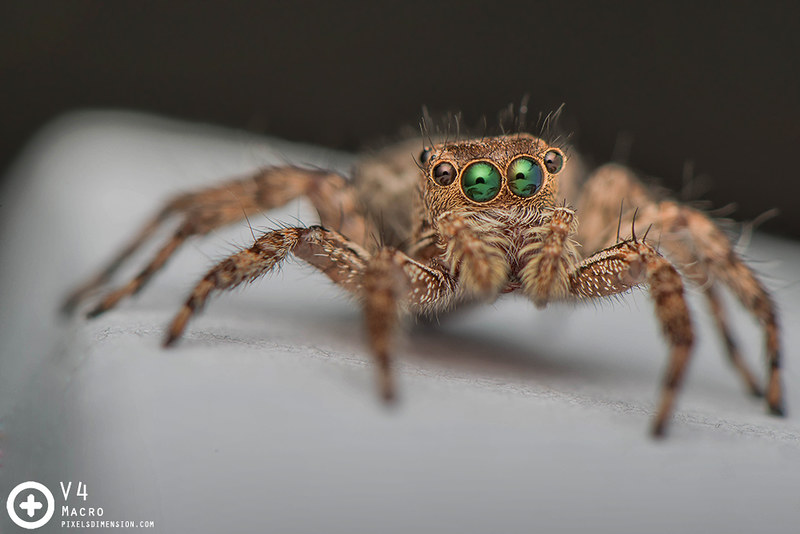
Robberflies have two compound eyes and three simple eyes (ocelli), allowing them to see precisely the location and distance of the flying prey before lifting off and piercing them in mid-air! Robberflies also have moustaches" that make them look more awesome while doing that.

For more photos and guides on Macro Photography, please check out my blog: http://pixelsdimension.com/
TS[PF] T.J.
post Oct 30 2014, 10:39 PM

20k VIP Club
Group Icon
Elite
24,193 posts

Joined: Feb 2010
From: Perak
#98
user posted imageYellowish Black Jumping Spider by PF T.J., on Flickr

An unidentified Salticid cleaning its fangs and legs. Note the colour difference of its two main eyes (also called Anterior Median Eyes [AME]). This phenomenon is often seen in Telamonia, Epeus etc. too, probably due to the way the eye lenses reflect light.

A typical Jumping Spider possesses a 4-layered retina in each of its AME eyes, enabling it to see very differently from us, even up to the ultraviolet range.

#99
user posted imageFlesh Fly by PF T.J., on Flickr


Flesh flies are common around compost piles, rotten vegetables or dung.

Flesh flies are often found along with blowflies though adults are much larger, faster and sensitive to its surroundings.

Flesh flies are known to develop embryo within the body and lay hatched maggots on suitable materials.

For more photos and guides on Macro Photography, please check out my blog: http://pixelsdimension.com/

TS[PF] T.J.
post Nov 1 2014, 12:16 AM

20k VIP Club
Group Icon
Elite
24,193 posts

Joined: Feb 2010
From: Perak
#100
user posted imagePlanthopper nymph (Fulgoromorpha) by PF T.J., on Flickr

A Peacock bug? NOPE! Just a Planthopper nymph excreting fireworks!

These "tails" are actually hydrophobic, waxy secretions from the abdomen of the Planthopper nymph. These serve as deterrents to predators and perhaps also act as an "umbrella" for the bug.

For more photos and guides on Macro Photography, please check out my blog: http://pixelsdimension.com/

TS[PF] T.J.
post Nov 1 2014, 11:27 PM

20k VIP Club
Group Icon
Elite
24,193 posts

Joined: Feb 2010
From: Perak
#101
user posted imageA Spiny Gea (Gea sinipes) resting on its web by PF T.J., on Flickr

This small little spider rests near the centre of its web. Most web-weaving spiders have unique and colourful patterns on the bottom side of its abdomen.

Some think that when spiders rest on the centre of their webs (which many do), the patterns may misdirect insect preys to mistake the spider as a flower, luring them into a trap.

For more photos and guides on Macro Photography, please check out my blog: http://pixelsdimension.com/

TS[PF] T.J.
post Nov 2 2014, 04:10 PM

20k VIP Club
Group Icon
Elite
24,193 posts

Joined: Feb 2010
From: Perak
#102
user posted imageJumping Spider with prey by PF T.J., on Flickr

An unidentified Jumping Spider with a huge flesh fly dinner!

Jumping Spiders are capable of hunting and killing preys that are larger or stronger than themselves, provided that they manage to grasp the prey, bite and inject venom in time- impressive!

For more photos and guides on Macro Photography, please check out my blog: http://pixelsdimension.com/

TS[PF] T.J.
post Nov 3 2014, 05:09 PM

20k VIP Club
Group Icon
Elite
24,193 posts

Joined: Feb 2010
From: Perak
#103
user posted imageGold-coloured Tortoise Beetle (Aspidomorpha sp.; Cassidinae) by PF T.J., on Flickr

A beautiful, gold coloured Tortoise Beetle.

These beetles are capable of changing their colour depending on the environment they are in.

For more photos and guides on Macro Photography, please check out my blog: http://pixelsdimension.com/
lizardlim
post Nov 3 2014, 08:16 PM

Getting Started
**
Junior Member
134 posts

Joined: Aug 2010


nice macro!
btw sifu, how you identify each species scientific name?
TS[PF] T.J.
post Nov 3 2014, 10:42 PM

20k VIP Club
Group Icon
Elite
24,193 posts

Joined: Feb 2010
From: Perak
QUOTE(lizardlim @ Nov 3 2014, 08:16 PM)
nice macro!
btw sifu, how you identify each species scientific name?
*
Thank you man! Appreciate it!

Oh, unfortunately no, there are just too many species out there to remember or recognize unfortunately sad.gif
I only know the more common ones tongue.gif
TS[PF] T.J.
post Nov 4 2014, 11:53 AM

20k VIP Club
Group Icon
Elite
24,193 posts

Joined: Feb 2010
From: Perak
#104
user posted imageAn Ornamental Coin Spider (Herennia multipuncta) with prey by PF T.J., on Flickr

This gravid (pregnant) is busy having her breakfast and decided to not bother about me taking her photos XD

Note the "twists" on the legs of the spider. These allow the legs to point forward (or backwards) instead of downwards, enabling this spider to lie flat on surfaces, which is usually does.

PS: I love this beautiful and unique spider <3

For more photos and guides on Macro Photography, please check out my blog: http://pixelsdimension.com/

TS[PF] T.J.
post Nov 5 2014, 06:09 PM

20k VIP Club
Group Icon
Elite
24,193 posts

Joined: Feb 2010
From: Perak
#105
user posted imageBoomerang Spider- Rhomphaea sp. ♂ by PF T.J., on Flickr

These bizarre-looking spiders are easy to recognized based on their long and curvy "tails".

Often hanging on the bottom-side of leaves or branches, these spiders don't really spin a lot of webs to catch preys.

For more photos and guides on Macro Photography, please check out my blog: http://pixelsdimension.com/
TS[PF] T.J.
post Nov 6 2014, 08:24 PM

20k VIP Club
Group Icon
Elite
24,193 posts

Joined: Feb 2010
From: Perak
#106
user posted imageYellow Tent Spider (Cyrtophora sp. ♀) drinking by PF T.J., on Flickr

Spiders need to drink water to function healthily, and they usually get their dosage by sipping off morning dew drops.

I have seen and reared quite a number of spiders but this particular type seem to drink alot more than the others. As seen in photo, the spider dips its mouth into the water on the leaf and spent quite some time drinking.

Note that one of its hind legs is attached to the safety line which (i) prevents the spider from falling and (ii) acts as a guide back to its nest.

For more photos and guides on Macro Photography, please check out my blog: http://pixelsdimension.com/

TS[PF] T.J.
post Nov 11 2014, 10:09 PM

20k VIP Club
Group Icon
Elite
24,193 posts

Joined: Feb 2010
From: Perak
#107
user posted imageBatik Golden Web Spider- Nephila antipodiana ♀ by PF T.J., on Flickr

A gigantic Nephila antipodiana (easily 10cm) resting on its web which is covered with.. not dead leaves, but plenty of termite flies!

These Nephila spiders are some of the largest around (even the males can grow larger compared to other species) and build impressively large webs. The yellowish tints of the webs will "shine" in gold under the morning sun- thus the name!

If you take a closer look, there is a male N. antipodiana at the back of the female, and a sneaky food-stealing spider (Argyrodes flavescens) stealing a bite out of the host's preys.

For more photos and guides on Macro Photography, please check out my blog:
http://pixelsdimension.com/
6216
post Nov 11 2014, 10:16 PM

Regular
******
Senior Member
1,003 posts

Joined: Mar 2014
Everyone has said you've taken plenty of good shots. I have to agree. And I can say I'll never have the eye for it like you do.
TS[PF] T.J.
post Nov 12 2014, 08:08 PM

20k VIP Club
Group Icon
Elite
24,193 posts

Joined: Feb 2010
From: Perak
QUOTE(6216 @ Nov 11 2014, 10:16 PM)
Everyone has said you've taken plenty of good shots. I have to agree. And I can say I'll never have the eye for it like you do.
*
Hi sir, thank you so much for your kind words, much appreciated! notworthy.gif notworthy.gif
I'm still learning la haha, there are many out there who are even better nod.gif

TS[PF] T.J.
post Nov 12 2014, 08:50 PM

20k VIP Club
Group Icon
Elite
24,193 posts

Joined: Feb 2010
From: Perak
#108
user posted imageRobberfly lift off! by PF T.J., on Flickr

And she's off!

Only managed to get one shot of this magnificent flyer which probably took off to hunt down the mosquitoes surrounding me! Awesome biggrin.gif

Note the small protrusion below the wings? Those are called Halteres (occur in pairs) which help flies to maintain balance during flight. Halteres evolved from hindwings.

For more photos and guides on Macro Photography, please check out my blog:
http://pixelsdimension.com/
TS[PF] T.J.
post Nov 13 2014, 03:46 PM

20k VIP Club
Group Icon
Elite
24,193 posts

Joined: Feb 2010
From: Perak
#109
user posted imageCommon Flashwing- Vestalis amethystina ♂ by PF T.J., on Flickr

A colourful and relatively large male damselfly. I am not really sure what this one is doing- stretching its tail?

Usually when a female damselfly is seen in this position, it is slitting tiny holes in leaves or stems to lay eggs.

For more photos and guides on Macro Photography, please check out my blog:
http://pixelsdimension.com/
TS[PF] T.J.
post Nov 14 2014, 12:17 PM

20k VIP Club
Group Icon
Elite
24,193 posts

Joined: Feb 2010
From: Perak
#110
user posted imagePortia Jumping Spider (Portia sp. ♂) by PF T.J., on Flickr

Portia Jumping Spiders are some of the brightest out there, capable of learning and applying strategies to hunt for their favourite preys- Orb Web Spiders.

This male Portia seemed to be attracted to my white-coloured flash diffuser.

For more photos and guides on Macro Photography, please check out my blog:
http://pixelsdimension.com/
TS[PF] T.J.
post Nov 15 2014, 09:28 PM

20k VIP Club
Group Icon
Elite
24,193 posts

Joined: Feb 2010
From: Perak
#111
user posted imageFungus weevil (Anthribidae) by PF T.J., on Flickr

Weevil beetles generally refer to those with a long "snout/nose" and belong to the Curculionoidea superfamily.

Fungus weevils, as the name suggest, feeds on fungus and decaying matter, especially wood. Found this one on an abandoned, man-made log.

More on Macro Photography here: http://pixelsdimension.com
Check out Malaysia's wildlife here: WildLife Malaysia

icon_rolleyes.gif
TS[PF] T.J.
post Nov 16 2014, 12:26 PM

20k VIP Club
Group Icon
Elite
24,193 posts

Joined: Feb 2010
From: Perak
#112
user posted imageCookie Jumper- Ligurra sp. ♂ by PF T.J., on Flickr

My first encounter with this cute little Jumping Spider, so called because of its relatively flat abdomen that resembles a cookie!

This curious little Jumping Spider has well developed legs I and prominent chelicerae.

More on Macro Photography here: http://pixelsdimension.com
Check out Malaysia's wildlife here: WildLife Malaysia


TS[PF] T.J.
post Nov 18 2014, 02:18 AM

20k VIP Club
Group Icon
Elite
24,193 posts

Joined: Feb 2010
From: Perak
#113
user posted imageParallel-spined Gasteracantha feasting- Gasteracantha diardi ♀ by PF T.J., on Flickr

This bold spider is more interested in finishing her breakfast than fleeing from me tongue.gif

... which is understandable, since like the other Spiny Spiders, she has a very tough and armoured shell that protects her from predators.

When disturbed, Spiny Spiders will retract their legs close to their body so that they are covered and protected by the shelled abdomen... but be careful and note their fangs! They love to bite when assuming this position!

More on Macro Photography here: http://pixelsdimension.com
Check out Malaysia's wildlife here: WildLife Malaysia
TS[PF] T.J.
post Nov 18 2014, 11:47 AM

20k VIP Club
Group Icon
Elite
24,193 posts

Joined: Feb 2010
From: Perak
#114
user posted imageOriental Garden Lizard- Calotes versicolor ♀ by PF T.J., on Flickr

An Oriental Garden Lizard sunning itself to increase her body temperature so that she becomes active enough for her daily activities.

I just love the reddish-brown eye colour!

More on Macro Photography here: http://pixelsdimension.com
Check out Malaysia's wildlife here: WildLife Malaysia

This post has been edited by [PF] T.J.: Nov 18 2014, 11:53 AM
TS[PF] T.J.
post Nov 19 2014, 10:49 AM

20k VIP Club
Group Icon
Elite
24,193 posts

Joined: Feb 2010
From: Perak
#115
user posted imageDouble-Humped Yellow Tent Spider- Cyrtophora cylindroides ♀ juv by PF T.J., on Flickr

This young tent spider was pretty inactive when I found her, and she wasn't eating either; this could only mean one thing- she was getting ready to moult!

Spiders lose appetite in preparation for ecdysis and will often ignore the food or flee altogether. This inactive period varies from spider to spider but is usually longer in larger spiders.


More on Macro Photography here: http://pixelsdimension.com
Check out Malaysia's wildlife here: WildLife Malaysia
TS[PF] T.J.
post Nov 20 2014, 11:09 AM

20k VIP Club
Group Icon
Elite
24,193 posts

Joined: Feb 2010
From: Perak
#116
user posted imageMetallic Green Tiger Beetle (Cicindela sp.) by PF T.J., on Flickr

Did you know? Tiger beetles are some of the fastest running organisms on the planet for their size?

Capable of running up to 9km/h, these beetles are so fast that their vision cannot keep up with their movements, so they are practically blind while moving, and has to stop every once in a while to reorientate.


More on Macro Photography here: http://pixelsdimension.com
Check out Malaysia's wildlife here: WildLife Malaysia
TS[PF] T.J.
post Nov 21 2014, 06:23 PM

20k VIP Club
Group Icon
Elite
24,193 posts

Joined: Feb 2010
From: Perak
#117
user posted imageA Giant Golden Orb Web Spider building her web- Nephila pilipes ♀ by PF T.J., on Flickr

A large female Nephila pilipes building her web in the morning. By holding herself firm on the main web structure, she uses her 4th pair of legs to pull out silk threads from her spinnerets, depositing them systematically.

On the other hand, smaller orb web spiders usually run around in circles while depositing their silk, and you WILL be surprised at how fast the webs are built!

More on Macro Photography here: http://pixelsdimension.com
Check out Malaysia's wildlife here: WildLife Malaysia
TS[PF] T.J.
post Nov 21 2014, 08:20 PM

20k VIP Club
Group Icon
Elite
24,193 posts

Joined: Feb 2010
From: Perak
#118
user posted imageThe "Night" Spider- Araneus nox ♀ by PF T.J., on Flickr

Stop running! This Orb Spider doesn't want to stop T___T So called probably because of its dark and shiny abdomen, the Araneus nox builds large webs and often lies in wait at the centre.


More on Macro Photography here: http://pixelsdimension.com
Check out Malaysia's wildlife here: WildLife Malaysia
TS[PF] T.J.
post Nov 23 2014, 01:44 PM

20k VIP Club
Group Icon
Elite
24,193 posts

Joined: Feb 2010
From: Perak
#119
user posted imageA pair of Batik Golden Orb Spiders- Nephila antipodiana ♂♀ by PF T.J., on Flickr

It is fairly easy to spot a male spider on a female Nephila's web regardless of species, this is because the sneaky males (in red, top) are always trying to get the opportunity to mate with the female (without being eaten, of course!) to ensure the survival of the species.

The males don't always just climb onto the underside of the female's abdomen to mate since it is quite risky for him to do so. Instead, he will stop at the top of the female's abdomen and wait for his opportunity.


More on Macro Photography here: http://pixelsdimension.com
Check out Malaysia's wildlife here: WildLife Malaysia
TS[PF] T.J.
post Nov 24 2014, 01:50 PM

20k VIP Club
Group Icon
Elite
24,193 posts

Joined: Feb 2010
From: Perak
#120

user posted imageTrapdoor Spider playing dead- Liphistius desultor ♀ by PF T.J., on Flickr

Trapdoor spiders are known to play dead when disturbed, and while they are lying upside down, you can see the unique characteristics of these "living fossils"- some of the oldest spiders alive today! Note the 4 pair of book lungs (light orange patches) instead of 2, the downward pointing fangs (instead of sideways-pointing) and the location of the spinneret which is at the bottom of the abdomen (instead of at the terminal).

Anyway, what interested me about this photo is actually the "playing dead" behaviour. If a spider as "old" as this knows how to act dead, it basically means that this trick is likely useful 300 million years ago too- a way to confuse preys that rely on vision to hunt.

More on Macro Photography here: http://pixelsdimension.com
Check out Malaysia's wildlife here: WildLife Malaysia
TS[PF] T.J.
post Nov 25 2014, 02:04 PM

20k VIP Club
Group Icon
Elite
24,193 posts

Joined: Feb 2010
From: Perak
#121
user posted imageA mother Parasteatoda mundula, egg sac and spiderlings by PF T.J., on Flickr

It is sometimes funny how we often overlook some of the most common spiders in our gardens. This Rolled-Leaf Comb-Footed Spider loves to live inside a rolled leaf suspended at the centre of its web.

The female spider will often be found within the leaf, with pink-to-yellowish, egg "balls"~ The mother spider in this photo has just finished making another pink-coloured egg sac, indicated by the shrunken state of the abdomen.

The spiderlings around her are likely from a previous egg sac. These tiny spiders will stay under the care of their mother until they are big enough to leave.


#122
user posted imagePlanthopper (Fulgoromorpha) by PF T.J., on Flickr

A juvenile? Don't think it has wings yet hmmm... Found this one resting on some tree branches amongst the morning dew~

Planthoppers are so called because of their ability to hop from one leaf to another at amazing speeds.

More on Macro Photography here: http://pixelsdimension.com
Check out Malaysia's wildlife here: WildLife Malaysia

TS[PF] T.J.
post Nov 26 2014, 12:05 PM

20k VIP Club
Group Icon
Elite
24,193 posts

Joined: Feb 2010
From: Perak
#123
user posted imageHarvestman- Opiliones; Tithaeus sp. (?) by PF T.J., on Flickr

Harvestmen look a lot like spider superficially (often confused with daddy-long-legged-spiders) but they are not considered as true spiders.


Despite also having eight legs, harvestmen do not have a distinctively separated thorax and abdomen like spiders do: The thorax and abdomen are merged together (as seen in photo .

Harvestmen are usually herbivours or scavengers.

#124
user posted imageJumping Spider with prey by PF T.J., on Flickr

An unidentified Jumper with her prey. Food are hard to come by in the wild, and you can bet that most organisms will not give up their food without a fight! This particular spider is known to be very stubborn about not giving up its food XD

More on Macro Photography here: http://pixelsdimension.com
Check out Malaysia's wildlife here: WildLife Malaysia
TS[PF] T.J.
post Nov 27 2014, 11:04 AM

20k VIP Club
Group Icon
Elite
24,193 posts

Joined: Feb 2010
From: Perak
#125

user posted imageGreat Wide-Jawed Jumper- Parabathippus magnus ♂ by PF T.J., on Flickr

"Can't remember where I put my last fly prey"

A Great Wide-Jawed Jumper in the midst of cleaning his fangs, legs and eyes. This particular genus of Jumping Spider is known to have exceptionally long fangs and pedipalps. Fast and agile, Parabathippus makes efficient daylight hunters.

More on Macro Photography here: http://pixelsdimension.com
Check out Malaysia's wildlife here: WildLife Malaysia
TS[PF] T.J.
post Nov 28 2014, 09:20 PM

20k VIP Club
Group Icon
Elite
24,193 posts

Joined: Feb 2010
From: Perak
#126
user posted imageOrange Hammerhead worm- Bipalium by PF T.J., on Flickr

Bipalium refers to predatory land flatworms that roam on land. These worms are generically called Hammerhead worms due to their unique, hammer-like head (as seen in photo).

These worms can grow very, very long by preying on earthworms or other small snails. Bipalium worms are usually found on trunks of both live or fallen trees.

More on Macro Photography here: http://pixelsdimension.com
Check out Malaysia's wildlife here: WildLife Malaysia
aimeh
post Nov 29 2014, 11:19 AM

Casual
***
Junior Member
466 posts

Joined: Dec 2005


Owh man. Just like reading books in library. Love it.
TS[PF] T.J.
post Dec 2 2014, 12:36 PM

20k VIP Club
Group Icon
Elite
24,193 posts

Joined: Feb 2010
From: Perak
QUOTE(aimeh @ Nov 29 2014, 11:19 AM)
Owh man. Just like reading books in library. Love it.
*
Thank you man for your kind words notworthy.gif notworthy.gif
I try to make the photos more meaningful, and hopefully readers will be able to learn something out of them apart from just enjoying the photo thumbup.gif
TS[PF] T.J.
post Dec 2 2014, 12:37 PM

20k VIP Club
Group Icon
Elite
24,193 posts

Joined: Feb 2010
From: Perak
#127

user posted imageSt. Andrew Cross Spider (Argiope versicolor) shaking it off! by PF T.J., on Flickr

As hardcore fans of Taylor Swift, Argiope spiders take her "Shake It Off" song very literally and seriously!

The organisms that get stuck on webs of these spiders are not always "desirable", where some may even pose a risk to the spider. Despite having 8 legs, Argiope spiders do not use them to kick unwanted visitors out like other spiders do. Instead, they shake their webs violently to evict them.

Argiope spiders may use this similar trick, albeit less vigorously, to cause trapped prey to struggle, thus allowing the spider to locate them on the web.

More on Macro Photography here: http://pixelsdimension.com
Check out Malaysia's wildlife here: WildLife Malaysia
lizardlim
post Dec 2 2014, 02:21 PM

Getting Started
**
Junior Member
134 posts

Joined: Aug 2010


another impressive shot!

smile.gif
TS[PF] T.J.
post Dec 3 2014, 06:51 PM

20k VIP Club
Group Icon
Elite
24,193 posts

Joined: Feb 2010
From: Perak
QUOTE(lizardlim @ Dec 2 2014, 02:21 PM)
another impressive shot!

smile.gif
*
Thank you thank you notworthy.gif notworthy.gif
TS[PF] T.J.
post Dec 3 2014, 06:51 PM

20k VIP Club
Group Icon
Elite
24,193 posts

Joined: Feb 2010
From: Perak
#128

user posted imageLong-Patella Ant Mimicking Spider (Agorius sp.?) by PF T.J., on Flickr

Another ant-mimicking spider! There are just so many different types of them that I am genuinely confused now tongue.gif

...and we can't blame them, as there are huge advantages to being ant-mimicking ant hunters. These spiders can easily enjoy lots of food since ants occur in large amounts; they are also protected since most predators prefer not to meddle with ants (simply because they taste bad, and can be dangerous when attacking in large numbers).

#129

user posted imageStick insect by PF T.J., on Flickr

This cute little stick insect was swaying side-by-side on this leaf. I wonder what it was doing?

More on Macro Photography here: http://pixelsdimension.com
Check out Malaysia's wildlife here: WildLife Malaysia

This post has been edited by [PF] T.J.: Dec 4 2014, 09:08 PM
TS[PF] T.J.
post Dec 4 2014, 09:08 PM

20k VIP Club
Group Icon
Elite
24,193 posts

Joined: Feb 2010
From: Perak
#130

user posted imageSemi-coppered Heavy Jumper- Hyllus cf. semicupreus ♀ by PF T.J., on Flickr

A cute female Semi-coppered Heavy Jumper, very easy to recognized due to her size, the two "horns" on the head and of course, the apparent white band across its "face".

These spiders can be found all the way to India, thanks to their amazing adaptability. Unlike most other large spiders, these spiders were able to live together with humans (in their gardens and parks), thus gaining access to a lot more food, especially flies!

By the way, did I mention these spiders are some of the nicest to photograph? They are always so tame and cooperative.... maybe they are just being lazy XD

More on Macro Photography here: http://pixelsdimension.com
Check out Malaysia's wildlife here: WildLife Malaysia

TS[PF] T.J.
post Dec 8 2014, 06:28 PM

20k VIP Club
Group Icon
Elite
24,193 posts

Joined: Feb 2010
From: Perak
#131
user posted imageWagler's Pit Viper- Tropidolaemus wagleri ♀ by PF T.J., on Flickr

An old photo from some time ago tongue.gif
I remembered my cousin said "Unless if you have a death wish, never ever spray water onto a pit viper's face!"
Well, I would definitely listen to the expert XD


#132
user posted imageBatik Golden Web Spider- Nephila antipodiana juv ♀ by PF T.J., on Flickr

A young female Nephila antipodiana is very fast and agile due to the smaller size. As it grows larger, it will become bogged down by their size and weight (photo of an adult here: https://www.flickr.com/photos/59583171@N07/15145036244/

Nevertheless, being very large and scary has its advantages, since large spiders no longer have to worry too much about the smaller predators.


More on Macro Photography here: http://pixelsdimension.com
Check out Malaysia's wildlife here: WildLife Malaysia
TS[PF] T.J.
post Dec 9 2014, 03:30 PM

20k VIP Club
Group Icon
Elite
24,193 posts

Joined: Feb 2010
From: Perak
#133
user posted imageDouble-Humped Yellow Tent Spider- Cyrtophora cylindroides ♀ juv by PF T.J., on Flickr

A Cyrtophora cylindroides, instar n+1 from this https://www.flickr.com/photos/59583171@N07/15638351178
Note the obvious change in colour and also abdominal patterns. Some spiders change drastically with each specific moult.

Who knows, it might just grow up into this in the end: https://www.flickr.com/photos/59583171@N07/15104058004

I will know once I've done my DNA analyses happy.gif


More on Macro Photography here: PixelsDimension
Check out Malaysia's wildlife here: WildLife Malaysia
TS[PF] T.J.
post Dec 9 2014, 10:40 PM

20k VIP Club
Group Icon
Elite
24,193 posts

Joined: Feb 2010
From: Perak
#134

user posted imageWhite Crab Spider and spiderlings- Thomisus sp. ♀ by PF T.J., on Flickr

A mother Thomisus crab spider guarding her young while they climb all over the place!

More on Macro Photography here: PixelsDimension
Check out Malaysia's wildlife here: WildLife Malaysia
TS[PF] T.J.
post Dec 10 2014, 11:06 PM

20k VIP Club
Group Icon
Elite
24,193 posts

Joined: Feb 2010
From: Perak
#135
user posted imageHammerhead Fly- Richardia sp. (?) Richardiidae by PF T.J., on Flickr

Another encounter with a Hammerhead Fly! I've never get the chance to really photograph them since they always fly away.. had to make do with a heavily cropped shot this time huhu T____T

Despite having a slightly prolonged "stalk", Hammerhead Flies are not closely related to the common Teleopsis Stalk-eye Flies (Diopsidae); these are much larger and robust, and not to mention fly a hell lot faster.

More on Macro Photography here: PixelsDimension
Check out Malaysia's wildlife here: WildLife Malaysia


This post has been edited by [PF] T.J.: Dec 16 2014, 01:59 AM
SUStsunade
post Dec 10 2014, 11:26 PM

Look at all my stars!!
*******
Senior Member
2,063 posts

Joined: Jan 2003
From: Konoha
superb work! keep em coming thumbup.gif
TS[PF] T.J.
post Dec 11 2014, 10:37 AM

20k VIP Club
Group Icon
Elite
24,193 posts

Joined: Feb 2010
From: Perak
QUOTE(tsunade @ Dec 10 2014, 11:26 PM)
superb work! keep em coming  thumbup.gif
*
Thank you Hokage, appreciate it notworthy.gif notworthy.gif notworthy.gif
TS[PF] T.J.
post Dec 16 2014, 01:56 AM

20k VIP Club
Group Icon
Elite
24,193 posts

Joined: Feb 2010
From: Perak
#136
user posted imageA female Chrysso nigra comb-footed spider by PF T.J., on Flickr

Previously known as Argyrodes nigra and Theridula caudata, this tiny little spider (Teridiidae) is only 2-3mm large, but one of its most striking feature is the glossy black, somewhat heart-shaped abdomen.

Found around Southeast Asia, this spider stays in parks or gardens but are hard to see due to the size. They are incredibly uncooperative and difficult to photograph too! @_@

More on Macro Photography here: PixelsDimension
Check out Malaysia's wildlife here: WildLife Malaysia

TS[PF] T.J.
post Dec 16 2014, 01:59 AM

20k VIP Club
Group Icon
Elite
24,193 posts

Joined: Feb 2010
From: Perak

#136
user posted imageLong Green Crab Spider lying in wait- Oxytate virens ♀ by PF T.J., on Flickr

#137
Oxytate virens crab spiders can be easily recognized in the field due to their unique, all-green body. These spiders rely on camouflage and ambush to catch their preys, and often stay very, very still.

More on Macro Photography here: PixelsDimension
Check out Malaysia's wildlife here: WildLife Malaysia
4agze
post Dec 17 2014, 06:26 AM

SwaggeR
*****
Senior Member
783 posts

Joined: Jan 2003
From: Hertfordshire


Emperor Scorpion (Pandinus imperator)

Studio shot; handled by trained personnel.

Canon EOS 5D Mark III
EF100mm f/2.8L Macro IS USM
ƒ/16.0
1/160
ISO 100
I think this was 6 stacked images in CS6

user posted image
TS[PF] T.J.
post Dec 17 2014, 09:46 PM

20k VIP Club
Group Icon
Elite
24,193 posts

Joined: Feb 2010
From: Perak
#137
user posted imageLichen Huntsman Spider- Pandercetes sp. ♀ by PF T.J., on Flickr

Lichen huntsman spiders are always a magnificent sight due to their immense size, brilliant patterns and colours. Freshly moulted lichen huntsman may show lighter colours and seen in this photo.

Note how flat the spider while resting? This is one of the reasons why they are so hard to notice out in the wild.

Lichen Huntsman Spiders are almost always found on tree trunks, but some may venture onto foliages occasionally.

More on Macro Photography here: PixelsDimension
Check out Malaysia's wildlife here: WildLife Malaysia
TS[PF] T.J.
post Dec 26 2014, 11:40 AM

20k VIP Club
Group Icon
Elite
24,193 posts

Joined: Feb 2010
From: Perak
#138
user posted image2-in-1: Dragonfly and millipede by PF T.J., on Flickr

Got really lucky to to find two creatures so close to one another ^___^ Both were resting and remained oblivious to the other

Called a Grenadier (Agrionoptera insignis), these beautiful dragonflies dwell around ponds or slow-flowing streams.

On the other hand, I know nuts about millipedes, sorry about that tongue.gif

More on Macro Photography here: PixelsDimension
Check out Malaysia's wildlife here: WildLife Malaysia

#139
user posted imageStalk-Eyed Fly (Teleopsis sp. ♂) by PF T.J., on Flickr

A typical posture for this type of Stalk-Eye Fly, I wonder why they do this?

Female Stalk-Eyed Flies select males based on the length of their eye stalks. Males with longer stalks tend to attract more attention (especially from predators), thus surviving, adult males are deemed more successful; interesting!

More on Macro Photography here: PixelsDimension
Check out Malaysia's wildlife here: WildLife Malaysia
TS[PF] T.J.
post Dec 27 2014, 12:53 AM

20k VIP Club
Group Icon
Elite
24,193 posts

Joined: Feb 2010
From: Perak
#140
user posted imageSpitting Spider- "Scytodes pallida" by PF T.J., on Flickr

Don't be fooled by the slow-moving and calm demeanour of this nocturnal spider; Spitting Spiders have developed unique and efficient modes of hunting prey- they can spit gluish venom from their fangs at very high speeds to trap their prey before delivering the killing bite!

Unlike most spiders, Spitting Spiders have 6 eyes only instead of the usual 8.

More on Macro Photography here: PixelsDimension
Check out Malaysia's wildlife here: WildLife Malaysia
TS[PF] T.J.
post Dec 27 2014, 01:21 PM

20k VIP Club
Group Icon
Elite
24,193 posts

Joined: Feb 2010
From: Perak
#141
user posted imageGreater Bluewing- Rhyothemis plutonia ♂ by PF T.J., on Flickr

This beautiful dragonfly can be easily recognized by the purplish-green iridescence of the wings.

The Greater Bluewing, along with several other species are commonly known as Flutterers, referring to the way they fly in a clumsy and irregular manner.

More on Macro Photography here: PixelsDimension
Check out Malaysia's wildlife here: WildLife Malaysia
TS[PF] T.J.
post Dec 27 2014, 10:51 PM

20k VIP Club
Group Icon
Elite
24,193 posts

Joined: Feb 2010
From: Perak
#142

user posted imageGarden Spider- Parawixia sp. ♀ by PF T.J., on Flickr

This medium-sized orb weaver spider builds its large web at night and lie in wait for preys at the centre.

During the day, it hides itself in curled leaves.

More on Macro Photography here: PixelsDimension
Check out Malaysia's wildlife here: WildLife Malaysia

TS[PF] T.J.
post Dec 28 2014, 01:37 PM

20k VIP Club
Group Icon
Elite
24,193 posts

Joined: Feb 2010
From: Perak
#143
user posted imageMantis by PF T.J., on Flickr

Found this bold and beautiful mantis in a garden. After photographing it for awhile I noticed why mantises are so popular among Macro Photographers- they don't really move much, and they will almost certainly "attack" your camera's light diffuser- resulting in great poses tongue.gif

Though I have not tried, I suppose it is not difficult to "encourage" a mantis to show their beautiful threat display stance.

This is pretty much my 2nd encounter with a large mantis (pathetic I know huhu), I hope I will see more of them in the future biggrin.gif

More on Macro Photography here: PixelsDimension
Check out Malaysia's wildlife here: WildLife Malaysia
TS[PF] T.J.
post Dec 30 2014, 12:01 PM

20k VIP Club
Group Icon
Elite
24,193 posts

Joined: Feb 2010
From: Perak
#144

user posted imagePentagon-Abdomen Crab Spider- Massuria angulata ♂ by PF T.J., on Flickr

A male Massuria angulata, found this one having fun with a female on a tree branch. The male is only slightly smaller than the female, and a tad darker, displaying brownish-green colouration. Like the female, the 1st two pair of legs are well-developed, and long.

More on Macro Photography here: PixelsDimension
Check out Malaysia's wildlife here: WildLife Malaysia
mingyuyu
post Dec 30 2014, 12:24 PM

B A N N E D
Group Icon
Elite
3,249 posts

Joined: Oct 2011


a lot of awesome shots as usual, i think you can consider to maybe print all of them out as a book, that would be awesome biggrin.gif
TS[PF] T.J.
post Dec 30 2014, 05:51 PM

20k VIP Club
Group Icon
Elite
24,193 posts

Joined: Feb 2010
From: Perak
QUOTE(mingyuyu @ Dec 30 2014, 12:24 PM)
a lot of awesome shots as usual, i think you can consider to maybe print all of them out as a book, that would be awesome biggrin.gif
*
Thank you man, really appreciate it! biggrin.gif
Still have lots to learn and many more insects/spiders to find though- very super long wishlist haha laugh.gif

Yeah, maybe will print them out one day and hang on my house's walls.. or maybe I should print my cat photos haha~

... or maybe publish a scientific book~

Thanks for the suggestion mate, will definitely consider notworthy.gif
TS[PF] T.J.
post Dec 30 2014, 11:04 PM

20k VIP Club
Group Icon
Elite
24,193 posts

Joined: Feb 2010
From: Perak
#145
user posted imageCaterpillar- In and Out by PF T.J., on Flickr

A caterpillar eating and defecating at the same time!

The Lepidopteran (Butterflies and Moths) life cycle is a unique and highly efficient one. The life cycle is divided into two different forms- a caterpillar, and an adult.

The caterpillar is an eating machine and all it does is eat, so as to accumulate enough energy to grow into an adult. The adult, on the other hand, is a breeding machine, barely eating and very focused on finding mates to breed before dying.

More on Macro Photography here: PixelsDimension
Check out Malaysia's wildlife here: WildLife Malaysia
TS[PF] T.J.
post Dec 31 2014, 02:02 PM

20k VIP Club
Group Icon
Elite
24,193 posts

Joined: Feb 2010
From: Perak
#146
user posted imageFishing Spider- Hygropoda sp. ♂ (?) by PF T.J., on Flickr

Found this large Pisaurid spider resting on a flashy lily leaf with his meal.

This type of spider, along with many other Nursery Web Spiders (Pisauridae), loves to lie waiting on the upper side of leaves for preys to pass by (usually during the evening and night); and will quickly dart underneath the leaves when disturbed.

More on Macro Photography here: PixelsDimension
Check out Malaysia's wildlife here: WildLife Malaysia

#147
user posted imageA beautiful perching Damselfly- Libellago sp. (?) by PF T.J., on Flickr

This particular type of damselflies (Chlorocyphidae) are known as "Jewels". Unlike many other damselflies, these are quite small in size, and have tails that are shorter than their wings~

The males of this particular group of damselflies are also known to settle territorial disputes by hovering face-to-face in the air- a spectacular sight!

More on Macro Photography here: PixelsDimension
Check out Malaysia's wildlife here: WildLife Malaysia

TS[PF] T.J.
post Jan 2 2015, 09:18 PM

20k VIP Club
Group Icon
Elite
24,193 posts

Joined: Feb 2010
From: Perak
#148
user posted imageReddish-Orange Tent Spider- Cyrtophora sp. ♀ by PF T.J., on Flickr

Found this beauty in a park, not sure whether its a red morph of the Cyrtophora cylindroides, or a different species altogether, have to run some tests to find out.

Tent Spiders are always difficult to photograph since they will ALWAYS hang upside down (almost broke my neck taking this shot @@). This is probably because the more vibrant colours of the abdomen was meant to fool ground-dwelling insects to think that there it is a flower (=food), luring and eventually trapping them on the spider's 3-dimensional web eventually. If the spider is upright, the striking abdomen will definitely attract unwanted attraction.

More on Macro Photography here: PixelsDimension
Check out Malaysia's wildlife here: WildLife Malaysia
TS[PF] T.J.
post Jan 3 2015, 10:48 PM

20k VIP Club
Group Icon
Elite
24,193 posts

Joined: Feb 2010
From: Perak
#149
user posted imageSilver-Spotted Sun Spider- Neogea nocticolor ♀ by PF T.J., on Flickr

SpideyDEX updated! Finally I have found this Sun Spider (albeit its commonness). Found these among thick undergrowths.

Closely related to St. Andrew's Cross Spiders (Argiope), Neogea builds stabilimenta as support for their webs as well (not shown here).

These spiders are also known to build multiple, cute cup-shaped egg sacs which are usually hanged on the upper portion of the spider's web.


#150
user posted imageA mating pair of "Deceptive" Coraltails- Ceriagrion fallax pendleburyi ♂♀ by PF T.J., on Flickr

An uncommon damselfly, usually found around swampy areas at higher elevations.

Note the heart-shaped mating wheel. The female (bottom) is seen receiving sperm from the secondary genitalia of the male (top). Fertilization of eggs only takes place when the eggs are being laid.
TS[PF] T.J.
post Jan 5 2015, 07:49 PM

20k VIP Club
Group Icon
Elite
24,193 posts

Joined: Feb 2010
From: Perak
#151
user posted imageAn Oval St. Andrew Cross Spider wrapping prey- Argiope aemula ♀ by PF T.J., on Flickr

This enormous Argiope spider was seen rotating a trapped grasshopper while spraying silk all over it for immobilization. Argiope aemula are usually found building webs among low shrubs, catching mostly leaping grasshoppers or crickets.

Note the mere four white spots on the bottom side of the abdomen instead of the usual 6 seen in other Argiope spiders.

More on Macro Photography here: PixelsDimension
Check out Malaysia's wildlife here: WildLife Malaysia
TS[PF] T.J.
post Jan 6 2015, 11:46 PM

20k VIP Club
Group Icon
Elite
24,193 posts

Joined: Feb 2010
From: Perak
#152
user posted imageCommon Garden Spider- Parawixia dehaani ♀ by PF T.J., on Flickr

Common Garden Spiders are nocturnal and come in a wide range of colours and forms: Another form here: <a href="https://www.flickr.com/photos/59583171@N07/15050424247/in/photolist-p9sL5P-qw9EfL-oVXmMe-hiFQrg-jaKhQ2">www.flickr.com/photos/59583171@N07/15050424247/in/photoli...</a>

I am not really sure they are all conspecific, worth checking out.


More on Macro Photography here: PixelsDimension
Check out Malaysia's wildlife here: WildLife Malaysia
TS[PF] T.J.
post Jan 7 2015, 10:58 PM

20k VIP Club
Group Icon
Elite
24,193 posts

Joined: Feb 2010
From: Perak
#153
user posted imageAn Elf dragonfly- Tetrathemis irregularis ♂ by PF T.J., on Flickr

This relatively small dragonfly has one of the prettiest eyes ever! the eye colours and patterns will change drastically depending on your shooting angle, awesome!

More on Macro Photography here: PixelsDimension
Check out Malaysia's wildlife here: WildLife Malaysia

This post has been edited by [PF] T.J.: Jan 8 2015, 10:37 AM
TS[PF] T.J.
post Jan 8 2015, 10:37 AM

20k VIP Club
Group Icon
Elite
24,193 posts

Joined: Feb 2010
From: Perak
#154
user posted imageWide-Jawed Viciria- Viciria praemandibularis ♀ by PF T.J., on Flickr

The distinct and unique orange colour and patterns of the Wide-Jawed Viciria are hard to miss~ However, the females do not have wide-jaws like the menacing males do.

More on Macro Photography here: PixelsDimension
Check out Malaysia's wildlife here: WildLife Malaysia

This post has been edited by [PF] T.J.: Jan 9 2015, 01:48 PM
Timemuffin
post Jan 8 2015, 08:43 PM

Getting Started
**
Junior Member
98 posts

Joined: Jul 2011
this thread got too many creepy crawlies and uncensored bug sex

i'm staying in me thread where everything is plasticy & clean.


» Click to show Spoiler - click again to hide... «

TS[PF] T.J.
post Jan 8 2015, 11:55 PM

20k VIP Club
Group Icon
Elite
24,193 posts

Joined: Feb 2010
From: Perak
QUOTE(Timemuffin @ Jan 8 2015, 08:43 PM)
this thread got too many creepy crawlies and uncensored bug sex

i'm staying in me thread where everything is plasticy & clean.
» Click to show Spoiler - click again to hide... «

*
Thanks mate! notworthy.gif notworthy.gif
I lose a lot of blood to mosquitoes, while you lose a lot of blood to nosebleed keke brows.gif brows.gif
TS[PF] T.J.
post Jan 9 2015, 01:48 PM

20k VIP Club
Group Icon
Elite
24,193 posts

Joined: Feb 2010
From: Perak
#155
user posted imageGiant Golden Web Spider and a butterfly prey- Nephila pilipes ♀ by PF T.J., on Flickr

.... and she's not even at her largest form! The large Common Mormon Butterfly as scale.

Nephila pilipes are the most common and obvious giant web-building spiders around Southeast Asia.

They are so successful probably because of the tiny males that are capable of easily distribute to other places by air; and the large females that are pretty much undisputed in the world of arthropods.

More on Macro Photography here: PixelsDimension
Check out Malaysia's wildlife here: WildLife Malaysia

#156
user posted imageGold-coloured millipede by PF T.J., on Flickr

Quite a spectacle! This vibrant and striking millipede is probably telling predators to stay away from it or suffer the consequences!

Millipedes protect themselves by curling into a coil, thus using their tough exoskeleton to protect the delicate, inward-facing body parts. Millipedes also produce foul smelling odour through pores (Ozopores) as a means to fend off predators.

More on Macro Photography here: PixelsDimension
Check out Malaysia's wildlife here: WildLife Malaysia
TS[PF] T.J.
post Jan 10 2015, 12:51 AM

20k VIP Club
Group Icon
Elite
24,193 posts

Joined: Feb 2010
From: Perak
#157
user posted imageCelebes Leucauge- Leucauge celesbina ♂ by PF T.J., on Flickr

The Celebes Leucauge can be very common in highlands, dominating low shrubs and grasslands.

Male Leucauge spiders are somewhat uncommon, and are often smaller sized (considering cephalothorax and abdomen only) than female counterparts. However, their very long legs, particularly the first 2 pairs, make them look really large. Males build webs as large as females' when not out looking for mates.

*Photo purposely rotated for better presentation.

More on Macro Photography here: PixelsDimension
Check out Malaysia's wildlife here: WildLife Malaysia

#158
user posted imageHalf-coiled millipede by PF T.J., on Flickr


A beautiful millipede assuming defensive position, protecting the soft and vulnerable legs and ventral parts from attack.

I know nuts about millipedes, any kind ID would be very much appreciated smile.gif


More on Macro Photography here: PixelsDimension
Check out Malaysia's wildlife here: WildLife Malaysia

#159
user posted imageA hunting huntsman spider- Heteropoda venatoria ♀ by PF T.J., on Flickr

A "Domestic" Huntsman Spider in her spider nest? IMPOSSIBRUU!

Huntsman spiders think that using webs to capture preys are for noobs; so they rely on agility and brute strength instead to hunt and kill!

This hungry huntsman spider decided to go out hunting during the day, found another spider's nest and decided to attack! At 20x larger, the prey didn't stand a chance against the huntsman.

More on Macro Photography here: PixelsDimension
Check out Malaysia's wildlife here: WildLife Malaysia
TS[PF] T.J.
post Jan 11 2015, 01:11 PM

20k VIP Club
Group Icon
Elite
24,193 posts

Joined: Feb 2010
From: Perak
#160
user posted imageA Double-Humped Yellow Tent Spider- Cyrtophora cylindroides ♀ by PF T.J., on Flickr

Growing up!
A Cyrtophora cylindroides, instar n+3 from this: https://www.flickr.com/photos/59583171@N07/15638351178

Note the whitish patterns fading away and the abdomen becoming striking yellow in colour. The patterns are expected to continue to fade away, and the legs darkening as the spider ages.

More on Macro Photography here: PixelsDimension
Check out Malaysia's wildlife here: WildLife Malaysia

#161
user posted imageA juvenile Argiope dang ♀ by PF T.J., on Flickr


This species of Cross Spider is pretty common throughout Peninsular Malaysia, and can often be found in gardens, parks or places near streams or drains.

This spider can grow as large as the other Argiope spiders, and are often confused with A. catenulata and A. mangal due to the similar, cylinder-type abdomen.

More on Macro Photography here: PixelsDimension
Check out Malaysia's wildlife here: WildLife Malaysia
TS[PF] T.J.
post Jan 12 2015, 11:42 PM

20k VIP Club
Group Icon
Elite
24,193 posts

Joined: Feb 2010
From: Perak
#162

user posted imageHeavy Jumper- Hyllus sp. ♂ by PF T.J., on Flickr

Blasted hot day arrrrr... haven't found me matey!

Heavy Jumpers usually refer to large-sized Jumping Spiders which are often very hairy. They can be very fast when provoked, but most of the time they are very trustful, and don't mind doing their own things while you photograph them~

Which reminds me... I still haven't seen the common Hyllus diardi yet T______T


More on Macro Photography here: PixelsDimension
Check out Malaysia's wildlife here: WildLife Malaysia
TS[PF] T.J.
post Jan 14 2015, 08:19 PM

20k VIP Club
Group Icon
Elite
24,193 posts

Joined: Feb 2010
From: Perak
#163
user posted imageNeoscona Orb-Weaver Spider- Neoscona sp. ♀ by PF T.J., on Flickr

Like other Neoscona spiders, this one probably starts building her web around the evening (usually 7pm) and waits at the centre for unfortunate preys.

Hating sunlight, Neoscona spiders will hide in curled leaves during the day. It also seems that they destroy their own webs during the morning before going into hiding.

#164
user posted imageA Celebes Leucauge- Leucauge celebesiana ♀ by PF T.J., on Flickr


I was updating my blog on tetragnathid aka Big-Jawed Spiders and I was writing about how common Leucauge spiders are in Malaysia, that's when I found out I don't really have much photos of them! It's kind of funny how the most common spiders are always left out haha tongue.gif

A Celebes Leucauge may not be as common as the decorative Leucauge (Leucauge decorata), but they both look pretty similar.

Check out a male Celebes Leucauge here: https://www.flickr.com/photos/59583171@N07/16238733765/

#165
user posted imageWhite Lynx Spider- Oxyopes cf. shweta ♀ by PF T.J., on Flickr

Found this great-looking Lynx spider on the leaves of a mangrove tree. Unlike many other common Lynx spiders, this one actually stayed around calmly~

#166
user posted imageA Dark Glassy Tiger- Parantica agleoides by PF T.J., on Flickr

We may hate the awful smell of the Lantana plent, but this Dark Glassy Tiger (weird name for a butterfly?) seems to enjoy it alot~

More on Macro Photography here: PixelsDimension
Check out Malaysia's wildlife here: WildLife Malaysia

This post has been edited by [PF] T.J.: Jan 14 2015, 11:50 PM
green_algae
post Jan 15 2015, 12:26 AM

Regular
******
Senior Member
1,003 posts

Joined: Dec 2011


Amazing thread,keep up the good work.
TS[PF] T.J.
post Jan 15 2015, 09:07 AM

20k VIP Club
Group Icon
Elite
24,193 posts

Joined: Feb 2010
From: Perak
QUOTE(green_algae @ Jan 15 2015, 12:26 AM)
Amazing thread,keep up the good work.
*
Thank you man! notworthy.gif notworthy.gif
Will keep shooting~~
TS[PF] T.J.
post Jan 15 2015, 09:08 PM

20k VIP Club
Group Icon
Elite
24,193 posts

Joined: Feb 2010
From: Perak
#167
user posted imageA Scorpion Spider- Arachnura sp. ♀ by PF T.J., on Flickr

Despite being named Scorpion Spiders, these spiders actually try their best to imitate fallen leaves i.e. the tail mimics the leaf stalk (petiole) whereas the entire body mimics the leaf itself. These spiders often come with colours (orange, brown etc.) that resemble wilted leaves too.

Arachnura spiders are so good at mimicking fallen leaves that you won't get much chance of seeing one spreading its legs and move!

#168
user posted imageA metallic green Jewel Bug by PF T.J., on Flickr

Not sure what this is, but it sure is beautiful!


#169
user posted imageA Double-Yellow Line Epeus- Epeus flavobilineatus ♀ by PF T.J., on Flickr

This sub-adult Epeus is really unique thanks to its greenish colour! The colour is a useful camouflage as these spiders often dwell on the (green) leaves of shrubs and small plants.

The females also lay tiny, green-coloured, spherical eggs too, can't wait to photograph those one day smile.gif

More on Macro Photography here: PixelsDimension
Check out Malaysia's wildlife here: WildLife Malaysia

TS[PF] T.J.
post Jan 16 2015, 03:11 PM

20k VIP Club
Group Icon
Elite
24,193 posts

Joined: Feb 2010
From: Perak
#170
user posted imageCopulation: Big-bellied Tylorida- Tylorida ventralis ♂♀ by PF T.J., on Flickr

These spiders are some of the most daring when it comes to having sex in public tongue.gif

The male on the left is seen using one of his modified palps to inject sperm into the genitalia (called epigyne) of the female.

The injection occurs multiple times and the entire copulation process may last up to minutes and even hours depending on species.

More on Macro Photography here: PixelsDimension
Check out Malaysia's wildlife here: WildLife Malaysia
aimeh
post Jan 19 2015, 04:15 PM

Casual
***
Junior Member
466 posts

Joined: Dec 2005


No need to say anything.

rclxms.gif rclxms.gif rclxms.gif rclxms.gif rclxms.gif rclxms.gif rclxms.gif rclxms.gif rclxms.gif
TS[PF] T.J.
post Jan 21 2015, 11:09 PM

20k VIP Club
Group Icon
Elite
24,193 posts

Joined: Feb 2010
From: Perak
QUOTE(aimeh @ Jan 19 2015, 04:15 PM)
No need to say anything.

rclxms.gif  rclxms.gif  rclxms.gif  rclxms.gif 
*
Thank you mate, much appreciated notworthy.gif notworthy.gif
TS[PF] T.J.
post Jan 21 2015, 11:10 PM

20k VIP Club
Group Icon
Elite
24,193 posts

Joined: Feb 2010
From: Perak
#171
user posted imageAn adult Crane Fly by PF T.J., on Flickr

Crane Flies are medium to large-sized flies that pretty much look like oversized mosquitoes.

Known commonly as "Mosquito Lion" or "Mosquito Hawk", adult Crane Flies don't actually hunt mosquitoes; in fact, they do not eat at all. Adults only have 10-15 days to mate before dying.

#172
user posted imagePentagon-Abdomen Crab Spider- Massuria angulata ♀ by PF T.J., on Flickr

This spider may not be a looker, but it sure is robust and exceptionally patient, lying in wait for long periods of time for food.

This particular female was seen mating with the male here: https://www.flickr.com/photos/59583171@N07/15523826163/

#173
user posted imageSoldier Fly (?) by PF T.J., on Flickr

Not really sure whether this is a Soldier Fly or a Hornet lol... they all look the same to me T____T
Any help with ID is kindly appreciated!

Still, what bugs me most about this photo is the orange-thingy coming out of the vine; I wonder what that is too.

More on Macro Photography here: PixelsDimension
Check out Malaysia's wildlife here: WildLife Malaysia

This post has been edited by [PF] T.J.: Jan 21 2015, 11:10 PM
TS[PF] T.J.
post Jan 22 2015, 12:06 AM

20k VIP Club
Group Icon
Elite
24,193 posts

Joined: Feb 2010
From: Perak
#174
user posted imageMangrove Long-Jawed Spider- Tetragnatha josephi ♂ by PF T.J., on Flickr

Spider, why you so long?!

Mangrove Tetragnatha spiders are in many ways very similar to their common cousins found near freshwater habitats: They are long, skinny and have ridiculously large jaws!

Mangrove Tetragnatha spiders are confined to, well, mangrove areas, and have different jaw structure from other species.


More on Macro Photography here: PixelsDimension
Check out Malaysia's wildlife here: WildLife Malaysia
TS[PF] T.J.
post Jan 23 2015, 06:27 PM

20k VIP Club
Group Icon
Elite
24,193 posts

Joined: Feb 2010
From: Perak
#175
user posted imageDartlets mating (Potanthus?; Hesperiinae) by PF T.J., on Flickr

Found these two skipper butterflies mating~

Butterflies rely on pheromones to find their respective partners. During copulation, the males will use their specific clasping genitalia on the abdomen to hold onto the female prior to injecting a spermatophore containing both nutrients and sperm.

More on Macro Photography here: PixelsDimension
Check out Malaysia's wildlife here: WildLife Malaysia
TS[PF] T.J.
post Jan 25 2015, 12:36 AM

20k VIP Club
Group Icon
Elite
24,193 posts

Joined: Feb 2010
From: Perak
#176
user posted imageA Trashline Orb-Web Spider- Cyclosa sp. ♀ by PF T.J., on Flickr

Cyclosa Orb-weaver spiders are smart and creative spiders that decorate their webs with leaf matter of debris, mainly as camouflage.

Many of these spiders build very unique web support structures called stabilimenta (the thicker and circular webs in this photo).

Learn more about these awesome spiders in this article by the famous Nicky Bay: http://sgmacro.blogspot.com/2015/01/spider...sing-trash.html

More on Macro Photography here: PixelsDimension
Check out Malaysia's wildlife here: WildLife Malaysia

#177
user posted imageA gravid Oval St. Andrew Cross Spider- Argiope aemula ♀ by PF T.J., on Flickr

Undisputed! I swear the A. aemula Cross Spiders that I find keep getting larger and larger to the point they become scary!

Probably the largest Argiope (in terms of overall size) spiders in Malaysia, Oval Cross Spiders build their webs on grassy areas near water, and usually prey on grasshoppers and crickets that accidentally jump onto their webs!

More on Macro Photography here: PixelsDimension
Check out Malaysia's wildlife here: WildLife Malaysia
TS[PF] T.J.
post Feb 5 2015, 04:08 PM

20k VIP Club
Group Icon
Elite
24,193 posts

Joined: Feb 2010
From: Perak
#178
user posted imageAnt-mimicking Katydid by PF T.J., on Flickr

Hmmm, looks like its not just the spiders that love to mimic ants in terms of form. However, unlike spiders, which mimic ants to hunt ants; this cute little katydid display a form of protective mimicry- mimicking ants as protection.

This is because ants usually contain formic acid that tastes really bad, and most predators are not stupid enough to eat them (again)! Smart!


More on Macro Photography here: PixelsDimension
Check out Malaysia's wildlife here: WildLife Malaysia


#179
user posted imageA Four-spotted Fungus Beetle by PF T.J., on Flickr

Found this common fungus beetle, well, eating fungus haha biggrin.gif

Tiny and inactive, these beetles are often overlooked by men (perhaps apart from Macro Photographers!).


More on Macro Photography here: PixelsDimension
Check out Malaysia's wildlife here: WildLife Malaysia

This post has been edited by [PF] T.J.: Feb 5 2015, 04:11 PM
Arvinaaaaa
post Feb 5 2015, 04:13 PM

Peace :D
*******
Senior Member
3,930 posts

Joined: Jan 2012


this i support
TS[PF] T.J.
post Feb 5 2015, 04:28 PM

20k VIP Club
Group Icon
Elite
24,193 posts

Joined: Feb 2010
From: Perak
QUOTE(Arvinaaaaa @ Feb 5 2015, 04:13 PM)
this i support
*
Thank you man, really appreciate it! notworthy.gif notworthy.gif notworthy.gif
Arvinaaaaa
post Feb 5 2015, 04:34 PM

Peace :D
*******
Senior Member
3,930 posts

Joined: Jan 2012


QUOTE(PF T.J. @ Feb 5 2015, 04:28 PM)
Thank you man, really appreciate it!  notworthy.gif  notworthy.gif  notworthy.gif
*
bro, u should take more shots of flowers and leaves (nature)..tried to find in your website, so far only found 1 (the stamen of the hibiscus)

damn nice that photo haha icon_rolleyes.gif rclxms.gif
TS[PF] T.J.
post Feb 5 2015, 05:33 PM

20k VIP Club
Group Icon
Elite
24,193 posts

Joined: Feb 2010
From: Perak
QUOTE(Arvinaaaaa @ Feb 5 2015, 04:34 PM)
bro, u should take more shots of flowers and leaves (nature)..tried to find in your website, so far only found 1 (the stamen of the hibiscus)

damn nice that photo haha  icon_rolleyes.gif  rclxms.gif
*
Thanks again bro, much appreciated!
You are right, I should take more photos of flowers and leaves haha, I tend to overlook them when I hunt for other arthropods sweat.gif

Still, here's some of the flower photos I took: https://www.flickr.com/search/?w=59583171@N07&q=flower

Thanks again ya, your feedback is highly appreciated notworthy.gif
soulhunter87
post Feb 5 2015, 05:38 PM

Casual
***
Junior Member
455 posts

Joined: Dec 2007


NICE PIC!! where do u found so many creature? care to share location?
TS[PF] T.J.
post Feb 5 2015, 06:01 PM

20k VIP Club
Group Icon
Elite
24,193 posts

Joined: Feb 2010
From: Perak
#180
user posted imageAn adult Dang's Cross Spider releasing dragline silk- Argiope dang ♀ by PF T.J., on Flickr

An adult Arigope dang releasing dragline silk: The silk is released into the air and carried by the wind until it sticks to any surface (far from the spider), forming a "bridge" where the spider can use to start building a cobweb, or simply to escape deathtraps.

Most web-building spiders will do this when there is wind movement.

More on Macro Photography here: PixelsDimension
Check out Malaysia's wildlife here: WildLife Malaysia

#181
user posted imageAn adult Dang's Cross Spider on the hunt- Argiope dang ♂ by PF T.J., on Flickr

Male spiders spend most of their juvenile days building webs and catching their preys. Once becoming an adult, they focus mainly on tracking down (mostly by pheromone) suitable female spiders of the same species. During this time, they don't really feed.

More on Macro Photography here: PixelsDimension
Check out Malaysia's wildlife here: WildLife Malaysia

#182
user posted imageSubadult Huntsman Spider (Heteropoda sp. ♀) by PF T.J., on Flickr

Impressive display of camouflage by a juvenile Huntsman Spider! They are certainly difficult to see, especially by an untrained eye.

One of the best ways to notice organisms that camouflage well is to use a torchlight, the shadow casts will reveal their location almost immediately~

More on Macro Photography here: PixelsDimension
Check out Malaysia's wildlife here: WildLife Malaysia

This post has been edited by [PF] T.J.: Feb 5 2015, 06:21 PM
TS[PF] T.J.
post Feb 6 2015, 02:01 PM

20k VIP Club
Group Icon
Elite
24,193 posts

Joined: Feb 2010
From: Perak
#183
user posted imageA Soldier Ant guiding the Workers by PF T.J., on Flickr

Soldier ants are larger-sized ants that are often stationed at both sides along ant trails to provide protection.

Here the Soldier Ant is seen directing the worker ants on an alternative travelling path. Ants are known to communicate through pheromones and antennae touches.

More on Macro Photography here: PixelsDimension
Check out Malaysia's wildlife here: WildLife Malaysia
Arvinaaaaa
post Feb 7 2015, 10:18 AM

Peace :D
*******
Senior Member
3,930 posts

Joined: Jan 2012


QUOTE(PF T.J. @ Feb 5 2015, 05:33 PM)
Thanks again bro, much appreciated!
You are right, I should take more photos of flowers and leaves haha, I tend to overlook them when I hunt for other arthropods  sweat.gif

Still, here's some of the flower photos I took: https://www.flickr.com/search/?w=59583171@N07&q=flower

Thanks again ya, your feedback is highly appreciated  notworthy.gif
*
icon_rolleyes.gif
TS[PF] T.J.
post Feb 10 2015, 11:46 AM

20k VIP Club
Group Icon
Elite
24,193 posts

Joined: Feb 2010
From: Perak
#184
user posted imagePlexippus sp. ♀- Housefly Catcher by PF T.J., on Flickr

Not exactly a very rare Jumping Spider, but definitely challenging to photograph due to their alertness and sensitivity. You just have to wait until it cools down (which may take a while) before you can really work. Note the awesome green eyes!

Although considered as a "pest" by most people, these spiders actually help humans in controlling the real pests like houseflies and blowflies! Know your real enemy guys!

#185
user posted imageCytophora cicatrosa sub ♀- Four-Humped Tent Spider by PF T.J., on Flickr

As the common name suggests, this spider has an abdomen with four obvious, black-coloured humps on the upper front-end.

Like most other juvenile Tent Spiders, this one has brown, glossy legs and cephalothorax, which are expected to turn darker and hairier as the spider matures.

#186
user posted imageHyllus cf. diardi ♀- Heavy Jumper by PF T.J., on Flickr

A Heavy Jumper with a bad hair day. This large and hairy jumping spider may look pretty scary, but in fact, it is one of the most friendly, as with most other Hyllus jumping spiders.

This spider is not shy and will not try to flee when encountered, instead, they will often jump onto anything (hands, camera etc.) placed directly in front of them, like most Fighting Spiders (Thiania sp.) do~

More on Macro Photography here: PixelsDimension
Check out Malaysia's wildlife here: WildLife Malaysia

This post has been edited by [PF] T.J.: Feb 10 2015, 11:49 AM
TS[PF] T.J.
post Feb 13 2015, 03:30 PM

20k VIP Club
Group Icon
Elite
24,193 posts

Joined: Feb 2010
From: Perak
#187
user posted imageAn angry, gravid Flat-abdomen Crab Spider- Camaricus maugei ♀ by PF T.J., on Flickr

Yet another display of a tantrum by a large Camaricus maugei mother spider. These spider tend to raise and shake their first pair of legs as a warning sign when disturbed.

Male Camaricus maugei here: https://www.flickr.com/photos/59583171@N07/...t-hTCXdo-ngJU2K

More on Macro Photography here: PixelsDimension
Check out Malaysia's wildlife here: WildLife Malaysia
TS[PF] T.J.
post Feb 16 2015, 05:58 PM

20k VIP Club
Group Icon
Elite
24,193 posts

Joined: Feb 2010
From: Perak
#188
user posted imageRed Wide-Jawed Jumper- Parabathippus sp. Wide-Jawed Jumper- Likely Parabathippus sp. ♂ by PF T.J., on Flickr

Fast, large and agile, this spider can usually be found resting on top of leaves, and will quickly hide underneath when disturbed.


More on Macro Photography here: PixelsDimension
Check out Malaysia's wildlife here: WildLife Malaysia

#189

user posted imageSmall hunter, large prey- Argiope sp. ♀ by PF T.J., on Flickr

A young Argiope cross spider enjoying a large blowfly feast. Note the unique zig-zag web stabilimentum characteristic of this particular genus of spiders, built especially when young.

More on Macro Photography here: PixelsDimension
Check out Malaysia's wildlife here: WildLife Malaysia


This post has been edited by [PF] T.J.: Feb 16 2015, 06:25 PM
TS[PF] T.J.
post Feb 17 2015, 06:09 PM

20k VIP Club
Group Icon
Elite
24,193 posts

Joined: Feb 2010
From: Perak
#190
user posted imageA mother Round-Bodied House Daddy-Long-Leg Spider- Physocyclus globusus ♀ by PF T.J., on Flickr

A common daddy-long-legged spider that is often wrongly hated by humans.

Mother spiders are known to look after their eggs by holding onto them right until younglings emerge.

The white-coloured substance seen in this photo are actually the newly developed legs of the spiderlings, which are almost ready to hatch.

More on Macro Photography here: PixelsDimension
Check out Malaysia's wildlife here: WildLife Malaysia

#191
user posted imageMother Bug (Coreidae) guarding her eggs by PF T.J., on Flickr

A mother, leaf-footed bug caring for her many eggs (which are very neatly arranged I must say!)


More on Macro Photography here: PixelsDimension
Check out Malaysia's wildlife here: WildLife Malaysia
TS[PF] T.J.
post Feb 18 2015, 10:44 PM

20k VIP Club
Group Icon
Elite
24,193 posts

Joined: Feb 2010
From: Perak
#192
user posted imageYellow-Silver St. Andrew's Cross Spider- Argiope catenulata ♀ by PF T.J., on Flickr

Prayers answered! Finally got the chance to photograph one of the most beautiful Argiope spiders in Malaysia happy.gif

The striking, silvery-white hairs and the colourful (red, orange, yellow) abdominal patterns are the two main attractions of this beauty.


More on Macro Photography here: PixelsDimension
Check out Malaysia's wildlife here: WildLife Malaysia
TS[PF] T.J.
post Feb 23 2015, 09:32 AM

20k VIP Club
Group Icon
Elite
24,193 posts

Joined: Feb 2010
From: Perak
#193
user posted imageHouse Feather-Legged Spider feasting- Uloborus plumipes ♀ by PF T.J., on Flickr

An Uloborid spider eating who knows what! Uloborid spiders can occur in a wide range of forms, but can usually be found near man-made structures i.e. corners of walls, railings etc.

*Note what appears to be an egg sac at the back.

More on Macro Photography here: PixelsDimension
Check out Malaysia's wildlife here: WildLife Malaysia
TS[PF] T.J.
post Feb 23 2015, 10:28 PM

20k VIP Club
Group Icon
Elite
24,193 posts

Joined: Feb 2010
From: Perak
#194
user posted imageWater Monitor Lizard- Varanus salvator by PF T.J., on Flickr

Water Monitor Lizards are common, large lizards that can be found near water.

These lizards are carnivores that feed on a wide range of preys including fish, frogs, rodents, birds, crabs, and even snakes.

Despite their fearsome appearance, monitor lizards usually flee when encountered.

More on Macro Photography here: PixelsDimension
Check out Malaysia's wildlife here: WildLife Malaysia

#195
user posted imageFlying snake- Chrysopelea ornata ornatissima by PF T.J., on Flickr

This colubrid snake is diurnal (active during day time) and arboreal (lives on trees). Apart from the striking gold colour, this snake is also famous for its ability to glide or parachute from tree to tree. This allows it to cover longer distances, hunt for preys or escape predation effectively. Impressive!

More on Macro Photography here: PixelsDimension
Check out Malaysia's wildlife here: WildLife Malaysia
TS[PF] T.J.
post Feb 26 2015, 06:25 PM

20k VIP Club
Group Icon
Elite
24,193 posts

Joined: Feb 2010
From: Perak
#196
user posted imageLynx Spider- Hamataliwa sp. ♀ by PF T.J., on Flickr

Found this orange beauty beside a lily pond, waiting for prey. Hamataliwa Lynx Spiders are different from regular Oxyopes by having shorter legs and boxier cephalothorax.

More on Macro Photography here: PixelsDimension
Check out Malaysia's wildlife here: WildLife Malaysia

#197
user posted imageHarvestman (Opiliones) by PF T.J., on Flickr

If you are afraid of daddy long-legged spiders, then you are going to be terrified by these arachnids!

Many harvestmen may look like much larger versions of daddy long-legged spiders we have at home, but they are not considered as spiders due to the lack of a true thorax and abdomen.

Harvestmen are usually omnivores and can be found in moist, shaded areas of parks or forests.

More on Macro Photography here: PixelsDimension
Check out Malaysia's wildlife here: WildLife Malaysia
TS[PF] T.J.
post Feb 28 2015, 12:44 AM

20k VIP Club
Group Icon
Elite
24,193 posts

Joined: Feb 2010
From: Perak
#198
user posted imageGiant Golden Web Spider- Nephila pilipes ♀ by PF T.J., on Flickr

It is that time of the year again, where most of the Nephila spiders- the largest orb-weavers of the world, reach adulthood.

This female Nephila lie in wait at the centre of her 1.5m web, waiting for prey in a banana plantation.

**There is actually a mosquito sucking "blood" from the abdomen of the spider; and another water mite sucking "blood" from the mosquito!


More on Macro Photography here: PixelsDimension
Check out Malaysia's wildlife here: WildLife Malaysia

#199
user posted imageUnknown Crab Spider (Camaricus? ♂) by PF T.J., on Flickr

Who is that Pokemon?

No idea what this one is but it kind of look like a Flat-abdomen crab spider (Camaricus maugei). I guess you never expect when you will find something new- found this male crab spider in my car lol @@

More on Macro Photography here: PixelsDimension
Check out Malaysia's wildlife here: WildLife Malaysia

#200
user posted imageStink Bug (Hemiptera) by PF T.J., on Flickr

Beautiful orange-black stink bug, definitely not touching it!
Note the interesting, protruding eyes.

More on Macro Photography here: PixelsDimension
Check out Malaysia's wildlife here: WildLife Malaysia
TS[PF] T.J.
post Mar 3 2015, 09:13 AM

20k VIP Club
Group Icon
Elite
24,193 posts

Joined: Feb 2010
From: Perak
#201
user posted imageCommon FlashWing- Vestalis amethystina ♀ by PF T.J., on Flickr

These damselflies have transparent wings with purplish iridescence- very beautiful when they flew under the sunlight biggrin.gif


Those metallic green body color is damn fancy too hehe~

Flashwings can be easily found in quieter parts of rivers with slow-moving water and plenty of shades

More on Macro Photography here: PixelsDimension
Check out Malaysia's wildlife here: WildLife Malaysia

#202
user posted imageDouble-spotted spiny Spider- Thelacantha brevispina ♀ by PF T.J., on Flickr

Double-spotted spiny spiders are generally widespread, but can usually be found in higher elevations.

These spiders look very much like the Gasteracantha kuhli spiny spiders and are often mistaken for one another.

More on Macro Photography here: PixelsDimension
Check out Malaysia's wildlife here: WildLife Malaysia
TS[PF] T.J.
post Mar 5 2015, 10:05 AM

20k VIP Club
Group Icon
Elite
24,193 posts

Joined: Feb 2010
From: Perak
#202
user posted imageA "modest" Cross Spider- Argiope modesta ♀ by PF T.J., on Flickr

A large, gravid Cross Spider after performing a drop-from-web technique, usually to confuse predators.

This species of spider may not look much, but when seen under the rising or setting sun, A. modesta may be the most beautiful spiders you have ever seen yet, as the abdomen "reflects" the sunlight.

More on Macro Photography here: PixelsDimension
Check out Malaysia's wildlife here: WildLife Malaysia

#203
user posted imageA sad Pringles Spider- Araneus mitificus ♀ by PF T.J., on Flickr

Sad spider is sad. This is the saddest looking Kidney Garden Spider I have ever seen, featuring a crying face on the abdomen.

More on Macro Photography here: PixelsDimension
Check out Malaysia's wildlife here: WildLife Malaysia

This post has been edited by [PF] T.J.: Mar 5 2015, 10:06 AM
SUSMrUbikeledek
post Mar 5 2015, 10:08 AM

On my way
****
Senior Member
580 posts

Joined: Aug 2011


please, not the creepy crawley. I got fobia.
TS[PF] T.J.
post Mar 9 2015, 04:38 PM

20k VIP Club
Group Icon
Elite
24,193 posts

Joined: Feb 2010
From: Perak
QUOTE(MrUbikeledek @ Mar 5 2015, 10:08 AM)
please, not the creepy crawley. I got fobia.
*
Sorry bro haha, got skinks now brows.gif brows.gif

#204
user posted imageNursery Web Spider- Hygropoda sp. ♂ (?) by PF T.J., on Flickr

Not really sure what spider this one is but both the male and female build similar webs such as this- small-sized, messy, and with a hole in the centre for the spider.

More on Macro Photography here: PixelsDimension
Check out Malaysia's wildlife here: WildLife Malaysia

#205
user posted imageOlive Tree Skink - Dasia cf. olivacea by PF T.J., on Flickr

Skinks are small lizards with scaly but smooth skin, and a cone-shaped head; they are usually quite slender as well. Most are found among leaf litters.


Just like Geckos, most have tails that snap off easily, ones that can be easily regenerated biggrin.gif


More on Macro Photography here: PixelsDimension
Check out Malaysia's wildlife here: WildLife Malaysia
TS[PF] T.J.
post Mar 11 2015, 05:36 PM

20k VIP Club
Group Icon
Elite
24,193 posts

Joined: Feb 2010
From: Perak
#206
user posted imageCross Spider- Argiope cf. chloreis ♀ by PF T.J., on Flickr

This particular cross spider is unique in its own way due to its way smaller size (when compared to its cousins) and the dull greenish-grey colouring of the abdomen.

These spiders are often found building their small webs across the width of leaves.

#207
user posted imageGreater Housefly Catcher- Plexippus paykulii ♂ by PF T.J., on Flickr

Look who dropped by the office today?
Finally, after a few years looking, I have finally found this supposedly common Jumping Spider.... and the first thing that comes to mind after photographing this is the Nutella Duo (white and chocolate), yummy yummy!
nkforce
post Mar 18 2015, 12:20 PM

New Member
*
Junior Member
48 posts

Joined: Jan 2009
all these insects very interesting, i never see alot of them before!
meanwhile too close feel very disgusting to me OAO!!! LOL!!

well done sifu =)
TS[PF] T.J.
post Mar 18 2015, 04:56 PM

20k VIP Club
Group Icon
Elite
24,193 posts

Joined: Feb 2010
From: Perak
QUOTE(nkforce @ Mar 18 2015, 12:20 PM)
all these insects very interesting, i never see alot of them before!
meanwhile too close feel very disgusting to me OAO!!! LOL!!

well done sifu =)
*
Thank you for the kind words man notworthy.gif notworthy.gif

I am still learning too, and there are still a lot of things that I've not seen before haha, its like a real-life Pokemon game thumbup.gif
TS[PF] T.J.
post Mar 20 2015, 03:36 PM

20k VIP Club
Group Icon
Elite
24,193 posts

Joined: Feb 2010
From: Perak
#208
user posted imageSpiny-tailed gecko (Hemidactylus frenatus ?) by PF T.J., on Flickr

Found this supposedly common fella in an abandoned shed near the forest.

The red-coloured "spots" on the fingers/toes are actually parasitic red mites! @@

#209
user posted imageCommon Garden Spider- Parawixia dehaani ♀ by PF T.J., on Flickr

The Common Garden Spider is not exactly very "common" to most people, simply because these spiders only come out during the night, where they wait on the centre of their large webs for prey .

During the day, the spider will abandon its web (without destroying it), and hide on or inside nearby tree leaves.

More on Macro Photography here: PixelsDimension
Check out Malaysia's wildlife here: WildLife Malaysia
nkforce
post Mar 23 2015, 05:35 PM

New Member
*
Junior Member
48 posts

Joined: Jan 2009
QUOTE(PF T.J. @ Mar 18 2015, 04:56 PM)
Thank you for the kind words man  notworthy.gif  notworthy.gif

I am still learning too, and there are still a lot of things that I've not seen before haha, its like a real-life Pokemon game  thumbup.gif
*
you are welcome, but you really done a good job XD

yea, really like pokemon XD, you need to complete the pokedex, haha

those spider really disgusting @@ orzzz ><

TS[PF] T.J.
post Mar 23 2015, 06:14 PM

20k VIP Club
Group Icon
Elite
24,193 posts

Joined: Feb 2010
From: Perak
#210
user posted imageOrange longhorn beetle (Cerambycidae; Coleoptera) by PF T.J., on Flickr

This moderately large longhorn beetle displays some striking orange and metallic green colourations- awfully attractive!

As the name suggests, longhorn beetles are beetles that have long antennae "horns" which may be longer than their bodies.

#211
user posted imageGiant centipede- Scolopendra subspinipes by PF T.J., on Flickr

A giant centipede! Probably a different subspecies or different colour morph this time (as opposed to the usual one which is mostly red in colour).

This beautiful centipede has legs that vary from green to yellow to bright red- nice!

#212
user posted imageOrchid mantis nymph- Hymenopus cf. coronatus by PF T.J., on Flickr

This tiny but beautiful mantis may likely be the 1st instar of the beautiful, famous and ferocious orchid mantis that many people adore.

When can I actually see an adult? T____T

#213
user posted imageHuntsman spider- Heteropoda sp. by PF T.J., on Flickr

This huntsman spider was waiting for prey on some patches of lichen during the day- must be real hungry. Despite this, it wasn't easy to locate this spider!

More on Macro Photography here: PixelsDimension
Check out Malaysia's wildlife here: WildLife Malaysia
TS[PF] T.J.
post Mar 24 2015, 08:15 PM

20k VIP Club
Group Icon
Elite
24,193 posts

Joined: Feb 2010
From: Perak
#214
user posted imageParallel-spined Spiny Spider (Gasteracantha diardi) under UV illumination 1 by PF T.J., on Flickr

Spiders are easy to find at night, mainly because their eyes will fluoresce when being shined by UV. However, certain spiders have entire body parts that fluoresce instead.
It is unclear as to why this happens. Some say its for males to locate the females; some say its an attractant towards preys; and some say it serves as a warning to the spider itself that its exposed (under moonlight) to predation.

More on Macro Photography here: PixelsDimension
Check out Malaysia's wildlife here: WildLife Malaysia

#215
user posted imageParallel-spined Spiny Spider (Gasteracantha diardi) under UV illumination 2 by PF T.J., on Flickr

Top view of the spiny spider. Note that certain parts of the body appear brighter than others.

It is too bad I have been conned about the wavelength of the UV torchlight- this one is way too bright (390nm)!

More on Macro Photography here: PixelsDimension
Check out Malaysia's wildlife here: WildLife Malaysia

TS[PF] T.J.
post Mar 24 2015, 08:16 PM

20k VIP Club
Group Icon
Elite
24,193 posts

Joined: Feb 2010
From: Perak
#216
user posted imageHeavy Jumper- Hyllus diardi ♀ by PF T.J., on Flickr

A mature, large and very hairy heavy jumper. Despite the scary-looking appearance, heavy jumpers are usually shy, sometimes even curious.

Since they are relatively huge, and don't really move around much, they make great photographic subjects.

Same individual, but 2 moults more than this one: https://www.flickr.com/photos/59583171@N07/15865035734/

More on Macro Photography here: PixelsDimension
Check out Malaysia's wildlife here: WildLife Malaysia

#217
user posted imageDouble-striped Carrhotus- Carrhotus viduus ♂ by PF T.J., on Flickr

This curious little spider can be recognized fairly easily by its thick, white moustache.

Often found in gardens, this spider can usually be found waiting on leaves for prey. Unlike many other Jumping Spiders, this one seldom flees when photographed.


More on Macro Photography here: PixelsDimension
Check out Malaysia's wildlife here: WildLife Malaysia

This post has been edited by [PF] T.J.: Mar 27 2015, 05:23 PM
TS[PF] T.J.
post Mar 28 2015, 06:29 PM

20k VIP Club
Group Icon
Elite
24,193 posts

Joined: Feb 2010
From: Perak
#218
user posted imageColourful mantis by PF T.J., on Flickr

Found this bold and beautiful mantis in a garden. After photographing it for awhile I noticed why mantises are so popular among Macro Photographers- they don't really move much, and they will almost certainly "attack" your camera's light diffuser- resulting in great poses tongue.gif


Though I have not tried, I suppose it is not difficult to "encourage" a mantis to show their beautiful threat display stance.


This is pretty much my 2nd encounter with a large mantis (pathetic I know huhu), I hope I will see more of them in the future biggrin.gif

More on Macro Photography here: PixelsDimension
Check out Malaysia's wildlife here: WildLife Malaysia

#219
user posted imageCurved Long-Spined Spider- Macracantha arcuata ♀ by PF T.J., on Flickr
This spider is undoubtedly one of the most bizarre and beautiful out there due to its brilliant colours and of course, the two long protruding abdominal spines.


As wonderful as they may be, I am always amazed at how this particular species of spider (along with those of the genus Gasteracantha) manages to survive in the wild- although tough, the weird abdominal shapes actually hinders their movements significantly. The relatively short legs mean that they cannot really handle larger preys and have to rely very heavily on their large web constructions for food.

More on Macro Photography here: PixelsDimension
Check out Malaysia's wildlife here: WildLife Malaysia
TS[PF] T.J.
post Apr 2 2015, 10:03 AM

20k VIP Club
Group Icon
Elite
24,193 posts

Joined: Feb 2010
From: Perak
#220
user posted imageBlack morph of a Pretty Cross Spider- Argiope pulchella ♀ by PF T.J., on Flickr

Found this spider building her web very strategically on the metal rails directly directly opposite a waterfall- an extremely good way to catch insects that got carried away by the strong airflow generated by the waterfall.


#221
user posted imagePale daddy-long-leg spider with egg sac- Smeringopus cf. pallidus ♀ by PF T.J., on Flickr

Yet another common daddy-long-leg spider that can be found in corners of walls of buildings. The mother is seen holding onto her egg sacs which will hatch in a few weeks time.

More on Macro Photography here: PixelsDimension
Check out Malaysia's wildlife here: WildLife Malaysia

This post has been edited by [PF] T.J.: Apr 2 2015, 10:05 AM
TS[PF] T.J.
post Apr 3 2015, 05:27 PM

20k VIP Club
Group Icon
Elite
24,193 posts

Joined: Feb 2010
From: Perak
#222
user posted imageOrnamental Coin Spider- Herennia multipuncta ♀ by PF T.J., on Flickr

The Ornamental Coin spider can be found mostly on tree trunks, although they may sometimes be found on walls of buildings near forest fringes.

To me, these spiders are some of the most bizarre-looking spiders out there! With the unique crown-shaped abdomen and bright pinkish-orange colours; these spiders are sure to grab your attention, if you can notice them!

Check out the underside of this spider here: https://www.flickr.com/photos/59583171@N07/15405525346

#223
user posted imageLaglaise's Garden Spider- Eriovixia laglaizei ♀ by PF T.J., on Flickr

There were many instances where I have marked the location of a few spiders and their webs so that I could come back and photograph them later. However, many a time I couldn't find them when I came back.
This is when I realized that some spiders tend to eat up/ destroy their own webs. This Laglaise's Garden Spider is seen destroying its on web during an early morning.

Why do they consume and destroy their webs? Perhaps it is to reduce waste of nutrients and also to "cover up" the location of their territory (most spiders tend to hide in leaves just beside their webs- easy to find and preyed upon).

#224
user posted imageHeavy Jumper- Hyllus sp. ♂ by PF T.J., on Flickr

Heavy Jumpers usually refer to large-sized Jumping Spiders which are often very hairy. They can be very fast when provoked, but most of the time they are very trustful, and don't mind doing their own things while you photograph them~

More on Macro Photography here: PixelsDimension
Check out Malaysia's wildlife here: WildLife Malaysia
TS[PF] T.J.
post Apr 4 2015, 09:38 PM

20k VIP Club
Group Icon
Elite
24,193 posts

Joined: Feb 2010
From: Perak
#225
user posted imageReinwardt's Argiope Spider with butterfly prey- Argiope reinwardti ♀ by PF T.J., on Flickr

An adult female Cross Spider working hard to knock out a struggling butterfly that flew into her web.

This particular species of spiders may look thin, fragile and slow, but their webs are large and formidable.

#226
user posted imageDoleschall's Argiope Spider- Argiope doleschalli ♀ by PF T.J., on Flickr

A large, female Cross Spider. This particular species of spider is usually found near streams in deeper parts of forests.

This large-sized spider is known to be extremely sensitive, agile in addition to producing very strong webs. It is therefore quite strange that these spiders do not dominate over the other Argiope species.

#227
user posted imageRajah Brooke's Birdwing- Trogonoptera brookiana ♀ by PF T.J., on Flickr

This is Malaysia's National Butterfly, named after Captain James Brooke, a White Rajah of Sarawak.

The female is relatively uncommon compared to the male, and are often larger in size. This photo shows a female having to stay in-flight to sip nectar from a yellow daisy. Due to the large size and heavy weight; the daisy will snap if the female Rajah Brooke decides to land on it lol..

The males of this species can be seen here: https://www.flickr.com/photos/59583171@N07/14962792974

#228
user posted imageCelebes Leucauge feasting- Leucauge celebesiana ♀ by PF T.J., on Flickr

Celebes Leucauge are not as common as the Decorative Leucauge (Leucauge decorata). However, at higher elevations, Celebes Leucauge seem to thrive a lot better than all its counterparts.

These spiders build mostly horizontal webs, where the spider can be found hanging lazily in the centre.

More on Macro Photography here: PixelsDimension
Check out Malaysia's wildlife here: WildLife Malaysia

TS[PF] T.J.
post Apr 9 2015, 08:46 PM

20k VIP Club
Group Icon
Elite
24,193 posts

Joined: Feb 2010
From: Perak
#229
user posted imageGreen Scarab Beetle- Anomala sp.) by PF T.J., on Flickr

A common, likely female Green Scarab beetle with an attractive, metallic bronze underside and legs.

The beetle may be slow and clumsy, but it is very well protected by its thick and tough armour.

More on Macro Photography here: PixelsDimension
Check out Malaysia's wildlife here: WildLife Malaysia


#230
user posted imageTailed Jay- Graphium cf. agamemnon by PF T.J., on Flickr

This beautiful, black and green butterfly is common all the way from India to Southeast Asia. Due to the short life cycle of only 1 month (from egg to adult), this species of butterflies can produce many broods per year.

More on Macro Photography here: PixelsDimension
Check out Malaysia's wildlife here: WildLife Malaysia
TS[PF] T.J.
post Apr 15 2015, 11:46 PM

20k VIP Club
Group Icon
Elite
24,193 posts

Joined: Feb 2010
From: Perak
#231
user posted imageRobberfly action by PF T.J., on Flickr

A robberfly about to lift off, probably shocked by the sudden burst of light~

Robberflies are efficient, agile hunters that are so great that they are able to pierce through prey with their sharp proboscis in mid-air!

More on Macro Photography here: PixelsDimension
Check out Malaysia's wildlife here: WildLife Malaysia
TS[PF] T.J.
post Apr 16 2015, 12:57 PM

20k VIP Club
Group Icon
Elite
24,193 posts

Joined: Feb 2010
From: Perak
#232
user posted imageGecko on glass by PF T.J., on Flickr

A gecko climbing a piece of glass. Most geckos are capable of climbing walls and ceilings thanks to their specialized, adhesion-capable toes.

The footpads on each toe are able to form attractive forces with the surfaces which are strong enough to support the weight of the entire gecko body.

The strength of adhesion will increase when water is present in minute quantity.

More on Macro Photography here: PixelsDimension
Check out Malaysia's wildlife here: WildLife Malaysia
TS[PF] T.J.
post Apr 16 2015, 11:33 PM

20k VIP Club
Group Icon
Elite
24,193 posts

Joined: Feb 2010
From: Perak
#233
user posted imageJumping Spider ♀ with prey by PF T.J., on Flickr

This particular scorpion-like Jumper has beautiful, yellowish-green coloration on the body, and the knack to raise its abdomen as seen in photo.

This particular species of spider is known to be extremely stubborn when they are eating (another Jumping Spider in this case)- extremely unwilling to let go of their precious food!

More on Macro Photography here: PixelsDimension
Check out Malaysia's wildlife here: WildLife Malaysia

TS[PF] T.J.
post Apr 17 2015, 04:56 PM

20k VIP Club
Group Icon
Elite
24,193 posts

Joined: Feb 2010
From: Perak
#234
user posted imageA mother Sumatran Two-Tailed Spider (Hersilia sumatrana Jumping Spider ♀ with prey) guarding her egg sac by PF T.J., on Flickr

A plus-sized mother Hersilia sumatrana safeguarding her egg sac, which is extremely well camouflaged like herself.

As the name suggests, Two-Tailed spiders have two long and protruding appendages which look like tails.

These spiders excel at climbing walls and tree trunks, moving at blazingly fast speeds. It is not uncommon to lose sight of the spider within the blink of an eye!

More on Macro Photography here: PixelsDimension
Check out Malaysia's wildlife here: WildLife Malaysia

TS[PF] T.J.
post Apr 20 2015, 05:56 PM

20k VIP Club
Group Icon
Elite
24,193 posts

Joined: Feb 2010
From: Perak
#235
user posted imageSub-female Heavy Jumper- Hyllus cf. keratodes ♀, by PF T.J., on Flickr

This great-looking spider can be easily recognized by the orange-coloured bristles on the palps.

Although this spider can grow very large, it is generally shy and will lie in wait in this unique position (see photo).


More on Macro Photography here: PixelsDimension
Check out Malaysia's wildlife here: WildLife Malaysia

#236
user posted imageA sub-female Giant Golden Web Spider (Nephila pilipes ♀,) with prey by PF T.J., on Flickr

Nephila pilipes (juv) ♀, one of the largest orb weavers in the world. The female is many times larger than the males.

The webs of these spiders are so strong that they can even trap small birds and bats (which the spider doesn't mind eating too). Webs from this particular genus of spider were shown to be as tough as Kevlar!


More on Macro Photography here: PixelsDimension
Check out Malaysia's wildlife here: WildLife Malaysia
TS[PF] T.J.
post Apr 21 2015, 05:55 PM

20k VIP Club
Group Icon
Elite
24,193 posts

Joined: Feb 2010
From: Perak
#237
user posted imageA Giant Tree Trunk Huntsman Spider (Heteropoda boiei ♂) by PF T.J., on Flickr

Can you see me?

This large and beautiful huntsman spider may be partially legless, but it is far from being helpless.

Despite still being able to move at great speeds, the spider prefers to press his body onto the tree trunk, making it extremely hard to detect!

And did I mention this is one of the most beautiful huntsman spiders out there? *____*

More on Macro Photography here: PixelsDimension
Check out Malaysia's wildlife here: WildLife Malaysia
TS[PF] T.J.
post Apr 23 2015, 11:10 PM

20k VIP Club
Group Icon
Elite
24,193 posts

Joined: Feb 2010
From: Perak
#238
user posted imageA male Reinwardt's Argiope Spider- Argiope reinwardti ♂ by PF T.J., on Flickr

A male Argiope spider resting on his web on a cactus plant- ouch! This particular species of males are darker in terms of colour and have unique, double-white bands which are especially prominent on legs I and II.

Male Argiope spiders are very much smaller (~7-8 times) and less showy than the colourful and attractive females. This means that the males are harder to find.

More on Macro Photography here: PixelsDimension
Check out Malaysia's wildlife here: WildLife Malaysia

#239
user posted imageA red Gea Orb-Weaver Spider- Gea sp. ♂ by PF T.J., on Flickr

A red coloured, male Gea. Notice how the male of this particular genus of spiders are similar to those of Argiope (Above)?

This is because the genera Gea and Argiope are closely related to one another.

Two of the main differences between these two genera of spiders (apart from looks) are the structure of webs, and also the position of the posterior eyes.

It is interesting to note that the size difference between male and female Gea spiders are much smaller than those of Argiope.

More on Macro Photography here: PixelsDimension
Check out Malaysia's wildlife here: WildLife Malaysia
TS[PF] T.J.
post Apr 28 2015, 08:49 PM

20k VIP Club
Group Icon
Elite
24,193 posts

Joined: Feb 2010
From: Perak
#240
user posted imageReinwardt's Argiope Spiders- Argiope reinwardti ♂♀ by PF T.J., on Flickr

Two male Argiope spiders (top left) fighting over the female.

Unfortunately, in the spider world, the fastest and strongest males do not always get to the female. A hungry female may actually eat up the much smaller male.

So the male doesn't only have to be strong and fast, he has to be smart too to be able to mate successfully. This is an example of evolutionary pressure.


More on Macro Photography here: PixelsDimension
Check out Malaysia's wildlife here: WildLife Malaysia
TS[PF] T.J.
post Apr 29 2015, 03:45 PM

20k VIP Club
Group Icon
Elite
24,193 posts

Joined: Feb 2010
From: Perak
#241
user posted imageBeautiful damselfly (Libellago lineata ♀?) by PF T.J., on Flickr

Not really sure about the ID, but this particular damselfly has a tail that is shorter than its wings, so it under the family Chlorocyphidae; or more commonly known as "Gems".

These beautiful damselflies can usually be found in botanical gardens to forest parks, where they love to just perch on small twigs.


More on Macro Photography here: PixelsDimension
Check out Malaysia's wildlife here: WildLife Malaysia
TS[PF] T.J.
post Apr 30 2015, 05:48 PM

20k VIP Club
Group Icon
Elite
24,193 posts

Joined: Feb 2010
From: Perak
#242
user posted imageAgelenid spider ♂ (Agelenidae) by PF T.J., on Flickr

A male Agelenid spider. These spiders are often called "Orb Weavers" which build a flat sheet of non-sticky web with a retreat tunnel somewhere around the middle of the web. The spiders often wait near the tunnel for insects (especially grasshoppers) to leap into the web and become trapped.

Agelenid spiders are very fast runners, and will quickly dart into their retreat tunnels at the slightest disturbance.

Some of these spiders were reported to be social spiders too, rare!

More on Macro Photography here: PixelsDimension
Check out Malaysia's wildlife here: WildLife Malaysia
TS[PF] T.J.
post May 3 2015, 06:09 PM

20k VIP Club
Group Icon
Elite
24,193 posts

Joined: Feb 2010
From: Perak
#243
user posted imageCrane fly by PF T.J., on Flickr

Crane Flies are medium to large-sized flies that pretty much look like oversized mosquitoes.

Known commonly as "Mosquito Lion" or "Mosquito Hawk", adult Crane Flies don't actually hunt mosquitoes; in fact, they do not eat at all. Adults only have 10-15 days to mate before dying.


More on Macro Photography here: PixelsDimension
Check out Malaysia's wildlife here: WildLife Malaysia

#244
user posted imageGreenish-Pink Slantfaced Grasshopper (Acrididae) by PF T.J., on Flickr

Not all grasshoppers look like the ones we usually see. Some have long, slanted faces; and that's how these particular group of grasshoppers got their names.

These medium-sized insects are highly sensitive and prefer living in bushes and undergrowths.


More on Macro Photography here: PixelsDimension
Check out Malaysia's wildlife here: WildLife Malaysia
TS[PF] T.J.
post May 5 2015, 05:43 PM

20k VIP Club
Group Icon
Elite
24,193 posts

Joined: Feb 2010
From: Perak
#245
user posted imageTiny Leaf-footed Bug Nymph by PF T.J., on Flickr

This newly-hatched bug are all over the place where I stay. Slow and tiny, this bug nymph prefers to stay still and not attracting any attention to itself.

The bug nymphs uses their proboscis to penetrate plant tissue to sip plant saps.


More on Macro Photography here: PixelsDimension
Check out Malaysia's wildlife here: WildLife Malaysia

#246
user posted imageRed Stink Bug (?) by PF T.J., on Flickr


More on Macro Photography here: PixelsDimension
Check out Malaysia's wildlife here: WildLife Malaysia
TS[PF] T.J.
post May 7 2015, 05:21 PM

20k VIP Club
Group Icon
Elite
24,193 posts

Joined: Feb 2010
From: Perak
#247
user posted imagePancorius cf. magnus ♀ by PF T.J., on Flickr

You can keep your fighting spiders. At 1.5cm large (not even largest size), this fella will not only rip your spider apart, but will enjoy it for dinner! And don't let the size fool you, its still very fast and agile; making large orb spiders a joke, and other salticids puny.


More on Macro Photography here: PixelsDimension
Check out Malaysia's wildlife here: WildLife Malaysia

TS[PF] T.J.
post May 7 2015, 05:49 PM

20k VIP Club
Group Icon
Elite
24,193 posts

Joined: Feb 2010
From: Perak
#248
user posted imageStenogastrine wasps feeding- Parischnogaster sp. ♀ by PF T.J., on Flickr

Female wasps feeding their young residing within inverted cup-shaped holes early in the morning.

These group of wasps often build their nest on small branches or twigs near tree trunks. Different species of Parischnogaster wasps are known to build different types of nests.


More on Macro Photography here: PixelsDimension
Check out Malaysia's wildlife here: WildLife Malaysia


#249
user posted imageDamselfly in distress- Rhinocypha perforata ♂ by PF T.J., on Flickr


This beautiful, Common Blue Jewel (previously known as Heliocypha perforata) was seen struggling to free his legs from some spider silk, and even resorting to chewing off the fine and sticky threads.

These damselflies prefer quiet, protected backwaters.

Freed the poor damselfly after I was done shooting smile.gif


More on Macro Photography here: PixelsDimension
Check out Malaysia's wildlife here: WildLife Malaysia

TS[PF] T.J.
post May 13 2015, 02:24 PM

20k VIP Club
Group Icon
Elite
24,193 posts

Joined: Feb 2010
From: Perak
#250
user posted imageCross spider seduction- Argiope reinwardti ♂♀ by Ji Tan, on Flickr

What do you do to make a female happy before mating? You give her a massage!

And here's a male Reinwart's Cross Spider showing us how its done. The males are known to seduce and turn on female spiders by rubbing on their legs and body parts; this will give the male spider an opening to mate with the female (without being eaten, of course XD)


More on Macro Photography here: PixelsDimension
Check out Malaysia's wildlife here: WildLife Malaysia

TS[PF] T.J.
post May 18 2015, 03:20 PM

20k VIP Club
Group Icon
Elite
24,193 posts

Joined: Feb 2010
From: Perak
#251
user posted imageSignal Fly by Ji Tan, on Flickr

Had to literally get into a dustbin for this shot tongue.gif

Signal flies are easy to identify due to their colourful and bizarre eyes which come with "wavy " patterns.

These flies are attracted to plant material or decomposing organic matter.


More on Macro Photography here: PixelsDimension
Check out Malaysia's wildlife here: WildLife Malaysia

#252
user posted imageSix-spotted Scorpion Jumper- Bavia sexpunctata ♀ by Ji Tan, on Flickr

This Salticid is so called because of the obvious 6 spots on its abdomen, and also the fact that it looks like a scorpion while resting.

These spiders are often found on buildings or on tree trunks. The first pair of legs are strong and well-suited for hunting.


More on Macro Photography here: PixelsDimension
Check out Malaysia's wildlife here: WildLife Malaysia
TS[PF] T.J.
post May 19 2015, 02:24 PM

20k VIP Club
Group Icon
Elite
24,193 posts

Joined: Feb 2010
From: Perak
#253
user posted imageAn Ocher Satinwing- Euphaea ochracea ♂ by Ji Tan, on Flickr

This beautiful male damselfly is grouped under the Satinwing family Euphaeidae, displaying stout and relatively short bodies.

This particular species of damselflies are not uncommon, but are generally localized, preferring less disturbed areas near streams.


More on Macro Photography here: PixelsDimension
Check out Malaysia's wildlife here: WildLife Malaysia

#254
user posted imageBrown Sailor Spider- Neoscona nautica ♀ by Ji Tan, on Flickr

A Brown Sailor Spider up-closed, showing her unique 8-eyed arrangement.

This spider is waiting for the sun to set, so that she can start spinning her web and "hunt" during the night.

More on Macro Photography here: PixelsDimension
Check out Malaysia's wildlife here: WildLife Malaysia
nokian
post May 20 2015, 12:24 AM

Casual
***
Junior Member
350 posts

Joined: Feb 2005


wow.I like the pictures ..

TS[PF] T.J.
post May 20 2015, 10:01 AM

20k VIP Club
Group Icon
Elite
24,193 posts

Joined: Feb 2010
From: Perak
QUOTE(nokian @ May 20 2015, 12:24 AM)
wow.I like the pictures ..
*
Thank you kindly sir notworthy.gif notworthy.gif
TS[PF] T.J.
post May 20 2015, 04:57 PM

20k VIP Club
Group Icon
Elite
24,193 posts

Joined: Feb 2010
From: Perak
#255
user posted imageParallel-spined Spiny Spider- Gasteracantha diardi by Ji Tan, on Flickr

Probably a young (and perhaps hungry) adult female, the older ones seem to have shinier carapace, as can be seen here: www.flickr.com/photos/59583171@N07/15193693593

When disturbed, Spiny Spiders will retract their legs close to their body so that they are covered and protected by the shelled abdomen... but be careful and note their fangs! They love to bite when in this position!


More on Macro Photography here: PixelsDimension
Check out Malaysia's wildlife here: WildLife Malaysia

#256
user posted imageA Celebes Leucauge in resting position- Leucauge celebesiana ♀ by Ji Tan, on Flickr

A Celebes Leucauge spider assuming resting position, with her forelegs being "left hanging". It is only when the spider is sure that the surrounding is safe before she really rests.

More on Macro Photography here: PixelsDimension
Check out Malaysia's wildlife here: WildLife Malaysia

TS[PF] T.J.
post May 25 2015, 02:36 PM

20k VIP Club
Group Icon
Elite
24,193 posts

Joined: Feb 2010
From: Perak
#257
user posted imageBlue-bottle Blow Fly (Calliphoridae) by Ji Tan, on Flickr

I visit the dumpster every week to catch these flies to feed my spiders; surprisingly I realized that I do not have much photos of these annoying dipterans.

Blowflies are very common around areas with dung or rotten materials, and can be easily recognized by their shiny metallic body parts, and large red eyes.


More on Macro Photography here: PixelsDimension
Check out Malaysia's wildlife here: WildLife Malaysia

#258
user posted imageLeaf-footed Bugs (Coreidae) mating by Ji Tan, on Flickr

A male (bottom) and female (top) bug copulating in the wild. The female appears to be "multitasking", drinking plant sap while mating- impressive!

These moderately large hemipterans are common and can often be found on Ixora plants.


More on Macro Photography here: PixelsDimension
Check out Malaysia's wildlife here: WildLife Malaysia
TS[PF] T.J.
post May 26 2015, 04:21 PM

20k VIP Club
Group Icon
Elite
24,193 posts

Joined: Feb 2010
From: Perak
#259
user posted imageMetallic Jewel Bugs (Scutelleridae) gathering by Ji Tan, on Flickr

Are these True Bugs (Hemiptera):
1. Attracted to the pheromones of the opposite sex, a female?

2. Attracted to the leaf exudes?

3. Having an important discussion on world domination?


More on Macro Photography here: PixelsDimension
Check out Malaysia's wildlife here: WildLife Malaysia
TS[PF] T.J.
post May 28 2015, 04:49 PM

20k VIP Club
Group Icon
Elite
24,193 posts

Joined: Feb 2010
From: Perak
#260
user posted imageA hymenopteran fight by Ji Tan, on Flickr

A battle for survival between a weaver ant (Oecophylla sp.) and a wasp, which are quite closely related to one another. Who do you reckon will win the fight?

The answer is simple: the wasp will win so long as the weaver ant doesn't get any reinforcements. This is because the weaver ant doesn't have a stringer, even though its bite can be powerful. On the other hand, all the wasp has to do is stab the ant with its venomous sting and its over.


More on Macro Photography here: PixelsDimension
Check out Malaysia's wildlife here: WildLife Malaysia

TS[PF] T.J.
post Jun 1 2015, 10:47 PM

20k VIP Club
Group Icon
Elite
24,193 posts

Joined: Feb 2010
From: Perak
#260
user posted imageTent Spider- Cyrtophora moluccensis ♀ by Ji Tan, on Flickr

An old and very large Tent Spider. Most of the colours have faded.

Note the very big difference between this old individual and young one: https://www.flickr.com/photos/59583171@N07/12316879764

Similar phenomena were observed for Cyrtophora cylindroides (Double-humped Yellow Tent Spider).


More on Macro Photography here: PixelsDimension
Check out Malaysia's wildlife here: WildLife Malaysia
TS[PF] T.J.
post Jun 2 2015, 04:47 PM

20k VIP Club
Group Icon
Elite
24,193 posts

Joined: Feb 2010
From: Perak
#261
user posted imageNet-Winged Beetle (Lycidae) ♀ by Ji Tan, on Flickr

A flashy Net-Winged Beetle, which kind of look like a female Scorpionfly. Mimicry? Or just plain coincidence?

These beetles can often be found near tree barks and leaf litter, and they deter predator by being toxic.


More on Macro Photography here: PixelsDimension
Check out Malaysia's wildlife here: WildLife Malaysia

This post has been edited by [PF] T.J.: Jun 2 2015, 05:22 PM
TS[PF] T.J.
post Jun 4 2015, 03:56 PM

20k VIP Club
Group Icon
Elite
24,193 posts

Joined: Feb 2010
From: Perak
#262
user posted imageCommon Tiny House Dweller- Oecobius sp. ♂ by Ji Tan, on Flickr

Yet another spider that's so common that people don't bother about them~
This tiny but fast spider can be found indoors, usually around corners of walls, where they usually hunt for ants there.

This male Oecobius is only 1mm in size, and looks very much like a juvenile if it wasn't for the modified palps.

More on Macro Photography here: PixelsDimension
Check out Malaysia's wildlife here: WildLife Malaysia
TS[PF] T.J.
post Jun 4 2015, 04:32 PM

20k VIP Club
Group Icon
Elite
24,193 posts

Joined: Feb 2010
From: Perak
#263
user posted imageLong-Jawed Mother Spider guarding her egg sac- Tetragnatha cf. mandibulata ♀ by Ji Tan, on Flickr

Everything about the Tetragnatha is long, the legs are long, the body is long, the jaws are long, and unsurprisingly, so do the egg sacs lol...

These spiders love living near water and their long and slender body shapes allow them to easily hide among small twigs or leaves. This particular one was found in a paddy field.

More on Macro Photography here: PixelsDimension
Check out Malaysia's wildlife here: WildLife Malaysia

This post has been edited by [PF] T.J.: Jun 4 2015, 04:33 PM
TS[PF] T.J.
post Jun 10 2015, 05:22 PM

20k VIP Club
Group Icon
Elite
24,193 posts

Joined: Feb 2010
From: Perak
#264
user posted imageRobberfly by Ji Tan, on Flickr

Robberflies have two compound eyes and three simple eyes (ocelli), allowing them to see precisely the location, distance and trajectory of the flying prey before lifting off and piercing them mid-air!

Robberflies also have "moustaches" that make the look more awesome while doing their thing!


More on Macro Photography here: PixelsDimension
Check out Malaysia's wildlife here: WildLife Malaysia
TS[PF] T.J.
post Jun 12 2015, 07:45 PM

20k VIP Club
Group Icon
Elite
24,193 posts

Joined: Feb 2010
From: Perak
#265
user posted imageComb-footed spider with spiderlings- Anelosimus sp. (?) by Ji Tan, on Flickr

A mother spider protecting her younglings from harm. Found this in a mangrove.

Mother care in arachnids is not uncommon as it helps increases the odds of survival for the hatchlings.

#266
user posted imageA gravid Capped Black-headed Spider- Zygiella cf. calyptrata ♀ by Ji Tan, on Flickr

This tiny-sized orb weaver tend to build its home in drier areas. The spider curls up lalang leaves (top left) to form a somewhat circular shelter to live in.

#267
user posted imageAn gravid mother Tent Spider- Cyrtophora moluccensis ♀ by Ji Tan, on Flickr

An adult, and obviously pregnant Cyrtophora mother spider. The beautiful abdominal patterns of this spider will eventually fade as the spider ages.


More on Macro Photography here: PixelsDimension
Check out Malaysia's wildlife here: WildLife Malaysia
TS[PF] T.J.
post Jun 22 2015, 05:13 PM

20k VIP Club
Group Icon
Elite
24,193 posts

Joined: Feb 2010
From: Perak
#268
user posted imageFace of a Long Horn Beetle (Cerambycidae) by Ji Tan, on Flickr

Hmm, finally managed to finally photograph a common Long Horn Beetle. The larvae of this type of beetles can cause great damage to wooden structures or trees, and are thus considered as pests in certain countries. Some Long Horn Beetles can grow extremely large and heavy, and like many other large beetles, they are clumsy and don't often fly.


More on Macro Photography here: PixelsDimension
Check out Malaysia's wildlife here: WildLife Malaysia
TS[PF] T.J.
post Jun 24 2015, 04:53 PM

20k VIP Club
Group Icon
Elite
24,193 posts

Joined: Feb 2010
From: Perak
#269

user posted imageMangrove Cross Spider releasing bridge-line- Argiope mangal ♀ by Ji Tan, on Flickr

Ever wondered how a spider builds a web between two structures (e.g. trees) that are far apart? This is how they do it, by releasing bridge-line silk which are carried by wind to the other side. Once attached, the spider will lay another anchoring line before proceeding to weaver the entire web- a process which may take minutes to hours.


More on Macro Photography here: PixelsDimension
Check out Malaysia's wildlife here: WildLife Malaysia
TS[PF] T.J.
post Jun 27 2015, 09:46 PM

20k VIP Club
Group Icon
Elite
24,193 posts

Joined: Feb 2010
From: Perak
#270
user posted imageNisitrus sp. ♀- Common Bush Cricket by Ji Tan, on Flickr

An upclose, face shot of a Common Bush Cricket, showing its large, rounded eyes and mouthparts (mandible, maxilla, labium).

These moderately large and colourful crickets can be found in forest parks and gardens, chewing away on leaves of many plants.


More on Macro Photography here: PixelsDimension
Check out Malaysia's wildlife here: WildLife Malaysia

#271
user posted imageWhite-Lipped Frog- Hylarana cf. labialis by Ji Tan, on Flickr

An upclose shot of the eye of the common, White-Lipped Frog. These frogs are commonly found near rivers or ponds.

More on Macro Photography here: PixelsDimension
Check out Malaysia's wildlife here: WildLife Malaysia

TS[PF] T.J.
post Jun 29 2015, 08:59 PM

20k VIP Club
Group Icon
Elite
24,193 posts

Joined: Feb 2010
From: Perak
user posted imageStriated Donoessus- Donoessus striatus ♂ by Ji Tan, on Flickr

A: What is the ID of this spider?
B: Dono... XD

An awesome looking spider with a lot of striated marks throughout its body, an uncommon find!

The dorsal patterns are characteristic for both male and female.


More on Macro Photography here: PixelsDimension
Check out Malaysia's wildlife here: WildLife Malaysia

TS[PF] T.J.
post Jun 30 2015, 07:32 PM

20k VIP Club
Group Icon
Elite
24,193 posts

Joined: Feb 2010
From: Perak
#273


user posted imageOrange-striped Threadtail mating wheel- Prodasineura humeralis ♂♀ by Ji Tan, on Flickr

A lovely damselfly couple forming the mating wheel. The female (bottom) is seen receiving sperm from the secondary genitalia of the male (top). Fertilization of eggs only takes place when the eggs are being laid.


More on Macro Photography here: PixelsDimension
Check out Malaysia's wildlife here: WildLife Malaysia
TS[PF] T.J.
post Jun 30 2015, 07:32 PM

20k VIP Club
Group Icon
Elite
24,193 posts

Joined: Feb 2010
From: Perak
#274
user posted imageCurved Long-Spined Spider under UV- Macracantha arcuata ♀ by Ji Tan, on Flickr

Most, if not all spiny spiders have hard and tough abdomens that will fluoresce under UV illumination, even if they are coloured, as seen in this spider.

Check out Macracantha arcuata under "normal" light:
user posted imageCurved Long-Spined Spider- Macracantha arcuata ♀ by Ji Tan, on Flickr

The abdomen is reddish-orange in colour. No doubt one of the most bizarre spiders on Earth.


More on Macro Photography here: PixelsDimension
Check out Malaysia's wildlife here: WildLife Malaysia

This post has been edited by [PF] T.J.: Jul 1 2015, 04:04 PM
mrsu
post Jul 1 2015, 07:57 PM

Casual
***
Junior Member
358 posts

Joined: Mar 2012
Wao...these pictures are all very good, I am a former macro shooter too, like your shots.
TS[PF] T.J.
post Jul 1 2015, 11:07 PM

20k VIP Club
Group Icon
Elite
24,193 posts

Joined: Feb 2010
From: Perak
QUOTE(mrsu @ Jul 1 2015, 07:57 PM)
Wao...these pictures are all very good, I am a former macro shooter too, like your shots.
*
Thank you kindly sir! notworthy.gif notworthy.gif
How come you don't shoot anymore bro? hmm.gif
mrsu
post Jul 2 2015, 06:05 AM

Casual
***
Junior Member
358 posts

Joined: Mar 2012
QUOTE(PF T.J. @ Jul 1 2015, 11:07 PM)
Thank you kindly sir!  notworthy.gif  notworthy.gif
How come you don't shoot anymore bro?  hmm.gif
*
Last time I quit photography for a while and sold all of my equipment, including my macro lenses and flash. After I going back to photography few years back I still not buying any macro lenses, and my current camera can't mount flash, so can't do diy flash like how I used to do. You and your team are doing great works, keep them coming, definitely will be following your works smile.gif Gambateh
TS[PF] T.J.
post Jul 3 2015, 12:39 AM

20k VIP Club
Group Icon
Elite
24,193 posts

Joined: Feb 2010
From: Perak
QUOTE(mrsu @ Jul 2 2015, 06:05 AM)
Last time I quit photography for a while and sold all of my equipment, including my macro lenses and flash. After I going back to photography few years back I still not buying any macro lenses, and my current camera can't mount flash, so can't do diy flash like how I used to do. You and your team are doing great works, keep them coming, definitely will be following your works smile.gif Gambateh
*
Ah... that's sad sad.gif
If you ever feel like coming back, please let me know haha, can go shooting some times thumbup.gif thumbup.gif

Thank you for your kind words, I still have a lot to learn laugh.gif

Take care~
TS[PF] T.J.
post Jul 6 2015, 05:48 PM

20k VIP Club
Group Icon
Elite
24,193 posts

Joined: Feb 2010
From: Perak
A pair of A. catenulata spiders, quite rare in Malaysia thumbup.gif

#275
user posted imageYellow-Silver St. Andrew's Cross Spider- Argiope catenulata sub ♀ by Ji Tan, on Flickr

An uncommon Argiope spider in Malaysia, and possibly one of the most beautiful too, thanks to the silverish abdomen. Had a hard time looking for this spider, and it seems that A. catenulata prefers wastelands or any dry areas, unlike other Argiope.

#276
user posted imageYellow-Silver St. Andrew's Cross Spider- Argiope catenulata ♂ by Ji Tan, on Flickr

A male A. catenulata is even harder to find than the female, mainly because they are so small and camouflage very well. The male can be easily recognized by the silver patterns on the abdomen not seen in other male Argiope.


More on Macro Photography here: PixelsDimension
Check out Malaysia's wildlife here: WildLife Malaysia

TS[PF] T.J.
post Jul 7 2015, 04:47 PM

20k VIP Club
Group Icon
Elite
24,193 posts

Joined: Feb 2010
From: Perak
#277
user posted imageNephila pilipes pair ♂♀ and web stabilimenta by Ji Tan, on Flickr

A pair of Giant Golden Web Spiders resting on the female's golden-coloured web. Note the huge size difference between the female (left) and male (right)!

Although most of the time Nephila pilipes do not build stabilimentum (the zig-zag structure on the web), it seems that when the web is exposed, or built on moving structures (as for this case, lalang), the spider will resort to building this specialized webs for support.


More on Macro Photography here: PixelsDimension
Check out Malaysia's wildlife here: WildLife Malaysia

TS[PF] T.J.
post Jul 8 2015, 10:45 PM

20k VIP Club
Group Icon
Elite
24,193 posts

Joined: Feb 2010
From: Perak
#278
user posted imagePraying Mantis by Ji Tan, on Flickr

A large-sized mantis totally ignoring me and taking its sweet time to "escape". Despite its gradual retreat, the mantis has never taken its eyes (the dark spot on the eye) off me.


More on Macro Photography here: PixelsDimension
Check out Malaysia's wildlife here: WildLife Malaysia


#279
user posted imageZebra Smiley (Theridion zebrinum ♀) with Signal fly prey by Ji Tan, on Flickr

A comb-footed spider enjoying her large-sized meal. This fancy-looking spider has a "smiley face" at the tip of its abdomen, which is pretty amazing biggrin.gif

On top of that, the Zebra Smiley builds unique, zig-zag webs which are somewhat parallel across the broad surface of a leaf.


More on Macro Photography here: PixelsDimension
Check out Malaysia's wildlife here: WildLife Malaysia
TS[PF] T.J.
post Jul 9 2015, 05:28 PM

20k VIP Club
Group Icon
Elite
24,193 posts

Joined: Feb 2010
From: Perak
#280
user posted imageFour-Humped Tent Spider- Cyrtophora cicatrosa ♀ by Ji Tan, on Flickr

A tiny tent spider resting head facing down in its sophisticated, 3-dimensional, tent-like web. These spiders are quite small and often overlooked, but the unique webs are hard to miss.

The females are known to deposit rounded egg sacs in a vertical fashion on their webs.


More on Macro Photography here: PixelsDimension
Check out Malaysia's wildlife here: WildLife Malaysia

#281
user posted imageLong-bodied Jungle Pholcid- Calapnita cf. deelemanae ♀ by Ji Tan, on Flickr

The "daddy-long-legged spiders" that dwell in the jungle are very much different, and a lot colourful than the ones that we usually have at home.

This particular Pholcid has an abdomen that is many times longer than its cephalothorax. Like other pholcids, the female is known to protect the egg sacs until they hatch. The egg sacs of this particular spider are unique and arranged in a linear fashion.

More on Macro Photography here: PixelsDimension
Check out Malaysia's wildlife here: WildLife Malaysia
TS[PF] T.J.
post Jul 13 2015, 08:31 PM

20k VIP Club
Group Icon
Elite
24,193 posts

Joined: Feb 2010
From: Perak
#282

user posted imageCurved Long-Spined Spider- Macracantha arcuata ♀ by Ji Tan, on Flickr

A shot of the unique Macracantha arcuata from the back.

This spider is undoubtedly one of the most bizarre and beautiful out there due to its brilliant colours and of course, the two long protruding abdominal spines.

The spines are long, heavy and unwieldy, thus this particular species of spiders prefer to always hang upside down whenever possible to save energy.


More on Macro Photography here: PixelsDimension
Check out Malaysia's wildlife here: WildLife Malaysia

TS[PF] T.J.
post Jul 16 2015, 12:56 PM

20k VIP Club
Group Icon
Elite
24,193 posts

Joined: Feb 2010
From: Perak
#283
user posted imageMangrove Cross Spider (Argiope mangal ♀) with blowfly prey by Ji Tan, on Flickr

An adult Argiope mangal enjoying a yummy blowfly for dinner. Mangrove Cross Spiders are restricted to mangrove areas and the adults can be recognized by their beautiful yellow abdomens.

Blowflies are often found in mangrove areas too, especially when monkey faeces are there.


More on Macro Photography here: PixelsDimension
Check out Malaysia's wildlife here: WildLife Malaysia


#284
user posted imageTent Spider- Cyrtophora moluccensis ♀ by Ji Tan, on Flickr


Possibly a red morph of Cytophora moluccensis. Photo of the same spider taken awhile ago: https://www.flickr.com/photos/59583171@N07/18159556498

Perhaps the faded colours were due to malnutrition?

More on Macro Photography here: PixelsDimension
Check out Malaysia's wildlife here: WildLife Malaysia

TS[PF] T.J.
post Jul 20 2015, 06:11 PM

20k VIP Club
Group Icon
Elite
24,193 posts

Joined: Feb 2010
From: Perak
#285
user posted imageMale Lynx spider (Oxyopidae) by Ji Tan, on Flickr

A close relative to the common garden Lynx Oxyopes spiders, this larger type of Lynx Spiders also display spiny hairs all over the legs, and is often found in forest fringe or parks. Behold the wonderful colours and patterns of this amazing spider!

#286
user posted imageCaterpillar by Ji Tan, on Flickr


This large and peculiar-looking caterpillar is capable of moving the feather-like structures on its body as it gracefully moves. I wonder what its for...

Any help in ID is kindly appreciated.

#287
user posted imageVariable Sprite (Agrocnemis rubescens ♂♀) mating wheel by Ji Tan, on Flickr

Two common and fully mature Variable Sprite damselflies mating. The female (bottom) is seen receiving sperm from the secondary genitalia of the male (top). Fertilization of eggs only takes place when the eggs are being laid.


More on Macro Photography here: PixelsDimension
Check out Malaysia's wildlife here: WildLife Malaysia

TS[PF] T.J.
post Jul 21 2015, 06:08 PM

20k VIP Club
Group Icon
Elite
24,193 posts

Joined: Feb 2010
From: Perak
#288
user posted imageHeavy Jumper- Hyllus cf. keratodes ♀ by Ji Tan, on Flickr

This great-looking spider can be easily recognized by the orange-coloured bristles on the palps. And like many other Hyllus spiders, this one is exceptionally curious too!

Hyllus jumpers will often look at you as you work, and will not hesitate to jump onto your hands or camera when in range.


More on Macro Photography here: PixelsDimension
Check out Malaysia's wildlife here: WildLife Malaysia
TS[PF] T.J.
post Jul 26 2015, 09:06 PM

20k VIP Club
Group Icon
Elite
24,193 posts

Joined: Feb 2010
From: Perak
#289
user posted imageAnt-mimicking Spider (Myrmarachne ♀) by Ji Tan, on Flickr

Not every kerengga ant (Oecophylla) you see is an ant. Certain spiders from the family Salticidae and Thomisidae have evolved to greatly resemble Weaver ants, both for protection and predation (on Oecophylla). These ant-mimicking spiders can be easily identified by their 4 pairs of legs (instead of just 3)!

Found this mother Myrmarachne guarding her egg sac on a tree infested with weaver ants- very brave. After all, the most dangerous places are usually the safest.

#290
user posted imageDoleschall's Cross Spider- Argiope doleschalli ♀ by Ji Tan, on Flickr

An uncommon Orb-weaver spider, easily recognized by its black-coloured body, striped legs and striped abdomen.
A female of this species has four, yellowish-orange "protrusion" at the bottom side of her cephalothorax which is interestingly not seen in other Argiope spiders. What makes this species so different from the others?

#291
user posted imageCrazy Cyclosa with web stabilimenta by Ji Tan, on Flickr

A rubbish-collecting Cyclosa on her orb web. The spider intelligently deposits remains of leaves and preys on its web to serve as camouflage.

These spiders are known to build stabilizing structures called Stabilimentum (plural stabilimenta) of various shapes: Some are so awkwardly deposited that it may seem like the spider was drunk!


More on Macro Photography here: PixelsDimension
Check out Malaysia's wildlife here: WildLife Malaysia
TS[PF] T.J.
post Jul 27 2015, 09:36 PM

20k VIP Club
Group Icon
Elite
24,193 posts

Joined: Feb 2010
From: Perak
#292
user posted imageJumping Spider by Ji Tan, on Flickr

An unidentified Salticid cleaning her legs. Love the nerdy-looking face!


More on Macro Photography here: PixelsDimension
Check out Malaysia's wildlife here: WildLife Malaysia
TS[PF] T.J.
post Jul 28 2015, 05:49 PM

20k VIP Club
Group Icon
Elite
24,193 posts

Joined: Feb 2010
From: Perak
#293
user posted imageParallel-spined Spiny Spider (Gasteracantha diardi) under UV illumination by Ji Tan, on Flickr

Spiders are easy to find at night, mainly because their eyes will fluoresce when being shined by UV. However, certain spiders have entire body parts that fluoresce instead.
It is unclear as to why this happens. Some say its for males to locate the females; some say its an attractant towards preys; and some say it serves as a warning to the spider itself that its exposed (under moonlight) to predation.


More on Macro Photography here: PixelsDimension
Check out Malaysia's wildlife here: WildLife Malaysia

TS[PF] T.J.
post Jul 30 2015, 08:51 PM

20k VIP Club
Group Icon
Elite
24,193 posts

Joined: Feb 2010
From: Perak
#294
user posted imageSalticid by Ji Tan, on Flickr


More on Macro Photography here: PixelsDimension
Check out Malaysia's wildlife here: WildLife Malaysia
amir_tengkorak
post Jul 31 2015, 03:38 PM

Wow..Amazing...
******
Senior Member
1,347 posts

Joined: May 2009
From: From: From: From:


QUOTE(PF T.J. @ Jul 30 2015, 08:51 PM)
#294
user posted imageSalticid by Ji Tan, on Flickr
More on Macro Photography here: PixelsDimension
Check out Malaysia's wildlife here: WildLife Malaysia
*
All of your macro shots is superb bro. I missed shooting macro cry.gif
Its been a while since my last extension tube with diy lighting etc.
TS[PF] T.J.
post Aug 3 2015, 08:21 PM

20k VIP Club
Group Icon
Elite
24,193 posts

Joined: Feb 2010
From: Perak
QUOTE(amir_tengkorak @ Jul 31 2015, 03:38 PM)
All of your macro shots is superb bro. I missed shooting macro  cry.gif
Its been a while since my last extension tube with diy lighting etc.
*
Hey man thank you kindly for the praise, I'm still learning la haha, there are a lot more pros out there thumbup.gif
How come you don't shoot anymore? Come come let's shoot brows.gif

*Just took a look at your Flickr, damn man you are good at shooting everything notworthy.gif

This post has been edited by [PF] T.J.: Aug 3 2015, 08:22 PM
TS[PF] T.J.
post Aug 3 2015, 08:22 PM

20k VIP Club
Group Icon
Elite
24,193 posts

Joined: Feb 2010
From: Perak
user posted imageHyllus cf. keratodes with food by Ji Tan, on Flickr

A heavy jumper feeding on another jumping spider. Although spiders are quite capable of eating everything (polyphagous), they certainly have their own preferences if they get to choose!


More on Macro Photography here: PixelsDimension
Check out Malaysia's wildlife here: WildLife Malaysia

amir_tengkorak
post Aug 3 2015, 11:35 PM

Wow..Amazing...
******
Senior Member
1,347 posts

Joined: May 2009
From: From: From: From:


QUOTE(PF T.J. @ Aug 3 2015, 08:21 PM)
Hey man thank you kindly for the praise, I'm still learning la haha, there are a lot more pros out there  thumbup.gif
How come you don't shoot anymore? Come come let's shoot brows.gif

*Just took a look at your Flickr, damn man you are good at shooting everything  notworthy.gif
*
No lah i also still learning. Learning is neverending haha. Btw whats your fav gears for macro? Your shots super clean dude.
TS[PF] T.J.
post Aug 7 2015, 12:05 AM

20k VIP Club
Group Icon
Elite
24,193 posts

Joined: Feb 2010
From: Perak
QUOTE(amir_tengkorak @ Aug 3 2015, 11:35 PM)
No lah i also still learning. Learning is neverending haha. Btw whats your fav gears for macro? Your shots super clean dude.
*
Yeah, I agree man!
Not only its never ending learning, its never ending spending also huhuu cry.gif cry.gif

Oh I use a Nikkor 105mm F2.8 + raynox-150 for my macro shots.. But after trying out so many different types of systems, I suppose in the end the most important thing is still the light diffusion system. As long as its good, then all shots will be good thumbup.gif
TS[PF] T.J.
post Aug 7 2015, 12:06 AM

20k VIP Club
Group Icon
Elite
24,193 posts

Joined: Feb 2010
From: Perak
Macro time!
#295
user posted imageRed Stink Bugs mating (Dindymus rubiginosus?) by Ji Tan, on Flickr

Found these two lovebirds mating in public! I supposed its their season now, they seemed to be everywhere!

These bugs can attract one another via hormone or sound, and the copulation process can take minutes and possibly hours.

#296
user posted imageHyllus cf. keratodes ♂ by Ji Tan, on Flickr

A young, male Hyllus heavy jumper. it seems that the two, characteristic "horns" on the heads of male spiders of this particular species tend to fall off as they age, often misleading people to think that they are different species.

#297
user posted imageYellow caterpillar by Ji Tan, on Flickr

A very beautiful and hairy caterpillar! The striking yellow colour was so brilliant that the caterpillar looked like a spark of light from afar. Very impressive!


More on Macro Photography here: PixelsDimension
Check out Malaysia's wildlife here: WildLife Malaysia

amir_tengkorak
post Aug 7 2015, 01:10 AM

Wow..Amazing...
******
Senior Member
1,347 posts

Joined: May 2009
From: From: From: From:


QUOTE(PF T.J. @ Aug 7 2015, 12:05 AM)
Yeah, I agree man!
Not only its never ending learning, its never ending spending also huhuu  cry.gif  cry.gif

Oh I use a Nikkor 105mm F2.8 + raynox-150 for my macro shots.. But after trying out so many different types of systems, I suppose in the end the most important thing is still the light diffusion system. As long as its good, then all shots will be good  thumbup.gif
*
Neverending spending is your gatalness la bro hahaha

Nikkor 105mm f2.8 is gooding yo. And yes agreed with you regarding the lighting. But luck also playing role. I spend hours in jungle apa alien also no appear.
TS[PF] T.J.
post Aug 8 2015, 01:12 AM

20k VIP Club
Group Icon
Elite
24,193 posts

Joined: Feb 2010
From: Perak
QUOTE(amir_tengkorak @ Aug 7 2015, 01:10 AM)
Neverending spending is your gatalness la bro hahaha

Nikkor 105mm f2.8 is gooding yo. And yes agreed with you regarding the lighting. But luck also playing role. I spend hours in jungle apa alien also no appear.
*
Yeahhh... I suppose my hands are a bit gatal sweat.gif sweat.gif

You are right, sometimes it depends on luck... if it rains then all gone huhuhu..
But I suppose it is worth taking note of the seasonality of insects/spiders haha... for example, these few months are pretty bad for spiders cry.gif
TS[PF] T.J.
post Aug 8 2015, 01:13 AM

20k VIP Club
Group Icon
Elite
24,193 posts

Joined: Feb 2010
From: Perak
#298
user posted imageStingless bees guarding their nest (Tetragonula sp.?) by Ji Tan, on Flickr

Stingless bee guards protecting the entrance to their hive.

Stingless bees, as the name suggests, are not capable of stinging. They build their hives in tree cavities, rock crevices and even man-made structures.

The bees store pollen and honey in large, egg-shaped pots made of beeswax mixed with various types of plant resin. Because of this, stingless bees are often cultivated for their honey.

#299
user posted imageLong Bodied Jungle Pholcid (Calapnita deelemanae) with Salticid prey by Ji Tan, on Flickr

Nature always has its ways.

How does a tiny and seemingly fragile pholcid spider end up preying on a much larger and agile jumping spider?

This leaf-dwelling pholcid is often found beneath foliages and has 6 eyes (instead of the usual 8 in spiders).


More on Macro Photography here: PixelsDimension
Check out Malaysia's wildlife here: WildLife Malaysia
amir_tengkorak
post Aug 8 2015, 01:25 AM

Wow..Amazing...
******
Senior Member
1,347 posts

Joined: May 2009
From: From: From: From:


QUOTE(PF T.J. @ Aug 8 2015, 01:12 AM)
Yeahhh... I suppose my hands are a bit gatal  sweat.gif  sweat.gif

You are right, sometimes it depends on luck... if it rains then all gone huhuhu..
But I suppose it is worth taking note of the seasonality of insects/spiders haha... for example, these few months are pretty bad for spiders  cry.gif
*
I respect the way you do your photography. Macro with some stories about the subject. Taking note of the seasonality is damn important. It will prevent wasting time in jungle. And wasting blood for nyamuk haha
TS[PF] T.J.
post Aug 8 2015, 01:21 PM

20k VIP Club
Group Icon
Elite
24,193 posts

Joined: Feb 2010
From: Perak
QUOTE(amir_tengkorak @ Aug 8 2015, 01:25 AM)
I respect the way you do your photography. Macro with some stories about the subject. Taking note of the seasonality is damn important. It will prevent wasting time in jungle. And wasting blood for nyamuk haha
*
Thanks again for your kind words man, just some simply notes only la haha, nothing special, it helps my memory also tongue.gif
Agreed! Not only wasted blood for nyamuk, but leaches too cry.gif cry.gif cry.gif
TS[PF] T.J.
post Aug 8 2015, 01:22 PM

20k VIP Club
Group Icon
Elite
24,193 posts

Joined: Feb 2010
From: Perak
#300
user posted imageMangrove Cross Spider- Argiope mangal ♀ by Ji Tan, on Flickr

Meet Joseph! Named after the scientist who caught and describe this particular spider from Singapore!

Mangrove Cross Spiders, although naturally confined to mangrove areas, they certainly have no problems living in non-mangrove areas. If this is the case, then why confine themselves in mangroves? Competition? Predatory?

#301
user posted imageYellow-Silver Cross Spider (Argiope catenulata ♀) with blowfly prey by Ji Tan, on Flickr

One of the most beautiful Cross Spiders in Malaysia, the female Arigope catenulata displays striking silver patterns on both her abdomen and cephalothorax. Despite its relative uncommonness here, this species seem to be more abundant in Northern South-east Asia all the way to India.


More on Macro Photography here: PixelsDimension
Check out Malaysia's wildlife here: WildLife Malaysia

TS[PF] T.J.
post Aug 11 2015, 05:02 PM

20k VIP Club
Group Icon
Elite
24,193 posts

Joined: Feb 2010
From: Perak
More macro!

#302
user posted imageBig-bellied Tylorida with prey- Tylorida ventralis ♀ by Ji Tan, on Flickr

A very common spider that you can find pretty much anywhere in the wild. The males can often be seen hanging out with the females on the same web, and it is not uncommon to see them mating in public tongue.gif

#303
user posted imageCommon Garden Lynx Spider- Oxyopes lineatipes ♀ by Ji Tan, on Flickr

A very common spider that frequents your house garden, keeping the insect populations there in check~

Like Jumping Spiders, Lynx Spiders do not use webs to capture their prey. Most of the time they just sit on or beneath foliages, waiting for oblivious prey to stop by.

#304
user posted imageWolf Spider carrying egg sac- Pardosa sp. ♀ by Ji Tan, on Flickr

Female wolf spiders, like many other spiders, take care of their young even before they hatch, carrying them around either attaching the egg sac to its abdomen, or pushing the roundish egg sac using their pedipalps as the spider moves.

It is not uncommon to see hatchlings staying on top of the abdomen of the wolf spider, where they will stay until they are old enough to head out into the vast world.


More on Macro Photography here: PixelsDimension
Check out Malaysia's wildlife here: WildLife Malaysia
TS[PF] T.J.
post Aug 11 2015, 08:42 PM

20k VIP Club
Group Icon
Elite
24,193 posts

Joined: Feb 2010
From: Perak
#305
user posted imageCommon Four Ring- Ypthima huebneri by Ji Tan, on Flickr

A very common butterfly in Malaysia.. not sure why its called a "Four Ring" when it clearly has more than that haha...
Oh well, don't know too much about butterflies, they all look the same, and are all very hard to photograph!

#306
user posted imageCommon Big-Jawed Spider- Tetragnatha mandibulata ♀ by Ji Tan, on Flickr

The common Big-Jawed Spider is hardly a favourite for any macrographer. They are long, thin and dull-coloured, not the most interesting of subjects.

Still, these spiders are highly abundant near water bodies, and are very important biological controls in many agricultural sectors, keeping insect pests in check~

#307
user posted imageHeliocypha biforata ♂ by Ji Tan, on Flickr

Imho one of the most beautiful damselflies, Heliocypha biforata can often be found in quiet places near streams.


More on Macro Photography here: PixelsDimension
Check out Malaysia's wildlife here: WildLife Malaysia
TS[PF] T.J.
post Aug 13 2015, 02:25 PM

20k VIP Club
Group Icon
Elite
24,193 posts

Joined: Feb 2010
From: Perak
#308
user posted imageTiger moth by Ji Tan, on Flickr

A very common moth that people don't really bother seeing or photographing. These moths can be found on open patches of flowers in gardens or parks.

#309
user posted imageWeaver ant holding on- Oecophylla smaragdina by Ji Tan, on Flickr

Kerangga ants build their nests using leaves, and inside is where the queen will reside. In order to keep the nest intact, some ants have to use their bodies and fangs to connect and hold pieces of leaves in place.

These ants show extremely high level of discipline and will not move a single bit even when disturbed.

#310
user posted imageFly extending proboscis by Ji Tan, on Flickr

It is reported that the extension of a proboscis in Drosophila is associated with brain movement. I wonder what this fly was thinking about, if it was thinking at all!


More on Macro Photography here: PixelsDimension
Check out Malaysia's wildlife here: WildLife Malaysia

TS[PF] T.J.
post Aug 13 2015, 09:50 PM

20k VIP Club
Group Icon
Elite
24,193 posts

Joined: Feb 2010
From: Perak
#311
user posted imageBianor cf. angulosus ♂ by Ji Tan, on Flickr

This particular spider has exceedingly long and well-developed legs 1, and is closely related to Harmochirus.

Found this one staying on plants that are dangerously close to water.

#312
user posted imageMother Siler semiglaucus guarding her eggs by Ji Tan, on Flickr

A Bottle-Brush Iridescent Jumper guarding her rounded eggs under a protective web cocoon.
Inside, the mother will patiently care for her eggs, guarding them from predators.

#313
user posted imageA Lynx Spider- Hamataliwa sp.(?) ♀ by Ji Tan, on Flickr

A fairly large lynx spider, probably waiting for prey to land near it. Wasn't expecting to find a Lynx spider that's not an Oxyopes in the garden lol.


More on Macro Photography here: PixelsDimension
Check out Malaysia's wildlife here: WildLife Malaysia
TS[PF] T.J.
post Aug 14 2015, 09:28 PM

20k VIP Club
Group Icon
Elite
24,193 posts

Joined: Feb 2010
From: Perak
#314
user posted imageBrown Plume Moth (Pterophoridae) by Ji Tan, on Flickr

Looks like a Brown Plume Moth sucking sap from a leaf.

Despite being one of the weirdest-looking moths I have ever seen, plume moths are very common. These moths have uniquely developed wing structures that look like skeletons; its amazing how they can still fly like this. Apparently these structures are supposed to make them look like dead leaves, camouflaging them from predators.

#315
user posted imagePill millepede (Oniscomorpha) by Ji Tan, on Flickr

Ahhh, the good O' pill millepede, I remembered when during our childhood years, whenever we see a pill millepede, there was only one thing to do- disturb it!

Upon disturbance, the millepede will quickly roll itself into a "ball", and we would let it roll here and there. Come to think of it, we were quite cruel during that time @@

#316
user posted imageHeavy huntsman spider- Thelcticopis sp. ♀ by Ji Tan, on Flickr

Heavy huntsman spiders can be differentiated from the usual, Heteropoda huntsmen by their larger body size and shorter legs.

Juveniles of this spider are known to hide among foliage in silk retreats during the day, making them easy to be mistook for Pisaurids or even Clubionids.


More on Macro Photography here: PixelsDimension
Check out Malaysia's wildlife here: WildLife Malaysia

TS[PF] T.J.
post Aug 17 2015, 08:15 PM

20k VIP Club
Group Icon
Elite
24,193 posts

Joined: Feb 2010
From: Perak
#317
user posted imageA metallic green Frog Legged Beetle (Sagra sp.?) by Ji Tan, on Flickr

Frog-legged Beetles are so called because of their hind-legs that sort of resemble those of frogs. Even so, these beetles don't use their legs to jump. They are capable of flying, but they rarely do so, possibly because of their inefficient manoeuvrability.

These beetles are usually come in a variety of metallic colours, and can be found on foliages.

#318
user posted imageA metallic green Long-legged fly (Dolichopodidae) by Ji Tan, on Flickr

Long legged flies are true flies that often come with beautiful, metallic colours on their body. These flies are predatory and usually feed on mosquito larvae.

Long-legged flies are known to be very sensitive to the flash of a camera, and is fast enough to escape the frame of your shot! Amazing reflexes!


More on Macro Photography here: PixelsDimension
Check out Malaysia's wildlife here: WildLife Malaysia
TS[PF] T.J.
post Aug 19 2015, 10:54 PM

20k VIP Club
Group Icon
Elite
24,193 posts

Joined: Feb 2010
From: Perak
#319
user posted imageTetragnathid spiderlings by Ji Tan, on Flickr

A cluster of Long-Jawed spiderlings. The remains of the white egg sac can be seen in the background.

Spiderlings lack morphological characters and are thus very difficult to identify based on visual cues alone.


#320
user posted imageA Brown Cockroach- Periplaneta cf. brunnea (?) by Ji Tan, on Flickr


More on Macro Photography here: PixelsDimension
Check out Malaysia's wildlife here: WildLife Malaysia
TS[PF] T.J.
post Aug 23 2015, 11:22 PM

20k VIP Club
Group Icon
Elite
24,193 posts

Joined: Feb 2010
From: Perak
#321
user posted imageA Mud Dauber- Sceliphron sp. ♀ by Ji Tan, on Flickr

A beautiful, black-and-yellow Mud Dauber. This female wasp lives a solitary life and builds her nests using mud. A female Mud Dauber enjoys hunting spiders to feed her young.

#322
user posted imageGreen-and-Red Long-Jawed Spider- Tetragnatha hasselti ♂ by Ji Tan, on Flickr

A beautiful, greenish male Tetragnatha hasselti featuring a unique green abdomen and some red spots. The males can often be found resting on foliages at forest fringes. Although thin and seemingly fragile, these spiders are extremely fast, and thanks to their greenish camouflage and body shape; they can easily disappear within a blink of an eye!


More on Macro Photography here: PixelsDimension
Check out Malaysia's wildlife here: WildLife Malaysia

TS[PF] T.J.
post Aug 24 2015, 05:03 PM

20k VIP Club
Group Icon
Elite
24,193 posts

Joined: Feb 2010
From: Perak
#323
user posted imageAn aphid world (Aphididae) by Ji Tan, on Flickr

An aphid infestation- a colourful assortment of aphid pests on a yam plant. Aphids are serious pests to the agricultural sector as they are capable of reproducing really quickly, with or without sex!

If you take a closer look, you can see liquid droplets attached to the legs of the aphids. These are "honeydew" that serve as food for ants, which in turn provide protection to the aphids.

Also, you will notice white-coloured "things" in the photo, those are actually exuviae- the remains of the exoskeleton that is left after an aphid moults.

#324
user posted imageCommon Garden Spider- Parawixia dehaani ♀ by Ji Tan, on Flickr

The Common Garden Spider is not exactly very "common" to most people, simply because these spiders only come out during the night, where they wait on the centre of their large webs for prey .

During the day, the spider will abandon its web (without destroying it), and hide on or inside nearby foliages.


More on Macro Photography here: PixelsDimension
Check out Malaysia's wildlife here: WildLife Malaysia
TS[PF] T.J.
post Aug 27 2015, 10:46 PM

20k VIP Club
Group Icon
Elite
24,193 posts

Joined: Feb 2010
From: Perak
#325
user posted imageGreen Hawk Moth Caterpillar by Ji Tan, on Flickr

A beautiful Hawk Moth Caterpillar displaying its countershading colours, making it hard to see.

The horn is actually located at the rear of the caterpillar, rather than the head, and there are two fake "eyes" at the anterior part of the body, probably to scare predators.

#326
user posted imageMetallic green fly (Diptera) by Ji Tan, on Flickr

#327
user posted imageElectric Blue Banded Phintella- Phintella vittata ♂ by Ji Tan, on Flickr

This particular species of spiders has always been on my wanted list, not because they are rare; but rather because they are so damn fast and jumpy that a proper up-closed face shot is virtually impossible.


The Phintella vittata is rather tiny plus very sensitive and will flee whenever you get close or use your flash. What's more, the black-coloured face and eyes make camera focusing difficult and inaccurate.

Managed to get a so-so shot after many tries~

Note the extra long spider fangs! Scary!


More on Macro Photography here: PixelsDimension
Check out Malaysia's wildlife here: WildLife Malaysia
TS[PF] T.J.
post Aug 30 2015, 09:58 PM

20k VIP Club
Group Icon
Elite
24,193 posts

Joined: Feb 2010
From: Perak
#328
user posted imageA Common Scarlet (Crocothemis servilia ♂ imm) by Ji Tan, on Flickr

Common Scarlets are very common dragonflies that can be found in grassy areas with still water. Adult males are red in colour whereas the females are yellow in colour.

Like many other dragonflies, male Common Scarlets are very territorial and will perch and guard their favourite spots. Doing this will allow the dragonfly to secure a mating partner and a good place to lay offsprings.

#329
user posted imageGreen Whip Spider (Ariamnes sp. ♀) by Ji Tan, on Flickr

This is probably one of the most amazing spiders of the world! Whip spiders are usually green to turquoise in colour, and have a very long abdomen which tapers off at the end. The spider can easily press its legs together so that its entire body looks like a thin thread which is very difficult for its predator to see.

#330
user posted imageBrown Twig Spider (Miagrammopes sp. ♀) by Ji Tan, on Flickr

Twig Spiders are brown in colour and often position their legs together to imitate a twig.

These spiders have short, thick brushes of bristles on the terminals of legs 1 and 4, and they also appear to only have 4 eyes (rather than the usual 8!).

Unlike other Uloborid spiders, the Brown Twig Spider do not build webs but rely on a single silk line to camouflage on, and believe it or not, to catch prey!

#331
user posted imageLynx Spider (Oxyopes lineatipes ♀) with Tiger Moth Prey by Ji Tan, on Flickr

Lynx Spiders are efficient predators that rely on speed and accuracy to hunt for prey, and they are very abundant pretty much everywhere, particularly on shrubs and low vegetations.

Lynx spiders can be easily recognized by their unique, hexagonal-positioned eyes as well as their spiny legs.


More on Macro Photography here: PixelsDimension
Check out Malaysia's wildlife here: WildLife Malaysia

TS[PF] T.J.
post Aug 31 2015, 09:24 PM

20k VIP Club
Group Icon
Elite
24,193 posts

Joined: Feb 2010
From: Perak
#332
user posted imageA brown skipper (Hesperiidae) sipping salt by Ji Tan, on Flickr

A common skipper butterfly resting on my arm. Apparently it was attracted to the sodium from my sweat. Most butterflies require minerals like this for proper reproduction.

The skipper stayed on my arm for a good 10 minutes before flying off (too much ajinomoto?)

#333
user posted imageDouble-striped Carrhotus- Carrhotus viduus ♂ by Ji Tan, on Flickr

Probably an old individual, the characteristic "moustache" seems to be missing in this one.

The Double-striped Carrhotus is a fairly common Jumping Spider that can be found on shrubs and low vegetation. The males are usually wait on leaves or twigs for prey. However, they can be quite aggressive towards other males, often chasing and hunting down intruders.

#334
user posted imageDouble-striped Carrhotus- Carrhotus viduus ♀ by Ji Tan, on Flickr

A female Double-striped Carrhotus. Although the females can be found in the same habitats as the males, they are a lot faster and jumpy.

It is also observed that this particular species of jumping spiders can jump a lot farther than average.

#335
user posted imageMother Green-and-Red Long-Jawed Spider (Tetragnatha hasselti ♀) with egg sac by Ji Tan, on Flickr

A beautiful Tetragnatha spider which, unlike other Tetragnatha, prefers to live on foliages of trees instead. T. hasselti can also be easily recognized by their orange-green colours, providing great camouflage.

It is observed that Tetragnatha hasselti is probably the fastest among the other common Tetragnatha in Malaysia i.e. T. mandibulata and T. josephi.


More on Macro Photography here: PixelsDimension
Check out Malaysia's wildlife here: WildLife Malaysia

TS[PF] T.J.
post Sep 1 2015, 10:58 PM

20k VIP Club
Group Icon
Elite
24,193 posts

Joined: Feb 2010
From: Perak
user posted imageYellow caterpillar by Ji Tan, on Flickr

#336
user posted imageMoth emerging from chrysalis by Ji Tan, on Flickr

Apparently it has shed all its yellow hairs to be used as materials for its cocoon as the caterpillar metamorphosize into the moth you see above. Impressive!

#337
user posted imageMangrove Cross Spider (Argiope mangal ♀) by Ji Tan, on Flickr

A freshly moulted (likely penultimate moult) Mangrove Cross Spider! Note how beautiful the fiery orange-yellow abdomen is, and how reddish the legs are at first. However, like most other spiders, the colours tend to fade as the spider ages; the abdomen will become a lot yellower, before fading eventually to become yellowish white.

#338
user posted imageBrown Plant Hopper (Nilaparvata lugens) by Ji Tan, on Flickr

This tiny little Brown Plant Hopper is so notorious that scientists decided to give them nicknames- BPH!
BPH, despite their minute sizes, attack paddy in large numbers, causing significant to total losses. BPH is also known to transmit viruses i.e. rice ragged stunt virus and rice grassy stunt virus.

Much efforts are put in to handle this formidable agricultural pest.


More on Macro Photography here: PixelsDimension
Check out Malaysia's wildlife here: WildLife Malaysia
TS[PF] T.J.
post Sep 5 2015, 10:35 PM

20k VIP Club
Group Icon
Elite
24,193 posts

Joined: Feb 2010
From: Perak
#339
user posted imageMangrove Long-Jawed Spider- Tetragnatha josephi ♂ by Ji Tan, on Flickr

#340
user posted imageMangrove Long-Jawed Spider- Tetragnatha josephi ♀ by Ji Tan, on Flickr

A spider named after the famous spiderman of Singapore- Joseph Koh.

Mangrove Tetragnatha spiders are in many ways similar to their common cousins found near freshwater habitats: They are long, skinny and have ridiculously large jaws!

Mangrove Tetragnatha spiders are confined to, well, mangrove areas, and have different jaw structure from other species.

Interesting question: How come the males need jaws this big? Is it really that better and capturing prey? Or are they just for show, to tackle the females? XD


More on Macro Photography here: PixelsDimension
Check out Malaysia's wildlife here: WildLife Malaysia
pubmut
post Sep 8 2015, 07:39 AM

Getting Started
**
Junior Member
141 posts

Joined: Jan 2003
From: KL


Great work TJ. I do hope that you've put some of these pics on natgeo's pic of the day and entered their contests. You can never tell where it leads you in terms of gaining more wisdom and networking.

How come there's no presence on FB or at least Twitter?

This post has been edited by pubmut: Sep 8 2015, 07:46 AM
TS[PF] T.J.
post Sep 10 2015, 05:13 PM

20k VIP Club
Group Icon
Elite
24,193 posts

Joined: Feb 2010
From: Perak
QUOTE(pubmut @ Sep 8 2015, 07:39 AM)
Great work TJ. I do hope that you've put some of these pics on natgeo's pic of the day and entered their contests. You can never tell where it leads you in terms of gaining more wisdom and networking.

How come there's no presence on FB or at least Twitter?
*
Hey man, thank you very much for the praise notworthy.gif notworthy.gif
I am actually a scientist haha, so I am not that aware of things going outside sweat.gif
The Natgeo thing looks nice, I will submit my photos there, thanks for sharing!

I don't have twitter haha, and I only upload my photos to spider FB pages rather than photography ones laugh.gif
Will see what I can do to promote more, thanks again ya!
notworthy.gif
TS[PF] T.J.
post Sep 10 2015, 05:52 PM

20k VIP Club
Group Icon
Elite
24,193 posts

Joined: Feb 2010
From: Perak
Back with spider spam!

#341
user posted imageMaybe Black-and-White Jumper (Carrhotus sannio ♀?) by Ji Tan, on Flickr

A cute, common and cooperative jumping spider which can be found on low vegetation in gardens. Been trying hard to figure out the ID of this cute spider, could this actually be the female of a Carrhotus sannio? If it is then the common name may have to be changed haha tongue.gif

#342
user posted imageBrown Sailor Spider (Neoscona nautica ♀) ready to eat by Ji Tan, on Flickr

A Neoscona spider moving towards her just-wrapped termite fly prey. Neoscona spiders are nocturnal and will start spinning their moderately large webs for the night at approximately 7-8pm. There are plenty of insects at night, so food is usually not a problem.

Like many other orb weaver spiders, a Neoscona doesn't always eat its prey right away, especially when they are already full (like this one).

#343
user posted imageMulti-coloured Cross Spider (Argiope versicolor ♂) by Ji Tan, on Flickr

A male Argiope versicolor releasing his bridge-line. These male spiders only have one main focus in life, which is to find and mate at least once, and ideally only twice. Male Argiope will only feed and drink every once in awhile; most of the time they will be on the move and hunt for females of the same species.

The males will use their specialized pedipalps to inject sperm into the epigyne of a female. After that, the males will often break one or both of their palps in the epigyne to prevent other males from fertilizing the same female.

The males are so efficient and evolved that they live only to mate, once the 2nd pedipalp is broken in the female's epigyne, the male spider dies immediately, and automatically, and very often it will end up becoming the food for the female- somewhat similar to the sacrificing males in redback spiders.

#344
user posted imageBoomerang Spider- Rhomphaea sp. ♂ by Ji Tan, on Flickr

This bizarre-looking comb-footed spider iseasy to recognized based on thelong and curvy "tails".

Often hanging on the bottom-side of leaves or branches, these spiders don't really spin a lot of webs to catch preys.

#345
user posted imageFlat-Bellied Ground Spider (likely Gnaphosidae) by Ji Tan, on Flickr

An unidentified, fast-moving spider found on a tree trunk.

These bizarre-looking spiders are easy to recognized based on their long and curvy "tails".


Often hanging on the bottom-side of leaves or branches, these spiders don't really spin a lot of webs to catch preys.


More on Macro Photography here: PixelsDimension
Check out Malaysia's wildlife here: WildLife Malaysia

pubmut
post Sep 11 2015, 07:53 AM

Getting Started
**
Junior Member
141 posts

Joined: Jan 2003
From: KL


QUOTE(PF T.J. @ Sep 10 2015, 05:13 PM)
Hey man, thank you very much for the praise  notworthy.gif  notworthy.gif
I am actually a scientist haha, so I am not that aware of things going outside  sweat.gif
The Natgeo thing looks nice, I will submit my photos there, thanks for sharing!

I don't have twitter haha, and I only upload my photos to spider FB pages rather than photography ones  laugh.gif
Will see what I can do to promote more, thanks again ya!
notworthy.gif
*
Hi TJ

Twitter has a way of putting you on the map quickly when you start getting followers.

It's still not too late to enter:

Natgeo photo contest

I reckon the grand prize would be an ultimate thrill for you.

Regards
TS[PF] T.J.
post Sep 11 2015, 09:45 PM

20k VIP Club
Group Icon
Elite
24,193 posts

Joined: Feb 2010
From: Perak
QUOTE(pubmut @ Sep 11 2015, 07:53 AM)
Hi TJ

Twitter has a way of putting you on the map quickly when you start getting followers.

It's still not too late to enter:

Natgeo photo contest

I reckon the grand prize would be an ultimate thrill for you.

Regards
*
Thanks again man, appreciate it notworthy.gif notworthy.gif notworthy.gif
TS[PF] T.J.
post Sep 11 2015, 09:46 PM

20k VIP Club
Group Icon
Elite
24,193 posts

Joined: Feb 2010
From: Perak
#346
user posted imageCurved Long-Spined Spider under UV- Macracantha arcuata ♀ by Ji Tan, on Flickr

Most, if not all spiny spiders have hard and tough abdomens that will fluoresce under UV illumination, even if they are coloured, as seen in this spider.


Check out Macracantha arcuata under "normal" light: https://www.flickr.com/photos/59583171@N07/15268284769

The abdomen is reddish-orange in colour. No doubt one of the most bizarre spiders on Earth.

#347
user posted imageRed Tent Spider- Cyrtophora moluccensis ♀ by Ji Tan, on Flickr

A red morph of Cyrtophora moluccensis. These spiders occasionally undergo population "explosions" where you can find hundreds of thousands of them building webs along the treelines- an amazing sight!

These spiders can grow quite large, and are fast and agile too. The reliable 3D webs that they build are very efficient at catching prey as well. I wonder why these spiders are not as common as the others as they seem pretty well adapted for survival.

#348
user posted imageCapped Black-headed Spider- Zygiella cf. calyptrata ♂♀ by Ji Tan, on Flickr

This particular orb weaver spider may be very small, but they usually occur in large amounts, and provide significant control of prey populations. These Zygella spiders prefers drier areas and will often spin their webs by curling up leaves or using dead twigs as the framework.

Based on observation, the males often seem to be slightly larger than the female (in the background).


More on Macro Photography here: PixelsDimension
Check out Malaysia's wildlife here: WildLife Malaysia

This post has been edited by [PF] T.J.: Sep 11 2015, 09:46 PM
TS[PF] T.J.
post Sep 13 2015, 02:56 PM

20k VIP Club
Group Icon
Elite
24,193 posts

Joined: Feb 2010
From: Perak
#349
user posted imageBug (ID appreciated) by Ji Tan, on Flickr

#350
user posted imageGround Beetle and Pseudoscorpions by Ji Tan, on Flickr

Note the two small pseudoscorpions on the legs of the ground beetle.
It is said that pseudoscorpions display cleaning associations with beetles, helping them to rid of mites. This sort of symbiosis is often seen in marine fishes as well.


More on Macro Photography here: PixelsDimension
Check out Malaysia's wildlife here: WildLife Malaysia
TS[PF] T.J.
post Sep 13 2015, 09:36 PM

20k VIP Club
Group Icon
Elite
24,193 posts

Joined: Feb 2010
From: Perak
#351
user posted imageWhite mantis (ID appreciated) by Ji Tan, on Flickr


Seen this white mantis a couple of times; it will often press its body flatly against the surface of leaf so that it is hard to notice.

The mantis is pretty quick as well, quite hard to photograph unfortunately.

#352
user posted imageFemale Stag Beetle (?) by Ji Tan, on Flickr

#353
user posted imageParallel-spined Gasteracantha feasting- Gasteracantha diardi ♀ by Ji Tan, on Flickr

Gastercantha diardi is a common spiny spider that can be found near secondary forests or highlands. Female Gastercantha diardi spiders are capable of building amazingly large webs 2-3 meters apart, and will often wait at the centre of the web for preys.

Although the females are conspicuous and quite common, the same cannot be said for the males, which are a lot tinier, and often "on the run".


More on Macro Photography here: PixelsDimension
Check out Malaysia's wildlife here: WildLife Malaysia
danny_sp15
post Sep 13 2015, 11:05 PM

==============
*******
Senior Member
3,045 posts

Joined: Dec 2007
From: Canterlot


Bro, seriously, you should show this to nat geo or something. Really amazing shots. notworthy.gif
TS[PF] T.J.
post Sep 14 2015, 11:15 PM

20k VIP Club
Group Icon
Elite
24,193 posts

Joined: Feb 2010
From: Perak
QUOTE(danny_sp15 @ Sep 13 2015, 11:05 PM)
Bro, seriously, you should show this to nat geo or something. Really amazing shots. notworthy.gif
*
Thank you kindly man, really appreciate it! notworthy.gif notworthy.gif

Unfortunately there is always an issue between nature shots and artistic shots.
My shots are all nature shots which doesn't involve any torturing, freezing and killing of subjects. However, this means that my shots will never be able to compete with artistic shots taken by irresponsible macrographers who take pride in killing so long as their photographs are on the top of the charts. These photographers can shoot at higher magnifications and more details since a dead subject doesn't move at all.

Still, the saddest thing is that the public (even competition judges) who are oblivious to how such photos are taken, will always opt for the artistic shots, thus indirectly promoting killing of subjects for better shots cry.gif
The number of such shots are rising, even in NG galleries, which is quite sad cry.gif

PS: It is really fortunate that the top photographers in our region, namely Kurt Orion (Malaysia) and Nicky Bay (Singapore) are nature shooters as well, and they promote a professional and sustainable style of macrography thumbup.gif Do look up their work for those who are interested, they are the real professionals. My work is peanuts compared to them!

This post has been edited by [PF] T.J.: Sep 14 2015, 11:17 PM
TS[PF] T.J.
post Sep 14 2015, 11:17 PM

20k VIP Club
Group Icon
Elite
24,193 posts

Joined: Feb 2010
From: Perak
#354
user posted imageA Jewel Beetle (Buprestidae) by Ji Tan, on Flickr

Jewel beetles or metallic wood-boring beetles are highly popular because of their striking and wonderful, metallic colours (not that obvious in this individual though lol)

Found this one in a paddy field. The larvae of Jewel Beetles can be devastating on trees and grasses; not quite sure whether they affect paddies as well.

#355
user posted imageLong-Jawed Orb Weaver Spider- Tetrangatha sp. ♀ by Ji Tan, on Flickr

According to available literature, there should be around 5-6 species of Tetragnatha in Malaysia. They all look quite similar in morphology, but a closer look at the jaws and reproductive structures will reveal otherwise.

Is this a different species than the usual? Guess we will find out soon enough.

#356
user posted imageA metallic green Frog Legged Beetle (Sagra sp.?) by Ji Tan, on Flickr

Is this one of the other reasons why this is called a Frog-legged Beetle? This particular fellow raised both its hindlegs when it sensed my presence.

Frog-legged Beetles are so called because of their hind-legs that sort of resemble those of frogs. Even so, these beetles don't use their legs to jump. They are capable of flying, but they rarely do so, possibly because of their inefficient manoeuvrability.


These beetles are usually come in a variety of metallic colours, and can be found on foliages.


More on Macro Photography here: PixelsDimension
Check out Malaysia's wildlife here: WildLife Malaysia

This post has been edited by [PF] T.J.: Sep 14 2015, 11:20 PM
danny_sp15
post Sep 14 2015, 11:42 PM

==============
*******
Senior Member
3,045 posts

Joined: Dec 2007
From: Canterlot


QUOTE(PF T.J. @ Sep 14 2015, 11:15 PM)
Thank you kindly man, really appreciate it!  notworthy.gif  notworthy.gif

Unfortunately there is always an issue between nature shots and artistic shots.
My shots are all nature shots which doesn't involve any torturing, freezing and killing of subjects. However,  this means that my shots will never be able to compete with artistic shots taken by irresponsible macrographers who take pride in killing so long as their photographs are on the top of the charts. These photographers can shoot at higher magnifications and more details since a dead subject doesn't move at all.

Still, the saddest thing is that the public (even competition judges) who are oblivious to how such photos are taken, will always opt for the artistic shots, thus indirectly promoting killing of subjects for better shots  cry.gif
The number of such shots are rising, even in NG galleries, which is quite sad  cry.gif

PS: It is really fortunate that the top photographers in our region, namely Kurt Orion (Malaysia) and Nicky Bay (Singapore) are nature shooters as well, and they promote a professional and sustainable style of macrography  thumbup.gif  Do look up their work for those who are interested, they are the real professionals. My work is peanuts compared to them!
*
Im no expert, but I think your pics are magazine cover-worthy. They're artistic enough as it is. You seem to have a knack for great composition.

Looking forward to seeing your pics on a Nat Geo cover someday. biggrin.gif
TS[PF] T.J.
post Sep 14 2015, 11:44 PM

20k VIP Club
Group Icon
Elite
24,193 posts

Joined: Feb 2010
From: Perak
QUOTE(danny_sp15 @ Sep 14 2015, 11:42 PM)
Im no expert, but I think your pics are magazine cover-worthy. They're artistic enough as it is. You seem to have a knack for great composition.

Looking forward to seeing your pics on a Nat Geo cover someday. biggrin.gif
*
Thanks man, you are too kind notworthy.gif notworthy.gif notworthy.gif
TS[PF] T.J.
post Sep 15 2015, 10:40 PM

20k VIP Club
Group Icon
Elite
24,193 posts

Joined: Feb 2010
From: Perak
Macro spam!

#357
user posted imageSemi-coppered Heavy Jumper- Hyllus cf. semicupreus ♀ by Ji Tan, on Flickr

A cute female Semi-coppered Heavy Jumper, very easy to recognized due to her size, the two "horns" on the head and of course, the apparent white band across the "face".

These spiders can be found all the way to India, thanks to their amazing adaptability. Unlike most other large spiders, these spiders were able to live together with humans (in their gardens and parks), thus gaining access to a lot more food, especially flies!

By the way, did I mention these spiders are some of the nicest to photograph? They are always so tame and cooperative.... maybe they are just being lazy XD

#358
user posted imageFood-stealing Spider caught stealing food- Argyrodes flavescens ♀ by Ji Tan, on Flickr

A cunning food-stealing spider feeding on what appears to be a signal fly leftover on a web of a Nephila spider.

Food-stealing spiders resembles the males of Nephila and Nephilengys spiders and can often be found on their massive webs, waiting to grab a bite of the goodies trapped on the web. Most of the time the hosts appear undisturbed by their presence, possibly because they are too small to enjoy.

Argyrodes can also be found on webs of Argiope spiders.

#359
user posted imageRopalidia wasps attending to larvae by Ji Tan, on Flickr

Ropalidia wasps are known for their cooperative nest-building and brood care behaviour. This one is seen caring for the larger-sized larvae which looks like its about to hatch (?).

#360
user posted imageMetallic Green Tiger Beetle (Cicindela sp.) by Ji Tan, on Flickr

Did you know? Tiger beetles are some of the fastest running organisms on the planet for their size?
Capable of running up to 9km/h, these beetles are so fast that their vision cannot keep up with their movements, so they are practically blind while moving, and has to stop every once in a while to reorientate.

#361
user posted imageFemale Winged Ant by Ji Tan, on Flickr

Winged ants have elbowed antennae, thin waists constricted at the thorax and hind wings smaller than their front wings. Winged female ants that have successfully mated with winged males will have to look for a suitable location for its colony. Then, she will shed her wings and begin laying the first batches of eggs.

#362
user posted imageHouse Feather-Legged Spider- Uloborus cf, plumipes ♀ by Ji Tan, on Flickr

What time is it? Its 9.10pm!

Uloborid spiders are unique-looking spiders that are often brownish to greyish white in colour. They can often be found on corners of walls or plants within or around shaded parts of the buildings. Uloborid spiders prefer to stay close to one another on their horizontal-style webs which are unlike those seen in other orb-weavers.

#363
user posted imageLong-bellied Cyclosa- Cyclosa bifida ♀ by Ji Tan, on Flickr

One of the Debris-Collecting Spiders, this Long-Bellied Bifida can be easily recognized from its long and curved abdomen. THis particular spider often spins a neatly arranged web, with it waiting at the centre.


The webs are often "littered" with carcases or exoskeletons of previous victims to serve as a way of camouflaging itself.


More on Macro Photography here: PixelsDimension
Check out Malaysia's wildlife here: WildLife Malaysia

TS[PF] T.J.
post Sep 17 2015, 10:09 PM

20k VIP Club
Group Icon
Elite
24,193 posts

Joined: Feb 2010
From: Perak
#364
user posted imageLittle Pardosa wolf spider with freshly hatched spiderlings- Pardosa pusiola by Ji Tan, on Flickr

A mother Pardosa spider carrying her newly hatched spiderlings on her back, something we usually see in scorpions. The roundish object is the remaining egg sac.

The spiderlings will remain on the back of the mother and feed on the remaining yolk within the remains of the egg sac until their next moult. After that, the spiderlings will begin to disperse. This is a strategy to ensure higher survival rates of the offspring.

#365
user posted imageA Giant Golden Web Spider wrapping her prey- Nephila pilipes ♀ by Ji Tan, on Flickr

A Nephila pilipes delivering a deadly bite into a helpless honey bee, and is now getting ready to wrap her up before beginning the feast.

This exceptionally large spider builds very large, sticky, and gold-coloured webs which can even trap birds and bats (which the spider doesn't mind eating)!

#366
user posted imageStick insects mating by Ji Tan, on Flickr

ID appreciated biggrin.gif

#367
user posted imageHarvestman by Ji Tan, on Flickr

A giant-sized "daddy-long-leg"!

Harvestmen are not considered as spiders due to the lack of a true thorax and abdomen.

Harvestmen are usually omnivores and can be found in moist, shaded areas of parks or forests.

and man they can run!


More on Macro Photography here: PixelsDimension
Check out Malaysia's wildlife here: WildLife Malaysia

This post has been edited by [PF] T.J.: Sep 17 2015, 10:12 PM
TS[PF] T.J.
post Sep 19 2015, 07:54 PM

20k VIP Club
Group Icon
Elite
24,193 posts

Joined: Feb 2010
From: Perak
#368
user posted imageCommon Flashwing- Vestalis amethystina ♂ by Ji Tan, on Flickr

A common, but very beautiful damselfly, often found in shaded parts of waterfalls and rivers.

Apart from having an attractive, metallic green body, Flashwings have purplish wings too, which will glitter under the sunlight- definitely a sight to behold.

#369
user posted imageZebra Smiley- Theridion zebrinum ♂ by Ji Tan, on Flickr

A male Zebra Smilley is pretty much the same size as the female: https://c2.staticflickr.com/4/3814/19528979...f22e4d6a6_b.jpg

Much like the female, the glossy red male also build webs with characteristic, sub-parallel zig-zag lines on leaves. However, the males do not have any stripes or patterns on their body, and certainly not the fascinating"smiley face" seen only in the females of the species!

#370
user posted imageTurquoise stick insect by Ji Tan, on Flickr

A beautifully coloured stick insect resting on bamboo leaves. These stick insects try their best not to move so as to avoid attention. However, once their camouflage has been foiled, they will easily fall downwards onto the next piece of foliage in attempts to quickly escape.

ID appreciated smile.gif

#371
user posted imageParischnogaster stealing food from spider by Ji Tan, on Flickr

An in-flight shot of a wasp stealing wrapped food from a Tetragnatha big-jawed spider. These wasps are known to forage and steal food from many different types of orb weaver spiders, to be brought back to their nests to feed their young.

More on Macro Photography here: PixelsDimension
Check out Malaysia's wildlife here: WildLife Malaysia

pubmut
post Sep 19 2015, 11:14 PM

Getting Started
**
Junior Member
141 posts

Joined: Jan 2003
From: KL


Young man

Here you go.

Olympus Global Open Photo Contest


TS[PF] T.J.
post Sep 20 2015, 10:15 PM

20k VIP Club
Group Icon
Elite
24,193 posts

Joined: Feb 2010
From: Perak
QUOTE(pubmut @ Sep 19 2015, 11:14 PM)
Young man

Here you go.

Olympus Global Open Photo Contest
*
Thanks man! Just submitted entries for this one hehe notworthy.gif notworthy.gif
TS[PF] T.J.
post Sep 20 2015, 11:41 PM

20k VIP Club
Group Icon
Elite
24,193 posts

Joined: Feb 2010
From: Perak

#372
user posted imageLace sheet weaver spider- Psechrus sp. ♀ by Ji Tan, on Flickr
As the name suggests, Psechrus spiders build lace-like, messy webs which are usually associated with tree trunks. Occasionally they build webs on foliage of plants as well. These spiders often hang upside down in their webs, waiting for prey to fall onto their webs, when alarmed, they can simply retreat to the far end funnel of the web, usually with crevices for hiding.

#373
user posted imageTwin-Spotted Sylvan- Coeliccia cf. didyma♀ by Ji Tan, on Flickr

A beautiful and relatively large-sized featherleg damselfly. Many of these damselflies will assume an opened wing position when perching.

#374
user posted imageFood-stealing Spider caught stealing food- Argyrodes flavescens ♀ by Ji Tan, on Flickr

A cunning food-stealing spider feeding on a fly stolen from a web of a Nephila pilipes.

Food-stealing spiders resembles the males of Nephila and Nephilengys spiders and can often be found on their massive webs, waiting to grab a bite of the goodies trapped on the web. Most of the time the hosts appear undisturbed by their presence, possibly because they are too small to be actually satisfying.


Argyrodes can also be found on webs of Argiope spiders.

#375
user posted imageShadowdamsel- Drepanosticta sp. by Ji Tan, on Flickr

Shadowdamselflies typically have narrow hyaline wings, a light thorax and a long thin abdomen.
These damselflies are found in forests around streams and they fly slowly.

9 species of Drepanosticta were recordard from Peninsular Malaysia.


More on Macro Photography here: PixelsDimension
Check out Malaysia's wildlife here: WildLife Malaysia

TS[PF] T.J.
post Sep 22 2015, 09:17 PM

20k VIP Club
Group Icon
Elite
24,193 posts

Joined: Feb 2010
From: Perak
#376
user posted imageCurved Long-Spined Spider- Macracantha arcuata ♀ by Ji Tan, on Flickr

This spider is undoubtedly one of the most bizarre and beautiful out there due to its brilliant colours and of course, the two long protruding abdominal spines.

As wonderful as they may be, I am always amazed at how this particular species of spider (along with those of the genus Gasteracantha) manages to survive in the wild- although tough, the weird abdominal shapes actually hinders their movements significantly. The relatively short legs mean that they cannot really handle larger preys and have to rely very heavily on their large web constructions for food.

#377
user posted imageA fecund Common Garden Spider- Parawixia dehaani ♀ by Ji Tan, on Flickr

The Common Garden Spider is not exactly very "common" to most people, simply because these spiders only come out during the night, where they wait on the centre of their large webs for prey .


During the day, the spider will abandon its web (without destroying it), and hide on or inside nearby tree leaves.

#378
user posted imageCommon Bush Cricket- Nisitrus sp. by Ji Tan, on Flickr

An upclose, face shot of a Common Bush Cricket, showing its large, rounded eyes and mouthparts (mandible, maxilla, labium).


These moderately large and colourful crickets can be found in forest parks and gardens, chewing away on leaves of many plants.


More on Macro Photography here: PixelsDimension
Check out Malaysia's wildlife here: WildLife Malaysia
TS[PF] T.J.
post Sep 23 2015, 11:18 PM

20k VIP Club
Group Icon
Elite
24,193 posts

Joined: Feb 2010
From: Perak
#379
user posted imageAn Ocher Satinwing- Euphaea ochracea ♂ by Ji Tan, on Flickr

This beautiful male damselfly is grouped under the Satinwing family Euphaeidae, displaying stout and relatively short bodies.

This particular species of damselflies are not uncommon, but are generally localized, preferring less disturbed areas near streams.

#380
user posted imageButterfly that looks like two by Ji Tan, on Flickr

This butterfly looked like two butterflies mating, and I fell for it!

Y U DO DIS?!


More on Macro Photography here: PixelsDimension
Check out Malaysia's wildlife here: WildLife Malaysia
TS[PF] T.J.
post Oct 2 2015, 11:18 PM

20k VIP Club
Group Icon
Elite
24,193 posts

Joined: Feb 2010
From: Perak
#381

One of the shots today~

user posted imageRed-tailed Racer- Gonyosoma oxycephalum by Ji Tan, on Flickr

This green colour, medium-sized Colubrid is an arboreal (living on trees) snake that feeds mainly on young birds. This snake got its name because of the slightly reddish tail that it has. The blue coloured tongue looks weird, but attractive at the same time. It is said that the snake has an air "bag" in its neck which can be inflated to make the snake look intimidatingly larger.

Although arboreal, Red-tailed Racers occasionally go down to the ground to get from one place to another. I don't know much about snakes, but was really lucky to be able to come across one smile.gif


More on Macro Photography here: PixelsDimension
Check out Malaysia's wildlife here: WildLife Malaysia
TS[PF] T.J.
post Oct 3 2015, 08:22 PM

20k VIP Club
Group Icon
Elite
24,193 posts

Joined: Feb 2010
From: Perak
#382
user posted imageCyclosa spider and web stabilimentum by Ji Tan, on Flickr

A large debris-collecting spider resting on the centre of her web. These zigzag structures are termed stabilimentum (plural stabilumenta) which supposedly provide stabilization and rigidity to the web.

#383
user posted imageYellow wasp by Ji Tan, on Flickr

Found this wasp stopping for a abit before flying off. This type of wasp is often seen hunting for young caterpillars to be brought back to the nest as food for the young.

Any ID is kindly appreciated!

#384
user posted imageGreen Scarab Beetle- Anomala sp. (?) by Ji Tan, on Flickr

A Green Scarab Beetle (cf. Anomala sp.). A common, likely female Green Scarab beetle with an attractive, metallic bronze underside and legs. The beetle may be slow and clumsy, but it is very well protected by its thick and tough armour.

#385
user posted imageMonkey Hopper (Erucius sp.?) by Ji Tan, on Flickr

A colorful grasshopper that has an alien-like face! Monkey hoppers are often found on foliages around forest fringes.


More on Macro Photography here: PixelsDimension
Check out Malaysia's wildlife here: WildLife Malaysia

TS[PF] T.J.
post Oct 10 2015, 11:01 PM

20k VIP Club
Group Icon
Elite
24,193 posts

Joined: Feb 2010
From: Perak
#386
user posted imageBlue bronzeback ( Dendrelaphis cyanochloris) vs. gecko by Ji Tan, on Flickr
WTF?! You bite me? I bite you!
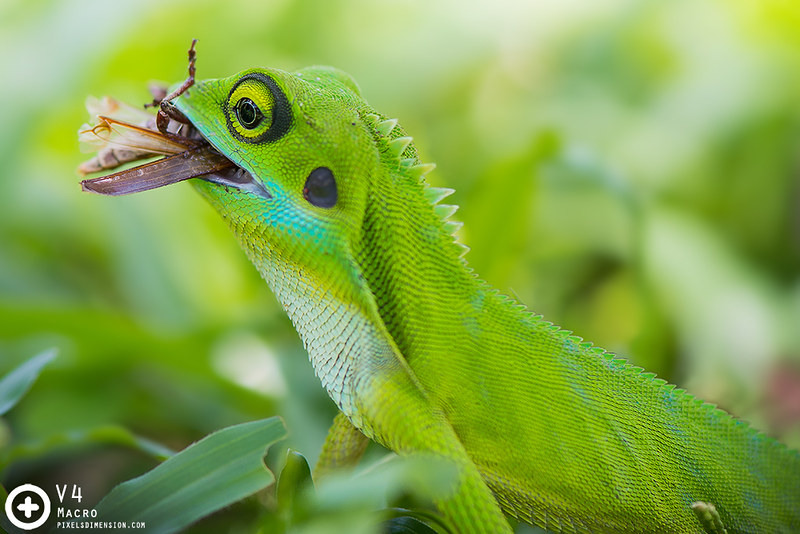
Helping a herpetologist shoot some photographs. It was great to be able to see watch and learn some snake behaviours during the session.

The blue bronzeback was kind of in a bind at this stage. But once its toxins come into effect, the gecko became totally defenceless. The snake then slowly move the position of its prey so that it can be swallowed head-in.


More on Macro Photography here: PixelsDimension
Check out Malaysia's wildlife here: WildLife Malaysia

This post has been edited by [PF] T.J.: Oct 10 2015, 11:04 PM
nokian
post Oct 10 2015, 11:09 PM

Casual
***
Junior Member
350 posts

Joined: Feb 2005


Great pictures..

TS[PF] T.J.
post Oct 13 2015, 01:37 PM

20k VIP Club
Group Icon
Elite
24,193 posts

Joined: Feb 2010
From: Perak
QUOTE(nokian @ Oct 10 2015, 11:09 PM)
Great pictures..
*
Thank you mate! Much obliged notworthy.gif notworthy.gif
TS[PF] T.J.
post Oct 13 2015, 01:38 PM

20k VIP Club
Group Icon
Elite
24,193 posts

Joined: Feb 2010
From: Perak
#387
user posted imageDead Leaf Mantis cleaning its forelegs by Ji Tan, on Flickr

A young dead leaf mantis cleaning its forelegs after a meal. They often clean up when there's water too.

Dead leaf mantises are so called because of their brown-coloured camouflage that works best among dead leaves, making them virtually invisible!

Cooperative fella, love shooting mantises; if only they are common T_T


More on Macro Photography here: PixelsDimension
Check out Malaysia's wildlife here: WildLife Malaysia
TS[PF] T.J.
post Oct 16 2015, 11:28 AM

20k VIP Club
Group Icon
Elite
24,193 posts

Joined: Feb 2010
From: Perak
#388

user posted imageLonghorn Beetle (Cerambycidae) by Ji Tan, on Flickr

As the name suggests, beetles such as this have very long antennae, which may grow longer than the body of the beetle itself!

The larvae of this type of beetles can cause great damage to wooden structures or trees, and are thus considered as pests in certain countries. Some Long Horn Beetles can grow extremely large and heavy, and like many other large beetles, they are clumsy and don't often fly.


More on Macro Photography here: PixelsDimension
Check out Malaysia's wildlife here: WildLife Malaysia

TS[PF] T.J.
post Oct 21 2015, 11:44 PM

20k VIP Club
Group Icon
Elite
24,193 posts

Joined: Feb 2010
From: Perak
#389

user posted imageGiant Golden Web Spider (Nephila pilipes juv ♀) melanic form by Ji Tan, on Flickr

A melanic form of Nephila pilipes, which usually have yellow, and then red-coloured legs.

It is unsure whether the colour difference offers a competitive advantage in the habitat.

#390
user posted imageMale daddy-long-legged spider (Pholcus sp.?) by Ji Tan, on Flickr


An uncommon male Pholcid spider resting on a leaf. Note the palps in striking orange.


#391
user posted imageHorned Stink Bug by Ji Tan, on Flickr

This bug will not only produce a stench, but will poke you as well haha biggrin.gif


More on Macro Photography here: PixelsDimension
Check out Malaysia's wildlife here: WildLife Malaysia


TS[PF] T.J.
post Oct 24 2015, 09:40 PM

20k VIP Club
Group Icon
Elite
24,193 posts

Joined: Feb 2010
From: Perak
#392
user posted imageGiant Forest Scorpion (Heterometrus spinifer) glowing under UV light by Ji Tan, on Flickr

Scorpions tend to glow under UV illumination as a result of chemical reactions happening within the carapace.

Long has been discussed the reasons behind this UV illumination. Right now scientists believe that this phenomenon, which is very light sensitive, allows scorpions to look for areas without light- a place to hide!

#393
user posted imageBlack Lynx Spider (Hamadruas sp. ♀?) by Ji Tan, on Flickr

A very large Lynx Spider, lying in wait on a leaf of thin silk. Note the long, erect spines as well as the characteristic hexagonal eye arrangement.

#394
user posted imageLong-legged Fly Mating Ritual by Ji Tan, on Flickr

A mating pair of Long-Legged Flies, flying around before copulating. The two of them will fly together with the male tailing the female wherever she flies- a spectacular sight!


#395
user posted imageBumblebee Jumper- Omoedus ephippigera ♂ by Ji Tan, on Flickr

Cute little jumper of black and yellow, resembling that of a tiny bumblebee. You can usually find them waiting for prey on foliage in gardens or secondary forests


More on Macro Photography here: PixelsDimension
Check out Malaysia's wildlife here: WildLife Malaysia
TS[PF] T.J.
post Oct 25 2015, 06:10 PM

20k VIP Club
Group Icon
Elite
24,193 posts

Joined: Feb 2010
From: Perak
user posted imageDecorative Leucauge- Leucauge decorata ♀ by Ji Tan, on Flickr

A beautiful decorative Leucauge, with its unique, almost-pointy abdomen. Like many other Leucauge, this one builds an almost symmetrical orb-web, and lie hanging-down in the centre, waiting in prey.

Decorative Leucauge can be found normally in gardens and forest fringes.


user posted imageRhino Garden Jumper- Thorelliola ensifera ♀ by Ji Tan, on Flickr

A Rhino Garden Jumper, quite common in gardens and secondary forests. Seen some in mangrove forests as well.

The males are known to have two "horns" on its "face" (this is a female though), leading to its name.


More on Macro Photography here: PixelsDimension
Check out Malaysia's wildlife here: WildLife Malaysia
TS[PF] T.J.
post Oct 25 2015, 11:29 PM

20k VIP Club
Group Icon
Elite
24,193 posts

Joined: Feb 2010
From: Perak
#398
user posted imageBianor cf. angulosus ♂ by Ji Tan, on Flickr

Fly: Oh my, what super long legs you have Mr. Bianor!

Bianor: All the better for me to strangle you with! >:D

This particular spider has exceedingly long and well-developed legs 1, and is closely related to Harmochirus.

#399
user posted imageFully matured Hyllus cf. keratodes ♂ by Ji Tan, on Flickr


An adult, male Hyllus heavy jumper. it seems that the two, characteristic "horns" on the heads of male spiders of this particular species tend to fall off as they age, often misleading people to think that they are different species.


More on Macro Photography here: PixelsDimension
Check out Malaysia's wildlife here: WildLife Malaysia
TS[PF] T.J.
post Nov 3 2015, 01:36 PM

20k VIP Club
Group Icon
Elite
24,193 posts

Joined: Feb 2010
From: Perak
#400
user posted imageDomestic huntsman- Heteropoda venatoria ♂ by Ji Tan, on Flickr

Never had the chance to photograph this fast and elusive huntsman spider.. until now!

Note the characteristic "distorted heart-shape" on the cephalothorax. Nice!

This spider is as large as an average-sized hand palm and can be found on walls of buildings.

Despite the large size, Heteropoda venatoria is not easy to find since they only come out and night. During the day, they tend to squeeze and hide in very tiny crevices.

Huntsman spiders re also very fast, capable of darting and low jumping to escape danger!


More on Macro Photography here: PixelsDimension
Check out Malaysia's wildlife here: WildLife Malaysia
TS[PF] T.J.
post Nov 3 2015, 04:37 PM

20k VIP Club
Group Icon
Elite
24,193 posts

Joined: Feb 2010
From: Perak
#401
user posted imagePortia Jumping Spider- Portia cf. fimbriata ♂ by Ji Tan, on Flickr

A Striped-faced Portia, one of the smartest jumping spiders out there; shown to display learning abilities and sophisticated hunting patterns.

Portia spiders are very easy to recognize once noticed. Their bodies are in such a way that they resemble dead leaves or litters- a great way of camouflaging itself. This spider moves relatively slowly too, as a part of its camouflage technique.

This spiders can often be found near webs of larger spiders i.e. Nephila, Nephilengys, Argiope, looking for food.


More on Macro Photography here: PixelsDimension
Check out Malaysia's wildlife here: WildLife Malaysia

TS[PF] T.J.
post Nov 4 2015, 12:21 AM

20k VIP Club
Group Icon
Elite
24,193 posts

Joined: Feb 2010
From: Perak
user posted imageGrass Orb Web Spider- Liprocea cf. fusiformis ♀ by Ji Tan, on Flickr

Grass Orb Web Spiders are nocturnal spiders that love to position themselves with stretched legs so that they are well-camouflage among long lalang grasses.

The identity of this orb weaver spider is somewhat in disarray and will require more studies.


More on Macro Photography here: PixelsDimension
Check out Malaysia's wildlife here: WildLife Malaysia
TS[PF] T.J.
post Nov 8 2015, 04:26 PM

20k VIP Club
Group Icon
Elite
24,193 posts

Joined: Feb 2010
From: Perak
#403

user posted imageTree-Stump Spider- Poltys cf. illepidus ♀ by Ji Tan, on Flickr

Undoubtedly one of the most bizarre-looking orb weavers out there, the Tree Stump Spider not only has weird-looking "horns" on its abdomen, it rests in a relatively awkward position too. This helps the spider camouflage very well on tree branches and twigs.

Tree-Stump Spiders are nocturnal and build large webs at night.

More on Macro Photography here: PixelsDimension
Check out Malaysia's wildlife here: WildLife Malaysia
PenangLaksa
post Nov 9 2015, 11:07 PM

Enthusiast
*****
Senior Member
789 posts

Joined: Oct 2006
Beautiful work, I enjoyed damselflies the most. Thanks for sharing ;-)
TS[PF] T.J.
post Nov 10 2015, 01:36 PM

20k VIP Club
Group Icon
Elite
24,193 posts

Joined: Feb 2010
From: Perak
QUOTE(PenangLaksa @ Nov 9 2015, 11:07 PM)
Beautiful work, I enjoyed damselflies the most. Thanks for sharing ;-)
*
Thank you kindly man thumbup.gif
Happy to know that you are aware of their existence, unlike many others out there huhu
thumbup.gif thumbup.gif
TS[PF] T.J.
post Nov 10 2015, 01:36 PM

20k VIP Club
Group Icon
Elite
24,193 posts

Joined: Feb 2010
From: Perak
#404

user posted imageBlack and White Jumper- Carrhotus sannio ♂ by Ji Tan, on Flickr

Not a very common Jumping Spider although they can be found in gardens. I have only seen this spider twice, and the first one I've seen was more white than yellowish, quite interesting.

More on Macro Photography here: PixelsDimension
Check out Malaysia's wildlife here: WildLife Malaysia
TS[PF] T.J.
post Nov 10 2015, 09:44 PM

20k VIP Club
Group Icon
Elite
24,193 posts

Joined: Feb 2010
From: Perak
#405

user posted imageCross Spider- Argiope dang ♀ by Ji Tan, on Flickr

This species of Cross Spider is pretty common throughout Peninsular Malaysia, and can often be found in gardens, parks or places near streams or drains.

This spider can grow as large as the other Argiope spiders, and are often confused with A. catenulata and A. mangal due to the similar, cylinder-type abdomen.

More on Macro Photography here: PixelsDimension
Check out Malaysia's wildlife here: WildLife Malaysia

TS[PF] T.J.
post Nov 15 2015, 10:59 PM

20k VIP Club
Group Icon
Elite
24,193 posts

Joined: Feb 2010
From: Perak
#406
user posted imageBatik Golden Web Spider- Nephila antipodiana ♀ by Ji Tan, on Flickr

A young adult Nephila antipodiana. These spiders occur in at least 2 different colour morphs- yellow and black.

The yellowish tints of the webs will "shine" in gold under the morning sun- thus the name! The web by itself is strong, but not very sticky. However, insect carcasses left on the web will make the web a whole lot stickier!

More on Macro Photography here: PixelsDimension
Check out Malaysia's wildlife here: WildLife Malaysia


TS[PF] T.J.
post Nov 16 2015, 10:09 PM

20k VIP Club
Group Icon
Elite
24,193 posts

Joined: Feb 2010
From: Perak
#407
user posted imageMantis and butterfly prey by Ji Tan, on Flickr

A large preying mantis tearing through a butterfly it has just caught. Unlike spiders which only digest the internals of their prey, mantises eat pretty much the entire prey, leaving little, if not nothing behind.


More on Macro Photography here: PixelsDimension
Check out Malaysia's wildlife here: WildLife Malaysia

This post has been edited by [PF] T.J.: Nov 16 2015, 10:12 PM
TS[PF] T.J.
post Nov 17 2015, 05:31 PM

20k VIP Club
Group Icon
Elite
24,193 posts

Joined: Feb 2010
From: Perak
#408user posted imageComb-footed Spider (Theriididae) by Ji Tan, on Flickr

Any form of ID is highly appreciated!

Found this fancy looking-spider on bamboo leaves. The "combs" on each leg are especially evident in this shot.

#409
user posted imageBlack Sailor Spider- Neoscona cf. nautica ♂ by Ji Tan, on Flickr

Found this spider waiting in close proximity to a female Neoscona. The males tend to rest in a diamond shaped manner (as in photo), and builds smaller and messier webs.


More on Macro Photography here: PixelsDimension
Check out Malaysia's wildlife here: WildLife Malaysia
TS[PF] T.J.
post Nov 18 2015, 11:39 PM

20k VIP Club
Group Icon
Elite
24,193 posts

Joined: Feb 2010
From: Perak
#410
user posted imageLadybird mimicking spider- Paraplectana sp. ♀ by Ji Tan, on Flickr

A young Paraplectana, the colour of the abdomen has not turned red/yellow yet, and the black spots are also undeveloped.

Mimicry comes in many ways. Although most spiders tend to mimic ants, mainly because ants make very nasty food to predators; some unique ones like Paraplectana mimics ladybirds. Ladybirds have tough shells which deters predators, and the Paraplectana makes sure to use this to its advantage.

#411
user posted imageOrange Harvestman by Ji Tan, on Flickr

If you are afraid of daddy long-legged spiders, then you are going to be terrified by these arachnids!


Many harvestmen may look like much larger versions of daddy long-legged spiders we have at home, but they are not considered as spiders due to the lack of a true thorax and abdomen.


Harvestmen are usually omnivores and can be found in moist, shaded areas of parks or forests.


More on Macro Photography here: PixelsDimension
Check out Malaysia's wildlife here: WildLife Malaysia

TS[PF] T.J.
post Nov 19 2015, 10:06 PM

20k VIP Club
Group Icon
Elite
24,193 posts

Joined: Feb 2010
From: Perak
#412
user posted imageStick insects getting ready to mate by Ji Tan, on Flickr

A male (left) and female (right) stick insects getting together. I was expecting some kind of mating ritual like those seen in many different organisms; but apparently these guys prefer turning the heat up pronto tongue.gif

ID is kindly appreciated biggrin.gif

#413
user posted imageA Celebes Leucauge in resting position- Leucauge celebesiana ♀ by Ji Tan, on Flickr

A Celebes Leucauge spider assuming resting position, with her forelegs being "left hanging". It is only when the spider is sure that the surrounding is safe before she really rests.


More on Macro Photography here: PixelsDimension
Check out Malaysia's wildlife here: WildLife Malaysia

TS[PF] T.J.
post Dec 8 2015, 09:34 PM

20k VIP Club
Group Icon
Elite
24,193 posts

Joined: Feb 2010
From: Perak
It's been a while laugh.gif

#414
user posted imageHeavy Jumper- Hyllus diardi ♀ by Ji Tan, on Flickr

A mature, large and very hairy heavy jumper. The hairs and bristles on this one appear to display some slight yellowish tint (its usually white). I wonder what governs the colour variation.

Despite the scary-looking appearance, heavy jumpers are usually shy, sometimes even curious.


Since they are relatively huge, and don't really move around much, they make great photographic subjects.

#415
user posted imageOrange comb-footed spider (Theridiidae) ♀ by Ji Tan, on Flickr

ID appreciated! smile.gif

A tiny comb-footed spider in brilliant orange. A brown variant was also seen. This mother spider is busy protecting her egg sac.

#416
user posted imageEriovixia sp. ♀ by Ji Tan, on Flickr

Seen quite a lot of different Eriovixia morphs, not really sure whether they are of the same species. If they are not, what governs the difference in colour?

Is it food, genetics, or other environmental influences that we know not of?


More on Macro Photography here: PixelsDimension
Check out Malaysia's wildlife here: WildLife Malaysia

TS[PF] T.J.
post Dec 14 2015, 10:57 PM

20k VIP Club
Group Icon
Elite
24,193 posts

Joined: Feb 2010
From: Perak
#417

user posted imageMother Cyrtophora with giant egg sac- Cyrtophora sp. ♀ by Ji Tan, on Flickr

A colourful tent spider in brilliant yellowish orange. This mother spider was busy connecting silk lines to her egg to make sure that the egg doesn't fall.

Probably the same colour morph as this one: https://www.flickr.com/photos/59583171@N07/...g-kqymXr-jLpeeW


More on Macro Photography here: PixelsDimension
Check out Malaysia's wildlife here: WildLife Malaysia
TS[PF] T.J.
post Dec 31 2015, 05:03 PM

20k VIP Club
Group Icon
Elite
24,193 posts

Joined: Feb 2010
From: Perak
#418
user posted imageJuvenile Wagler's Pit Viper- Tropidolaemus wagleri by Ji Tan, on Flickr

Pros go out in the night to hunt for snakes, while noobs like me just hope I get lucky in the morning haha tongue.gif

This juvenile Pit Viper just had a big meal (evident by the bulky body in the photo) and stayed really still, lucky!

The juvenile and adult look very different from one another: https://www.flickr.com/photos/59583171@N07/15331977613

#419
user posted imageCrab-Eating Mangrove Snake- Fordonia sp. by Ji Tan, on Flickr

A common snake in tidal rivers and sometimes mangrove forests. The top colour may vary from one morph to another, ranging from grey to brown to orange.

This snake enjoys seafood tongue.gif

#420
user posted imageDog-Faced Water Snake- Cerberus rynchops by Ji Tan, on Flickr

A dog-snake hybrid? XD

This particular snake display dull and dark colours, and can be found in swampy areas along the coast or rice fields.


More on Macro Photography here: PixelsDimension
Check out Malaysia's wildlife here: WildLife Malaysia
TS[PF] T.J.
post Jan 4 2016, 07:45 PM

20k VIP Club
Group Icon
Elite
24,193 posts

Joined: Feb 2010
From: Perak
#421
user posted imageYellow-Silver St. Andrew's Cross Spider- Argiope catenulata ♀ by Ji Tan, on Flickr

A female A. cetenulata with a linear, but discontinuous stabilimentum.

One of the most beautiful Cross Spiders in Malaysia, the female Arigope catenulata displays striking silver patterns on both her abdomen and cephalothorax.

I mentioned how uncommon this spider was in my previous posts; turns out I was looking at the wrong place! A. catenulata are very common in paddy fields.


#422
user posted imageLong-tailed Runcinia- Runcinia sp. ♀ by Ji Tan, on Flickr

A common crab spider that can be found in grasslands. Like many other crab spiders, this one will raise and shake its two pairs of forelegs when agitated. Doing this will fool predators into thinking that the spider is actually larger than it actually is, causing them to flee.

#423
user posted imageDecorative Leucauge- Leucauge decorata ♂ by Ji Tan, on Flickr

Finally come across a male Leucauge decorata. I suppose the males are not difficult to find, just that most of us tend to ignore this rather common spider tongue.gif

The males are skinnier and smaller than the females. They also display the same abdominal patterns. The main distinguishing character would be the swollen palps (which are quite small), and the messy, incomplete webs.

Female here: https://www.flickr.com/photos/59583171@N07/22469198041


More on Macro Photography here: PixelsDimension
Check out Malaysia's wildlife here: WildLife Malaysia

TS[PF] T.J.
post Jan 7 2016, 07:59 PM

20k VIP Club
Group Icon
Elite
24,193 posts

Joined: Feb 2010
From: Perak
#424
user posted imageSalticid ♂ by Ji Tan, on Flickr

ID kindly appreciated.

Looks like he lost one of his palps.

A common jumping spider that is fast and agile. Easily recognizable by the flaming red-orange colours of the femur of legs I, and not to mention the cute "moustache".

#425
user posted imageFungus beetle (?) by Ji Tan, on Flickr

... with cancer? haha
Interesting find, really like the many bulges on its elytron.


#426
user posted imageOrnamental Coin Spider- Herennia multipuncta ♂ by Ji Tan, on Flickr

A male Coin Spider sitting in his silken cup on a tree trunk.

The male is much smaller, and looks way different than the female. Photo of female here: https://www.flickr.com/photos/59583171@N07/17017012091

This is an example of sexual dimorphism.


More on Macro Photography here: PixelsDimension
Check out Malaysia's wildlife here: WildLife Malaysia
TS[PF] T.J.
post Jan 10 2016, 03:05 PM

20k VIP Club
Group Icon
Elite
24,193 posts

Joined: Feb 2010
From: Perak
#427

user posted imageTetragnathidae- Leucauge/Opadometa ♀ by Ji Tan, on Flickr


A female spider feeding. Some say this is a Leucauge, some say its an Opadometa. Looks like we have to wait and find out.


#428
user posted imageParasitoid wasp ♀ (?) by Ji Tan, on Flickr

ID kindly appreciated!

A parasitoid wasp (?) with a very long ovipositor?

Was really very lucky to get this shot sharp in one go, the fella never stuck around.

More on Macro Photography here: PixelsDimension
Check out Malaysia's wildlife here: WildLife Malaysia
TS[PF] T.J.
post Jan 12 2016, 09:58 PM

20k VIP Club
Group Icon
Elite
24,193 posts

Joined: Feb 2010
From: Perak
#429

user posted imageTrilobite beetle by Ji Tan, on Flickr

A very bizarre-looking beetle- A Trilobite Beetle!
Trilobite beetles are so-called due to their resemblance to the already-extinct Marine Trilobite arthropods.

The females of these beetles are termed Neotenous since they remain in larvae-form throughout their lives.

#430
user posted imageOrange butterfly by Ji Tan, on Flickr

More on Macro Photography here: PixelsDimension
Check out Malaysia's wildlife here: WildLife Malaysia
TS[PF] T.J.
post Jan 13 2016, 07:52 PM

20k VIP Club
Group Icon
Elite
24,193 posts

Joined: Feb 2010
From: Perak
#431
user posted imageScarlet Grenadier- Lathrecista asiatica ♀ by Ji Tan, on Flickr

A common, beautiful dragonfly perching on a dead twig. Found this near shaded parts of the forest ,close to a river.


More on Macro Photography here: PixelsDimension
Check out Malaysia's wildlife here: WildLife Malaysia

#432
user posted imageSpider-hunting Wasp (?) by Ji Tan, on Flickr

Found this really big wasp hopping from plant to plant. Looks quite similar to a spider-hunting wasps, which hunt and kill spiders.

I think something is wrong with one of its wings.. infected or injured?


More on Macro Photography here: PixelsDimension
Check out Malaysia's wildlife here: WildLife Malaysia
TS[PF] T.J.
post Jan 19 2016, 10:31 PM

20k VIP Club
Group Icon
Elite
24,193 posts

Joined: Feb 2010
From: Perak
#433
user posted imageParasitoid wasp on a fungus beetle larva? by Ji Tan, on Flickr

Not sure whether its a coincidence, or the wasp was really trying to attack the larva.

#434
user posted imageParallel-Spined Gasteracantha- Gasteracantha diardi ♀ by Ji Tan, on Flickr

Ventral view of a Parallel-Spined Gasteracantha. The bottom part is apparently as awesome as the top!

#435
user posted imageTent Spider web- Cyrtophora moluccensis ♀ by Ji Tan, on Flickr

A side view of a Tent Spider's web, unlike its cousins Gea and Argiope, a Tent Spider such as this builds a 3D web that is not only effective at catching prey, but lasts longer too.
As a result, a tent spider doesn't rebuild her web everyday.

More on Macro Photography here: PixelsDimension
Check out Malaysia's wildlife here: WildLife Malaysia

TS[PF] T.J.
post Jan 23 2016, 09:42 PM

20k VIP Club
Group Icon
Elite
24,193 posts

Joined: Feb 2010
From: Perak
#436
user posted imageBulbous-spined Gasteracantha- Gasteracantha crucigera ♀ by Ji Tan, on Flickr


More on Macro Photography here: PixelsDimension
Check out Malaysia's wildlife here: WildLife Malaysia
TS[PF] T.J.
post Nov 18 2016, 10:19 PM

20k VIP Club
Group Icon
Elite
24,193 posts

Joined: Feb 2010
From: Perak
So lazy to upload photos recently rclxub.gif

Here's a shot of a Gerbera Daisy from my recent trip to Cameron Highlands laugh.gif

user posted imageGerbera Daisy by Ji Tan, on Flickr

Gerbera Daisy is a beautiful flower that is native to the tropics. This plants have been bred over the years to produce an extensive array of wonderful colours.

Surprising to many, Gerbera plants are actually easy to plant in your home garden, and can be purchased for around RM10-20 depending on variety/ presence of flowers biggrin.gif
Timemuffin
post Dec 13 2016, 10:32 AM

Getting Started
**
Junior Member
98 posts

Joined: Jul 2011
QUOTE(PF T.J. @ Nov 18 2016, 10:19 PM)
So lazy to upload photos recently  rclxub.gif

Here's a shot of a Gerbera Daisy from my recent trip to Cameron Highlands laugh.gif

user posted imageGerbera Daisy by Ji Tan, on Flickr

Gerbera Daisy is a beautiful flower that is native to the tropics. This plants have been bred over the years to produce an extensive array of wonderful colours.

Surprising to many, Gerbera plants are actually easy to plant in your home garden, and can be purchased for around RM10-20 depending on variety/ presence of flowers biggrin.gif
*
ini terbaiiik

TS[PF] T.J.
post Dec 14 2016, 06:51 PM

20k VIP Club
Group Icon
Elite
24,193 posts

Joined: Feb 2010
From: Perak
QUOTE(Timemuffin @ Dec 13 2016, 10:32 AM)
ini terbaiiik
*
Thank you boss! Your photos are so much better, if you know what I mean brows.gif brows.gif


Change to:
| Lo-Fi Version
0.1430sec    0.50    5 queries    GZIP Disabled
Time is now: 21st December 2025 - 10:55 PM