Welcome Guest ( Log In | Register )

4 Pages  1 2 3 > » Bottom

Outline · [ Standard ] · Linear+

Investment 320 DEVELOPERS PLANS MORE 2018-2019 LAUNCHES, Property News, Upcoming & Landbank News

views
     
TSaccetera
post Feb 9 2014, 06:54 PM, updated 9y ago

Ambassador of ChatHouz AI
********
All Stars
10,777 posts

Joined: Sep 2009


Note: This thread will be used to post Latest Developer Buying Land News + Changing Property Product Trend News

According to PTLM Research, the no. of planning, landbanking transactions and development order submission are at the "craziest" time. More latest news can be available at https://www.facebook.com/groups/115179435202482/.


(a snapshot for Klang Valley only)

user posted image

(snipped)

user posted image

This post has been edited by accetera: Nov 24 2017, 10:43 AM
TSaccetera
post Feb 9 2014, 07:16 PM

Ambassador of ChatHouz AI
********
All Stars
10,777 posts

Joined: Sep 2009


Just before CNY...


UOA plans new mixed dev in Old Klang Road


UOA in share subscription agreement for land deal

The StarProperty | January 29, 2014 | 316 views | Topic : Property News.
http://www.starproperty.my/index.php/artic...-for-land-deal/

KUALA LUMPUR: UOA Development Bhd has entered into a share subscription agreement with several parties for a land deal in Jalan Klang Lama.

In a filing with Bursa Malaysia yesterday, UOA Development said the agreement with Eureka Equity Sdn Bhd, Regenta Development Sdn Bhd, Lau Soon Woh, Mow Chooi Yoon and Kok Koek Hung involved the subscription of three million ordinary shares of RM1 each in Eureka at par by UOA and Regenta.

Eureka has pieces of land measuring about 1.2ha in Jalan Klang Lama valued at RM63.5mil.

The principal activity of Eureka, which is currently dormant, is property development.

Following the share subscription, UOA holds 59.99% stake in Eureka, Lau (10%), Mow (20%), Kok (10%) and Regenta (0.00002%).

UOA said the land was located approximately 1km from the federal highway and was near Mid Valley City and has a prominent frontage to Jalan Klang Lama.

The location of the land is also highly accessible.

“The land is ideal for condominium and commercial development.

“The proposed subscription allows the company to strategically expand its landbank in Kuala Lumpur that matches the fast turnaround strategy,” UOA said.

The company said the proposed subscription was expected to contribute positively to the future earnings of UOA following development of the land.

UOA said its management was optimistic about the prospects of the development of the land.

UOA is the developer of Bangsar South, a RM10bil gross development value integrated development on the former Kampung Kerinchi squatter colony.

TSaccetera
post Feb 9 2014, 08:12 PM

Ambassador of ChatHouz AI
********
All Stars
10,777 posts

Joined: Sep 2009


In this week's Focus M hardcopy...


Kwasa Damansara expected to yield over RM50 billion in GDV


Will Kwasa be MRCB’s new KL Sentral?

Focus M | By Hafidz Baharom | Friday, 07 Feb 2014, 12:01 AM
http://www.focusmalaysia.my/Mainstream/Wil...new-KL-Sentral-

With Kwasa Land Sdn Bhd having officially called tender for its 932ha in Sungai Buloh, Malaysian Resources Corporation Bhd (MRCB) could be the biggest winner of the RM50 bil gross development value (GDV) project.

MRCB is believed to be planning its second transport hub – similar to its KL Sentral development – in the project, Kwasa Damansara, to be developed over the next 20 years.

The second transport hub had been hinted at by MRCB chief operating officer Imran Salim in a recent interview. He says the company will keep to its niche as a transport-oriented developer.

He tells FocusM MRCB is still seeking land with proximity to public transport. The Kwasa Damansara development will have two MRT stations, slated for completion in 2017.

“As long as there is one mode of public transport there or we can have a bit more integration with other modes, it will be fantastic,” says Imran. “We are looking at that perspective. Urban regeneration, urban redevelopment, that is our forte. That is going to be our key product and that is where our focal point is,” he adds.

However, as part of MRCB’s future plans, Imran says the company is also seeking to develop a new township.

“The township that we have is in Perak – Bandar Seri Iskandar. We will probably duplicate this somewhere else – a similar concept. Again, it is not a focal point; but we should have one or two just to diversify our products out there,” he says.


For the full story, please subscribe to Focus Malaysia.
TSaccetera
post Feb 9 2014, 08:30 PM

Ambassador of ChatHouz AI
********
All Stars
10,777 posts

Joined: Sep 2009


City & Country: Office to hotel conversion on the rise in Malaysia
The Edge Property
By Haziq Hamid of theedgemalaysia.com
Friday, 07 February 2014 23:30
http://www.theedgeproperty.com/news-a-view...n-malaysia.html

CONVERTING office buildings into hotels is an easy way to maximise asset value in certain markets and has resulted in a big change in the way property developers are creating new hotel supply to cater to the country’s growing tourism industry.

A recent Zerin Properties report, “Office to Hotel Conversion”, highlights this growing trend and examines whether vacant office buildings in Kuala Lumpur can be converted into hotels to increase their net profit and yield.

A National Property Information Centre commercial property stock report states that the supply of purpose-built offices in Kuala Lumpur was at 81.6 million sq ft while incoming supply was at 13.6 million sq ft as at 3Q2013. Selangor’s supply of purpose-built offices stood at 32.4 million sq ft while incoming supply was at 4.2 million sq ft. The occupancy rate for Kuala Lumpur offices was 78.8%, compared with Selangor’s 73.9%.

As a comparison, 12% of offices in the UK have stood empty for many years, according to the report by Zerin Properties. In some areas such as Birmingham, 18% of commercial properties are said to be empty. The UK government believes thousands of sites can be converted into homes [rather than hotels], while still meeting the demand for offices when the economy picks up.

According to Roja Rani, Zerin Properties’ head of research and consultancy, the need to fill commercial space in Malaysia is greater because there is an oversupply.

“However, this could just be that there is an oversupply of old buildings and these are being converted simply because they lack tenants and their yield is far lower than what it should be,” she says.

Malaysia’s current vacancy rate is nearly double that of Britain, which translates into a larger need for office to hotel conversion, she adds. Furthermore, tourist arrivals have been increasing, hitting the 25 million mark in 2012.

Vacant office buildings in cities with popular holiday destinations nearby are perfect for conversion into hotels. In fact, this trend may have already started.

The report cites Tan Sri Tony Fernandes, group CEO and director of AirAsia Bhd and founder of Tune Group Sdn Bhd, who was quoted as telling Endemic Guides that many property owners wanted to convert their office buildings into hotels to get higher yields.

Fernandes himself has converted office buildings in prime areas of London, including Kings Cross and Paddington, into hotels.

A few Malaysian entrepreneurs have taken a leaf from Fernandes’ book and done the same back home. Mak Hoong Weng, director of Art Form Enterprise Sdn Bhd, owns buildings in Kuala Lumpur, Melaka and Kuantan that he has amassed over a 10-year span. He plans to convert 10 of them into hotels, offering over 1,000 rooms.

One of Mak’s boutique hotels, Star Luxury Hotel in Jalan Raja Chulan, Kuala Lumpur, was converted from two office towers and currently charges between RM280 and RM1,500 per night. He also owns a multi-storey heritage building in Jalan Tun Perak, where the ground floor has been leased out to a food and beverage operator and the rest of the building rented to a budget hotel operator.

The 13-storey Wisma Peladang in Jalan Bukit Bintang also underwent a complete retrofit in 2006, becoming Piccolo Hotel. It immediately drew investment from Berjaya Land, which now owns 51% of the four-star hotel, which charges an average room rate of RM246. As at September 2013, Piccolo had an occupancy rate of 80%.

Meanwhile, corporate office tower Plaza Atrium in Lorong P Ramlee is being converted into 109 serviced apartments spread over 34 floors by Pinehigh Development Sdn Bhd, a wholly-owned subsidiary of Far East Organization.

According to Roja, more developers in Kuala Lumpur are starting to jump on the bandwagon. “Recently, it was announced that an old office building, Menara CMY in Jalan Ampang, would be redeveloped into a hotel.”

Foo Gee Jen, managing director of WTW, also cites some conversions in Kuala Lumpur, namely Wisma KLH into Wolo Hotel, Magnum Plaza into Sky Express Hotel (previously Flamingo Hotel) and Sentosa Hospital into Tunes Hotel.

However, he does not believe this is a growing trend. “It all depends on the location being suitable for a hotel, the cost of refurbishment compared with potential profits and whether the property has been vacant for a long time.”

There have been such conversions in Kota Kinabalu and Kuching as well, he says. Two office buildings in Kuching were converted into hotels to cater for the increase in tourist arrivals. KKB Engineering Bhd’s building was redeveloped into the 80-room Abell Hotel while Kuching Tower became the 50-room Lime Tree Hotel.

Overall, says the report, the current trend of investing in office building redevelopment in Kuala Lumpur seems to be focused on old buildings. This is due to the growing number of new Grade-A office buildings in prime locations that boast much better facilities. The more stylish offices draw tenants to relocate despite the higher rents.

Old office buildings are also ripe for transformation because their rents are lower than new buildings, which translates into shrinking yearly income. The redevelopment of old office buildings in strategic locations, close to tourist attractions, into hotels would maximise yields and boost income. A vacant building costs its owner huge sums in lost rent.

With Malaysia’s office vacancy rate at 23%, with a substantial future supply in the pipeline, the competition for tenants is tight and it could take months or even years before a client can be found.

According to Roja, apart from office towers, several office buildings have been converted into serviced apartments, condominiums and retail space.

Foo, meanwhile, adds that shopoffices in many cities have also been converted into budget hotels.

“More are converted into hotels rather than purpose-built offices. In fact, several heritage shophouses are now boutique hotels, especially in Penang and Melaka.”

Foo says office space can also be converted for use as universities, colleges, hospitals or specialist centres. “The conversion is usually done by the operators after they acquire the building. However, there are more hotel operators than education or hospital operators as it is easier to obtain a licence for the hotel business than for universities or hospitals.”

The conversion of offices into hotels represents a great opportunity for investors and developers.

Foo says from a purely investing viewpoint, an office building generates more profit than a hotel. “Most hotel profits are generated as a business and not as an investment and therefore are not comparable with office building rental returns.”

According to the Zerin Propertie problem, a major problem in this new scenario could be the investors’ lack of experience in the hotel industry as they would have mainly invested in office space before. One way to overcome this is to carry out detailed research on the demand for particular types of hotels in specific areas and whether they fit the layout of existing office buildings, it advises. For example, a 3-storey building in Seri Kembangan may not be suitable for a luxury hotel.

Another problem could be that the original floor plan of an existing office building may not cater for the type of hotel the developer wants to invest in, says Roja. He adds that most floor plans of old offices would tend to cater for boutique and budget hotels.

Nevertheless, the conversion of office buildings into hotels seems right at the moment, given the high vacancy rates and the booming local tourism industry. It makes sense to transform older office buildings that are currently vacant into something that offers better returns.


A growing trend around the world

The conversion of offices into hotels is evident in many other parts of the world, according to the Zerin Properties report, “Office to Hotel Conversion”.

In Germany, for example, a huge amount of office space has been turned into budget hotels. In Berlin, some of these hotels, located near busy transport lines, enjoy high occupancy and revenue per room.

Hotel Indigo Berlin Hardenbergstrasse is an 81-room office conversion that opened in 2012. Tourists are drawn by its cheap prices and prime location close to Ku’damm Avenue, which is known for its designer shops, restaurants and bars.

Tan Sri Tony Fernandes, founder and key shareholder of Tune Hotels, has converted office buildings into hotels in prime areas of London, including Kings Cross and Paddington.

In September 2011, Fernandes acquired a vacant office building, which was formerly the headquarters of the Unite union, at 324 Grays Inn Road, Kings Cross. He turned it into Tune Hotels Kings Cross and opened it in 2012, a few weeks before the Olympics. The hotel saw an occupancy rate of 95%.

More recently, a 1960s 8-storey building in Red Lion Street in Bloomsbury, central London, was granted permission for conversion into a 150-bedroom hotel because it could no longer be used as an office. The conversion was considered ideal because of the need for increased hotel supply in London.

Over in the US, Trump Organization is planning a US$200 million redevelopment of the Old Post Office Building in Washington, DC, into a luxury hotel. The company has finalised a deal with the US General Services Administration to redevelop the landmark building in Pennsylvania Avenue now that a congressional review has been completed.

In Manhattan, planned conversions have been key to some of the largest office transactions in recent years. These include 650 Madison Avenue, which sold for US$1.3 billion (US$2,200 psf), as well as 550 Madison Avenue, which Sony Corp sold for US$1.1 billion to an investment group headed by developer Joseph Chetrit. Chetrit is exploring plans to convert the asset into luxury condominiums, a hotel and an upscale retail space.

In Auckland, a number of office buildings in the central business district are said to be appropriate for conversion into hotels. International hotel operator Accor Hotels has announced that it will be opening a boutique operation in the Reserve Bank office building on Customs Street in downtown Auckland. This is expected to be the start of a trend of such conversions as there is strong demand for hotels in the city due to an acute shortage of existing hotel stock for sale.


This article first appeared in The Edge Malaysia Weekly, on January 27, 2014.

This post has been edited by accetera: Feb 9 2014, 08:31 PM

TSaccetera
post Feb 9 2014, 11:53 PM

Ambassador of ChatHouz AI
********
All Stars
10,777 posts

Joined: Sep 2009


From The Edge Malaysia this week..

>>> TSR Capital has an upcoming commercial office project on Jalan Semantan.

In other news:

>>> Maju Group submits development order for 9 highrise blocks of 1,678 units High Density project near Bandar Tasik Selatan.

This post has been edited by accetera: Feb 9 2014, 11:56 PM
TSaccetera
post Feb 10 2014, 12:04 AM

Ambassador of ChatHouz AI
********
All Stars
10,777 posts

Joined: Sep 2009


Mah Sing Group's Lakeville project begins soon with "Sale by Tender Only".

user posted image
by francis fong of PTLM.
TSaccetera
post Feb 10 2014, 12:20 AM

Ambassador of ChatHouz AI
********
All Stars
10,777 posts

Joined: Sep 2009


WEEKENDER ::: A once upon time prominent property developer, Country Heights group is set on making a big comeback to the local property scene starting with the planned RM11 billion Mines Wellness City that is set to put Seri Kembangan on the world map. MWC is an entry-point project under the Economic Transformation Programme (ETP). Besides MWC, tycoon Tan Sri Vincent Tan of Berjaya Group also has future plans for a RM10 billion metropolis project in Seri Kembangan. (Quoting https://www.facebook.com/groups/115179435202482/ )


Country Heights boss selling private assets
The Star BizWeek | by hanim adnan | Updated: Saturday February 8, 2014 MYT 11:13:07 AM
http://www.thestar.com.my/Business/Busines...p-listed-compa/

user posted image
Lee: ‘I’m totally unaware of this gold discovery.’


PROPERTY tycoon and businessman Tan Sri Lee Kim Yew of Country Heights Holdings Bhd who is making a comeback is seeking to sell his plantation assets, which includes the oil palm estates previously under the Country Heights Growers Scheme (CHGS), for an estimated RM400mil, say sources.

Lee paid RM215.5mil to fully terminate the country’s first oil palm farm sharing scheme last August. This excludes a goodwill of RM25mil.

Lee courted controversy when buying back the scheme but with the chapter on CHGS over and a sale on the cards, Lee tells StarBizWeek that his Country Heights group is set on making a big comeback to the local property scene.

To make this happen, there is a need to raise more capital, which he says can be generated from the sale of some of his privately-held oil palm plantation assets in the country.

“I will definitely sell some of these plantation assets if the right opportunity arises as this is an immediate focus to ensure our public-listed entity Country Heights can be on a stronger financial footing,” Lee adds.

Sources close to the group say Lee is mulling over selling about 8,000 ha of brownfield plantation land in Malaysia pegged at RM50,000 per ha.

The plantation assets will include the 4,000ha oil palm plantations in Gua Musang, Kelantan that was previously developed for the CHGS, which has been put up for sale in the open market at a reserved price of RM170mil since August last year.

Back in 2006, the Gua Musang land was brought at RM19.8mil.

While there have been many parties that have expressed their interest after visiting the site of the Gua Musang plantation, Lee says: “So far, no deal has been struck.”

“Given such a situation, we have decided to allocate RM30mil to rehabilitate the Gua Musang plantation by way of improving its infrastructure and also putting aside 80 ha to be transformed into an elephant conservation centre,” explains Lee.

“We will strictly adhere to a ‘no killing’ policy even though elephants were at fault for destroying part of our oil palm estate, therefore making it deem unviable.”

Mining plantation land?

This latest twist on the rehabilitation programme by Lee has also stirred market talk on the discovery of gold on the Gua Musang plantation land.

This is on the back of the current increase in new mining licences, leaseholds or concessions being handed out by the Kelantan government, apart from the mining-savvy state of Pahang and Perak.

Gua Musang, for many decades, has been known as a gold-mining town given its large deposits of gold and other valuable minerals.

Plantation land value in Gua Musang has also escalated to between RM58,000 and RM60,000 per ha of late due to the increase in mining activity over the past three years, says some industry players.

The current scenario is that many plantation companies with oil palm plantations in Pahang and Kelantan have found that they are actually sitting on gold, iron ore, copper, silver and manganese deposits.

In terms of the individual minerals, the Department of Minerals and Geoscience has valued the country’s gold reserves at RM14bil, coal higher at some RM124bil, tin at RM54bil and iron ore at RM17bil.

Under the law, oil palm planters can only harvest their fruits on their plantation land. Valuable minerals underneath the plantation belong to the state government.

So if these oil palm planters decide to diversify into mining, they will need to apply for a mining licence or concession but this will be at the expense of an already “scarce” amount of oil palm land in Malaysia.

Once mining activity is undertaken, there is no irreversible way to make the soil fertile again for conversion into agriculture land.

Lee, meanwhile, claims that he is surprised by market talk that there is gold underneath the Gua Musang plantation.

“I am totally unaware of this (gold discovery).

“From what I understand, based on our mineral soil test done earlier, there is only deposit of manganese and not gold.

“But then this is already an open secret given the surrounding mining areas here,” he points out.

However he declined to comment on whether he is applying for mining licence from the Kelantan government anytime soon.

Comprehensive restructuring

For now, Lee wants to fully focus on Country Heights’ ongoing comprehensive restructuring exercise involving its three core businesses – property development, property investment and hospitality, leisure and health.

In its heyday, its largest development was the Mines Resort City in Sungai Besi. Country Heights spotted the potential in the 150-acre world’s largest open-tin cast mining lake which was once a deserted wasteland.

The latest major development for the group will be the Mines development which is getting a new lease of life as “Mines Wellness City”, an RM11bil mixed use project anchored on a health and wellness theme.

The 120-acre development, to be built around the existing infrastructure in Mines, is an entry point project under the Economic Transformation Programme which aims to position Malaysia as a wellness landmark for the region.

The Mines Wellness City which will undergo a 10-year development is a culmination of several years of work to rebrand the 1,000-acre Mines Resort City in what Lee calls the “second wave” for the Mines project.

Other new property developments include Beleza Garden Homes in Jitra, Cyber Residency in Cyberjaya and Borneo Highlands Resort in Kuching
.

This post has been edited by accetera: Feb 10 2014, 12:20 AM
TSaccetera
post Feb 10 2014, 03:40 PM

Ambassador of ChatHouz AI
********
All Stars
10,777 posts

Joined: Sep 2009


Construction sector Q4 growth at 11.3% on-year
The StarBiz | Monday February 10, 2014 MYT 1:11:37 PM
http://www.thestar.com.my/Business/Busines...1dot3pc-onyear/

KUALA LUMPUR: The value of construction work done in the fourth quarter 2013 recorded an increase of 8.1% quarter-on-quarter to RM24.7bil, with the year-on-year percentage at 11.3%.

user posted image

This means the sector has continued to register a positive growth after the negative growth in the second quarter of 2011.

The highest percentage share in construction during the quarter was by the civil engineering sub-sector, which recorded 36.5%. This was followed by non-residential buildings (30.8%), residential buildings (27.6%) and special trades (5.1%).

Compared to Q3, the value of work done for the non-residential buildings showed a decrease compared to the previous quarter at 30.8% against 34.4%. However, the civil engineering, residential buildings and special trade showed an increase in the value of work done compared with the previous quarter.

Selangor led the other states with 25.7% or RM6.35bil’s worth of work, followed by Wilayah Persekutuan in second place with 16.1% (RM3.98bil), then Johor with 14.4% (RM3.55bil) and Perak with 7.7% (RM1.9bil).

Penang’s share of Q4 construction work stood at only 5.1% or RM1.25bil.

The private sector continued to dominate as project owner with a share of 69.3% in the fourth quarter 2013. Nevertheless, the share of public sector has increased to 30.7% from 29.7% compared to the previous quarter.

user posted image
TSaccetera
post Feb 10 2014, 05:05 PM

Ambassador of ChatHouz AI
********
All Stars
10,777 posts

Joined: Sep 2009


Fiamma eyes project launch early next year
BY DANIEL KHOO | The StarProperty | February 10, 2014
http://www.starproperty.my/index.php/artic...arly-next-year/

PETALING JAYA: Fiamma Holdings Bhd hopes to launch its second property development project in Kuala Lumpur early next year, comprising two blocks of 40-storey service apartments at Jalan Yap Kwan Seng.

user posted image
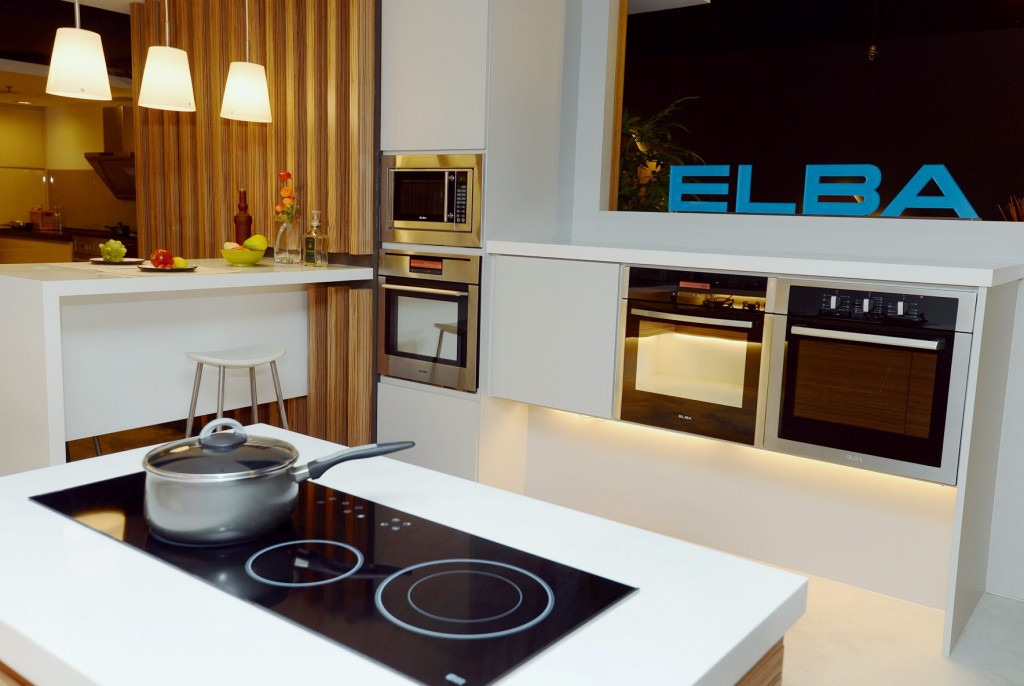
A file picture of Elba products on display at Fiamma Holdings’ showroom in Kuala Lumpur. Fiamma has announced its second property development project in Kuala Lumpur, due to be launched early next year.

The project, that is pending approvals from the relevent authorities, will be located on 0.6ha site near the Public Bank headquarters and the Australian High Commission at the Jalan Ampang intersection.

“The planned development will be bigger than our project at Jalan Tuanku Abdul Rahman,” said the company’s spokesperson.

If everything goes according to plan, Fiamma expects contribution from the upcoming project to lift its revenue and profits from the financial year ending Sept 30, 2016 (FY16) onwards.

Income from property development made up 9.6% of the group’s revenue in FY13.

“We expect higher contribution from this segment in FY14 due to the increased realisation of the present development project which commenced development in the middle of 2012,” said the spokesperson, who declined to be named.

The office and retail project has a gross development value of RM160mil and is almost fully sold.

Fiamma derives the bulk of its revenue from manufacturing and selling home electrical appliances under the brand names Elba, Faber, Rubine, Tuscani, MEC and Haustern. It is also the distributor for brands such as Whirpool, Braun home appliances, Omron, Tuttnauer and Charder.

The company made a net profit of RM24.13mil, or 18.5 sen a share in FY13. Revenue stood at RM211.9mil.

Fiamma had also been paying out steady dividends to its investors in the past five years in tandem with its improving financial outlook. On Jan 27, the company proposed a final dividend of 5 sen per share amounting to RM6.7mil for its shareholders to approve at its upcoming AGM on Feb 19.
TSaccetera
post Feb 10 2014, 07:45 PM

Ambassador of ChatHouz AI
********
All Stars
10,777 posts

Joined: Sep 2009


Gadang to build up property division
The Sun Daily | Eva Yeong | 10 February 2014 - 05:40am
http://www.thesundaily.my/news/952671

KUALA LUMPUR (Feb 10, 2014): Gadang Holdings Bhd is looking to double contributions from its property division to the group's topline to 40% by 2016 from 20% currently, its managing director and CEO Tan Sri Kok Onn said.

The diversified group said its property segment, utility and plantation divisions will eventually provide solid support to the group's total income base where currently construction is still the main driver.

"Property now contributes about 20% to turnover but starting from next year, it will be more. It can easily touch 25% to 30% once we start launching the projects in our pipeline. In terms of profit from the division, it is quite good," he told SunBiz in an interview recently.

user posted image

Kok said by 2016, it hopes to achieve 50% contribution from its construction segemnt, 30% to 40% contribution from property development and the balance from utilities and plantation.

"We are progressing well in the property division and our prospects for this financial year (ending May 31, 2014) will be better than last year. Last year we made RM32 million in profits.

"This year will be better, although the first half was a bit lower mainly because of the property billing which is slow but our sales are okay," he said, adding that it has over 200 acres of land currently.

Some of the ongoing projects include Jentayu Residensi in Tampoi, Johor with gross development value (GDV) of RM174 million, Capital City also in Tampoi, Johor with GDV RM2.2 billion and Residensi Vyne in Sungai Besi, Kuala Lumpur with GDV RM500 million.

It also has a joint venture (JV) with Cyberview Sdn Bhd to develop the K-Workers Housing Project in Cyberjaya with GDV RM1.06 billion and is in the midst of planning a township in Pokok Sena, Kedah with GDV RM300 million.


Kok said it wants to further its JV with Cyberview, specifically for an integrated commercial project in Cyberjaya.

"We are thinking if we can work closely together and perform well, they might give us more of their jobs. They have few billion worth of projects in Cyberjaya.

"We are also looking for more land. We have bought a piece of land in Taman Melawati, Kuala Lumpur but we haven't completed the sales and purchase agreement," he said.

He added that it is also in talks with landowners in Johor but has yet to close any deals there.

Commenting on measures announced by the government to curb speculative buying in the property market, Kok said the impact on the company's property sales is very small and the property market is still very bullish.

"Only in terms of bank loans there will be some impact, as those buying their second property will get a lot of queries. There will be some impact but sales is still strong, depending on location," he said.

As for the rising cost of materials, he said the impact is minimal as steel and cement prices are controlled by the government.

"Maybe there is just a 5% increase in all-in cost. Actually, labour is the problem. We don't have enough skilled labour to do first-class finishings. We can get semi-skilled labour easily but it is not easy to get skilled labour," he added.

As for overseas property projects, he said it is not keen unless the market has strong local demand.

"If you develop a project overseas and target Malaysian buyers, money goes out of the country. Our focus is more on Malaysia. If we decide to go overseas and the local people buy, that's okay because we can make money and bring it back. That's my philosophy. We prefer markets where local demand is strong," he said.

Meanwhile, its construction division remains its biggest contributor with an order book of RM1.6 billion and tender book of RM6 billion comprising seven projects that it is eyeing.

Out of the seven projects, it has already tendered for three namely the design and build contract for the privatisation of Kinrara-Damansara Expressway, RAPID Cogeneration Plant by Petronas and a 268-bed hospital in Kuala Krai, Kota Baru.

Kok said it is confident in securing at least RM2 billion out of the RM6 billion worth of projects.

As for the plantation business, it expects the division to start contributing in 2016 when the plantations are all matured.

"By this year, we will complete all our planting on 5,000 acres in Ranau, Sabah. We are looking for more land, we want to have more JVs with landowners around the Ranau area. Buying land is very expensive. Planted land now can easily cost RM20,000 to RM25,000 per acre so we will JV with landowners. Once we start harvesting, we'll split the profits with landowners based on a fixed revenue per tonne," he said.

Gadang Holdings is also looking to establish a dividend policy, possibly by this year or next, said Kok.

"Last year we gave 3%. Now we're looking into it and we have asked our internal auditor KPMG to look into it, we want them to give us a guideline," he said.

He said on average, it has been paying dividends of about 2% but it is aiming to increase the dividend payout this year onwards to more than 3%.

TSaccetera
post Feb 11 2014, 10:51 AM

Ambassador of ChatHouz AI
********
All Stars
10,777 posts

Joined: Sep 2009


Heritage body slams KL City Hall over failure to see historical value of Brickfields quarters
BY TRINNA LEONG | The Malaysian Insider | February 11, 2014
http://www.themalaysianinsider.com/malaysi...cal-value-of-br


Shy of a century, the 100 Quarters in Brickfields could come under the wrecking ball soon unless the Kuala Lumpur City Hall draws up a plan to save a part of the capital city's history, says heritage authority Badan Warisan Malaysia (BWM).


user posted image
The historical 100 Quarters in Brickfields is set to make way for three high rise buildings. – The Malaysian Insider pic by Nazir Sufari, February 11, 2014.


The two-storey buildings have served as homes to railway families for 99 years but BWM says that underneath the simple and plain facade lies a wealth of history.

“Badan Warisan urges the mayor of Kuala Lumpur to hold a moratorium on this redevelopment until a comprehensive cultural mapping of this area is done,” its president Laurence Loh said in a letter to The Malaysian Insider.

“We need to put some brakes on the escalating erosion of the character and identity of KL before we lose the very reason why KL can still be an attractive destination for work and play for its citizens as well as transient visitors,” he added.

Built in 1915, the 100 Quarters comprises three rows of houses along Jalan Chan Ah Tong, Lorong Chan Ah Tong and Jalan Rozario – and was mainly occupied by those working in the then Malayan Railways. It is to make way for three residential towers to be developed by Malaysia Resources Corp Bhd (MRCB), which is partly-owned by Malaysia's largest pension fund, the Employees Provident Fund (EPF).

The city’s development comes at a cost of losing its historical aesthetics as former and current residents argued that the place forms a big part of Brickfields’s identity.

“The authorities and the developer have to understand what Brickfields is about. The area has been a cultural, residential and spiritual hub,” said V. Kanagasivam, the president of the Temple of Fine Arts Malaysia which is located two streets away from the quarters.

“That is the character of Brickfields. Building three towers that are 47-storey high would just ruin the character of the place,” he added.

He said BWM's suggestion to have City Hall map out Brickfield’s cultural heritage should be implemented as it helps keep the place’s history intact.

“Instead of bulldozing their plans, they can take up Badan Warisan’s suggestion. Looking at what Brickfields is, it is best to build something that complements the character of the area,” Kanagasivam added.


user posted image
The signboard announcing the development plans at the site of the 100 Quarters in Brickfields. – The Malaysian Insider pic by Nazir Sufari, February 11, 2014.


The KL City Hall had agreed to “barter” the land where the quarters are and an adjacent field to MRCB in exchange for the development of Little India, Pines bazaar and Jalan Ang Seng in Brickfields several years ago.

Residents from the quarters will soon be moved to newly built flats at Jalan Ang Seng once they get the green light from authorities.

BWM’s Loh said that the quarters remain an important part of history as the city transitioned into a cosmopolitan city.

“The 100 Quarters is what remains of the historical railway setting within the KL hub and from looking at old maps, it represents about 2% of old Brickfields which includes the railway yard and godowns,” he said.

Former quarters resident and current Brickfields Rukun Tetangga chairman S.K.K Naidu said that it would be desirable if City Hall and MRCB could at least work on showcasing the area’s history.

“It is good if they can preserve at least a few houses since it is part of Brickfield’s history. Even if it is just the facade that is kept, that is already good enough for us,” he said, noting that residents have pretty much resigned to the fact that the quarters would be gone and replaced by high rise buildings.

“The land deal has been signed. It is tough to change the decision now,” he added.

Naidu said the quarters would not have had to go if the authorities had thought it over carefully before entering into the agreement with MRCB.

“The government should have thought about the historical elements of the houses before making the deal with MRCB. Now we can only ask for a compromise that City Hall addresses the traffic and parking issues in the area,” he said.

Apart from the 100 Quarters, the KL City Hall has approved plans for the city's tallest office tower, Menara Warisan, near the historical Stadium Merdeka where independence was first celebrated in 1957.

Kuala Lumpur is a relatively young city which developed after tin was discovered and mined in the early 1800s. The town quickly became Selangor's capital with a grand train station and airport as commercial activities grew around the confluence of two rivers that run through the city.

It became the capital city after independence in 1957 and later as Malaysia's capital after the country's formation in 1963. Kuala Lumpur became a federal territory in 1974. – February 11, 2014.

TSaccetera
post Feb 11 2014, 03:09 PM

Ambassador of ChatHouz AI
********
All Stars
10,777 posts

Joined: Sep 2009


March launch for Phase 2 of Ion d'Elemen project
Business Times | Feb 10, 2014
http://www.btimes.com.my/Current_News/BTIM.../#ixzz2syD01q8l

user posted image


NCT Group will launch Phase 2 of Ion d'Elemen, its RM1 billion project in Genting Highlands, Pahang, early next month, says its founder and group managing director Yap Ngan Choy.

Phase 2 will feature 279 serviced apartment units, selling at more than RM890 per square foot (psf), Yap said.

The apartments, which are fully furnished, range from 1,000 sq ft to 1,300 sq ft each.

Yap told Business Times he is bullish on sales and expects volume to be driven by Malaysians who are looking to stay in the highlands.

When NCT launched Phase 1 a year ago and all 248 units were sold out within seven months.

The units in the first phase were sold at RM840 psf and around 70 per cent were purchased by locals. The rest buyers buyers from China, Singapore, Taiwan, Hong Kong, Iran and Bangladesh, Yap said.


Ion d'Elemen is a resort-styled five-star serviced apartment project, designed using the five elements in Chinese philosophy - wood, fire, earth, metal and water - as base.

It stands at more than 6,000 ft above sea level. Its colours, structure, building materials and green landscaping all revolve around the five elements.

The 4.08ha project will have a total of 1,001 apartments in seven towers and developed over the next four to five years. Each block has its designated element to enhance the feng shui flow.

Yap said the third and final phase will be launched by the end of this year and prices will start from RM910 psf.

"Besides staying in the highlands, owners will enjoy five-star services from Best Western Premier and the seven per cent rental yields.

The hotel group will be managing all the apartments upon vacant possession starting 2016," Yap said.

Under the agreement, the hotel brand will render hospitality and building management services for at least five years.

Yap said when the contract with Best Western Premier expires, NCT will embark on a profit sharing scheme with the purchasers.

TSaccetera
post Feb 12 2014, 10:05 AM

Ambassador of ChatHouz AI
********
All Stars
10,777 posts

Joined: Sep 2009


Eco World to launch EcoSpring and EcoSummer townships in Johor


Eco World to launch two townships with combined value of RM5bil

by zazali musa | The StarBiz | Tuesday February 11, 2014 MYT 8:14:13 AM
http://www.thestar.com.my/Business/Busines...-two-townships/

JOHOR BARU: Eco World Development Group Bhd will be launching two township development projects in Iskandar Malaysia in May, following the success of its flagship project EcoBotanic@Nusajaya launched last September.

Chief executive officer Datuk Chang Khim Wah said the projects – EcoSpring and EcoSummer located in the Tebrau growth corridor – would be launched concurrently.

user posted image
Chang (right) and Eco World divisional general manager Phan Yan Chang looking at models of the cluster houses for EcoSpring project.

He said the company was targeting different buyers for the projects, which have different architectural features.

EcoSpring, sitting on a 161.87ha site, would comprise cluster homes, semi-detached houses and bungalows designed after English cottages, said Chang, while EcoSummer, sited on 80.93ha just next to EcoSpring, would offer only double-storey link houses for buyers along the lines of English colonial-styled houses.

“Both projects, on a 242.80ha site with a combined gross development value of RM5bil, will keep us busy for the next eight years,” he told StarBiz.

Chang was speaking at the opening of Eco World’s sales gallery and office, and Chinese New Year open house, at Tropika Welcome Centre in Taman Setia Tropika here.

He added that Phase 1 of EcoSpring would have 200 residential properties at an indicative selling price of RM1mil onwards, while the 500 units of EcoSummer would have a price tag starting from RM650,000.

“Tebrau remains the property hotspot in Iskandar Malaysia due to its maturity and accessibility from almost all parts of Johor Baru, making it a favourite among house buyers,” he said.

Chang said Eco World’s maiden project, EcoBotanic@Nusajaya, had received good response, with the first phase’s 624 units of cluster houses and semi-detached houses priced between RM900,000 and RM1.3mil, and RM1.8mil and RM2mil, respectively, being sold out.

He said the next launch for the Nusajaya project would be at the end of the year, with 200 units of semi-detached houses and bungalows at indicative selling prices of RM2mil and RM3.5mil, respectively.

“Our next move is the Kota Masai area, as we still have a large tract of land there of about 404.68ha, and the area has good growth potential,’’ shared Chang.

TSaccetera
post Feb 12 2014, 10:22 AM

Ambassador of ChatHouz AI
********
All Stars
10,777 posts

Joined: Sep 2009


Some MNCs that we have drawn Shared Services or Operations Centre are:

Schlumberger, Paypal (eBay), Vale, Cargill, IBM, Linde, Rentokil, AECOM, Citibank and Citigroup Transaction Services, Royal Dutch Shell, ALTRAN, Philips, Darden Restaurants, Toshiba TTDA Division, Colas Rail, WorleyParsons, AKER Solutions, British Telecom, Bloomberg, Alstom, Oleon, Promat International, Horizon Group Properties, NTT Data Corporation


KL draws RM800mil, 27 global companies set up regional HQ

by b.k. sidhu | The StarBiz | Tuesday February 11, 2014 MYT 2:21:17 PM
http://www.thestar.com.my/Business/Busines...-in-Greater-KL/

KUALA LUMPUR: InvestKL has managed to get 27 global companies to set up their regional headquarters in the Greater Kuala Lumpur area, with total investment so far at RM800mil, sources said.

They have also created over 2,200 new jobs over the past two years, of which 80% are held by Malaysians.

InvestKL Malaysia is an agency set up to woo 100 of the world’s largest multinational companies (MNCs) listed on Fortune 500 or Forbes Global 2000 to invest in Greater KL by 2020. A Government entity set up under the Economic Transformation Programme, it has been in operation since August 2011.

user posted image
Malaysia is competing with Singapore and Hong Kong for global companies to set up their headquarters here.

Some of the big names among the 27 companies include oil and gas player Schlumberger, Vale, IBM, Darden, Cargill, Naton, Colas Rail, Linde and Rentokil.

The bulk of investments from the 27 companies comprise new investments, although some existing global companies that have been in the country for a while have also set up new businesses.

One such case is IBM, which has set up a new global delivery centre in Greater KL. Similarly, Vale, which has a plant in Perak, has also set up a new shared services centre in Kuala Lumpur.

By the middle of this year, sources said, the agency expects to add five more big names to the league, bringing the cumulative investment figure to RM1bil, and adding another 500 new jobs.

The agency is in talks with several MNCs from the US, Europe and Japan to make Kuala Lumpur their business hub.

Malaysia is competing with Singapore and Hong Kong for global companies to set up their headquarters here.

Although both Singapore and Hong Kong are far ahead, InvestKL has been set up to “promote Greater KL as a choice destination for regional headquarters, as there is ready talent, a stable economic environment, and the cost of doing business here is fair versus the other two cities”.

According to reports, Singapore remains the top choice for global MNCs in the Asia Pacific region to house their regional headquarters.

It attracted 46% of all the companies coming into the region in 2011, followed by Hong Kong with 25%, China 11%, Malaysia 8%, Thailand 4% and others 6%.

This post has been edited by accetera: Feb 12 2014, 10:32 AM
TSaccetera
post Feb 12 2014, 10:35 AM

Ambassador of ChatHouz AI
********
All Stars
10,777 posts

Joined: Sep 2009


Gateway@KLIA presents to you an airside shopping experience...


WCT expects RM70m-RM80m a year from KLIA2 Gateway biz (Update)

by ng bei shan | The StarBiz | Tuesday February 11, 2014 MYT 3:58:40 PM
http://www.thestar.com.my/Business/Busines...A2-Gateway-biz/

SHAH ALAM: WCT Holdings Bhd expects its 70:30 joint venture (JV) with Malaysia Airports Holdings Bhd

Gateway@Kuala Lumpur International Airport 2, to rake in a revenue of RM70mil to RM80mil per annum.

Speaking to reporters after the company’s EGM on Tuesday, WCT’s director Kenny Wong Yik Kae said the take-up rate for the retail space stands at 80%.

It targets to reach 85% to 90% as there is a stream of inquiries from potential tenants.

He said operating profits from the integrated complex is estimated to range from RM15mil to RM20mil.

“We expect to see some losses in the first three years due to depreciation, but subsequently, the project will contribute positively to the group’s top and bottom-lines,” he said.

Commenting on how any possible delays of the opening of the KLIA2 main terminal may impact its operations and financials there, he said: “There will be some form of impact but that will not harm our business.”

He added that its rights as a concessionaire were well preserved should any further delay occur.

The integrated complex was completed end-July last year.

TSaccetera
post Feb 12 2014, 10:42 AM

Ambassador of ChatHouz AI
********
All Stars
10,777 posts

Joined: Sep 2009


L&G plans RM788mil apartment project
by liz lee | The StarBiz | Wednesday February 12, 2014 MYT 7:31:59 AM
http://www.thestar.com.my/Business/Busines...014-or-early-2/

PETALING JAYA: Land & General Bhd (L&G) plans to launch its second Ampang serviced apartment project by the end of this year or early next year, having obtained shareholder approval.

The joint-venture (JV) project with the Malaysia Land Properties Sdn Bhd (Mayland) group has a gross development value of RM788mil.

With a gross development cost of RM558mil, L&G should see an estimated profit of RM230mil from this project in its 2015 financial year.


from thread: https://forum.lowyat.net/topic/3029866

QUOTE(accetera @ Jan 9 2014, 11:38 PM)
user posted image
PERMOHONAN KEBENARAN MERANCANG BAGI PELAN SUSUNATUR 2 PLOT PERNIAGAAN TERDIRI DARIPADA 4 BLOK BANGUNAN PANGSAPURI SERVIS 45-47 TINGKAT TERMASUK 9 TINGKAT PODIUM YANG MENGANDUNGI KEDAI, TLK DAN KEMUDAHAN SERTA 1 TINGKAT BASEMENT TLK DI ATAS LOT PT. 14324 (LOT 18152) BATU 4, JALAN AMPANG, MUKIM HULU KELANG DAERAH GOMBAK, SELANGOR DARUL EHSAN

Lulus Bersyarat: 18-Jan-13

http://www.epbt.gov.my/osc/Proj1_Info.cfm?Name=409580&S=S
*
Managing director Low Gay Teck said the project would not contribute to the group’s revenue in the current financial year.

“We are launching the project later this year or early next year. Hence, there will be no financial impact in the 2014 financial year ending March 31,” he told the media after its EGM.

The long period before the launch, he said, was due to some amendments the group had in mind for the design and planning of the development.

“We are trying to include features like dual-key units and 3+1 bedroom units and are awaiting approval from local authorities,” Low said.

The new development will have four 46-storey apartment blocks and will be launched in two phases.

Low said the group was looking to price the units at about RM900 per square foot.

For the next 15 months, however, the group is targeting to achieve unbilled sales of RM600mil, supported mainly by its Bandar Sri Damansara and Ampang projects.

The group had in January proposed a JV between its wholly owned unit Pillar Quest Sdn Bhd and Mayland’s wholly owned subsidiary Positive Valley Sdn Bhd to develop a 2.29ha land off Jalan Ampang for a total cash consideration of RM118.49mil.

The land is adjoining its Elements@Ampang project. The property developer secured a 100% vote for the JV.

Low said the JV with Mayland followed the successful collaboration between both developers for the Elements@Ampang serviced apartment project.

“Based on our buyers’ profile for Elements, 80% of the purchasers were locals from the 25-to-45 age group,” he said.

On the expected softer property market in 2014, Low said statistics continued to show that the Malaysian population growth outweighed the number of new residential products in the market by six-to-one.

“As a long-term developer, we have to look from a macro perspective. There is no glut.

“Sales may be slow for a while from a knee-jerk reaction, but the actual demand or interest in property has not waned.”

TSaccetera
post Feb 12 2014, 10:56 AM

Ambassador of ChatHouz AI
********
All Stars
10,777 posts

Joined: Sep 2009


Free Bus Service for Petaling Jaya folks?


Project to show feasibility of using public transport in the city

by story and photos by vincent tan | The Star Metro Central | Wednesday February 12, 2014 MYT 9:25:41 AM
http://www.thestar.com.my/News/Community/2...rt-in-the-city/

IF EVERYTHING goes as planned, Petaling Jaya residents will be able to use a free bus service by the middle of this year.

The 28.2km route will start from the bus terminal in Jalan PJS 3/11 and will serve the Kampung Dato Harun KTM station, Asia Jaya LRT and Sections 14 and 16. Other areas covered include the Universiti Malaya Medical Centre (UMMC) and PJ Old Town.

user posted image
Taman Jaya LRT station, one of the two stations that will form part of the route for the upcoming free bus service by MBPJ.

Petaling Jaya mayor Datin Paduka Alinah Ahmad said RM1mil had been allocated for the project under Budget 2014.

“However, the actual cost of running this service is about RM3mil. One avenue to raise funds for this project is through supplementary budget requests.

“We are exploring other means of raising funds from stakeholders along the bus route,” said Alinah.

She said the aim was to show the feasibility of using public transport to get around Petaling Jaya, especially during peak hours in the morning and evening.

“The operational hours will be from 6am to 9pm daily so that both schoolchildren and working adults can benefit from this,” the mayor said.

With 10 vehicles for this inaugural free service, Alinah envisions a five-minute frequency during peak hours and 10 minutes at off-peak.

Peak hours are from 6am to 9am and from 4.30pm onwards, although this may change based on traffic condition and feedback.

Incentives are being worked out to encourage Petaling Jaya City Council (MBPJ) employees to take public transport.

“This will free up parking spaces in PJ New Town and surrounding areas as well as reduce the number of bays needed,” said Alinah.

The bus service is intended to be free for Petaling Jaya residents, and Alinah said one way to ensure this would be through the issuance of free bus ride cards after checking ratepayers’ assessment or licence fee records.

Students in a Petaling Jaya-based school or institution will also be entitled to travel for free.

Currently, there is a free community bus service, with two vehicles that cater for senior citizens and low-income earners, running from 9.30am to 2pm.

user posted image

There are 31 stops from PJS3 to PPUM and 27 on the return route.

Alinah said the service, which is a collaboration with RapidBus, a division of transport conglomerate Prasarana, would be run separately.

“The new service is similar to the GoKL free bus service in Kuala Lumpur,” she added.

The GoKL service is being subsidised by the Land Public Transport Commission (SPAD).

Alinah said she would be writing to Prasarana to provide details on the proposed bus service.

“Prasarana will then apply to SPAD for a permit for the bus service,” said Alinah.

In terms of number of passengers, the mayor hopes to achieve 20% capacity.

“We can call it a good start if 20% of the seats in each bus are filled,” she said.

Some residents approached by StarMetro said they might give the bus a try.

“I used to stay in Old Town and it would have been useful. It should benefit students and those working in the city centre,” said Low Kian Sing, who was in Menara MBPJ to pay bills.

Section 10 Residents Association chairman Ronald Danker hopes people will take advantage of the new bus service and hence reduce the number of cars on the road.

“Section 10 senior citizens will find it useful to get to the Asia Jaya LRT station,” said Danker.

PJS 2 Taman Dato Harun Residents Association chairman Shamsury Joha also hopes the new buses will reduce the number of cars on the road.

“During the morning rush hour, there are a lot of single-occupant vehicles,” he noted.

Seksyen 1B Rukun Tetangga chairman Kok Kuan Yong was concerned about how genuine Petaling Jaya residents would be identified for eligibility.

“Many people come to Petaling Jaya for work or run errands.

“Even if you use assessment records, how are you going to identify the children of houseowners?” asked Kok.

It would be better, he said, if the service was free for everyone.

TSaccetera
post Feb 12 2014, 11:18 AM

Ambassador of ChatHouz AI
********
All Stars
10,777 posts

Joined: Sep 2009


Speculated before that Galeries Lafayette and Takashimaya may be coming to KL. However, it is still too early to validate any concrete plans. What we know as of now is major retailers like AEON, Parkson, IKEA, Uniqlo, H&M, TANGS and Marks & Spencer are on the lookout to increase their out-of-KL and nationwide presence. Here in Klang Valley, Isetan, Robinsons and Debenhams may open new outlets in this coming two years. In 2016, we would be expecting Central Department Store (from Thailand) to open at CentralPlaza@i-City regional mall. Source >>> https://www.facebook.com/groups/115179435202482/


Malaysia's retail sector remains attractive to major retailers
by eugene mahalingam | The StarBiz | Wednesday February 12, 2014 MYT 6:53:26 AM
http://www.thestar.com.my/Business/Busines...st-of-living-a/

PETALING JAYA: The local retail sector remains attractive as a business destination despite the rising cost of living and cautious consumer sentiment, according to industry experts and observers.

AmResearch analyst Tan Ee Zhio said Malaysia “is increasingly on the radar of major departmental and mid-to-high end international fashion retailers”.

Citing a local news report recently, Tan noted in his report yesterday that French department store Lafayette and Japan-based Takashimaya Co Ltd were looking to enter Malaysia.

user posted image

“This news does not come as a surprise as many retailers have expanded in Malaysia given its growth potential due to the limited choice of fashion brands in the country and its attractiveness as a shopping destination.

“We think that the trend of international retailers seeking an entry into Malaysia will grow amid an overall slowdown in consumer spending following the Government’s subsidy rationalisation exercise.”

Since September last year, the Government had embarked on various subsidy rationalisation initiatives, including for fuel and sugar.

Malaysian Association for Shopping and High-rise Complex Management past president Richard Chan said while consumer sentiment had dwindled slightly due to the rising cost of living, however, some retailers had not experienced a drop in business activity.

“Some food and beverage retailers are still reporting steady business operations,” he said.

Chan, however, said the entrance of the new foreign retailers was not a clear indication of the local retail sector’s current wellbeing.

“Yes, we have players like Lafayette and Takashimaya announcing that they are coming into Malaysia, but it doesn’t mean that they will be opening shop tomorrow. It could take two to three years for them to start operations. By then, the economic environment would’ve already changed.”

According to Tan, there are about 100 international brands alone last year that ventured into Asia, with the majority of them originating from Europe.

“The retail scene is matured in countries like Singapore, Hong Kong and Japan compared with Malaysia, Indonesia, Philippines and Vietnam, which are seen as potential new markets by retailers,” he said.

It was also reported recently that the Klang Valley was expected to see as many as eight malls and five refurbishments, with a total estimated net lettable area of more than five million sq ft this year.

One industry observer noted that despite the cautious outlook, Malaysia remained an attractive investment destination due to the ease of doing business in the country.

“Malaysia is less stringent and more business friendly compared with a lot of neighbouring countries,” he said, adding that Malaysia had risen to sixth position in the ‘ease of doing business’ from 12th previously among 189 economies in the World Bank’s “Doing Business 2014 report, which was published late last year.
TSaccetera
post Feb 12 2014, 12:10 PM

Ambassador of ChatHouz AI
********
All Stars
10,777 posts

Joined: Sep 2009


Southeast Asia's Largest Zero-Emissions Electric Bus Order Awarded to BYD
Business Wire | February 10, 2014 11:20 AM Eastern Standard Time
http://www.businesswire.com/news/home/2014...er#.UvroE9xXjcs
http://au.finance.yahoo.com/news/southeast...-162000038.html

KUALA LUMPUR, Malaysia--(BUSINESS WIRE)--Malaysia's Prasarana Transit has announced that BYD Co. Ltd. won the bid to supply 15 new battery electric transit buses. As Malaysia first, as well as Southeast Asia's largest electric bus public bidding project, BYD beat out competitors from around the world for this historic project. The 15 electric buses will be operated by Rapid KL, a Prasarana subsidiary, to be used as shuttle buses on capital of Malaysia Kuala Lumpur’s first BRT line exclusively for electric buses. As one of Malaysia's largest public transportation groups, Prasarana is responsible for the management and planning of Malaysia metro, buses and other public transportation assets. Prasarana is 100% state-owned.

“It’s a great honor for us to win the Malaysia’s first electric bus bid. Malaysia pays great attention to the sustainable development of public transport, BYD hopes to work closely with all of our partners like Prasarana to make the public transportation cleaner and quieter.”

Since last August, BYD’s 40 foot electric bus has been in trial operation in Kuala Lumpur. As a part of the trial, the bus was arranged to run on a 5.3 km - 7 station, Bus Rapid Transit (BRT) line operated by Rapid KL and the trial operation results are satisfactory and high complimented by Prasarana. According to the report, the range of the pure electric bus could be more than 400 kilometers per charge in Kuala Lumpur.

This year in January, after hosting the BYD pure electric bus trial operation launching ceremony, Mr. Datuk Seri Idris Haron, governor of the state of Malacca, drove the bus himself, and then put his thumb up and stated, “the electric bus is very comfortable and very quiet, we like this kinds of zero emissions bus." As the first all-electric bus introduced to the state of Malacca, the BYD electric bus will be operated in Bandar Hilir area for one to two months. BYD's pure electric bus had passed various local tests in Malaysia earlier.

A BYD representative said, "It’s a great honor for us to win the Malaysia’s first electric bus bid. Malaysia pays great attention to the sustainable development of public transport, BYD hopes to work closely with all of our partners like Prasarana to make the public transportation cleaner and quieter.” Actually, improving the quality of public transport has been incorporated into the national development program in Malaysia. The relative authorities think public transportation is one of the main reasons for urban air pollution, while BYD’s pure electric bus is considered to fit this reform direction.

BYD’s pure-electric bus employs many advanced technologies developed in-house by BYD’s expansive staff of more than 15,000 engineers. The advanced environmentally-friendly, Iron-Phosphate (or “Fe”) batteries, in-wheel hub motors and regenerative braking. The break-through BYD Iron-Phosphate battery is fire-safe and non-toxic: there are no caustic materials contained in the battery, no toxic electrolytes or heavy metals and can be completely recycled. The BYD electric bus delivers a host of operational and environmental benefits for public transport riders, operators and people in the community – it is very quiet and ensures a comfortable ride without vibrations, jerks or noise associated with the conventional buses and combustion engines. The bus can also drive for more than 250 km (155 miles) even in heavy city traffic on a single charge. The bus has completed more than 20 million kilometers of “in revenue service” and has been evaluated in many major cities all over the world.

About BYD

BYD Company Ltd. is one of China’s largest companies to have successfully expanded globally. Specializing in battery technologies, their green mission to “solve the whole problem” has made them industry pioneers and leaders in several High-tech sectors including High-efficiency Automobiles, Electrified Public Transportation, Environmentally-Friendly Energy Storage, Affordable Solar Power and Information Technology and Original Design Manufacturing (ODM) services.

As the world’s largest manufacturer of rechargeable batteries, their mission to create safer and more environmentally friendly battery technologies has led to the development of the BYD Iron Phosphate (or "Fe") Battery. This fire-safe, completely recyclable and incredibly long-cycle technology has become the core of their clean energy platform that has expanded into automobiles, buses, trucks, utility vehicles and energy storage facilities. BYD and all of their shareholders, including the great American Investor Warren Buffett, see these environmentally and economically forward products as the way of the future.

BYD has made a strong entrance to the North, Central and South American markets with their battery electric buses, and lineup of automobiles. Their mission lies not just in sales growth, but also in sociological integration and local job creation as they have poured incredible investments into developing offices, dealerships and manufacturing facilities in the local communities they now call home, truly a first for Chinese companies. For more information, please visit www.byd.com or www.facebook.com/bydcompany.

TSaccetera
post Feb 12 2014, 05:06 PM

Ambassador of ChatHouz AI
********
All Stars
10,777 posts

Joined: Sep 2009


Over RM3,000 psf for TRX land
By Charles Yong of theedgemalaysia.com
The Edge Property | Wednesday, 12 February 2014 15:01
http://www.theedgeproperty.com/news-a-view...r-trx-land.html

KUALA LUMPUR: 1Malaysia Development Bhd (1MDB) is setting a reserve price of above RM3,000 per sq ft (psf) for its flagship Tun Razak Exchange (TRX) development, given the recent highs fetched within the central business district, a source told The Edge Financial Daily.

Assuming a sale price of RM3,000 psf and a developable area of 60% for the 70 acres (28.33ha) of prime land, TRX could be revalued at RM5.49 billion. As at March 31, 2012, the land was valued at RM1.78 billion on 1MDB’s books. The government-linked investment company bought the land from the government for RM320 million (or RM105 psf), according to media reports.

While there are already two transactions which have reached such soaring prices in Kuala Lumpur’s central business district — Singapore’s Oxley Holdings bought a Jalan Ampang plot in November at RM3,325 psf and KSK Group Bhd acquired a tract near Jalan Conlay in December at RM3,299 psf — investors who are keen to buy a plot at TRX, which is meant to be an international financial hub, would have to pay a similarly high price, if not higher.

Oxley acquired the Jalan Ampang plot before securing the necessary approvals for development. TRX plots, on the other hand, come not only with approvals, but with wide-ranging incentives such as tax breaks, allowances, cost deductions, and stamp duty exemptions.


In December, 1MDB said it was seeking investors to develop Stage 1 of TRX, consisting of a signature tower, up to five residential towers and two five-star hotels and a retail mall. It plans to continue holding equity interest in the majority of TRX’s developments through joint ventures. To date, it has announced only one partnership, with China’s EXIM Bank to develop the signature tower.

TRX plans to continue holding equity interest in the majority of its developments through joint ventures. To date, it has announced only one partnership, with China’s EXIM Bank to develop the signature tower

However, many local developers and the public have expressed concern that the state-backed mega-project would sponge off demand for offices in the surrounding area.

Asset revaluations come rather often in 1MDB, to the extent that opposition leaders have called the state investor’s profits “paper gains”.

It bought the 70 acres from the government for RM320 million (or RM105 psf), according to media reports, and had by March 2010 revalued it to RM820 million. By 2012, it revalued it again at RM1.78 billion. The company would not be financially sound if not for such revaluations as well as loan injections, says Pakatan Rakyat.

Any significant revaluation to TRX would prove a boon to the debt-laden company. Its gearing ratio as at March 31, 2012 stood at 7.24 times.

According to media reports, it used US$1 billion (RM3.49 billion then) of the proceeds to invest in a joint venture with PetroSaudi International Ltd, a privately owned oil company. The following year, it sold its 40% stake in the venture to PetroSaudi for US$1.2 billion. However, the sale was not paid for in cash but in a bullet bond expiring in 2021 with an interest rate of 8.67%. 1MDB then lent a further US$500 million to PetroSaudi in another bullet bond expiring in 2015.


This article first appeared in The Edge Financial Daily, on February 12, 2014.

4 Pages  1 2 3 > » Top
 

Change to:
| Lo-Fi Version
0.0255sec    0.43    7 queries    GZIP Disabled
Time is now: 5th December 2025 - 10:31 PM