


 Military Thread V11, #Condolences9MMRO :(
Military Thread V11, #Condolences9MMRO :(
|
|
 Jan 10 2014, 10:00 PM Jan 10 2014, 10:00 PM
Return to original view | Post
#1
|
 
Junior Member
575 posts Joined: Feb 2013 
|
reporting in for this new bebenang~
|
|
|
Jan 10 2014, 10:00 PM
Return to original view | Post
#2
|
|
Junior Member
575 posts Joined: Feb 2013
|
QUOTE(azriel @ Jan 10 2014, 09:36 PM) KAI delivery of the Indonesian Air Force T-50i Golden Eagle. like F-16 but a bit more fat     |
|
|
Jan 12 2014, 01:24 PM
Return to original view | Post
#3
|
|
Junior Member
575 posts Joined: Feb 2013
|
if it wasn't for Cik Su front canards, i will still have a hard time identifying between Sukhois and Migs last time at Subang airforce base's Open Day..
|
|
|
Jan 12 2014, 05:08 PM
Return to original view | Post
#4
|
|
Junior Member
575 posts Joined: Feb 2013
|
QUOTE(yinchet @ Jan 12 2014, 01:51 PM) Bila ada wang boros je. maybe nex time we should spend the money on refurbished stuff..untuk cukupkan dari segi kuantiti..quality set aside for awhile..like used blackhawks from US, used LPD, tanks and etc.. bila tak ada wang baru tau susah. sigh. What to do.  This post has been edited by kerolzarmyfanboy: Jan 12 2014, 05:14 PM |
|
|
Jan 12 2014, 09:03 PM
Return to original view | Post
#5
|
|
Junior Member
575 posts Joined: Feb 2013
|
QUOTE(yinchet @ Jan 12 2014, 08:54 PM) We can't afford it. woa..13 units..anything above 10 units is considered luxury for us Malaysia nowadays won't u say? haha I would go for 13units gowind class. redesignate as 3950tonnage guided-missile frigates. Fully equipe with aster 15/30 80 cell + 8 cell MdCN + 8 CVS401 Perseus. |
|
|
Jan 13 2014, 02:22 AM
Return to original view | Post
#6
|
|
Junior Member
575 posts Joined: Feb 2013
|
QUOTE(atreyuangel @ Jan 12 2014, 10:54 PM) Full scale war? hope we wouldn't have to face like vietnam did.. nope but small skirmishes that I'm afraid off they are quite opportunist  |
|
|
Jan 13 2014, 08:03 PM
Return to original view | Post
#7
|
|
Junior Member
575 posts Joined: Feb 2013
|
QUOTE(zimhibikie @ Jan 13 2014, 03:37 PM) Dpt Rafale, cantek, dapat Super Horny pun ok jugak..janji rudal ye ampuh.. pelik benor nickname Super Horny..Cik Su tu bole terima lagi..  |
|
|
Jan 16 2014, 09:39 AM
Return to original view | Post
#8
|
|
Junior Member
575 posts Joined: Feb 2013
|
QUOTE(superis @ Jan 16 2014, 09:18 AM) What??? Frigate for humanitarian mission? we're gonna save the shit out of u!! |
|
|
Jan 20 2014, 01:14 AM
Return to original view | Post
#9
|
|
Junior Member
575 posts Joined: Feb 2013
|
QUOTE(FlameReaper @ Jan 19 2014, 05:22 PM) Found this somewhere, not sure if you guys already had it here. I think we already knew more than this... china so far away from SEA but claim so large area..dafak so greedy China's South China Sea Territory Claims sos: http://livedoor.blogimg.jp/kanris-kokusai/.../9/b9ef579e.jpg Tengah dok saja-saja browsing website Jepun (maklumla weeaboo) suddenly I found this. From where I found this, this seems to be quite dated, because there's an October 2013 timestamp on the post this was contained in (it's an archive from a Japanese BBS).   meanwhile, even if we able to get the malaysia-claimed territory via ICJ or etc, doesn't it seems too big to guard it? so large..while we only have a few modern ships in our arsenal..  |
|
|
Jan 20 2014, 01:16 AM
Return to original view | Post
#10
|
|
Junior Member
575 posts Joined: Feb 2013
|
QUOTE(KYPMbangi @ Jan 19 2014, 10:32 PM) I read and watch the desert storm's documentary, seems like the Iraqis monkey model were still operated with only hand cranked turret? them tank crews must have a very strong arms..  |
|
|
Jan 22 2014, 01:16 AM
Return to original view | Post
#11
|
|
Junior Member
575 posts Joined: Feb 2013
|
QUOTE(ayanami_tard @ Jan 21 2014, 04:59 PM) if nobody didn't realized, nuri's actual designation is S61A4 so..does that mean our Nuri can be upgraded to S-61T?so... |
|
|
Jan 22 2014, 01:19 AM
Return to original view | Post
#12
|
|
Junior Member
575 posts Joined: Feb 2013
|
QUOTE(elimi8z @ Jan 22 2014, 12:26 AM) » Click to show Spoiler - click again to hide... « DatGun.jpg » Click to show Spoiler - click again to hide... «  very close resemblance to its predecessors MG42 |
|
|
Jan 22 2014, 06:19 PM
Return to original view | Post
#13
|
|
Junior Member
575 posts Joined: Feb 2013
|
QUOTE(waja2000 @ Jan 22 2014, 05:23 PM) I found other forum blame our ship no crew control and monitor the radar & Navigator at ship bridge ?any idea how our ship can't avoid it ? radar din pickup the other ship signal? i thought there's supposed to be one observer outside the bridge with his binocular on..maybe it was foggy..This post has been edited by kerolzarmyfanboy: Jan 22 2014, 06:21 PM |
|
|
Jan 25 2014, 07:56 PM
Return to original view | Post
#14
|
|
Junior Member
575 posts Joined: Feb 2013
|
Hornet v. MiG
U.S. Marine aviators to Malaysian MiG pilots: Show us what you got. By Ed Darack Nearly three miles above the turquoise waters of the South China Sea last July, U.S. Marine Lieutenant Colonel Dan Shipley eyed the dim outline of a fast-approaching Mikoyan-Gurevich MiG-29 Fulcrum. Flying with the Royal Malaysian Air Force on a training mission, Shipley had been tracking the MiG by radar from the cockpit of his Boeing F/A-18D Hornet. While Shipley and Captain Justin Archibald, the Hor-net’s weapons and sensors officer, could have tried to simulate firing an air-to-air missile at the MiG from a distance, the war game required that the two confirm with their eyes that the MiG really was a MiG, and not a friendly military aircraft or an unarmed civilian airplane. The Hornet and MiG rocketed past each other at a combined velocity of nearly 1,000 mph, granting each side a clear, albeit fleeting, view of the opposing jet. Both fighter pilots banked hard, each trying to maneuver into position first and stay there long enough to make the other one fall victim to an air-to-air missile or a volley of cannon rounds. The MiG went nose-high, its pilot relying on the Fulcrum’s superior thrust-to-weight ratio to vertically outrun the Hornet. Anticipating this, Shipley had pulled the Hornet’s nose up and torqued the jet inside the trajectory of the MiG, a maneuver generating 6.8 Gs. Fifteen seconds and two high-G turns later, with the tail of the MiG directly ahead and the distinctive squeal in his headset telling him the infrared seeker in one of the Hornet’s missiles had a lock, Shipley squeezed a red trigger on his control stick, sending a signal to fire. Forty-five seconds into the engagement, the Hornet’s mission computer confirmed a simulated kill. Later that day, Shipley and Archibald met up with the MiG pilot, Major Ahmad Khusairi bin Ahmad Fadli, in an air-conditioned briefing room at Malaysia’s Kuantan Air Base, about 150 miles east of Kuala Lumpur. While the three aviators discussed the day’s mission and analyzed data from the two aircraft’s computers, the F/A-18 and the single-seat MiG-29 were prepped for the next day’s training flight. For three weeks each summer, in an exercise known as Air Warrior, the aviators of a Marine Corps Hornet squadron duel with the fighter pilots of the Royal Malaysian Air Force, the only MiG-equipped foreign air force that Marine aviators train with overseas on an annual basis. Accompanying the Hornets to Kuantan Air Base are elements of a C-130J Super Hercules transport and inflight refueling squadron, part of an air controller squadron, and logistics support personnel. Each year a different Hornet fighter squadron arrives in Malaysia for the exercise; last year, Marine Fighter Attack Squadron (All Weather) 225, based at Marine Corps Air Station Miramar near San Diego, California, was chosen to participate. The U.S. aviators come to Kuantan realizing that because they fly more often than the Malaysians, they are more seasoned, particularly since almost all have actual combat experience. But Air Warrior focuses on air superiority sorties, which the Marine pilots have typically flown only against other U.S. aviators and aircraft. “I’ve trained against Air Force F-16s, F-15s, even the F-22 Raptor, but this is the first time with the Fulcrum,” says Shipley, the executive officer of 225 and a former Blue Angels demonstration pilot. “It is just a phenomenal experience for us to see how a MiG actually performs.” The experience might one day be critical for U.S. pilots, given that the MiG-29 is flown by various U.S. adversaries, including Syria, Iran, Cuba, and North Korea. Air Warrior, however, is far more than a tactical exercise involving the forces of two friendly nations. The South China Sea is a region where the United States might engage an enemy in a future conflict, so it pays for the military to build allies there—the facet of Air Warrior that will pay the biggest long-term dividends. “By deploying to Malaysia, operating there, and then redeploying there, year after year, we’re not only honing our skill-sets used in that particular exercise, but building and bolstering our relationships in that part of the world,” says Lieutenant Colonel Rob Scott, chief of the future operations group at the Pentagon’s Plans, Policies, and Operations Department for the Marine Corps. The U.S. ground crews assigned to Air Warrior must prepare for a challenging tour of duty at Kuantan Air Base. Because there were no hangars available to the U.S. maintenance crews, they had to work outside in oppressive heat and humidity. Each day began early, with the maintenance teams wiping thick beads of dew from the Hornets’ canopies. By 9:30 each morning on the flightline, every crew member’s olive drab T-shirt was soaked with sweat. By noon, the pounding sun had driven all but a few crew members into the shade. “One of the things the staff had to look out for was to make sure the maintainers didn’t become heat casualties—that they constantly were drinking water,” says Sergeant Major Ron Halcovich. “The maintainers, once they get working, will forget about everything else that is going on around them.” Fortunately, during the three weeks of Air Warrior, there were no heat casualties. “This is comparatively an austere environment,” says Major Peter McArdle, 225’s maintenance officer. “It is more austere than Iraq, for instance, in terms of services available and conditions.” McArdle explains that air bases in Iraq, such as Al Asad, which is controlled by U.S. forces, are essentially kept to the same standards as those in the States. “Training in an austere environment is good for the Marines to learn how to operate with limited parts support, limited ground support, smaller ramp space than they’re used to,” says McArdle. One of the greatest hazards for the Hornets during Air Warrior came from a virtually invisible source: FOD—foreign object debris. A close inspection of the Kuantan flightline reveals chunks of broken concrete every few feet. Most of the pieces are pebble size, but even a paper clip, if sucked into an intake, can destroy the turbine blades of a Hornet’s engines, grounding the craft. Each day of Air Warrior, the Marines spent time doing “FOD sweeps,” shoulder-to-shoulder walks to scan the pavement for debris. MiG-29s, on the other hand, have special engine intake louvers that block foreign objects, so the Malaysians don’t rank FOD removal nearly as high in priority as U.S. aviation units do. In Air Warrior engagements, each side consists of one to three aircraft; sometimes the two sides are equally matched and sometimes they are lopsided, with one aircraft, for example, trying to defend itself against two opponents. Regardless of the number of aircraft, all engagements begin the same: After takeoff, the MiGs and Hornets climb to 15,000 feet. Traveling at 350 knots (about 400 mph), they maintain a separation from each other of about a mile. The agreed-upon “hard deck” lies 5,000 feet above ground level; if a fighter flies below 5,000 feet, it has “crashed.” The two sides split, and once out of visual range, the high-G dance begins: Each turns toward the other, with each pilot trying to get a tactical advantage over the other, putting his aircraft in position to fire its weapons. (The U.S. fighters are equipped with Sidewinder missiles stripped of motors and warheads. The MiGs are flying “slick,” without their usual array of air-to-air missiles.) While each engagement evolves uniquely, both sides follow the same approach: Work the aircraft for all of its advantages over the other, and try to deny the opponent from working his advantages over you. Since the MiG-29 and F/A-18 are fairly evenly matched, victory usually boils down to pilot skill. “The Americans have better radar, better weapons, so we try to get in close,” says Major Patricia Yapp Syau Yin of the Malaysian air force, recounting a one-on-one engagement she had against a Hornet. “Try to defeat their radar capabilities by doing aggressive moves—zooming in. We have to try to roll in behind them, not roll in front of them. Weapon-wise, software-wise, they are one up. But power-wise, we are one up.” The MiG-29N that the Malaysians fly has a top speed of Mach 2.3 and a climb rate of 65,000 feet per minute; the F/A-18D’s maximum speed is Mach 1.8 with a climb rate of 50,000 feet per minute. The Hornet, however, is a more maneuverable aircraft, with a fly-by-wire control system and more advanced avionics and cockpit displays. Captain Matt Wieand, a Hornet pilot who flew against Syau Yin, says: “You make the turn in and come into the merge, and you feel the adrenaline. It is like a high-speed chess game, and a little like a dance, that ultimately is all about energy management. You assess the MiG’s status, and if you misjudge the MiG’s energy state or its pilot’s options, you can get killed. You can trade potential energy [altitude] for kinetic energy [speed], and you always have to be thinking ahead. In this business, airspeed is life.” Just minutes after training to shoot down one another, the MiGs and Hornets fly side by side, refueling. With a para-drogue-tipped fuel hose coursing behind the two refueling pods of a KC-130J Super Hercules, an F/A-18 and a MiG each plug in to refuel, with less than 50 feet separating the tips of the fighters’ wings. Each Hornet fluidly connects to the fuel line; the MiGs, however, which have been retrofitted with NATO standard fueling probes, have a tougher time, though after a few jabs, most of them eventually succeed. “This was my first time [refueling during Air Warrior]—not that good an experience,” says Major Nasruddin Khalid. “I plug in, and the hose disconnected. I tried twice until I reach my bingo fuel, then came back alone.” Major Josh Vance, the operations officer of the refueling squadron, points out that during some missions, three Hornets and three MiGs were flying just yards from one another off the rear of the tanker while awaiting clearance to connect to the fuel hoses. Tight formation flying, the MiG pilots’ unfamiliarity with the KC-130J and the turbulence patterns generated by its six-blade propellers, and language issues (all Malaysian pilots speak English, but many have strong accents) make for an environment where a mishap—even a disaster—can happen in a fraction of a second. But in the midst of the high-risk training and detailed coordination of aircraft and ground crews, the Malaysian and American aviators find common ground. “We talk the same language,” says Major Sebastian William of the Malaysian air force, referring to “pilot speak.” “Whatever we talk about is understood by both parties.” “You have your comedians, your jokers,” says Marine Corps Major Chad Sund. “You have two groups of people who grew up in different cultures, but there are so many similarities.” By the end of Air Warrior, the Marines had won virtually all of the air-to-air fights (with a few draws). But the Malaysians say they appreciate even the losses. “Every year we learn something new from the Americans,” says Major William. “With the limited number of assets, we can train only so much. Everything that we can take from the Americans, we will take.” The Hornet pilots too value the experience. “Training here is looked at the same way as training back in the States,” says Peter McArdle. “It doesn’t matter if we ‘killed’ everybody. We evaluate how we did and try to determine if and how we could do it better next time.” Though he has more than 2,000 hours in the Hornet, Shipley was grateful for the opportunity to rack up more air time. “It’s as real as it can get without an AIM-9 actually coming off the rail,” he says. “I was excited. The guy I fought was actually pretty experienced. He was [call sign] Taro. We’re more experienced than [the Malaysian pilots], as we do a lot more practice. But Taro did a lot of out-of-plane maneuvering, not often seen from the Malaysian pilots. He was really good.” Shipley hopes to participate in a future Air Warrior. “These exercises are tremendously valuable,” says retired U.S. Army Lieutenant Colonel Ralph Peters, a global military strategist and author. “They strengthen alliances at both the political and practical levels, but they also allow us to identify and address a wide range of problems in interoperability, from fuel nozzle mismatches to radio incompatibilities—the sort of down-and-dirty details that can make a huge difference in a period of crisis. Human relationships remain critical in 21st century warfare, and these exercises do at least as much to build trust between individuals as they do to rehearse common flight procedures.” The learning and bond-building will continue, but—starting this year—with new equipment: The Malaysians are replacing their MiG-29s with the newer, more advanced Sukhoi Su-30, a fighter/attack aircraft flown by a number of countries, including some with which the United States has had tense relations (China and Venezuela). While Malaysia is officially neutral, it certainly leans toward friendly these days—due in large measure to Air Warrior. sos auww smokey lose.. |
|
|
Jan 26 2014, 03:29 PM
Return to original view | Post
#15
|
|
Junior Member
575 posts Joined: Feb 2013
|
QUOTE(atreyuangel @ Jan 26 2014, 01:36 AM) rilek le abang TGB, ni tahun bila punya nih, yang main ni suma era budak2 cycle 2, takde Ace mau pun Mav punya geng deyy deyy citer thread mrsm xpyh bwk sini la deyy..haha sori la slowpoke..baru baca la..din notice the year until yesterday.. |
|
|
Jan 26 2014, 08:00 PM
Return to original view | Post
#16
|
|
Junior Member
575 posts Joined: Feb 2013
|
what other ToT agreement we have that involves selling blueprints other than Meko-class and FNSS Pars?
|
|
|
Jan 27 2014, 01:47 AM
Return to original view | Post
#17
|
|
Junior Member
575 posts Joined: Feb 2013
|
QUOTE(KYPMbangi @ Jan 26 2014, 10:28 PM) The "patrol" ships for more tactical, send hornets as bait, while they're distracted by the hornets..scorpenes can easily fire torpedo on them..btw what is that china's heli? looks big.. 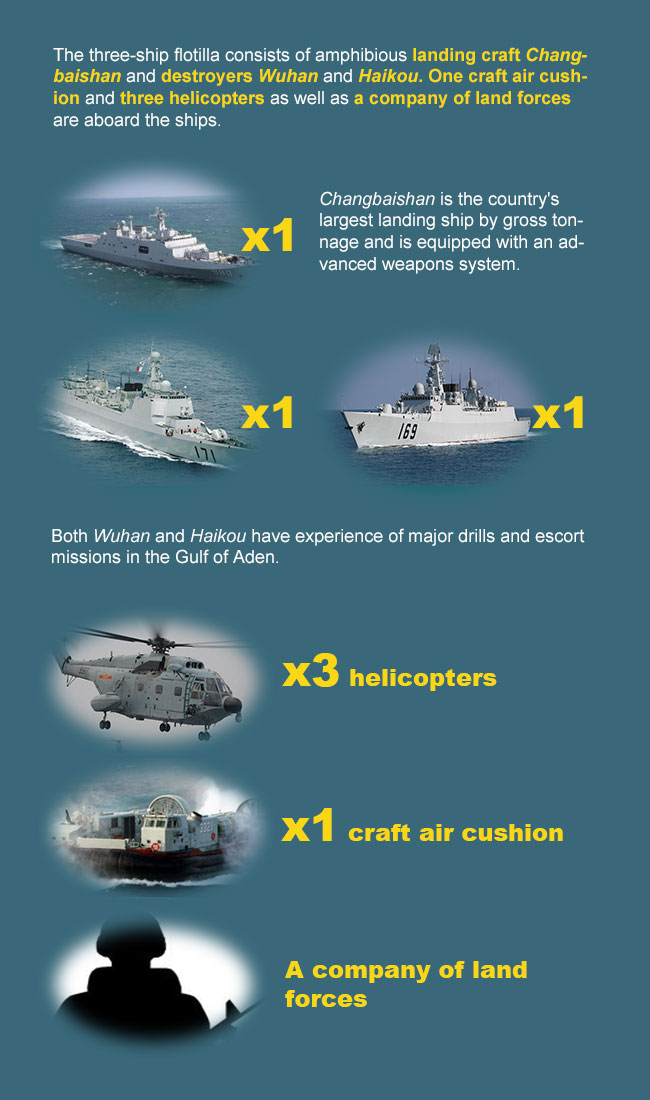 This post has been edited by kerolzarmyfanboy: Jan 27 2014, 01:52 AM |
|
|
Jan 27 2014, 12:05 PM
Return to original view | Post
#18
|
|
Junior Member
575 posts Joined: Feb 2013
|
QUOTE(LTZ @ Jan 27 2014, 09:34 AM) We'll avoid any means of military action with China.... they are more more superior. We just show our presence to maintain soverignity while they show their presence to claim soverignity. i know..i know..just my strategy..lel..but if this dispute still not settle, then when will any of us (countries that claims sovereignity in the islands) going to explore the rich natural gas and petroleum in the spratlys? |
|
|
Jan 27 2014, 12:42 PM
Return to original view | Post
#19
|
|
Junior Member
575 posts Joined: Feb 2013
|
QUOTE(MAD GOD @ Jan 27 2014, 12:33 PM) Even superpower need oil to run their engine of mass destruction. So now claiming the SEA waters .. what can Malaysia do ? Nak mintak duit royalty from China for taking their oil ?? Ada biji ke ?? Or just yak yak yak about maintaining their ketuanan melayu more than the region security itself. you arr really need to study a bit about international relations, dasar luar negara malaysia..we will not provoke china and start a war, that's against our policy we will continue to object china's breaching our sovereignty befriend to China will be more benefiting than against them even if the whole SEA joint forces, still can't outmatch the number in China's South Sea Fleet imo, a cooperation should be created with China to explore the rich oil in spratlys via joint venture |
|
|
Jan 27 2014, 01:08 PM
Return to original view | Post
#20
|
|
Junior Member
575 posts Joined: Feb 2013
|
QUOTE(MAD GOD @ Jan 27 2014, 01:03 PM) Heloooo ~~ REality check .. they already did breach our sovereignty. For China, Action is more powerful than words. Mana Bijan buat bising? Mana ATM ? Why did they not deploy our Navy just to see their Military at sea? FYI, our scorpene always on duty in the area..watching very silently..Is That million dollar Subs is just for show, nothing more. during ops daulat, china ships retreat from the area quickly after knowing scorpene is in the area.. which might explain why they brought 3 ASW helicopter now This post has been edited by kerolzarmyfanboy: Jan 27 2014, 01:10 PM |
| Bump Topic Topic ClosedOptions New Topic |
| Change to: |  0.0560sec 0.0560sec
 0.56 0.56
 6 queries 6 queries
 GZIP Disabled GZIP Disabled
Time is now: 13th December 2025 - 05:47 PM |
 Quote
Quote