1Gbps? The old generation design TM used during HSBB Phase 1 areas can't even support 50Mbps.
TM launched FTTH services using GPON technology 7 years ago during its early stage of introduction.
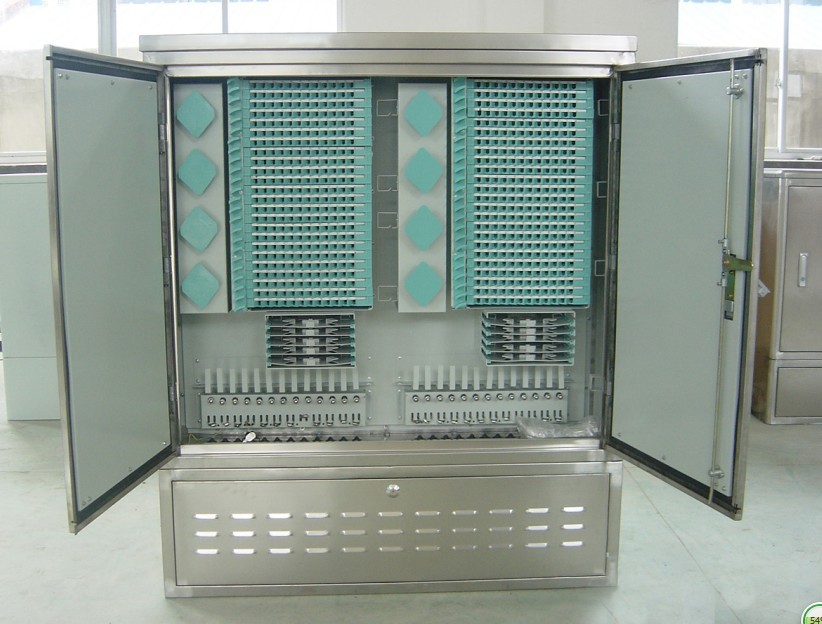
To further understand how GPON works, each port at the OLT has 2.4G/1.2G rate. If you "pao"(reserve) the port all to yourself meaning only 1 line direct to your home, of course you'll get a dedicated 2.4G/1.2G line but it's going to cost you a dedicated leased line. So to cut costs down, you need to share that line using a passive splitter installed in the cabinet like the one shown above.
The idea is like a water tap/electricity cable that goes into your home, if you turn on too many taps/install too many air-conditioner units, then of course overload/water pressure slow lorr.
The splitter cassettes inside the cabinet looks like one of these:


Back then (2008), TM got greedy and used the maximum 1 port split 64 lines.Each user only gets this much guaranteed bandwidth:
2.4G / 64 lines = 37.5Mbps (Download)
1.2G / 64 lines = 18.75Mbps (Up)
If you count in overheads say 10%, that's around 34M (Down) / 17M (Up).
Also don't forget you need to reserve IPTV bandwidth around 8Mbps plus the internet plan you're selling.
30M(Internet) + 8M(IPTV) = 38M (Down)
Through my years of experience, even 30M already got restriction, don't say 50M.If they insist on selling, I can guarantee most customers will come back complaining that they can never achieve their package speeds. they will be taking a gamble and pray that customers won't complain. That's why 50M plans are very limited to certain new areas.
As comparison, Time's network and many other FTTH providers in Indonesia(Telkom) and Thailand(AIS, CAT, 3BB) who launched their GPON networks much later all use 1:32 splitters max on each port.
So each port is capable of 72M down / 38M up. Selling 100M service like what Time does still works but rarely you can get speed results that matches your subscribed 100M plan.
Now those FTTH services in USA, Singapore and Japan use even tighter standards,if you subscribe gigabit packages, they will put you on very low split count per port. No more than 16 lines per port with some no more than 8 lines per port.
TM covered many areas already during HSBB Phase 1 so if they want to plan for faster speeds, just imagine how much work and budget extra they need to spend to re-wire all the old ports. It's like building a new network once again. More OLT ports, new feed lines for new ports need to pull to cabinets and more splitters. They'll not afford it unless more songlap happens.
Now with Phase 2, the improvised the split ratio a little. It's now 1:32 on par with Time and the rest of the industry ISPs. That's why I said 100M ports are now capable with the newer bigger cabinets.
More splitters = More space needed = Need more BIGGER cabinet.
Heard of AT&T Gigapower service in US? They split no more than 16 lines per port, so they need really big cabinets. This is an ADC cabinet used over there, big a not? It's taller than a fully grown "ang moh"

In Singapore and HK, you won't see large size cabinets on the roads, they "sorok"(hide) them inside HDB flat riser rooms/huts. If you get to see one, it's at least twice the size of ours on the road.
Woa, thanks for the knowledge. I am glad that my network is kinda future proof, but damn they haven't launch Unifi. By the way are you a network engineer?


 Nov 23 2015, 02:27 PM


 Quote
Quote


 0.0291sec
 0.37
0.37
 7 queries
 GZIP Disabled