Welcome Guest ( Log In | Register )

Bump Topic Topic Closed RSS Feed

Outline · [ Standard ] · Linear+

 PMR Thread 2013

views
     
Critical_Fallacy
post Mar 14 2013, 09:47 PM

∫nnộvisεr
Group Icon
VIP
3,713 posts

Joined: Nov 2011
From: Torino
QUOTE(infrasonic @ Mar 14 2013, 06:29 PM)
umm can post a picture of the table here? i'll try to help you memorize biggrin.gif i got a incredible way that helps you memorize a long thing for a long time
Hi Sonic,

Here is the table for Resistor Color-coding. Please share with us your incredible way or a useful mnemonic to help memorize the resistor color codes. Thanks! smile.gif

user posted image
Critical_Fallacy
post Mar 30 2013, 11:02 PM

∫nnộvisεr
Group Icon
VIP
3,713 posts

Joined: Nov 2011
From: Torino
QUOTE(infrasonic @ Mar 27 2013, 08:33 PM)
btw, any tips/fast way to study maths? used to be good in maths but this year i cant find any tuition.. (good teachers with suitable time not in my area, good teachers in my area time not suitable for me or either full dy..)

and i very lazy to study at home xD

so i want to study it as quick as possible..cant spent more than 1 hour studying especially at home..too much stuffs for me to play
(1) Your level now in PMR Maths is probably Unconsciously Incompetence.

(2) There are 39 Chapters altogether (Form 1, 2, 3) in PMR Maths. If you allocate 50 min each day to study and revise each chapter a day, you will learn the fundamentals in 39 days and become Consciously Incompetence.

(3) To understand or know how to maths problems in PMR, you will repeat the same thing for another 39 days. It requires concentration to become Consciously Competence.

(4) To reach the final level "Unconsciously Competence" that it has become "second nature" and the maths problem can be solved easily, you need to practice for another 39 days.

50 min for one chapter a day, and by end of July 2013, I guarantee that you will score A+ in PMR Maths. You get what you desired within your OWN Criteria (< 1 hour) and you can do or play whatever you want after that. By the way, you can also ask for advice from maximR and Flame Haze icon_rolleyes.gif
Critical_Fallacy
post Mar 30 2013, 11:23 PM

∫nnộvisεr
Group Icon
VIP
3,713 posts

Joined: Nov 2011
From: Torino
QUOTE(infrasonic @ Mar 30 2013, 11:06 PM)
haha..no need 39days for me coz i'm okay with form 1 and form 2 maths (i never got less than 80 in maths last year).this year, only got 79 coz i'm too lazy to study~
by the way, 1 hour is a lot yo..don't forget i still have geo, sejarah, science
Then, make it fast & furious 5 min a chapter each day, but do it consistently until 1 week before PMR. It doesn't matter if you are too lazy to study or not, you will still score 90~100 in PMR Maths. You have 55 min extra others (geo, sejarah, science, etc), as long as I guarantee that you will score A+ in PMR Maths. thumbup.gif
Critical_Fallacy
post Mar 31 2013, 12:20 AM

∫nnộvisεr
Group Icon
VIP
3,713 posts

Joined: Nov 2011
From: Torino
QUOTE(infrasonic @ Mar 31 2013, 12:09 AM)
90-100 too impossible la..maybe 80+
That's quite motivating! As long as you do it consistently for 5 min a chapter each day until 1 week before PMR, you surefire score A in PMR Maths. rclxm9.gif

Good luck, SONIC!
Critical_Fallacy
post Mar 31 2013, 12:24 AM

∫nnộvisεr
Group Icon
VIP
3,713 posts

Joined: Nov 2011
From: Torino
QUOTE(infrasonic @ Mar 31 2013, 12:09 AM)
90-100 too impossible la
"Impossible" to me, after performing innovative fission, it becomes, "I'm possible."

cool2.gif ~ Think Critically & Think Positively ~ cool.gif
Critical_Fallacy
post Apr 11 2013, 11:19 PM

∫nnộvisεr
Group Icon
VIP
3,713 posts

Joined: Nov 2011
From: Torino
QUOTE(maprocks @ Apr 11 2013, 05:59 PM)
Thanks for the tip. I am very weak at maths..
I was naturally born weak at math since primary education, but I gradually become better and better after each failure. For example, if I can't or I fail to solve a problem initially, I'm gonna ask myself, "Am I not good enough? ... Why? ... What do I need?"

Critical_Fallacy
post May 8 2013, 12:25 AM

∫nnộvisεr
Group Icon
VIP
3,713 posts

Joined: Nov 2011
From: Torino
QUOTE(infrasonic @ May 6 2013, 08:44 PM)
someone help me with the working pls.
*note that ques 2 answer is A based on the book, not B
Q2.

(12y − 6) / 15

3*(4y − 2) / (3*5) ... cancel out the 3s.

(4y − 2) / 5

For Q8, Q11, Q15, Q16, and Q22, could you post your initial workings, please?
Critical_Fallacy
post Sep 2 2013, 05:14 PM

∫nnộvisεr
Group Icon
VIP
3,713 posts

Joined: Nov 2011
From: Torino
QUOTE(infrasonic @ Sep 2 2013, 02:55 PM)
what's the difference between inference, hypothesis and conclusion?
Before explaining that, understand what an argument is can be helpful. Arguments can be expressed in just one sentence or they can extend over an entire book. They can be easy to follow or difficult to follow. They can be trivial or important. They can be full of mistakes or perfect. But one thing is certain! The structure of an argument consists of two parts:

(1) a claim: some statement of fact or opinion; the point of what’s being said; this point is usually called the conclusion.

(2) support for the claim: evidence or reasons related to the claim in such a way as to endorse it or make it acceptable; these supporting lines of reasoning are usually called premises.

Before you can effectively evaluate an argument, you need to understand what kind of argument is being offered. Philosophically, arguments have been divided into two types: deductive arguments and inductive arguments. But I leave them aside for your self-discovery.

The word “hypothesis” derives from the Greek work hupotithenai meaning ‘to propose or to speculate.’ The fundamental process of hypothesis is to speculate about an underlying cause-effect relationship. By itself, an hypothesis is nothing more than a speculative knowledge proposition formed on the basis of incomplete information, without evidence and reasoning.

On the contrary, the word “inference” has two meanings. One conveys the process of inferring something or drawing logical conclusions from premises known or generally accepted to be true, whereas the other technically signifies a conclusion reached on the basis of evidence and reasoning. To which are you referring? unsure.gif

user posted image
Critical_Fallacy
post Sep 2 2013, 08:14 PM

∫nnộvisεr
Group Icon
VIP
3,713 posts

Joined: Nov 2011
From: Torino
QUOTE(infrasonic @ Sep 2 2013, 06:27 PM)
Btw, since hypothesis is formed without evidence and reasoning, does it means that I can write something false?
By suggesting a proposition that you know it is “false” in the first place, that implies you have evidence and reasoning to support your claim. Therefore, it is NOT a hypothesis.

QUOTE(infrasonic @ Sep 2 2013, 06:27 PM)
Let's say the experiment is about friction, can I write the hypothesis as "The rougher the surface the lesser the frictional force"?
Like stated, hypothesis is nothing more than a speculative knowledge proposition formed on the basis of incomplete information. What is incomplete information? You form a hypothesis based on at least a phenomenal effect that you can observe directly, but you don't know what is causing it. Well, you observe the rougher the surface, the harder you need to push the crate.
Critical_Fallacy
post Sep 2 2013, 08:21 PM

∫nnộvisεr
Group Icon
VIP
3,713 posts

Joined: Nov 2011
From: Torino
QUOTE(ChuckyHuntsYou @ Sep 2 2013, 06:19 PM)
I have BM tips and KHB but I won't share because I paid RM150 to get all the tips. 70% accurate tongue.gif
QUOTE(maximR @ Sep 2 2013, 06:28 PM)
And what if they don't come out ?
Hi Chakie,

Would you be so kind as to teach us the way you derived the probabilistic event for predicting the 70% accuracy?

Did you use the Complementary Cumulative Distribution Function to predict PMR with the data of past 10 years?
Critical_Fallacy
post Sep 3 2013, 05:11 PM

∫nnộvisεr
Group Icon
VIP
3,713 posts

Joined: Nov 2011
From: Torino
QUOTE(infrasonic @ Sep 3 2013, 04:00 PM)
Now got another problem, I dunno how to differentiate the direction of magnetic field in solenoids. In the picture, both of them looks the same but the direction of magnetic field is different. Couldn't understand the description also.
user posted image
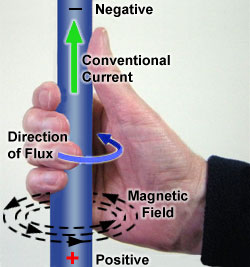
I'm amazed when my PMR teacher taught me how to apply the Right-Hand Grip Rule in electromagnetism. It is practical, quick, & ready-at-hand (PQR). There is another rule called Fleming's Left-Hand Rule for describing the direction of motion in an electric motor, or the direction of electric current in an electric generator. But you probably haven't encountered this one yet.

user posted image
Critical_Fallacy
post Sep 3 2013, 05:26 PM

∫nnộvisεr
Group Icon
VIP
3,713 posts

Joined: Nov 2011
From: Torino
QUOTE(infrasonic @ Sep 3 2013, 05:00 PM)
Umm I know that north is attracted to south. What I dunno is the direction of the magnetic field is moving in a solenoid. Sometimes they will ask like what direction will the compass points to if the setup is like that.
Here is a more accurate graphical representation of the Magnetic Fields due to a Solenoid.

user posted image
Critical_Fallacy
post Sep 3 2013, 07:02 PM

∫nnộvisεr
Group Icon
VIP
3,713 posts

Joined: Nov 2011
From: Torino
QUOTE(infrasonic @ Sep 3 2013, 06:14 PM)
I got that in my reference book. Indeed, it's very useful, but didn't say anything for the solenoid. Can explain to me how to use the Right-Hand Grip Rule on solenoid???
QUOTE(MathsGeniusOrNot @ Sep 3 2013, 06:17 PM)
yea preety confused with the solenoid as well... all i know is right hand grip rule ( if ur thumb pointing towards up means current up and the other 4 fingers means anticlockwise) but thats not related to solenoid...
Because your textbook is static, and your teachers probably didn't help you to visualize electromagnetic fields. I'm not good at describing invisible things using words. Perhaps you learn better by watching this following video. Anyhow, the fundamental of the Right-Hand Grip Rule is actually for an electric current (depicted by the Right Thumb's pointing) passes through a straight wire to determine the direction of the magnetic field, (depicted by the curls of the fingers).

user posted image

The Right-Hand Grip Rule still apples even when it is applied to an solenoid, where you get the instantaneous magnetic field at a particular point of the electric solenoid wire. However, when you zoom out to look at the overall view of the generated magnetic fields, the physicists discovered that in fact, the Magnetic Fields due to a Solenoid can be visualized using the Modified Right-Hand Grip Rule. This time, when you wrap your right hand around the solenoid with your fingers in the direction of the conventional current, your thumb points in the direction of the magnetic north pole.

user posted image

Watch the following video. Who knows if the examiners ask you to draw the magnetic fields for a solenoid bent in circle. Just disregard the mathematics shown in the video for the moment.


Critical_Fallacy
post Sep 4 2013, 03:06 PM

∫nnộvisεr
Group Icon
VIP
3,713 posts

Joined: Nov 2011
From: Torino
QUOTE(YingC8888 @ Sep 4 2013, 12:40 AM)
hypothesis:
The size of beaker increase, the time taken for candle to burn out increase

conclusion:
The size of beaker increase, the time taken for candle to burn out increase
Hi infrasonic,

As a mini-science student, Wouldn't you be a little doubtful when hypothesis = conclusion? Does the beaker has something to do with the burning of the candle DIRECTLY? You may notice that the beaker is used to trap the air inside it. In fact, the conclusion could be the summary of the experiment purpose and the interpretation of the experiment results. The larger beaker may imply that it contain more air volume than the smaller beaker. Got it? icon_rolleyes.gif
Critical_Fallacy
post Sep 4 2013, 04:43 PM

∫nnộvisεr
Group Icon
VIP
3,713 posts

Joined: Nov 2011
From: Torino
QUOTE(infrasonic @ Sep 4 2013, 03:27 PM)
My science teacher got tell me that hypothesis = conclusion before.. Just that don't be so 'clever' and write too much in the hypothesis xD
OK! Let me say this one more time. Your experiment is to prove or disprove something. Therefore, A hypothesis does not necessarily mean the conclusion. A very important and infamous "failed" experiment is the Michelson–Morley experiment, with the hypothesis stated: "Because light can travel through a vacuum, it was assumed that even a vacuum must be filled with aether." The null result refuted the existence of aether and concluded that light does not require medium to travel. Verify this STORY with your Science Teacher or with ChuckyHuntsYou and maximR then.

Problem Statement: Why do candles go out when they are placed underneath a beaker?

A Hypothesis is a proposed unproven explanation, or at least a prediction for a limited range of phenomena, a single event, or a fact through direct uncontrolled observation, usually before designing an experiment.

An Interference is a rationalized causal explanation, a scientific one where you give a plausible account of the events leading up to how or why something has occurred, through experiment, controlled observation, measurement, & analysis.

A Conclusion is a full summary of causal explanations that involves a sequence of linked events. If, say, A causes B which in turn causes C, A is often referred to as a proximate cause of B and a remote cause of C. B in turn is a proximate cause of C.

So for example, if I put a beaker over a candle and cutting off the consumption of oxygen by fire, causing the candle flame goes out after a few minutes, then confinement of the candle under a glass beaker is the proximate cause of the limiting oxygen concentration inside the beaker and the remote cause of the extinguishment of the candle flame.

But this is the FALSE SENSE of the apparent answer. Because the candle is put under a beaker and most beakers have lips in which the beaker is not fully cut off from oxygen, so there is still oxygen supply. In fact, the candle does go out because of the relative higher carbon dioxide concentration that is in the beaker. A carefully designed experiment would look something like this: icon_rolleyes.gif

user posted image

Topic ClosedOptions
 

Change to:
| Lo-Fi Version
0.0384sec    0.56    7 queries    GZIP Disabled
Time is now: 24th December 2025 - 12:08 AM