Welcome Guest ( Log In | Register )

Outline · [ Standard ] · Linear+

 Turtles, Terrapins and Tortoises V6, Teenage Mutant Ninja Turtles

views
     
tygoh
post May 3 2013, 02:27 PM

Getting Started
**
Junior Member
136 posts

Joined: Dec 2009


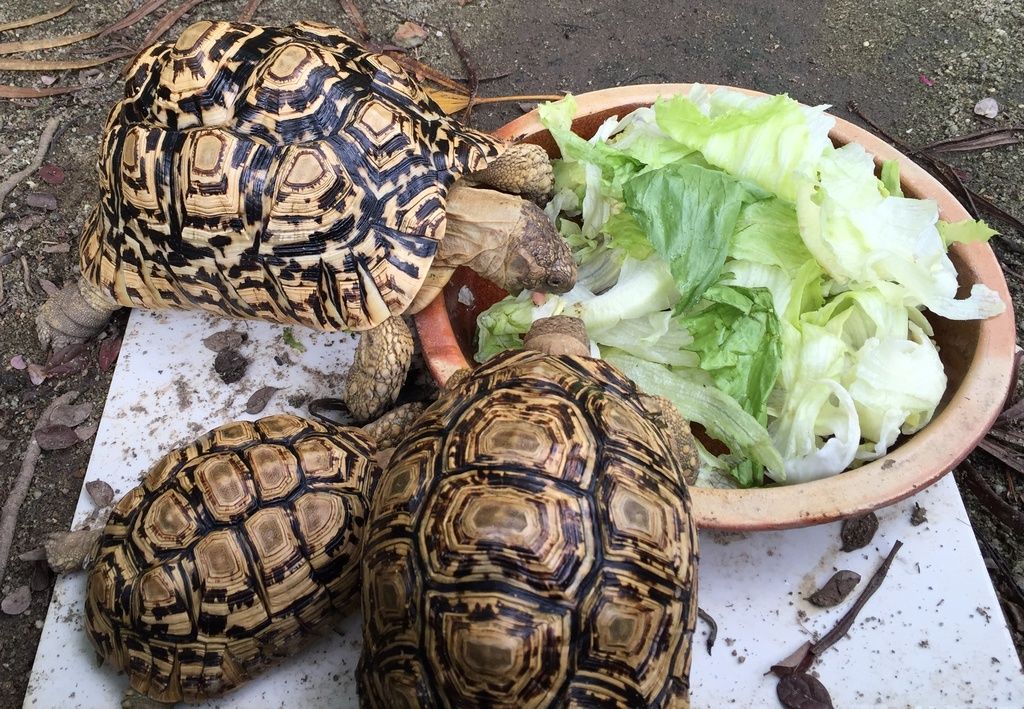
Since there are RT gurus here, mind i ask do you notice the white lines circulating each of their scutes. What does that mean.? I do not have a picture here, but will snap one when i get home.
tygoh
post May 3 2013, 03:33 PM

Getting Started
**
Junior Member
136 posts

Joined: Dec 2009


QUOTE(SAMPERTH @ May 3 2013, 02:47 PM)
Being awhile since i see you post here . Thats new growth !! Specially define if no growth for awhile , normally  you wont even notice its there .

Cheers
*
Samperth sifu still remember me. Really torts sensei ^^ notworthy.gif notworthy.gif

In addition to it, the white lines are not even height around the scutes. Is that normal for growth that will be even gradually.?
tygoh
post May 13 2013, 03:38 PM

Getting Started
**
Junior Member
136 posts

Joined: Dec 2009


QUOTE(mic_tcs @ May 10 2013, 10:04 PM)
Anyone can tell me if my leopard here is healthy or not? Is the white line consider growth or the shell is not growing dy?

From top view
user posted image

From bottom view
user posted image

From front view
user posted image

From back view
user posted image

From left side
user posted image

From right side
user posted image
*
Sorry hijack your post, deviating the questions. From the pictures of the scutes, are these considered pyramid as some forumers here mentioned in the past.
tygoh
post Jul 28 2015, 04:50 PM

Getting Started
**
Junior Member
136 posts

Joined: Dec 2009


QUOTE(SAMPERTH @ Jul 6 2015, 02:58 PM)
[attachmentid=4553658]

Just out not too long ago !
*
Sulcata.?
tygoh
post Jul 29 2015, 09:51 PM

Getting Started
**
Junior Member
136 posts

Joined: Dec 2009


QUOTE(SAMPERTH @ Jul 28 2015, 07:49 PM)
[attachmentid=4656746]

These are sulcata !!
*
Yiphora?
tygoh
post Jan 16 2016, 09:24 AM

Getting Started
**
Junior Member
136 posts

Joined: Dec 2009


QUOTE(Balitong @ Jan 4 2016, 05:25 PM)
Hi all sifus,
I have two red ear sliders that I raised at my home currently. Both of them i suspect is infected with shell rot but i'm not sure how to decide.  Both of them are eating fine and very active.  The condition has been showing for over a month now (for the older one, over 2 months).  And I bought medicine to apply but so far no effect. Should i be concern?  One of the younger one initially has very nice shell with no spots on the shell when I first bought it, after I bring it home and put in the same aquarium as the older turtle, it started to show the same symptoms as the old one. which is showing patches of grey on the shell. 

Attach the photos of the turtle. 

Older turtle (female).  Got this during school's carnival sale. 
[attachmentid=5695678]

Younger turtle (male).  Initially when i first bought it the shell is really green with no grey spots around the edges or on the shell.
[attachmentid=5695677]

Medicine.  I bring both out to a smaller dry aquarium to put on the medicine. After one or two hours, I put both back into water.
[attachmentid=5695679]
My setup:
1. Water filter (water change every week)
2. Basking area (for some reason, turtle don't like this)
3. UV light (on during the day)
4. Basking light. (not on most of the time)

Water temperature is around 31 degree everyday.  Is the water too high?  The turtles doesn't like to come to the basking area.
Any ideas?

Thank you.
*
Looks like growth lines.
tygoh
post Oct 26 2016, 07:12 PM

Getting Started
**
Junior Member
136 posts

Joined: Dec 2009


QUOTE(finalr3ality @ Sep 24 2016, 06:42 PM)
what means by fresh running water? means open tap water and let it flow? or simply soak? well, i edi give  plenty of sunlight. will try for a few more days. it's growing lazier. it will eat if i put food in front of him. other wise wont even search for food. that's y im worried. are they suppose to walk most of the time or sit in one place for few hours? because as far as i remember, the day i bought him, he walk a lot in the morning for the first week or so. then now sit in one place being lazy. im worried if there's parasites or any diseases. im so so worried bcz its my 1st time having tortoise as pet and it cost me a lot just to buy him( they are not cheap). btw, i read online, they are suppose to eat weeds or grass. but mine wont eat any grass and i'm not sure what weeds in Malaysia are safe for him. tried hibiscus leaves, only bite a piece at most. mainly only eat opuntia pads and sawi. not sure if only those 2 will enough or not.
*
How big is your hatchling.? They do eat any grass, but in Malaysia all sorts are edible (cow, bermuda, pearl...etc). Opuntia pads are not meant for regular food. It is succulents, may be twice a week is sufficient. You may consider Mazuri too.

Back to your question, inactive can be many reasons. Most case hatchlings inactive are due to the shop/breeder you purchase from does not house them in proper way. Example mix other type together in one enclosure. This is a No-No. Potentially they can cross affect different parasites that each type tortoise carry and naturally each has different immune system to fight against. All you can do is, to ensure soak it twice a day with warm water for about 15-20mins.
tygoh
post Oct 27 2016, 11:20 AM

Getting Started
**
Junior Member
136 posts

Joined: Dec 2009


QUOTE(finalr3ality @ Oct 27 2016, 07:36 AM)
oh btw, guys, anyone of you never use substrate an still have a healthy active tortoise?

and anyone had ever tried buying tortoise from far away and had it delivered without much problem? im living in sabah and most cheap and seem-reliable tortoise are at peninsula.

any experience can share share?
*
Given a choice, do not buy from oversea. Domestically is ok, some do provide guarantee upon you receive them. Try join the facebook group "Tortoises Group of Malaysia", you get the chance to meet M'sian breeder and seller.
tygoh
post Oct 27 2016, 11:24 AM

Getting Started
**
Junior Member
136 posts

Joined: Dec 2009


QUOTE(finalr3ality @ Oct 27 2016, 07:33 AM)
hi, thanks for the reply, waited for so long. this thread seems so inactive. but anyway thanks a lot for the advice. my tort is only 2.5 inch big so small. well, my tort doesn't seems to favour grass. he prefer weeds. at 1st im not sure what's the difference but then after doing research now i know. weeds are kind of like grass but leafy. but not all weeds are safe so avoided it just to be sure. umm.. my tort now has bubbly nose. poor guy. maybe i bought it from the wrong seller. not sure. he was housed with other species of tortoise before. so he could have got it from other tortoises. but the moment i bought him, he looks pretty healthy.

yeah, i did soak him in warm water. but sometimes i did skip soaking because im too bz (one of the reason i bought tortoise as pet). but not always. at most skipped once a week. usually soak once or twice per day. i had him injected by the vet but i don't think its gonna change anything. since they are general vet and not herp vet, they treats cats and dogs mainly. not sure what else i can do.
*
Day or noon time, best to let him wander around outside enclosure if you have. Preferably on a grassland with a shelter. I do know there are many reptiles veterinarian at peninsular side. It is normal hatchling does not possess habit of grass grazing till they grow to about size >4". Perhaps try prepare a meal, with chopped grass, leaves, vegetables. Hatchling will munch them like a buffet meal. tongue.gif tongue.gif
tygoh
post Oct 27 2016, 11:27 AM

Getting Started
**
Junior Member
136 posts

Joined: Dec 2009


By the way #SAMPERTH live in borneo, not sure which part. You can try contact him. He seems pretty active here last time, and experience in breeding some species successfully.
tygoh
post Oct 27 2016, 04:13 PM

Getting Started
**
Junior Member
136 posts

Joined: Dec 2009


QUOTE(finalr3ality @ Oct 27 2016, 03:58 PM)
Wah impossible buy from oversea.  I mean  buying from peninsula Malaysia.  Found a lot from mudah but a bit worry about postage and delivery.  I saw from tortoise group of Malaysia,  they sell very expensive oh.  Over 1k. Will try contact @samperth
*
Hehe you pay what you get. blush.gif
tygoh
post Oct 27 2016, 05:26 PM

Getting Started
**
Junior Member
136 posts

Joined: Dec 2009


QUOTE(finalr3ality @ Oct 27 2016, 04:37 PM)
Wah the one I bought wasn't cheap either.  Rm 500 leh.  From mudah,  I can get better and cheaper.  Even Malaysian tortoise oso got cheaper ones. 
BTW what tortoise r u having?
*
Same as u. Leopard, already 5yrs.
tygoh
post Oct 30 2016, 11:30 AM

Getting Started
**
Junior Member
136 posts

Joined: Dec 2009


QUOTE(SAMPERTH @ Oct 30 2016, 10:24 AM)
[attachmentid=7905766]

Anyone looks familiar ?

Cheers
*
Haha...most likely spot on. blush.gif blush.gif
tygoh
post Oct 30 2016, 11:31 AM

Getting Started
**
Junior Member
136 posts

Joined: Dec 2009


QUOTE(SAMPERTH @ Oct 30 2016, 05:18 AM)
Wow , being away for awhile but someone still remembers me , thanks I feel great .

Yes , I did bred some chelonian species , lesser choice but am still doing it .

[attachmentid=7905689]

Some sp that I used to have , some in picture are gigantic already - black emys and that aldabran .

Cheers
*
Any hatchlings yet from your yniphora?
tygoh
post Oct 30 2016, 11:33 AM

Getting Started
**
Junior Member
136 posts

Joined: Dec 2009


QUOTE(finalr3ality @ Oct 27 2016, 07:39 PM)
wah take pic see see. take pic of his habitat too. want to refer refer. hehehe

and suddenly some crazy idea crosses my mind. i tot about sending the tortoise to someone in kl then  ask him or her to bring to vet in kl then treat until completely healed then send my tortoise back. hahaha.  rclxms.gif  rclxms.gif
*
Here ya goes..

user posted image


tygoh
post Oct 31 2016, 10:10 AM

Getting Started
**
Junior Member
136 posts

Joined: Dec 2009


QUOTE(SAMPERTH @ Oct 30 2016, 05:51 PM)
[attachmentid=7906812]

My first clutch some years back .
At the moment nothing left .

[attachmentid=7906789]
These 3 I release to the peninsular 2015 ( I only release at most 10 per season )
Cheers
*
Future yniphora hatchling....can booking ah? brows.gif brows.gif
tygoh
post Oct 31 2016, 10:12 AM

Getting Started
**
Junior Member
136 posts

Joined: Dec 2009


QUOTE(finalr3ality @ Oct 30 2016, 06:56 PM)
Wah so jealous oh u guys can raise such healthy tortoises.  I raise 1 oso headache liao.  Provide this provide that oso not.  Haiz...
*
Keep it simple, and easy. Only when its hatchling need to be extra care. Otherwise...they are just your lawn mover. blush.gif
tygoh
post Nov 1 2016, 09:23 AM

Getting Started
**
Junior Member
136 posts

Joined: Dec 2009


QUOTE(SAMPERTH @ Oct 31 2016, 07:58 PM)
Lol waiting list is more than 70 pc If you order now will be 2023 or 2024 before I pm you , unless I release more per season( which I do not intend to do )

Cheers
*
I will fly straight to EM, once it pops out from the hatchling egg. blush.gif tongue.gif
tygoh
post Nov 2 2016, 06:19 PM

Getting Started
**
Junior Member
136 posts

Joined: Dec 2009


QUOTE(finalr3ality @ Nov 2 2016, 12:20 PM)
how u bring back to west malaysia? can naik flight?
*
Malaysia Boleh..
tygoh
post Nov 3 2016, 08:30 PM

Getting Started
**
Junior Member
136 posts

Joined: Dec 2009


QUOTE(tattvooi @ Nov 2 2016, 10:04 PM)
Dear all LYN Sifu,

I recently bought a Star (named Squirtle). It is my first pet tortoise and it is a hatchling~Bought it before I realised it's quite sensitive especially at this size. Any advice on my enclosure setup? I planted weed and added a cement basking platform. I soaked it every 2 days for couple of minutes. Cheers.

[attachmentid=7933979]
*
Hmmm many start to raise from a hatchling... Good luck! Its tough but fun. Have a read. I copied from a link, hope it helps.

Housing:

Indoors
I use a 50 gallon Rubbermaid tub filled with 6 inches of peat moss and two inches of cypress mulch on top. I provide a plastic shoe box with the lid on top and a hole cut out of the top of one of the sides big enough for the tortoise to get in and out easily. The hide box is filled with peat moss and a thin layer of sphagnum moss is placed on the top. It is buried in the substrate so that the bottom of the opening is level with the top layer of the substrate in the tub. The hide is covered with two inches of sphagnum moss and is placed below a Mercury Vapor Bulb about 12 inches. I plant tortoise grazing seed and timothy hay in there every two weeks so that there is always a fresh supply of growing food in their enclosure. I use plexiglass to cover the top of the entire enclosure to maintain heat and humidity. I cut holes in the plexiglass to accommodate the MVB fixture and the CHE fixture.

Outdoors
Weather permitting, I keep my tortoises outdoors as often as possible. I live in the desert southwest where temperatures in the summer can get well over 110F. I keep all of my tortoises, even new hatchlings, outdoors 24/7 during the summer. The key to keeping young tortoises outside in extreme hot weather is to provide a lot of shade and areas where the sun does not shine directly and is easily accessible so they do not risk overheating. It’s also important that the areas that get the hottest part of the sun be open and clear of any rocks, large clumps of grass, or obstacles of any type. This will decrease the risk that the tortoise will flip itself on its back and get caught in the heat. Shaded areas in my hatchling pens will not get above 90 degrees ground temperature when the ambient temperature is near 110F. It is also important in my opinion to provide a hide box in the shade that also acts as a source of elevated humidity. When trying to determine if it is warm enough to put the tortoise outside I use a 75F threshold. If the shaded areas are above 75F, then I feel comfortable placing them outside. The sunny areas will obviously be warmer than the shaded areas, so when the ambient temperatures is 75F, they will have areas in their enclosure that will allow them to elevate their body temperatures to appropriate levels.

Heat:
Understanding and knowing how to control the temperatures in your tortoise enclosure is a critical aspect in tortoise husbandry. Tortoises, like all reptiles, are cold blooded and depend on environmental elements to meet their heating requirements in order to digest its food and maintain overall good health. For tortoises less than 4 inches I try to maintain temperatures in their enclosures between 75F at the lowest, and 105F at the hottest except when they are outdoors, as mentioned above. When they are indoors I provide a basking spot directly beneath a Mercury Vapor bulb and on top of the humid hide, which is the 105F zone. At night the heat is maintained using a 100 watt ceramic heat emitter from Zoomed. The temperatures in the entire enclosure are never below 80F. A tortoise instinctively knows what temperatures its body requires, so by offering a variety of temperatures in your enclosure, the tortoise will be able to move to different areas in the enclosure to regulate its body temperature to desired levels.


Humidity:
For leopard tortoises less than 4 inches carapace length, I maintain an average level of humidity of about 50% throughout the enclosure. This is done by soaking the soil in the enclosure, using a spray bottle, and using a small humidifier when necessary. The humidity inside the hide box is around 80 - 90%. When maintaining high levels of humidity, it is important to monitor the ambient temperatures to make sure they do not get to dangerous levels. As mentioned, the hide boxes I use are located right beneath the mercury vapor bulb which creates temperatures inside the hide at about 85F.

Feeding:

I feed tortoises less than 4 inches long, two times a day; once in the morning and once in the evening. In the morning they will get any one of the following, or a random combination of:
Fresh grass, hibiscus leaves and flowers, dandelions, succulents, Romaine lettuce, spring mix, kale, carrots, mustard greens, or escarole.
I offer Mazuri every evening. Every other day I sprinkled their morning meal with calcium supplement. I alternate calcium D3 and calcium without D3 each time I supplement if they are being kept solely indoors. If they are getting outdoors more than three times during the week I will only use calcium without D3.

Hydration:
Hydration is also a very important aspect in tortoise husbandry. Something I often hear or read from people who are new to the hobby is the belief that tortoises will receive all of their hydration requirements from the food that they eat. I do not agree at all with this way of thinking, as depriving a tortoise of water or means to hydrate itself can become deadly. Bladder stones and mineral buildups are common in dehydrated tortoises. A tortoise that is well hydrated will be more easily able to expel the un-needed minerals before they accumulate to harmful levels. Damaged kidneys and internal organs are also a threat to dehydrated tortoises. I soak my young tortoises every day for approximately 5 to 10 minutes in large containers of water. The water is filled so that it is about halfway up the tortoises carapace. In addition to daily soaks, they also have shallow dishes of water that they can easily walk in and walk out of.

Lighting:
When they are not able to get outdoors, I use a 100W Powersun Mercury Vapor bulb as the only source of lighting in the enclosure. Any type of UVB emitting bulb will be sufficient in my opinion as long as it is not a coil type bulb which have been known to cause blindness and other health issues in reptiles.

Health:
Tortoises are susceptible to a wide variety of ailments and disease. Tortoises under 4 inches, especially less than 1 year old, seem to be more easily susceptible to disease than adult tortoises. Most ailments can be prevented by adequate husbandry or by simply raising the temperature in the tortoises enclosure, but things do happen. Some tortoises simply have weaker immune systems than others. It is not my intent to list different diseases and symptoms, but there are enough resources readily available for your research. If you follow my guidelines above, health issues may be kept to a minimum. One thing I would recommend prior to purchasing a tortoise is finding a local vet that has experience with tortoises.


2 Pages  1 2 >Top
 

Change to:
| Lo-Fi Version
0.0458sec    0.49    7 queries    GZIP Disabled
Time is now: 4th December 2025 - 04:28 AM