Welcome Guest ( Log In | Register )

Bump Topic Topic Closed RSS Feed

Outline · [ Standard ] · Linear+

 Music Instruments & Equipments Reviews Database, Post a review, Mods will copy it here.

views
     
chapree
post Dec 5 2005, 01:21 AM

I used to stuff for LYN Editorial and troll at LYN Forums
Group Icon
Elite
2,046 posts

Joined: Jan 2003
From: On a chair, facing the screen


OLP MM3


user posted image

First Impression : W00t, Sting Ray 5 incarnation! From bridge to the headstok and there's even Ernie Ball/Musicman logo behind the headstock. Lighter than a Sting Ray itself. Love the black one that comes with matching black hardware.

First Play : Hmm, same characteristic like the big brother, Sting Ray 5. A palette of tone can be achieved with the EQ control.

Warning :
Don't expect the tone to be as same as a Sting Ray though.

Price : RM 1350

Da Place : JS Music, Jalan Imbi (same row with CK Music), KL. http://www.jsmusic.com.my

Da Web : http://www.olpguitars.com

Not everybody in this world are fortunate enough to raise enough dough to buy their music instruments. I always felt that budget series are essentials to ensure the survival of budding musicians that just started one's journey. With plenty of budget series models nowadays, choosing one that worth your money is hard task. For the one that fancy Sting Ray basses, I have some models that might take your wallet away.

Enter the world of Officially Licensed Product or more known as OLP. OLP basses were developed under the careful eye of Ernie Ball/Musicman to ensure the end product met their high standard & quality. Apart from MusicMan licensed product, OLP also manufacture officially licensed product from Coffin Case, Traben Bass & Guitar, McSwain Guitars & Orange County Choppers (guitars & basses with their brand name, not those monsterous choppers!).

I tested two unit actually, one came with flamed maple top on top of a transparent red finishing and another one were a normal shiney thumbprint magnet black finish. Both came with white pearloid pickguards. As it's a direct decendents of Musicman Sting Ray 5, all the other pretty much resembles the big brother. Body are made from Basswood and the 34" scale bass's neck were made from maple flavoured with rosewood fingerboard. The finish on the headstock matches the body finish too! From cosmetic view, MM3 sure got my eye's glowing "w00t!".

user posted image

The bass were equipped with MM-style exposed poles pickup and passive electronic with 2 volume control (1 for each array of poles) and 1 tone control. Both basses were tested with Roland Bass Cube 100 amp. I started out with the flamed maple top unit but I realised that the particular unit have some irregular electronic setup. MM3 features 2 volume control but then this unit behave like it have 1 volume control unit which if you turn it all the way down, it will mute the bass. It have a thin tone which below my expectation of a MM-style bass. Maybe there's some error inside this unit, so I change to the black one.

So there, the sweet sound of Sting Ray growl. It's loud and punchy with lotsa mid range power. The B string growls were quite controlable. Slap 'em up I actually expecting the tone to be more treblish but then, you can always tweak the knobs around. It might appear that MM-styled bass have limited tone options but some knobs fiddling totally dumped that thought. Focus on the tone control and you shall be rewarded with plenty of modern sounding tone. Damn obvious this baby were meant for modern rockers out there. Classic tone lovers, you might have to K.I.V first.

To sum it up, if you just started your journey into magical world of low end or a modern rock scholar and have a very tight budget, you definately have to give serious thought on OLP MM3. Backed up by Ernie Ball/Musicman with great quality, sweet tone and awesome price, it's a good first step.

I would like to thank Jee, Retail Manager of JS Music Jln Imbi for superb hospitality. 3 hours are definately not enough to test these babies throughly so if you interested, just head to the shop and test it yourself.

This post has been edited by chapree: Dec 14 2005, 07:57 PM
nerd
post Dec 11 2005, 12:35 AM

another brick in the wall.
*******
Senior Member
3,373 posts

Joined: Jan 2003
From: My House


After some playing, here's my review of the VOX AD30VT!

But be warned, this review is coming from a relatively new guitar player, around 1 year old or so, who hasn't been exposed to as much music as the experienced members here, and isn't as skilled as them either.

Price: RM850 from RM1000
From: CK Music, Kuala Lumpur

I have owned this amp for about 5 days, however I've only managed to really play it properly today as I just got back from Tioman. This review will be edited as time progresses, if I find any shortcomings with the amp.

First of all, the aesthetics. This amp definitely has it. This is coming from a person who is not really into this vintage looks and stuff. At first I was doubting on this amp due to the classic grille, but one look at the amp once I stepped inside CK Music, and whoa. Was I stunned. This amp really rocks aesthetically!

I'd give it a 9/10.

Next up is functionality, as in the control panel. There are many dials and knobs on the control panel, but they're pretty easy to get the hang of. On the top tier of the control panel, you get the Amp dial which lets you choose from 11 amps, the Gain dial, the Equaliser dials, the Effects dial which lets you choose from a combination of 11 effects. On the bottom tier, there's the Preset and Manual buttons, Channel Selector and Write buttons, and also the Tap, Edit and Bypass buttons for the Effects. I'm not going to elaborate on every function of the dials and buttons. I'm just going straight to the shortcomings.

I wish they'd use a numbered dial instead of leaving it up to you to use your ears and listen to the level. Without numbers or bars, it makes it quite hard to read and judge.
Another shortcoming is that the Equaliser isn't really responsive to changes. It takes time and you may not hear the difference immediately.

I'd give the Control Panel functionality a 7/10.

As for diversity, this amp has loads of it. This amp is extremely versatile and extremely loaded with sounds and effects. This is what makes it shine the most. I'm not going to go into extreme detail on each and every amp models, but just to summarize them, there are about 6 "clean" amps and 5 high gain amps. They offer pretty close modelisation, although there have been some complaints about the Mesa Boogie modeller sounding too digital, it sounds okay to me.

Just on raw diversity, I'd give this amp a 10/10. I'll go to the major shortcomings later.

As for Effects, this amp is pretty loaded and good. My main gripe is that the Auto-Wah lacks intensity, but it's usable. I haven't really tinkered around with the Edit dial for the effects, so I can't really elaborate. But based on my playings and impressions, the effects are darned good for just simple practice, though I won't recommend bringing them to stage.. at least for large-scale performances. Small gigs are fine.

Will update this section once I get a better feel on the effects.

I give it a 9/10. One point deducted from the lack of intensity on the wah.

Okay, now the main gripe about the amps selection.

The clean channels are too soft. The lack of a dedicated volume control for the clean channels only makes it worse. This can be remedied by saving your "perfect" tone as a preset on one of the channels, but however, the task in getting your tone can be a little daunting due to the finicky equaliser knob and the gain knob (you get gain in your clean channel if your gain is past a certain level, turn down the gain and you also reduce the volume as the gain dial acts as a master volume for non-gain amps). To me, though I am a metalhead, but I am really particular about my clean sound if I play them. So, this is one very big shortcoming of the amp.

And, be prepared to get a shock if you suddenly switch channels from clean to distortion on preset mode without tinkering. That's what happened to me. The difference in volume was so.. big. Literally.

To summarize everything,

Pros: Extremely realistic sounding, generous amp and effects selections, pretty user friendly, extremely loud, extremely affordable.

Cons: A numbered dial could be better (how hard is putting this?), auto wah could be more intense, equaliser could be more responsive, the task of getting your sweet spot could be daunting.

Summary: A good amp, gig-able, but not perfect. The best one in it's range IMO.

Rating (not an average) : 7.5/10

Sorry if this review sounds noobish, after all I am..

This post has been edited by nerd: Dec 11 2005, 12:40 AM
TSPix
post Jan 4 2006, 04:14 AM

Tube Glower Phreak
Group Icon
VIP
2,918 posts

Joined: Nov 2004
From: Deliciously Pointless To: Jaw-Dropping Absurd


AD50VT by LedZep

here's a short clip recorded easier using the Vox AD50VT on the Black 2x12 settings. Gain & Volume - 3'o clock, bass - 10, treble - 2, mid - 1, & a light touch of reverb. Connected the amp's line out into my Audigy's microphone input lol.
Guitar used - Yamaha Pacifica 112, Position 4.
Slight EQ-ing was applied with Cubase.

AD50 BlackFace Sample Download
TSPix
post Jan 4 2006, 06:22 AM

Tube Glower Phreak
Group Icon
VIP
2,918 posts

Joined: Nov 2004
From: Deliciously Pointless To: Jaw-Dropping Absurd


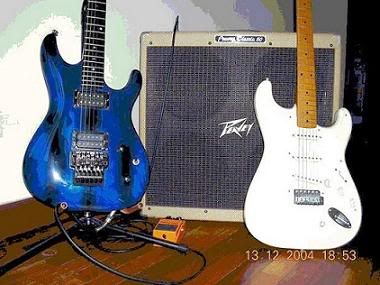
Peavey Classic 50, with 4x10' speakers

user posted image

From peavey.com :
"Originally launched in 1991, these versatile all-tube amps retain their distinctive sound and circuitry but now feature an updated chassis design. With three 12AX7s up front and four EL84 power amp tubes plus normal and bright inputs, 3-band passive EQ, and presence control, it's all the classic tone you seek and all the gigging versatility you need."

From eurotubes.com :
"The Classic series amps have got to be one of the best working manâeuro(tm)s amps ever built. For a production made amp they are built well and sound great. My favorite is the 50-410 I like the quick response of the 10âeuro(tm)s.These amps are fixed bias and use EL84 power tubes. They provide a crisp, warm tone when using tubes with a moderate natural plate current draw. If itâeuro(tm)s a good blues tone your after then a fairly hot set of EL84âeuro(tm)s will give a nice greasy tone with an early saturation. The drive channel is very good adding a nice smooth distortion when using good tubes. With the stock Chinese 12AX7âeuro(tm)s or sovteks ( the new EH tubes included, as they are sovteks ) it has a nasty honk!"

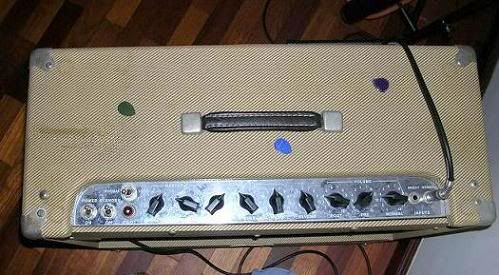
So what is this amp ? Probably a cheap way to get a very warm sounding tube amp ! It is definitely loud and very big and very heavy (about 20 to 30 kg) :
user posted image
(no, that oh-so-cool-too-bad-it's-not-80s-anymore looking dude is not me on the picture !)

I swapped the stock tubes by JJ tubes (www.eurotubes.com), because I had the money to do it, but not necessarily the "need" to do so (oh com'on, you know what I'm talking about... GAS, anyone ??). The move was a lucky one : it's a definite upgrade in terms of sound, especially on the second channel which got more details in the saturation. Anyway, let's not focus on that but more on the amp itself.

There are 2 channels, Clean and Overdrive, which are charing the same equalization controls. It's quite a drawback because you usually don't shape your clean channel's sound the same way you shape you overdrive's tone, and you end up doing a compromise on one of the channel if you intend to use both of them in live situation during the same song.

The EQ controls won't make your head too itchy : TREBLE, MID, BASS, PRESENCE, REVERB.

user posted image

Those are passive equalization : as far as I understand it, it has to do with the way those controls interact with themselves. Not to worry, most guitar amplifiers use passive EQ.
A little word on the PRESENCE : presence gives you a boost on the higher frequencies, even higher than the frequencies controlled by the TREBLE knob. Being able to access those frequencies is interesting in order to keep a good tone at low volumes or get a V-scooped metal sound. But I must say that I don't use it much.
The REVERB is connected to an independant spring-driven reverb device located at the bottom of the cabinet. So it is not solid-state reverb : it's the real deal. But at low volumes, it doesn't work very well if you try to put too much reverb and I reckon it has a nasty "boing" quality to it. At low volume, if you don't use to much reverb then it's fine. At higher volume, the phenomenom doesn't happen so obivously.

On top of that, you have VOLUME, MASTER, PRE-GAIN, POST-GAIN which controls the volume of the clean channel, the volume of the overdrive channel, the amount of gain of the overdrive channel, and the overall volume. Basically, it means that even though you're not allowed to have independant EQ for channels 1 and 2, you can still control the volume independantly. That also, you will find on any "decent" amp.

There are two jack inputs : "bright" and "normal". It has nothing to do with your intellect : normal people can use the bright input. Bright people would rather stay put with the normal input though. Don't be confused, let me explan it : the bright input just adds 3dB in the high frequencies, which can be useful when amplifying voice and acoustic guitars. For electric guitar, I don't really use it.

There is a FX Loop too, but that's pertty usual. People says it's working very fine, so I gather that in some other amps, the FX loop is quite tricky..? It's such a simple device that I wonder how it's able not to work less than fine. Nevermind.

Regarding the speakers, my amp is loaded with 4 speakers of 10 inches each. It's big ! It's a stack !

user posted image

And it's an open back. I played few times on a Classic 50 loaded with 2 speakers of 12 inches, and I really liked the fat and sweet tone. On the other hand, the 4 speakers gives you an awful lot of presence and dynamics. You're sure to be heard. And if you can't be heard, then you might have put it too loud and your public is already deaf. I didn't try to unplug 2 out of the 4 speakers, because I must check the ohms first (will it be 16 or 8 ohms ?). But it is possible to do so.

The sound now... I guess I wrote a lot about the hardware already... Well, the sound is all about WARMTH and SWEETNESS. The cleans are pretty much standard, I must admit they are my reference (in regards with my very limited amp experience) - they do the job in a very addictive way, except when doing clean "acoustic-like" rythms. You know those 6-strings chords full blast patterns typical from acoustic ballads. Well, it's a bit messy. The bass tends to eat up the other frequencies, but if you remove the bass, it sounds too "electric"/artifical . In my opinion, it's a common problem to all electric guitars and their amplifiers : they can't produce acoustic tones ! On partial chords though, it's very funky. When it comes to arppegios and solos, I like to give a dark tone to it, in a jazz kind-of-way. Mids are very effective, bass shouldn't push to much (they're very BIG) and the treble are a bit agressive, so I prefer to roll them down in clean settings.

The overdriven channel will give you a wide range of tones, from very slight crunch (funky chunky shaky chunks...), bluesy crunch (SRV, and so on...), 70s hard rock, ACDC, all those 70s reissues bands (The Jets, The Strokes, Kings of Leon, etc...) and many modern lead tones (yes, I bought it because I could get a Satriani Flying in a blue dream tone very easily). I wouldn't recomment it for metal, even though I must say I'm having a lot of fun myself doing palm mutes. Putting a overdrive pedal in front of it can give you a mean loud earth-shaking in-your-face tone, of course. That amp might however keep you within the 40% to 70% gain area, where it's more crunchy than overdriven, and the notes keep being dynamic.

That's all folks,

PROS : Warm tones, perfect for blues and funk, with a deep dark side that can be kicked in for jazz solos and rythms. Heavy duty cabinet, classy bassman look. Sound is very versatile.

CONS : Very heavy and big : not easy to move it around, and over-powered for a bedroom or small studio usage. The sound might be too warm (it's very addictive though), and the cleans tend to crunch at higher volume (it all depends how your tubes are set... i chose mine to break-up fast). Controlboard is chromed : tend to get dirty easily.

This post has been edited by Pix: Jan 4 2006, 06:24 AM
TSPix
post Jan 4 2006, 04:48 PM

Tube Glower Phreak
Group Icon
VIP
2,918 posts

Joined: Nov 2004
From: Deliciously Pointless To: Jaw-Dropping Absurd


The Long Overdued Vox AD30VT biased review/opinion by inactive forum spammer nick_drake. tongue.gif

user posted image
Vox AD series Homepage

Okay, i'll be straight with you guys. i bought this amp without even trying it. was such a gamble. but i thought, how can u go wrong with:

1) 11 carefully selected amp models and some buncho effects bundled together as a bonus.
2) a tube power amp section (not really tube, but works in that way...or so.. rolleyes.gif )
3) VOX. VOX. VOX. need me to repeat that again? laugh.gif
4) power selector behind to control the wattage.


Well, what can i say, they have given you 11 amps, you choose the one that suits your style. then tweak it. eq wise and the gain knob. i hv to admit that i wasn't too impressed with the sound quality for the first few days i got it. then i got around to tweaking the eq knobs.

another thing is,on my fave model(mesa boogie) , when u turn it up kinda loud, (wattage selector pass halfway) u hv to retinker your EQ again to suit the situation, ie: band jams, so that u can cut thru the mix. for example, playing softly in my bedroom, i would turn the treble way up , bass and mid at 12. that wld sound just fine. but during loud jam sessions with my band, i turn down the treble to just abt 3 oclock..as the increase in volume seems to make the sound thin out a lot...whereas if i left the treble cut down at 3 in a bedroom level...it would sound kinda muffled...sorry if i was abit confusing here.

I hv to say tho, this amp is a tiny bit under powered. during jam sessions, i maxed out/nearly maxed out the volume...and sometimes...sometimes i couldnt hear myself. or maybe its just the rest of my band playing too loud. but you might agree with me once you use this amp with a band, unmiked. other than that, gigs with a amp miking system, this amp should pull thru fine. smile.gif

So far, due to my narrow musical tastes and skills, i favour the mesa boogie(numetal) amp for dirty stuff, and the tweed (bassman) for cleans. but normally, i just get too lazy, and turn down the volume knob on my guitar on the mesa setting, and voila..i get some nice clean sound...not realy that clean tho..

I wouldn't really comment on the other amp models, as i guess , its universally known how they sound like. and i wouldnt dare to comment on the accuracy of the modelling as i hv nvr tried any of the real amps they modelled. but what i can assure you all is that, you WILL find something you love in this amp...and eventually marry that amp setting.. smile.gif

I would like to comment tho, on the marshall jcm900/2000 model (uk modern). it sounds kinda muffled and bassy. and lacks the definition and clarity. the jcm 800 is a very well defined amp tho. i play with it sometimes, and just like the unique punch it gives. but it kinda lacks gain on it, not that heavy. maybe a pedal will fix it?

user posted image

Effects, there are plenty, but some of them are tied to another effect. like chorus+reverb, tremolo+reverb... but its alright, as there are parameters where u can turn down the reverb to zero, and leave the tremolo working by itself. other stand alone effects include delay, reverb,autowah(not good),rotary speaker...
what is cool is that, you can really control the individual effect parameters such as the time, rate, feedback. such unexpected depth for a cheap combo amp. a real winner here if ur talking about your bang for the buck.


This amp , is wrapped up in that black plastic thing...uhm..what do u call it? tolex? heh, im kinda afraid i might scratch that plastic layer on top...

other than that, its a pretty sturdy amp. traces of plastic everywhere, but the front metal grille really gives it a sturdy reaffirmation that it can hold up, just dont treat your amp like you're a rockstar. hehe...it wont make you one anyway. i dont mind sitting on it, i use it as a stool too sometimes. tongue.gif


There we go... im done. smile.gif a little abrupt..
TheWhacker
post Mar 4 2006, 09:01 PM

Newbie
Group Icon
VIP
3,914 posts

Joined: Jan 2005


PRS Tremonti SE & PRS Mark Tremonti Model

user posted image
user posted image


How many of you collect your guitar hero's items which they used for their recordings, performances and their photo shoots ? Some will go crazy to obtain their guitar pick, guitar strap and what more, the guitar itself. (would you actually collect your guitar hero's underwear ? huh.gif) This review was done by my friend (my friend wish to remain anonymous) but since I'm the one that drove both of us to the shop, I think I have the rights to post this review tongue.gif. What both of "us" are doing to review are two Tremonti guitars from PRS which are PRS Mark Tremonti Model and PRS Tremonti SE. It will be very interesting to put these rather similar guitars side by side for comparisons.

The looks .....

(Tremonti SE)
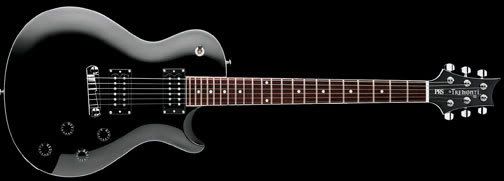
My friend owns a PRS Tremonti SE guitar. The SE stands for Student Edition. Well, you guess it, since most students are "not-so-rich", the Tremonti SE is the lower-end model made in Korea of the more excellent Mark Tremonti Model. Lower-end or not, the Tremonti SE has the looks of any expensive guitars out there. The body is made from Mahogany and there's a 3-way toggle pickup selector near the neck pickup, similar to Les-Paul guitars. There are also four control knobs which are controls the volume and tone for each pickup. To add some icing to the cake, there's white binding on the Mahogany body which looks real cool with the black colour body. The guitar has 22-fret neck with rosewood fretboard with PRS very own tuners which keeps the guitar in tune. And all this is still the Student Edition folks; I haven't mentioned anything on the Mark Tremonti Model yet.


user posted image
user posted image

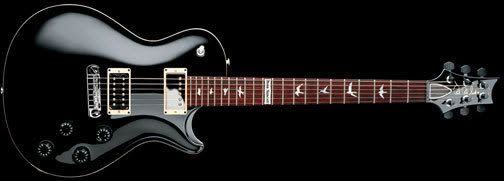
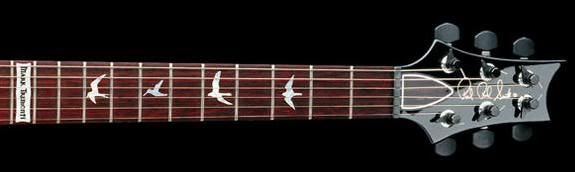
Tremonti SE top and Mark Tremonti Model bottom. Notice the pearl
bird inlays and the special 12th fret Mark Tremonti inlay.


(Mark Tremonti Model)
Now it's the more expensive version. Comparing the Mark Tremonti Model with the Tremonti SE is like comparing a Ferrari F50 with a Proton Gen-2. First look at this made in USA guitar and you'll notice the superb pearl bird inlays on the 22-fret rosewood neck and the special 12th fret Mark Tremonti inlay. The guitar's body is a carved maple top with thick mahogany back and has an opaque color with natural maple edge. The guitar has a unique Tremonti Bass and Tremonti Treble pickups with a PRS adjustable stoptail bridge. Everything else is pretty much the same with the SE version, there's a 3-way toggle pickup selector near the neck pickup and four control knobs which are controls the volume and tone for each pickup. The Tremonti SE is thinner than the Mark Tremonti Model.

The sounds .....

(Tremonti SE)
My friend says that the guitar has a pleasing mix of full and well-defined lows and brilliant mids on the neck pickup, and howling leads with some real AC/DC moments on the neck. The entire sound feels quite modern and punchy, but the output isn't too high and this gives it enough raunch for classic rock stuff. The guitar has a thin neck which means playability is awesome or in other words, the action is good stuff. It pleasingly winds up the clean channel with clean crystal clear sounds.
Overdrive turns the neck pickup into rythmn heaven, with the punch at low gain good for a wide range of driven backings, with the top end biting nicely. Winding up the gain gives a much more metally tone, as the benefits of a set mahogany neck show through. My friend plays this guitar with a Marshall AVT100X, and this guitar is good for metal and rock playing guitarists.


user posted imageuser posted image

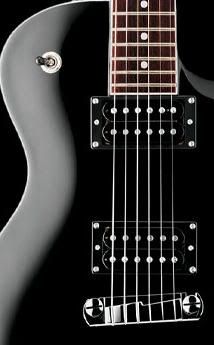
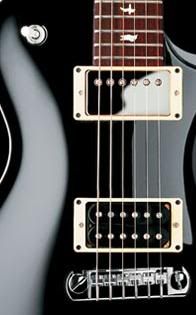
Tremonti SE on the left and Mark Tremonti Model on the right. Notice the finish
and the pickups on the Mark Tremonti Model.


(Mark Tremonti Model)
The amp used with this guitar is a Laney HCM65R. My friend is doing all the testing and I'm doing all the writing. The clean sound on this guitar is crystal clear and pristine, and when my friend switches on the overdrive channel on the amp, it's just pure ecstasy. Warmth and sustain for days with the fullest body of sound we have ever heard. This guitar is perfect for hard, guitar-driven rock...this is how Mark Tremonti makes those fat and warm crunch for their songs (listen to Creed's "What If"). As I mentioned earlier, this guitar has a unique Tremonti Bass and Tremonti Treble pickups installed. The fat and warm crunch is the result of the combination of these pickups. The Tremonti Bass pickup never sounds overdriven when playing clean, and the Tremonti Treble pickup will add extra presence/ brightness. There's no unwanted feedback at all with this guitar. My friend did point out that the action is super low & super fast, the guitar practically plays itself. Those who love Nickelback, Hoobastank, P.O.D., Linkin Park, Puddle Of Mudd just to name a few (and of course Creed) will surely love this guitar.

So which guitar to buy ?

Haha, seriously speaking ... we don't know. Well, it depends on your wallet. My friend bought his Tremonti SE for Rm2,999 and the Mark Tremonti Model is a cool Rm10,999. Basically, the Tremonti SE has less cosmetic finishes and the unique pickups then the Mark Tremonti Model. Both guitars are perfect for metal and rock players, but of course the Mark Tremonti Model provides the better sounding and better looking then its smaller brother has to offer.

Tremonti SE
Pros: Great for metal and rock guitarists, excellent workmanship, very comfortable
Cons: You'll get jealous with those who have the "real" Tremonti guitar laugh.gif.

Mark Tremonti Model
Pros: excellent workmanship, very comfortable, unique Tremonti pickups which sounds awesome, excellent presentation (pearl bird inlays and Mark Tremonti inlays)
Cons: Price moneyflies.gif, not suitable for blues and jazz
This post has been edited by TheWhacker: Mar 5 2006, 08:55 AM
TheWhacker
post Jun 27 2006, 10:54 AM

Newbie
Group Icon
VIP
3,914 posts

Joined: Jan 2005


Behringer AM100 Acoustic Modeler

user posted image


Ask any musicians' you know of and chances are they will own at least one acoustic guitar along with their endless list of electric guitars. Playing a gig with an electric guitars take some time to set up, from plugging your guitar to those pedals on the floor, to setting those controls on the amp and finally having the best pedals, amp and guitar in the world won't do a thing if you can't find a power plug. Acoustic guitars are a "take and play" instrument, similar to "plug and play" in most computer hardware.

Some songs require both acoustic and electric guitar in order to play the song properly and accurately. So how do you switch between your acoustic guitar and then back to your electric guitar at an instant on the live performance?

The Modeler

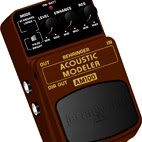
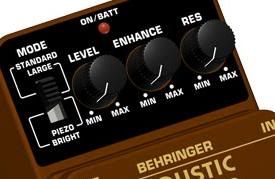
To solve that problem, allow me introduce the Behringer AM100 Acoustic Modeler pedal. This effects pedal allows guitarists to achieve realistic acoustic guitar modeling using any electric guitar. The pedal has dark brown colour which may be representing the wood theme here, hence acoustic guitar. The pedal has a switch to choose what type of Acoustic Guitar sound you want (standard, large, piezo pickup style or bright). Standard mode produces a typical acoustic guitar sound while at the Large mode delivers a large and more resonant acoustic feel. The Piezo mode simulates distinct brightness of a classic piezo pickup and the last mode Bright gives a brilliant and ultra-present sound which is good if you're playing in a live environment.


user posted image


On top of that, there's also 3 knobs for level, enhance and resonance. Level basically adjusts the output level (the volume). The Enhance control determines the amount of brilliance as well as upper harmonics and the Resonance control adjusts the resonance of the simulated acoustic guitar body.

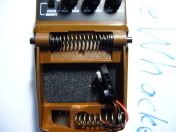
Sadly, the manual is only a sheet of paper (like all Behringer effects pedals), and to be honest the manual should have at least give more information, such as where to put the 9V battery (because of this I actually unscrewed the whole thing looking for where to put the battery, only to find out it is under the actual pedal). The locking system for the battery also needs about 5 different hands to unlock and lock again. See the picture below.


user posted image


If you stomped on the pedal, it would probably break due to the fact that it is mainly plastic. I said before "throwing a Boss pedal to the wall will crack the wall and the Boss pedal will be fine" but don't try throwing this Behringer pedal to anything, so press it and treat it gently.

Acoustic Sounds ?

The pedal was used with a 70's Fender Stratocaster and a Marshall MG50DFX amp. When in use, it makes a slight hissing noise, but it is very easy to ignore when playing with it. The sound when used is very similar to an acoustic guitar, but the highs, even when the enhance knob is turned up full, just aren't good enough. When the Resonance knob is turned up, the bottom 4 strings sound great.

I played the song "Some Day" by Nickelback and I was able to play the whole song only on the electric guitar with the AM100 plugged in. I played the song using the 'Piezo pickup' mode, with the 'Enhance' knob turned nearly to full, and the 'Resonance' knob set at about halfway. When the pedal is turned on it create a slight "pop", which can be a nuisance when turning it on an off mid song. You have to turn down the volume on the pedal itself it avoid the "pop" sound.

So I throw away my Acoustic guitar ?

No, keep it. If you're playing a song which uses only the acoustic guitar, then you should use an acoustic guitar to play it, not with this pedal. This pedal helps a lot if you don't want to switch guitars in a middle of performance. If you're looking for your first Acoustic Modeler pedal, this is the pedal to buy because it's only Rm120. However, if you're a seasoned guitarist, you should skip this pedal and settle for the Boss AC-2.

Pros: Super cheap; great acoustic sounds

Cons: Changing batteries is a big hassle; it's made of plastic; creates a "pop" sound when activating the pedal.
TheWhacker
post Jul 6 2006, 02:15 PM

Newbie
Group Icon
VIP
3,914 posts

Joined: Jan 2005


MaxCable Music/Instrument Cable

user posted image


Anyone here knows where Petaling Street is located ? This is the place where all the cheap electronic items like microphones, mixers, cables are being sold at very low prices. Don't think very low prices means very low quality, the catch is to find the right item at the right shop so a little abit of window-shopping is required to get the best bang for your money.


user posted image


I have seen alot of guitar cables in various shops with all the advance features like a muted button or an anti-tangle construction and all these cables don't come cheap. Some of them can reach over Rm200 price tag. Almost all guitarist and bassist will agree of the importance of having a good quality cable. This is because the cable acts as the middle man between your guitar and your amp. Some would settle for a cheap cable that will break or snap after awhile due to the cheap construction of the cable. But there's one cable under the same category of cheap but has the expensive features of an expensive cable.

The MaxCable

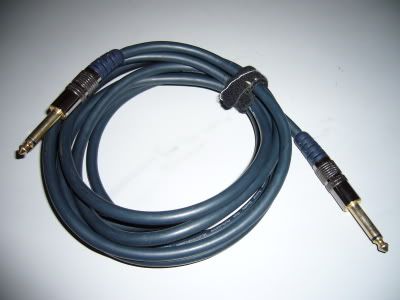
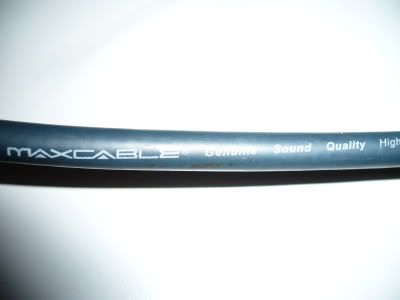
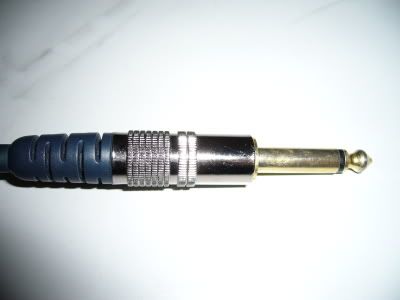
When I first saw this cable, my first taught is this cable is not going to be cheap. Its construction is a solid rubber base, you can slash someone's back with this cable and it will leave a mark on the skin. The connectors have a reinforced padding (see the picture below) to protect the wires inside the cable so that they will not break or snap while you move around with your guitar plugged on. This cable is 3 meters long, not that long for those who want to move around the stage during a live performance, but should be enough for most musicians. And to add the icing on the cake, the connectors are a 24k Gold Plated. Gold is one of the best conductor for electricity to inprove the connection between speakers or instruments. Gold is used because it is virtually resistant to corrosion, which is the primary reason why it is chosen over copper and silver.


user posted image


Max Sounds ?

Comparing this cable with a cheap cable (the ones the music stores will give free when you purchase a guitar from them), the MaxCable gives a more brighter and clearer sound on both clean and overdrive channels while on the cheap cable it gives abit of muddy sounds. I did an experiment with this cable by moving 3 meters away from the amp. The cable poped out from the guitar but there's no sign of cracking whatsoever and still works like new. The cheap cable however didn't suffer same the fate as its now in the rubbish bin because the connector broke while I was doing the same experiment.

The best cable ever !

So how much this cable cost ? Its only Rm25. Yes, Rm25. So go and get it thumbup.gif

Pros: It's Rm25, good construction, 24K Gold Plated connectors

Cons: If I have to say something bad about this cable, it would be the length of the cable, which is only 3 meters.

This post has been edited by TheWhacker: Aug 28 2006, 07:10 PM
TSPix
post Sep 11 2006, 03:17 AM

Tube Glower Phreak
Group Icon
VIP
2,918 posts

Joined: Nov 2004
From: Deliciously Pointless To: Jaw-Dropping Absurd


Great Tutorial written by MetalZone

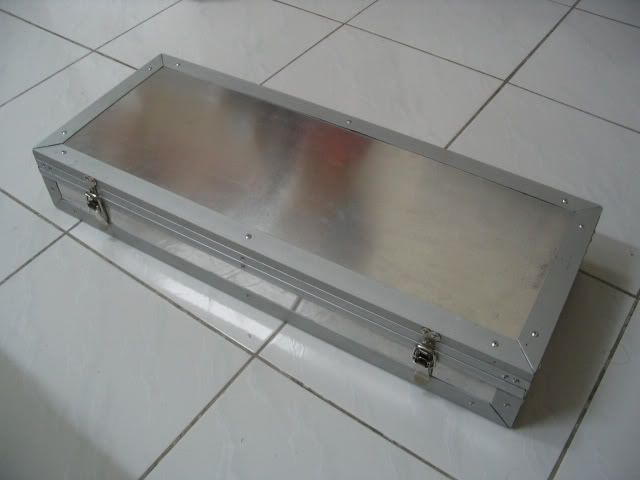
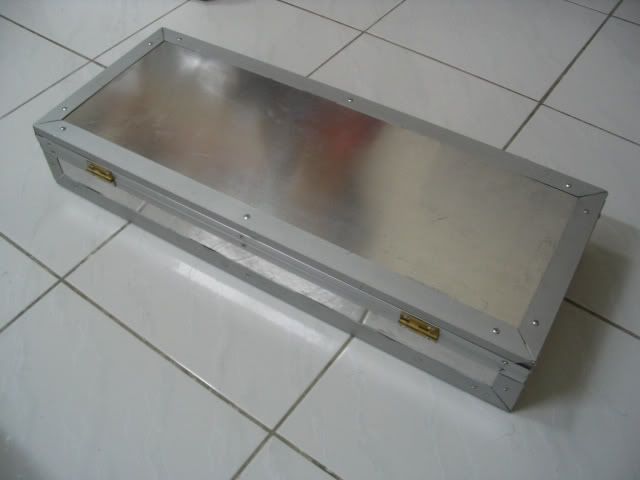
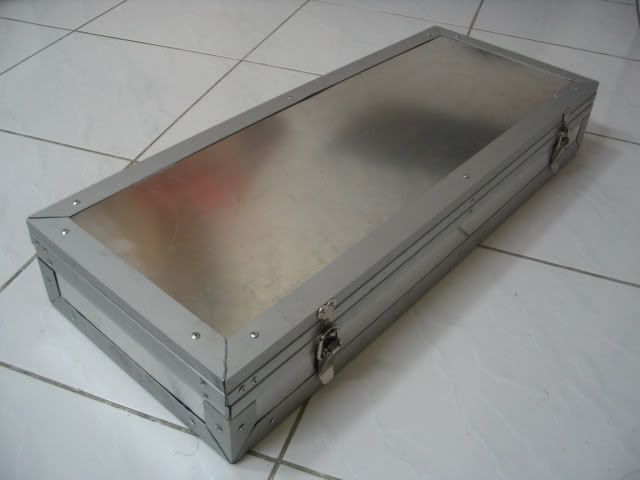
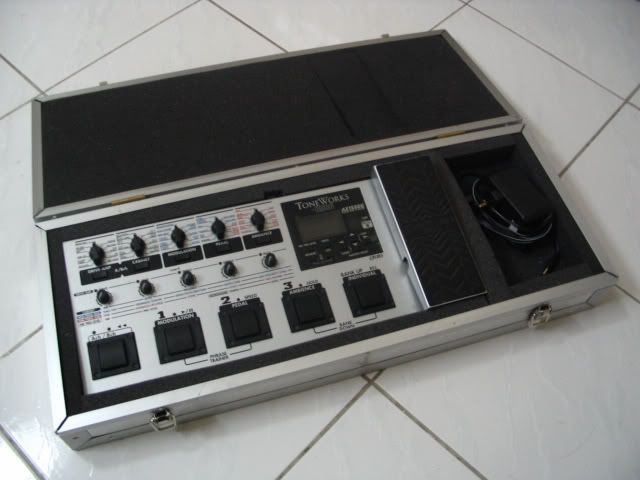
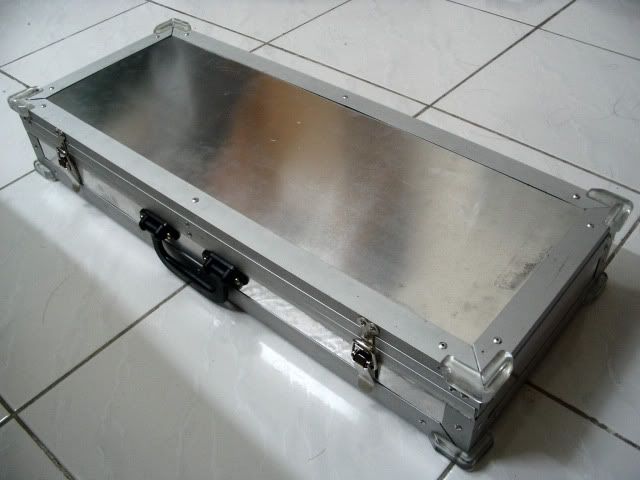
The cardbox box for my Korg ToneWorks AX1500G was getting somewhat worn from lugging it around to church, events, camps for the past 3 years. Since I always had a hard case for my electric guitar, i decided to make a simple aluminium case for my multi-effects too.

This issin't my usual precision work, so the workmanship is a little shabby. Coz I was doing it in a rush to finish it before I get back to KL. It only took me less than one and a half days to make it, thanks to some help from my dad.

Materials used: 1mm thick aluminium sheet, 25mm wide aluminium L-bracket, 12.5mm wide aluminium L-bracket, 2X hinges, 2X pull down latch, bostik super steel epoxy, rivets (i only used rivets in conjunction with epoxy, no screws) and some superglue (to hold some parts together temporarily), 1 inch thick black foam, 1X plastic handle, 8X corner edging.

1. First of all, plan what you want to do. The end product is only as good as how well you planned it. Measure the size of the equipment you want to make a case for. Consider how much strength you need for the case. When planning the dimensions, be sure to take in account of the thickness of the padding or foam that you intend to use. Decide on how do you want to divide the casing where it will open up (look at my pictures as an example). Remember to consider the sizes and types of aluminium L-brackets available to you and how you are going to piece them together. Take in account of the material thickness (eg. the thickness of the aluminium sheet or plywood). I can't stress enough on the planning stage. Planning is just as important as actually building it. If you can, design it in AutoCAD (I use AutoCAD whenever I'm designing anything, including modding) or any CAD program or draw it on paper. Then, calculate how much materials you need and proceed to buy them. Buy a little extra in case you make a mistake.

2. Draw out the pieces which you intend to cut on the materials. Draw accurately! Use a proper ruler and set square or the L-ruler. Remember to take in account even the 1 mm wide cut line made by the jigsaw or dremel. Cut the aluminium sheet or plywood according to the dimensions that you specified in planning. For the L-brackets, same thing. Just that you have to also cut a 45 degree angle for the corners where it will meet another piece. Use a file or some sandpaper to smoothen out the rough cuts.

3. So you got all the parts? It's time to piece them together. Some examples which you could use to attach them together: Rivets, screws, epoxy glue. I used both rivets and epoxy glue in my case. Now its time to drill the holes for the rivets/screws. Measure and mark the locations where you want to drill the holes. Always use a block of wood at the back when you are drilling through so that the hole doesnt get warped or become pear shaped. You can either drill through both the L-bracket and the aluminiums sheet or plywood at the same time, or drill through them seperately. If you do drill through them seperately, you need to be very accurate with your drilling to make sure everything lines up perfectly. If you choose to drill through both together, remember to mark both pieces with a pencil so that you know which piece matches which side. Be sure to use the right drill bit size to fit the size of the rivets that you may be using. It should be slightly larger than the size of the rivets.

4. Some people aren't familiar with how rivets work, so anyway here's basically how you do it. First you need a riveter. You can buy a relatively cheap hand riveter from a hardware shop together with some rivets. The head of the riveter has different interchangeable sizes to match the diameter of the rivets. When choosing rivets, choose according to what you need. You dont need humongous rivets for small joints like these. On each rivet, there's two sides; One side with a larger diameter and a ball at the end, and one side with a long smaller diameter shaft. The side with the ball is where you insert into the hole where you intend to rivet, whereas the other shaft is where you insert into the riveter. To rivet a joint, put the appropriate sides into their respective holes as explained previously, and pull the lever of the handle. You most probably need to release the handle and pull the second time. You will come to a point where it stops, pull the handle even harder and the shaft will snap off leaving the ball end of the rivet on the other side of the joint. Do it correctly and you should have a nice rivet joint. If you do make a mistake and need to remove a rivet, just drill through the rivet and it should come off.

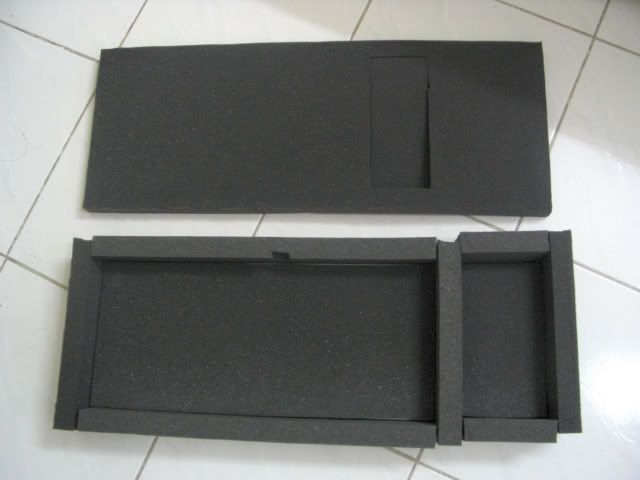
5. The remaining steps with the hinges and latches should be self-explained. For the foam, try to design them so that you can just fit them in like the way I did. Cut it with a sharp and long blade or knife to get a clean cut.

Thats about it for the tutorial I guess. Good luck!

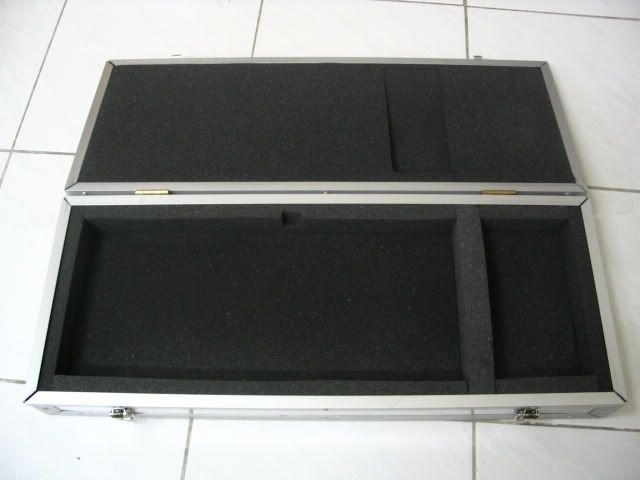
After adding the handle and corner edges/feet.
user posted image

user posted image

user posted image

user posted image

user posted image

user posted image

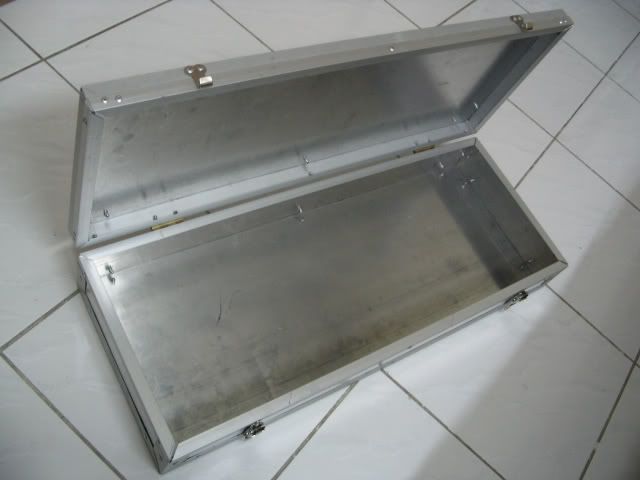
Without the foam put in
user posted image

The parts of the foam. No glue required. Just fit them in like a jigsaw puzzle.
user posted image

This post has been edited by Pix: Sep 11 2006, 03:20 AM
TheWhacker
post Feb 17 2007, 10:52 AM

Newbie
Group Icon
VIP
3,914 posts

Joined: Jan 2005


Ibanez RG1527 Review (by Equilibrium777)


Features: Ibanez RG Prestige 7 string model. Made In Japan. 24 frets and a bolt-on neck. Solid Basswood body. Mine is a blue with a slight touch of green on it. Standard Passive Pickups with 1-Volume 1-Tone selector. Edge Pro 7 with locking tuners. Comes with a very nice Ibanez Prestige Team J Craft hardcase (fits perfectly and can only fit the guitar). // 10/10

Sound: I play Progressive Metal, Neo-Classical, Jazz (well alot of things actually) with this guitar (Rusty Cooley, John Petrucci, and the likes). Running this Guitar through my Boss GT-6 to my Marshall AVT-150. The guitar is great but the pickups are questionable. Plan to change the pickups to EMG's or DiMarzio's depending on how fast I can save for it. It's stock pickup is muddy and not as powerfull as I expect it to be. But the stock pickups are bearable and won't dissapoint. A change is definate if you're a person who values tone and power. Not much difference between the Neck and Bridge Pickup. Neck pickup goes muddy when gain is up and the low B-string is played. Bridge pickup lacks the bite and has no power to it's sound. Clean sounds are ok and nothing to shout about. If you don't solo on the guitar and the B string(extended runs) and only do power chords then the pickups are quite reasonable as the sound it produces is heavy. // 5/10

Action, Fit & Finish: I had a techincian to do minor tweeks to it. It came with 3 springs at the back and added another one. 5 springs make the trem too hard to play with. 4 was just nice to keep it in better tune and stability. Had some intontion check and changed the action as it was slightly higher then usuall. Neck feels great but Ibanez didn't do a great job to the minor details. I can see extra wood used at the headstock(7 piece neck instead of 5). The paint around my pickup has a very small blotch. Not really noticeable. All in all still a good job. I'm just picky when it comes to these things. // 7

Reliability & Durability: Definately reliable if you can stand the weight as it is slightly heavier then a normal guitar. Still haven't played a real gig yet with this guitar so I cannot comment on it yet. Strap buttons are solid. I would use it on a gig without a backup. Finish looks as if it can last forever if properly taken care of. // 9

Impression: I play nearly everything and this guitar fits it well. With the right pickups this guitar can definately play anything if you know how to. I own an Ibanez S cutomized by me and a Fender Highway 1 also customized by me and the RG7 is different. This guitar gives you the extra string and that really opens up possibilities to your playing. The 7 stringer can play what a 6 stringer can and more. If it was stolen or lost (which I will make damn sure it won't) I'll definately get it back. I Compared it with the Hamer 7 string and still went for this because of the neck. The neck is truly important as it makes the transaction from 6 to 7 a lot easier. Wish it had better pickups. After playing a 7 string, when you return to a 6, the 6 will feel like a toy and feel much more easier to play (for me). It would take some time to get used to it but when you do, it'll rock hard. // 9


This is from my review at
http://ultimate-guitar.com/reviews/electri...1527/index.html


Added on February 17, 2007, 10:54 am
Taylor 410 Review (by Equilibrium777)


Features: It's a gift from my dad and well he refused to give much information about it when I asked. This is what I can see from my research. The certificate and serial numbers from the Taylor website. It's was made in 1996 and if it was built back then it was definately made in US. Standard 21 frets. Most likely normal frets, not jumbo's in a rosewood neck. Neck has a very nice feel, small and easy to wrap your hands around the whole neck and not too fat (Trademark Taylor Neck ). One piece neck instead of the "new technology" neck (The NT neck is glued and what not. I Find it cost cutting measures instead of enhancements). If the wood used is still the same 10 years back, then the top is Solid Stitka Spruce with Ovangkol for the back and sides. Mine has a Mat finish instead of the new satin and gloss. Has Bear Claw Marks on the top which makes it look much cooler than a normal one. Has a Dreadnought body using Grover tuners. Built in Fishman Pickups (No controls, just direct into the jack at the side of the guitar). It came with the original Hand Made Taylor Hardcase from 1996 instead of the new black ones. // 10/10

Sound: I use the Taylor to tackle all of my acoustic songs as it is my only acoustic guitar. I use Elixir 0.12-0.53 gauges and it sounds amazing! When you strum this baby it sings! The projection is amazing and it also sounds beautiful when finger plucked. I play jazz to power ballads on this beauty and it just captures peoples attention because of it's loud and powerfull projection! Has a warm and round sound which I particularly like as opposed to the Martin sound (I have something for warm and round sounds). I hardly plug it in but when I have to it's usually my Marshall AVT150 which doesnt't really suit or compliment it (saving for an AER). Only minor drawback with this guitar is the feedback. I have to stay quite a distance from the amp to prevent feedback. Must be because of the pickups but I won't make changes because it'll ruin the value of this guitar. // 9/10

Action, Fit & Finish: Well for a 10 year old guitar, It's as good as new. The previous owner really kept this guitar in amazing condition and everything was perfect. Stays in tune, action is amazing it's not too low but low enough to be just nice for me (I sent the guitar for a checkup at Sinamex recently and the tech said the action was high but since i played classical he said the action shouldn't be a problem ). The neck is perfect for it's age and humidity problems here in Malaysia (very hot and humid country). And the back of the guitar is showing minor signs of bloating(prevention is the best cure, the guitar bloat is very minor and i'm doing my best to stop it from bloatign anymore). All these are because of the weather conditions here. But again the problems may not have been here when it was first brought in. // 10/10

Reliability & Durability: I have used this guitar for a lot gigs and played with it nearly everyday and it still sounds and feels like when I first got them. It's 10 years old 'nuff said. The hardware seems brand new and the buttons are solid. I only use this guitar as my acoustic so I won't use another as a backup cause this guitar is irreplaceable. Finish would last the ages. // 10/10

Impression: Practicly this guitar totally suits me as it can cover everything from blues to jazz to rock to country. I may not own many other guitars but I've tried a lot of other guitars out there in the market from Martin, Maton, Fender, Takamine and even other Taylor models, but this is unique and different. This also show the difference in quality and workmanship 10 years back and now. I tried the new 410's and they had a lot of difference but all in all it still felt the same. Wished I had more information on the guitar but never regretted this guitar. Amazing gift. If it was stolen/lost I'll hunt for it with all my heart and soul because I know this guitar is irreplaceable. Love everything about it and hate only the feedback from the fishman pickups (not using the espression system). // 10/10

My Taylor 410 review from Ultimate Guitar
http://ultimate-guitar.com/reviews/acousti.../410/index.html

This post has been edited by TheWhacker: Feb 17 2007, 10:54 AM
blacktrix
post Sep 9 2007, 01:21 PM

Scott Pilgrim Vs The World!
Group Icon
VIP
13,063 posts

Joined: Jan 2003
From: Toronto
Moen Violent Metal MO-VM Distortion pedal review by Sweet Tooth

i bought this pedal half a year ago at The Guitar Store Damansara Perdana(sole distributor) after trying out the wide array of pedals they had there and i was pretty much stuck between this pedal and the MetalZone. In the end, i picked out this China-made pedal because i felt it had a greater crunch and aggro in it.
» Click to show Spoiler - click again to hide... «


MOEN Violent Metal MO-VM - made in china
Pros
- sturdy casing
- very versatile; has 6 tone knobs: Low, Mid, Hi, Level, Mid Freq, Dist.
- Amp booster
- able to achieve heavy crunches

Cons
- Not popular, outshadowed by the MetalZone
- can't achieve too high Mid settings
- battery connector has some problems(might just be my unit)
- on/off button might be too small for some
_____________________________________________________________________________

First off, don't be fooled by the made in china label, its not that bad. After testing this pedal through a 100watt marshall amp, i tested it through an MG30 to be sure it would sound good on a smaller amp, and it did. With a list price of RM295, most people compare this pedal to the MetalZone and go with the more tried and true pedal instead.

This distortion pedal is no laughing matter, it can get really deep crunchy tones and also smooth, laid back tones as well. having 6 knobs(similar to the MT2), it is very versatile in its functions. there is a lot of room for tweaking and fine tuning and you will be able to find your tone from this pedal no matter how fussy you are tongue.gif

with this pedal, i am able to achieve various tones, from kirk hammett to alexi laiho to valkyrie1232 thumbup.gif The only downside is you can't really get a really warm tone because too much mids will make everything on the higher register sound too muddy and even crack if you crank it up too much. to achieve that warm tone, i turn up my mids to about 12 - 1oclock and switch to my neck pickup. there's no need to keep the distortion at max because this pedal has some serious distortion in it.

i compared this pedal again with the metalzone a couple of days ago, matching both settings and i find that this pedal has less hum in it compared to the metalzone. However, the metalzone was able to reach warmer tones, with higher mid settings.

Next, there is a useful amp booster located on the left side of the pedal. by switching it on, the output will be increased by A LOT, i have to turn it off because switching it on makes it really loud and it might blow my amp. however, the tone gets really heavy and very very distorted. Perfect for heavy palm muting rhythm playing.

As the name suggests, this pedal is great for metal. it gives you a killer sound, more violent than ever(hence the name). I haven't compared this to the ML2 yet, but i doubt this pedal will be able to produce as much distortion as the ML2(based on what people say). All in all, this pedal is worth trying out if you are looking for a Metal pedal. It comes a very close 2nd to the metalzone in most aspects. Price wise, its slightly cheaper(RM295 against RM320) than the metalzone.

i hope this review was helpful and hopefully will give you an insight of this little pedal and maybe you'll go down to The Guitar Store and give it a try thumbup.gif

Ease of Use: 8 (too many knobs might be complicated to some)
Sound: 10 (very versatile in achieving various tones)
Reliability: 8 (my battery connector had problems)
Impression: 9 (looks good, sounds good)
Overall: 8.8/10


chester43
post Aug 23 2008, 09:13 AM

Getting Started
**
Junior Member
132 posts

Joined: Nov 2006


As you know, Slashâ„¢ has his own line of signature guitars lately. I m getting a Slashâ„¢ Signature Epiphone Les Paul soon, bt I heard some other guitar instructors comment that the sound of the guitar is ambushed inside and can't bring it into the full play. I know Epiphoneâ„¢ is a lower-range guitar, so it's definitely can't compare with the Gibson Slashâ„¢ Signature Les Pauls. I have read the Epiphone Specifications and the woods used are also mahogany Neck with Maple top. I have already tried the guitar Neck, the Long Neck Tenon & the Neck Radius both are right to me. I mean the feeling when i m fretting it is comfortable to me. I haven't tried out its sound though. The Problem is should I get one of this or any other suggestions?

This post has been edited by chester43: Aug 23 2008, 09:16 AM

Topic ClosedOptions
 

Change to:
| Lo-Fi Version
0.0233sec    0.34    5 queries    GZIP Disabled
Time is now: 21st December 2025 - 09:04 PM