Peavey Classic 50, with 4x10' speakers
From peavey.com :
"Originally launched in 1991, these versatile all-tube amps retain their distinctive sound and circuitry but now feature an updated chassis design. With three 12AX7s up front and four EL84 power amp tubes plus normal and bright inputs, 3-band passive EQ, and presence control, it's all the classic tone you seek and all the gigging versatility you need."
From eurotubes.com :
"The Classic series amps have got to be one of the best working manâeuro(tm)s amps ever built. For a production made amp they are built well and sound great. My favorite is the 50-410 I like the quick response of the 10âeuro(tm)s.These amps are fixed bias and use EL84 power tubes. They provide a crisp, warm tone when using tubes with a moderate natural plate current draw. If itâeuro(tm)s a good blues tone your after then a fairly hot set of EL84âeuro(tm)s will give a nice greasy tone with an early saturation. The drive channel is very good adding a nice smooth distortion when using good tubes. With the stock Chinese 12AX7âeuro(tm)s or sovteks ( the new EH tubes included, as they are sovteks ) it has a nasty honk!"
So what is this amp ? Probably a cheap way to get a very warm sounding tube amp ! It is definitely loud and very big and very heavy (about 20 to 30 kg) :

(no, that oh-so-cool-too-bad-it's-not-80s-anymore looking dude is not me on the picture !)
I swapped the stock tubes by JJ tubes (www.eurotubes.com), because I had the money to do it, but not necessarily the "need" to do so (oh com'on, you know what I'm talking about... GAS, anyone ??). The move was a lucky one : it's a definite upgrade in terms of sound, especially on the second channel which got more details in the saturation. Anyway, let's not focus on that but more on the amp itself.
There are 2 channels, Clean and Overdrive, which are charing the same equalization controls. It's quite a drawback because you usually don't shape your clean channel's sound the same way you shape you overdrive's tone, and you end up doing a compromise on one of the channel if you intend to use both of them in live situation during the same song.
The EQ controls won't make your head too itchy : TREBLE, MID, BASS, PRESENCE, REVERB.
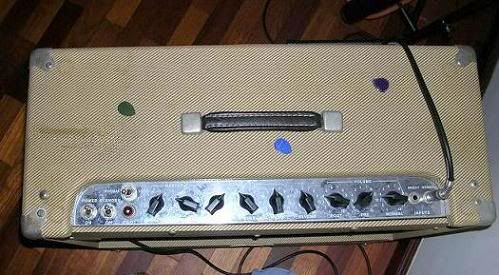
Those are passive equalization : as far as I understand it, it has to do with the way those controls interact with themselves. Not to worry, most guitar amplifiers use passive EQ.
A little word on the PRESENCE : presence gives you a boost on the higher frequencies, even higher than the frequencies controlled by the TREBLE knob. Being able to access those frequencies is interesting in order to keep a good tone at low volumes or get a V-scooped metal sound. But I must say that I don't use it much.
The REVERB is connected to an independant spring-driven reverb device located at the bottom of the cabinet. So it is not solid-state reverb : it's the real deal. But at low volumes, it doesn't work very well if you try to put too much reverb and I reckon it has a nasty "boing" quality to it. At low volume, if you don't use to much reverb then it's fine. At higher volume, the phenomenom doesn't happen so obivously.
On top of that, you have VOLUME, MASTER, PRE-GAIN, POST-GAIN which controls the volume of the clean channel, the volume of the overdrive channel, the amount of gain of the overdrive channel, and the overall volume. Basically, it means that even though you're not allowed to have independant EQ for channels 1 and 2, you can still control the volume independantly. That also, you will find on any "decent" amp.
There are two jack inputs : "bright" and "normal". It has nothing to do with your intellect : normal people can use the bright input. Bright people would rather stay put with the normal input though. Don't be confused, let me explan it : the bright input just adds 3dB in the high frequencies, which can be useful when amplifying voice and acoustic guitars. For electric guitar, I don't really use it.
There is a FX Loop too, but that's pertty usual. People says it's working very fine, so I gather that in some other amps, the FX loop is quite tricky..? It's such a simple device that I wonder how it's able not to work less than fine. Nevermind.
Regarding the speakers, my amp is loaded with 4 speakers of 10 inches each. It's big ! It's a stack !
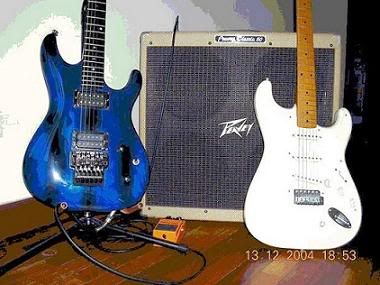
And it's an open back. I played few times on a Classic 50 loaded with 2 speakers of 12 inches, and I really liked the fat and sweet tone. On the other hand, the 4 speakers gives you an awful lot of presence and dynamics. You're sure to be heard. And if you can't be heard, then you might have put it too loud and your public is already deaf. I didn't try to unplug 2 out of the 4 speakers, because I must check the ohms first (will it be 16 or 8 ohms ?). But it is possible to do so.
The sound now... I guess I wrote a lot about the hardware already... Well, the sound is all about WARMTH and SWEETNESS. The cleans are pretty much standard, I must admit they are my reference (in regards with my very limited amp experience) - they do the job in a very addictive way, except when doing clean "acoustic-like" rythms. You know those 6-strings chords full blast patterns typical from acoustic ballads. Well, it's a bit messy. The bass tends to eat up the other frequencies, but if you remove the bass, it sounds too "electric"/artifical . In my opinion, it's a common problem to all electric guitars and their amplifiers : they can't produce acoustic tones ! On partial chords though, it's very funky. When it comes to arppegios and solos, I like to give a dark tone to it, in a jazz kind-of-way. Mids are very effective, bass shouldn't push to much (they're very BIG) and the treble are a bit agressive, so I prefer to roll them down in clean settings.
The overdriven channel will give you a wide range of tones, from very slight crunch (funky chunky shaky chunks...), bluesy crunch (SRV, and so on...), 70s hard rock, ACDC, all those 70s reissues bands (The Jets, The Strokes, Kings of Leon, etc...) and many modern lead tones (yes, I bought it because I could get a Satriani Flying in a blue dream tone very easily). I wouldn't recomment it for metal, even though I must say I'm having a lot of fun myself doing palm mutes. Putting a overdrive pedal in front of it can give you a mean loud earth-shaking in-your-face tone, of course. That amp might however keep you within the 40% to 70% gain area, where it's more crunchy than overdriven, and the notes keep being dynamic.
That's all folks,
PROS : Warm tones, perfect for blues and funk, with a deep dark side that can be kicked in for jazz solos and rythms. Heavy duty cabinet, classy bassman look. Sound is very versatile.
CONS : Very heavy and big : not easy to move it around, and over-powered for a bedroom or small studio usage. The sound might be too warm (it's very addictive though), and the cleans tend to crunch at higher volume (it all depends how your tubes are set... i chose mine to break-up fast). Controlboard is chromed : tend to get dirty easily.
This post has been edited by Pix: Jan 4 2006, 06:24 AM 

 May 30 2005, 05:13 PM, updated 19y ago


 Quote
Quote





 I THINK I HAVE GAS! I HAVE PURCHASED AN AMP, A ZOOM, AN ACOUSTIC, MY SHERATON AND GOING TO GET AN SX TELE IN THE SPACE OF A FEW MONTHS!!! HELP MEEEE!!!











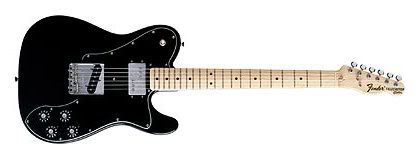

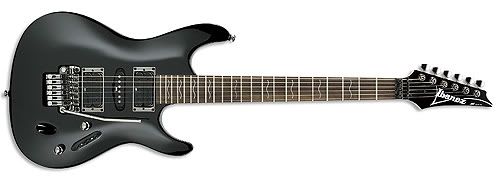
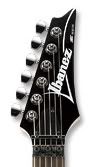
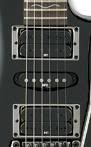


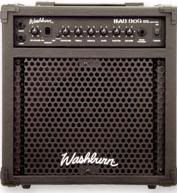
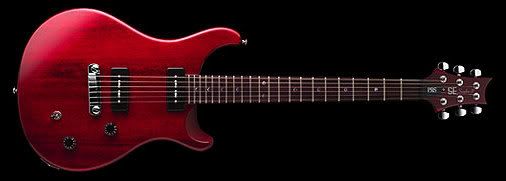
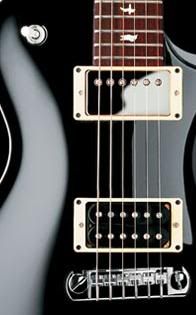
 .... I'm just joking. PRS stands for Paul Reed Smith. They (or he) are one of the most famous guitar makers in the world as all of their guitars are all hand made to perfection. How famous you ask ? My answer to that will be the various guitarist and bassist from very famous bands like Mark Tremonti from Creed, Brad Delson from Linkin Park, Carlos Santana and many more. And the best part is, PRS sells to you the guitars that those famous guitarists actually use. But now, I'm going to review the PRS SE Soapbar and maybe in the future, PRS Santana.
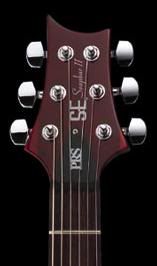
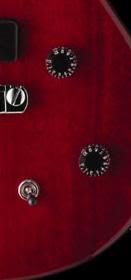





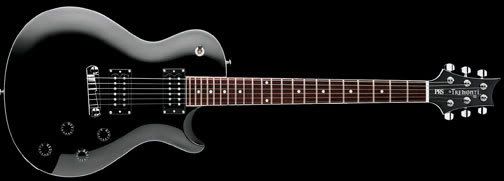
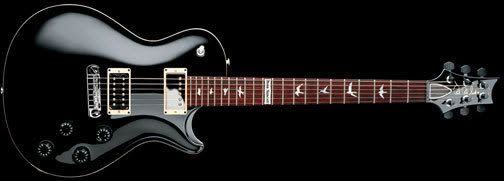
 ) This review was done by my friend (my friend wish to remain anonymous) but since I'm the one that drove both of us to the shop, I think I have the rights to post this review
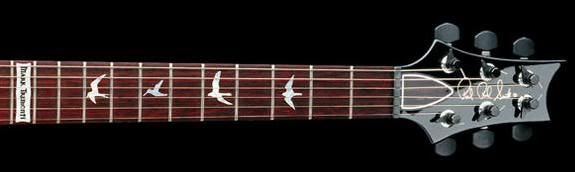
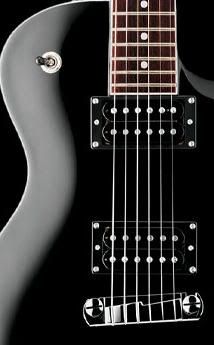
 , not suitable for blues and jazz


 0.0304sec
 0.40
0.40
 5 queries
 GZIP Disabled