Welcome Guest ( Log In | Register )

66 Pages < 1 2 3 4 > » Bottom

Outline · [ Standard ] · Linear+

 Solar Power Generation, for home use/sell back to tnb

views
     
weikee
post Sep 27 2011, 09:17 AM

10k Club
********
All Stars
12,019 posts

Joined: Jan 2003
QUOTE(ozak @ Sep 27 2011, 01:09 AM)
Are you kidding me. A faulty router need an AP?  What the router categories at?

My company do a lot of buying and selling parts and machine to oversea. And never need any AP at all. Just once a while get tax for some parts.
*
Because is under telecommunication.
jaycee1
post Sep 27 2011, 01:32 PM

AFK
*******
Senior Member
2,487 posts

Joined: Jul 2008


declare under computer components and say its for personal use. Tax free.

I used to lug all these network gear up and down (for my office in) France and Malaysia. Never once had an issue.
TSJinXXX
post Sep 27 2011, 01:44 PM

Look at all my stars!!
*******
Senior Member
2,516 posts

Joined: Feb 2007
From: Uarla Umpur


i sense a thread derailment coming.. back to topic plz smile.gif
weikee
post Sep 27 2011, 02:11 PM

10k Club
********
All Stars
12,019 posts

Joined: Jan 2003
Just get AP, maybe will be cheaper biggrin.gif


Added on September 27, 2011, 2:13 pm
QUOTE(jaycee1 @ Sep 27 2011, 01:32 PM)
declare under computer components and say its for personal use. Tax free.

I used to lug all these network gear up and down (for my office in) France and Malaysia. Never once had an issue.
*
If it look like PC no problem. If it look like network equipments is already got problem especially going via courier. Anyway is offtopic.

This post has been edited by weikee: Sep 27 2011, 02:13 PM
ozak
post Sep 28 2011, 11:27 AM

10k Club
********
All Stars
17,024 posts

Joined: Jan 2005


QUOTE(JinXXX @ Sep 26 2011, 10:59 AM)
@osak , yeah maybe start with lights first would be better, install 120w panel with 2x 100AH batts power

maybe 2 or 3 18 watt Philips lights, cost would be around 3 to 5k i think for a simple project...

would be better is can totally power fridge + aircond from solar that would be the most cost effective as those two items takes up a bunch of power from tnb bills..
*
So here I start with very very small solar project first. biggrin.gif

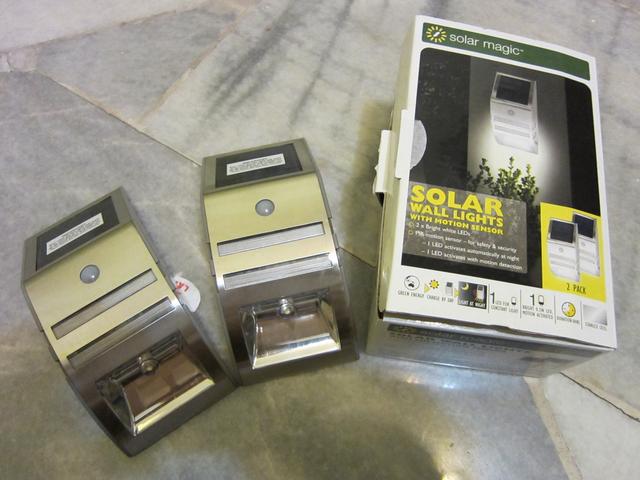
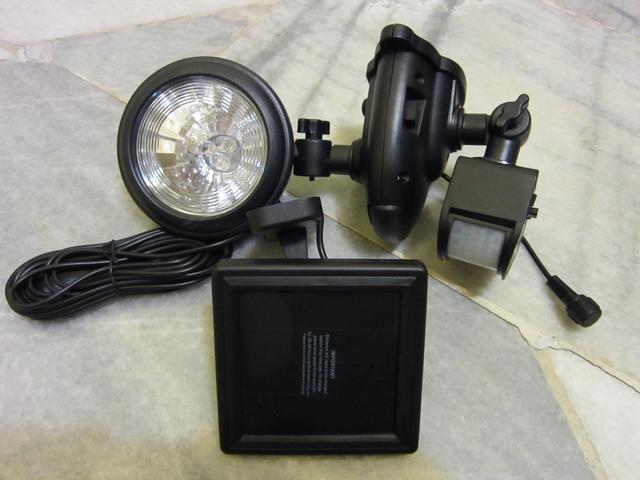
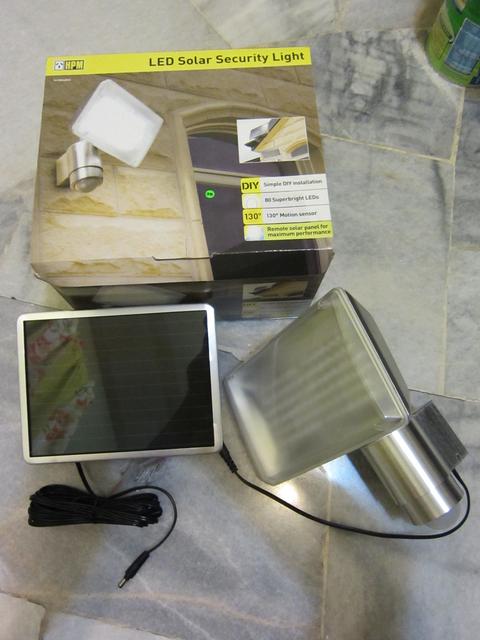
Thinking of adding some light for my back and front house but don't want increase the electrical consumption. So my solution is this ....

user posted image
user posted image
user posted image


This post has been edited by ozak: Jan 31 2019, 09:13 AM
weikee
post Sep 28 2011, 11:28 AM

10k Club
********
All Stars
12,019 posts

Joined: Jan 2003
Where the battery?
ozak
post Sep 28 2011, 11:36 AM

10k Club
********
All Stars
17,024 posts

Joined: Jan 2005


QUOTE(weikee @ Sep 28 2011, 11:28 AM)
Where the battery?
*
The battery is inside the housing. It use either 2 or 3pcs AA rechargerable battery. Either 800mah or 1800mah.
weikee
post Sep 28 2011, 12:06 PM

10k Club
********
All Stars
12,019 posts

Joined: Jan 2003
I am thinking of solar for the motion detector LED light, because that is the area i did not put wiring. Where did you get it?

Rechargeable AA battery are not lasting under hot temperature.
ozak
post Sep 28 2011, 12:15 PM

10k Club
********
All Stars
17,024 posts

Joined: Jan 2005


QUOTE(weikee @ Sep 28 2011, 12:06 PM)
I am thinking of solar for the motion detector LED light, because that is the area i did not put wiring. Where did you get it?

Rechargeable AA battery are not lasting under hot temperature.
*
All this are function at night only and motion detect. The light side should place at shade side or away from direct sun. Only the solar panel is place outside.

Brought from aus.
TSJinXXX
post Sep 28 2011, 12:26 PM

Look at all my stars!!
*******
Senior Member
2,516 posts

Joined: Feb 2007
From: Uarla Umpur


QUOTE(ozak @ Sep 28 2011, 12:15 PM)
All this are function at night only and motion detect. The light side should place at shade side or away from direct sun. Only the solar panel is place outside.

Brought from aus.
*
there is a solar lighting supplier in malaysia

look here

http://www.solarlight-mart.com/ , not sure about the pricing but seems reasonable...
weikee
post Sep 28 2011, 01:29 PM

10k Club
********
All Stars
12,019 posts

Joined: Jan 2003
Jinxxx, i feel that store is overprice. Selection are limited too.

May have to use my trusted ebay to source smile.gif
TSJinXXX
post Sep 28 2011, 01:30 PM

Look at all my stars!!
*******
Senior Member
2,516 posts

Joined: Feb 2007
From: Uarla Umpur


QUOTE(weikee @ Sep 28 2011, 01:29 PM)
Jinxxx, i feel that store is overprice. Selection are limited too.

May have to use my trusted ebay to source smile.gif
*
wonder if those that is interested can all do a bulk buy from us/china/etc etc etc
weikee
post Sep 28 2011, 01:58 PM

10k Club
********
All Stars
12,019 posts

Joined: Jan 2003
QUOTE(JinXXX @ Sep 28 2011, 01:30 PM)
wonder if those that is interested can all do a bulk buy from us/china/etc etc etc
*
Too big the order will trigger custom problem smile.gif

But the website do have some nice stuff if you are the DIY person.
ozak
post Sep 28 2011, 05:25 PM

10k Club
********
All Stars
17,024 posts

Joined: Jan 2005


QUOTE(JinXXX @ Sep 28 2011, 12:26 PM)
there is a solar lighting supplier in malaysia

look here

http://www.solarlight-mart.com/ , not sure about the pricing but seems reasonable...
*
This site is overprice for the solar light.


Added on September 28, 2011, 5:31 pm
QUOTE(weikee @ Sep 28 2011, 01:58 PM)
Too big the order will trigger custom problem smile.gif

But the website do have some nice stuff if you are the DIY person.
*
I brought back 2box (got others type solar light too), scan by the custom at the airport but no tax.

I m now checking the custom tariff for this tax. So far no tax tariff in their database. So either no tax at all or they simply tax it at others category. Can arque with them for this. hmm.gif

This post has been edited by ozak: Sep 28 2011, 05:31 PM
weikee
post Sep 28 2011, 05:33 PM

10k Club
********
All Stars
12,019 posts

Joined: Jan 2003
What i understand not listed mean standard taxing apply.
ozak
post Sep 29 2011, 08:56 AM

10k Club
********
All Stars
17,024 posts

Joined: Jan 2005


QUOTE(weikee @ Sep 28 2011, 05:33 PM)
What i understand not listed mean standard taxing apply.
*
Not really. I have experience that there is no tax with unknown item. But you still need to go there to explain and buy the custom form. If you have experience about custom tariff, you can straight tell them under which category in and how much tax. That can prevent them from anyhow tax you.

Ok, I found out that solar panel will get tax for 10% in custom tariff. It under name of photovoltaic. So any solar thing you want to get from oversea, add the 10% in.


Added on September 30, 2011, 1:27 pmHere have some good explanation about solar on grid. And why encourage you to put up a solar panel from power station.

Why tnb no encourage huh. hmm.gif
QUOTE
BIPV, Grid Connected, Photovoltaic, Solar Power Systems - Do You Need It ??? Or...  

  Electricity from BIPV, Grid Connected, systems, does NOT cover the cost of electricity that you use and you still have a monthly bill to pay, to the power company. You would need at least 15 Kilowatt peak, of Crystalline Solar panels, to fully power a small house, or 10Kwp of Modern, Thin film, Solar panels. Maximum allowed for BIPV Grid connected, in Malaysia, is 5Kwp. This seems to be omitted from all of the advertising. Only DC (Direct Current), Stand-Alone, systems, cover the whole cost of Electricity used.  
  Solar panels do NOT save energy. They are only an alternative supply of electricity. BIPV is a very expensive alternative, when compared to the price of Mains AC (Alternating Current) electricity, from the power company. Different types of PV panels work better in different climates but a lot of Myths often make consumers choose the 'WRONG' type of panel.  
  Solar panels make DC electricity (like a battery), directly from the Sun. This is a very simple conversion which is known as the �Photovoltaic effect�. DC power can be used directly, with most of your household appliances. The problem is that often the DC electricity is converted to AC, by an INVERTER , for Grid Connected systems, so that it can be put back into the AC mains Grid. This Inverter is an expensive piece of equipment, that has a Power LOSS, when converting the battery type electricity (DC) into Mains type electricity (AC).  
  For over 50 years, Solar power has been used in Stand-Alone, DC systems, in places where there was no Mains Electricity supply. Over 90% of all Solar power systems are still Stand-Alone systems but we never hear about these! No hype here, because there is no benefit for the big power companies if customers start using their own electricity and stop buying from them!  

 So why all the hype about BIPV?  

  The peak demand of the power company occurs at mid day and this demand can NOT be met in many areas. Coincidentally, the peak output of Solar panels happens at Mid day, when the Sun is at its Hottest. So an Ideal solution is to put Solar panels on local houses and feed this, much needed power, back to the power company, to help them meet the peak load. BIPV is intended to help the power company more than the consumer. The MPIA (Malaysian Photovoltaic Industry Association) protects consumers and explains all the pitfalls of using BIPV systems, before installing them.  
  Now you all know, that the power coming from the wall socket, in your house, is the AC type power. What some of you may not know, is that all your modern appliances are DC powered. To get round this problem, all your appliances are fitted with AC to DC converters, to turn the 240V AC power into 12V DC, in most cases. An example is your mobile phone, it comes with a wall mounted converter, to change the 240V AC to 4V DC to charge the battery. Also your lap top computer has a small black box on the mains lead, which also converts the 240V AC power back to 12V DC to charge the battery in your lap top. LCD TV is DC powered, Printer, PC, Satellite dish, and anything which has microchips inside are ALL DC powered. You are using DC powered appliances already, all with the AC to DC converters supplied by the manufacturers.
 
 
So why do we have AC 240V if everything is DC?  

This is because low voltage DC, can not be carried very far, over an electric cable. But AC high voltage can travel hundreds of miles and can be converted by transformers to higher voltages, which are needed to make the electricity travel these long distances, from the Power Station to your house. These transformers and voltage changes, cause a massive loss of power. 300% more power has to be produced at the power station, to make up for these losses in your AC mains system. That means that a 100 watt light bulb needs the power station to generate 300 watts of power, to light it. So if you put Solar Panels on your house and produce Mains electricity directly into the local power grid, for every 100 watts you put in, the power company saves 300 watts of power.

  Now in most countries, this is reflected in the price that the power company pays for the electricity you give to them. Thailand for example will give 3 times the rated tariff, for electricity they get from Solar panels.
 
  However, if you have a stand alone PV power system and you WISH to be BIPV, Grid connected, you can Pay the additional cost, of an expensive grid connection inverter and put the energy you Produce, back into the Grid. Unfortunately, you do not get paid for putting the energy into the Grid, you only get back AC power that you put in. So, you don't use or need the Grid Energy and get nothing in return, for connecting into the Grid System.
This post has been edited by ozak: Sep 30 2011, 01:29 PM

ozak
post Oct 1 2011, 07:12 AM

10k Club
********
All Stars
17,024 posts

Joined: Jan 2005


I wonder is this true. Maybe will announce this coming budget? smile.gif

QUOTE
The Malaysian cabinet had approved the Renewable Energy Act and Act for a Feed-in-Tariff Implementing Agency in April 2010. These acts were then formalized under the 10th Malaysia Plan, with which the National Renewable Energy Policy & Action Plan was announced to the public. It aims to increase the generation of electricity from renewable sources of energy from less than 1% of total output in 2009 to 5.5% in 2015.

Renewable sources of energy eligible for the tariff system are solar photovoltaic, biogas, biomass, mini hydro, and solid waste. Basically the system will allow producers and users alike to sell excess power to the national power grid. In other words it is a mechanism which will allow electricity produced from local renewable energy resources to be sold to power utilities at a fixed premium price for a specific duration. The organization which was established to manage the feed-in tariff programme is the Sustainable Energy Development Authority (SEDA).

Ministry of Energy, Green Technology and Water has also initiated the Green Technology Financing Scheme amounting to RM1.5 billion to attract the private sector to participate in green technology entrepreneurship. This step should be applauded as financing has always been the stumbling block. In Germany, juwi has been a successful example of private participation in the green energy sector.

From an investment point of view, this is also a good opportunity for ordinary citizens to achieve a relatively satisfactory ROI. A typical home which can install up to a 4kW solar panel system may require a capital of approximately RM60,000 to install the 4kW system. People however will only need to provide 10% of the sum. Due to good ROI (could be as high as 14% p.a), the rest can be loaned from a bank. 14% is certainly not bad, huh.

The Malaysian Feed-in-Tariff is expected to come into force in the third quarter of 2011, meaning - soon enough.
Kethcup SOS

weikee
post Oct 1 2011, 08:49 AM

10k Club
********
All Stars
12,019 posts

Joined: Jan 2003
6K initial pay up is good. But 4KW generate and sell back say 3KW after minus household usage. Base on my calculation it take long ROI.

Say:
- sell back 0.60 cents per hours for 3KWh (assume sell back is 0.20 / KWh)
- one day say peak power generate is only 5 hours (10am - 3pm)
- One month 30 days
- 0.6 * 5 * 30 = RM 90.00

RM 54,000 / 90 = 600 Months (50 years). That provide the photovoltaic running for 50 years without maintenance.


ozak
post Oct 1 2011, 11:01 AM

10k Club
********
All Stars
17,024 posts

Joined: Jan 2005


Here probally the rate. I don't think the ROI that long. The gov must come out some attractive rate or incentive to encourage. Otherwise what for they implement it.
Beside the tariff rate, the gov also need to come out some subsidy, discount or lease for the start up cost.

QUOTE
Malaysian authorities release details of proposed feed-in tariff system

Following on the progress of proposed renewable energy development policies for Malaysia Chief Technical Advisor to Malaysia's Ministry of Energy Ahmad Hadri Haris provided details of a proposed feed-in tariff system for the Asian nation, which include solar photovoltaics (PV). The policy would be created through the Act for a Feed-in Tariff Implementing Agency, which Malaysia's cabinet passed in April 2010. In October 2010 the Malaysian parliament will begin debating the act, and if successful a program could be launched as early as the second quarter of 2011. "Haris' Industry Briefing on Feed-in Tariff Procedures revealed as sophisticated a program as found anywhere in the world", states Renewable Energy Policy expert Paul Gipe of Wind Works. "Malaysia's proposal also seems designed to avoid several of the problems encountered with solar PV in Spain, including annual technology caps, and project registration."
 
Feed-in tariff rates to start at USD$0.302
The proposed PV feed-in tariff rates presented by the Ministry of Energy on a 21-year schedule start at USD$0.302 for systems smaller than 4KW, decreasing to USD$0.209 for systems between 10 and 30MW, with a 8% degression. Significant additional incentives would be offered for rooftop USD$.064 and building-integrated photovoltaic systems USD$.061, with small (less than USD$0.01) incentives for locally produced modules and inverters.
PJusa
post Oct 1 2011, 11:04 AM

Look at all my stars!!
*******
Senior Member
2,034 posts

Joined: Jan 2003
From: PJ
FiT works different weikee what you describe is net-metering. You sell ALL your power to TNB for a given price (around 1,50 under proposal i think) and you buy ALL your power from TNB at the REGULAR rate. This makes it pretty efficient if you have a large perfectly situated roof to work with. In fact your ROI can be around 8% ++ p.a.

sadly my roof is endangered by upcoming house-renovations. Any shading can totally f*** up your calculation so you need to be totally sure no neighbour can ever or will ever cause any shade to your roof. If got shade on the roof then the whole thing not worth it financially already.

66 Pages < 1 2 3 4 > » Top
 

Change to:
| Lo-Fi Version
0.0184sec    0.48    6 queries    GZIP Disabled
Time is now: 22nd December 2025 - 09:24 AM