QUOTE(jchue73 @ Jul 9 2011, 02:11 PM)
You get what you pay for. In terms of focusing speed, Tamron has always been known to be slow. Sigma is faster amongst 3rd party brands. But in terms of quality, Tamron makes quite good glasses.
If you're in KL/PJ, you can head to Nikon HQ in PJ.
Else, try online?
Subject and composition matters. Besides he does not shoot fast action. More landscape and models that have the time to pose for him.
Sorry but while your other postings are spot one, this one I think that's the most silly reason.

That rubber piece is actually part of the D700/D300/D300s. Not part of the MB-D10 battery grip.
Wah, where do you shoot with your camera? You need everything weather sealed meh?

Now that you mentioned, I only realised that I have not put mine one since everytime swap the battery grip on and off.
At high shutter speeds, yes. Low shutter speeds, no. Like I mentioned previously, most people switch of VR / IS to get sharp shots when shooting sports. You only get the benefit of VR /IS when shutter speed is very low.
Because it does not have VR, we should junk the 85mm f/1.4.

You got your Nikkor 17-55mm f/2.8 already?

We need to remind ourselves that not everybody on FX body.

On DX bodies, you need at least about 1/125. If you're a beginner, trying something faster like 1/160 or 1/200.
As a tip, you can try and set minimum shutter speed in the camera's Auto ISO button that tells the camera to jump to a higher ISO when the minimum shutter speed is not met.
Sorry but I don't get what is variable ND. Do you mean graduated ND?
Graduated ND is for sunrise / sunset where the sky part is bright and you want to make that part darker to balance out the landscape.
ND filters are like sunglasses where it blocks excess light. Circular Polariser (CPL) is used mainly during daytime but you don't have to use CPL all the time. Makes the skies bluer and reduces reflection / glare by polarising the light.
Where are you located?
Have you tried Foto Selangor or J-One?
Yes, you almost always need to fallback on sufficient shutter speed to freeze the subject movement unless purposely done for artistic purposes.
Since we are at the topic on minimum shutter speed, I would like to comment a little based on my little experience.
I have both DX and FX bodies, I can handheld both at 200mm , 1/8s. I don't see differences in terms of 'difficulty' comparing between DX and FX. Same goes to my 85mm, I can consistently hit sharp shots at 1/80s on both FX and DX.
I'm thinking this is because say for example on a 50mm lens, image projected will fill the entire FF sensor. On a crop sensor which is smaller, the image projected will still fill the entire 35mm size frame, but only certain portion can be recorded by the DX sensor. This is why, the focal length is the one deciding what's the 'min shutter needed' based on the 'rule of thumb'. Not the effective focal length.
If you're talking about teleconvertors, then yes that you will be taken into account as optically the focal length is changed. For DX versus FX, the only differences is FX up to the very edge where else DX only in the middle of the frame due to smaller sensor size.
Add on regarding the rubber thingy, when you fit the MB-D10 on your D300/D300s/D700, the rubber piece will be removed and slotted on the MB-D10, thought it might have dropped off when he detached the grip.
This post has been edited by celciuz: Jul 9 2011, 02:40 PM 

 Jul 8 2011, 05:40 PM


 Quote
Quote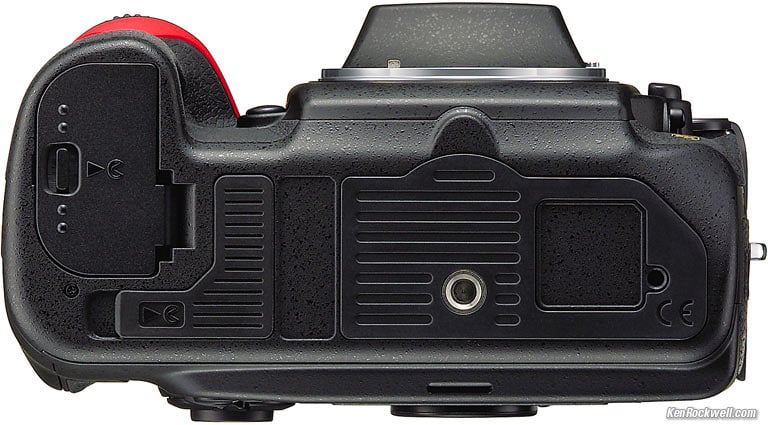


 . Need to compile them then I'll upload for you guys to see.


 0.0363sec
 0.30
0.30
 7 queries
 GZIP Disabled