QUOTE(deejay_krish @ May 16 2011, 03:26 PM)
Aisey bro, ive repaired more than 150 induction cookers. I know how they work exactly

Its heat generated from the coils then to the glass panels. After cooking, the glass panel and the unit will be freaking hot.
Bro, the heat is unwanted one. The real cooking come from induction. Not the heat generated. LOL...
QUOTE
An induction cooker transfers electrical energy by induction from a coil of wire into a pot made of material which must be electrically conductive and ferromagnetic. The heat generated is analogous to the unwanted heat dissipated in an electric transformer; most of the heat is due to resistive heating like a transformer's copper losses and eddy currents and the rest is analogous to a transformer's other iron losses.
A coil of wire is mounted under the cooking surface, and a large alternating current is passed through it. The current creates a changing magnetic field. When an electrically conductive pot is brought close to the cooking surface, the magnetic field induces an electrical current, called an "eddy current", in the pot. The eddy current, flowing through the electrical resistance, causes electrical power to be dissipated as heat; the pot gets hot and heats its contents by heat conduction.
The cooking surface is made of a material which is a poor heat conductor, so only minimal heat is transferred from the pot to the cooking surface (and thus wasted). In normal operation the cooking surface stays cool enough to touch without injury after the cooking vessel is removed.
Some energy will be dissipated wastefully by the current flowing through the resistance of the coil; wasted energy is minimised by the geometry of the design and by the coil having low resistance. The cooking vessel is typically made from stainless steel or iron, which is much less conductive. The pot is also ferromagnetic. Since the increased magnetic permeability of the material decreases the skin depth, the resistance will be further increased. The copper coil, on the other hand, is made from wire known as litz wire, which is a bundle of many tiny wires in parallel. The coil has many turns, while the bottom of the pot effectively forms a single shorted turn. This forms a transformer that steps down the voltage and steps up the current. The resistance of the pot, as viewed from the primary coil, appears larger. That, in turn, means that most of the energy becomes heat in the high-resistance steel, while the driving coil stays cool.
The reasons iron or steel cookware work on an induction cooker but aluminium or copper do not is because of the materials' permeability and resistivity.[8] Aluminium or copper cookware is more conductive and the skin depth in these materials is larger since they are nonmagnetic. Not only do these materials have lower resistivity than steel, the current flows in a thicker layer in the metal and so encounters less resistance and produces less heat. The induction cooker will not work efficiently with such pots. With iron or steel cookware, some heat is also generated due to the ferromagnetic material's magnetic hysteresis. This is a smaller component of the total heat generated.[9] The differences in hysteresis losses are a much smaller effect.
The heat that can be produced in a pot is a function of the surface resistance. A higher surface resistance produces more heat for similar currents. This is a "figure of merit" that can be used to rank the suitability of a material for induction heating. The surface resistance in a thick metal conductor is proportional to the resistivity divided by the skin depth. Where the thickness is less than the skin depth, the actual thickness can be used to calculate surface resistance.[8] Some common materials are listed in this table.


 May 16 2011, 02:48 PM, updated 15y ago


 Induction cooker vs gas cooker, Which one you choose?
  Quote
Quote










 There i knew that its a shit product, i mean the brand. Other brands ive heard less complaints.
 N also at the bottom, ull see how cold it is




 .
.


 I'm not sure about other brands and the quality of it.


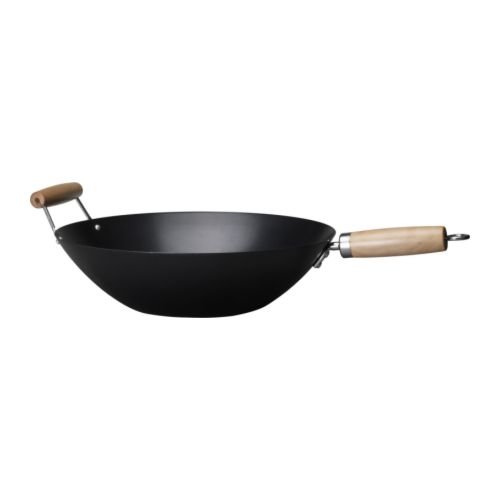

 wanna cook for how many people? I think 2+1 is more than enough already.


 0.0687sec
 0.37
0.37
 6 queries
 GZIP Disabled