


Primitive Fish, Fish that survived Milleniums
Primitive Fish, Fish that survived Milleniums
|
|
 Oct 16 2010, 12:00 PM Oct 16 2010, 12:00 PM
Return to original view | Post
#1
|
 
Junior Member
373 posts Joined: Nov 2006  
|
joshua : selling those tigers? my pond kinda feel empty nowadays
|
|
|
|
|
|
Oct 18 2010, 07:06 PM
Return to original view | Post
#2
|
|
Junior Member
373 posts Joined: Nov 2006
|
LOL Ben, slow down ler, don't get too excited and start to sell off your stuffs to get something else. most people who rush into things don't stay long in the hobby... any hobby
 |
|
|
Oct 19 2010, 09:07 AM
Return to original view | Post
#3
|
|
Junior Member
373 posts Joined: Nov 2006
|
Samperth is based in East Malaysia, so i supposed recommendations for LFS in West Malaysia will not do much help for him
|
|
|
Dec 12 2010, 01:38 PM
Return to original view | Post
#4
|
|
Junior Member
373 posts Joined: Nov 2006
|
QUOTE(ggMing @ Dec 12 2010, 01:12 PM) and i dont care if you have seen or kept walking fish before... but i have the rarest of all, the harlequin/gold variation f****ng poisoning. but bro, fyi, according to Section 12 of Act 686 under the Laws of Malaysia, you should care |
|
|
Dec 13 2010, 08:50 AM
Return to original view | Post
#5
|
|
Junior Member
373 posts Joined: Nov 2006
|
QUOTE(PIMPIN @ Dec 13 2010, 04:22 AM) The real danger is Act 76 of the Wildlife Protection Act 1972; Act 686 covers mostly international trade of CITES listed animals. Since yours is not listed under Act 76 you really have nothing to worry about because although its unlikely that its bred locally; Act 686 applies to the actual fish that is imported. If someone managed to breed them and yours is the offspring then technically it doesn't fall under either of the Act. now that's a discussion.Anyways, the chances of you getting into trouble for it is less than nil. according to section 14 of act 686, technically, locally, captive bred offspring of any scheduled animals are still considered illegal unless the breeding efforts are registered with the management authority (in the case of amphibians, the the Department of Wildlife. last time i checked, there are no records of axolotl breeder at Perhilitan), in which needed animals to come with CITES documents and import permit for any consideration to taken. all records of stocks and transactions needed to be strictly maintained, e.g., if sold to someone, that someone must be able to apply for a keeping permit from the respective authority based on the records/receipts/documents provided by the seller. earlier this year, keepers of undocumented animals that were scheduled under Act 686 that hasn't already been scheduled in Act 76 were given a grace period, in which many of us had taken the opportunity to declare each and every specimens that falls under Act 686, and applied for a special permission. the special permission also applies for those animals that originally came with CITES permit but in which owners had neglected to apply for a permit before. 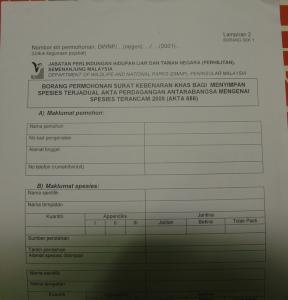

some of the keepers in Klang Valley had already got their special permission, but the application seems pending for keepers from other areas and for those with a big collection. This post has been edited by camillenoir: Dec 13 2010, 09:21 AM |
|
|
Dec 13 2010, 10:37 AM
Return to original view | Post
#6
|
|
Junior Member
373 posts Joined: Nov 2006
|
i'll try to provide answers based on my understanding and experiences. if there are flaws/things that needed to be pointed out by others, i sincerely welcome them to further enhance our understanding in this matter. i would also like to point out that i only have experiences dealing with the Wildlife Department and that i know nuts about the operations of Fisheries Department. (INTESA is governed by several authorities under the Ministry of Natural Resources, each with their own jurisdictions).
QUOTE(PIMPIN @ Dec 13 2010, 09:35 AM) Well if its in Appendix 1 of CITES meaning you need special import permit right? Ok that's what I understand so far. Let's say someone imported some and they mated and I end up with one of the offspring. Technically, it's not imported nor is it really breeding. It's just animals mating. Does everyone with a CITES pet inform authorities each time their pets mate? yes. that's what we had all been doing so far. all scheduled animals bred in captivity needed to be reported immediately. provided there are evidences to support the claim - eggshells, the offspring itself, usually the Wildlife Department are not that stringent unless they have reasonable doubts to suspect that the applicant is not sincere etc (e.g. trying to unlawfully produce for commercial purposes, etc)QUOTE(PIMPIN @ Dec 13 2010, 09:35 AM) Plus, what if that pet is not listed under Act 76 in Jadual 1 nor Jadual 2? Should the issue of applying for permits to possess, etc even arise as its neither a Binatang-Binatang Yang Diperlindungi Sepenuhnya nor is it a Binatang-Binatang Yang Diperlindungi?. yes, even though the animals are not listed under Act 76, permits are needed if they are listed under CITES. example: as we know it, Act 76 is so outdated that not a single tortoise is included, but still, we have got to apply for a permit to keep these animals. scheduled animals that are imported through proper channels come with CITES record etc. the record would be used to apply for a permit from the Department of Wildlife (in which they will match the details provided by the applicants with the importation, trading, etc records they have before issuing the permit). 
QUOTE(PIMPIN @ Dec 13 2010, 09:35 AM) And lastly, what if its again not listed in Third Schedule of Act 686? From what I understand, this grace period you mentioned covers those animals on that list so if a pet isn't listed then how is it relevant? the grace period only covered animals are listed under act 686 but not pre-existing acts/ordinance, eg. if those animals are listed under previous acts/ordinance but not Act 686, it is then subjected to existing laws. if those animals are listed under previous acts/ordinance and Act 686, the grace period did not cover them as well because they are subjected to existing law. but, if the animals are not listed under any Acts, then you should have no worries though. -------------------------------------------------------------------- as for the provisions of captive bred animals stated by CITES - well, it ain't captive bred unless there are proper records showing that it is captive bred. there is one interesting case that happen in the US a few days ago involving the genus Brachypelma. prior to this, everybody had been saying that no authorities give a damn about some insignificant arachnids and pointed out the fact their animals are CB animals obtained from reputable breeders, but since the apprehension of one very reputable breeder involving captive bred animals, most clients of the said offender had been denying all ties with him and even condemned him for what he's doing  it is sad to see good, passionate men being punished for doing the things they love the most. i'm not being anal or anything, but i think it is better to not take insignificant things for granted. therefore, if there are animals that needed to pointed out in case the owner hasn't realized its status, i will point it out but it is up to the owner to do whatever he sees fit. |
|
|
|
|
|
Feb 18 2011, 12:17 PM
Return to original view | Post
#7
|
|
Junior Member
373 posts Joined: Nov 2006
|
i bet that this news will put some real fire into you guys
327-Pound Alligator Gar May Be Biggest Ever Caught |
|
|
May 18 2011, 10:52 PM
Return to original view | Post
#8
|
|
Junior Member
373 posts Joined: Nov 2006
|
QUOTE(funkychips @ May 18 2011, 09:32 PM) That one is tiger salamander bro...I kept two before, but still got gills one, like axolotl. If you reduce the water level week by week eventually it will lose the gills and become adult stage... you, my friend, had been swayed over and over again by a multitude of organisms over the years Anyone who interest in tiger salamanders, I don't know how long this has been but the last time I saw one tiger salamander for sale at 88 Pets Sunwaymas. Quite expensive, rm3++ I think. Btw just wanna share this blurry pic I took when I drop by Xian Leng just now...they were sitting there looking at something...    ---------------------------------------------------------------------------------------------------------------------------------- anyway guys, back in December, I had stated the status of axolotls under Act 686 in this thread. and then come Act 716, in which Ambystoma dumerilii and Ambystoma mexicanum are also included under Schedule One (Protected Wildlife). So now they are scheduled under 2 Acts that work concurrently. for months, the Act had been the main discussion in the Snakes thread and references had been made in almost every other exotic animal thread and many online forums, but it seems like it haven't been touched here. the beauty of this new Act is the transitional provision provided under section 136, which in effect acts like a 2nd grace period for those who missed 686. so, anyone keeping those 2 species can still go to your respective state office to apply for permits before the 27th of June. application form can be downloaded here: http://www.wildlife.gov.my/pengumuman/borangaktabaru.pdf no permits are being issued at the moment (issuance is expected starting July) but make sure that you get a receipt from the counter as proof of your application. This post has been edited by camillenoir: May 18 2011, 10:55 PM |
|
|
May 19 2011, 06:51 AM
Return to original view | Post
#9
|
|
Junior Member
373 posts Joined: Nov 2006
|
i care not about people who don't care, but those who care at least have the right to be informed.
and from what I could see here, the fishkeeping community are not legally informed (although axotls are primarily kept by fishkeepers) while keepers of other animals are being somewhat active and alert on matter. |
| Change to: |  0.0582sec 0.0582sec
 0.51 0.51
 7 queries 7 queries
 GZIP Disabled GZIP Disabled
Time is now: 11th December 2025 - 01:42 AM |
 Quote
Quote