READY STOCk
Says:
As subject
Hi everyone, First of all Thanks to MOD, and Everyone, that give me chance to open a small business here.
I'm going to introduce something that might be New and Fresh .

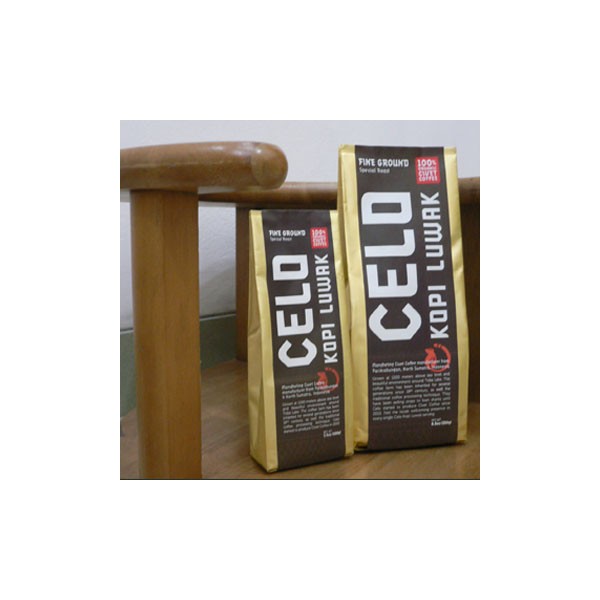
. Its Kopi Luwak, Originally from Indonesia. Anyway there are other countries in asia like philipines, and vietnam, also produce this type of coffee, but they dont call it Kopi Luwak. The word kopi luwak is originated from Indonesian,
"kopi" means Coffee and "Luwak" means Civet. Luwak or Civet is a type of an animal, im not sure how to describe this animal but i will present a picture, pictures tell thousand words.
Luwak or Civet
» Click to show Spoiler - click again to hide... «
FINNEST
Its my short introduction about kopi luwak, ok lets get into the detail.
What is Kopi Luwak?
» Click to show Spoiler - click again to hide... «
Kopi Luwak (pronounced [ˈkopi 'luak]) or Civet coffee is coffee made from coffee berries which have been eaten by and passed through the digestive tract of the Asian Palm Civet (Paradoxurus hermaphroditus) and other related civets. The civets eat the berries, but the beans inside pass through their system undigested. This process takes place on the islands of Sumatra, Java, Bali and Sulawesi in the Indonesian Archipelago, in the Philippines (where the product is called Motit Coffee in the Cordillera, or Kape Alamid in Tagalog areas) and in East Timor (locally called kafé-laku). Local lore in Vietnam has given the name "weasel coffee" to civet coffee, in what is considered the closest recognizable translation to English.
Civets consume the red coffee cherries, when available, containing the fruit and seed, and they tend to pick the ripest and sweetest fruit. Thus there is a natural selection for the ripest coffee beans. The inner bean of the berry is not digested, but a unique combination of enzymes in the stomach of the civet add to the coffee's flavor by breaking down the proteins that give coffee its bitter taste. The beans are defecated, still covered in some inner layers of the berry. The beans are washed, and given only a light roast so as to not destroy the complex flavors that develop through the process. Light roasting is considered particularly desirable in coffees that do not exhibit bitterness, and the most pronounced characteristic of Kopi Luwak is a marked reduction in bitterness.
In early days, the beans would be collected in the wild from a "latrine," or a specific place where the civet would defecate as a means to mark its territory, and these latrines would be a predictable place for local gatherers to find the beans. More commonly today, civet farms allow civets to roam within defined boundaries, and the feces produced are then processed and the coffee beans offered for sale.
source :wikipedia
Is kopi luwak safe or Sanitary to consume? YES!!
» Click to show Spoiler - click again to hide... «
Many consumers question whether civet coffee is safe and sanitary, and whether it contains E. coli bacteria. The civet is not known as a carrier of E. coli or other bacteria potentially dangerous to humans, and there is no public record of any illness conveyed by civet coffee. It is professed by producers that the enzymes in the digestive tract, as well as the rigorous washing and sun drying of the beans, help to eliminate bacteria, along with the high temperature roasting process, and that the coffee is entirely safe.
source :wikipedia
Scientifically about kopi luwak
» Click to show Spoiler - click again to hide... «
Further research by Dr. Massimo Marcone at the University of Guelph (Ontario, Canada) has shown that the civet's endogenous digestive secretions actually penetrate the beans. These secretions contain proteolytic enzymes which 'digest' the proteins thereby producing more smaller peptides and more free amino acids when compared to the control beans (beans not having been digested by the civet). These smaller peptides and proteins are known to be involved in Maillard browning reactions (non-enzymatic) upon roasting which is essentially exposure to high heat. As proteins are partially responsible for coffee's flavor, it is hypothesized that the change in the number and type of proteins in the civet beans contribute to the unique flavor. [10]
Verification of this theory was performed in Vietnam in 1996 by a team of German scientists contracted by Trung Nguyen Coffee Company[11] to study the changes that take place during the coffee beans' processing through the civet digestive tract. An analysis was performed and six specific enzymes were isolated, and a synthetic process using these enzymes was developed to simulate the natural effect.
A common misconception of Kopi Luwak coffee is that it is a specific coffee type. However, it is actually many different types of coffee that have been through a specific process that results in taste and body similarities. All Kopi Luwak does not taste identical, because civets may dine on any variety of Arabica, Robusta or other species of beans in the environment, and the bean variety greatly affects the underlying taste of the result. However, Kopi Luwak coffees share a similar aroma profile, lack of bitterness, and some flavor characteristics that gourmets of the coffee genre recognize among the many varieties.
While it has been referred to as the world's best coffee, taste is subjective, and the different production modes of Kopi Luwak around the world bring varying results. While the effect of the taste on the consumer is subjective, certain objective observations can be made. Typically, coffees of exceptionally smooth profile are given a lighter roast, because they will not exhibit a "raw" or bitter taste from light roasting. Most Kopi Luwak roast levels approximate Cinnamon (named for color, not taste) to Medium roast. Therefore, Kopi Luwak may not appeal to an aficionado of heavy roast coffee, if the taste elements enjoyed by the consumer include the changes in bean taste that result from the caramelization of sugars within the beans that occurs at high temperatures.
Typically gourmets of coffee agree, however, that the exceptional aroma and "high notes" of Kopi Luwak are unique, that the lack of bitterness is highly desirable, and some elusive and highly pleasing tastes of coffee are released through the enzyme process and cannot be duplicated any other way. Icing the brew also seems to bring out some flavors that cannot be found in other coffee processes.
source:wikipedia
For Any question and inquires , you can PM me or Post it here.
THANK YOU
Added on December 28, 2009, 5:23 pmThis is for Question and Answering Session. every question that has been asked i will put it in the post 2, so that we can learn and share 2gether.
i will reserve this second. hope Mod allow me to do so.
Q & A
1. Why The price in the website and the price i sell is very much different?
Answer:
» Click to show Spoiler - click again to hide... «
Because the price stated in the website is international price, its for buyer Europe, America, and other country. I can get this price is because i get it from the source in East java.
2. how do we brew kopi luwak?
Answer:
» Click to show Spoiler - click again to hide... «
Ok, we need to know that, Grounded kopi luwak is not like a instant coffee that sold in the market, Its pure coffee with no mix, grounded after roast. Here's the tips:
a: boil a water, until its really boiling,above 90c.
b. prepare your kopi luwak in a cup, 1 table spoon for 120 ml water ( if u see its too thick, u can add little bit more water).
c. pour the boiled water into the cup slowly, and steer about 5 times.
d. Then cover the cup with something for about 5 minutes. and serve it.
e. To taste the original taste of kopi luwak, dont add anything into your kopi luwak for the 1st serving. Enjoy.
another way of serving to make thicker coffee.
1. boil, 1 cup of water(120ml-150ml) or 2 cups of water on milk pan, depends on how many cups you wan serve.
2. when the water get about 60Celcius(estimate). put the 1 spoon of kopi luwak or 2 spoon, according how many cups of water you boil.
3. put on the lid(cover the pan with something)
4. when the water get boiled, stir well and turn off the fire,
5. and serve,(u can filter it too)
3. Is Kopi Luwak Halal?
Answer :
» Click to show Spoiler - click again to hide... «
Thanks
Testimonial» Click to show Spoiler - click again to hide... «
Suggestion» Click to show Spoiler - click again to hide... «
Response.
Hi sunitex.
im glad that u have received the packaged.
yap. now iam changing my packing already, so for the next order i will guarantee the package wont have problem anymore. because i use better plastic and the impulse sealer to seal the plastic so it wont reduce the freshness anymore.
Thanks very much for the suggestion.
Hope you can come again.
AUGUST 2012- Present:


 Dec 10 2012, 04:21 PM




 Quote
Quote
 0.0184sec
 0.48
0.48
 6 queries
 GZIP Disabled