QUOTE(atomik @ Aug 16 2009, 01:22 PM)
woo. what i should i do now. cant revert back to normal. oc ability more lesser. damn ler..

Use a method called ‘Hot-Swapping’ to reprogram the BIOS ROM
Hot-Swapping’ refers to removing a BIOS chip from the motherboard while the system power is on and the system is in an idle state.
Hot-Swapping a BIOS chip is VERY dangerous to both the system and the person attempting to remove the chip. This method of BIOS recovery should only be performed by experienced technician as a last option. Hot-Swapping will work on any type of BIOS chip as long as both computers use the same type of chip.
WARNING: If done improperly this method of BIOS recovery could cause severe damage to the motherboard and BIOS as well as severe injury to the person attempting to remove the chip.
Hot-Swapping requires you to have two computers with the same BIOS distribution and type. The way it works is, while the second (working computer) is on the BIOS chip is removed and the BIOS chip from the first (non-working) board is inserted in its place. The BIOS flash utility is then run on the second computer and the BIOS chip is updated with the BIOS file for the first computer. In essence you are reprogramming the bad BIOS chip on a different motherboard and then putting the chip back into the non-working motherboard. The procedure is below.
1) Start the second (working computer) and go to a DOS prompt. Make sure that no programs are running in the background.
2) While the computer is on carefully remove the BIOS chip from the motherboard and set it aside. Be sure to note the orientation of the chip so that you can later inset it back in to the motherboard exactly as it was.
3) Insert the BIOS chip from the first (non-working) computer in to the BIOS socket on the second (working computer’s) motherboard.
4) At the DOS prompt run the BIOS flash utility and update the BIOS chip with the correct BIOS file for the first computer. If you get a warning message that the chipset and BIOS does not match continue anyway.
5) Once the BIOS chip has been reprogrammed successfully carefully remove the BIOS chip from the second computer and put it back into the first computer. Be sure to pay close attention to the orientation of the chip so that you insert it correctly. Plugging in the chip backwards will immediately damage both the chip and the motherboard.
6) Start the first computer. If all went well the first system should now be working again. If not you have the 3th and 4th option: reprogram it via EEprom programer or purchase a replacement BIOS from the motherboard manufacturer.
kinda scary though!

QUOTE(AMDAthlon @ Aug 16 2009, 01:26 PM)
Mmm..may i know how to switch into 2nd BIOS?
there's a method using power button to switch from one bios to another, but till now i cant find how.



 Aug 16 2009, 11:29 AM


 Quote
Quote





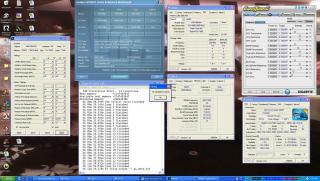


 the best i could get on stock vcore Q9550 is 3.95 @ 465 ..





 0.0322sec
 0.56
0.56
 6 queries
 GZIP Disabled