

 Nov 29 2025, 02:22 PM, updated 4w ago


QUOTE
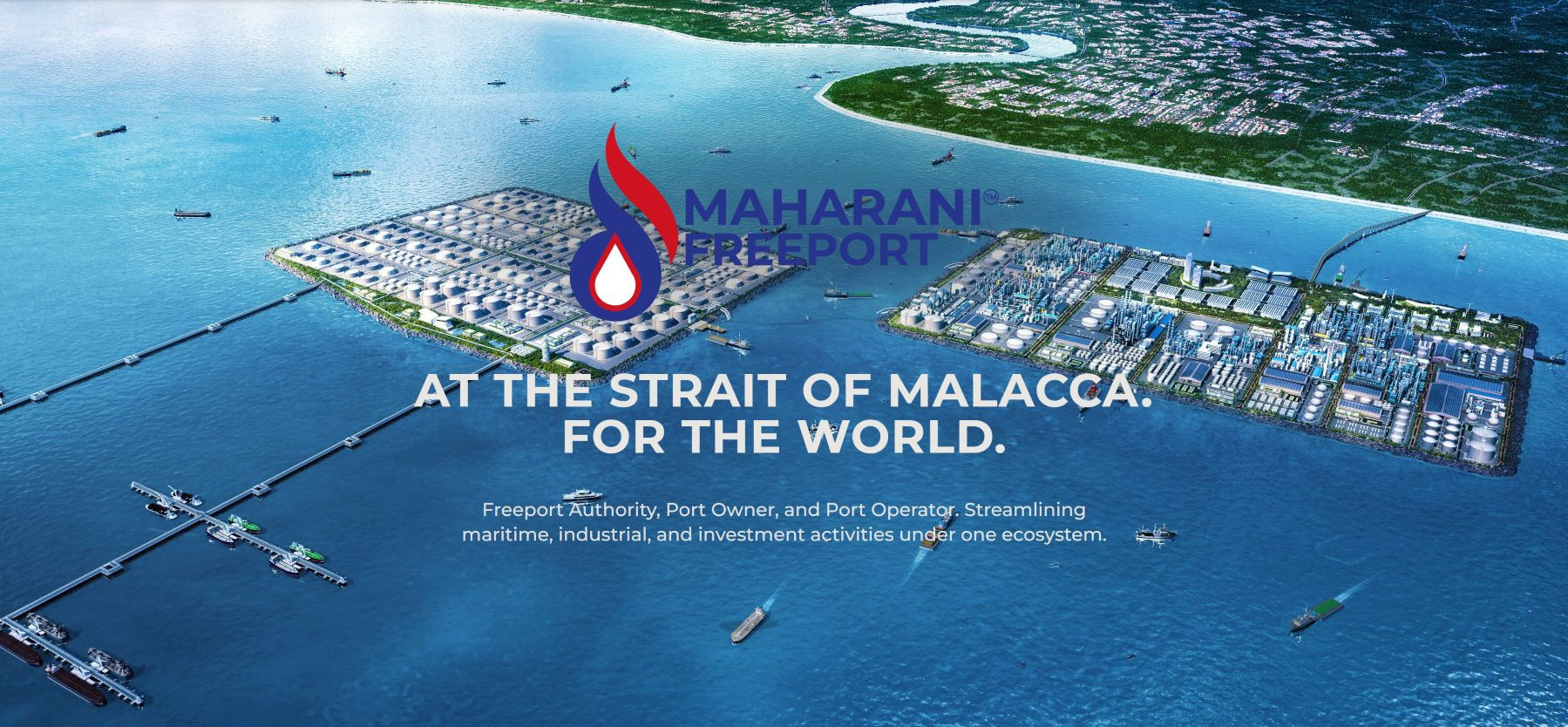
MUAR: Maharani Freeport, the country's first duty-free energy freeport, is set to dominate the world's busiest oil highway today.
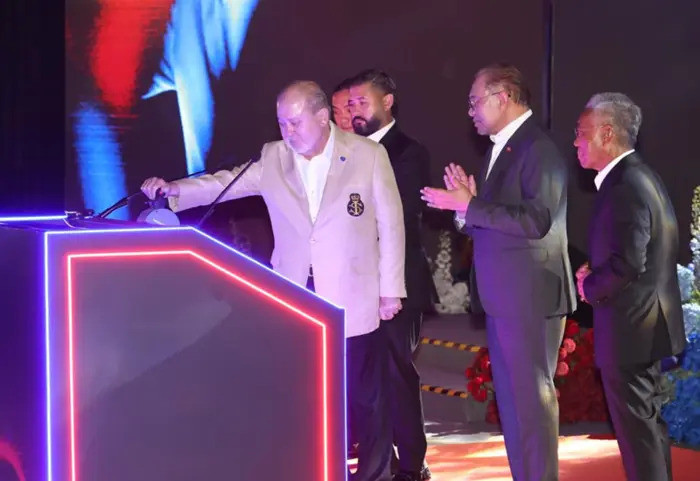
It went into full commercial operations moments after its official launch by His Majesty Sultan Ibrahim, King of Malaysia, today.
The 3,200-acre (1294.9ha), privately developed deepwater hub aims to draw RM144bil in global investments and support 45,000 direct and indirect jobs in the Straits of Malacca, where one in every five barrels of oil is shipped.
A freeport is a sovereign-designated port zone where goods can enter, be stored or processed, and leave again without paying customs duties or most taxes unless they move into a country's domestic market, making it a magnet for global trade, faster logistics and heavy investment.
Developed by Maharani Energy Gateway Sdn Bhd (MEG) as a one-stop global oil trading and maritime services centre, the national-status project places Malaysia in the heavyweight league of international freeports straddling key energy routes.
MEG executive chairman Datuk Dr Daing A. Malek Daing A. Rahaman said the freeport was already trading oil and offering storage, transshipment, blending, bunkering and ship-to-ship (STS) transfer services, months ahead of mass infrastructure completion.
The ceremony drew over 1,500 delegates, including the Johor Regent Tunku Mahkota Tunku Ismail Sultan Ibrahim, Prime Minister Datuk Seri Anwar Ibrahim, Johor menteri besar Onn Hafiz, diplomats from more than 30 countries, and multinational energy and logistics executives.
At 24 metres deep, Maharani Freeport's natural draft can berth Very Large Crude Carriers (VLCCs), offering an alternative anchorage point for bulk crude movement traditionally dominated by major regional transshipment ports.
Planned add-ons include petrochemical plants, energy data centres, AI-blockchain trading platforms, STS floating storage units and renewable fuel complexes.
Investors registered within the freeport will enjoy zero corporate tax, while oil-related firms may qualify for a 3 per cent corporate tax tier, which is one of the region's lowest.
The integrated masterplan spans three reclaimed islands, combining an energy hub, deep seaport, industrial park and financial hub to lock Malaysia into the global oil value chain for decades.
It went into full commercial operations moments after its official launch by His Majesty Sultan Ibrahim, King of Malaysia, today.
The 3,200-acre (1294.9ha), privately developed deepwater hub aims to draw RM144bil in global investments and support 45,000 direct and indirect jobs in the Straits of Malacca, where one in every five barrels of oil is shipped.
A freeport is a sovereign-designated port zone where goods can enter, be stored or processed, and leave again without paying customs duties or most taxes unless they move into a country's domestic market, making it a magnet for global trade, faster logistics and heavy investment.
Developed by Maharani Energy Gateway Sdn Bhd (MEG) as a one-stop global oil trading and maritime services centre, the national-status project places Malaysia in the heavyweight league of international freeports straddling key energy routes.
MEG executive chairman Datuk Dr Daing A. Malek Daing A. Rahaman said the freeport was already trading oil and offering storage, transshipment, blending, bunkering and ship-to-ship (STS) transfer services, months ahead of mass infrastructure completion.
The ceremony drew over 1,500 delegates, including the Johor Regent Tunku Mahkota Tunku Ismail Sultan Ibrahim, Prime Minister Datuk Seri Anwar Ibrahim, Johor menteri besar Onn Hafiz, diplomats from more than 30 countries, and multinational energy and logistics executives.
At 24 metres deep, Maharani Freeport's natural draft can berth Very Large Crude Carriers (VLCCs), offering an alternative anchorage point for bulk crude movement traditionally dominated by major regional transshipment ports.
Planned add-ons include petrochemical plants, energy data centres, AI-blockchain trading platforms, STS floating storage units and renewable fuel complexes.
Investors registered within the freeport will enjoy zero corporate tax, while oil-related firms may qualify for a 3 per cent corporate tax tier, which is one of the region's lowest.
The integrated masterplan spans three reclaimed islands, combining an energy hub, deep seaport, industrial park and financial hub to lock Malaysia into the global oil value chain for decades.
https://www.nst.com.my/news/nation/2025/11/...maharani-begins
Same company
Royal-linked Maharani Energy Gateway secures RM9.5b renewable energy investment from China firm
QUOTE
KUALA LUMPUR (Jan 29): Johor royalty-linked Maharani Energy Gateway Sdn Bhd (MEG) has secured a US$2 billion (RM9.47 billion) investment commitment from China Energy International Group Sdn Bhd (CEIG) for a renewable energy project located in the Maharani Energy Gateway Free Trade Zone (MEG FTZ) in Muar, Johor.
The proposed project saw two collaborative framework agreements inked between MEG and CEIG on Monday to build a combined cycle gas turbine (CCGT) power plant and a green hydrogen and green ammonia plant.
CEIG is the Malaysian subsidiary of China Energy Engineering Corp.
“One of the key components of the project is a joint venture between MEG and CEIG to build a green hydrogen plant and a CCGT power plant in the MEG FTZ,” said MEG executive chairman Datuk Dr Daing A Malek at the signing ceremony.
According to CEIG vice president of Southeast Asia regional headquarters Fan Yi, the CCGT plant is to have a peak generation capacity of 1.4GW, while the green hydrogen and green ammonia plant are to produce 3,400 metric tonnes (MT) of hydrogen and 18,800 MT of ammonia per year.
“We start construction after financing closure and first of all we have to negotiate, assisted by MEG, to talk about the off-takers such as TNB and we also get gas supply from Petronas,” Fan said.
“The first priority is we’re going to sign a PPA (power purchase agreement) with MEG, and MEG will supply power to all tenants in the FTZ,” she added.
The MEG project is a sea reclamation project off the coast of Muar which aims to create an energy hub and deep-sea port with three man-made islands covering an area of 1,295 hectares square.
A check with the Companies Commission Malaysia showed that MEG is 45% owned by K Energy Sdn Bhd, followed by the Sultan of Johor and soon-to-be Yang di-Pertuan Agong Sultan Ibrahim ibni Almarhum Sultan Iskandar, with a 40% stake, while Daing holds the remaining 15%.
K Energy is equally owned by Eric Ong Zong Ren and Valerie Ong Huei Zhen.
Minister of Investment, Trade and Industry Tengku Datuk Seri Zafrul Abdul Aziz, who was present to witness the signing ceremony, said government policies such as the New Industrial Master Plan 2030 and the New Energy Transition Roadmap have resulted in collaborations between foreign parties and domestic players.
“To that end, I welcome the MEG project, which is strategically positioned right in the centre of the East-West trade route. It is only five sailing days away from China, an important market for oil and gas, and also 28 sailing days to the Middle East, and 38 days to the Black Sea,” he said during a speech at the signing ceremony.
Zafrul also said that the MEG project would be a compelling proposition as a renewable energy-focused regional hub, as it is accessible to major cities such as Kuala Lumpur and Johor Bahru and benefits from its proximity to vast lands and water bodies.
The proposed project saw two collaborative framework agreements inked between MEG and CEIG on Monday to build a combined cycle gas turbine (CCGT) power plant and a green hydrogen and green ammonia plant.
CEIG is the Malaysian subsidiary of China Energy Engineering Corp.
“One of the key components of the project is a joint venture between MEG and CEIG to build a green hydrogen plant and a CCGT power plant in the MEG FTZ,” said MEG executive chairman Datuk Dr Daing A Malek at the signing ceremony.
According to CEIG vice president of Southeast Asia regional headquarters Fan Yi, the CCGT plant is to have a peak generation capacity of 1.4GW, while the green hydrogen and green ammonia plant are to produce 3,400 metric tonnes (MT) of hydrogen and 18,800 MT of ammonia per year.
“We start construction after financing closure and first of all we have to negotiate, assisted by MEG, to talk about the off-takers such as TNB and we also get gas supply from Petronas,” Fan said.
“The first priority is we’re going to sign a PPA (power purchase agreement) with MEG, and MEG will supply power to all tenants in the FTZ,” she added.
The MEG project is a sea reclamation project off the coast of Muar which aims to create an energy hub and deep-sea port with three man-made islands covering an area of 1,295 hectares square.
A check with the Companies Commission Malaysia showed that MEG is 45% owned by K Energy Sdn Bhd, followed by the Sultan of Johor and soon-to-be Yang di-Pertuan Agong Sultan Ibrahim ibni Almarhum Sultan Iskandar, with a 40% stake, while Daing holds the remaining 15%.
K Energy is equally owned by Eric Ong Zong Ren and Valerie Ong Huei Zhen.
Minister of Investment, Trade and Industry Tengku Datuk Seri Zafrul Abdul Aziz, who was present to witness the signing ceremony, said government policies such as the New Industrial Master Plan 2030 and the New Energy Transition Roadmap have resulted in collaborations between foreign parties and domestic players.
“To that end, I welcome the MEG project, which is strategically positioned right in the centre of the East-West trade route. It is only five sailing days away from China, an important market for oil and gas, and also 28 sailing days to the Middle East, and 38 days to the Black Sea,” he said during a speech at the signing ceremony.
Zafrul also said that the MEG project would be a compelling proposition as a renewable energy-focused regional hub, as it is accessible to major cities such as Kuala Lumpur and Johor Bahru and benefits from its proximity to vast lands and water bodies.
Meow meow
 Quote
Quote





 0.0182sec
 0.27
0.27
 5 queries
 GZIP Disabled