

 Sep 30 2025, 03:17 PM, updated 3 months ago


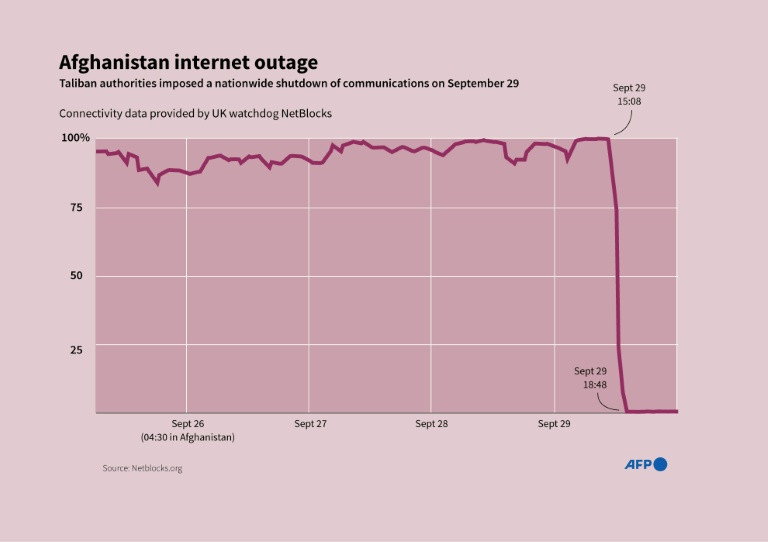
The Taliban government in Afghanistan has imposed a nationwide shutdown of telecommunications, weeks after it began severing fibre-optic internet connections.
The country is currently experiencing a "total internet blackout", internet watchdog Netblocks reports.
International news agencies say they have lost contact with offices in the capital Kabul. Mobile internet and satellite TV have also been severely disrupted across Afghanistan.
The Taliban have yet to give an official reason for the shutdown. Since seizing power in 2021, the Taliban have imposed numerous restrictions in accordance with their interpretation of Islamic Sharia law.
A Taliban official said the telecom shutdown would last until further notice.
Tolo News, a privately owned Afghan news channel, told people to follow its social media pages for updates as it expected disruptions to its television and radio networks.
Flights from Kabul airport have also been disrupted, local media reported.
According to Flight tracking service Flightradar24, at least eight flights scheduled to depart from or arrive at Kabul International Airport on Tuesday have been cancelled.
Diplomatic officials have told the BBC that the internet cuts could affect banking and e-commerce systems nationwide.
Several people in Kabul have told the BBC that their fibre-optic internet stopped working towards the end of the working day, around 17:00 local time (12:30 GMT)
Because of this, it is understood many people will not notice the impact until Tuesday morning, when banking services and other businesses are due to resume.
Fibre-optic cables transfer data super fast, and are used for much of the world's internet.
The BBC understands that a committee in Kabul has been tasked to examine potentially "filtering" fibre-optic internet in order to "prevent immoralities". The committee would also determine whether the fibre-optic ban would be enforced across the country, they said.
In a post on social network Mastodon.social, Netblocks said:
"Afghanistan is now in the midst of a total internet blackout as Taliban authorities move to implement morality measures, with multiple networks disconnected through the morning in a stepwise manner; telephone services are currently also impacted".
For weeks internet users in several Afghan provinces have been complaining about either slow internet access or no connectivity.
Several residents, who requested anonymity, previously told the BBC that their businesses and lives had been seriously affected by the internet cuts.
A man who works as a money changer in Takhar province said that his daughters' online English classes were disrupted. "Their last opportunity to study and stay engaged is now gone," he said.
Another woman previously told the BBC that she could not attend online classes since her home internet was cut off. "I had hoped to finish my studies and find an online job, but that dream has also been destroyed," she said. "Without internet access, I don't know what will happen next."
» Click to show Spoiler - click again to hide... «
https://www.bbc.com/news/articles/cdxqdy5nrlqo
 Quote
Quote






 they use this issit?





























 0.0276sec
 0.52
0.52
 5 queries
 GZIP Disabled