QUOTE(ridin @ May 2 2025, 04:52 PM)
Very mature thinking. I remember reading your posts like a decade or so ago, glad to see you are still around here.
...
If you don't mind me asking, how did you first started out venturing into business? I've always wanted to make that switch but I find it scary to take the leap.
Thanks for the lovely compliment! Yes, much of what I’ve learned came from life itself, especially after witnessing how my ex suffered in his corporate job. It shaped my perspective deeply.
How I started my business journey:
My first venture was a training business. After experiencing corporate burnout in Singapore, I returned to my hometown for a career break. While attending a government agency event, a manager approached me and said, "You don’t look local!" I told him I had just returned from Singapore after over 10 years working in Selangor and Singapore.
He replied, “Wow! Then you must have brought back a lot of knowledge and skills. Why don’t you start your own training consultancy? We’ll support you!”
Me: “But I just came back for a career break…”
Him: “Think about it. Help us upskill the community.”
Six months later, after having enough rest, vacation and preparation, I launched my training consultancy in May 2019. I planned, organised, and conducted public and B2B training events. I also collaborated with other trainers and companies.
My first 5 in-person events were co-promoted by government agencies. They were a success, leading to sponsorships for talks in other cities, with fully paid flights, accommodation, and honorarium. From around 130 attendees (mostly professionals and business owners), I received invitations from 20+ companies to either train their staff or co-host events. That was the 2020 plan.
*
Then, the pandemic hit.
In early 2020, the training industry pivoted from physical events to online webinars. While I adapted, I fell into depression because that was supposed to be the year I got married. Lockdowns separated me from my then-fiancé for three years.
Out of that emotional low, I founded my 2nd business: a mental health startup to support struggling adults through content, community, and access to professionals (coaches, counsellors, practitioners, and trainees).
I built the platform myself—website, sales pages, booking system, video content, e-books, and social media posts. My professional network spanned Malaysia, Singapore, the Philippines, Myanmar, Japan, Australia, and Canada. How I found them? Well, I approached them (strangers) on LinkedIn and asked if they'd like to be onboard.
We launched and got 11 sales on Day 1. But the stigma around mental health made monetisation tough.
*
At the same time, my business contacts started asking me to help with their marketing materials. It led to my 3rd business: a creative production agency.
I launched it with under RM200 (for SSM registration and domain name) and earned nearly RM100k in return. In the first year running this biz full-time, I closed 30 project deals with new clients, created jobs for vendors/freelancers, and paid out around RM40k in wages. (That was the first time I felt like a small boss. haha~)
I also acquired over 20 business clients, including a Fortune 500 MNC, and formed several strategic partnerships. All this was achieved with zero ads, zero website, zero events or sales calls... just pure word-of-mouth.
But client projects became draining. Burnout crept in again, and I decided to shift my focus back to e-learning and training (Biz 1).
*
Currently,
For Biz 1 (learning and development), I’m now creating and selling online courses and group classes to markets in Malaysia, China, and South Korea via a joint venture with an established academy (50-50 profit split). I'm also building my own online courses and group coaching programme in entrepreneurship, business, marketing, and sales, while partnering with a funnel marketer. We also do 50-50 split. These are my main initiatives for 2025.
As for Biz 2 (mental health), I’ve found a more sustainable model: producing content (writing/videos) and monetising through platforms like YouTube and Medium first. Once I grow a solid following, monetisation will be much easier. My priority is now building a strong personal brand before pushing products and services provided by those counsellors, coaches, and other wellness companies.
Biz 3 (creative agency) is still active, but I serve only existing clients and their referrals. I'm not sourcing new ones actively.
This is my whole biz journey in the last five years, beginning from mid-2019/ age 30.
*
So, you could see that I started as a corporate employee, but through events and networking, I built strong connections and converted them into collaborations. That’s how I launched businesses by leveraging what I already had: network, skills and knowledge to meet market demands in L&D, marketing, and wellness.
I’ve earned from every business. But of course, it hasn’t always been smooth. It usually takes 3–6 months to see small revenue trickles, and 2–3 years to start earning consistent paychecks. For exponential growth, it takes 5 to 10+ years.
» Click to show Spoiler - click again to hide... «
I still take on part-time and freelance work to stay financially afloat while building my business foundations. I continue to be headhunted by recruiters, with a recent opportunity to work for a NASDAQ-listed MNC. Personally, I’m open to job opportunities because my business is flexible—mostly automated and delegated to vendors and freelancers. I work with other companies not just for extra income, but also to sharpen my skills and expand my network.
To date, I’ve been employed by 20 companies over the past 15 years in various capacities (full-time, part-time and freelance; online and on-site) across many countries and time zones. For me, working = learning + networking + enjoying.
The full-time employers I worked for offered plenty of perks: free massages, movie tickets, sports classes, gym and swimming pool access, travel discounts, bonuses, free lunches, company dinners, karaoke sessions, free beer, and more. I also get to attend lots of paid training and industry events. This is the best part of employment.
*
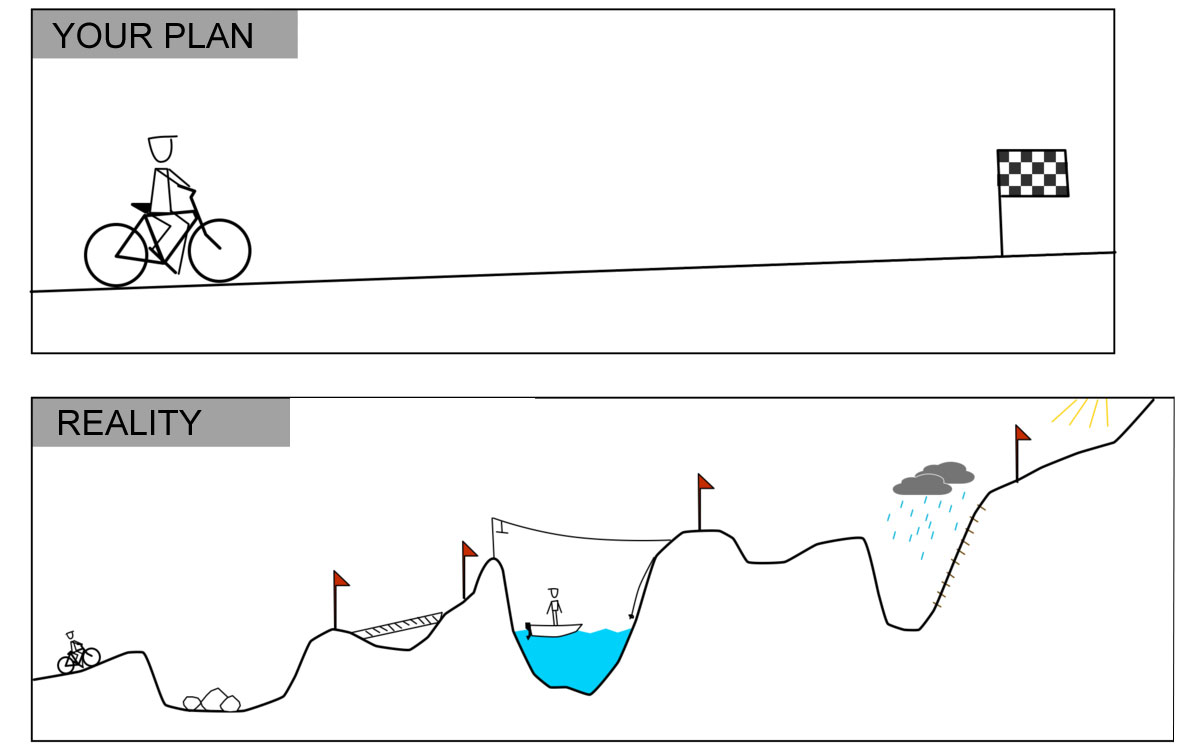
Seriously, starting and running your own business can sometimes feel boring, isolating, and unrewarding. It's not always glamorous as Rome wasn’t built in a day. There are also good times and bad times in volatile market conditions. Sometimes, you get bad customers, payment delays, zero enquiry, etc. Macam-macam lah.
However, running a business is beneficial because it offers the potential to earn more income compared to a regular job. In a corporate setting, once you hit 40 and above, you’re more likely to face retrenchment, slower career progression, or even age-related bias. Opportunities become fewer, competition gets tougher, and companies may prefer hiring younger, lower-cost talent with fewer commitments.
On the other hand, when you run your own business, your income potential is not capped by a fixed salary or limited by someone else’s decision. You get to decide how much to charge, who to work with, and how to scale. You can build assets (e.g. digital products, systems, brand equity, and partnerships) that continue to generate revenue even while you sleep.
Most importantly, you have control over your time, your lifestyle, and your impact. While it's true that business and entrepreneurship comes with risks and responsibilities, the long-term rewards (freedom, fulfilment, and financial abundance) often outweigh the temporary stability of a job, especially in a rapidly changing economy.
For me, I've set some biz and financial goals to hit by 40 years old. After 40, I want to semi-retire, spend more time with my future family (husband and children, if I'm blessed to have them), and enjoy life—traveling the world while doing consultancy work or speaking gigs—rather than waiting until I'm 50 or 60 to start exploring.
These future aspirations keep me motivated and focused. While there may be detours along the way, I continue to stay committed to building my business. Consistency is key.
» Click to show Spoiler - click again to hide... «
*
In short, if I could offer you some advice on how to get started, here are a few crucial pointers:
1. Keep your corporate job while building your side hustle. Minimise unnecessary startup expenses and always test market demand before going all in. As a beginner, avoid taking loans to start a business. Failure rates are high, and the financial burden can be overwhelming.
2. Build your reputation and network. Be known for something you do exceptionally well + something others are willing to pay for. Your credibility and visibility will open doors to opportunities and collaborations.
3. Start with services, not products. Services are easier to sell, especially in the early stages. Products require inventory, storage, shelf life management, and often face stiffer competition. With services, people buy
you—your expertise, personality, and connection.
4. Expect revenue to come in 5 times slower than your best-case estimate. For example, if you expect to earn RM10,000 in 3 months, mentally prepare for it to take up to 15 months. This mindset helps you manage expectations and plan for financial sustainability. If you hit your goal earlier—great. If not, you're already prepared.
5. Don’t be afraid to slow down, revise your plan, or pivot. Stay flexible and open-minded. Market demands can shift due to both macroeconomic and micro-level changes. The ability to adapt quickly and spot new opportunities is a valuable business skill. Always learn proactively and execute effectively.
Lastly, have fun and enjoy the journey. It won’t always be smooth, but it will be rewarding and deeply transformative. Running a business stretches you, challenges you, and helps you grow into a more well-rounded person. You’ll uncover hidden strengths as you push your limits and go the extra mile for yourself and for the people you serve. The impact you make in people's lives and the appreciation you receive will bring you immense joy and pride. It will remind you that stepping out of your comfort zone was worth it—and that, in the end, everything will be worthwhile.
 This post has been edited by Ralna: May 9 2025, 02:01 AM

 Jan 20 2025, 02:28 PM


 Quote
Quote

 0.0202sec
 0.45
0.45
 6 queries
 GZIP Disabled