


 Aug 12 2024, 02:12 PM, updated 2y ago


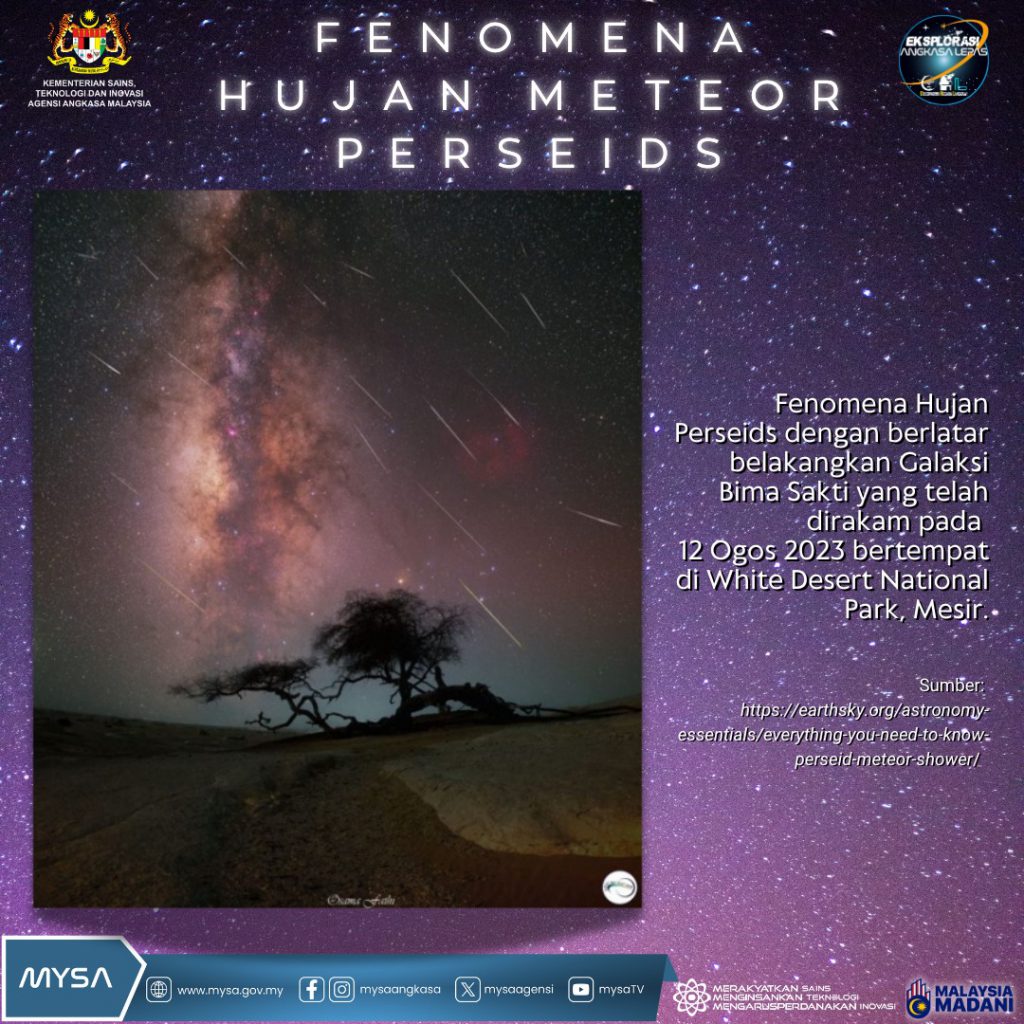
KUALA LUMPUR: Local astronomy enthusiasts have the opportunity to witness a unique celestial phenomenon known as the Perseid meteor shower tonight. According to the Malaysian Space Agency (MYSA), the event is expected to continue until dawn on August 13, with an average of 100 meteors per hour crossing the skies of the country. The visibility of this meteor shower in Malaysia is predicted to be good because the moon will set at midnight during the peak of the phenomenon.
The meteor shower occurs regularly as the Earth orbits the sun, as the planet must pass through the orbital path of the Swift-Tuttle comet, which has a nucleus with a diameter of 26 kilometers. This celestial body typically takes about 133 years to complete one orbit, and it last approached Earth in 1992. The comet is predicted to come close to Earth again in 2126, but it frequently orbits near the sun, which causes its debris to be released.
This situation arises due to the sublimation process, which scatters debris along its path, eventually leading to the dust entering the Earth's atmosphere. The remnants of the comet burn up, creating a long streak of light similar to the image of a meteor shower in the sky. Those wishing to observe this phenomenon clearly are advised to find a dark area, preferably far from any light pollution.
The Perseid meteor shower has been observed by humans for over 2,000 years and is named because its point of origin appears to come from the constellation Perseus, named after a hero from Greek mythology. It is considered the most prolific meteor shower and typically appears in the sky, especially in the northern hemisphere of the planet, from mid-July to the end of August.
So far, the record for the peak observation rate of the Perseid meteor shower is 173 meteors per hour, recorded by international astronomy scientists on August 13, 2009.
https://www.astroawani.com/berita-malaysia/...alam-ini-483077
 Quote
Quote
 0.0175sec
 0.22
0.22
 6 queries
 GZIP Disabled