Outline ·
[ Standard ] ·
Linear+
Home solar 4 months in.
|
bananaking
|
 Jun 26 2025, 02:20 AM Jun 26 2025, 02:20 AM
|
New Member


|
QUOTE(gobiomani @ Jun 24 2025, 02:29 PM) Looks like we all got scammed by TNB and NEM scheme. Based on the new billing structure it means that installing solar is a waste of money as you will not get a return on your investment. Wait and see first, because there is an interpretation issue. The calculator assumes when it says "Energy" charge, it means the energy we consume or sell back to grid. But on TNB's website, their definition of "Energy" is the fuel they need to generate the electricity. Not the electricity you consume or sell back. 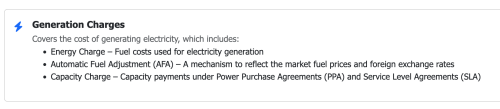 Therefore, the calculator's premise does not make sense: "The NEM 3.0 offset under the new tariff is calculated based on the assumption that it only applies to energy charges, and does not offset network or capacity charges". Why are you offsetting fuel cost with exported electricity? Best to wait until next month and see instead of play tikam tikam. SOS: https://www.mytnb.com.my/tariff/index-en.htmlThis post has been edited by bananaking: Jun 26 2025, 02:34 AM |
|
|
|
|
|
bananaking
|
Jun 27 2025, 04:29 PM
|
New Member
|
Reply from TNB's AI. 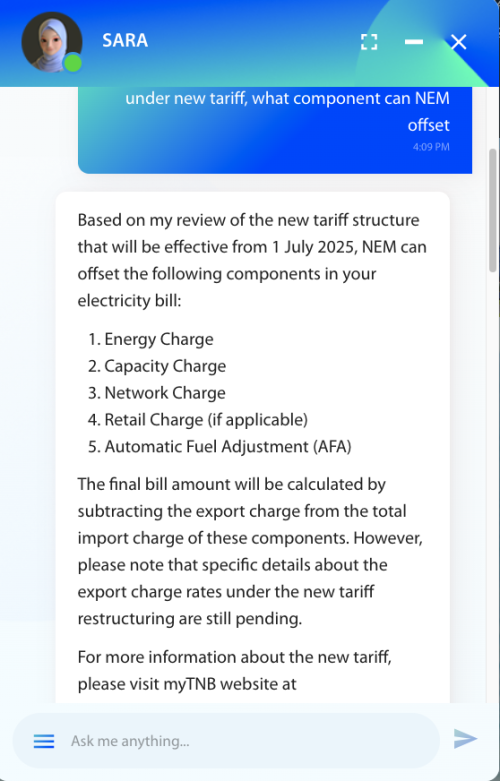 As I pointed out previously, energy charge = fuel cost. Not the charge on your power consumption. You can easily find this on TNB website. 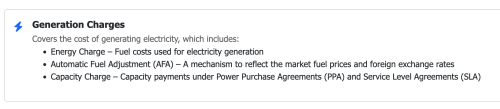 The thing that is genuinely unclear is the export tariff rate. Because last time tariff rate is stepped up (1-200kWh = RM0.218, 201-300kWh = RM0.334, 301-600kWh = RM0.516, etc). The price you consume at is the price you can export solar at. Starting July got new and simplified import rate. Below 1,500 kWh one rate, above 1,500 kWh one rate. Question is will export rate follow the import rate like before or will there be different rate for export. That is the one we need to look out for. If they give the same rate, great. if they give it a lower rate, then install a bigger system to export more (up to the limit TNB grid can handle). The cost per watt to scale up your solar production system goes down when it's bigger. This post has been edited by bananaking: Jun 27 2025, 11:52 PM |
|
|
|
|
|
bananaking
|
Jun 28 2025, 11:07 PM
|
New Member
|
Why lah keep quarrelling about whose wire and who pay... You do know 50% of TNB owned by Kazanah, EPF, Amanah Saham etc.... If they make more profit you get more dividends. On the flip side, Peninsular Malaysia grid power come from 90 % fossil fuel. Sarawak more than 70% from renewable. Fossil fuel power generation is very bad at quickly ramping up and down production eg: ramp down when there is high solar and ramp up at night. Countries with high solar production already facing this problem. TNB need to modernise the grid if not we will suffer in next couple decades. That is why they raising tariff for consumption above 1000kwh, a large factor is capex. TNB tariff is not decided on a whim, got many components. Just need to Google. For info can read this: https://theedgemalaysia.com/node/752817 |
|
|
|
|
|
bananaking
|
Jun 29 2025, 12:25 AM
|
New Member
|
QUOTE(yeapsc73 @ Jun 28 2025, 11:39 PM) Malaysia power demands are actually peak at around 8pm and drop all the ways until the next morning 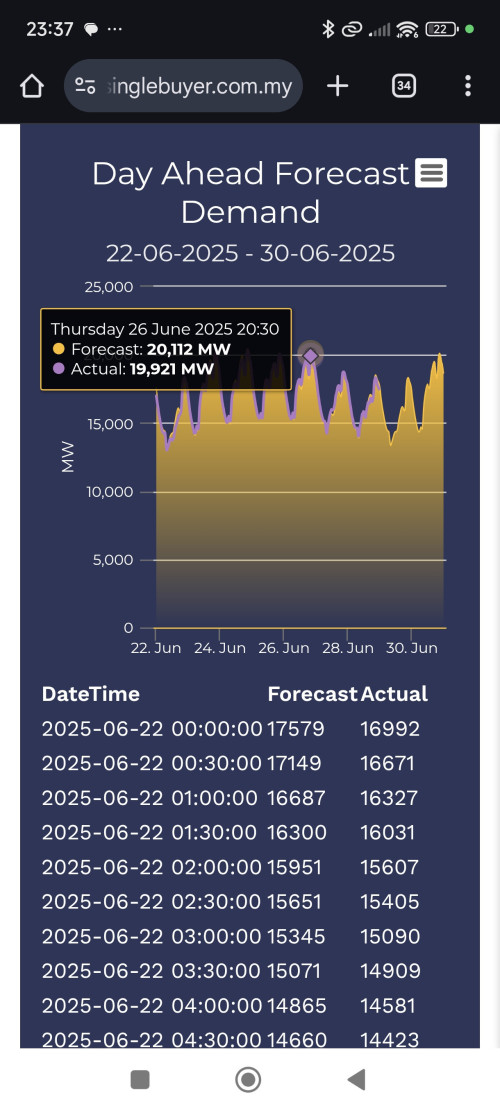 Malaysia not much different from other country, 7-8pm is indeed peak for most countries around the world. So power plants need to ramp up quickly then ramp back down which fossil fuel plants are really bad at doing. The "duck curve" (sudden spike at night representing the duck's head) can create instability in the grid which if not managed properly can lead to cascading failure like the Spain and Portugal outage recently (not exactly due to RE but grid instability). Read: https://en.wikipedia.org/wiki/Duck_curveQUOTE Without any form of energy storage, after times of high solar generation, power companies must rapidly increase other forms of power generation around the time of sunset to compensate for the loss of solar generation, a major concern for grid operators where there is rapid growth of photovoltaics.[9] So with more solar, our power production graph will change from gradual increase and decrease to rapid duck-shape swings. Our energy infra need to adapt to this change. This post has been edited by bananaking: Jun 29 2025, 12:41 AM |
|
|
|
|
|
bananaking
|
Jun 29 2025, 12:54 AM
|
New Member
|
QUOTE(swing123 @ Jun 29 2025, 12:48 AM) With the tariff changes as it is, I am more concerned that probably 90% of the solar providers focusing on residential solar segment will be out of business. There goes whatever 5 yrs, 10 yrs, 12 yrs, 20 yrs warranty for the various components that I paid for. What change? The claim of only offsetting energy charge is clearly false but people continue to debate it as if it is real. Now just waiting to see if there is any change to the export tariff. This post has been edited by bananaking: Jun 29 2025, 12:54 AM |
|
|
|
|
|
bananaking
|
Nov 11 2025, 12:16 PM
|
New Member
|
QUOTE(lurkingaround @ Nov 8 2025, 02:49 PM) . Fyi, ....... https://www.gbnews.com/politics/ed-miliband...fety-fears-fire - Ed Miliband’s solar panel drive sparks safety fears amid spate of rooftop fires
- 31 Oct 2025 Safety concerns have been raised over Energy Secretary Ed Miliband’s plans to install solar panels across millions more British homes after a surge in house fires caused by the energy solution or their batteries.
According to data gathered by insurance company QBE, fire services were called out roughly every two days last year to incidents involving a solar panel.
The company found this marked a 60 per cent increase in the past two years. ... https://archive.li/Hm9B7 = same news from The Telegraph (paywalled). That's about 180 rooftop solar fire incidents per year out of 1.6 million in the UK in 2024. . That's because the vast majority of solar systems in UK are using string inverters. Micro inverters is a rarity there. Sendiri google "DC arcing and string inverter". Microinverters essentially deals with lower voltages compared to String. Yes there are many safety fallbacks but if your installer fk up your installation, better to minimise the risk. |
|
|
|
|



 Quote
Quote
 0.0582sec
 0.59
0.59
 7 queries
 GZIP Disabled