The house RCD has higher current trigger level to prevent false trigger due to accumulated leakage current in appliances. TNB guidelines shows 2 RCDs:
1)
Up to 100mA trip current for wires to lighting and dedicated power outlets such as for air-cond, water heater, etc.
2)
Up to 30mA tripp current for power outlets such as 13A sockets for universal use.
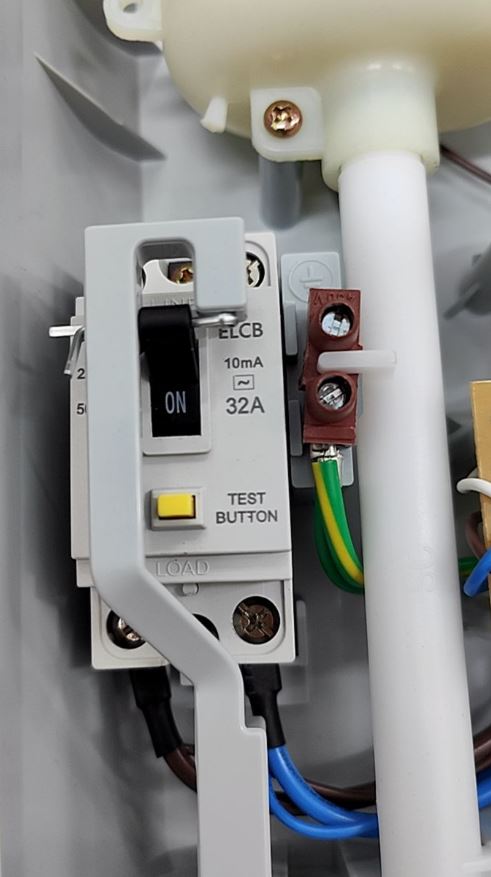
As for the water heater, another 10mA RCD is
recommended mandatory to be install for each water heater..
For me either ELCB or RCD, both can be unsafe. Most importantly is to regularly check if they function properly. The ELCB depends on house grounding. Over years the house grounding can fail due to corrosion perhaps. There RCD can also fail to trip due to malfunctioned.
In water heater electrocution, I read that 100% is due to using conductive hose with conductive shower head, which is basically metal. Nowadays all comes with rubber/silicone hose. Many say ELCB not safe but for me, it is still okay. WH body is plastic. Metal part inside the WH which is the heater itself is grounded. If there is shorted, the ELCB is triggered. The RCD operates in different way to prevent shock which is also no problem. However, normal RCD cannot detect faulty unit. Say the WH runs at 3kW, but when the current goes to 5kW it will not trip RCD because the supply and return currents are still balance

. Once the current goes over the MCB, then the MCB in DB box will trip. So, still safe to some extend.
Like I said the most important thing to ensure that those safety device performed normally with regular testing.
Fixed. That is based on Msia's ER
meanwhile in SG 2023..


 Sep 14 2023, 11:40 AM




 Quote
Quote


 0.0157sec
 0.57
0.57
 7 queries
 GZIP Disabled